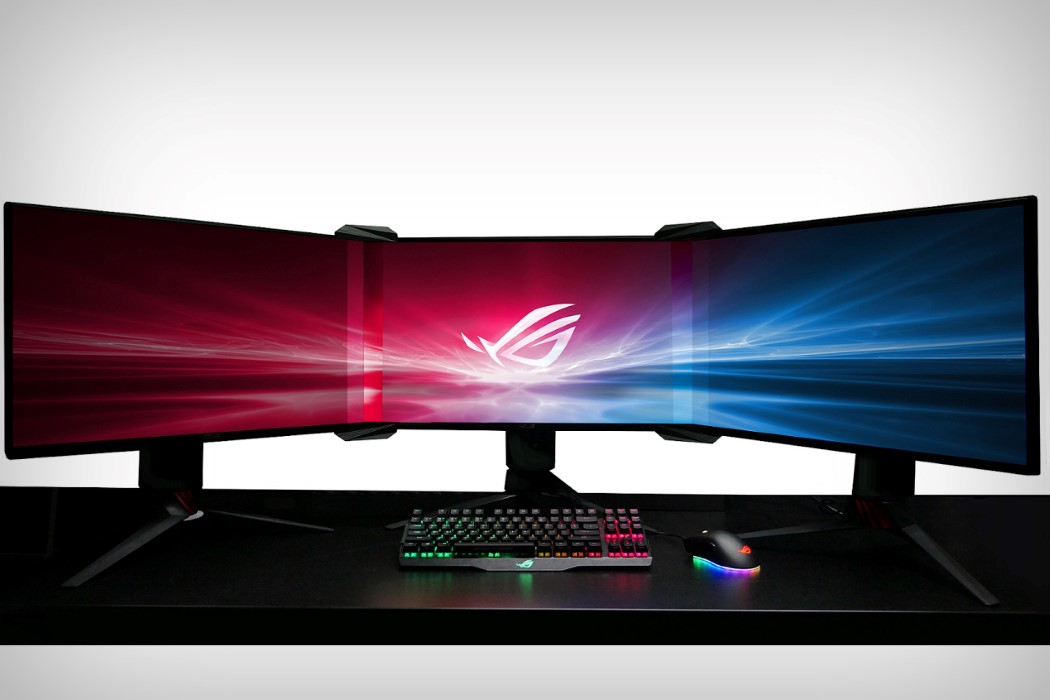
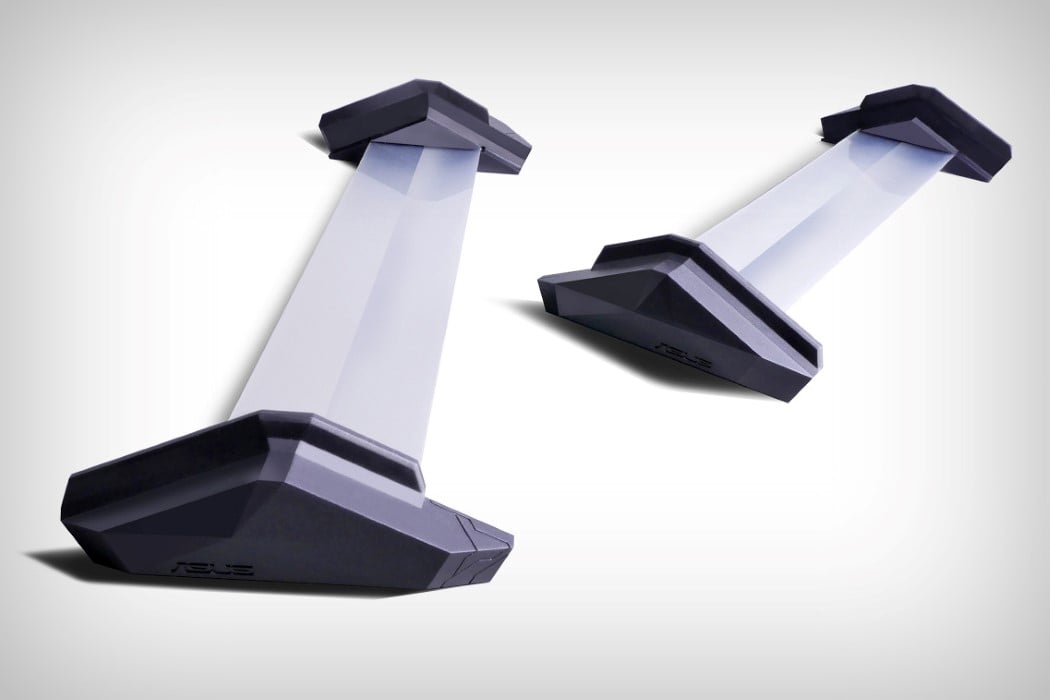
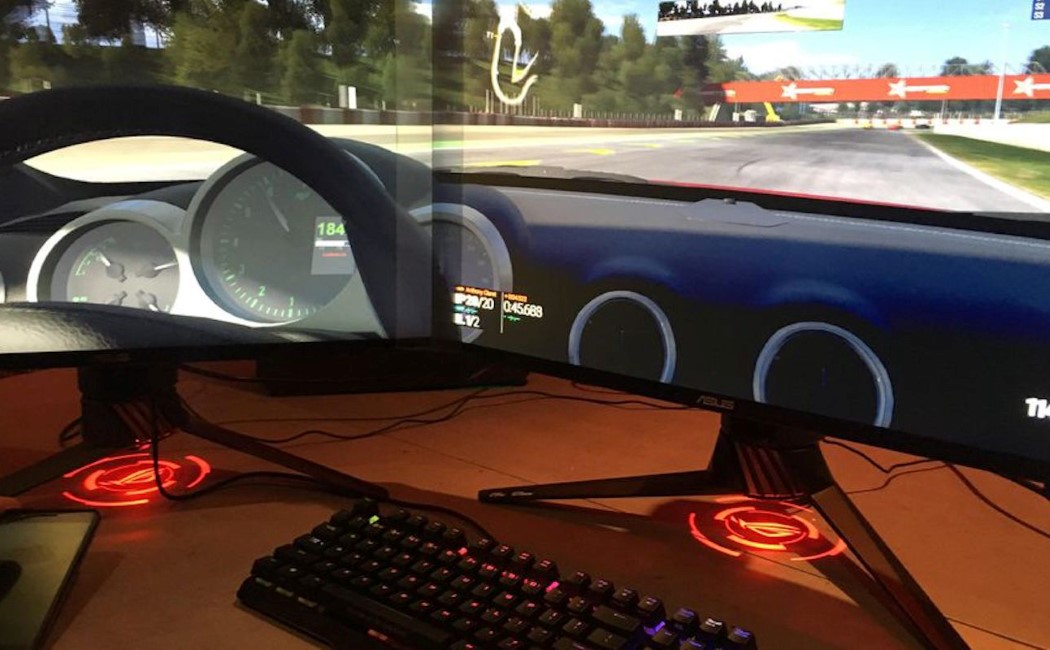
The poor bezel, I wonder what it ever did to us to deserve this hatred, but wow… Humans really dislike them. With every smartphone from last year trying hard to kill the bezel, Asus Rog finally designed a hack that does just that, but it isn’t for phones just yet. The Bezel Free Kit fulfills the dreams of gamers, allowing them to put together three monitors and remove the bezels between each WITHOUT using electricity or batteries). How does it do that? Refraction. The kit comes as two independent strips that can be placed between monitors. It uses a lens that ‘bends’ light in a manner that removes the bezel from view, making it look like you have one continuous screen.
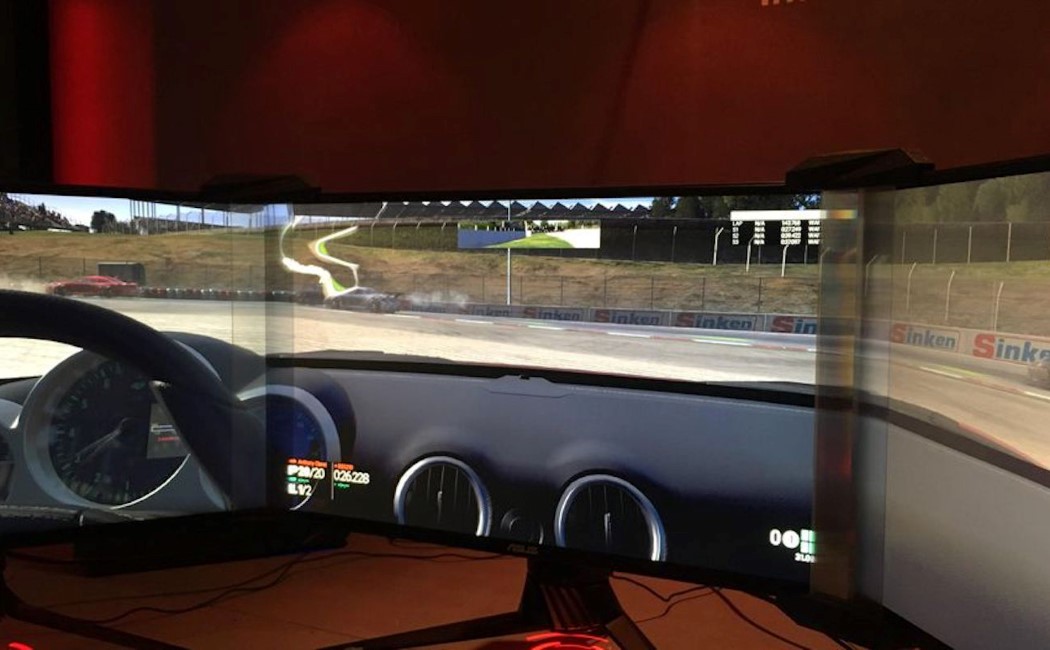
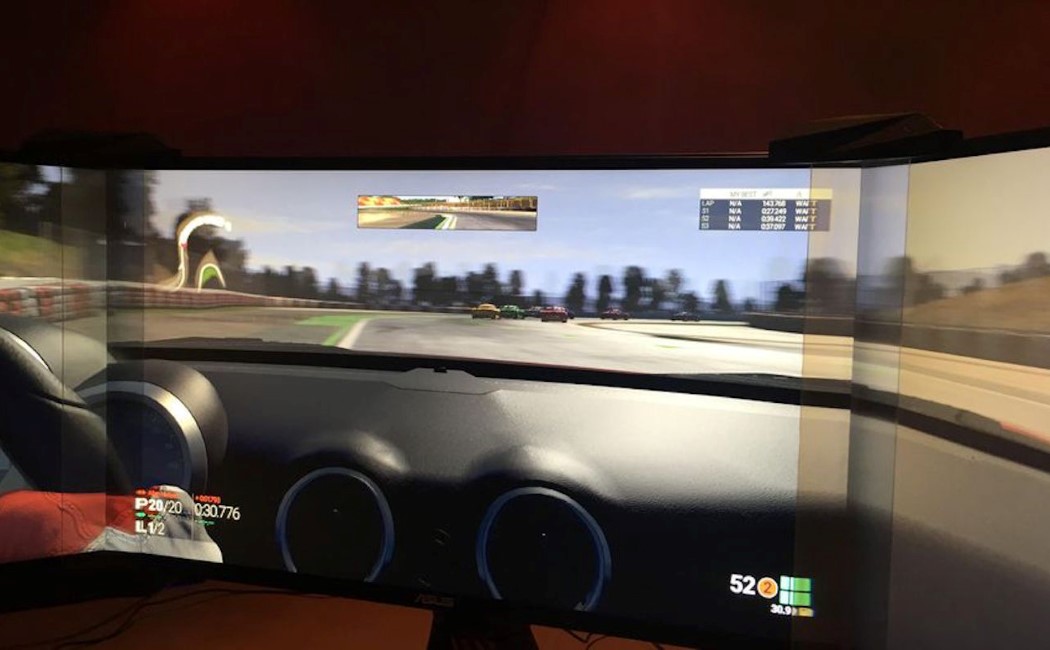
The result isn’t perfect, but it’s enough to make a difference. You still notice the fact that there’s something sitting between screens, and it applies a slight blurred effect to the imagery behind it, making it good for games, but not for productivity. The Bezel Free Kit snaps right on to monitors and comes in three sizes, designed for 24″, 25″, and 32″ monitors, but you’ll need to make sure all your monitors are the same make and size, so that the lens strips can easily mount onto the displays. Scroll down to check out a video of the guys at Verge having a look at it. Wouldn’t it be fun though if your smartphone screen protector could refract light to remove your bezels?
Designer: Asus
SHARE