The desert is something that I really don’t want to visit, as someone who is not fond of arid or humid weather (although I live in a place that always has the latter). But I have to admit that it can really be picturesque and instagrammable, if you get the right angle or view. It is a landscape where you can have a lot of art installations and exhibits which can encourage people to actually pay a visit and make it a tourist attraction.
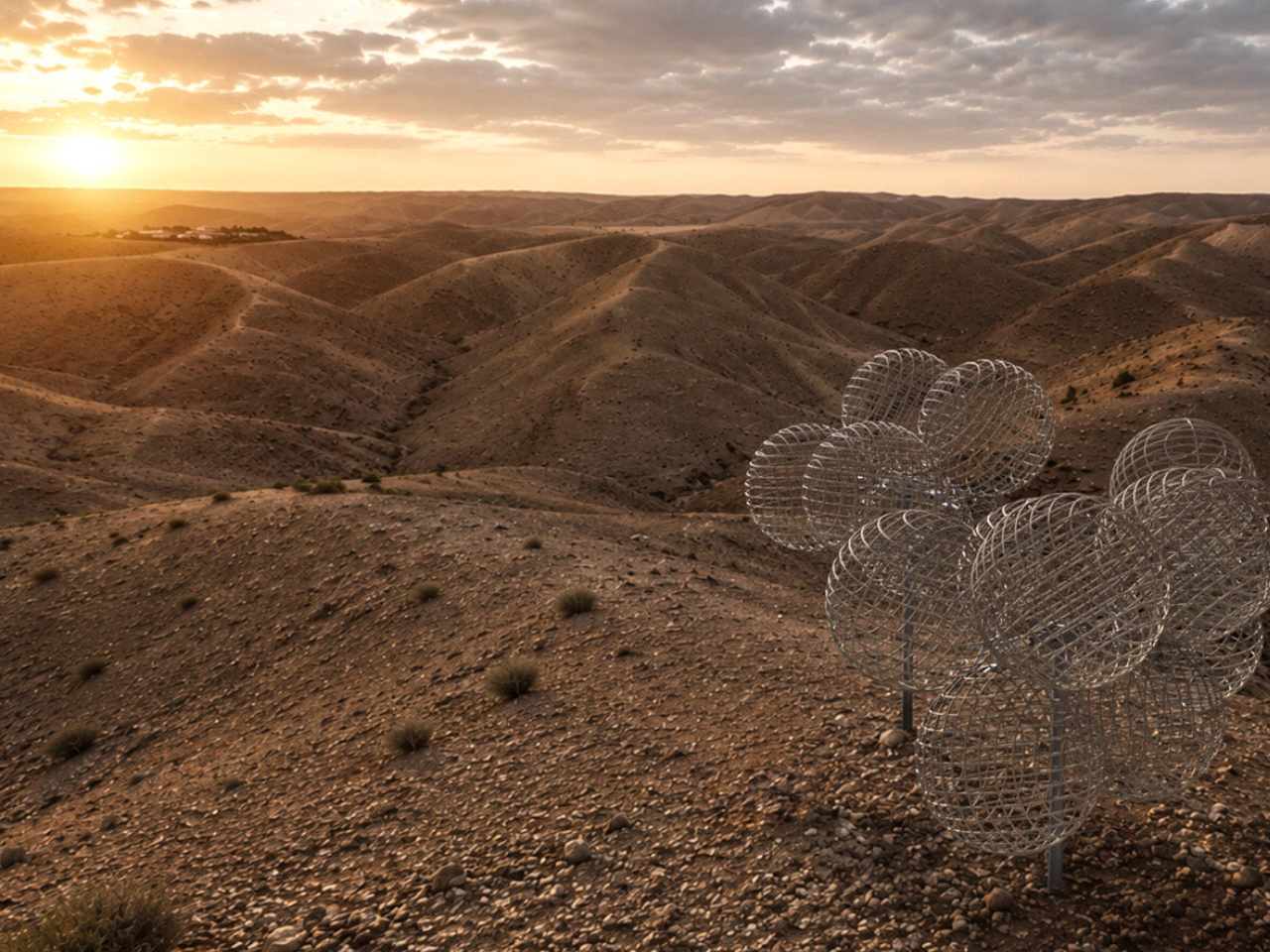
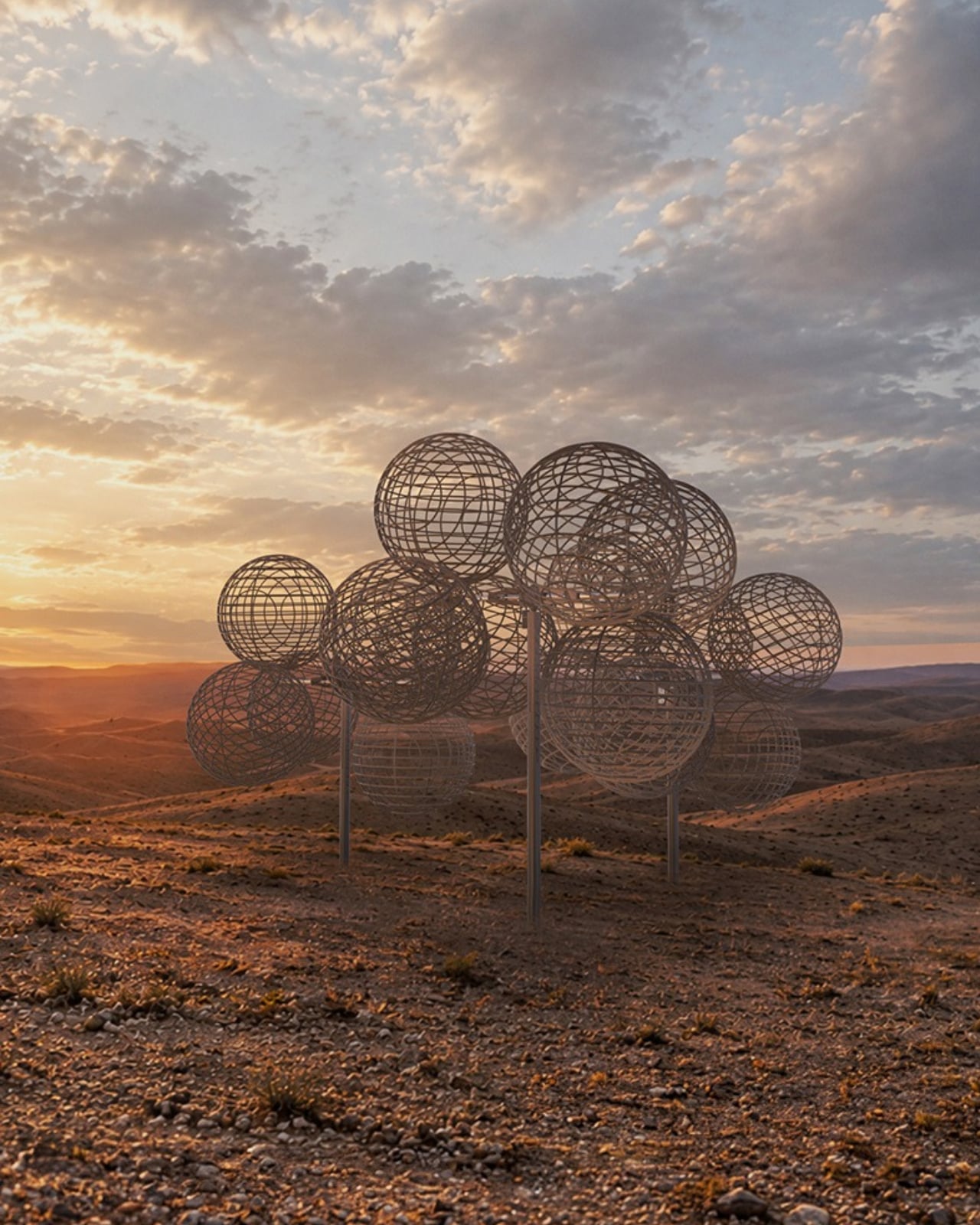
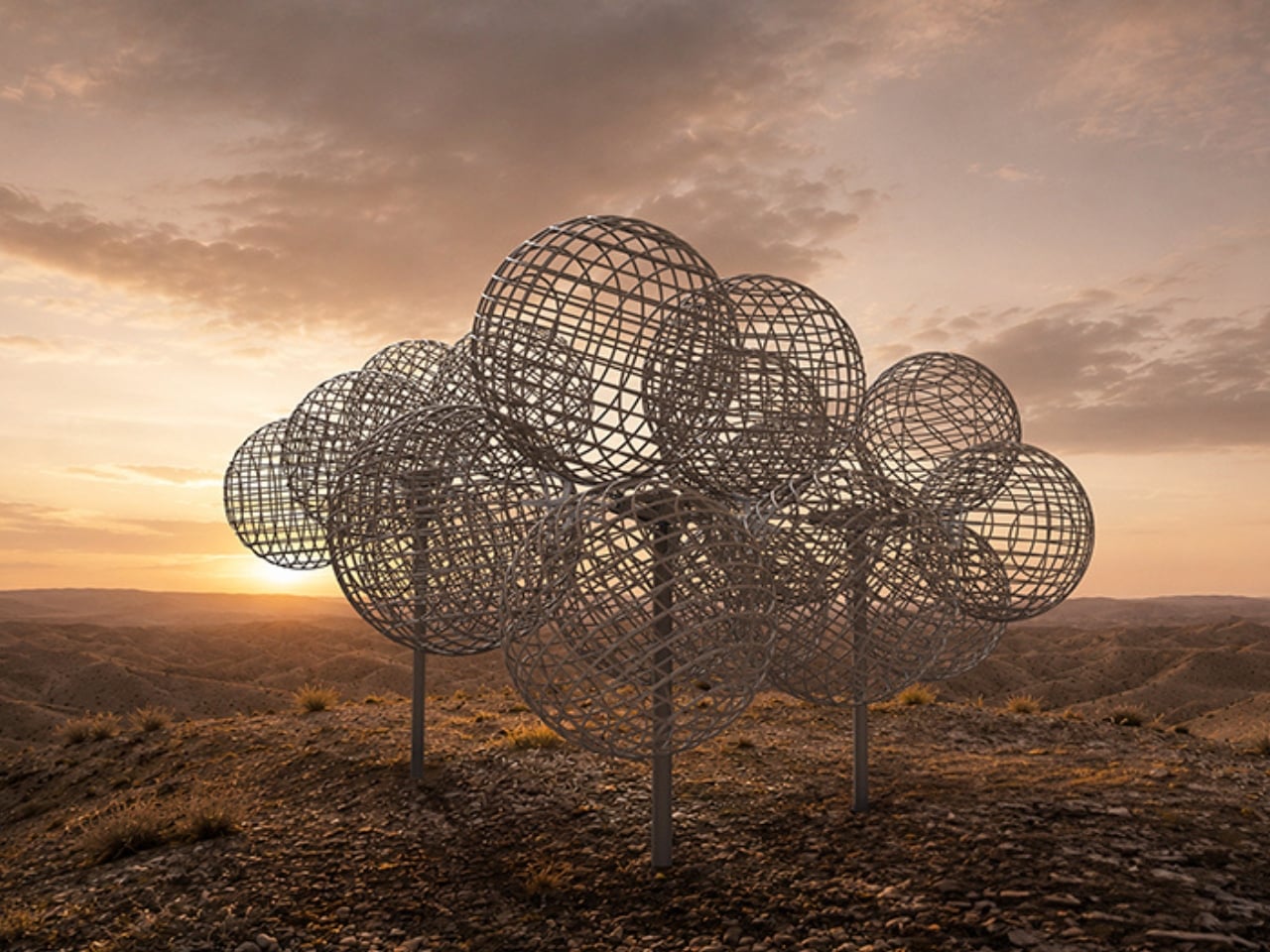
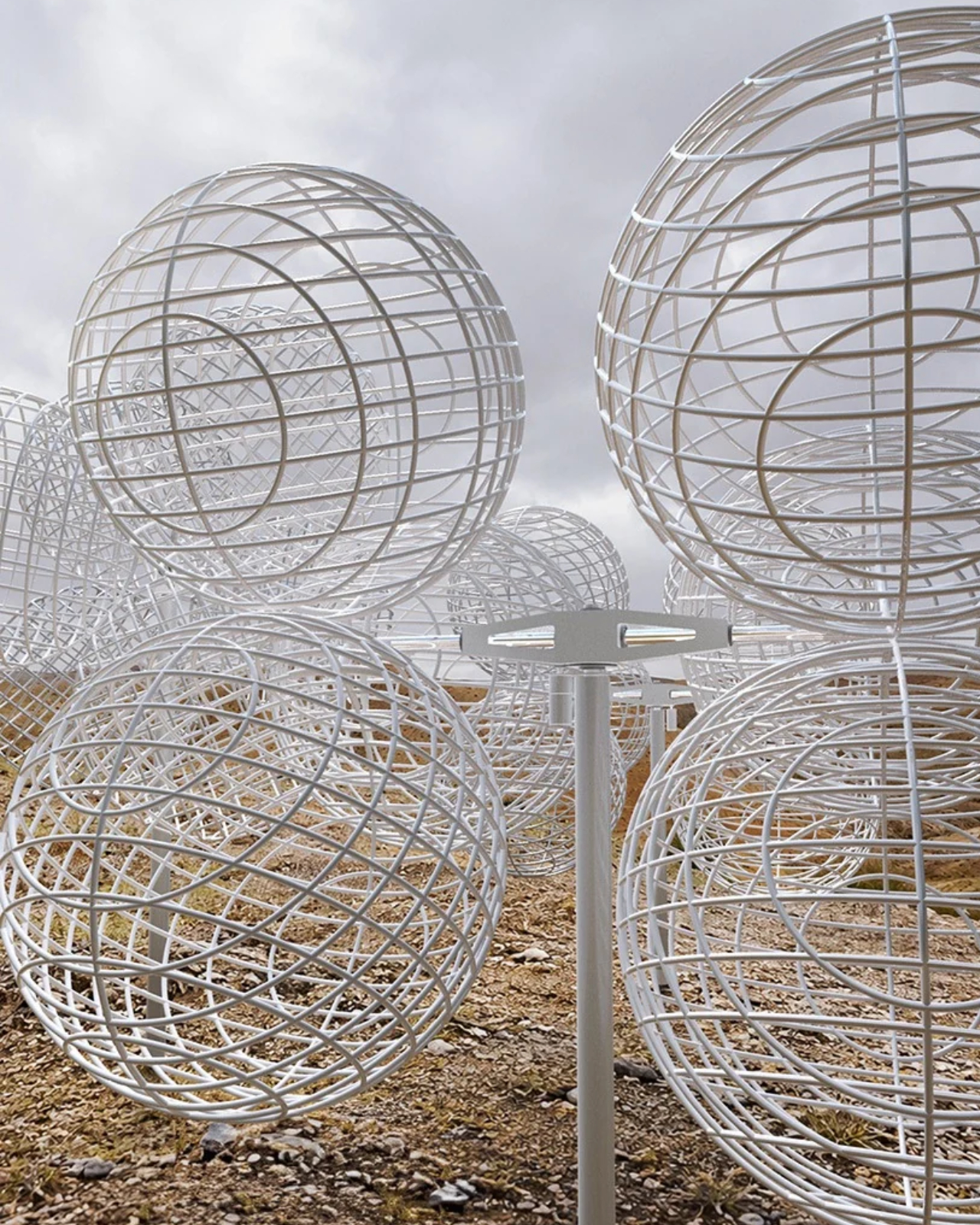
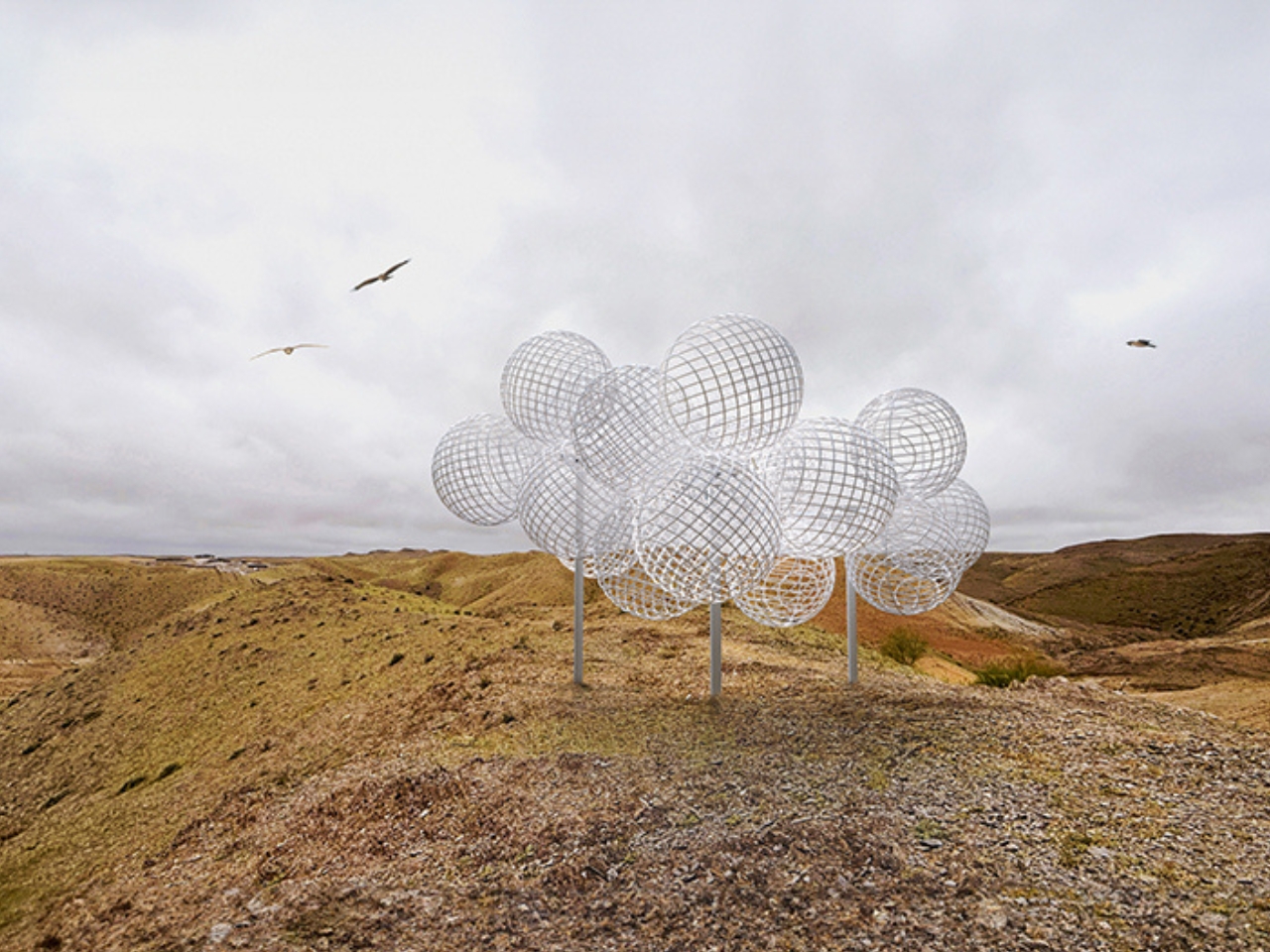
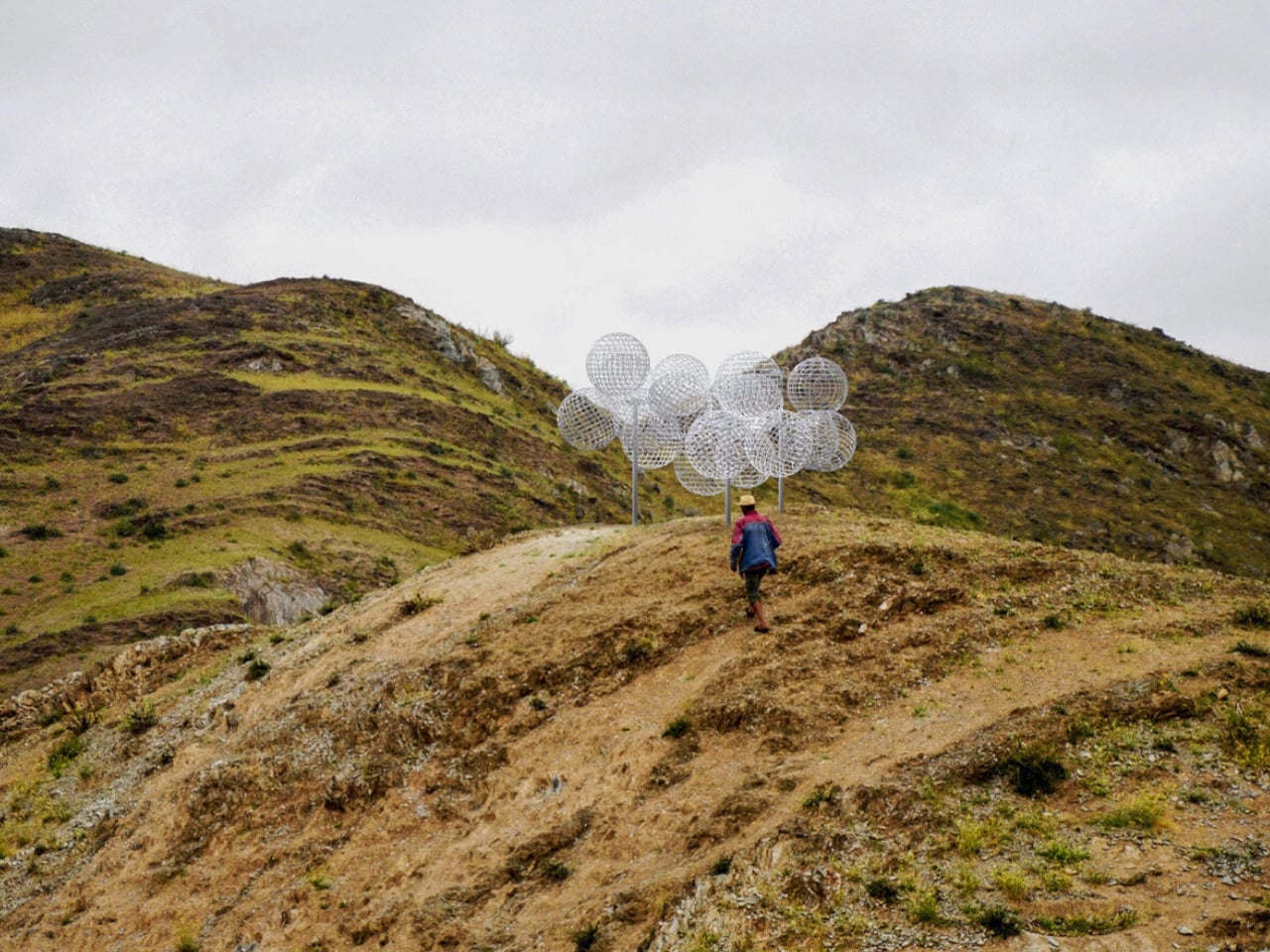
French artist Vincent Leroy has built a cloud with almost nothing to hide behind. Molecular Cloud Wireframe, a kinetic installation in Morocco’s Agafay Desert, outlines intersecting spheres with curved metal ribs. Instead of disappearing behind a solid object, you have the spaces between them letting the surrounding terrain to become part of the composition. Basically, you get a cloud that you can look through.
Designer: Vincent Leroy
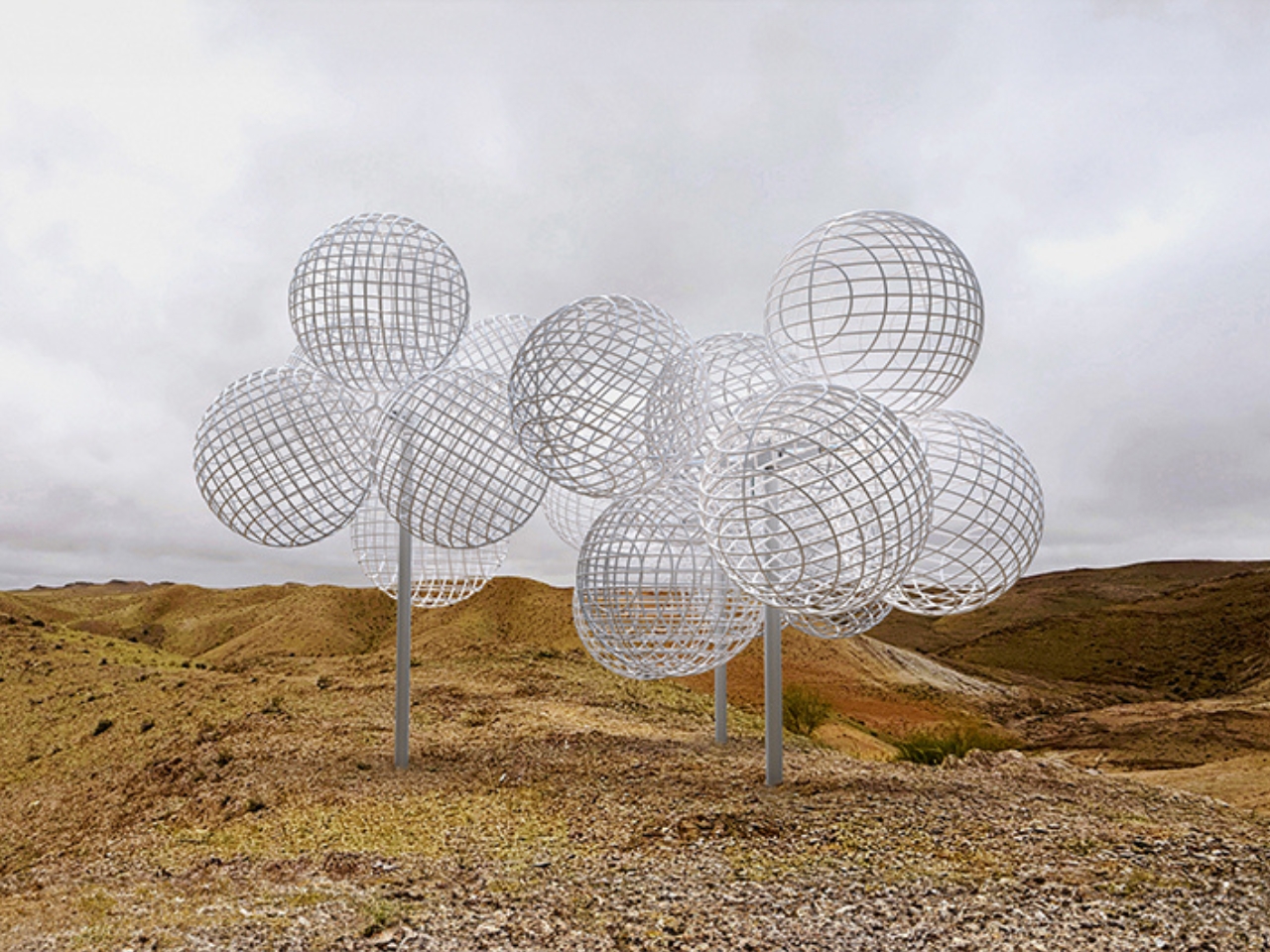
What this installation is trying to solve is how to put an object that will immediately grab people’s attention in an already striking landscape that you don’t need to reduce that to just scenery. A lot of the sculptures that we see sometimes dominate that scenario so what they wanted was a sculpture that needs a presence but not overwhelm it. Leroy’s open framework offers a persuasive answer. I like that it gives the eye a shape to follow while leaving room for everything around it. The desert isn’t being asked to step aside so a piece of art can have its moment since the former is the main character of course.
The name makes me picture a computer model before its surfaces have been added. That association appeals to me because the construction remains legible. You aren’t looking at a convincing imitation of a weather system. You’re being shown the lines that suggest one, with enough gaps for your brain to finish the job. To my mind, that’s more engaging than a literal cloud, however impressively someone might build it.

Light gives the framework another layer of variation. According to the project description, daylight emphasizes the depth of the overlapping spheres, while dusk turns the assembly into a flatter silhouette against the sky. A change in illumination alters how easily the eye can separate its parts. That seems a particularly fitting quality for an object borrowing its identity from something as changeable as a cloud.The wireframe version carries a recognizable geometry into a different material expression. It gives the familiar silhouette a much more exposed construction.
His background helps explain that interest in building an effect from relatively straightforward elements. Leroy studied industrial design in Paris and began producing kinetic works during his studies. His practice has since moved across sculptures, installations, and collaborations, with movement remaining central. I’m interested in that overlap between design and art: the technical arrangement matters, but the result doesn’t need to justify itself by making a household task easier or shaving seconds off a routine.
For the Coachella installation, Leroy described deliberately slowing movement to encourage a more contemplative experience. That’s an artistic intention, rather than a guaranteed response from everyone watching. Still, it offers a useful way to approach his work. I don’t need a sculpture to deliver a profound emotional reset. Giving me a reason to notice a changing shape for longer than a passing glance would be enough. Curiosity is a perfectly worthwhile outcome, especially when the underlying idea is easy to grasp.
Leroy has previously explained his relationship with technology, saying that it’s not the “end in itself” but he uses it as a a tool that “serves form, movement, emotion, and poetry.” That feels like a sensible standard for evaluating kinetic art. An elaborate mechanism can be fascinating, but technical complexity alone doesn’t make an object compelling. The movement has to contribute something to how we understand the form, or it risks becoming a demonstration looking for a purpose.
Molecular Cloud Wireframe gives me a clear reason to care about its form before needing a full engineering explanation. Its openness makes the setting indispensable to the idea. Move the same structure into a crowded exhibition hall, and I suspect its character would change considerably. Out in the desert, the gaps have somewhere to lead your eye. That’s the choice I appreciate most: Leroy has made an object with a recognizable outline while allowing the view beyond it to remain worth looking at.