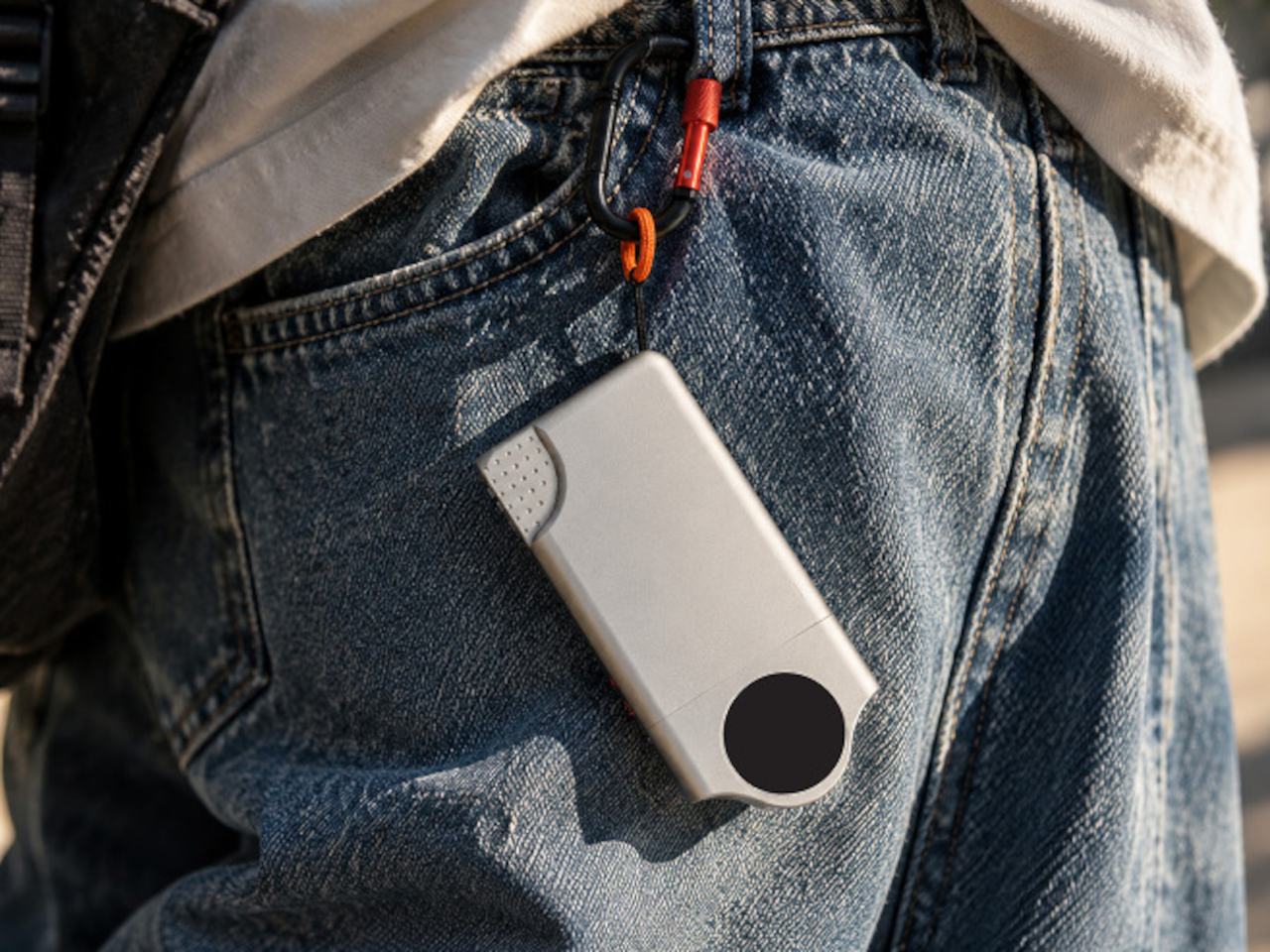
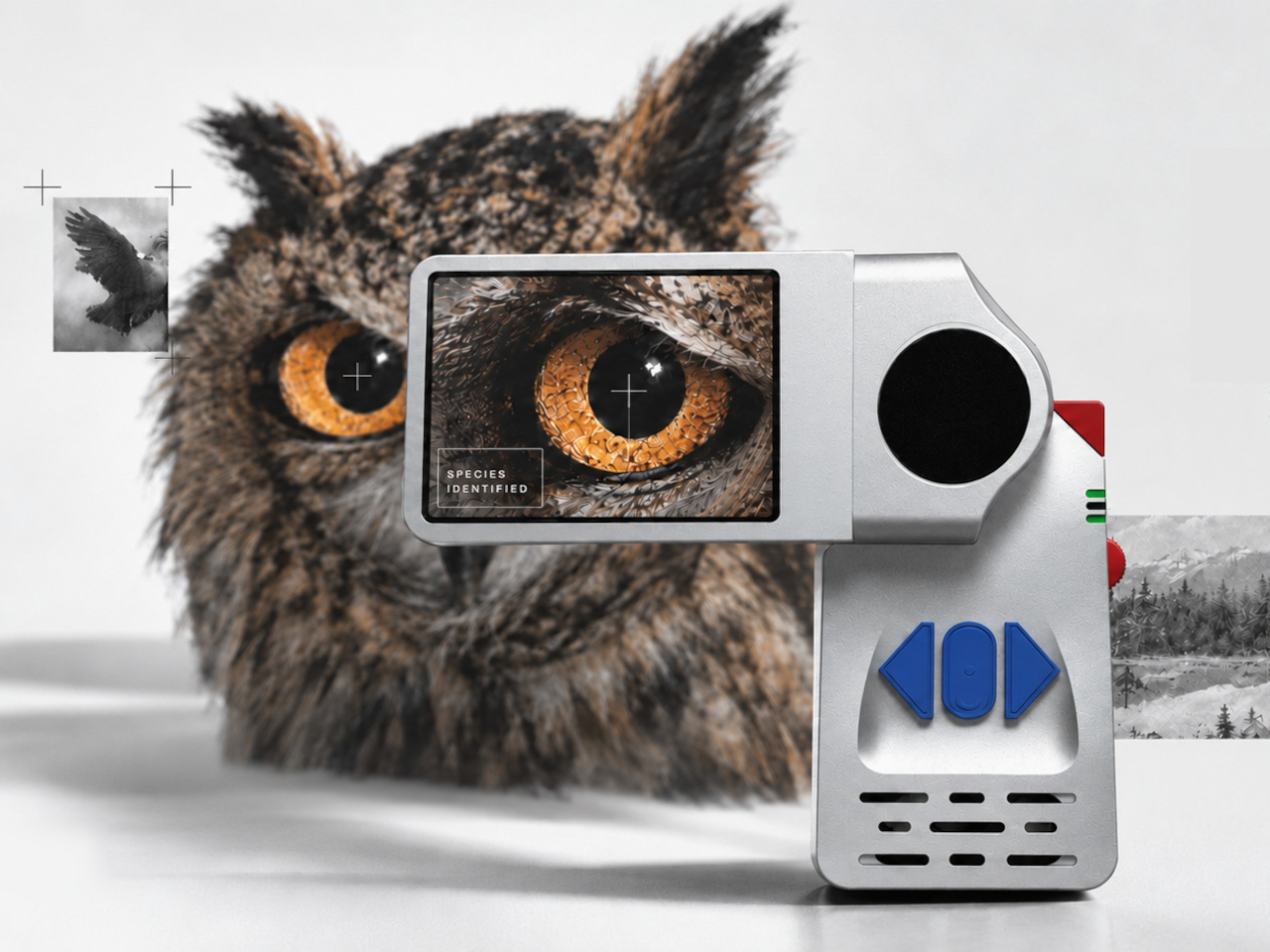
Coming across an unfamiliar bird is often the beginning of a phone search, with a few unrelated notifications along for the ride. The log handheld concept proposes a more focused companion for those moments, pairing a camera with AI-assisted species identification and a personal field log. Its folding screen turns a narrow device into an L-shaped tool for exploring what’s around you.
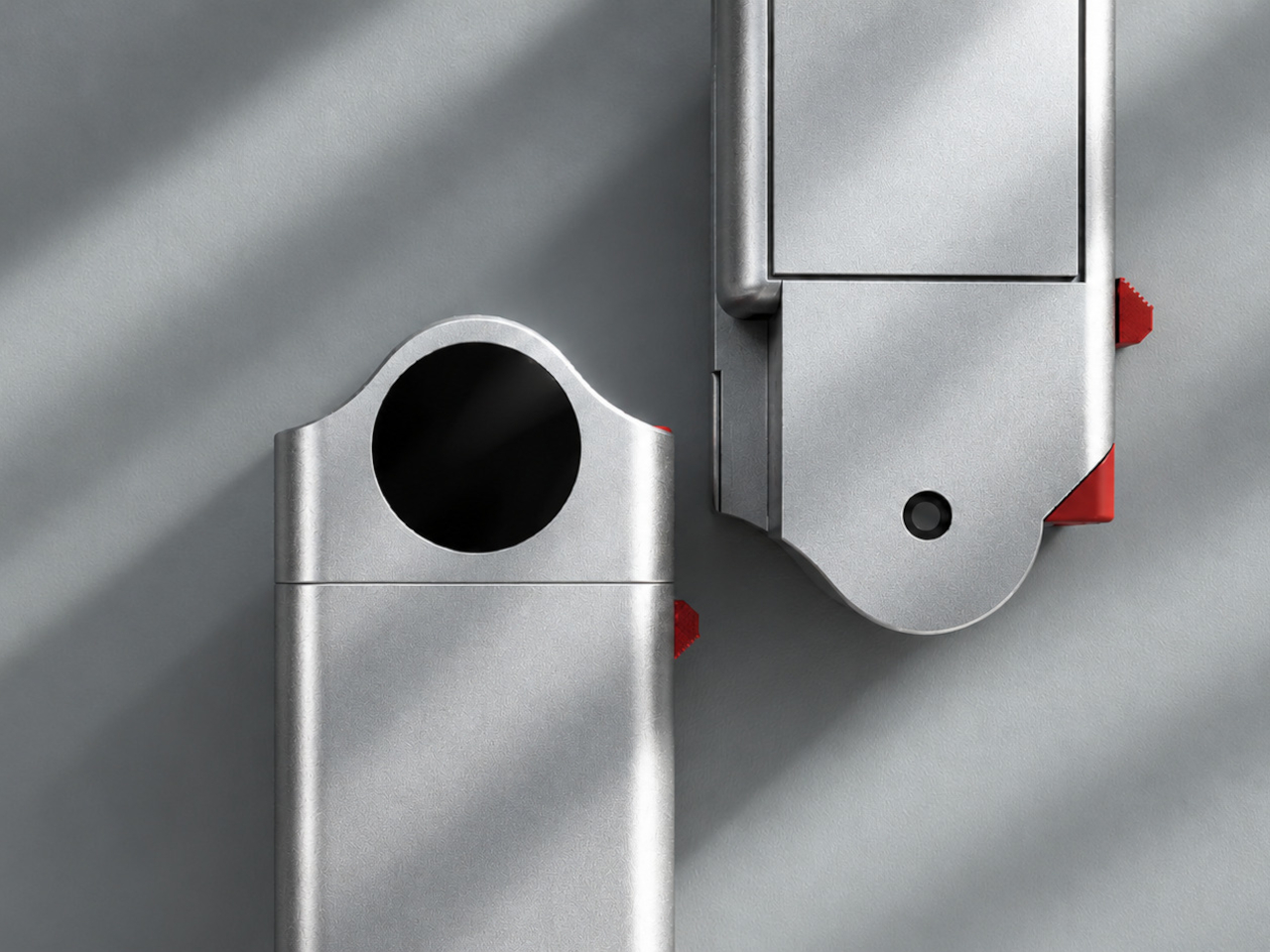
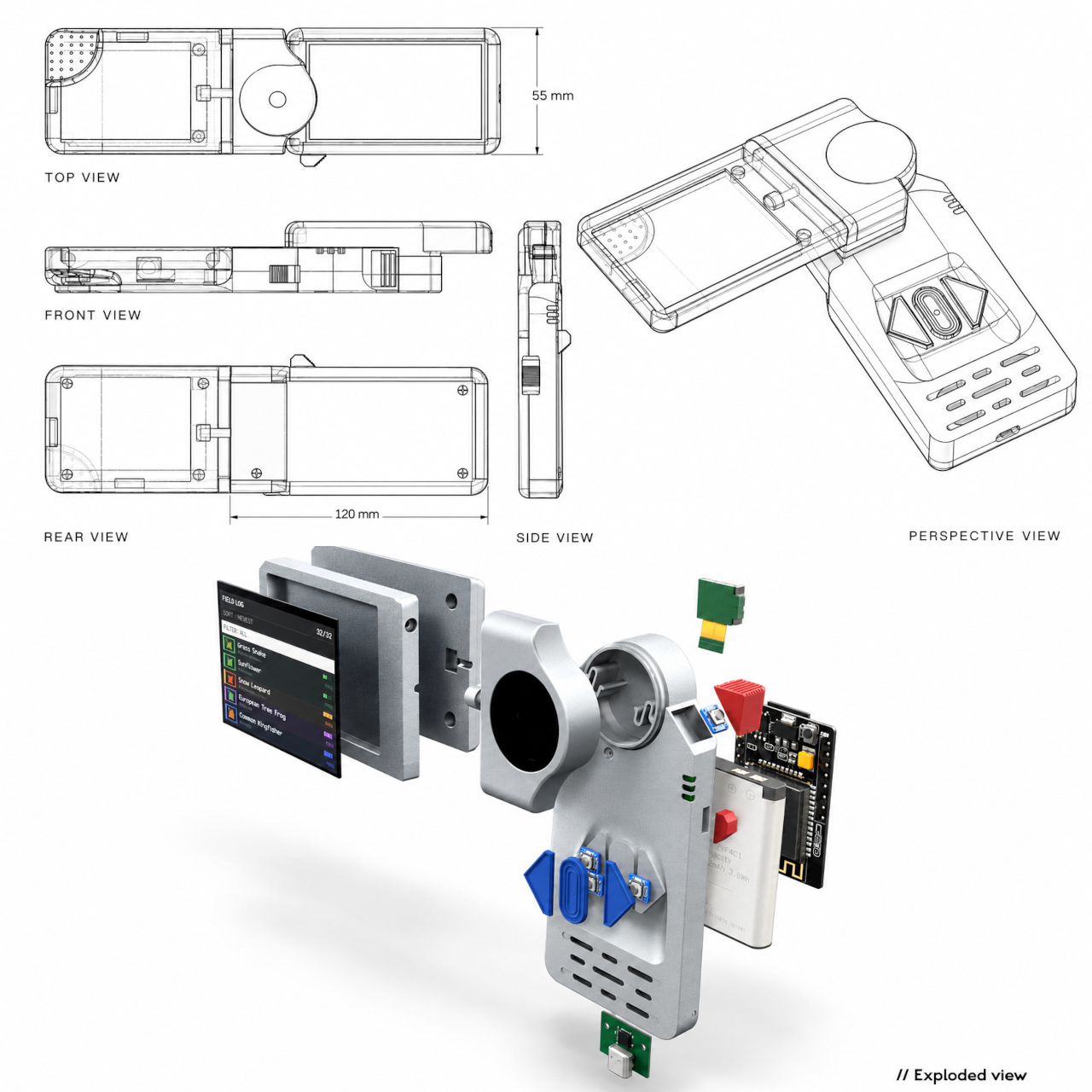
Closed, the device keeps its display folded against the body, leaving a slim rectangle with a distinctive circular joint at one end. Swing the screen outward, and it extends sideways above the grip, separating viewing from holding. That change gives the object a little of the character of an old camcorder, rather than yet another phone-shaped slab pretending to be something completely different.
Designer: Maanit Singh
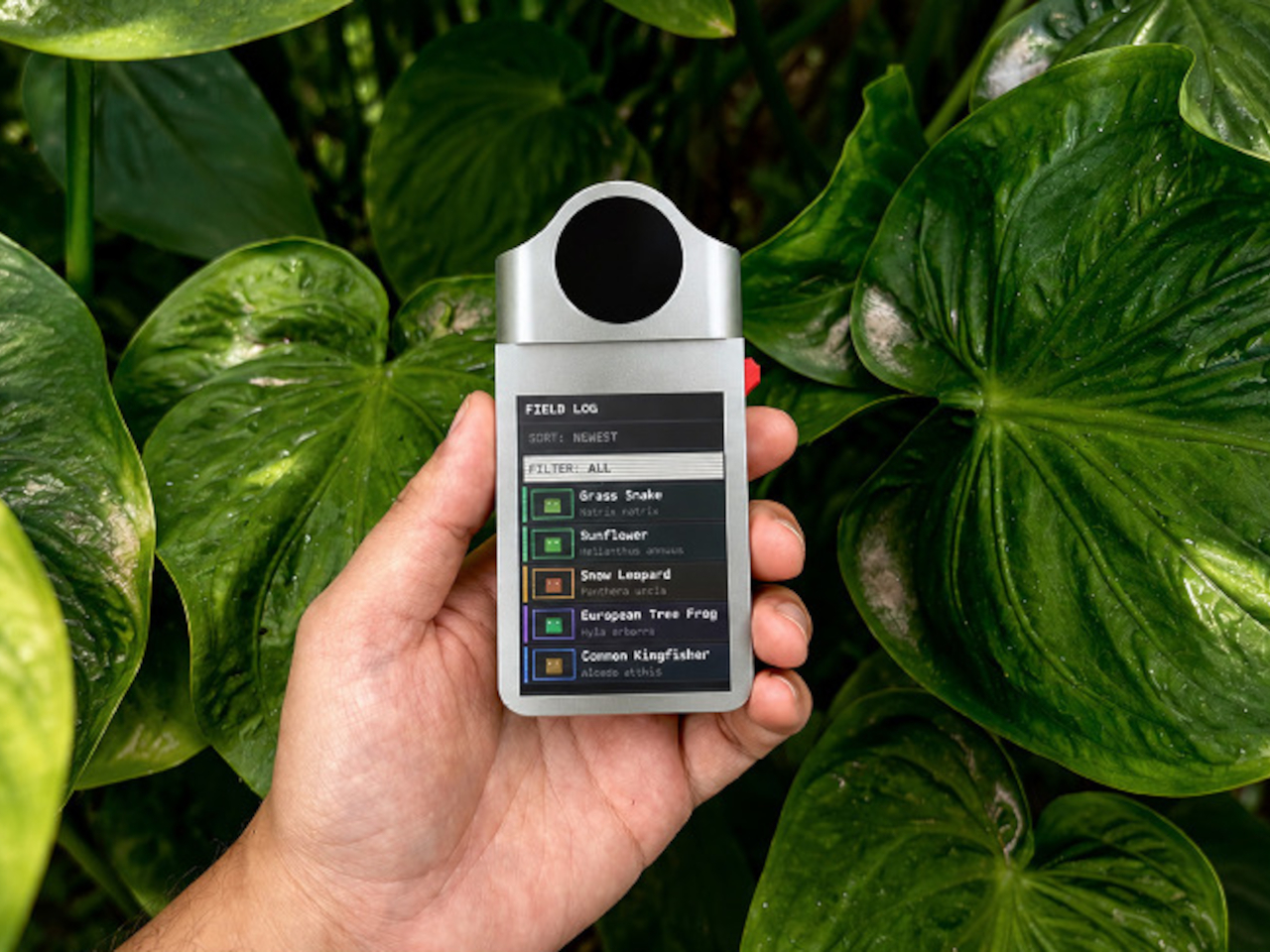
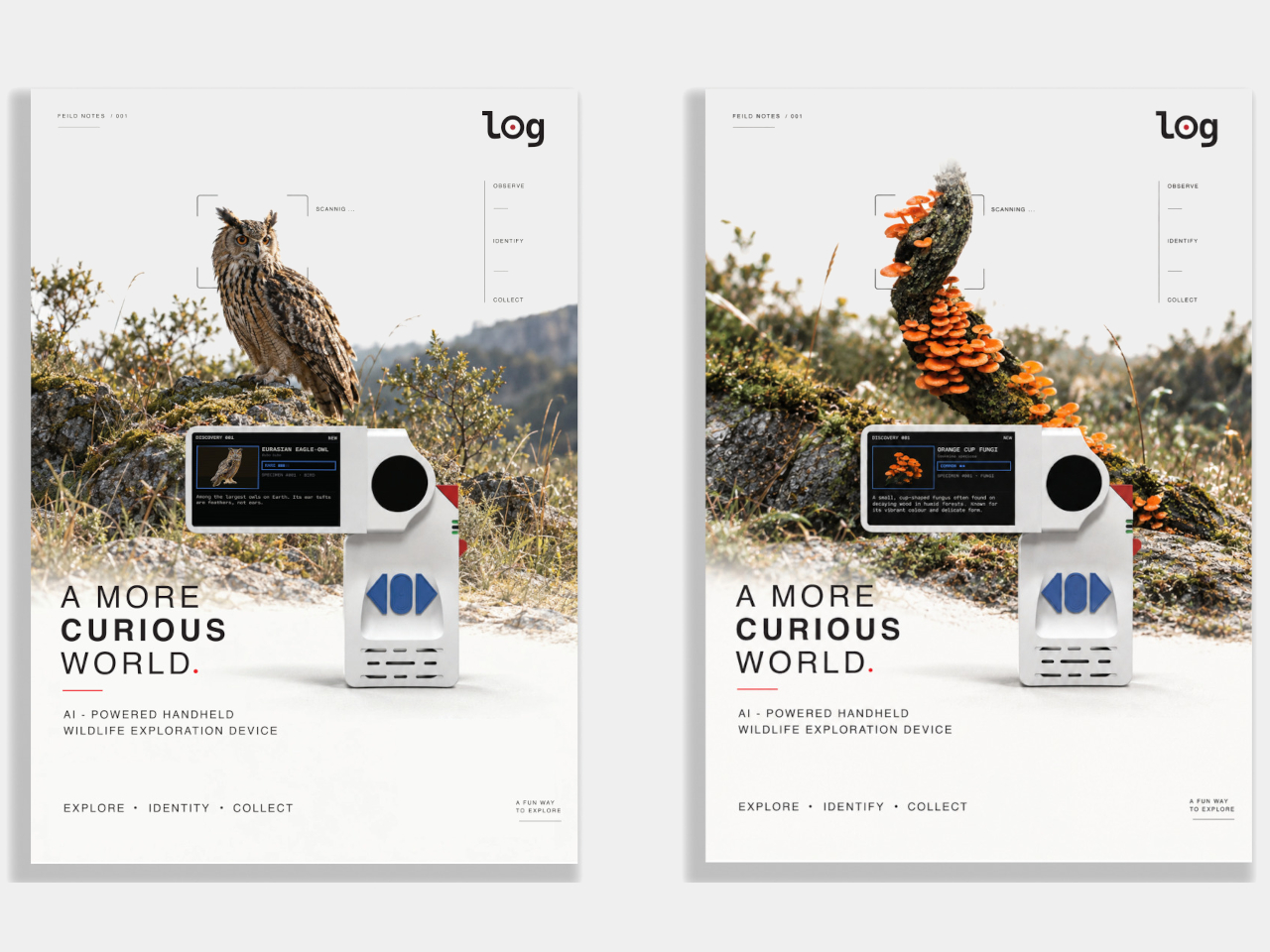
The silver-colored shell makes the controls hard to miss, with blue directional buttons set into a recessed area and red accents along the side. Their shapes suggest a device you operate by pressing rather than constantly swiping. For someone pausing beside a trail, that could mean keeping navigation under a thumb while the image stays visible on the separate screen above your hand.
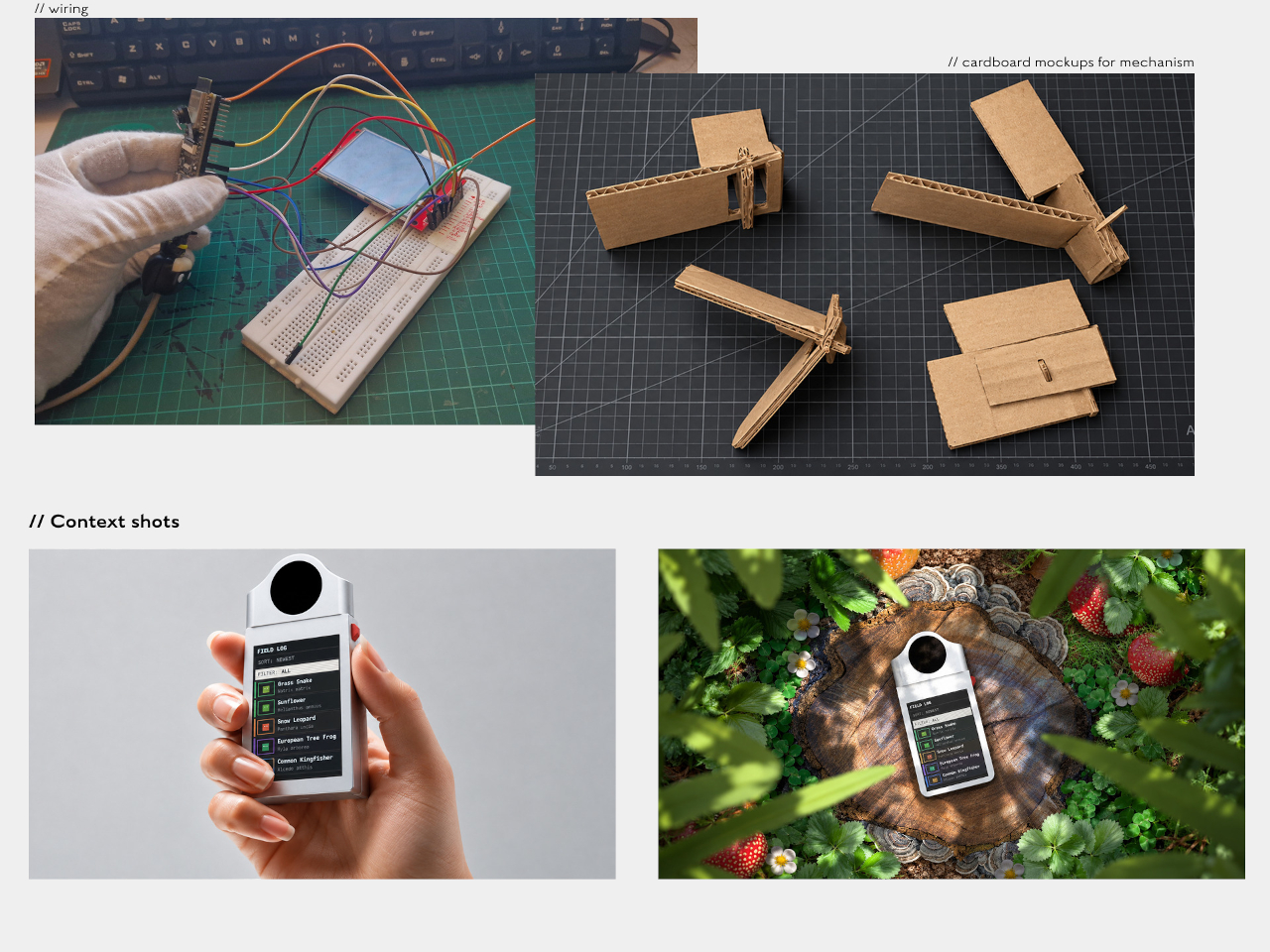
An unfamiliar flower or a bird on a branch would give that arrangement something to work with. The proposed interface pairs a photograph with identification information, then organizes encounters in a field log. Instead of leaving every sighting buried among screenshots and lunch photos, you’d have a dedicated collection to revisit, turning a short walk into something you can keep exploring afterward.


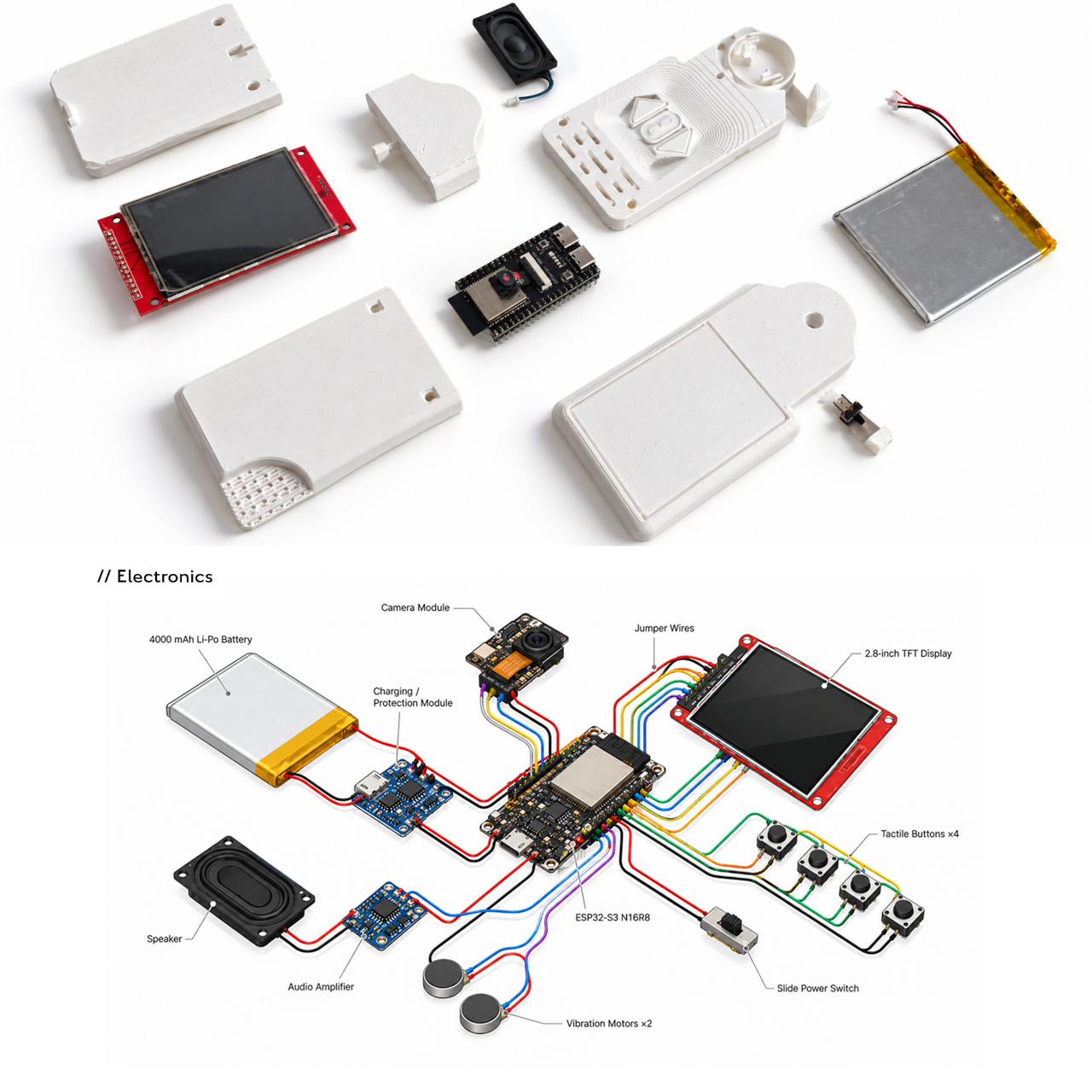
The proposed electronics include an ESP32-S3 controller, a camera module, a 2.8-inch TFT display, and a 4,000mAh battery. A speaker and two vibration motors suggest sound and tactile feedback could accompany the screen, although their exact behavior isn’t explained. That gives the concept more ways to get your attention than a visual prompt alone, potentially useful while you’re concentrating on something moving.
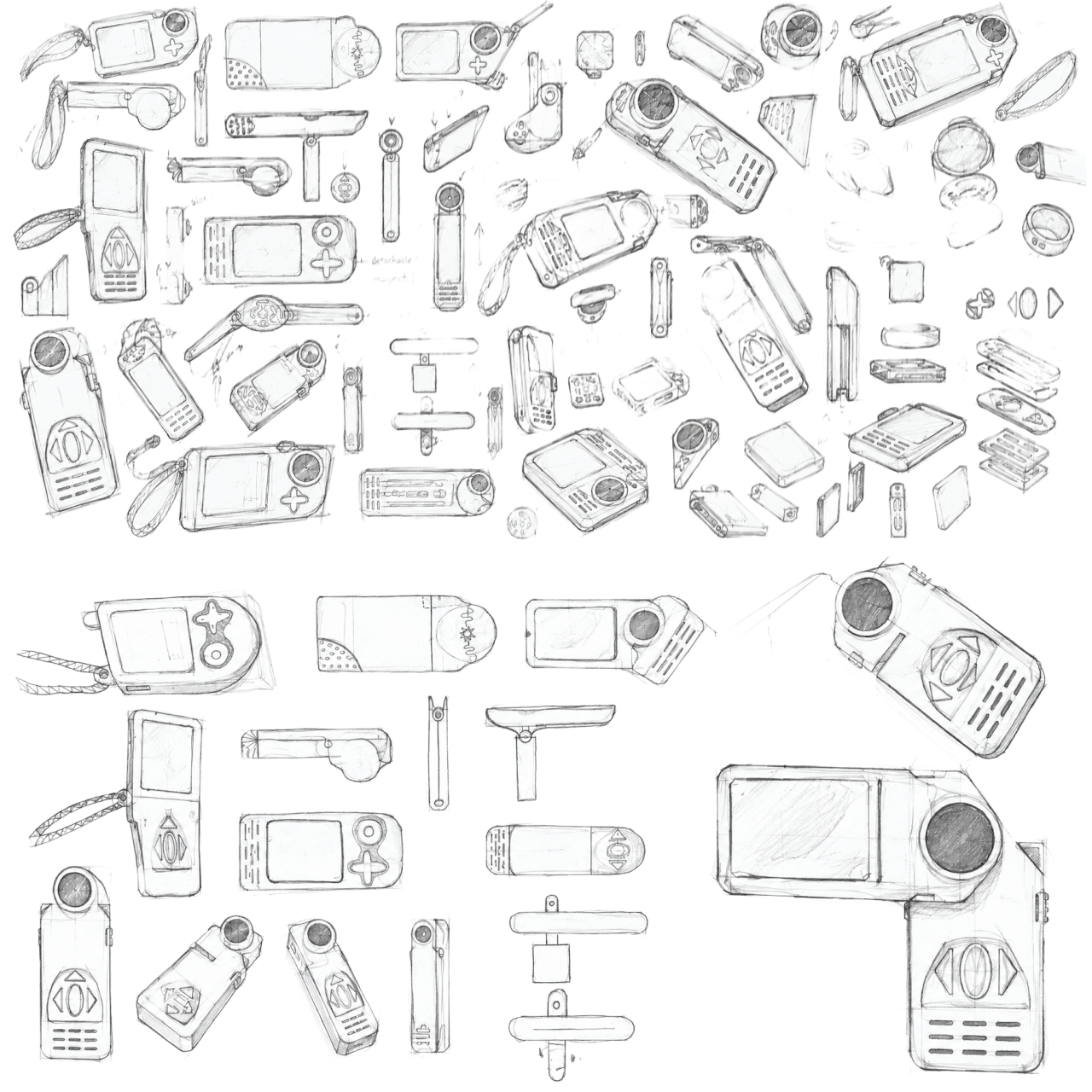
There’s some physical development behind the concept, including wired electronics, cardboard hinge studies, and a 3D-printed housing. Those experiments focus attention on the moving joint, which has to do more than make the device look unusual. It also needs to support a screen while someone holds the grip, then let the two sections return to a compact shape when the walk is over.
The AI side needs more caution than the friendly hardware suggests. The presentation doesn’t establish identification accuracy or explain whether recognition requires an internet connection. A species name on a screen should be a starting point for learning, not an unquestionable answer. That distinction matters especially with fungi and plants, where recognizing a resemblance isn’t the same as knowing what’s safe.
A dedicated nature gadget still has to earn the pocket space that a phone already occupies. With log, the distinction lies in the ritual of opening a tool built around observing and recording, rather than jumping into another app. You’d still be looking at a screen, of course. The hope is that you’d put it away with a better reason to look up.