In 1934, a BMW designer named Alfred Böning built a motorcycle so far ahead of its time that BMW itself did not know what to do with it. The R7 wrapped its entire mechanical guts in smooth, pressed steel bodywork shaped by Art Deco geometry, and it was so expensive and so strange next to the “bicycle with a motor” norms of the era that BMW shelved the one and only unit, crated it up, and basically forgot it existed. It sat lost in a warehouse until someone rediscovered it in 2005. It took until 2012, and a full restoration by Hans Keckeisen, for the world to actually see what Böning had been sitting on for seven decades, and it walked away with best in class at Pebble Beach the moment it did.
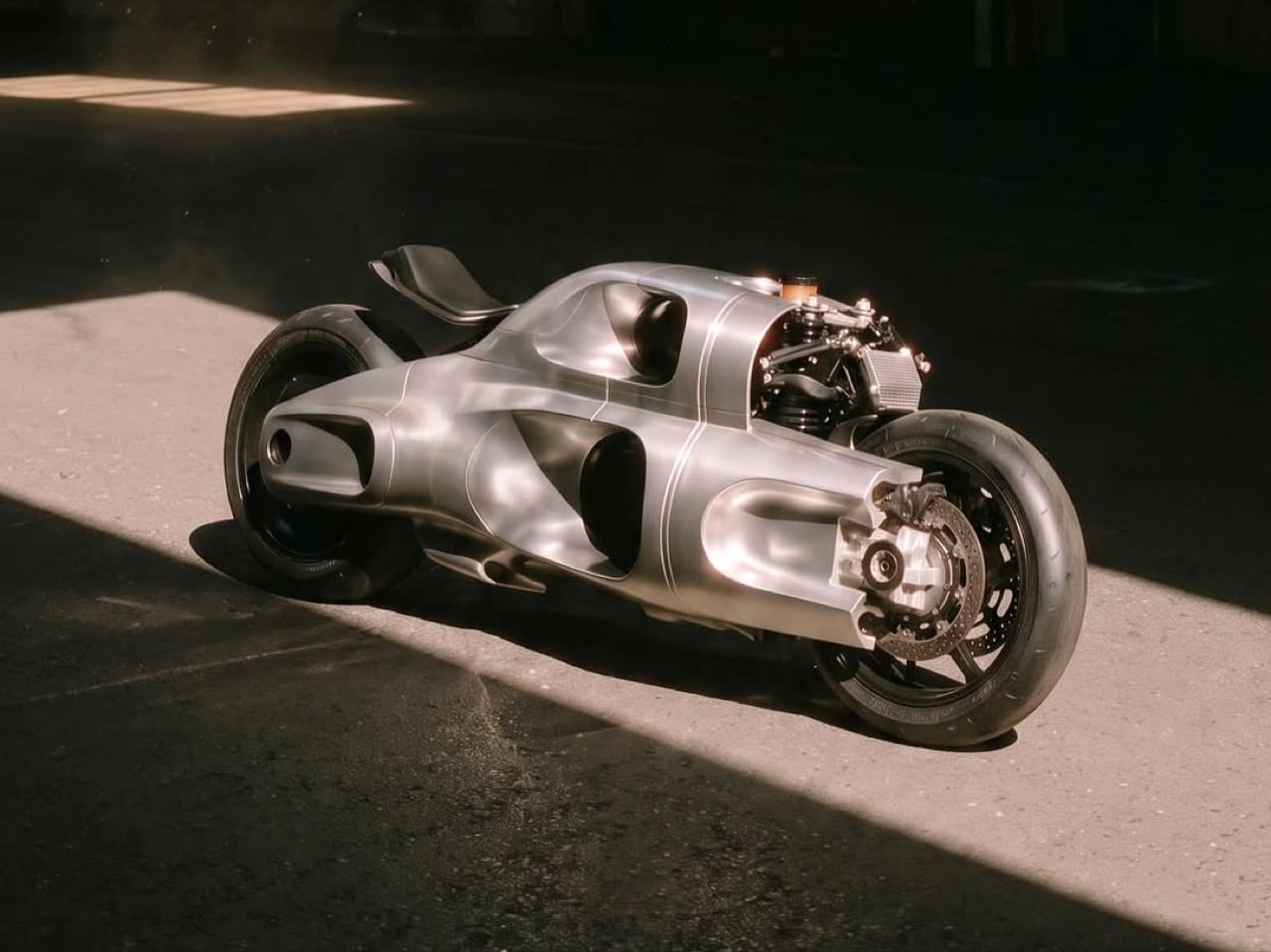
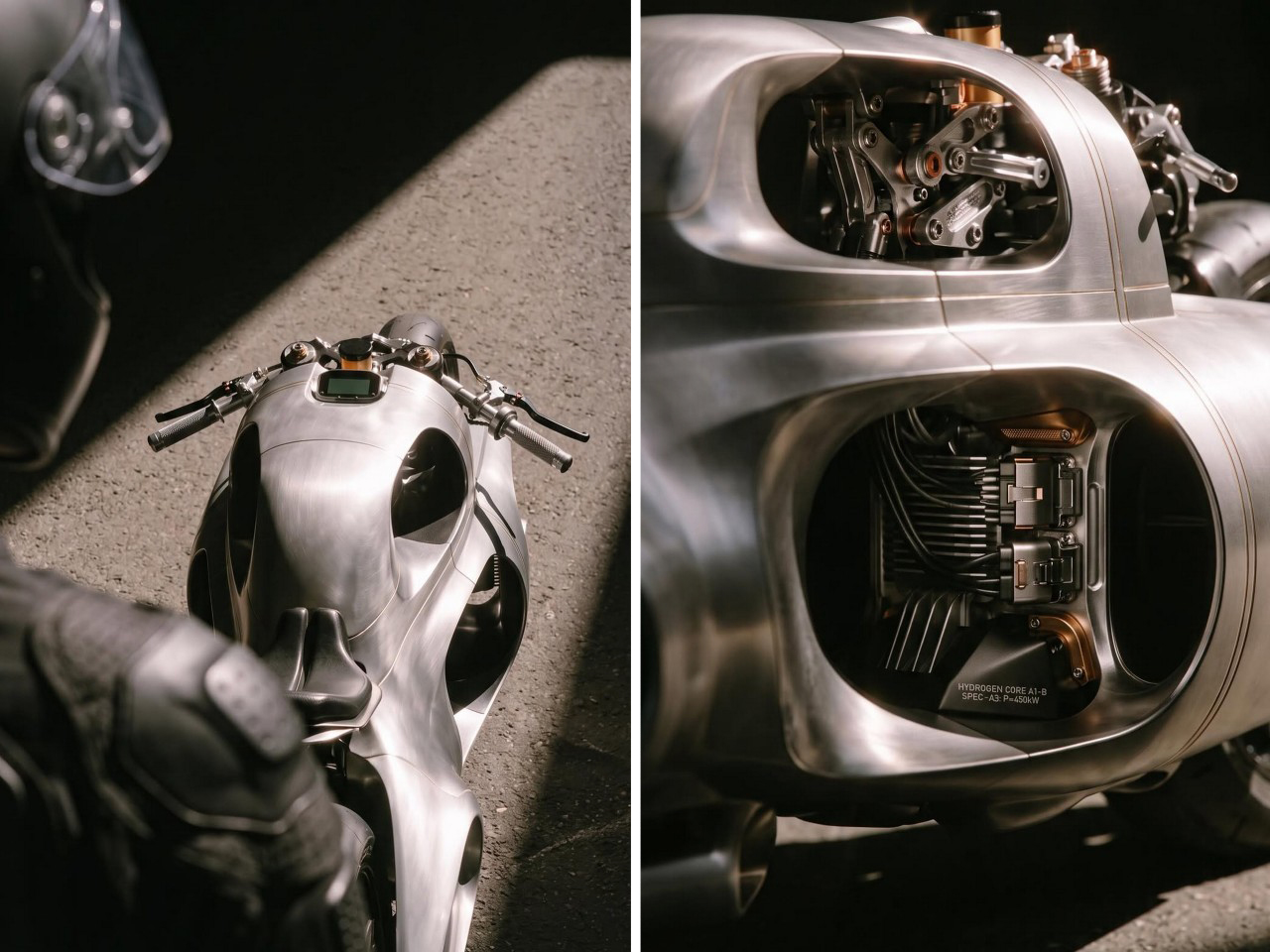
I bring this up because REV-1 feels like the same idea getting a second shot, minus the eight decades of waiting around in a crate. Designer Lennart Baramsky has wrapped a hydrogen powertrain in one continuous, hand-formed aluminum shell with barely a shut line in sight, badged simply REV-1 on the flank. There is no traditional fork, no fairing bolted over a chassis, just one sculpted metal body with cutouts carved through it like a machine that grew its own windows. Böning would probably recognize the impulse immediately, even if the engineering underneath has changed a lot in ninety years.
Designer: Lennart Baramsky
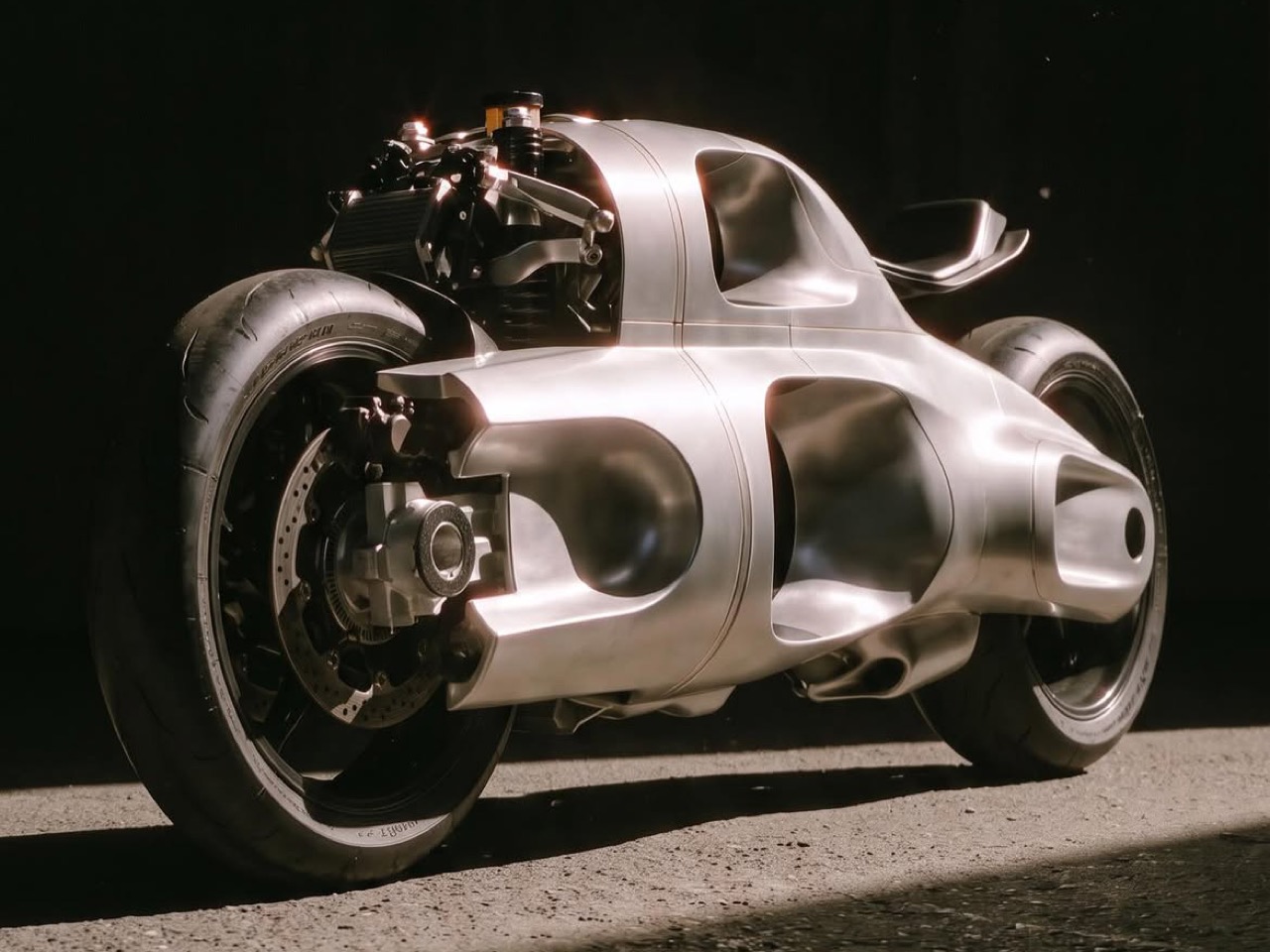
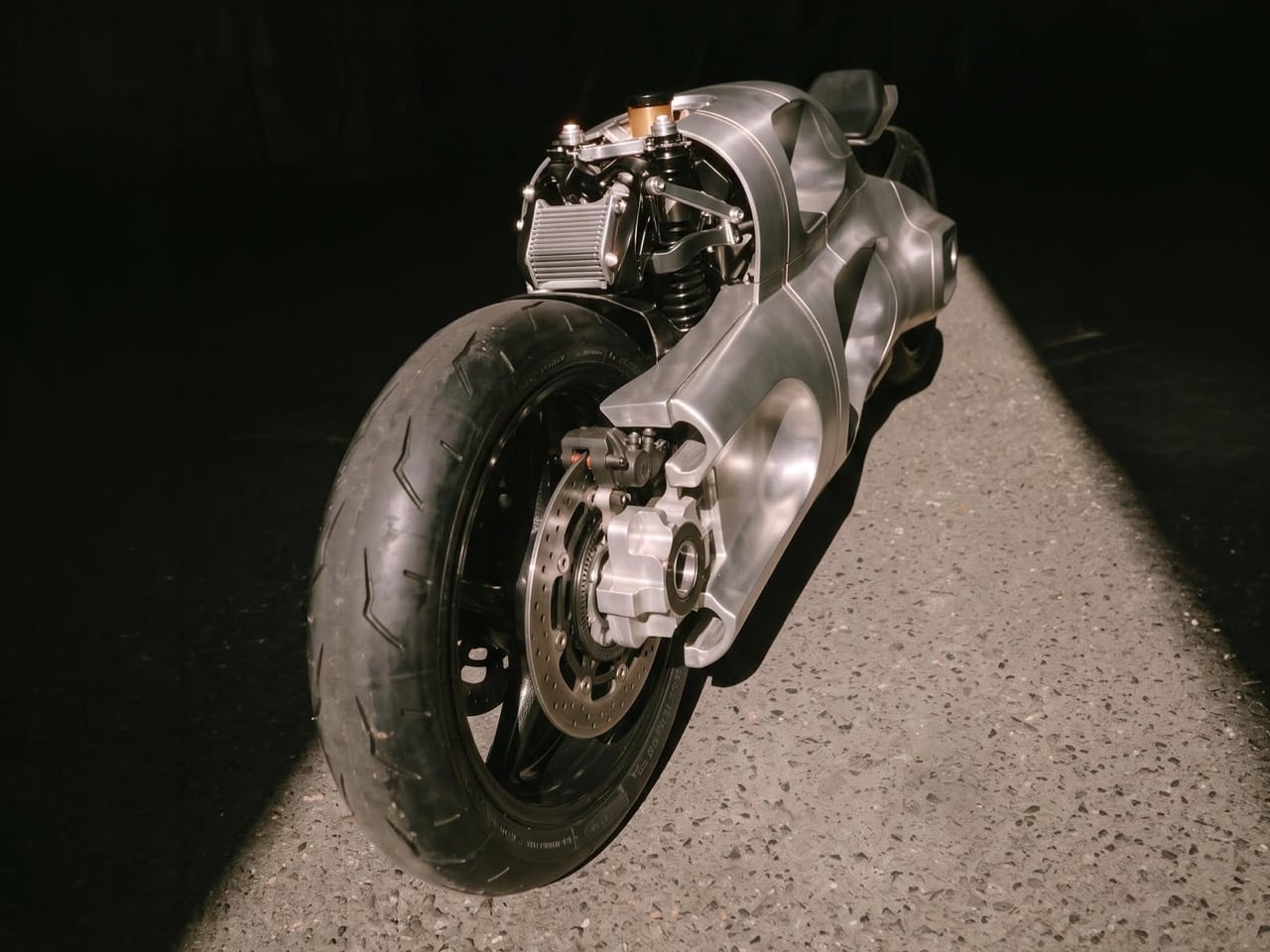
The front end is the part that stops you. Instead of a telescopic fork, there is a linkage setup, rod ends, a rocker arm, and a coilover mounted almost flat against the body, the same basic family of idea behind hub-center designs like the Bimota Tesi or the BMW Duolever we have covered on this site before, except here it disappears into the bodywork so completely you have to squint to find where the suspension actually lives. That single design decision does more to sell the “grown, not built” read of this bike than anything else on it.
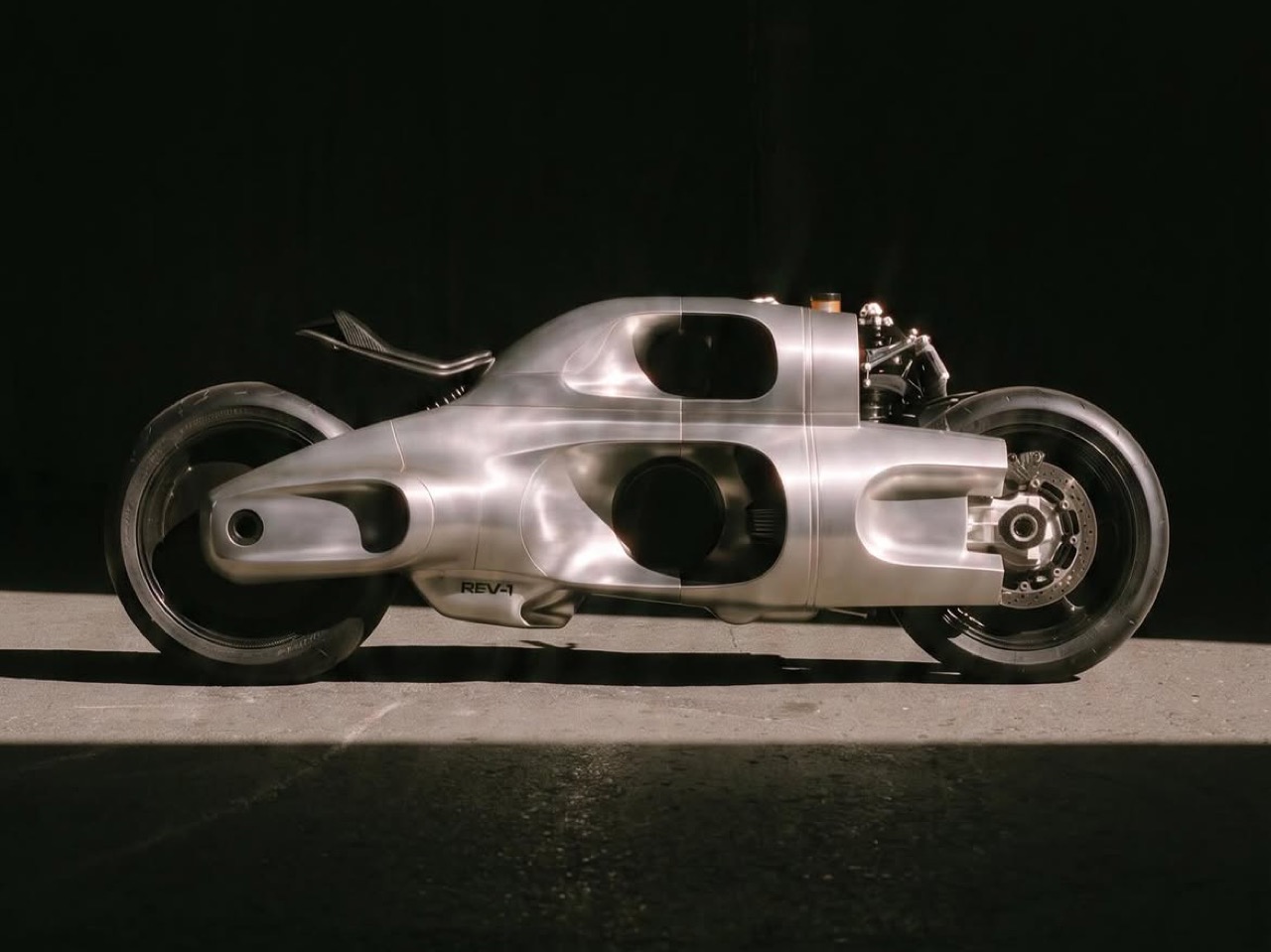
The badge on the tank claims a 450kW hydrogen core, and I want to be honest about what that number means in context. The most advanced real hydrogen motorcycle running today, Kawasaki’s Ninja H2 HySE, went public at Suzuka in 2024 making nowhere near that figure, and hydrogen fuel cell scooters like Suzuki’s Burgman have spent over a decade proving out the tech at a fraction of REV-1’s claimed output. That is not a knock on the design. It is a reminder that this is a concept badge doing concept badge things, the same way we flagged when covering Bandit9’s aluminum and carbon fiber Ducati builds that a beautiful shell does not always mean a buildable one.
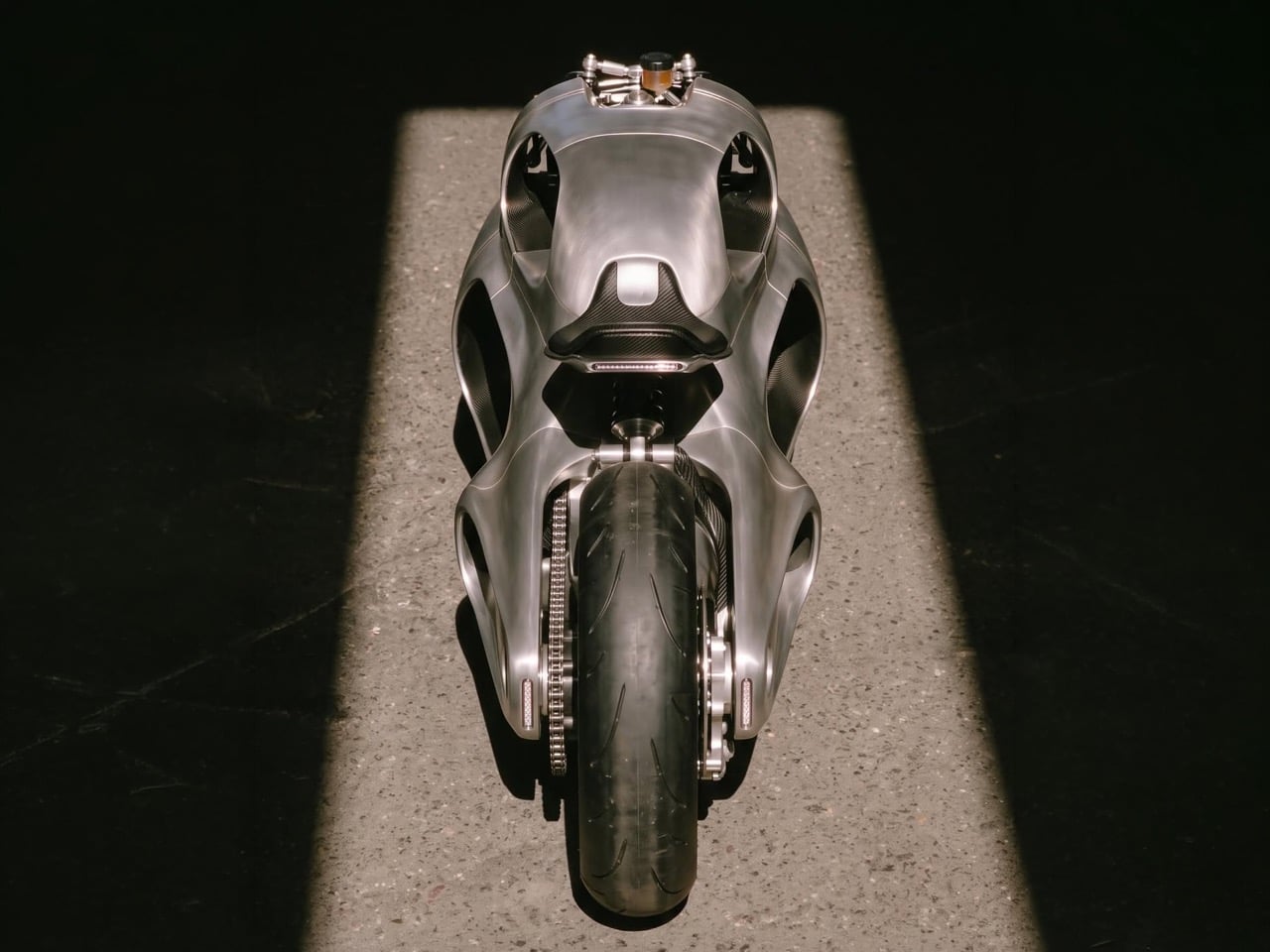
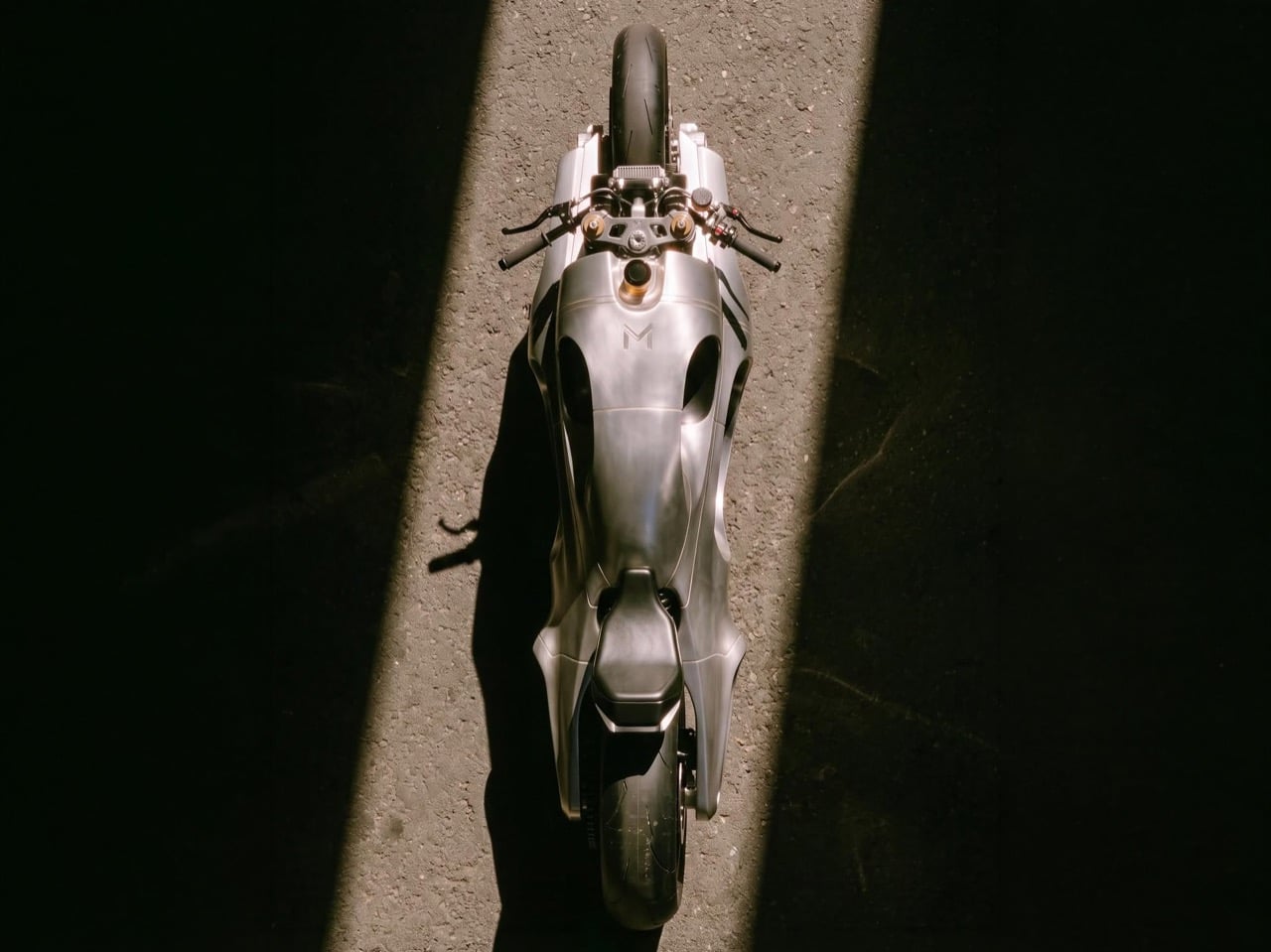
What REV-1 actually nails is the argument that a motorcycle can be one object instead of a pile of bolted-together ones. Böning tried to make that case in 1934 and got a crate for his trouble. Baramsky is making it again in an era with hydrogen fuel cells and render engines good enough to sell the illusion completely, and whether or not this thing ever turns a wheel in real life, the shape has already done its job.
SHARE