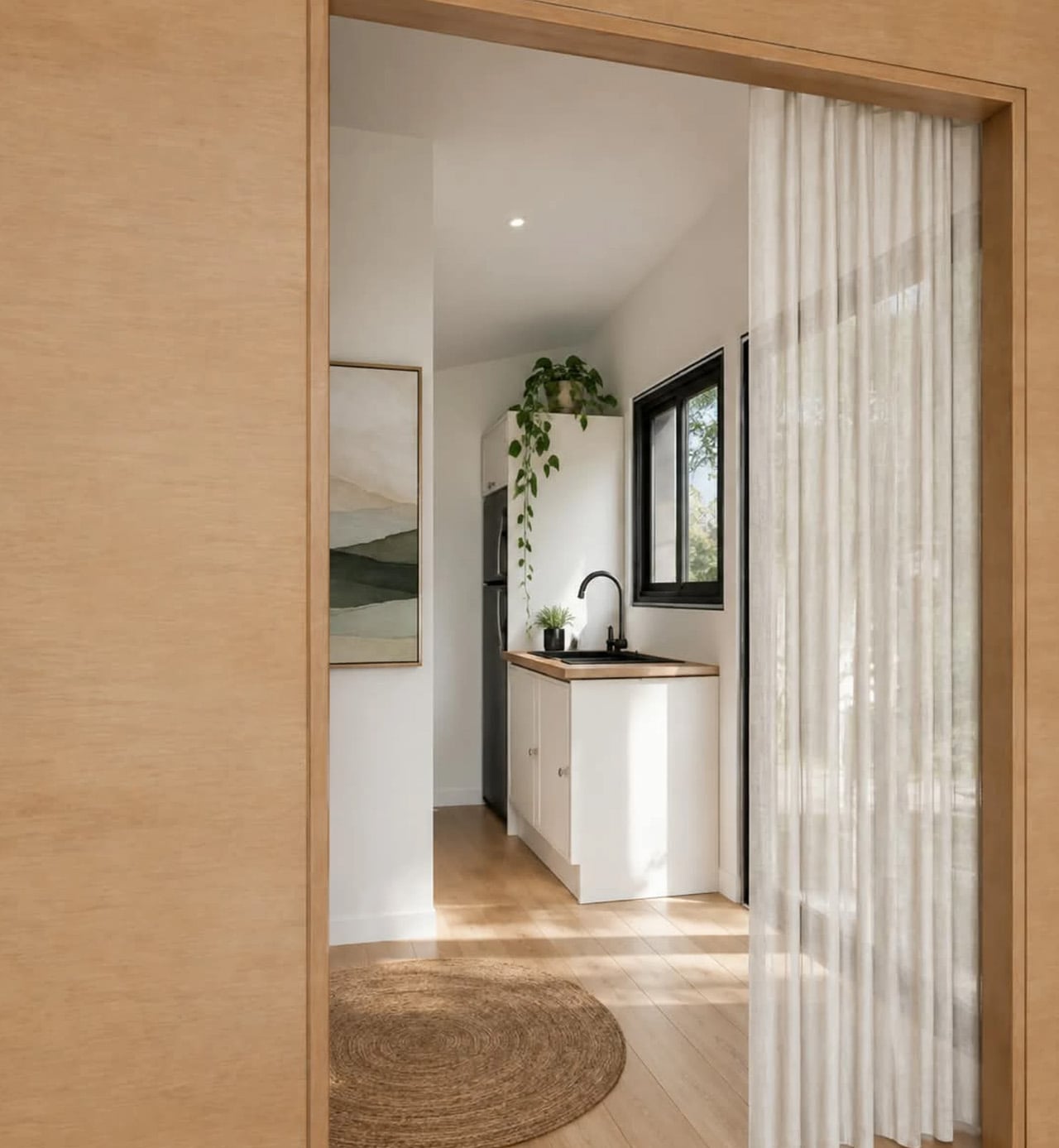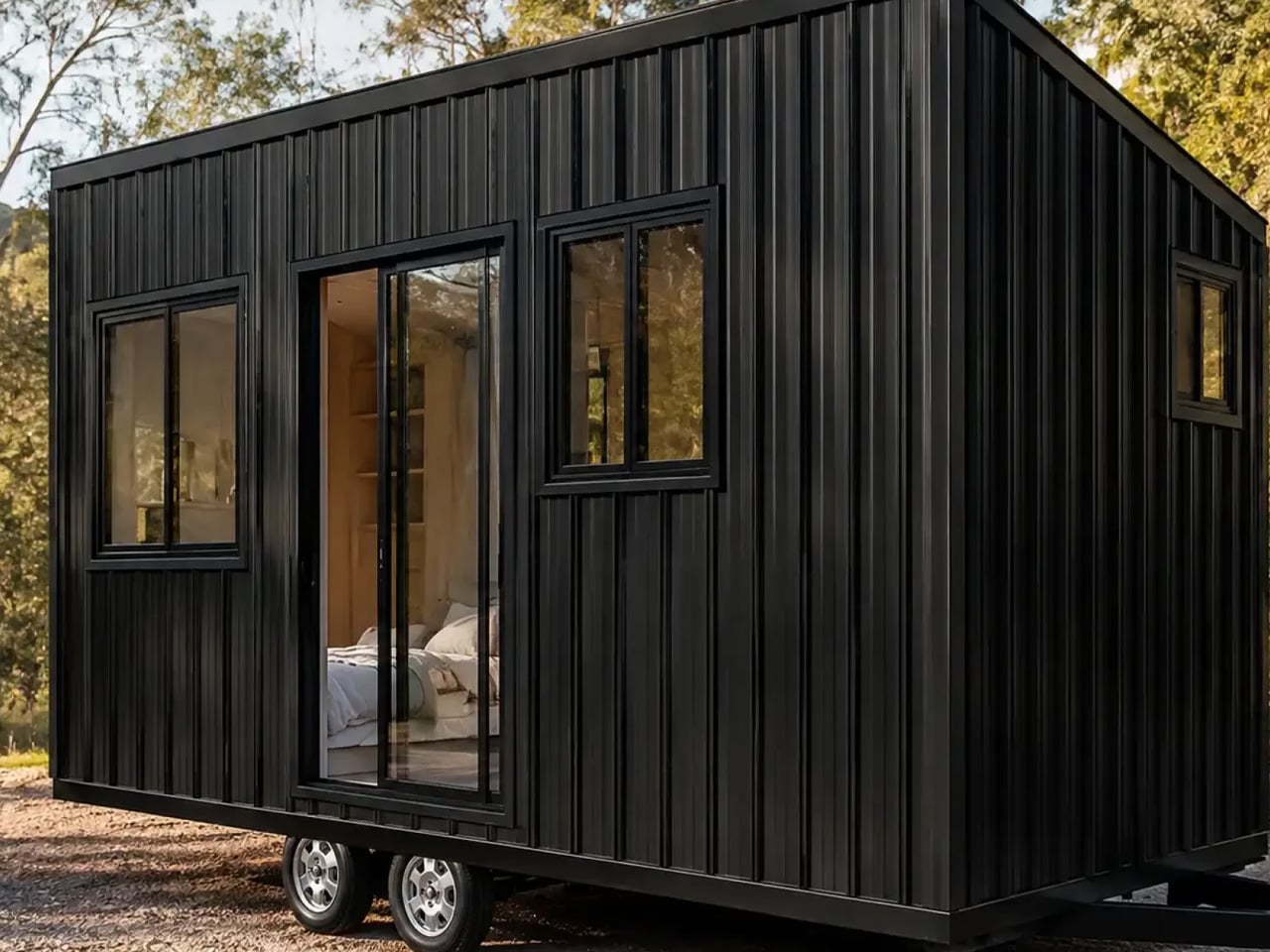
Tiny Tect Tiny Houses, the Queensland-based builder run by husband-and-wife team Ben and Alison, has a new model rolling toward completion, and it’s the smallest one yet in its Nido lineup. Designed by Australia’s Tiny Tect Tiny Houses, the model shown is finished in black metal and based on a double-axle trailer, and though its name references its length, for the metric-averse this shakes out at just 18 feet. That’s the Nido 5.5, and it’s the compact entry point into a family of homes that has already built a reputation for turning small footprints into livable, design-forward spaces.
The Nido 5.5 m model is currently under construction and is due to be completed in October. The moody black exterior is a signature move for the brand. Its larger sibling, the Nido 7m, wears the same shadowclad cladding, the kind of finish that reads industrial from the street and warm once you’re inside, a trick a lot of tiny home builders reach for but few pull off with this much restraint. On an 18-foot chassis, that finish does a lot of work. It makes the home look substantial in photos while keeping the actual build light enough to tow.
Designer: Tiny Tect Tiny Houses
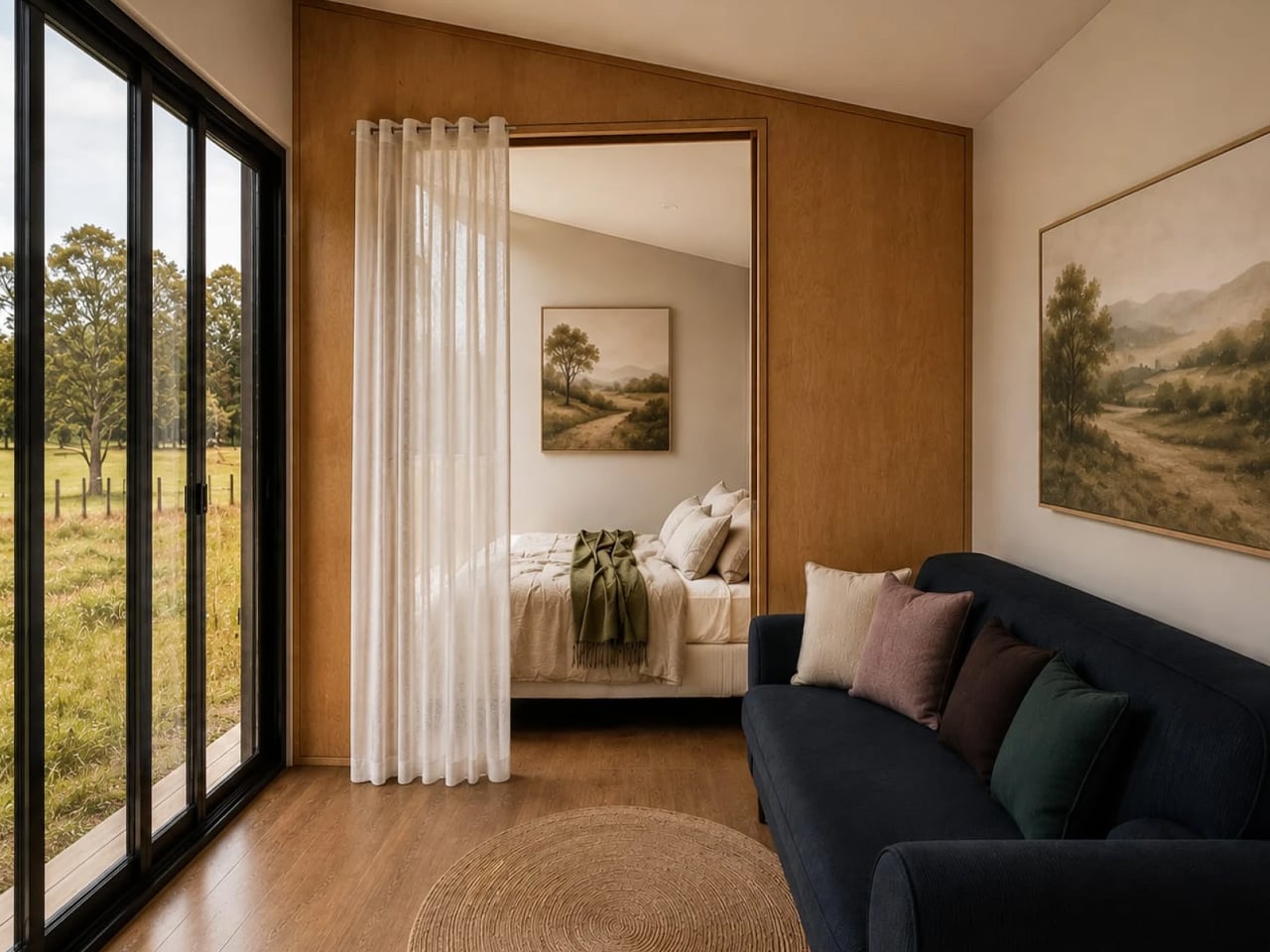
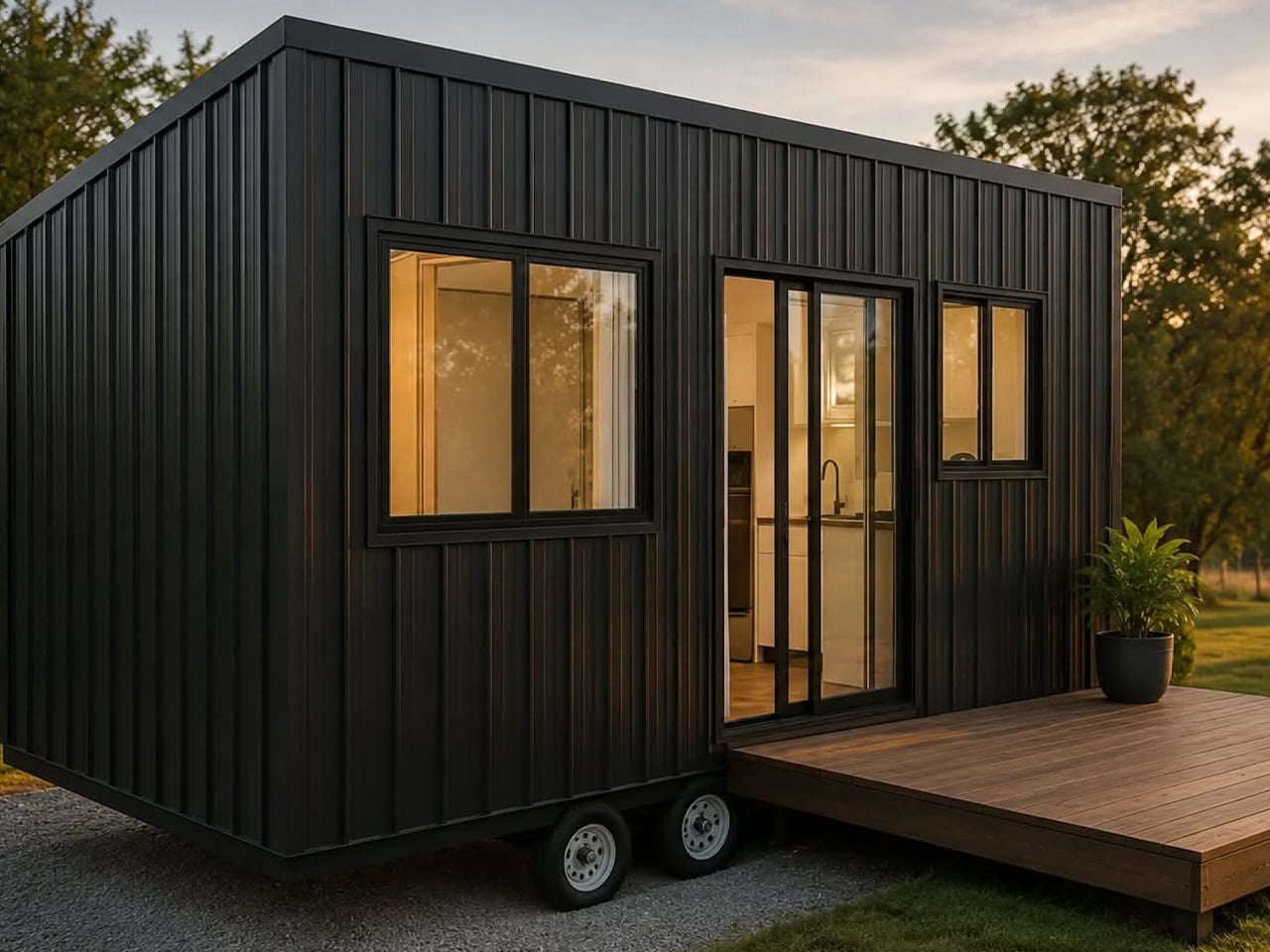
Pricing is where the Nido 5.5 separates itself from the rest of the range. It’s available for AUD 89,700 (around US$64,000), but for those who need something larger and more practical for full-time living, Tiny Tect Tiny Houses also offers an expanded version of the Nido, which has a length of 7 m (23 ft). That structure, a compact entry model with a roomier upgrade path, is smart product design as much as it is architecture. It gives buyers a reason to start small and scale up without switching builders or aesthetics.
The Nido name itself is doing quiet marketing work too. Tiny Tect built its following on the 7m Nido, a model praised for fitting a genuinely flexible floorplan and space for up to four people into a footprint most people would assume only works for one. The 5.5 doesn’t promise that same capacity, and it shouldn’t try to. It reads more like a weekender or a first foray into tiny living, a smaller bet on the same design language that made the original Nido a standout.
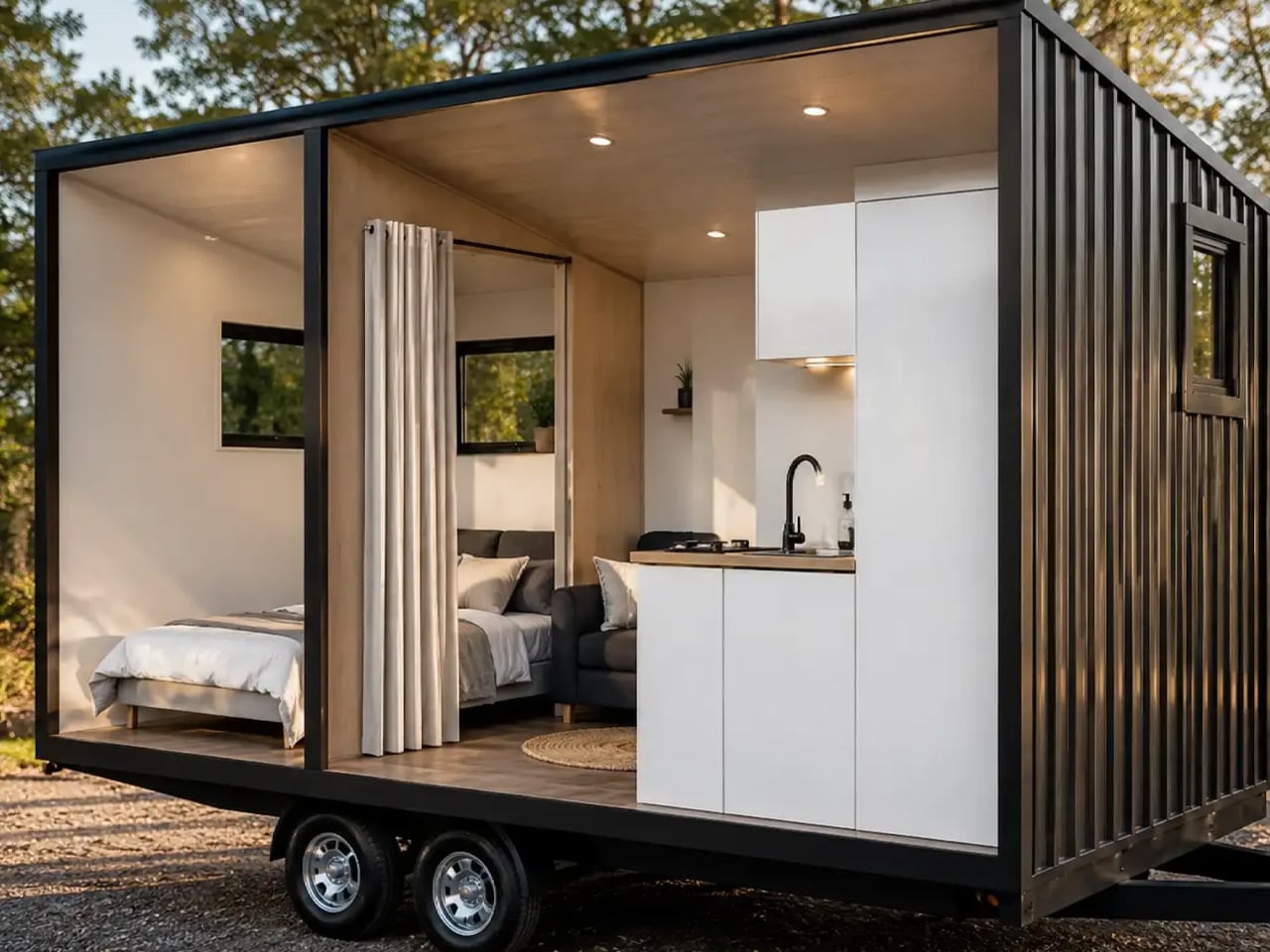
What makes the 5.5 worth watching isn’t a single headline feature. It’s the fact that a two-person architecture studio in Australia keeps finding new ways to compress the same idea- comfortable, good-looking, livable- without repeating itself. October will tell us whether the smallest Nido yet lives up to the name.