The desk lamp has been, essentially, a solved problem since Edison. A light source, a shade to direct it, and a switch. Every design evolution since then has adjusted the aesthetics or added a dimmer; the functional premise, that a lamp sits passively until pointed and switched, has remained largely untouched for more than a century. Watti is an attempt to challenge that premise at every level, simultaneously and on purpose.
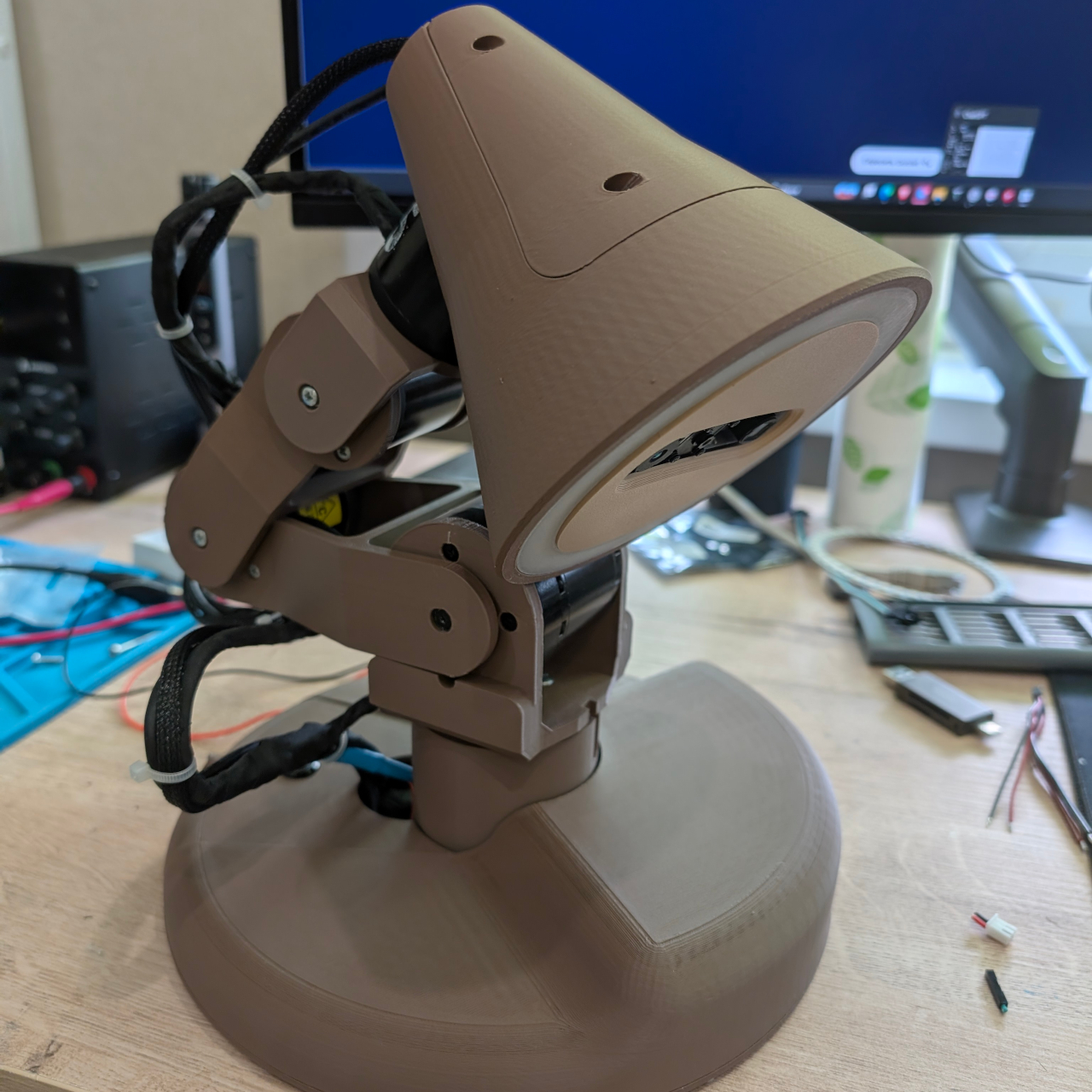
At first glance, Watti reads as a robotic arm that happens to have a light on the end. Five independently motorized axes control the base, shoulder, elbow, neck, and head, each driven by a RobStride motor that reports its position back to the computer. That range of motion gives the lamp the articulation of a traditional Anglepoise-style design, except it can get there on its own with measured precision.
Designer: Nikolay Tyulkin
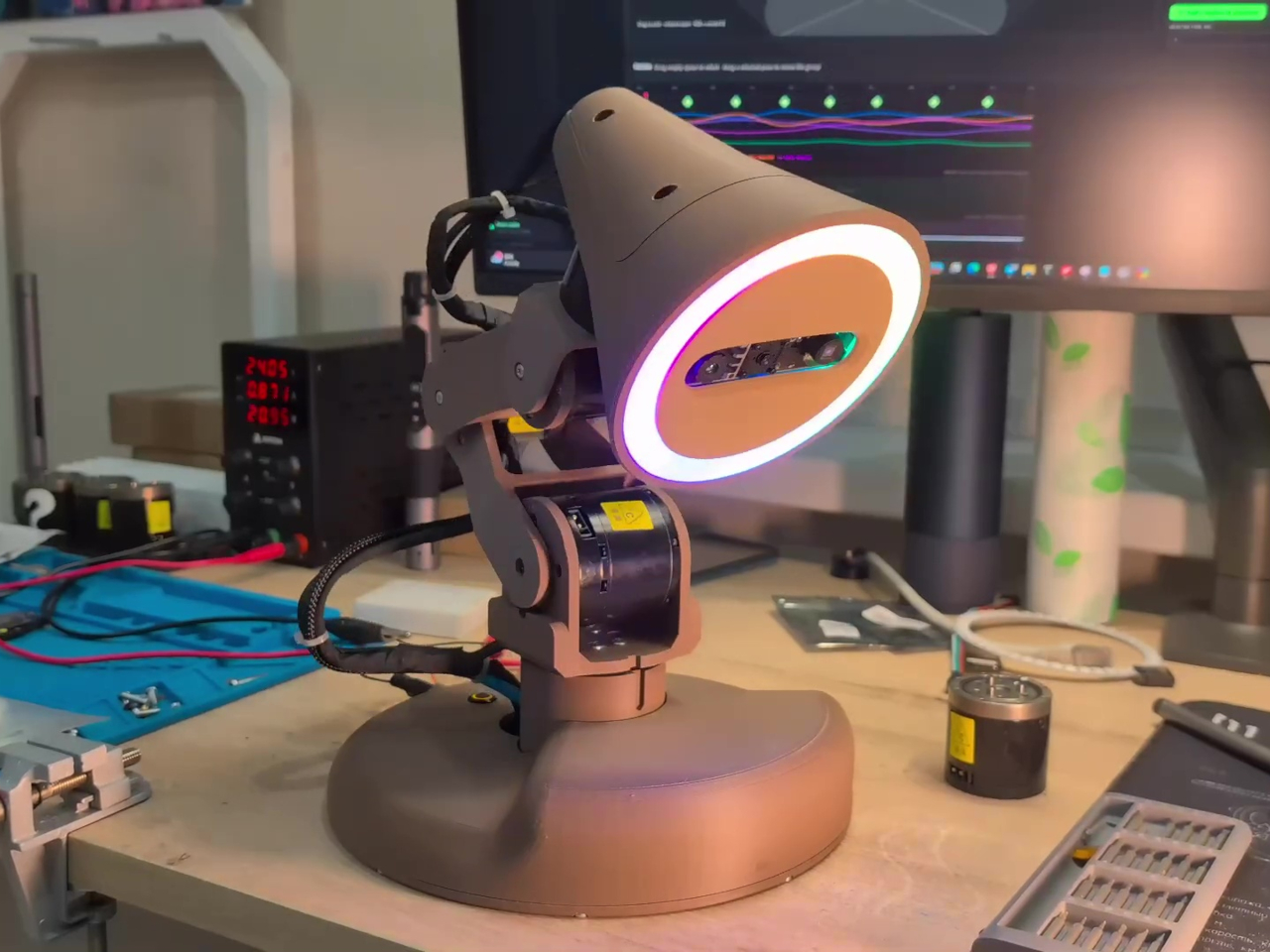
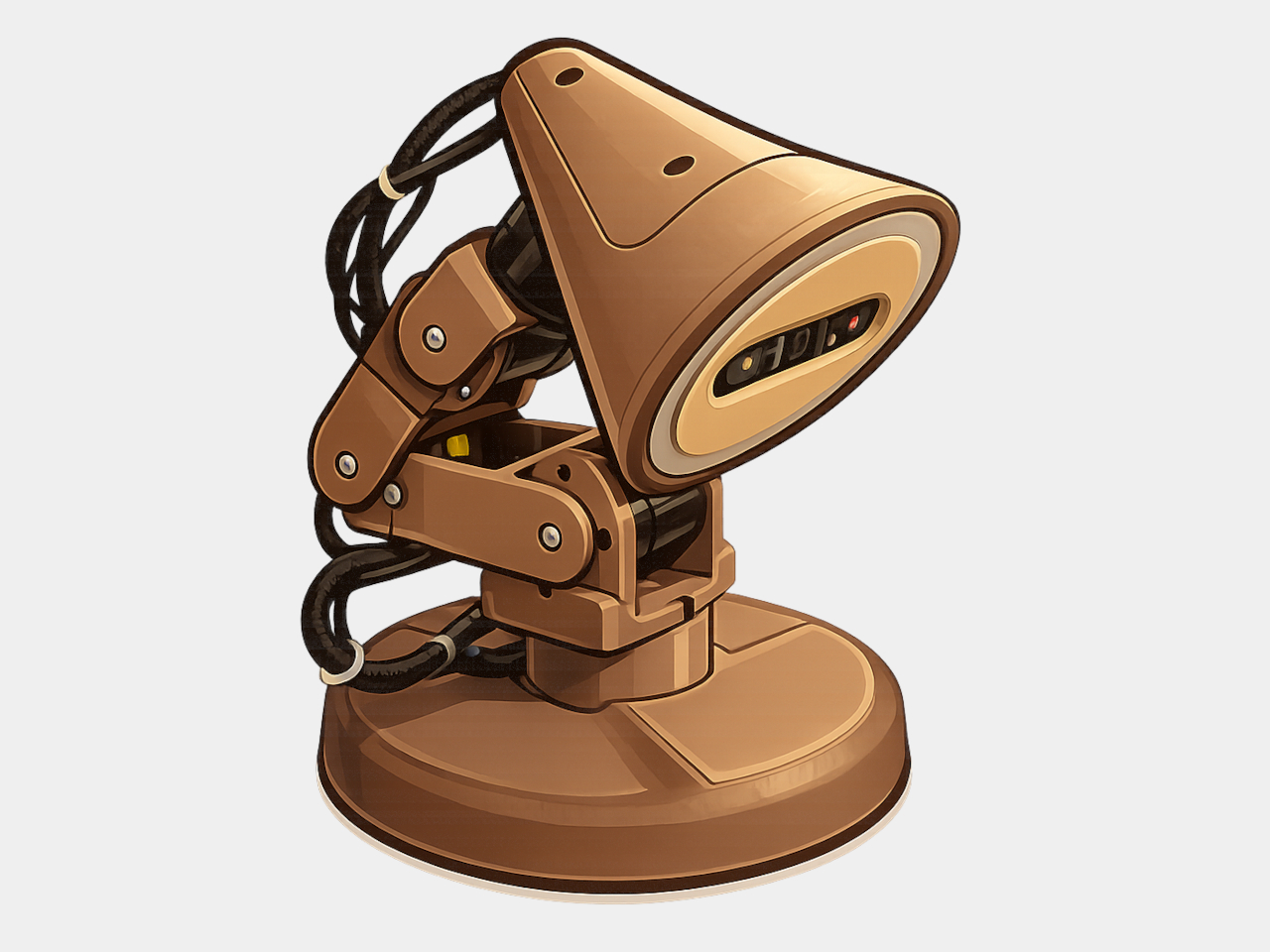
A ring of 45 individually addressable WS2812 RGB LEDs provides the actual light output, and a Raspberry Pi 5 running ROS 2 coordinates the whole system. The camera is what separates Watti from a sophisticated motorized fixture. An Orbbec Astra Mini S captures both color and depth data at 640×480 resolution and 30 frames per second, giving the system a three-dimensional view of whatever sits in front of it.
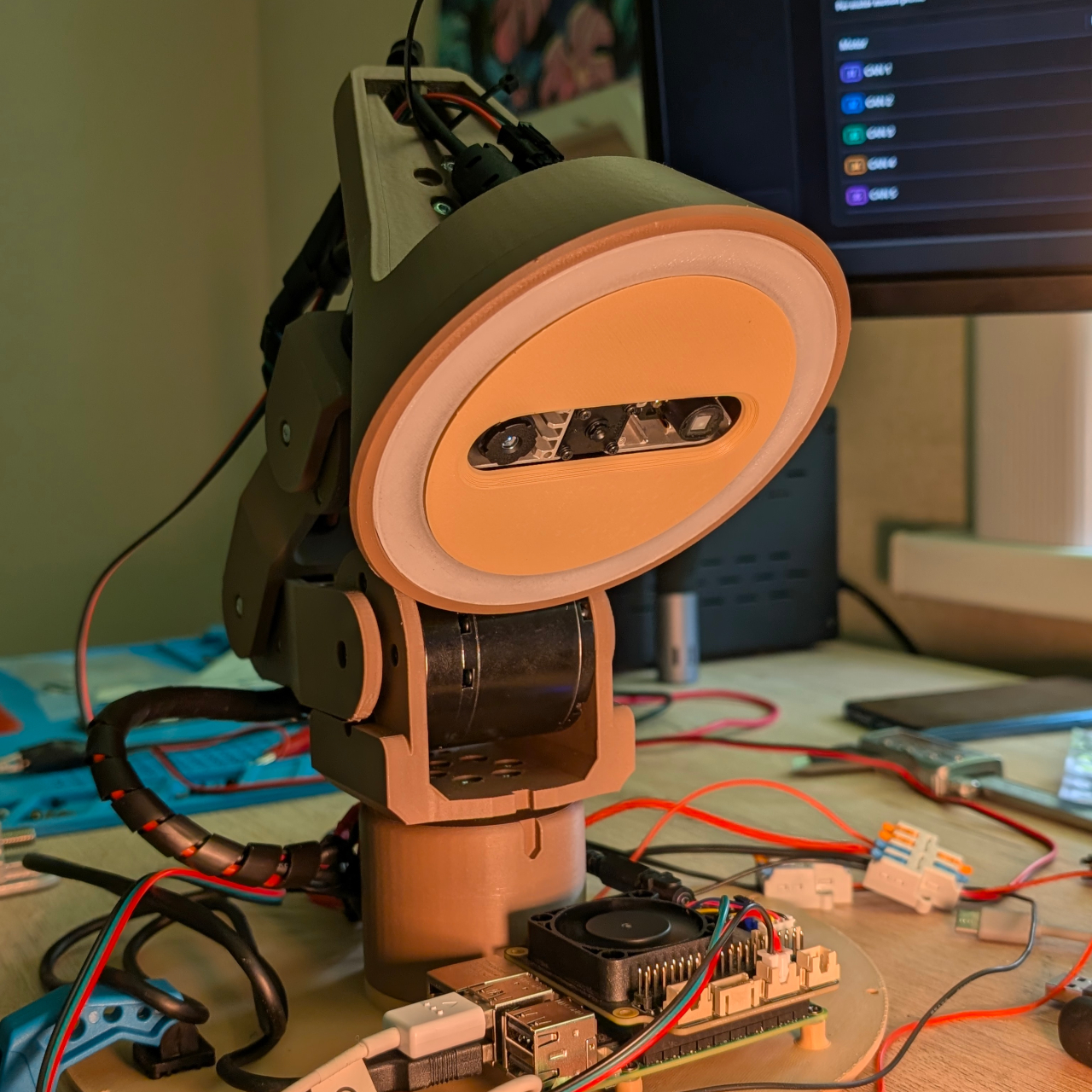
Those streams are visible in the companion software but not yet acted on in a meaningful way; the lamp can see the desk without fully understanding what’s happening there. That gap is precisely what the project is working to close. Hand tracking, automatic work-area illumination, and 3D scanning are all on the development roadmap, which would let the lamp decide where to point itself based on where hands are positioned and what is being worked on, without any manual adjustment.
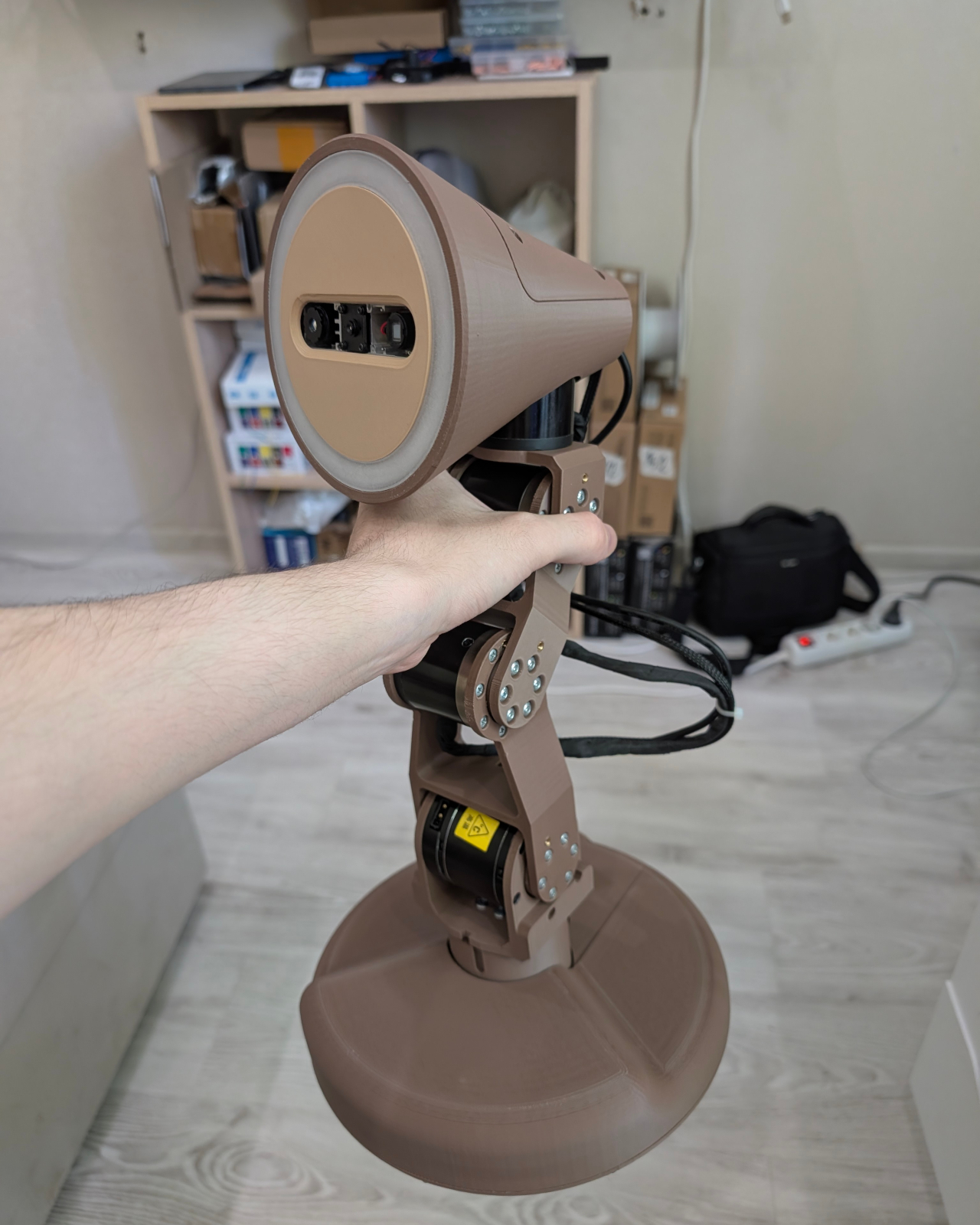
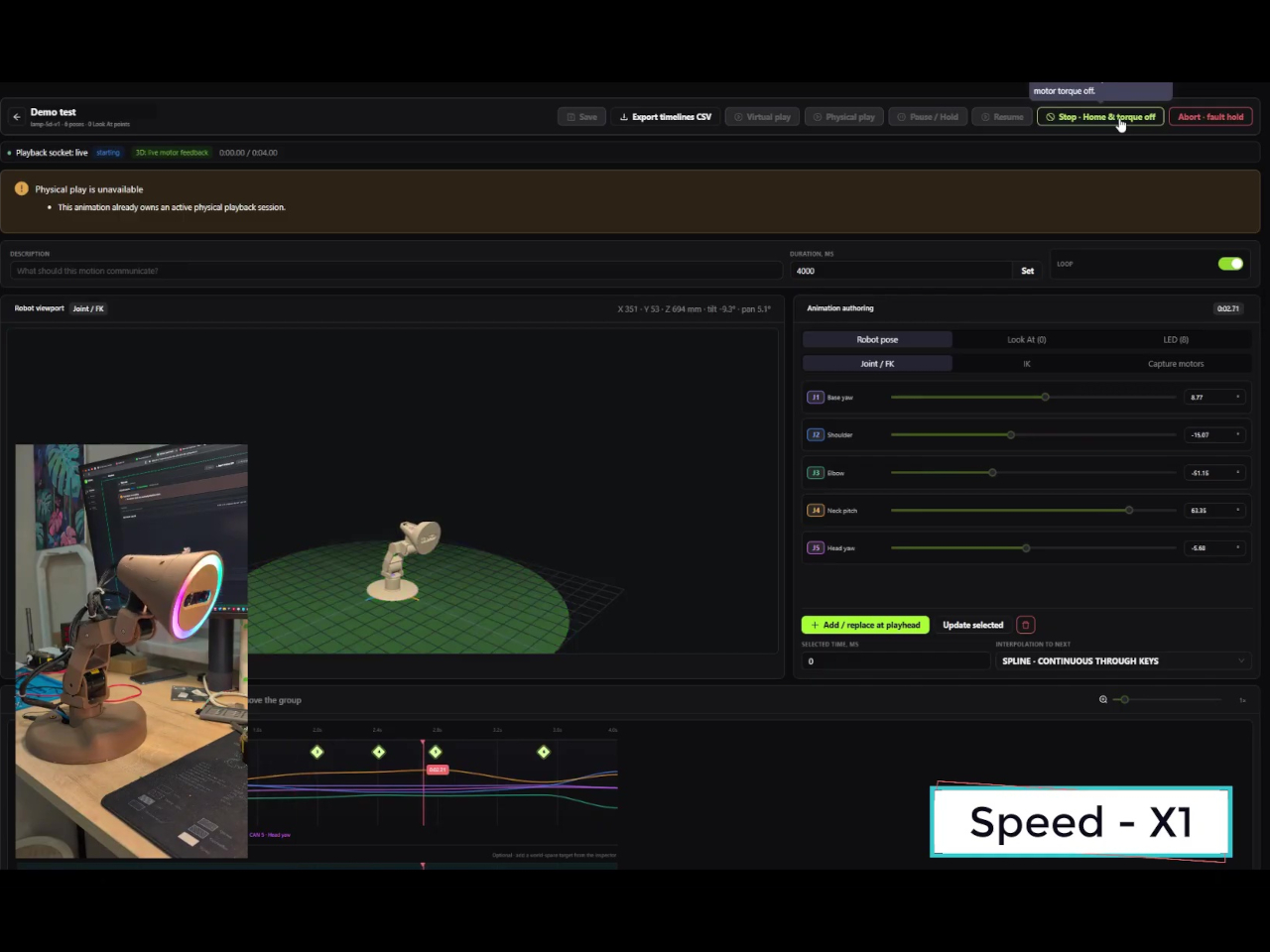
Even before those features arrive, Watti is already more programmable than most dedicated lighting tools. Watti Studio, a browser-based visual editor, lets users compose scenes that coordinate motion and light on a shared timeline. A virtual model of the five-axis lamp renders in the editor so poses and LED configurations can be arranged, previewed, and refined without a physical unit present. When a scene is ready, it’s packaged and transferred to the Raspberry Pi, which runs it locally without a continuous connection back to the browser.
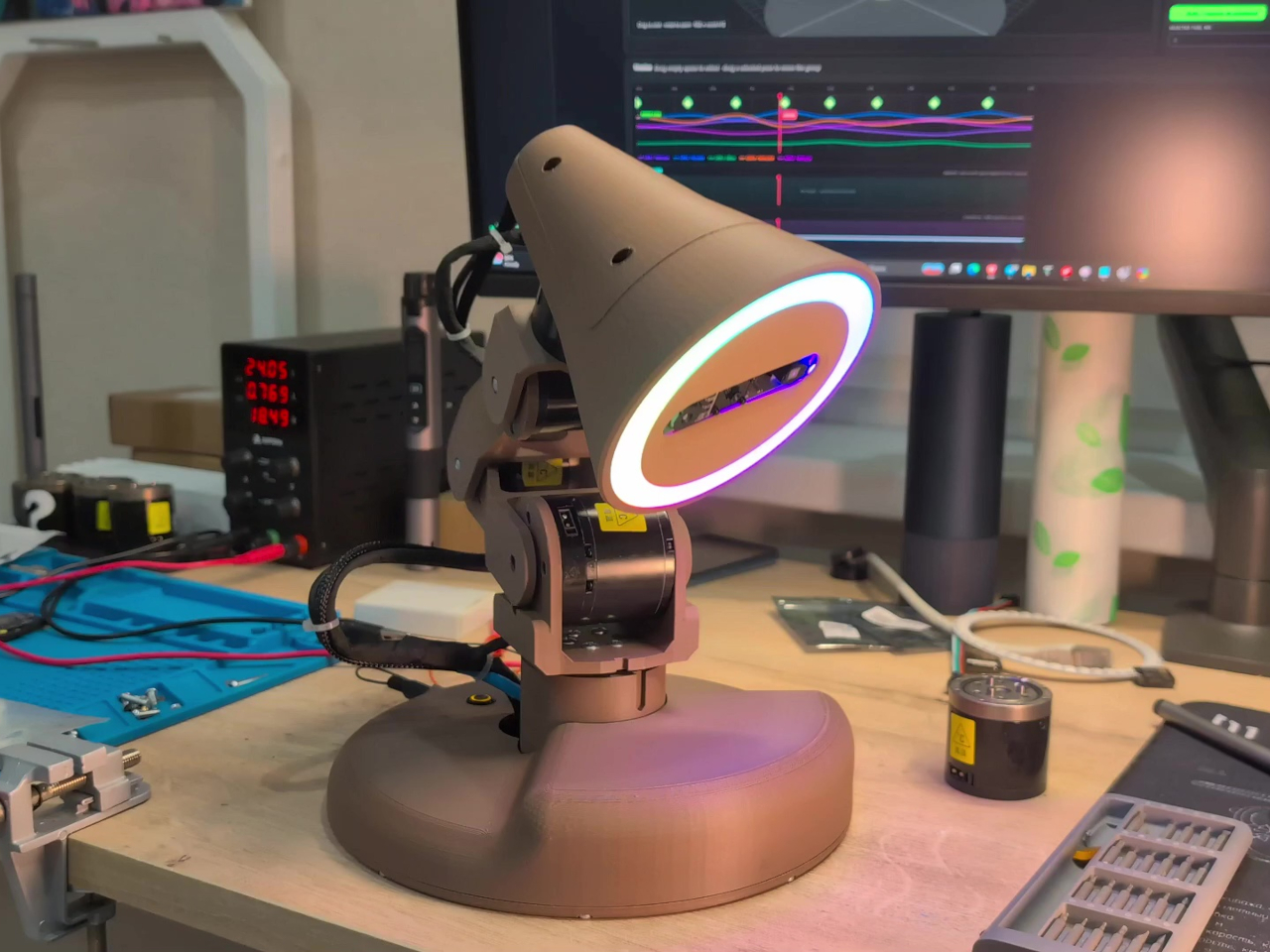
The prototype runs on an external 24 V, 10 A power supply and uses approximately $700 worth of parts. That puts it firmly in research and enthusiast territory for now. Plans to release hardware files, the bill of materials, electrical diagrams, the communication protocol, and example scenes would eventually make it a fully buildable project for others who want to take the concept further.
What Watti points toward is a lamp that treats lighting as a spatial and contextual problem rather than a manual adjustment. A light that can track where work is happening, adapt its position in real time, and coordinate color and intensity without interrupting the task at hand is a fundamentally different object than a lamp with a flexible neck. The premise sounds obvious once stated, which is usually a sign that someone should have built it sooner.