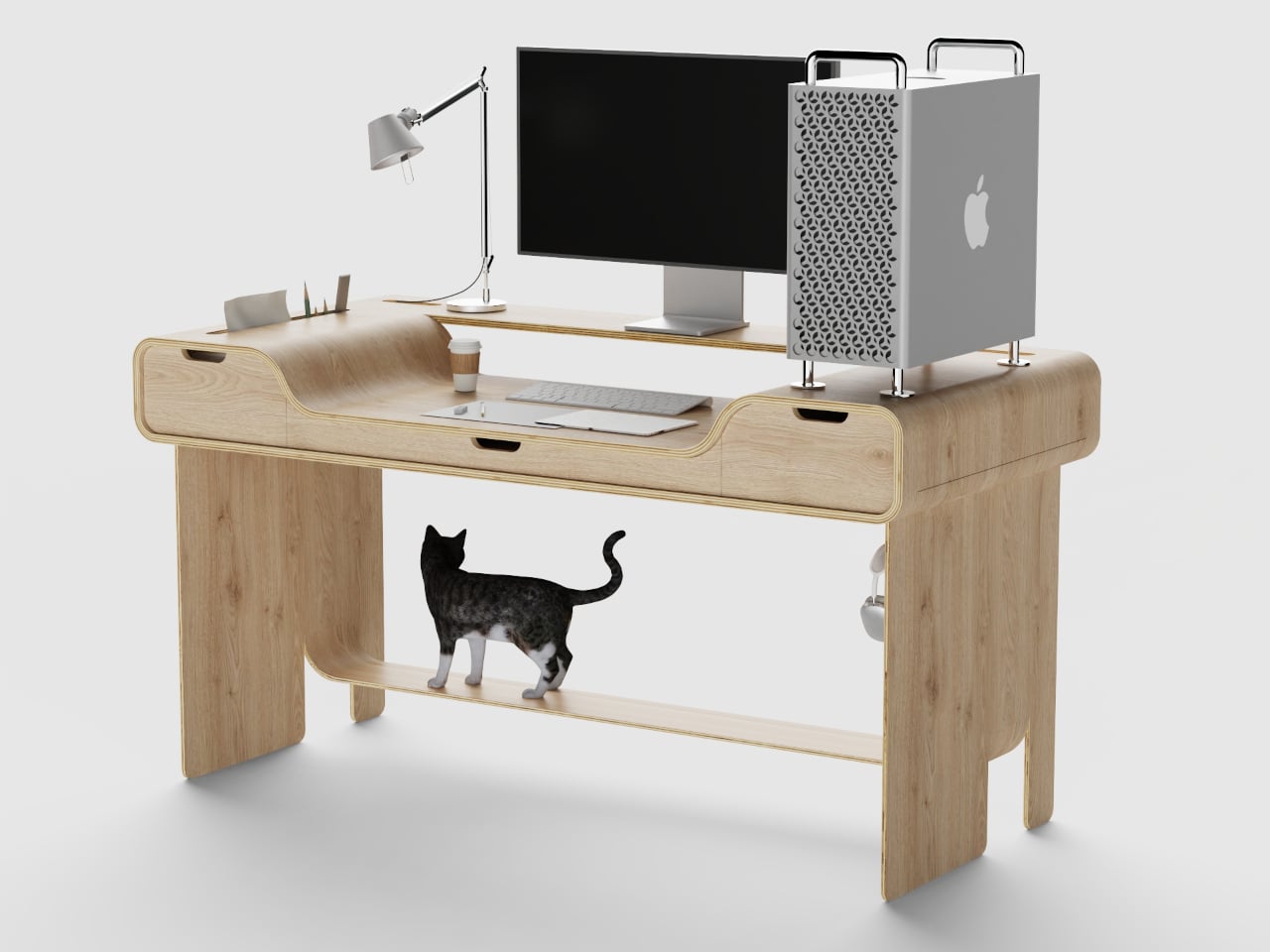
Most desk design still treats the flat surface as a given. Monitor, keyboard, notepad, and coffee all land on the same plane, and we adjust our posture around that rather than the other way around. That convention has held even as ergonomic research has consistently noted that the ideal height for viewing a screen and the ideal height for typing with relaxed arms aren’t the same, and that bridging the gap usually falls to accessories rather than to the furniture itself.
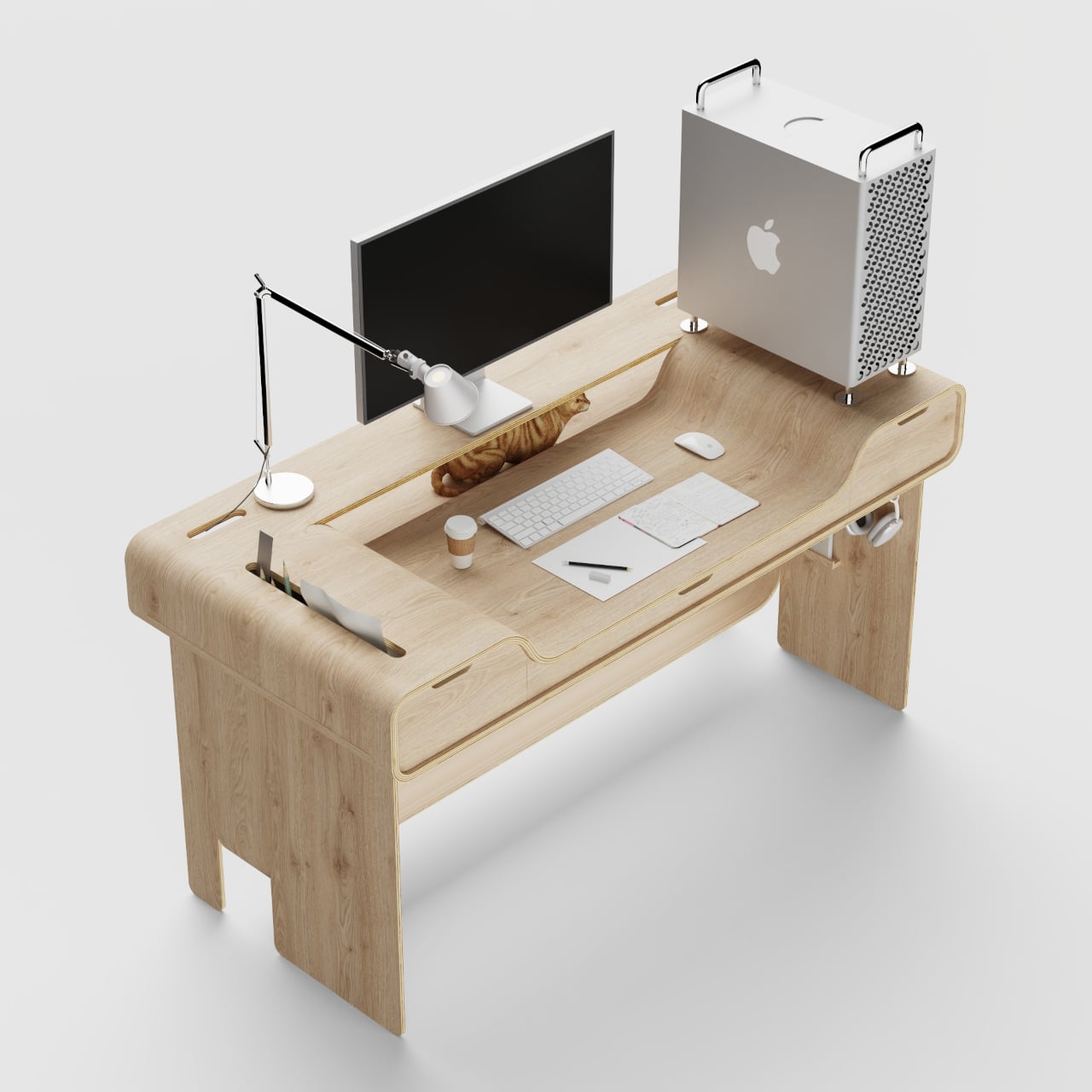
The Hollow Desk takes that problem seriously and solves it through the desk’s own structure. A “cut and bend” plywood technique creates two distinct surface levels in a single continuous form. The raised rear section supports the monitor and anything that lives near eye level. The front curves downward into a sunken working zone where the keyboard, mouse, notepad, and sketchbook sit at a lower, more natural arm height, keeping hands in a position the flat desk never quite manages.
Designer: SUNRIU Design
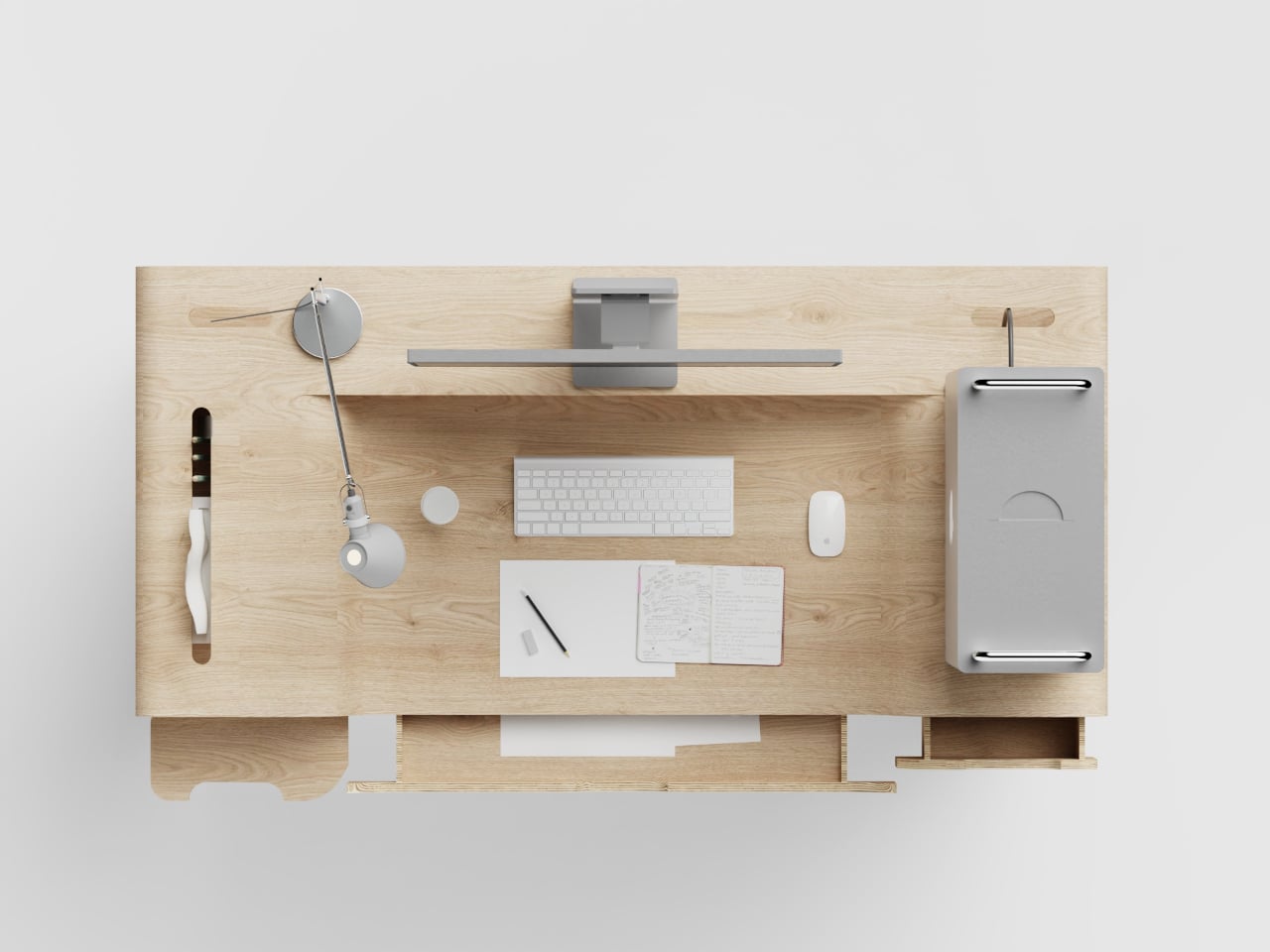
Framing it that way makes the change sound incremental, but the accumulated strain of typing at the wrong height over a full workday is measurable. The usual solutions are accessories: keyboard trays, wrist rests, monitor risers, each one a correction applied after the fact to furniture that wasn’t designed with this in mind. Most get purchased with good intentions and used inconsistently. The Hollow Desk puts the correction into the desk’s own geometry, and it stays there.
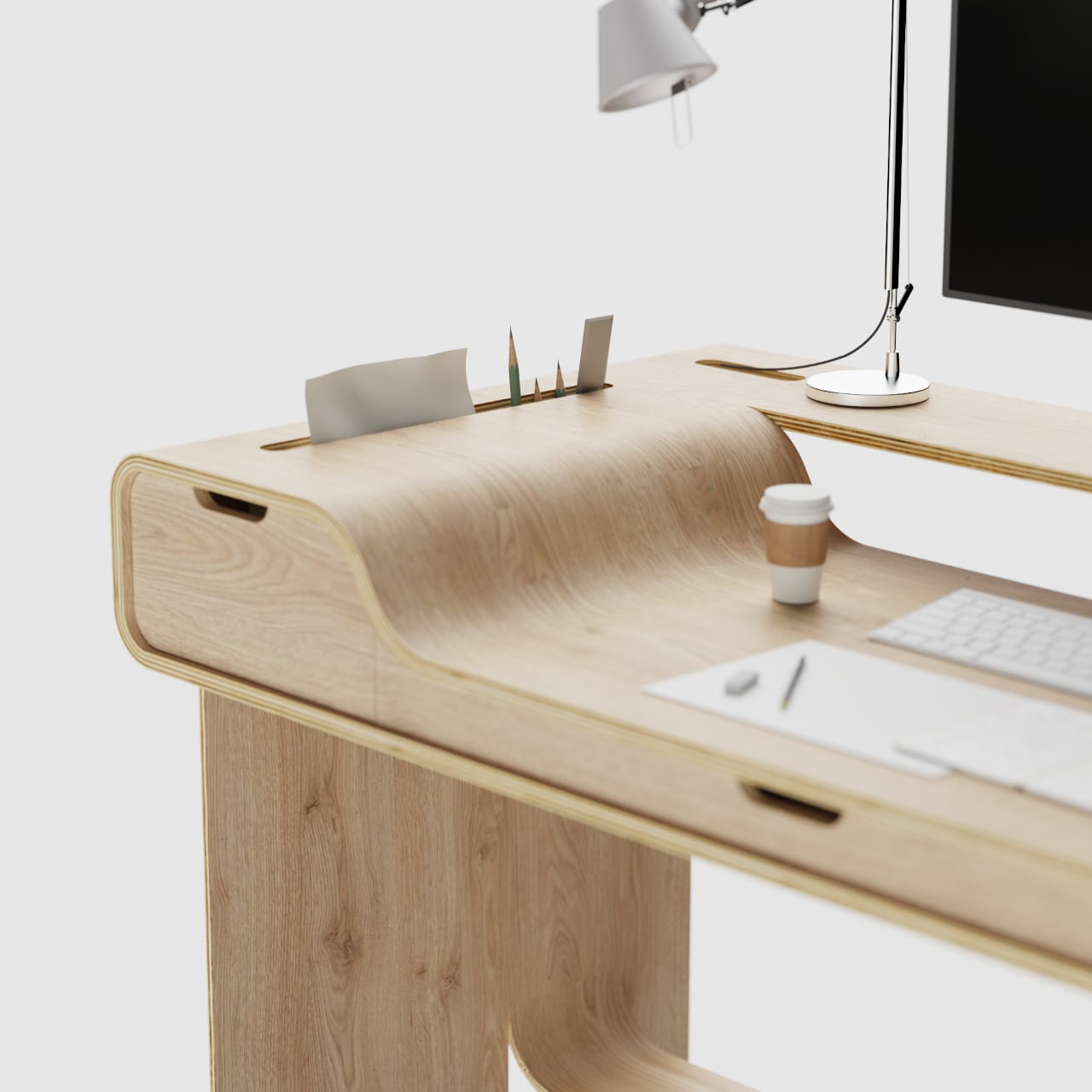
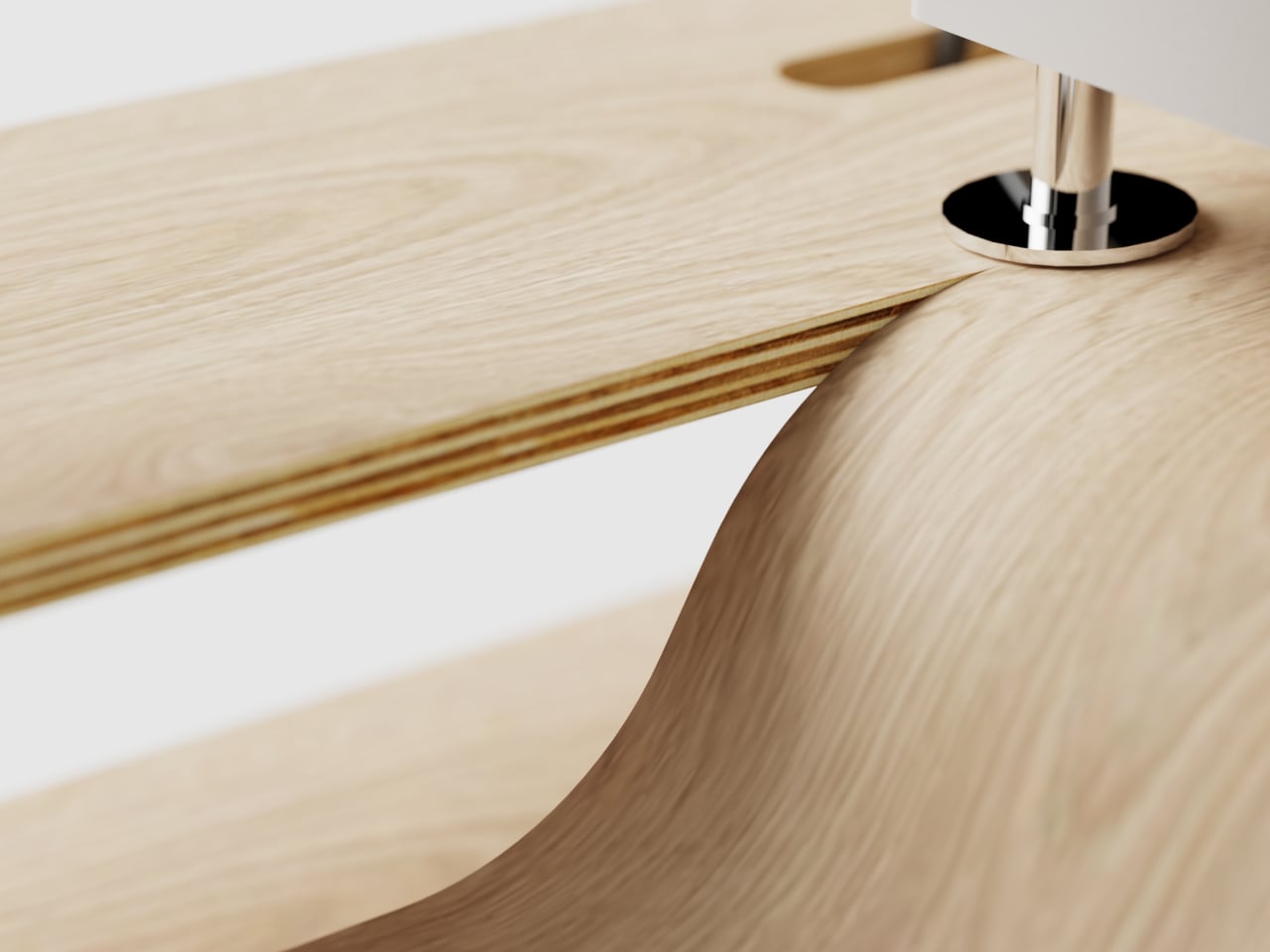
The plywood construction makes that organic form possible without complicated joinery. The bent curve that transitions from the raised rear surface down into the working zone exposes the layered plywood edge, and the design doesn’t try to conceal it. Those laminate layers become part of the visual identity, making the structural logic of the form visible at the transition rather than hiding it under a veneer that would smooth over the method entirely.
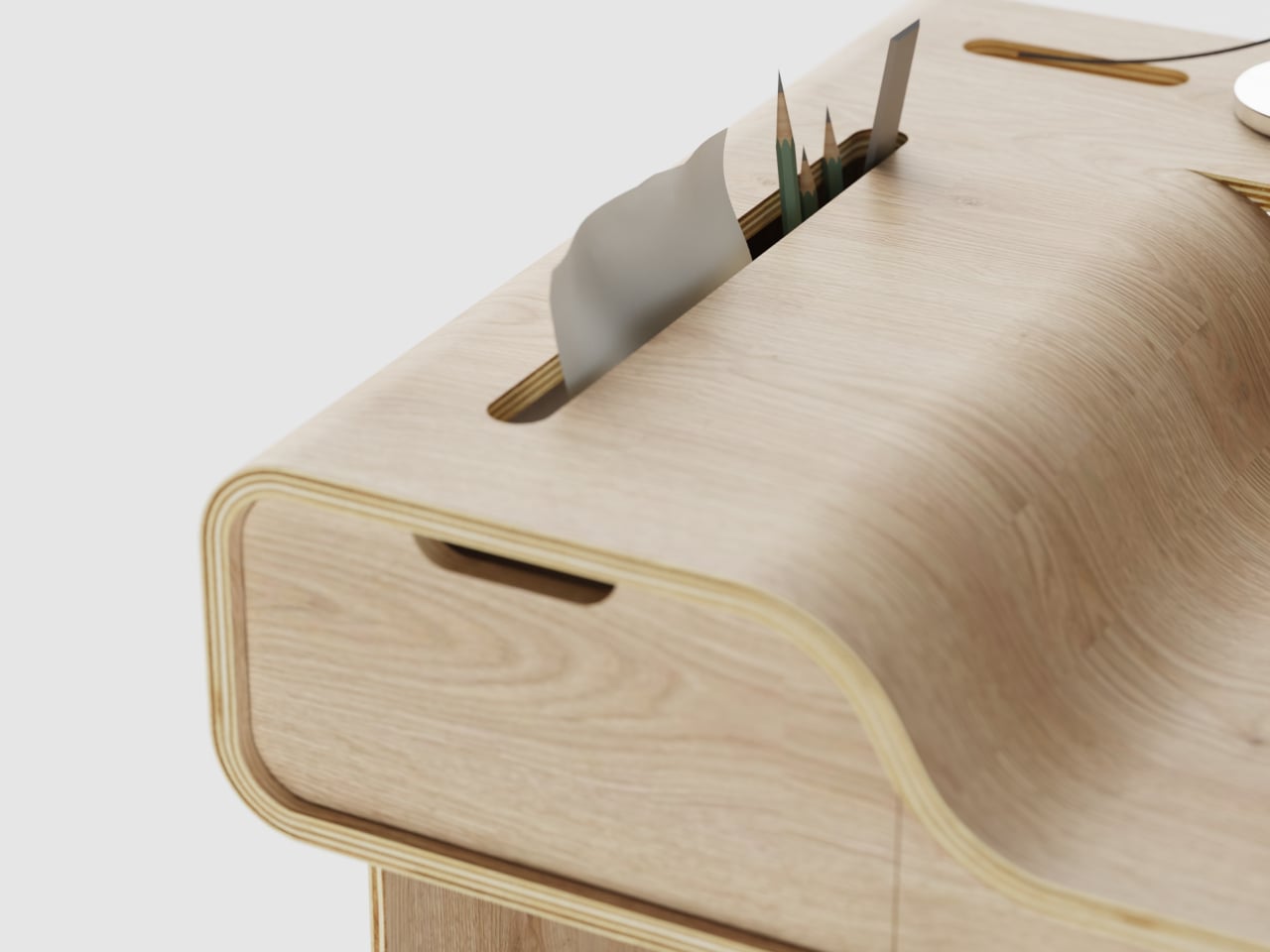
Storage is woven into the raised rear section without claiming any working surface. Vertical slots cut into the back panel keep pens, pencils, and cards upright within reach. A slim drawer with a finger-pull cutout sits flush under the front face of the raised section, invisible from above and accessible from the front. On the right side panel, a hook holds headphones off the desk, and a small ledge keeps a book at hand level without requiring a separate shelf.
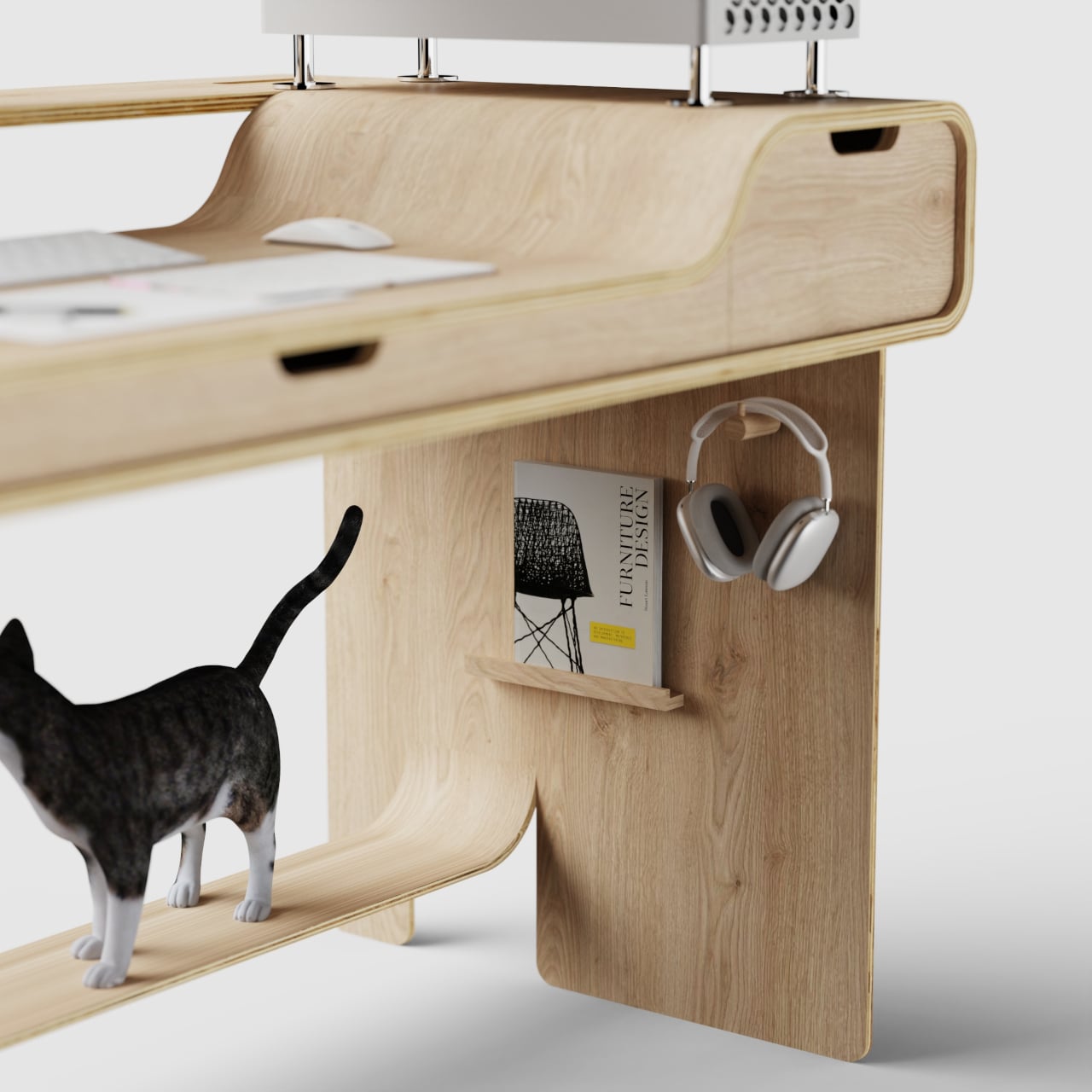
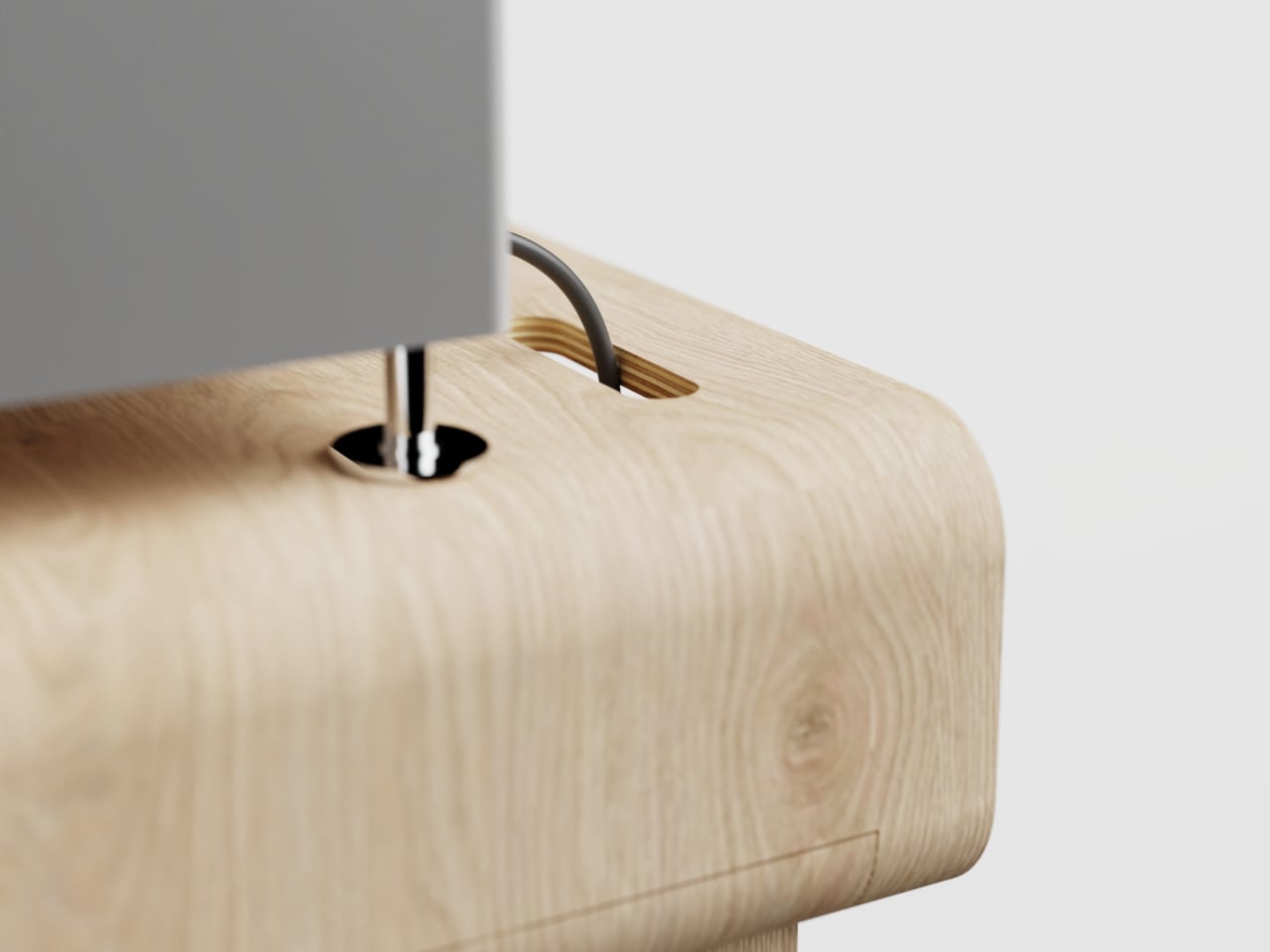
Cable management runs through pass-through holes in the raised rear platform, routing monitor cables out of view rather than leaving them to cross the working surface. A lower shelf at the base runs the full width and handles items that don’t need to stay immediately at hand. Both details are quiet, but on a desk this deliberate about surface hierarchy, leaving cables and secondary storage as afterthoughts would undercut the whole logic of the design.
The Hollow Desk is still a concept rendered in plywood. The raised rear platform works with whatever monitor or tower you already own, and the sunken working zone doesn’t favor any particular keyboard or input device. It isn’t trying to reorganize your workflow. It’s making a more fundamental intervention: changing where your hands sit while you work, which turns out to matter considerably more than any accessory applied on top of a flat surface ever does.