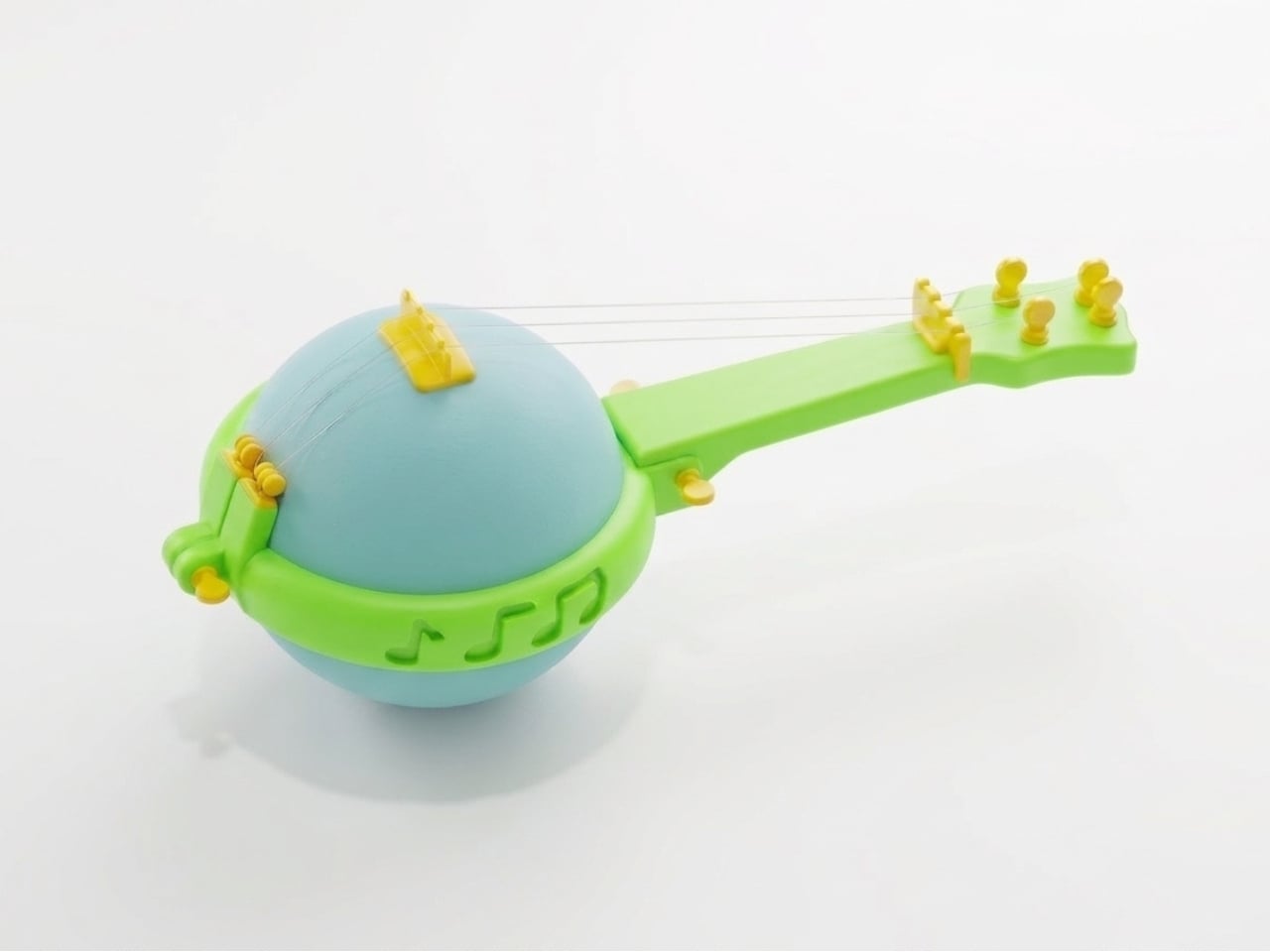
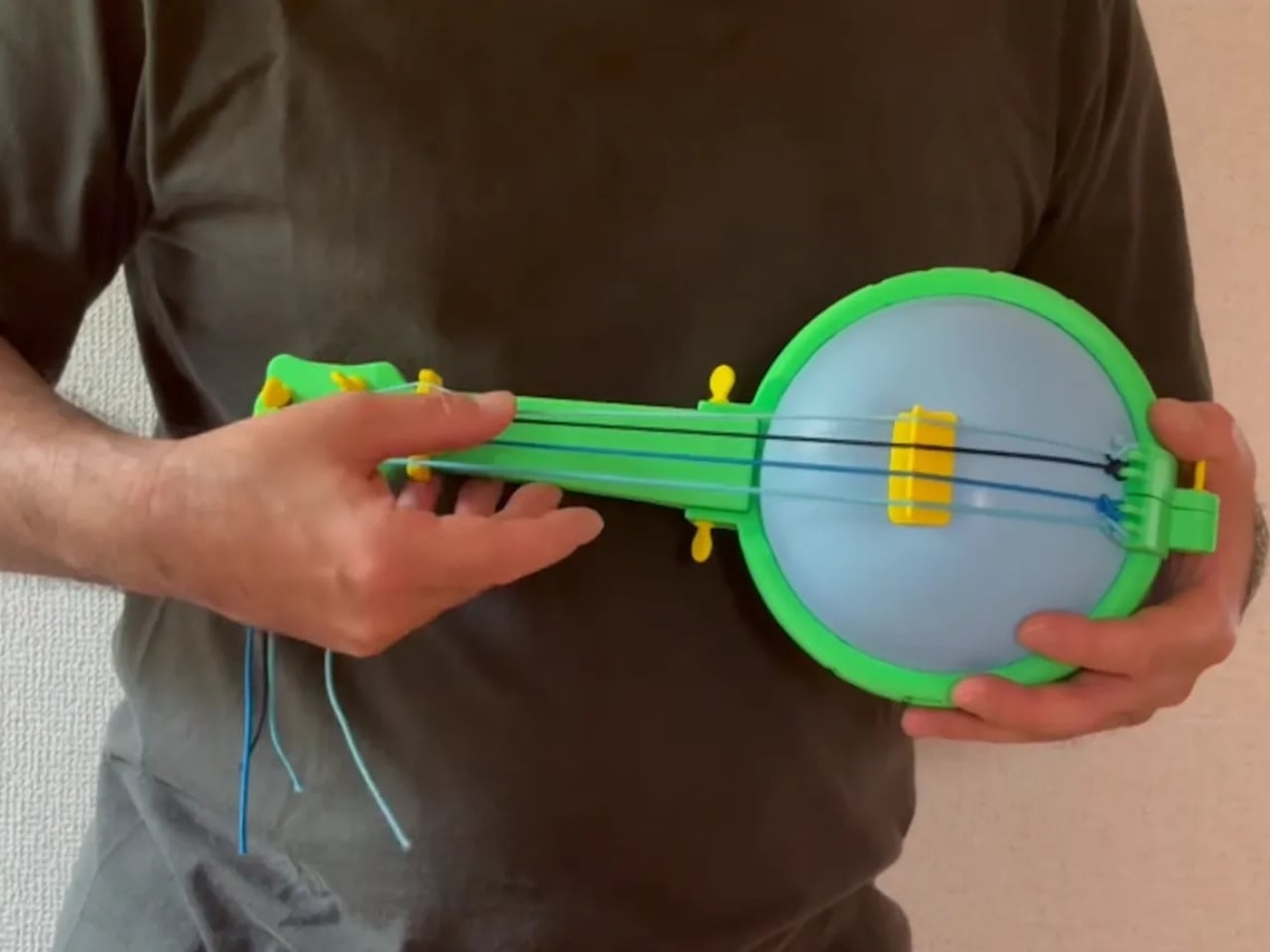
I’ll be honest: the first time I saw images of Co:Creation Lab’s Balloon Banjo, I laughed. Not in a dismissive way, but in the way you laugh when something is just genuinely delightful. It’s lime green and baby blue, shaped like a proper banjo, and where a wooden drum body should be, there’s a round, inflated party balloon clamped neatly into place. It looks like something that fell out of a toy box, which is exactly the point, and also exactly why it’s brilliant.
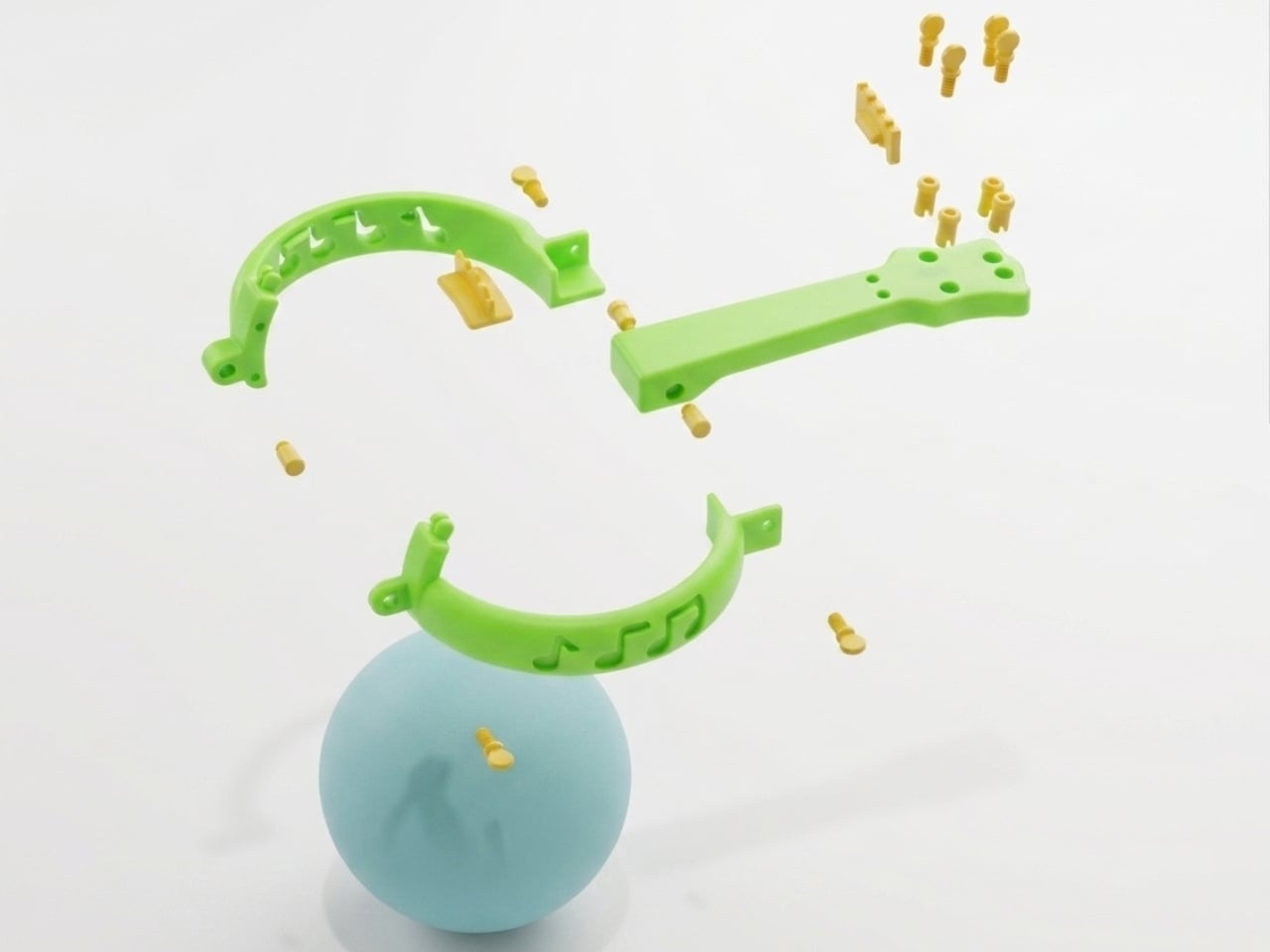
The concept is almost absurdly simple. You download 19 3D-printable parts, assemble them into seven components, and thread nylon fishing line as the strings. The balloon slots in underneath the frame and does what balloons do: it holds air. But that air is doing real acoustic work. The taut rubber surface acts as the sounding board, vibrating when you pluck the strings and creating an actual, if quirky, musical tone. Want to change how it resonates? Just add more air or let some out. No tools, no glue, no specialist equipment. The physics are right there in your hands, adjustable in real time.
Designer: Co:Creation Lab
One of the more considered decisions in this design is how it handles assembly. There are no metal screws. Instead, the parts use 3D-printed plastic screws, sized so that a six-year-old can turn them with their fingers without stripping the threads. That small detail says a lot about Co:Creation Lab’s thinking. This wasn’t designed to impress engineers. It was designed with a specific constraint in mind: a parent should be able to build it together with their child. The build is the experience, not just the end result.
I find that kind of intentional constraint genuinely refreshing. Design often gets celebrated for how much it can do, how many features it can pack in, how complex it can become. The Balloon Banjo goes the other direction entirely. Every choice is stripped back to what’s necessary, and what’s necessary turns out to be enough. The design files are available to download, and the materials cost next to nothing beyond the printer and filament. A party balloon, some fishing line, and a little patience. That’s it.
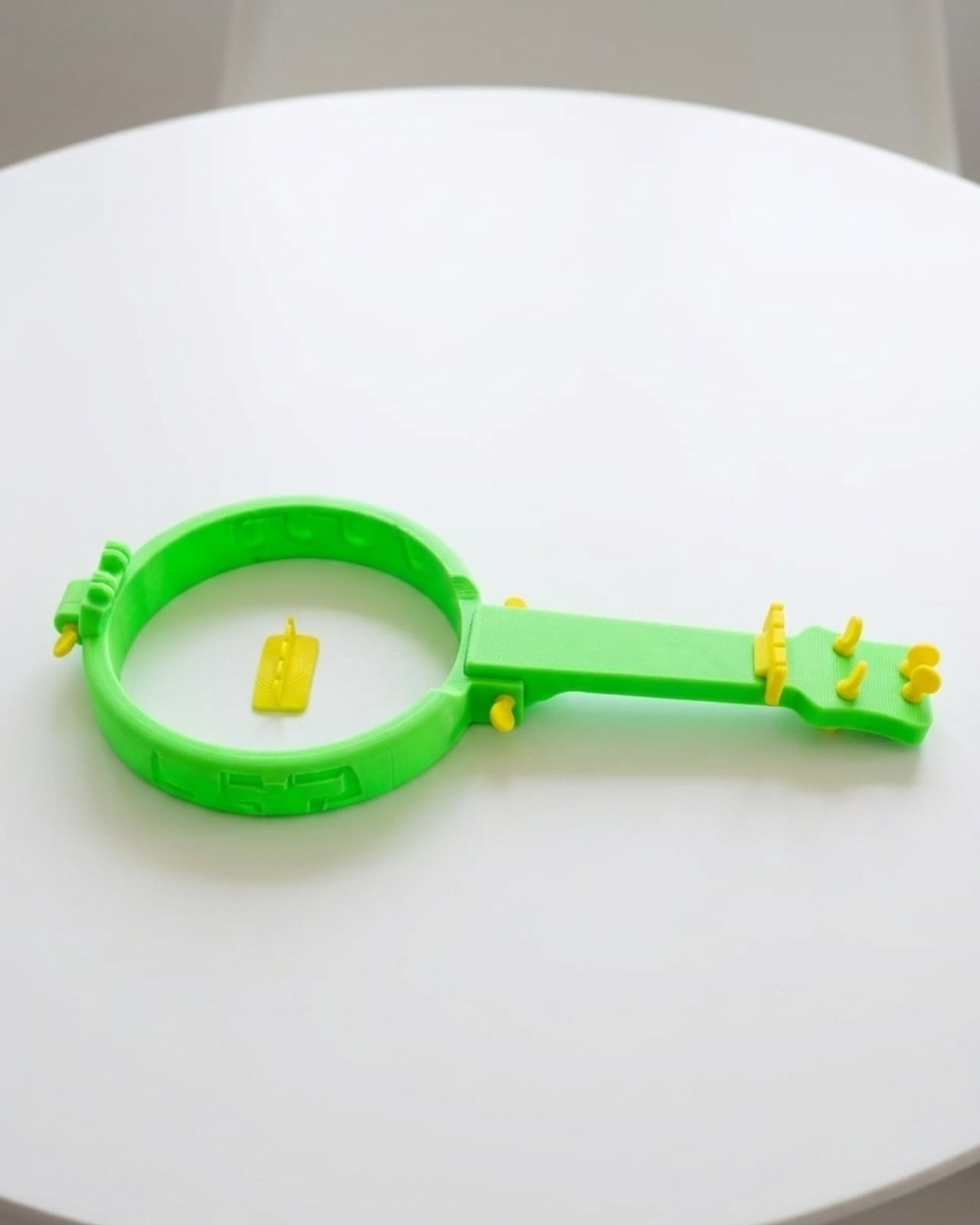
Is it a real musical instrument? Technically, yes. Is it going to replace your ukulele or compete with an actual banjo? Absolutely not. It’s more of a homebrew science toy than a concert-ready instrument. But I don’t think that’s a limitation so much as a reframing. The Balloon Banjo doesn’t ask to be taken seriously as an instrument. It asks you to be curious. It asks you to understand why it makes sound, what changes when you add more air, and what happens if you pull the string tighter. Those are good questions for any age.
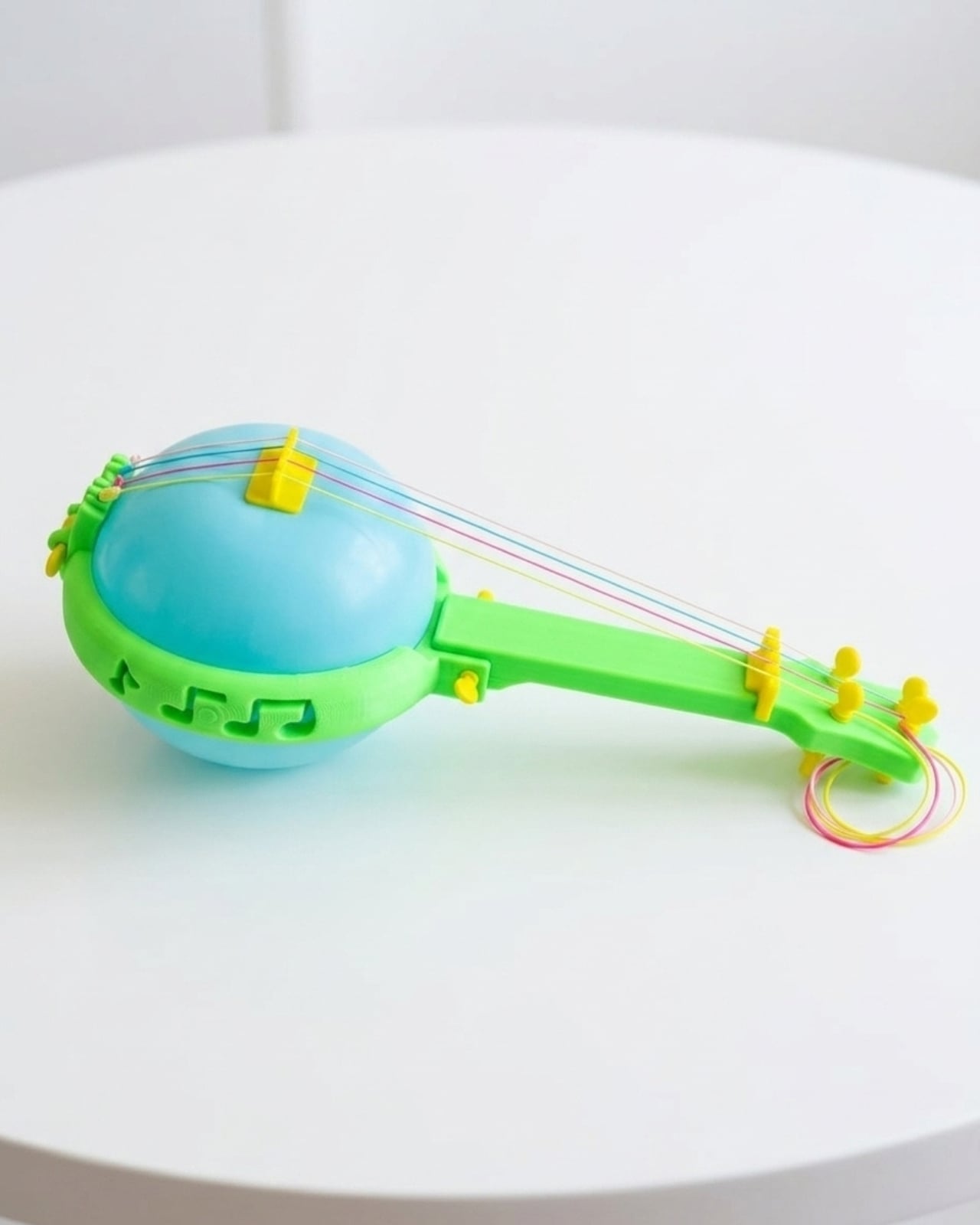
The aesthetic is also doing a lot here. That lime green frame and the pastel blue balloon aren’t accidental. The color palette is cheerful and toy-like, which signals immediately that this is meant to be played with, not displayed behind glass. Compared to the earnest seriousness that tends to follow a lot of maker culture projects, the Balloon Banjo has a lightness to it, a sense of humor about itself, that makes it more accessible rather than less.
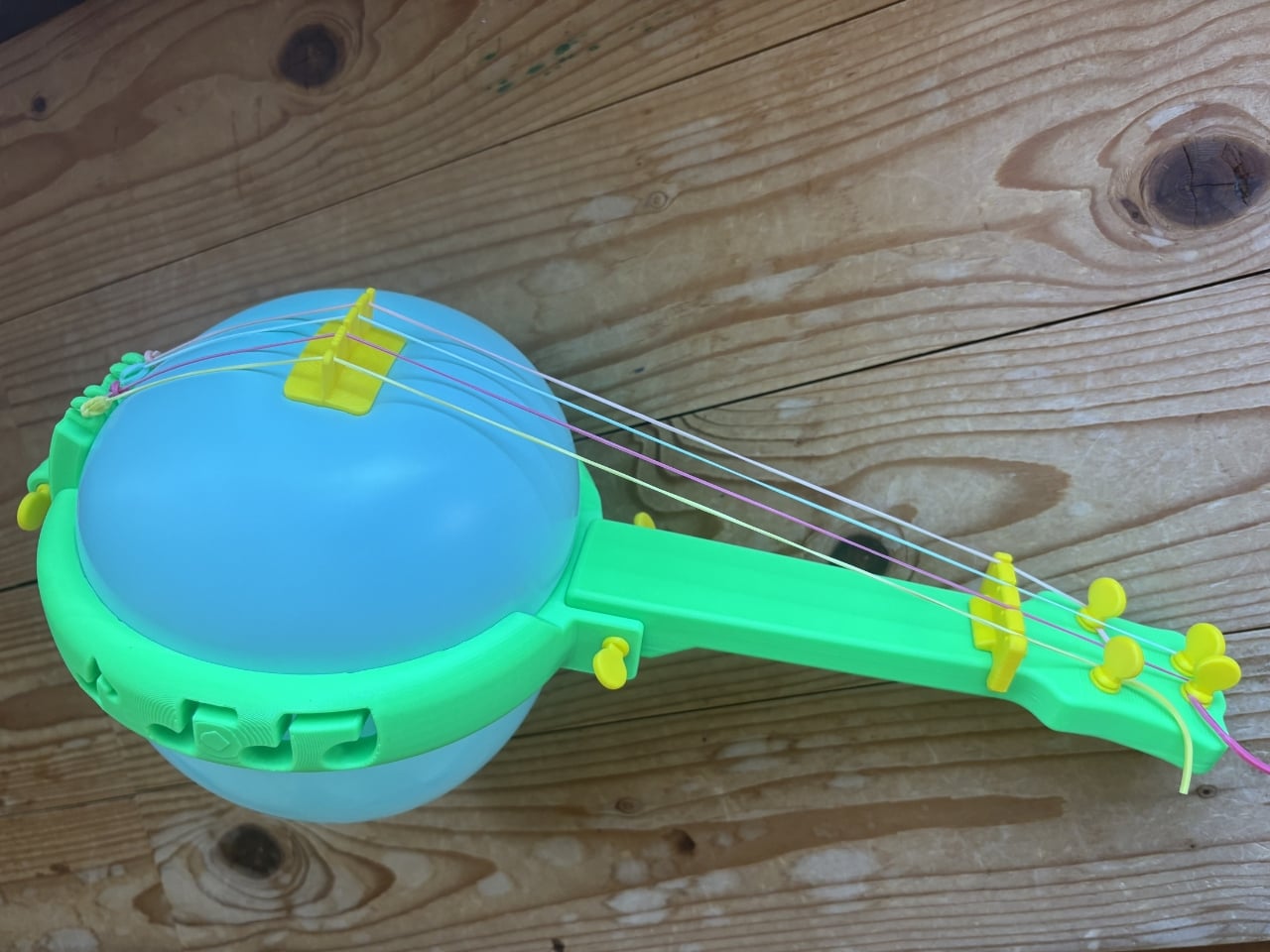
The broader conversation around 3D printing still tends to lean utilitarian: replacement parts, custom brackets, functional objects. What Co:Creation Lab has made is a reminder that fabrication can also just be fun. That you can hand a kid a finished thing, and the fact that they helped build it is what makes it matter. Good design doesn’t always have to solve a problem. Sometimes it just has to make you want to pick it up and pluck a string. Even if the sound is a little wonky.