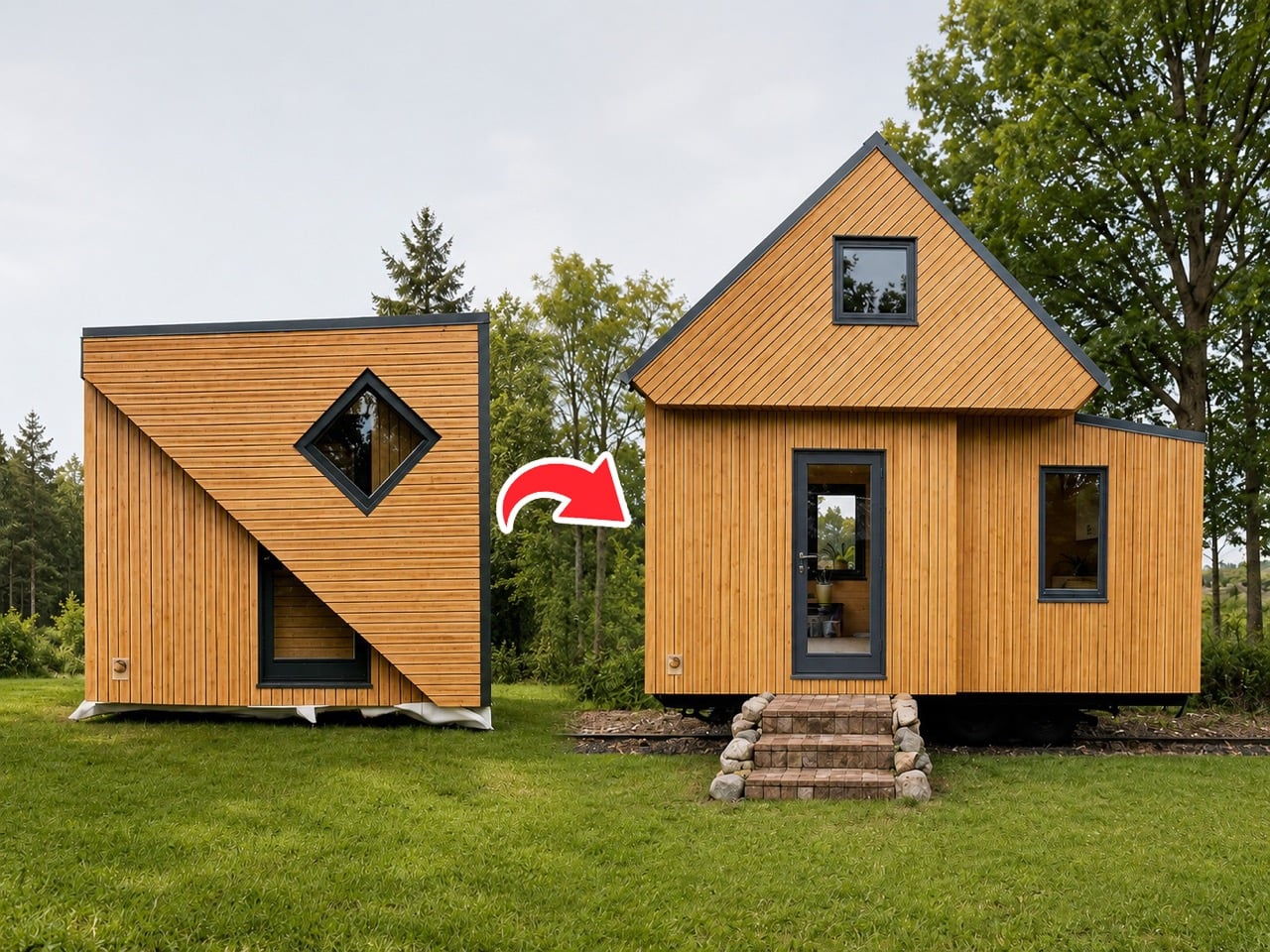
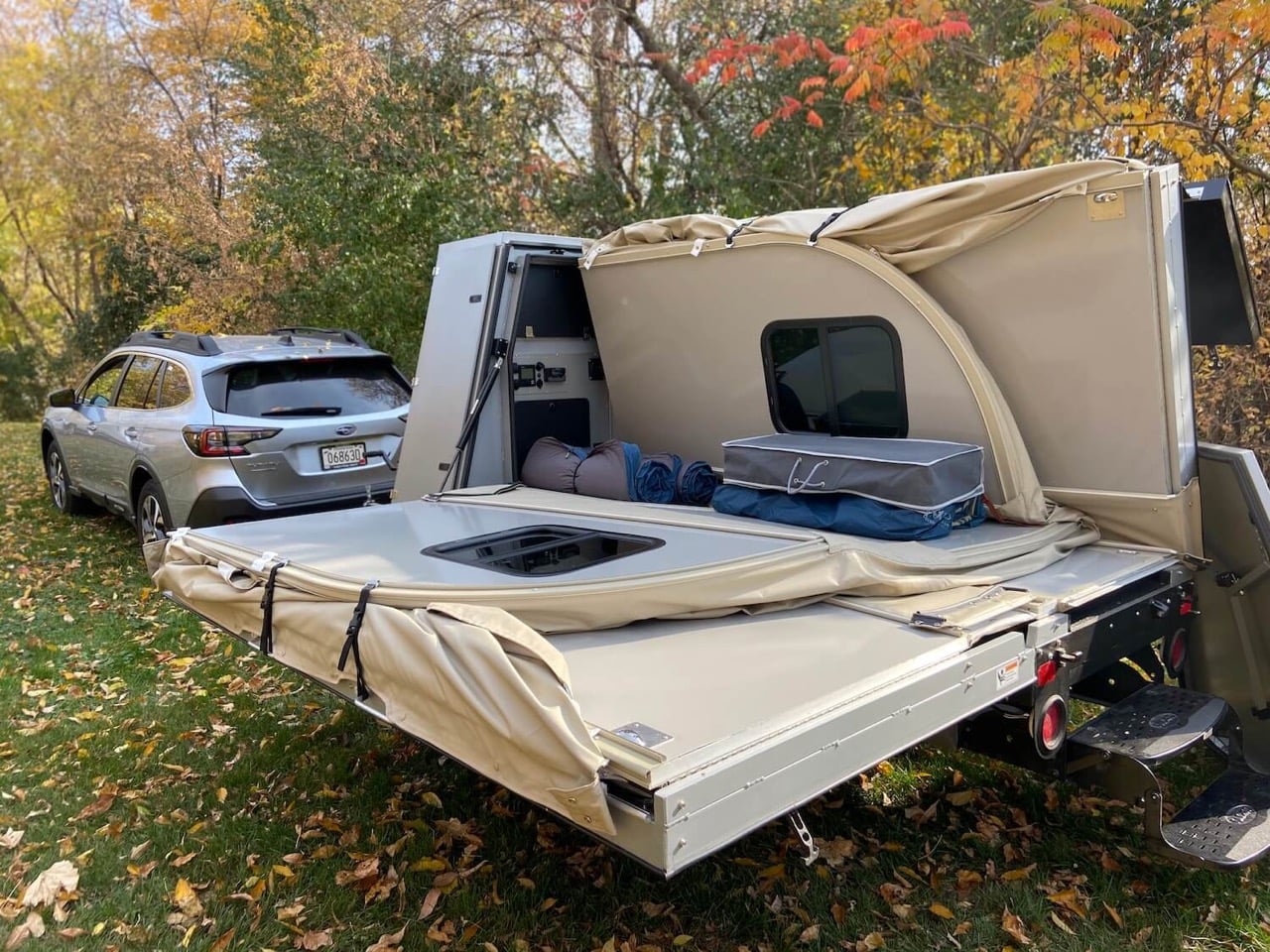
Fold-out cabins photograph incredibly well, which is most of the reason you know they exist. Panels swing open, a roof lifts, and roughly ninety seconds of timelapse turns a wooden crate into a house in a meadow. It’s genuinely great footage. It also skips every part of the process that costs you money, permits, or a Saturday.
What the timelapse leaves out: whether your vehicle can legally pull it, how many people it takes to unfold, what the battery bank runs down to on day three of clouds, and whether your county thinks the finished thing is a house, an RV, or a permit violation with nice cladding. None of these are exotic questions. They’re the first four things a buyer asks, and the current crop of manufacturer pages answers approximately zero of them. So let’s go through the numbers, starting with the one that stops most people cold.
Two Categories, One Name: Understanding What “Fold-Out” Means
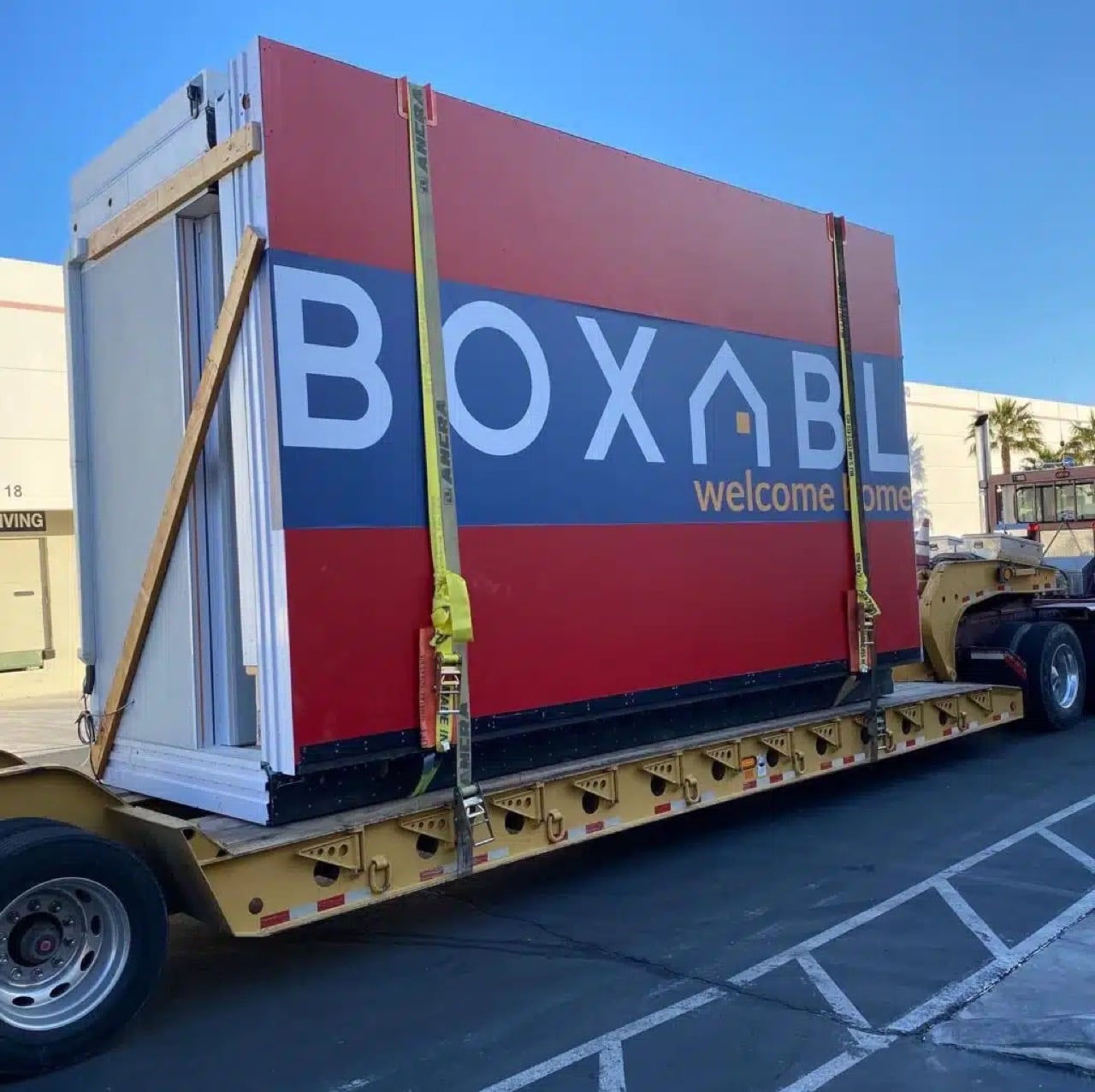
“Fold-out cabin” gets used for two completely different things, and nobody in the space bothers to separate them. One category actually hitches to a vehicle you might already own. The other arrives folded onto a flatbed and gets set down by a crane, because it weighs about as much as a fully loaded delivery truck. Boxabl’s Casita folds down to a tidy 19 by 8.5 feet, which looks towable if you squint. It weighs around 13,000 pounds. Erommy’s 40-foot folding house comes in even heavier at 14,771 pounds, and the listing says plainly that a crane is required to unload it.
Both of those get filed under “mobile” right next to genuinely lightweight, hitch-ready units, and the branding does nothing to warn you which one you’re buying. Brette Haus splits the difference a bit, shipping its cabins folded onto a flatbed too, but with a lighter CLT shell and a patented hinge rated for a hundred fold cycles, which at least suggests it’s built to be moved more than once. The lesson either way is that “foldable” describes the mechanism, not the moving method, and you should ask which one you’re getting before you fall for the render.
Tow Rate vs. Tongue Weight: Understanding the Crucial Difference
Boxabl’s smaller Baby Box is the honest towable option here, and its own numbers make the point better than any warning label could. It weighs 2,900 pounds with a listed hitch weight of 1,000 pounds, and Boxabl describes it as easily towed by most SUVs and trucks. Compare that against a Tesla Model Y with the factory tow package, which is rated for 3,500 pounds of trailer weight. On paper you clear that with room to spare, so you’re already picturing the road trip.
Here’s the part that ruins the picture. Tow rating and tongue weight are two different specs measuring two different forces, and the Model Y’s max tongue weight is 350 pounds. The Baby Box’s hitch weight is nearly triple that, which means the vehicle that technically “can tow it” will fail the actual hitch math before it leaves the driveway. The number that gets marketed is the one you pass. The number that actually stops you is the one nobody prints in bold, and it’s worth asking for by name before any deposit changes hands.
“Three hours” Doesn’t Factor Location or Delivery
Brette Haus says its cabins go from folded cube to livable in about three hours, hookups included. Boxabl claims roughly an hour for the Casita, and Erommy’s own copy mentions a hand-crank deploy under 45 minutes for its dual-wing design. All of these are probably true in isolation, and all of them are also only describing the unfold itself, timed from the moment the truck is already parked and level.
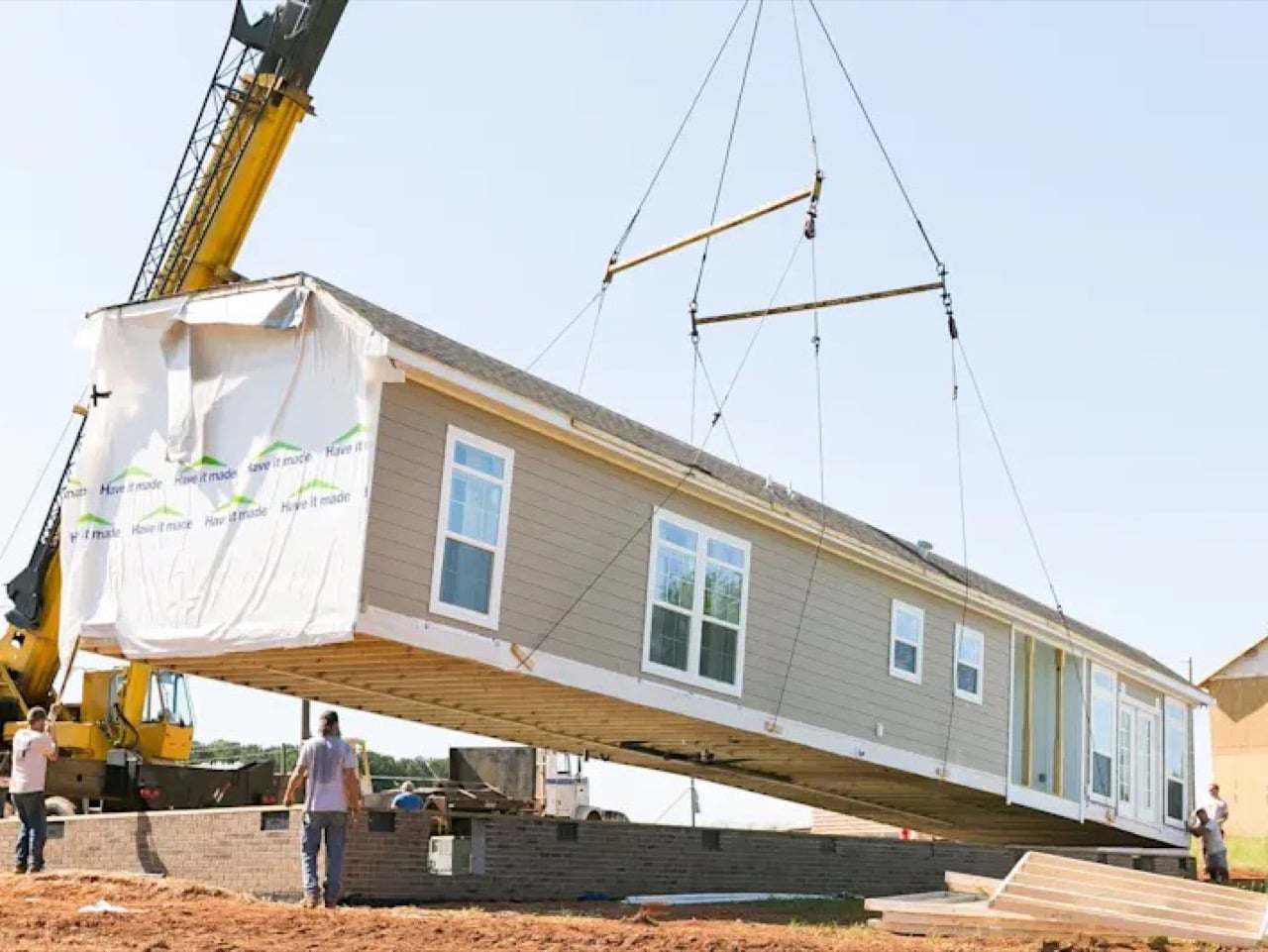
Nobody’s stopwatch includes the part where a 13,000-pound module needs a flatbed truck and a rigging crew to actually reach the site, or where a rural driveway needs clearance most of them don’t have. Add in permitting delays, a pad or footing that has to be prepped ahead of delivery, and the logistics of getting a crane to a property that may not have one within two counties, and the real number stretches from an afternoon into a project. The fold is the fast part. Getting a five-ton origami house to the meadow is the part that eats your week.
Your Solar Kit Isn’t Sized for a Cloudy Week
A typical fold-out cabin pulls somewhere between three and five kilowatt-hours a day, covering lights, a small fridge, and basic electronics. Give yourself two days of cloudy-weather backup and a lithium battery bank with reasonable depth of discharge, and you land around 8 kilowatt-hours of storage, roughly three good LiFePO4 units wired together. That’s a real, buildable number, and it’s the one every off-grid buyer actually needs before signing anything.
Brette Haus offers a solar kit as an optional add-on, Boxabl bundles a modest battery setup into some configurations, and almost nobody states the daily load their kit is actually sized around. “Off-grid ready” and “off-grid for a week of November clouds” are two very different promises wearing the same sticker. Ask the manufacturer for the daily kWh figure and the depth of discharge their battery uses, and if they can’t answer either one, assume the solar kit is decorative.
Wheels Can Make Or Break Your Cabin’s Legal Status
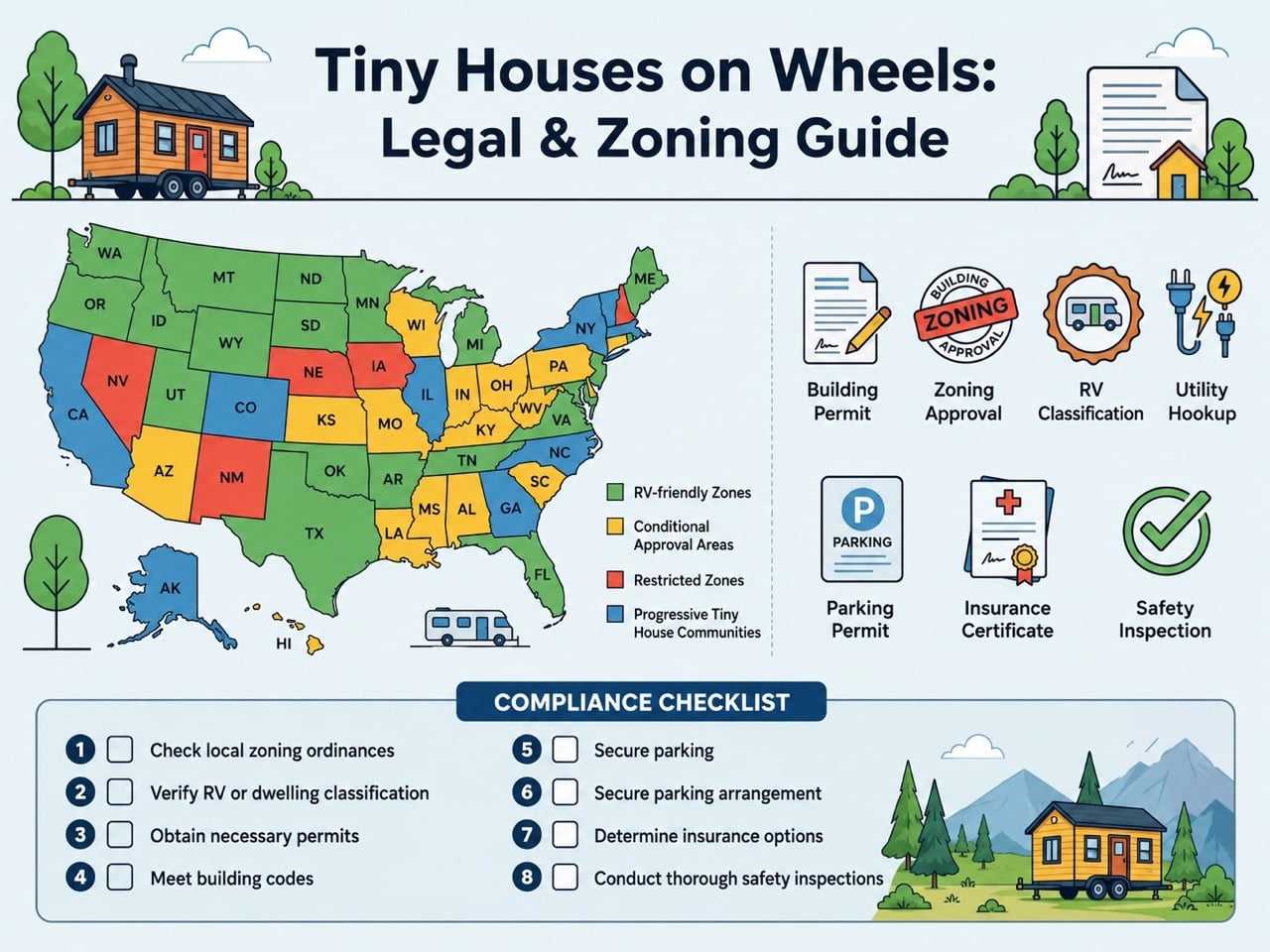
Wheels attached and never removed usually means your cabin gets classified as an RV, which keeps it out of most residential zoning entirely and pushes it toward RV parks or short-term siting. Remove the wheels, drop it onto a foundation, and it might qualify as an accessory dwelling unit instead, assuming your county has bothered to write rules for something this specific. Boxabl actually sells two versions of the same Casita for exactly this reason, one built to residential building code and one built to RV code with a permanent chassis, and the buyer picks based on how their local zoning treats each classification.
That split alone tells you how unsettled this category still is. Before you fall for a floor plan, call your local planning office and describe the thing you’re about to buy in plain terms, folded weight, wheels or no wheels, foundation or pad. The answer determines your insurance, your resale value, and whether the cabin you just paid for is legally a house or a very nice trespass. It’s the least fun call you’ll make in this whole process, and it’s also the one that saves you from all the others.
SHARE