Steve Jobs pulled the original MacBook Air out of a manila envelope in 2008 and the laptop industry never recovered. What followed was nearly two decades of manufacturers treating thinness as the primary measure of ambition. Apple refined the aluminum unibody chassis into a design language so influential that Dell, Samsung, HP, and virtually every other PC maker began chasing the same silhouette. The problem was that aluminum unibody construction left almost no room for battery expansion. The chassis became the constraint, and battery capacity was the thing that gave way. Users got a premium-feeling machine that needed a charger by mid-afternoon.
Krafted Edge, from a London-based team currently 14x funded on Kickstarter, takes that surrendered battery volume and turns it into a dedicated companion slab. At 12.88mm thin, matched to a laptop’s footprint, it slides into the same bag sleeve and sits flush underneath the machine on any desk. The 65W USB-C output handles a MacBook or Dell XPS at full charge speed, and a user-replaceable battery module means the unit survives well beyond the obsolescence cycle that Apple’s own design philosophy helped normalize.
Designer: Krafted
Click Here to Buy Now: $139.99 $200 (30% off) Hurry! Only 5 days left.
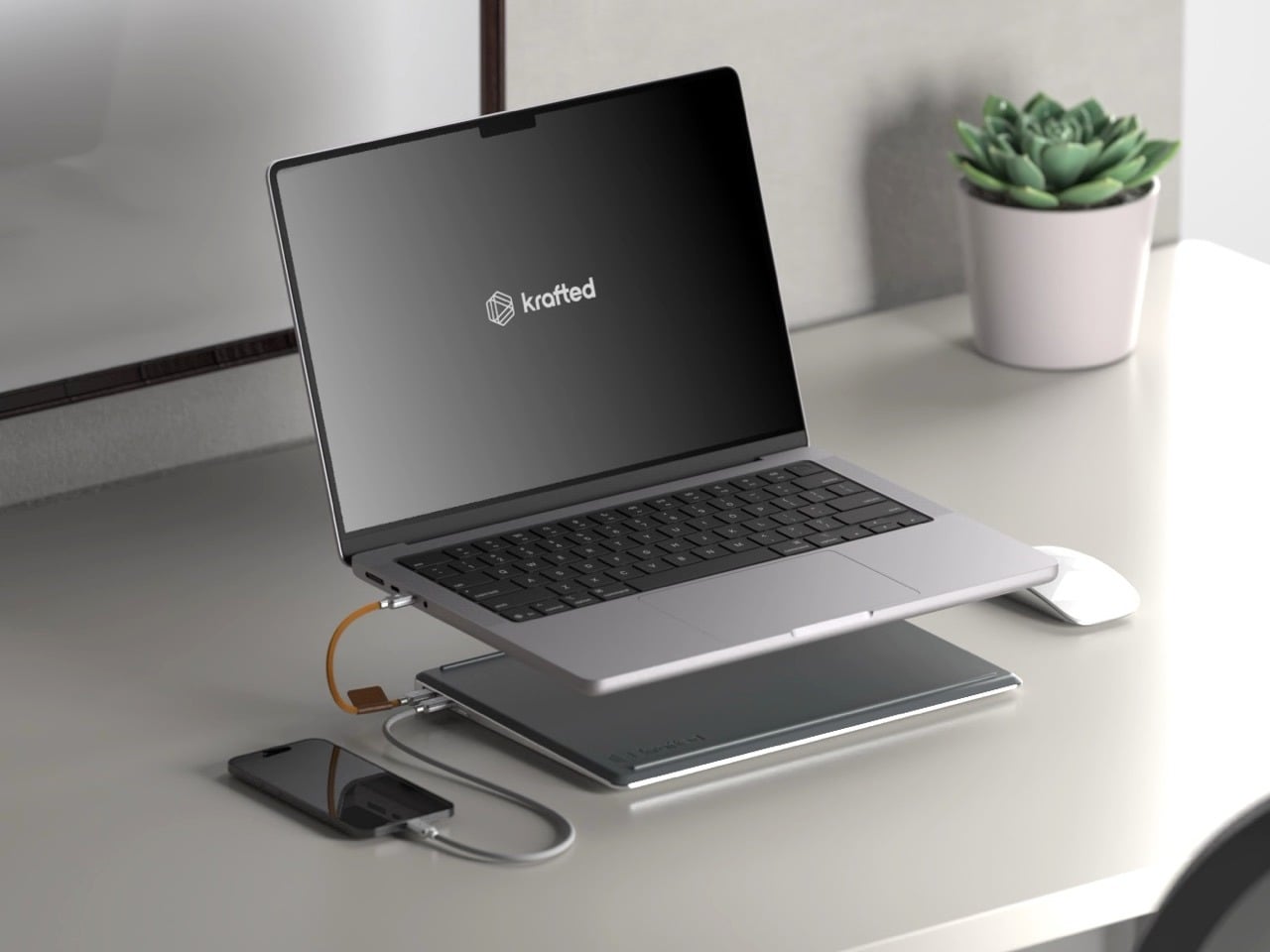
Most power banks are designed as self-contained objects, with their own visual identity, their own color language, their own form factor logic. Edge is designed to be a subordinate layer, a second slab that borrows the laptop’s rectangle and adds nothing extraneous. Silicone ventilation bars on the underside keep the laptop’s chassis from sitting flush against the battery surface, managing heat without vents or fans. That is a detail most companies would have skipped in the name of simplicity, and Krafted chose to solve it instead.

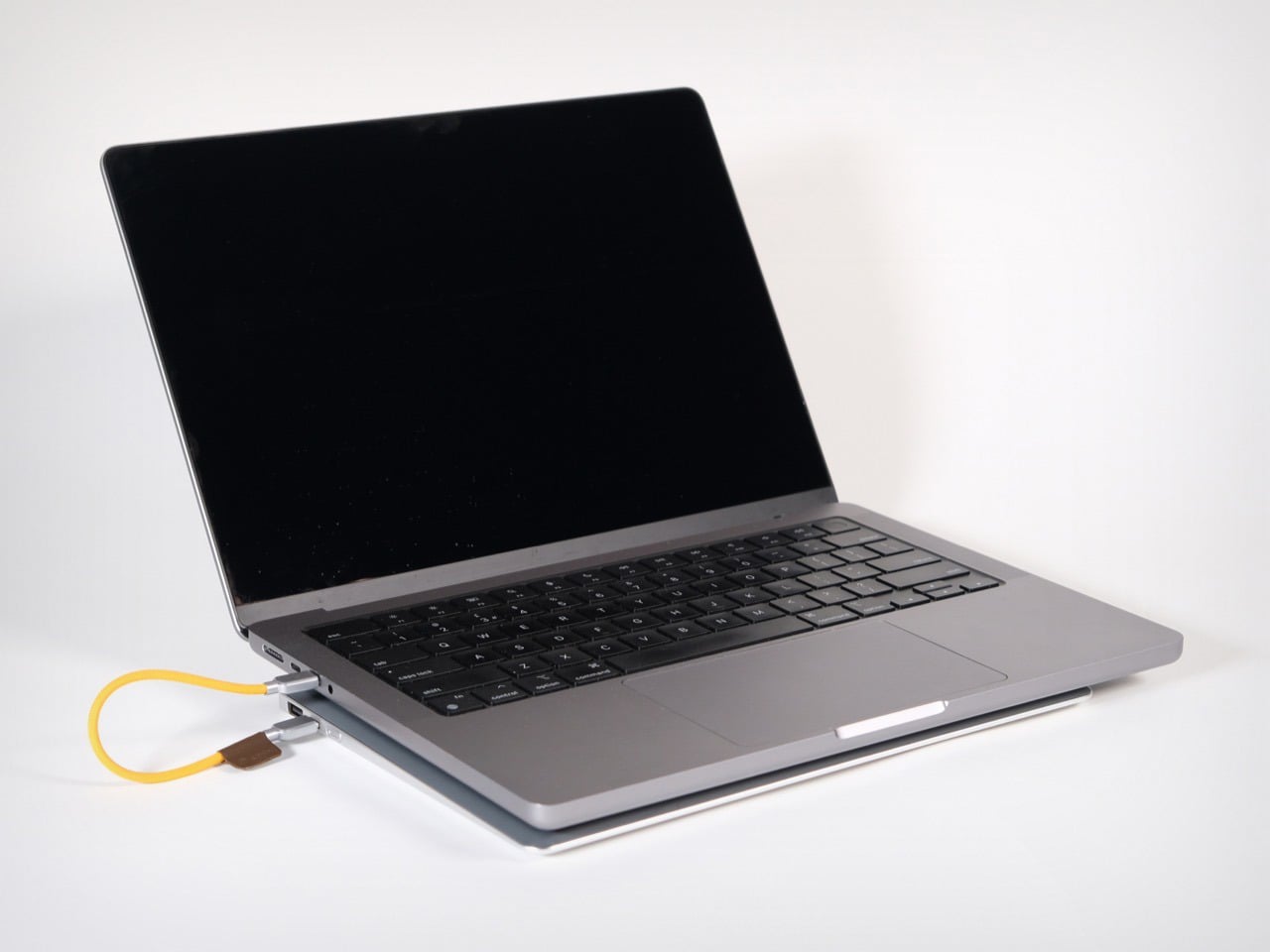
Twenty thousand milliamp hours at 65W USB-C output means Edge can push full-speed charging to a MacBook Air or Dell XPS, a level of output most portable batteries cannot match for laptop use. In practical terms, that translates to up to three full laptop charges, four phone charges, and thirty-five headphone charges from a single Edge. The USB-C and USB-A ports run simultaneously, meaning a laptop and phone can charge at the same time, the actual use case for anyone working through a long travel day. The USB-A port covers older devices and accessories from the same slim device. The spec sheet reads like something Krafted reverse-engineered from real-world work patterns rather than from what was cheapest to manufacture at a given wattage.
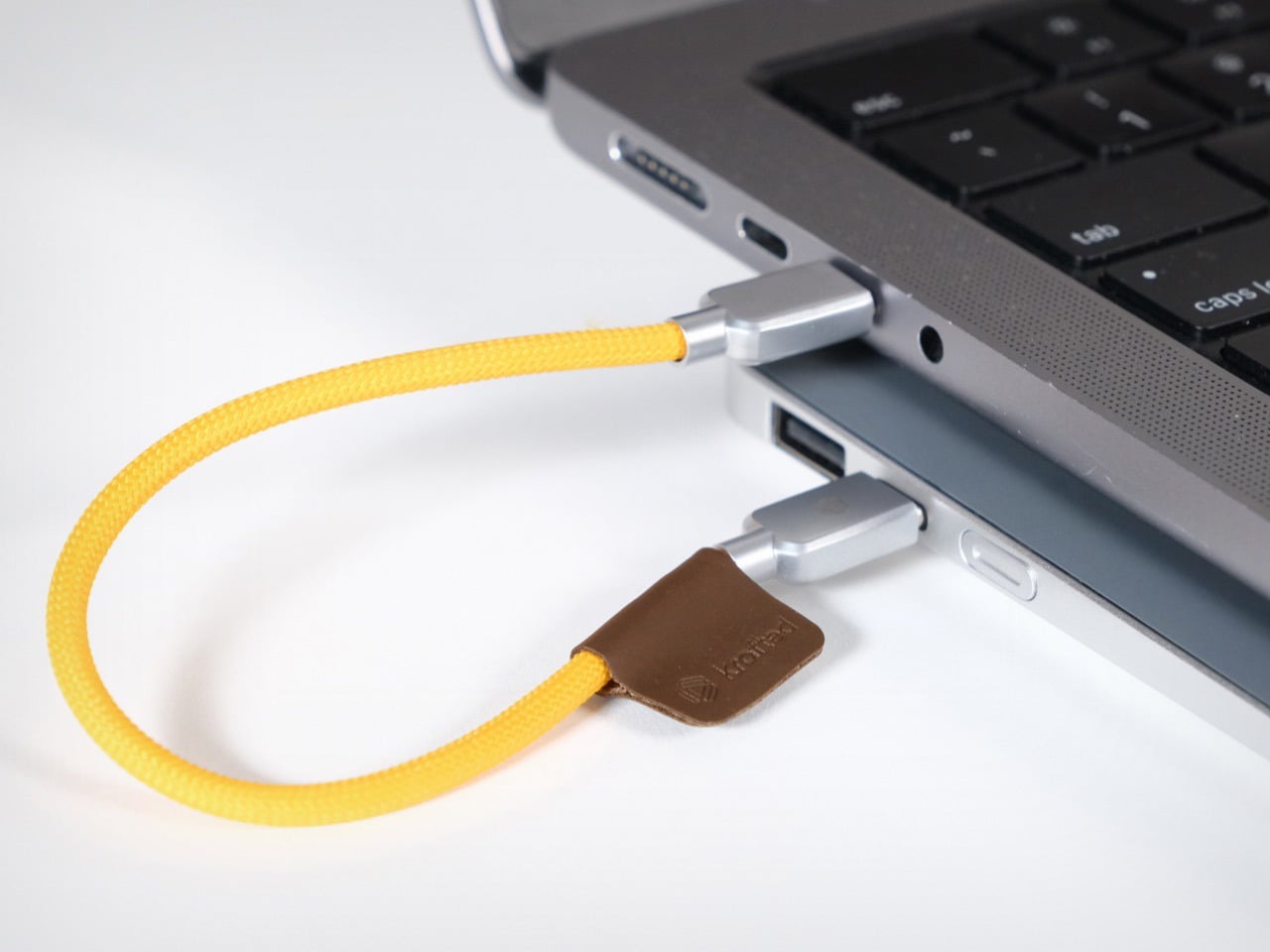
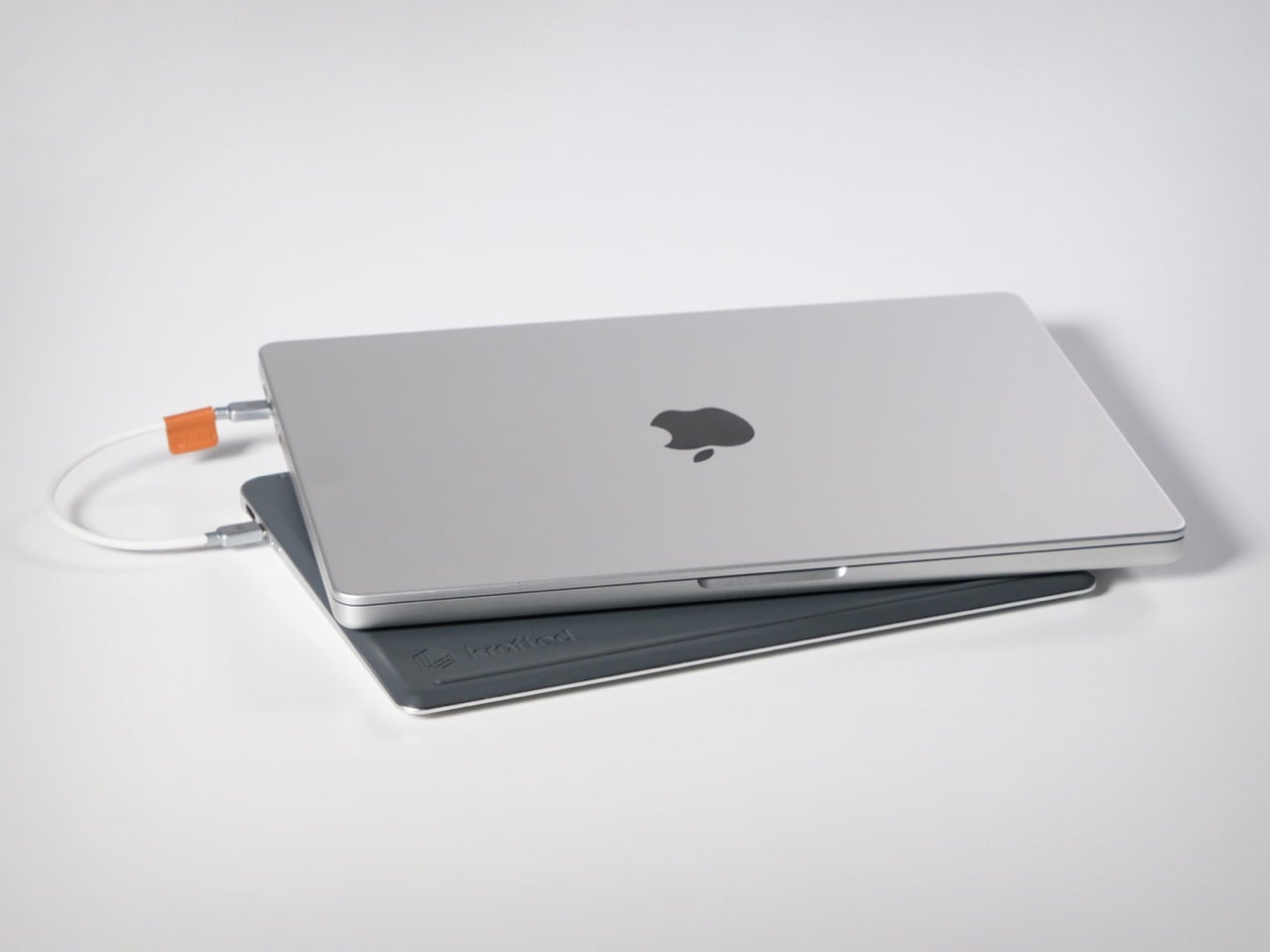
Aircraft-grade aluminium forms the housing, with ocean-bound plastic components used for the detailing, braided metal connectors on the cable, and a plant-based leather tag, meaning the material story carries a traceable supply chain rather than a footnote about corporate responsibility. On the certification side, Edge carries CE, UKCA, and UN38.3 compliance, and at approximately 74Wh, it falls comfortably below the 100Wh threshold that most international airlines enforce as the carry-on limit for lithium battery devices, no special permission required. That number matters more than it might seem right now. Airlines across multiple jurisdictions have been tightening restrictions on portable power devices in cabin luggage, and the last thing a frequent flyer needs is a power bank confiscated at security. Edge is built to travel as cleanly as the laptop it supports, which is the whole point of matching its form factor in the first place.

The replaceable battery system means Edge has a limitless lifespan. You do not throw it away when the battery degrades, you replace the module. Krafted breaks the single-use cycle that defines the category, so the aluminium chassis, the cables, the connectors, and the circuitry all outlive the cells inside them. That is a sustainability argument, but also a value proposition, because an object built to outlast a single battery’s lifespan is fundamentally different from a disposable product dressed up in premium materials. For a category historically treated as a commodity, the replaceable module puts Edge in the same conversation as tools you service rather than gadgets you replace. In a world where Apple sells its own batteries as non-serviceable components and charges accordingly, that philosophy lands as a genuine design position.

The Krafted Edge is available at a discounted $139 price tag, while the MSRP reads $200 if you wait to buy it after the Kickstarter campaign ends. A dual pack costs you $249 right now, netting you 37% savings. The Krafted Edge ships globally, with deliveries set for July 2026.
Click Here to Buy Now: $139.99 $200 (30% off) Hurry! Only 5 days left.