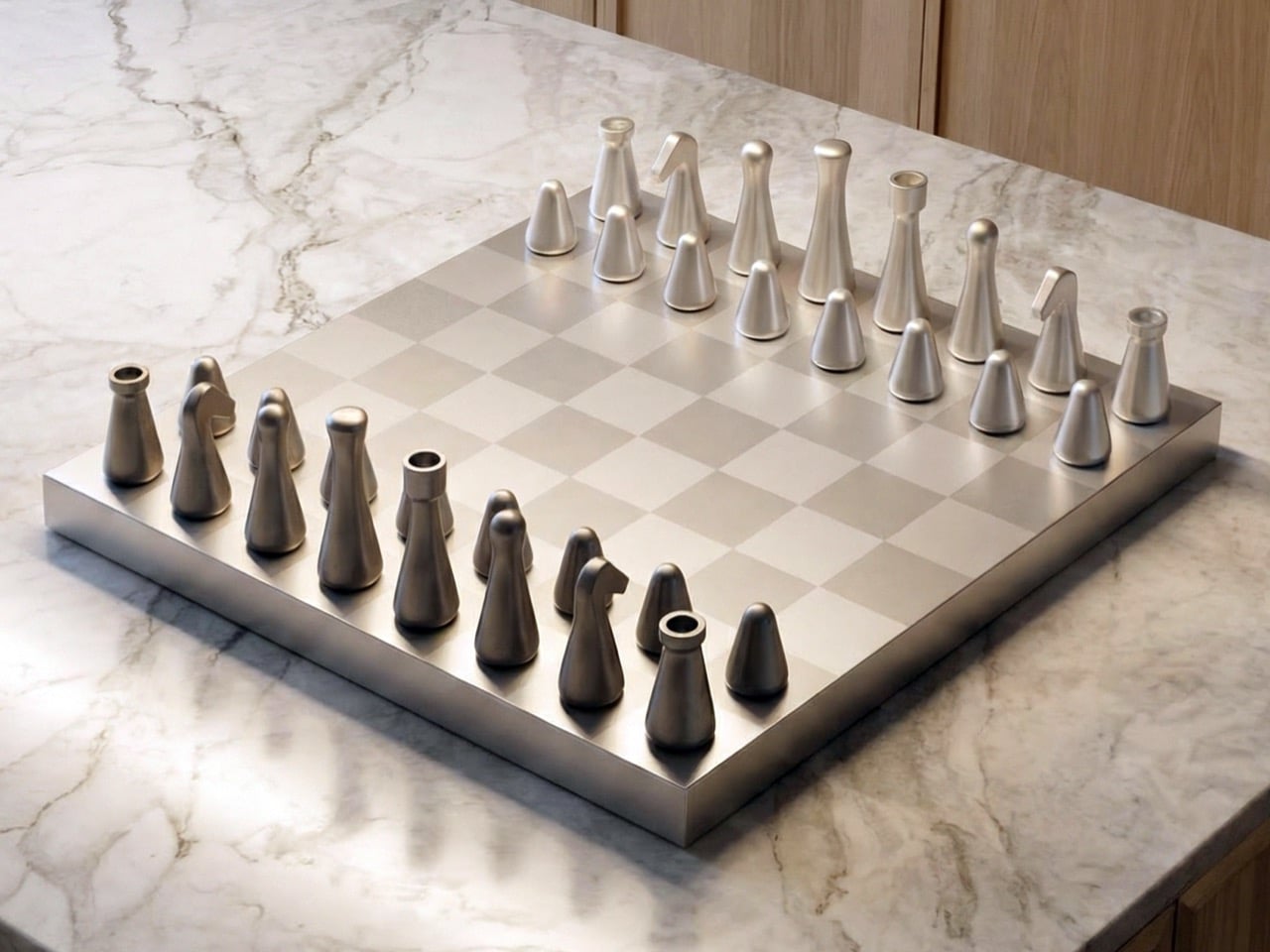
Chess has always been a game of structure, strategy, and symbolism. The pieces carry centuries of visual language: the authority of the King, the movement of the Knight, the strength of the Rook, the quiet repetition of the Pawns. Many chess sets lean into that history through ornament, carving, and decorative detail. Stoa takes a different path. It looks at the same familiar game and asks what can be simplified without losing meaning.
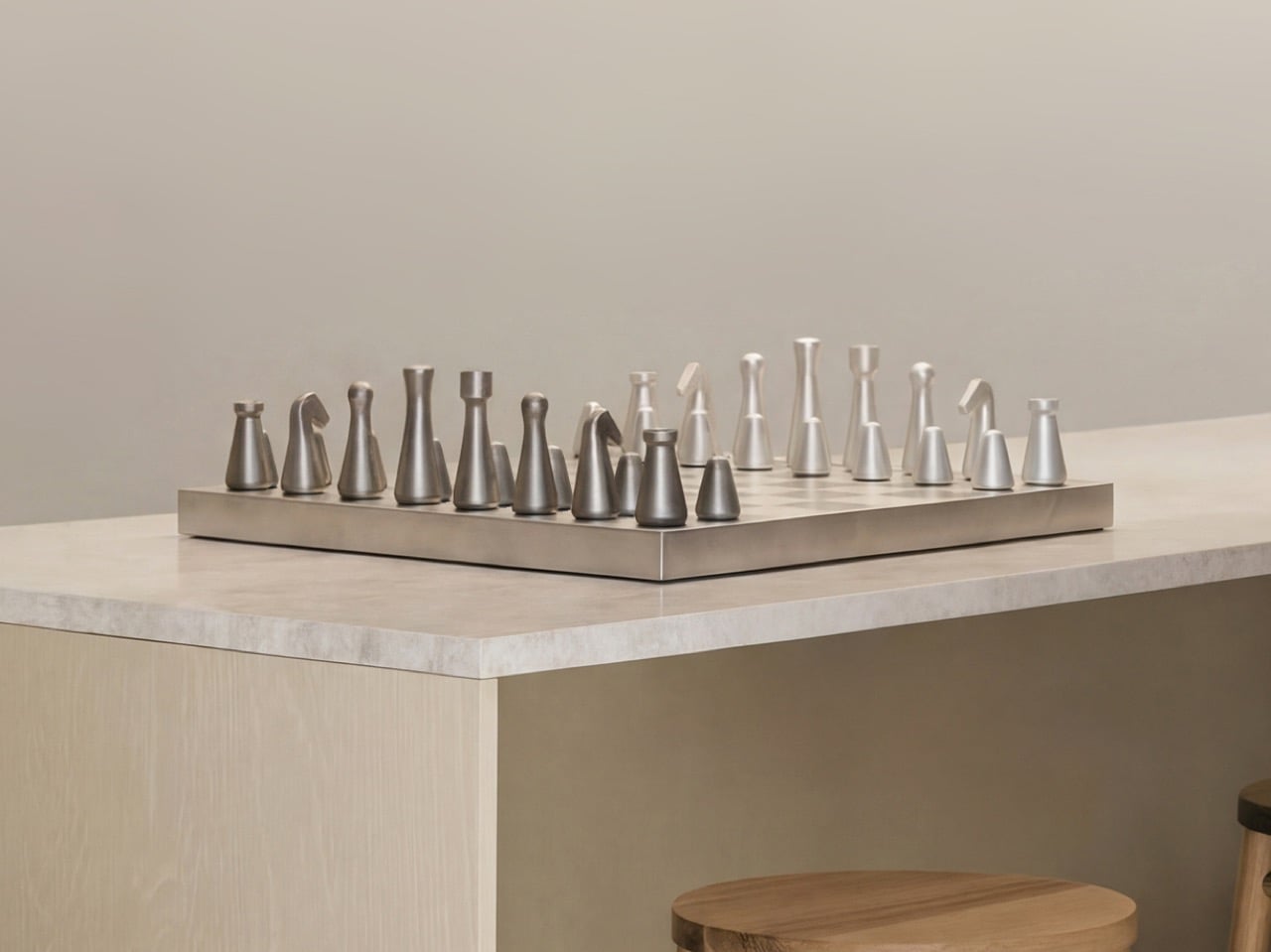
Inspired by Scandinavian design principles, Stoa is shaped by clarity, balance, and calm visual expression. Its forms are clean, architectural, and restrained, giving the set a quiet presence that feels natural in modern interiors. The pieces do not feel overly decorative or nostalgic. They feel composed, almost like small spatial objects arranged across a board. This gives Stoa a visual language that is contemporary, but still deeply connected to the traditions of chess.
Designer: Fabian Haydt
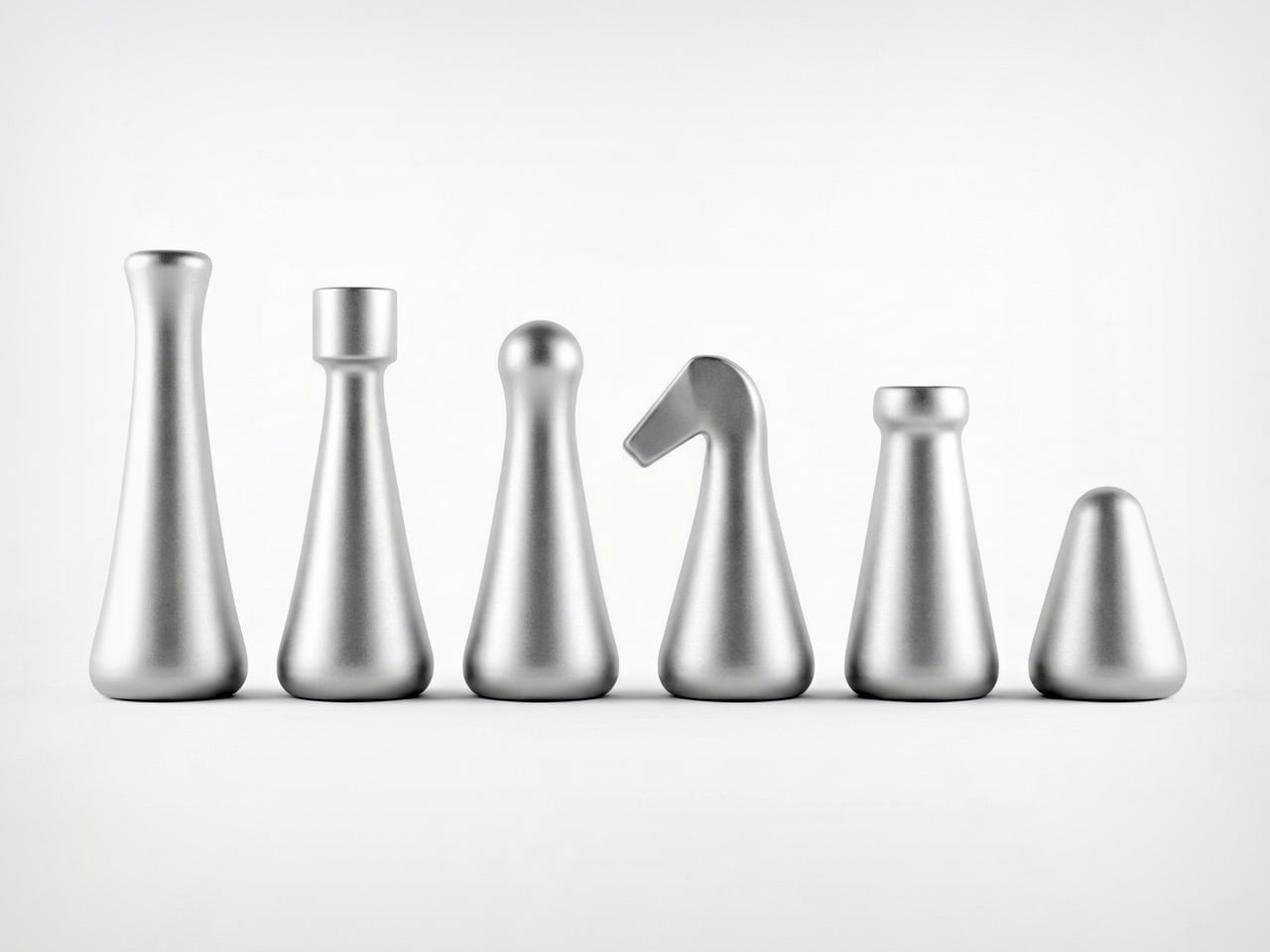
The strength of the design lies in its balance between reduction and recognition. Each piece is simplified to its essential geometry, yet remains easy to identify during play. This is an important distinction. Minimal chess sets can sometimes become so abstract that they ask too much from the player. Stoa avoids that by treating simplicity as a careful design decision rather than a visual shortcut. The King, Queen, Bishop, Knight, Rook, and Pawn each have their own identity, but none of them rely on unnecessary detail to communicate their role.
That clarity matters because chess is a game of focus. A player should be able to read the board quickly, understand the position of each piece, and make decisions without visual distraction. Stoa supports that experience through uncluttered forms and restrained proportions. The pieces are easy to recognize, comfortable to hold, and stable on the board. Their visual calmness allows attention to stay on the game itself.
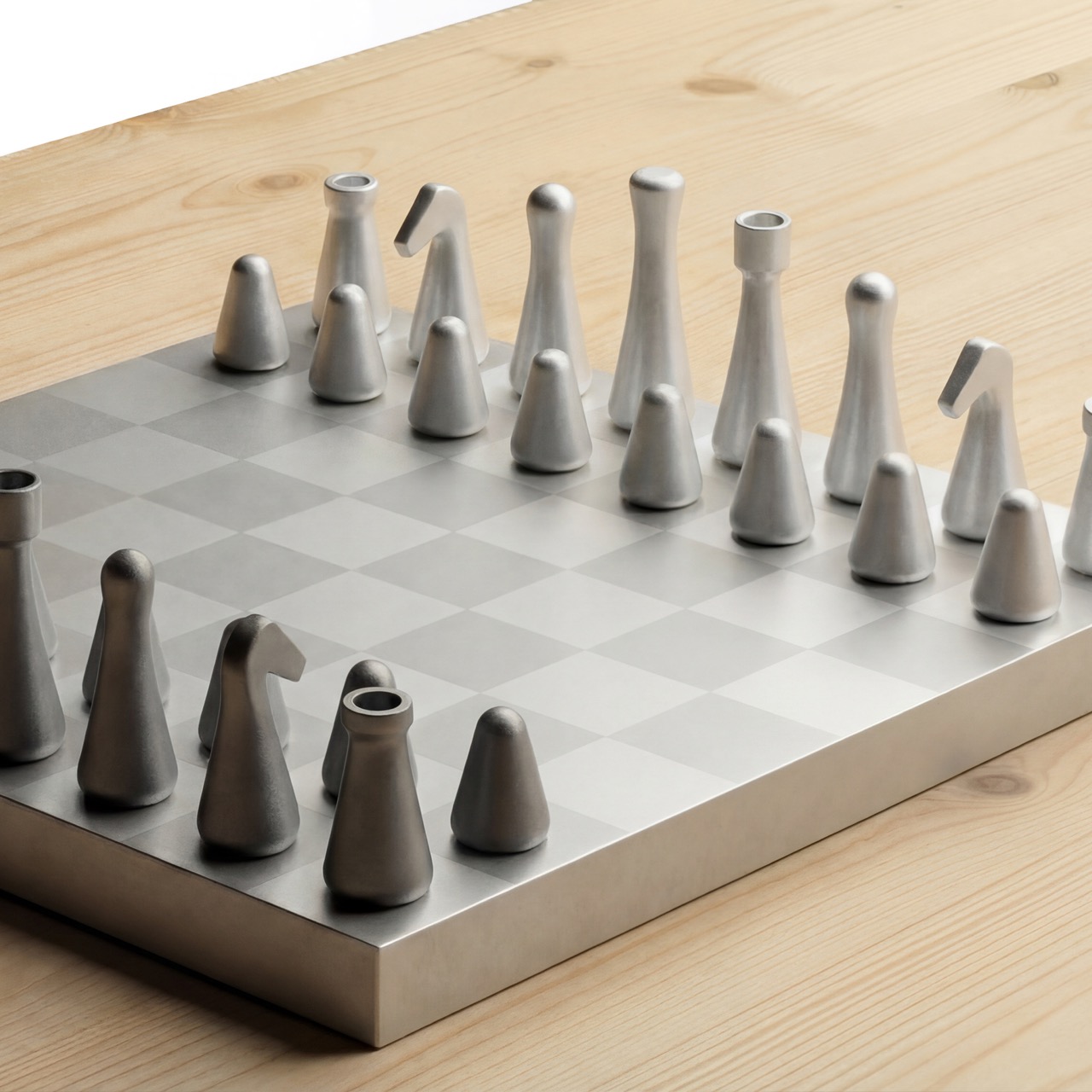
The Knight becomes one of the most interesting moments in the set. In traditional chess design, the Knight is often the most expressive piece, usually represented by a horse’s head. Reducing that form into a minimal object while keeping its character intact is a difficult challenge. Stoa handles it through proportion, silhouette, and a subtle sense of personality. It does not imitate the traditional Knight literally, but it preserves enough of its identity to make the piece immediately understandable.
Materiality adds another layer of refinement. Each piece is CNC-machined from solid recycled aluminum, giving the set a precise and durable foundation. After machining, the surfaces are polished and treated with fine glass bead-blasting to achieve a uniform matte texture. The pieces are then anodized for durability. This process gives Stoa a soft, premium finish that feels controlled rather than flashy.
The tactile experience is equally considered. Internal brass weights give the pieces a grounded feel, while leather pads on the bases provide stability and protect the board surface. These details make each move feel deliberate and satisfying. The weight, touch, and surface finish all contribute to a more immersive playing experience. Nothing feels accidental. Every material choice supports both function and atmosphere.
The proportions are compact and precise. The King stands at 68 mm, followed by the Queen at 62 mm, Bishop at 58 mm, Knight at 52 mm, Rook at 47 mm, and Pawn at 32 mm. The board measures 280 mm by 280 mm. This scale gives the set a refined presence without overwhelming the space around it. It can sit comfortably in a living room, study, or studio, carrying the elegance of a design object while remaining fully playable.

The development process focused on refining visual clarity, balance, and ergonomics. Multiple prototype stages helped test how the pieces felt in the hand and how quickly players could recognize them during faster gameplay. The challenge was not simply to make chess look minimal. It was to preserve the logic of the game while reducing each piece to a cleaner, more contemporary form. That required careful iteration, especially in maintaining distinction between pieces with similar proportions.
What remains is a chess set that feels calm, tactile, and quietly luxurious. Stoa brings a centuries-old game into a modern design language without disconnecting it from its roots. It respects tradition by understanding it, then translates that tradition through geometry, material precision, and visual discipline. The result is a set that feels made for contemporary life: thoughtful enough to admire, clear enough to play, and restrained enough to last.