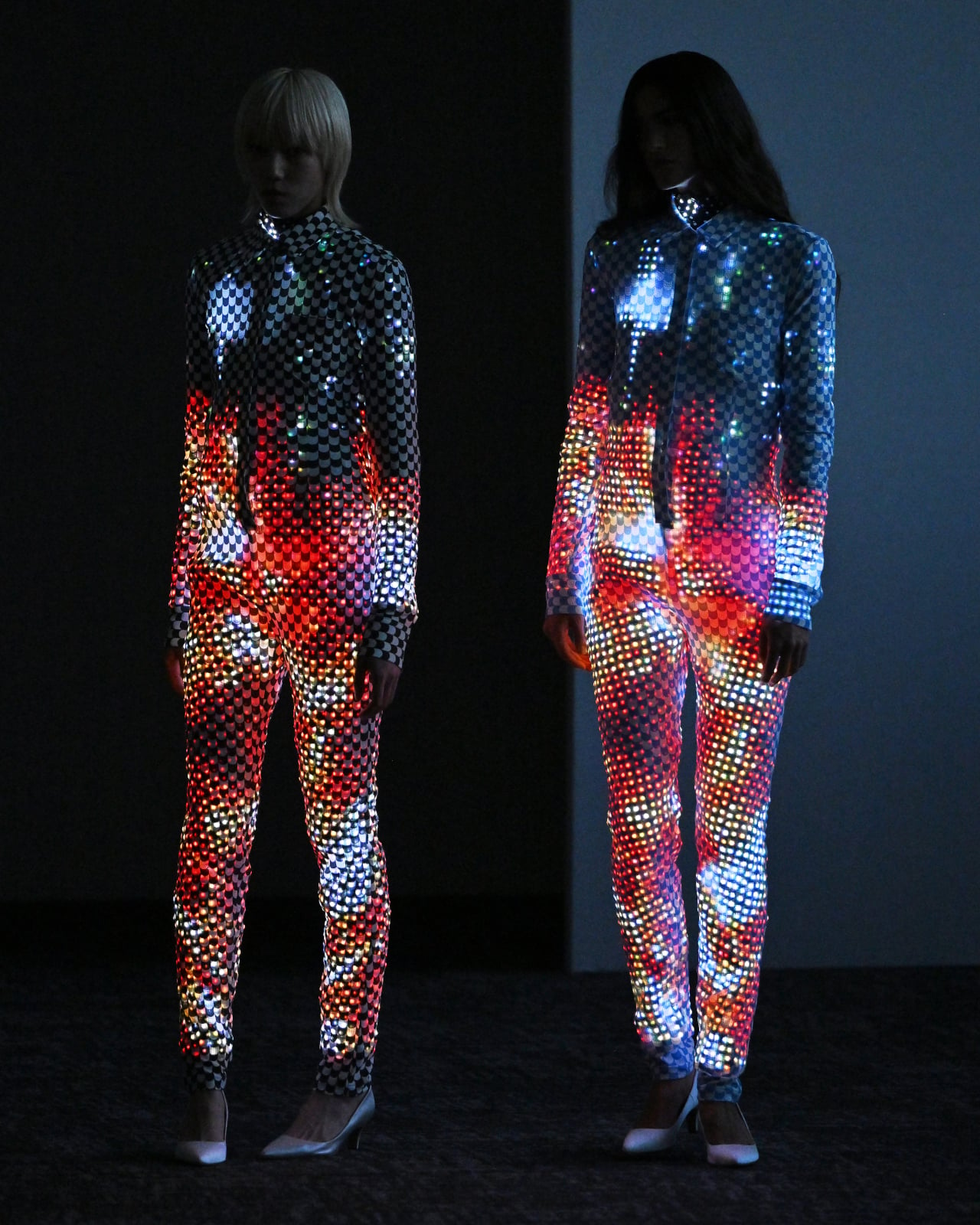
Changing your outfit usually means heading back to your closet, but ANREALAGE’s Spring/Summer 2027 “SKIN” collection suggests a different solution. Six dresses at Paris Fashion Week use E Ink to switch colors and patterns while they stay on the body. You could call them wearable screens, though their scale-like surfaces make them feel closer to something that grows and changes with the wearer.
Fashion has always played with the idea of a second skin, from tight-fitting clothes to prints that mimic textures found in nature. ANREALAGE takes that idea rather literally, treating the outside of a dress as something that doesn’t have to stay the same all day. The silhouette remains recognizable, but the colors moving across it can make a familiar piece feel new.
Designer: Kunihiko Morinaga (ANREALAGE), E Ink
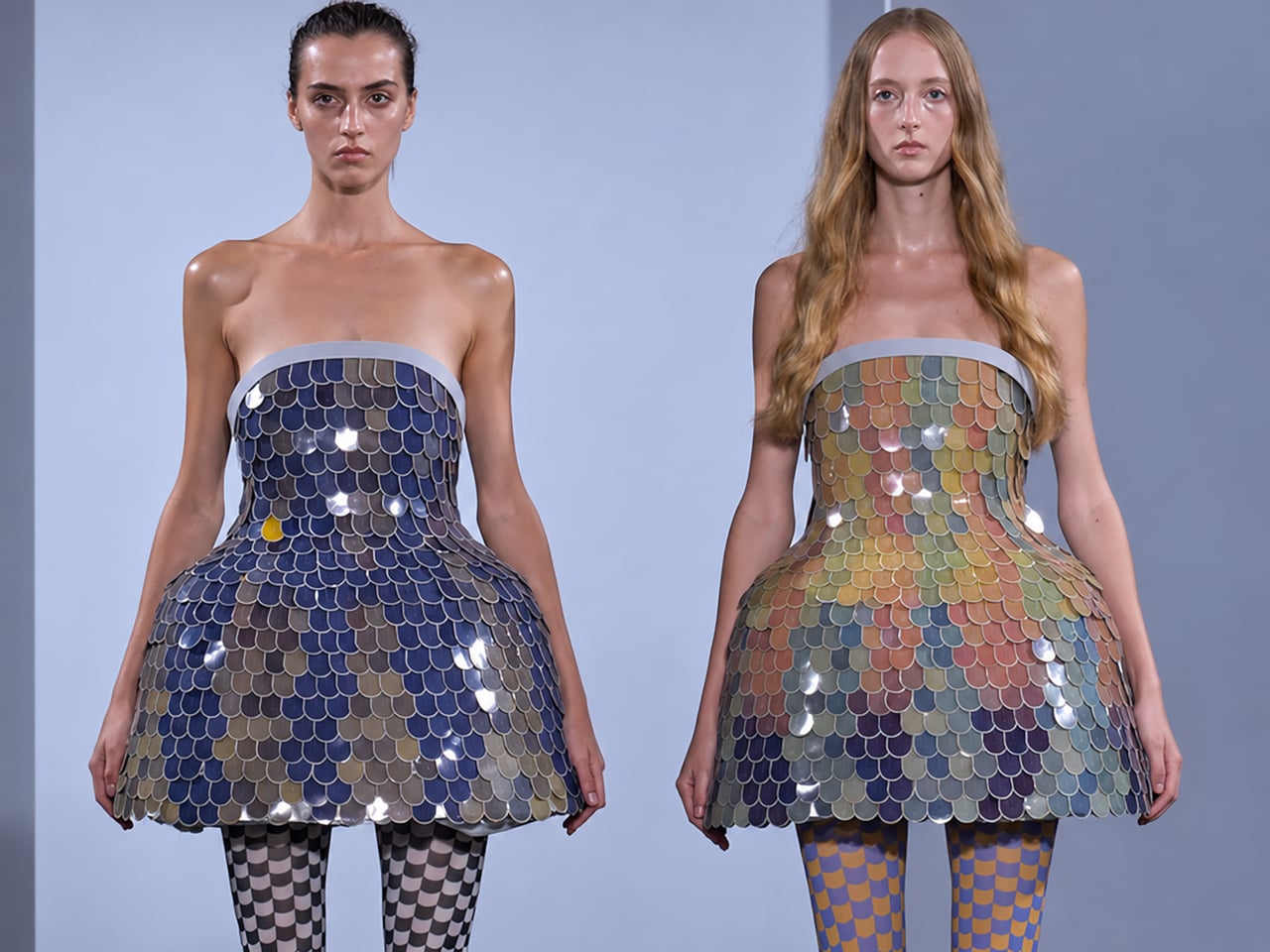
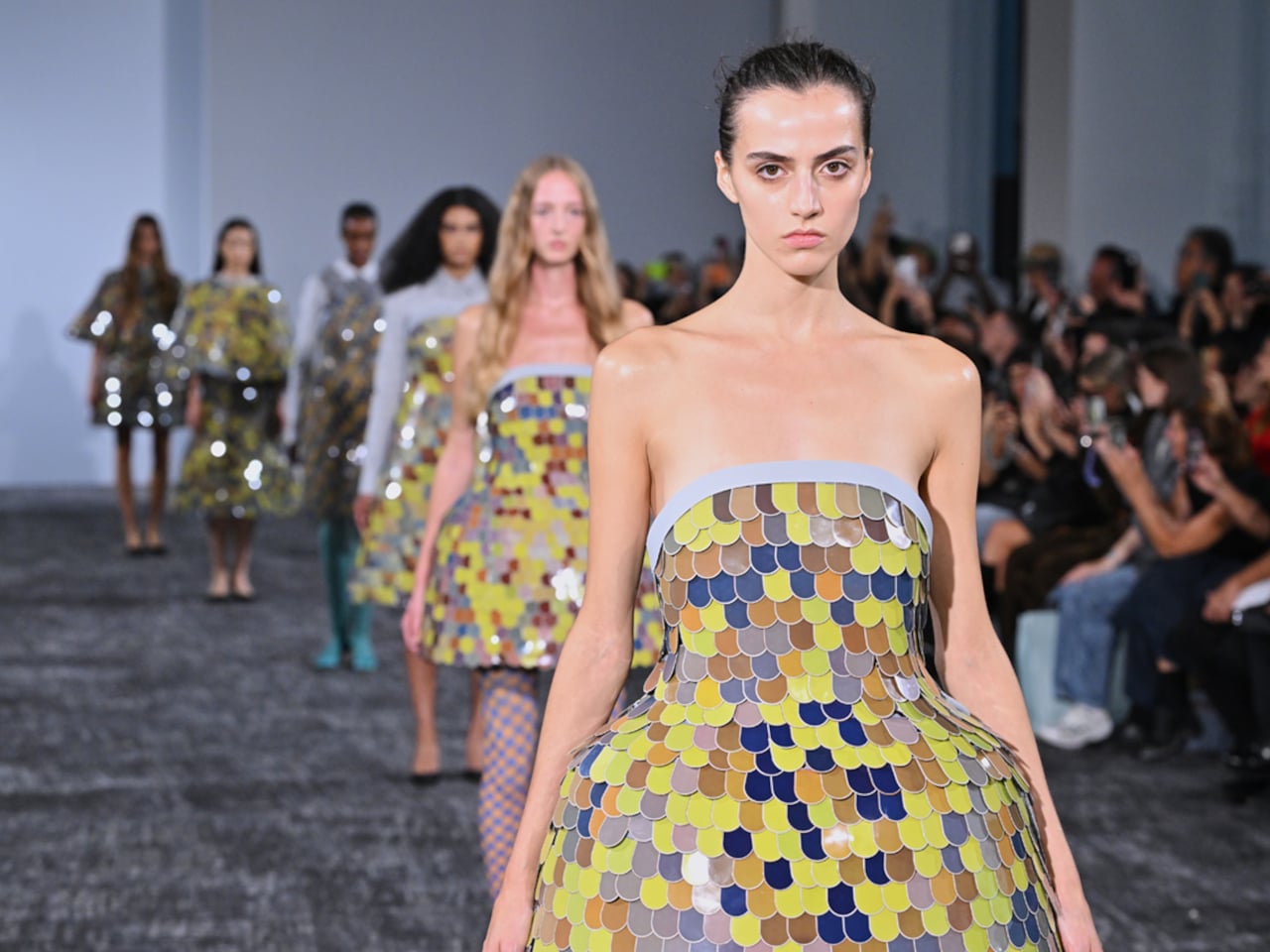
The changing surface uses E Ink Prism 3, which applies electronic paper technology beyond the e-reader screen. Each dress carries about 1,000 to 2,000 individual pieces arranged like scales, so the color shift happens across many smaller surfaces rather than one rigid-looking panel. That construction lets the dress keep its shape while its appearance follows a different script.
E Ink changes the effect of the technology, too. Unlike LEDs, these pieces aren’t glowing their way across the runway; their colors are visible in the surrounding light. That gives the dresses a quieter kind of drama, even when their patterns shift. It’s an important distinction for clothing, where a gadget stuck on top can pull attention away from the garment underneath.
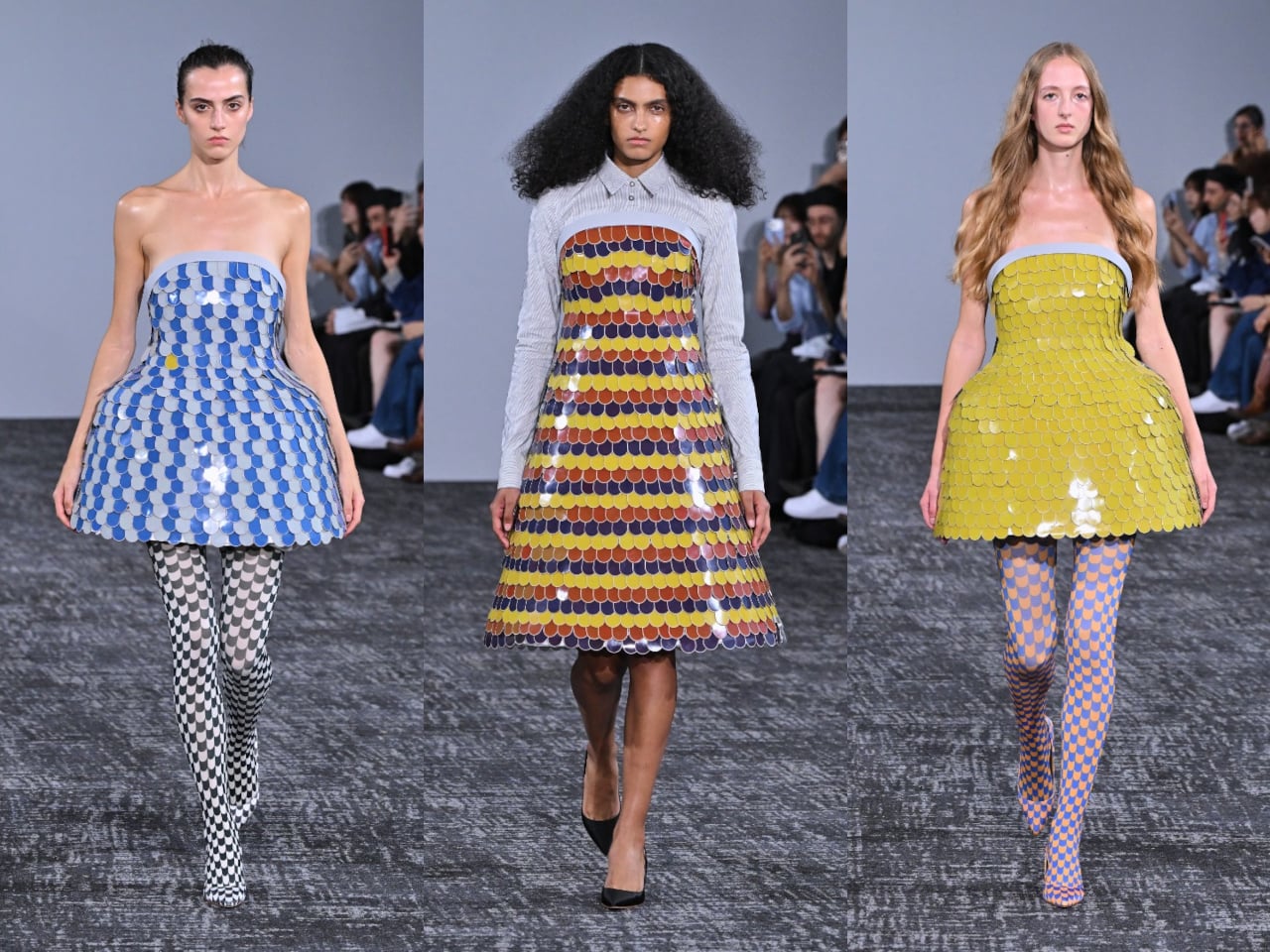
That doesn’t mean the electronics disappear into the fabric. The scales give each dress a distinct texture, turning the thing that makes the color change possible into part of the design. ANREALAGE explores other shifting surfaces in the collection, including 3D-printed elements that look different as the viewing angle changes. Not every transformation needs electronic paper to make its point.
On a runway, those changes give a garment several appearances without anyone slipping backstage for another outfit. The same idea could be appealing in performance costumes, where a change in color can mark a change in mood or scene. For now, though, the point is what the design makes possible, not a promise that everyone will dress this way.
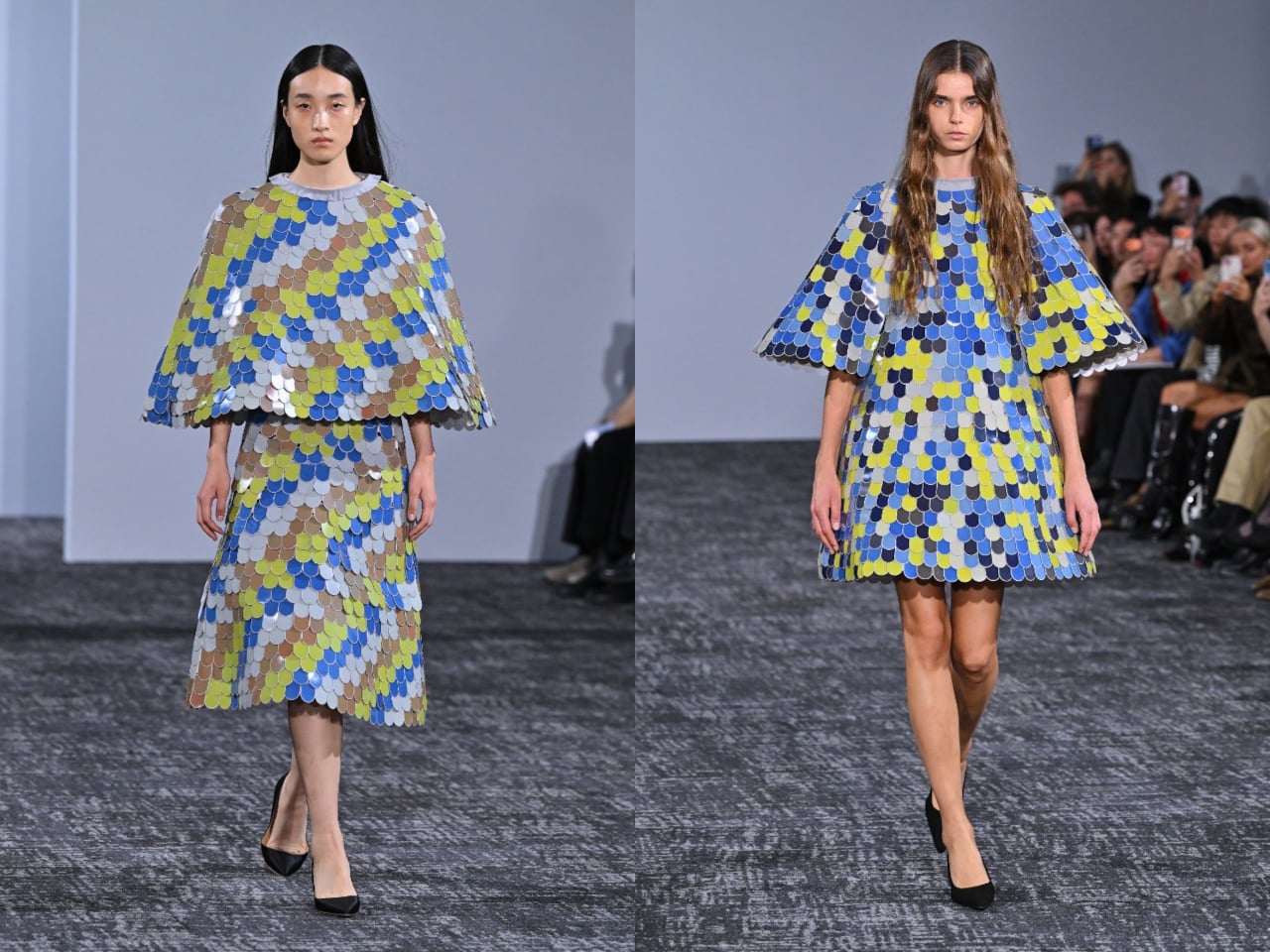
Of course, there are a few reasons why your next summer dress probably won’t come covered in electronic scales. Thousands of connected pieces raise questions about comfort, cleaning, repairs, and what happens when one stops working. E Ink suggests that changing the look of one garment might reduce the need for several, but that’s not the same as proving these dresses are easier on the environment.
That leaves “SKIN” somewhere between fashion experiment and material design. The dresses aren’t practical replacements for the clothes in your closet, but they do make the usual idea of a fixed pattern feel oddly limiting. A wearer can keep the same silhouette while the surface takes another direction, and you don’t need to understand E Ink to enjoy watching that happen.