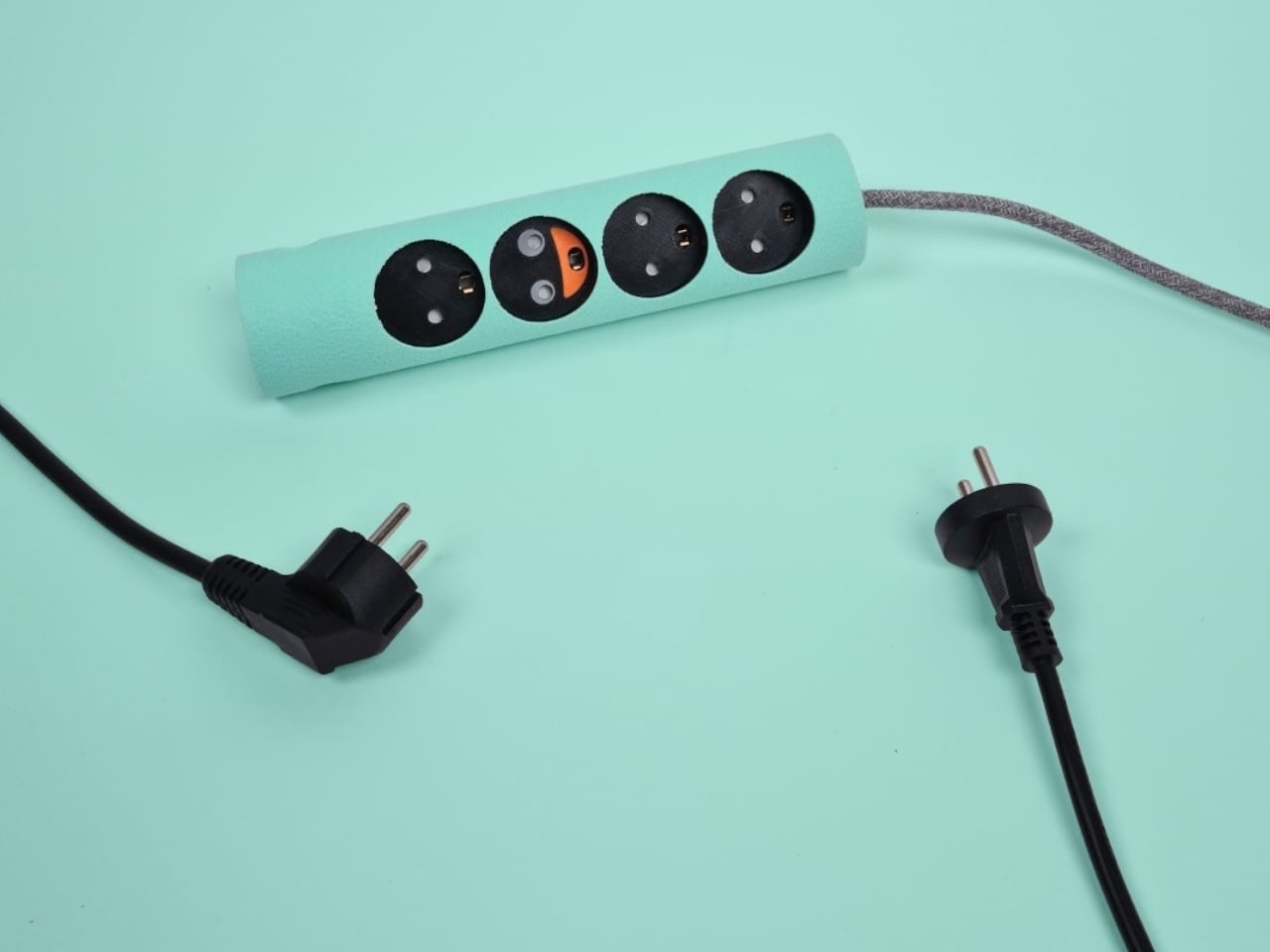
Anyone who has ever crawled under a standing desk at 6 a.m. trying to find an outlet knows the specific frustration of modern furniture. We’ve spent the last decade making our desks height-adjustable, our floor lamps articulated, our shelving modular, and somehow the humble power strip never got the memo. It just sits there, bolted to a fixed spot, forcing every cord in the room to stretch, sag, or dangle in whatever direction gets the job done.
That mismatch is the actual problem Swift Creatives set out to solve with Power Duck. When your desk goes up, the outlet doesn’t follow. When your lamp shifts, the plug stays put. You end up buying extension cords to bridge the gap, and then you end up hating the extension cords, because now there’s a tangle of cable running across the floor where someone is guaranteed to trip on it. Power Duck’s whole premise is simple: let the power source move with you instead of making you adjust around it.
Designer: Swift Creatives
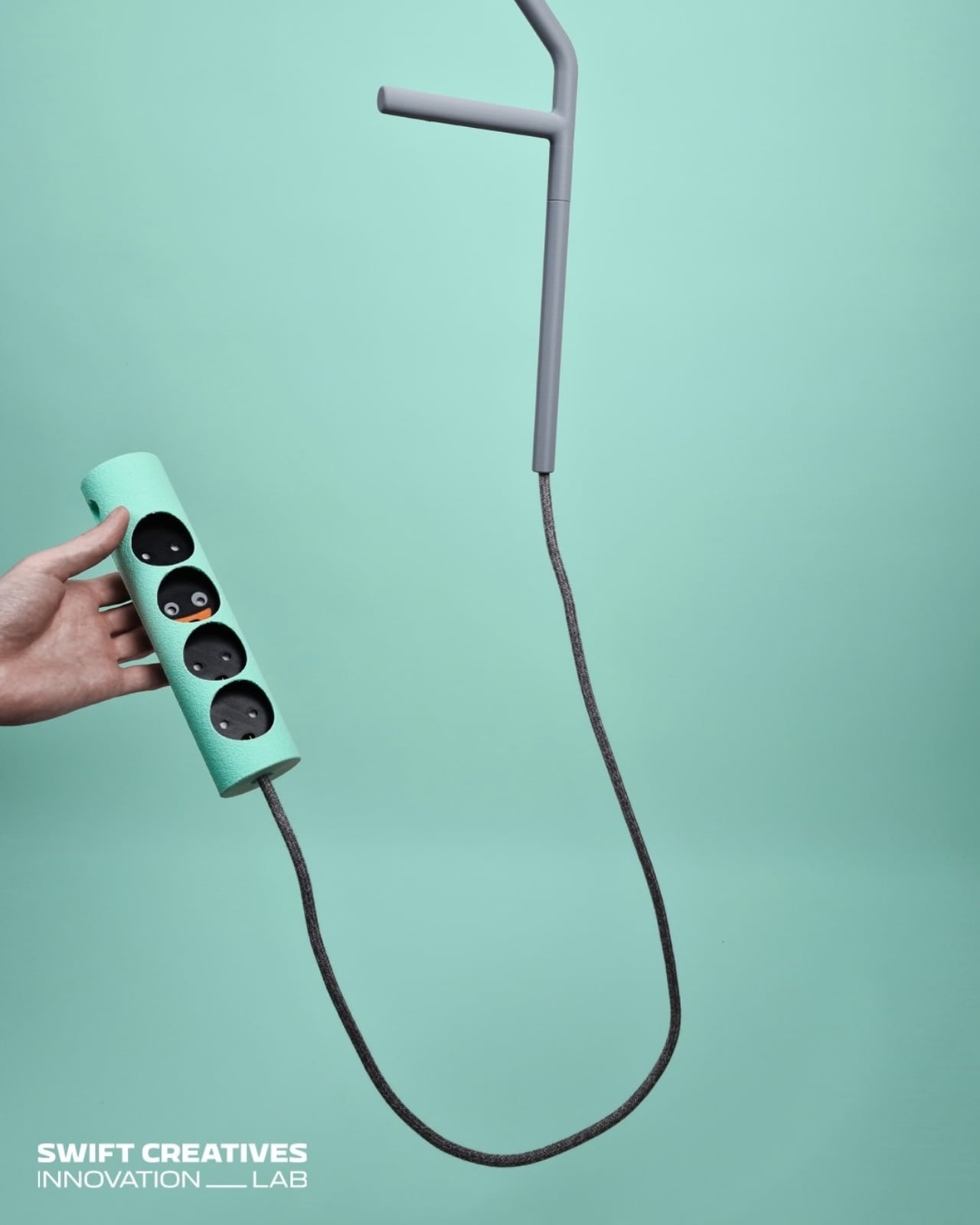
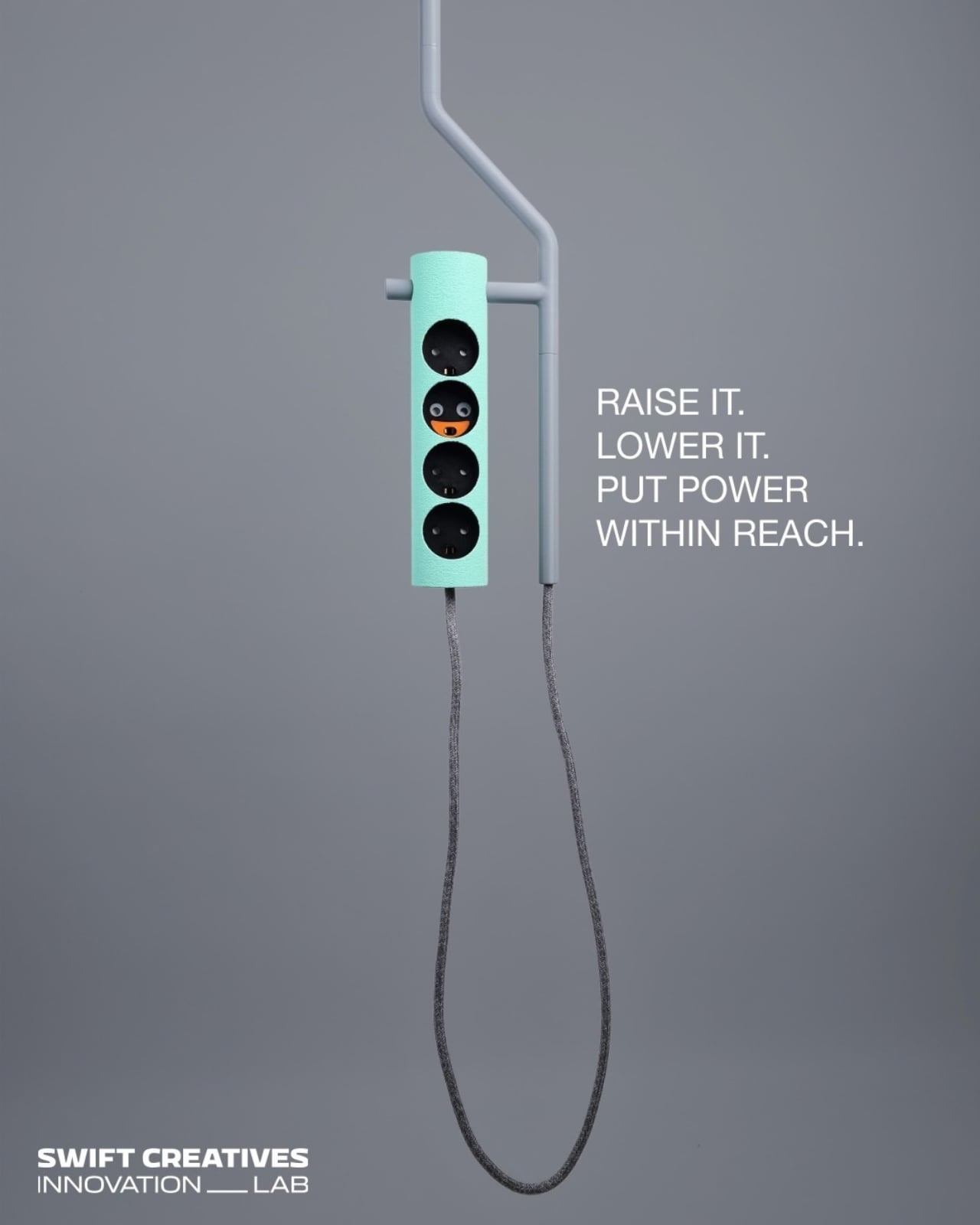
The mechanism itself is almost embarrassingly obvious once you see it. A grey pole, shaped a bit like an angular coat hook, holds a mint green sleeve that slides freely up and down. Inside that sleeve sit four outlets. Raise the sleeve when you need power near shoulder height, lower it when you want it tucked near the floor, and the cord just loops along for the ride instead of getting yanked taut. It’s the kind of adjustable height mechanism you’d expect on a desk lamp, quietly borrowed and applied to something as unglamorous as a power strip.
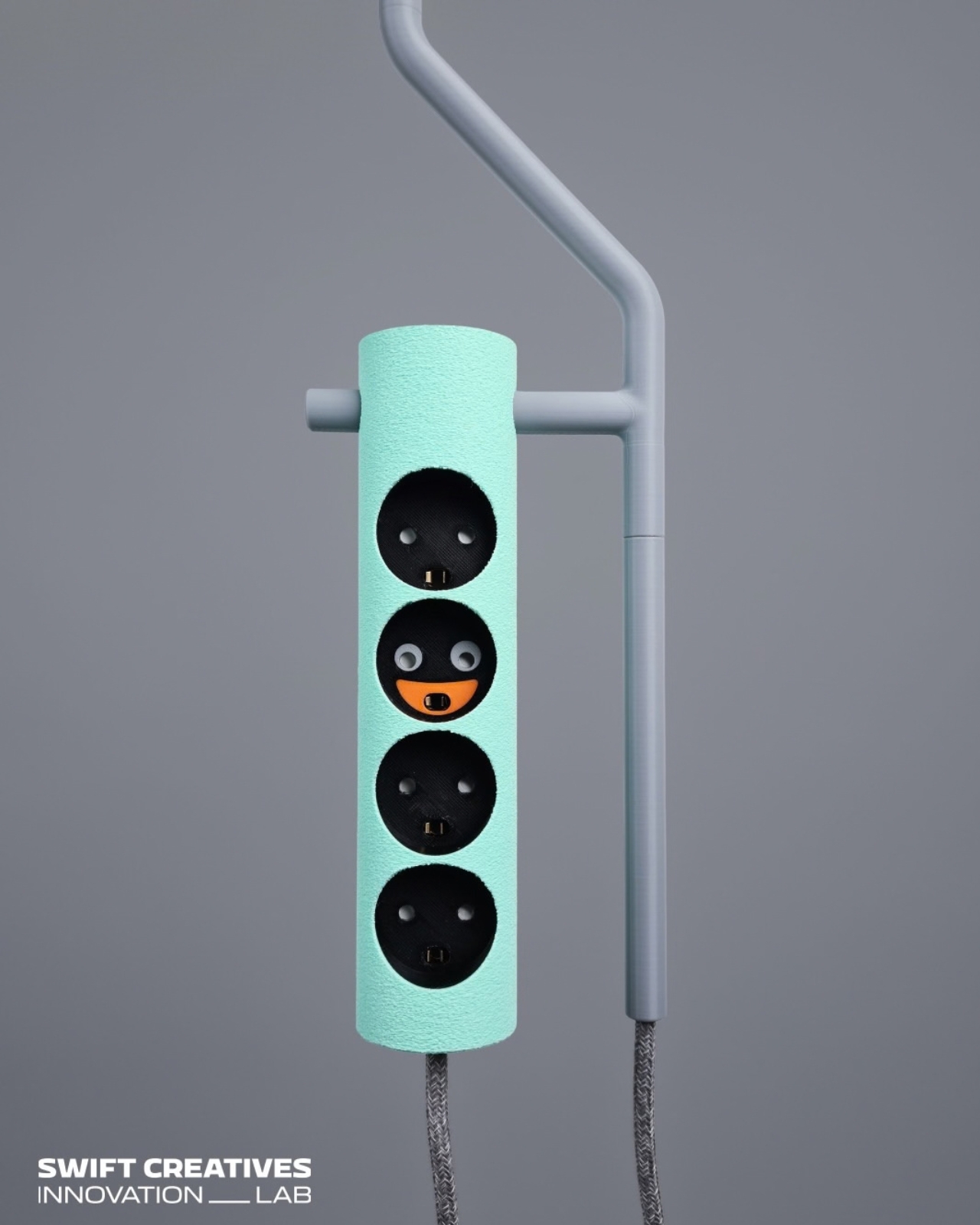
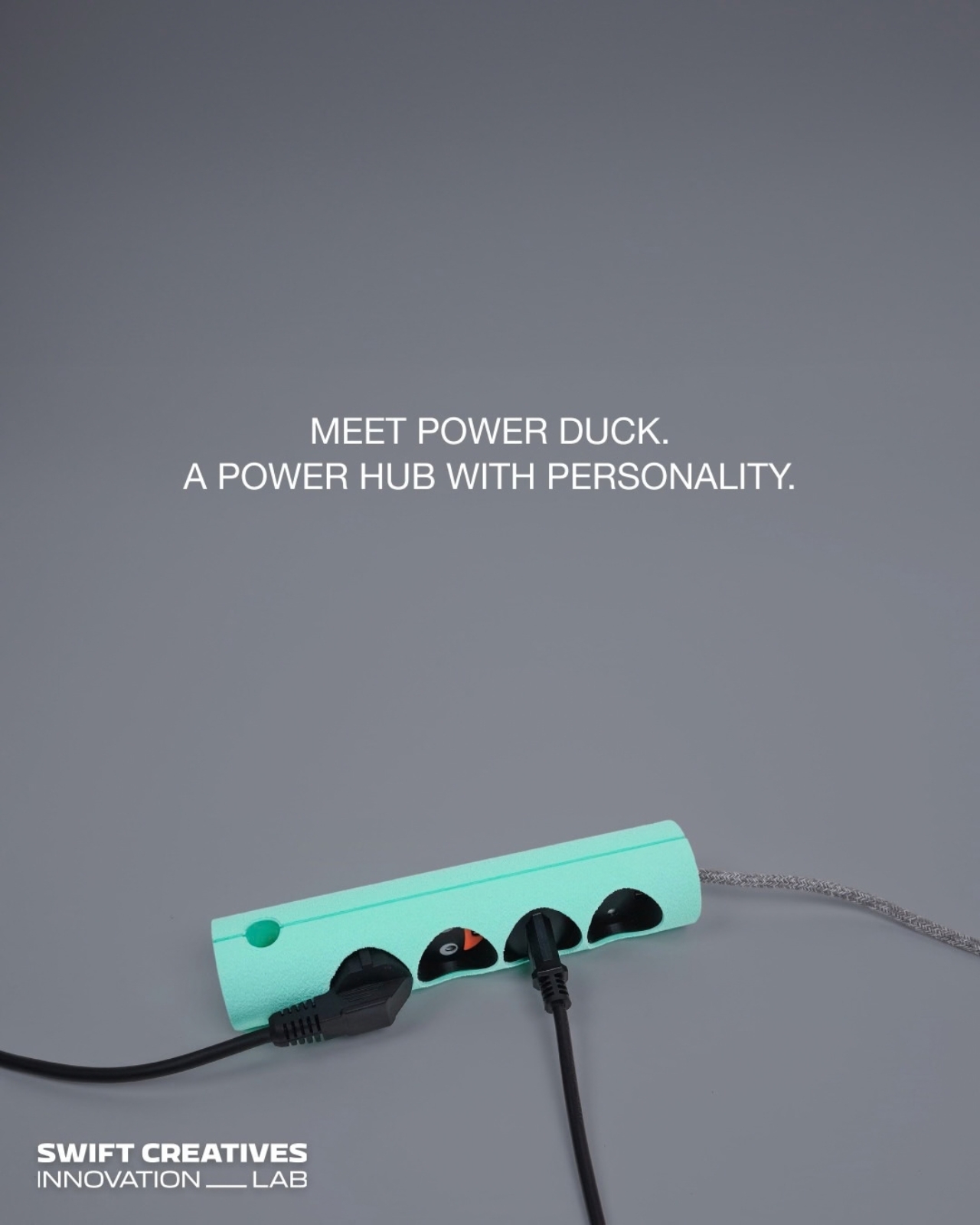
What makes the concept stick in your head, though, is the face. One of the four outlets has been given a pair of googly eyes and an orange beak, turning it into a duck peeking out at whoever plugs something in. It’s a small, almost throwaway detail, but it does a lot of work. Power strips are objects we’re trained to ignore, to hide behind furniture, to feel a little embarrassed about when guests are over. Giving one a face flips that instinct. Suddenly it’s not clutter you’re apologizing for, it’s a character sitting on your desk.
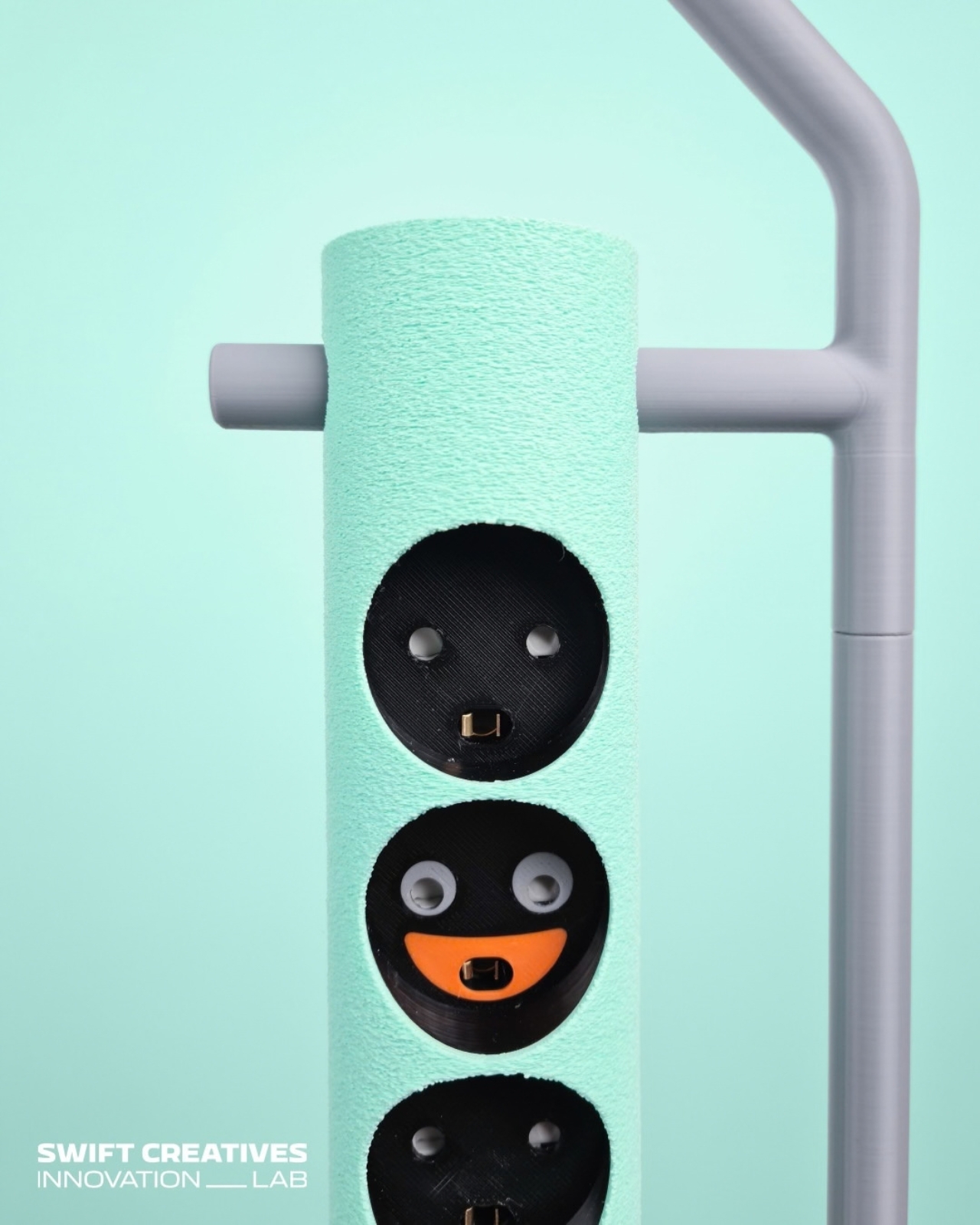
I like this move because it says something honest about where product design is headed. For years, “good design” in tech accessories meant disappearing entirely, going matte black or brushed silver so nothing draws attention. Power Duck takes the opposite bet, leaning into color and personality instead of camouflage. That’s a riskier choice, since a cartoon face can read as gimmicky if the underlying function doesn’t hold up. Here it doesn’t feel like a gimmick bolted onto a boring product just to make it shareable. The sliding mechanism is the real idea, and the duck face is the thing that makes you actually want to look at it twice.
It’s also worth saying plainly that Power Duck is a concept out of Swift Creatives’ Innovation Lab, not a product sitting on a shelf at your local hardware store. Plenty of clever ideas like this live on Instagram and never make it past the prototype stage, and there’s no guarantee this one breaks that pattern. But that doesn’t make it less useful as a signal. Somebody looked at a genuinely mundane annoyance, the fixed-height outlet strip fighting against our increasingly adjustable furniture, and treated it as worth solving rather than shrugging off.
American homes and offices have quietly filled up with height-adjustable everything over the past several years, from standing desks to monitor arms to modular shelving, and our power infrastructure has never caught up. Power Duck is a small, almost funny reminder that the unglamorous parts of a room deserve the same design attention as the parts we actually show off. Whether this exact duck ever ends up on a store shelf matters less than the fact that someone bothered to ask why a power strip has to be the one static object in an otherwise flexible setup. That question feels overdue, and I hope more designers start asking it.
SHARE