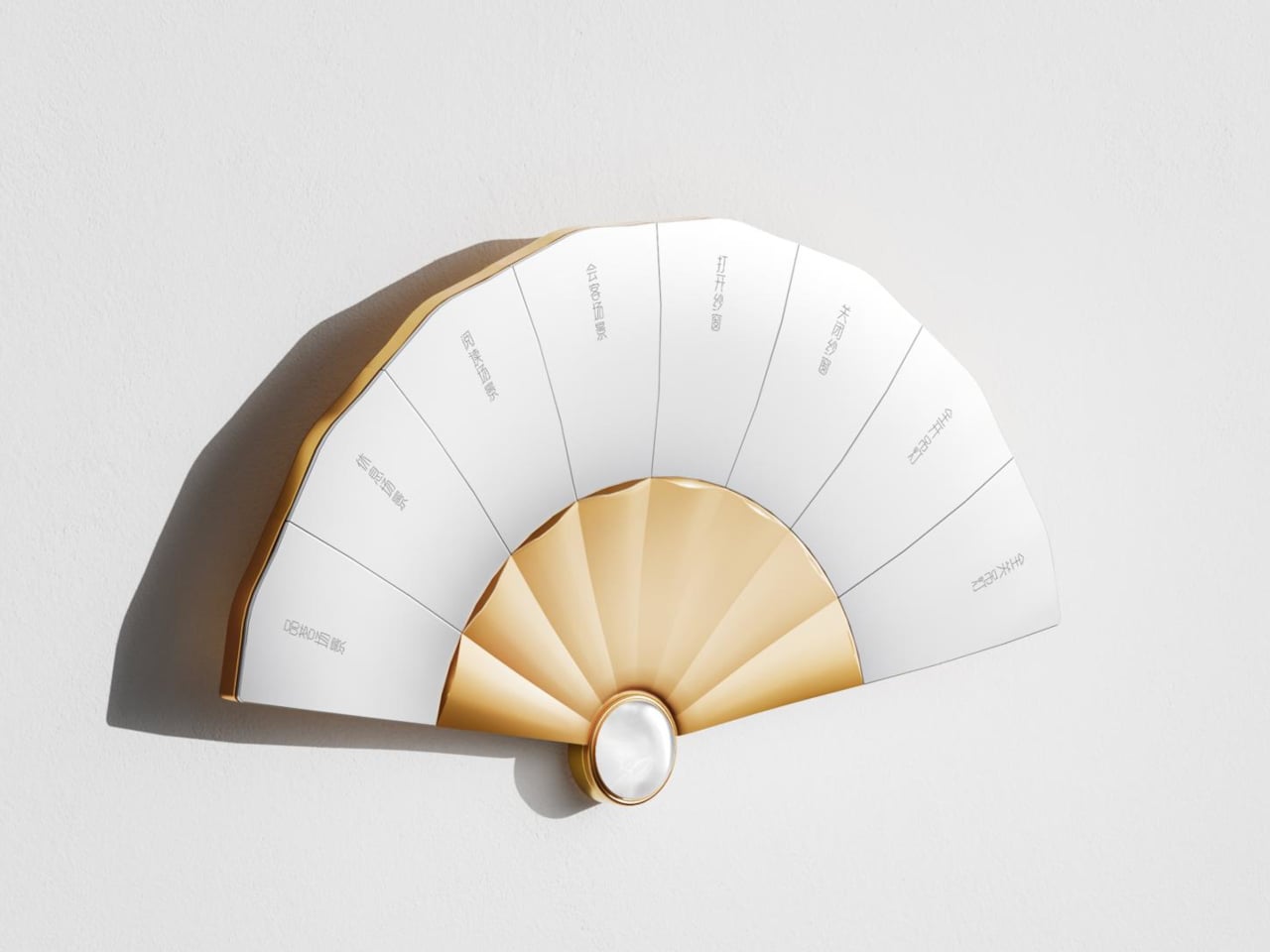
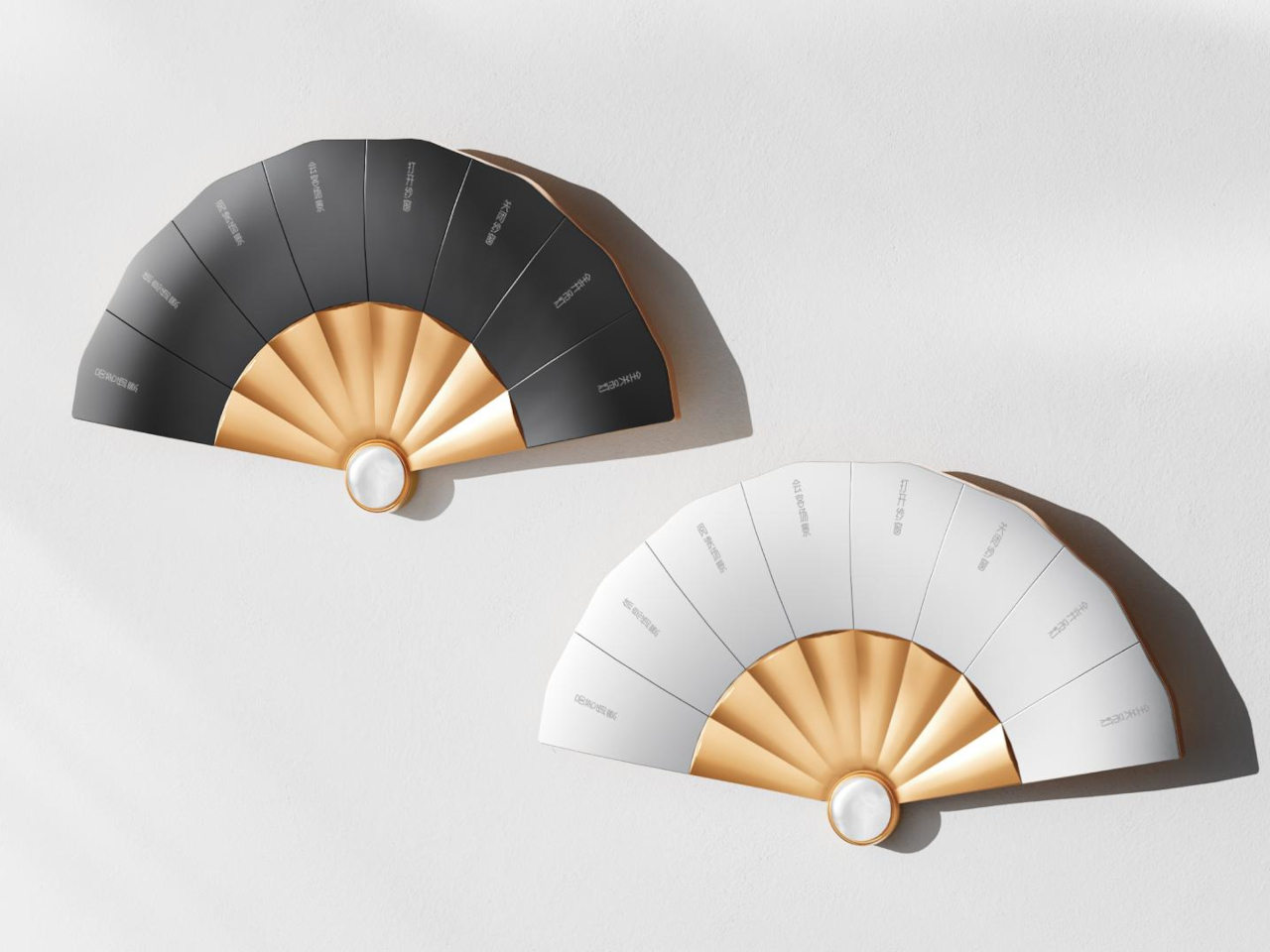
A folding fan used to say something about the person holding it, signaling taste and refinement long before anyone cared about voice assistants or smart lighting. The Fanora Control Terminal borrows that exact silhouette and turns it into a wall-mounted switch panel, proving a home automation interface doesn’t have to look like it was designed by an engineer who’s never held a fan in their life.
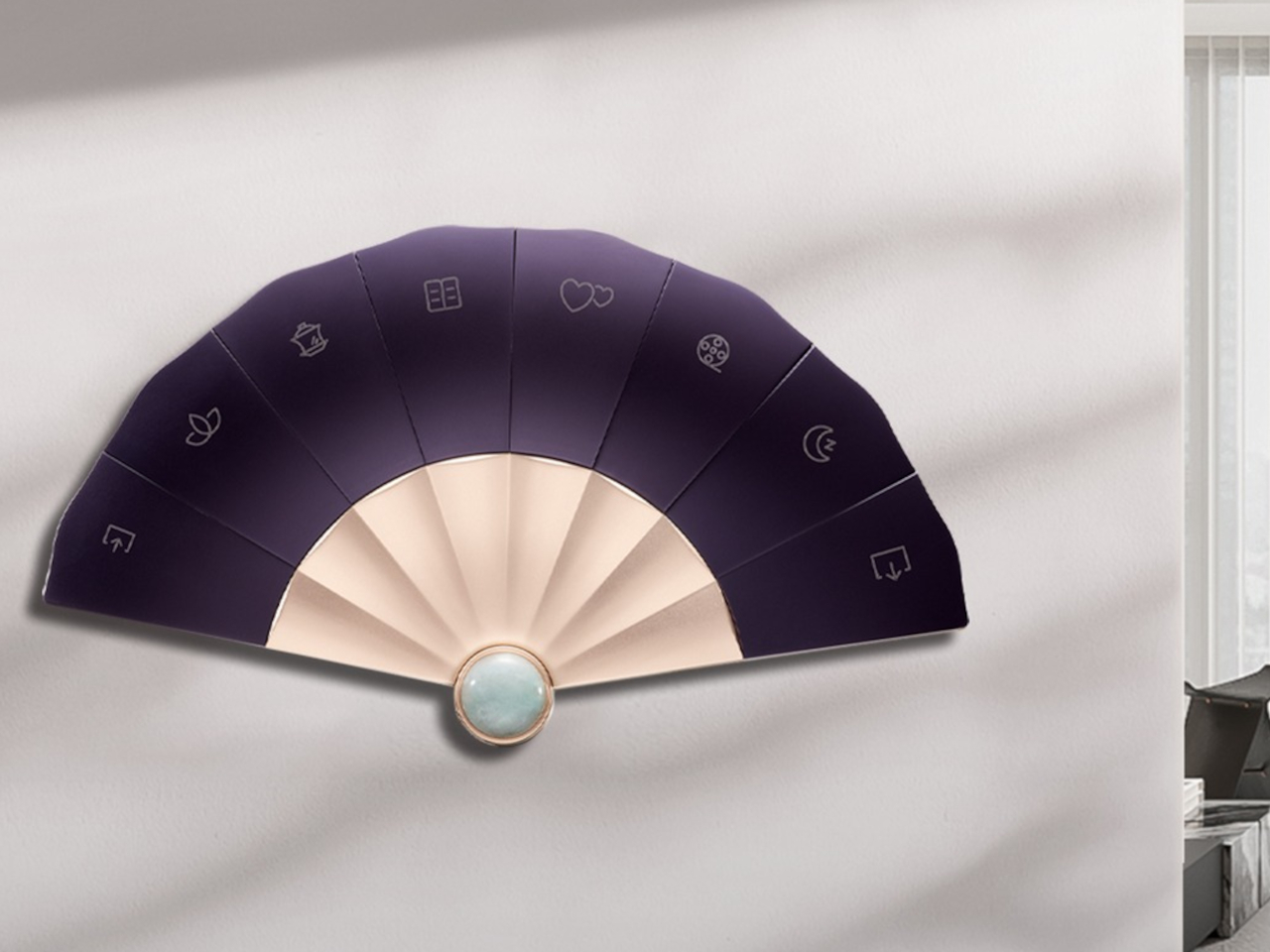
Eight mechanical buttons fan out from a central hinge point, each one following the natural arc a real folding fan would take when opened halfway. That shape isn’t decorative shorthand either. It’s the whole control surface, built from aluminum and finished with a jade centerpiece that used to signal scholarly status in Chinese tradition and now doubles as a working sensor housing.
Designer: HDL Automation
A Body Built From Aluminum, Not Plastic
The panel’s main body is machined from 6063 aluminum alloy, then sandblasted and anodized to get that matte, slightly warm finish instead of the glossy plastic most switch panels settle for. Each of the eight buttons goes through CNC processing, with a curvature shaped around how a fingertip actually presses rather than how a mold happens to come out, and a fine sand texture that keeps fingerprints from building up over months of daily use.
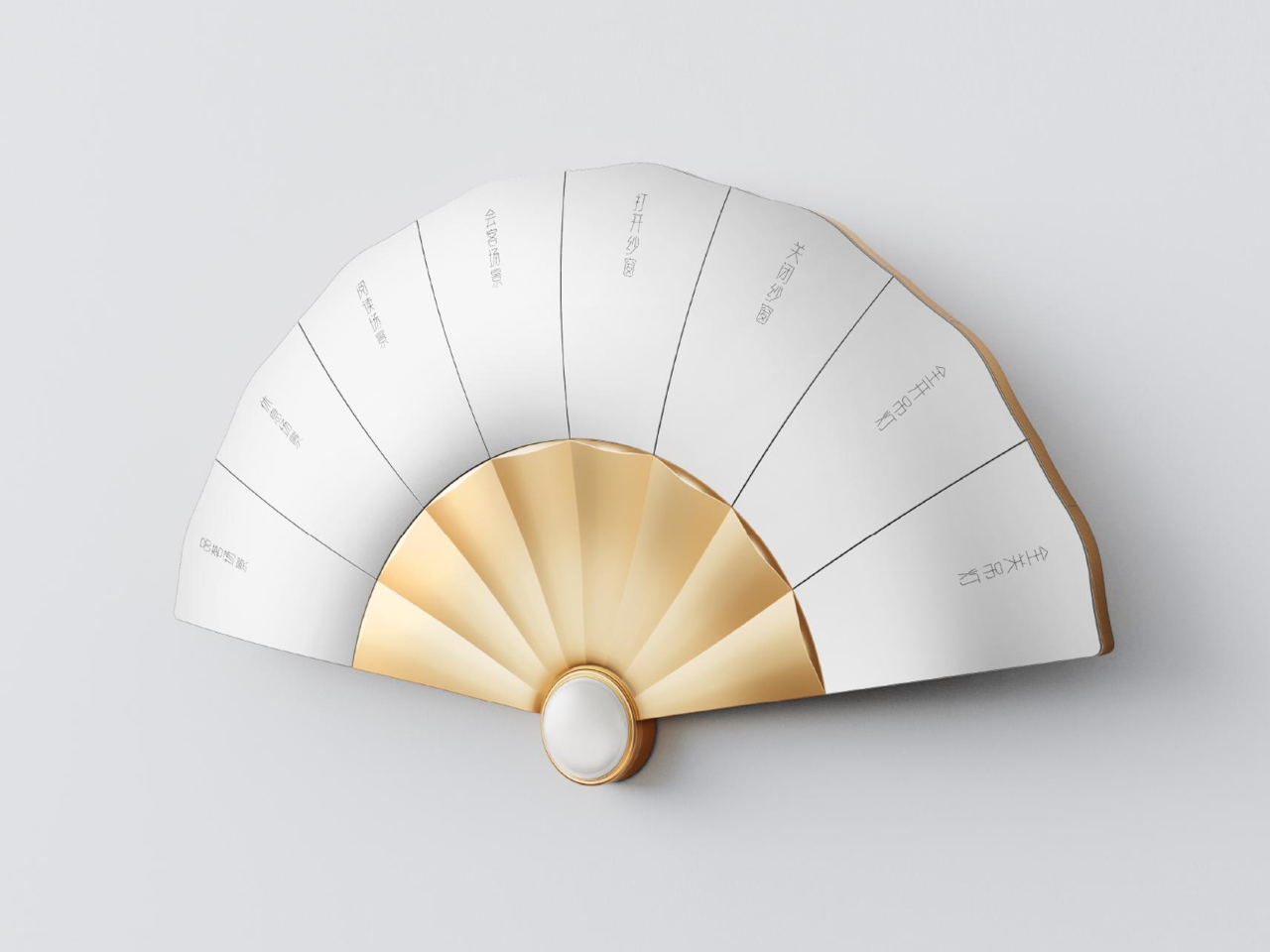
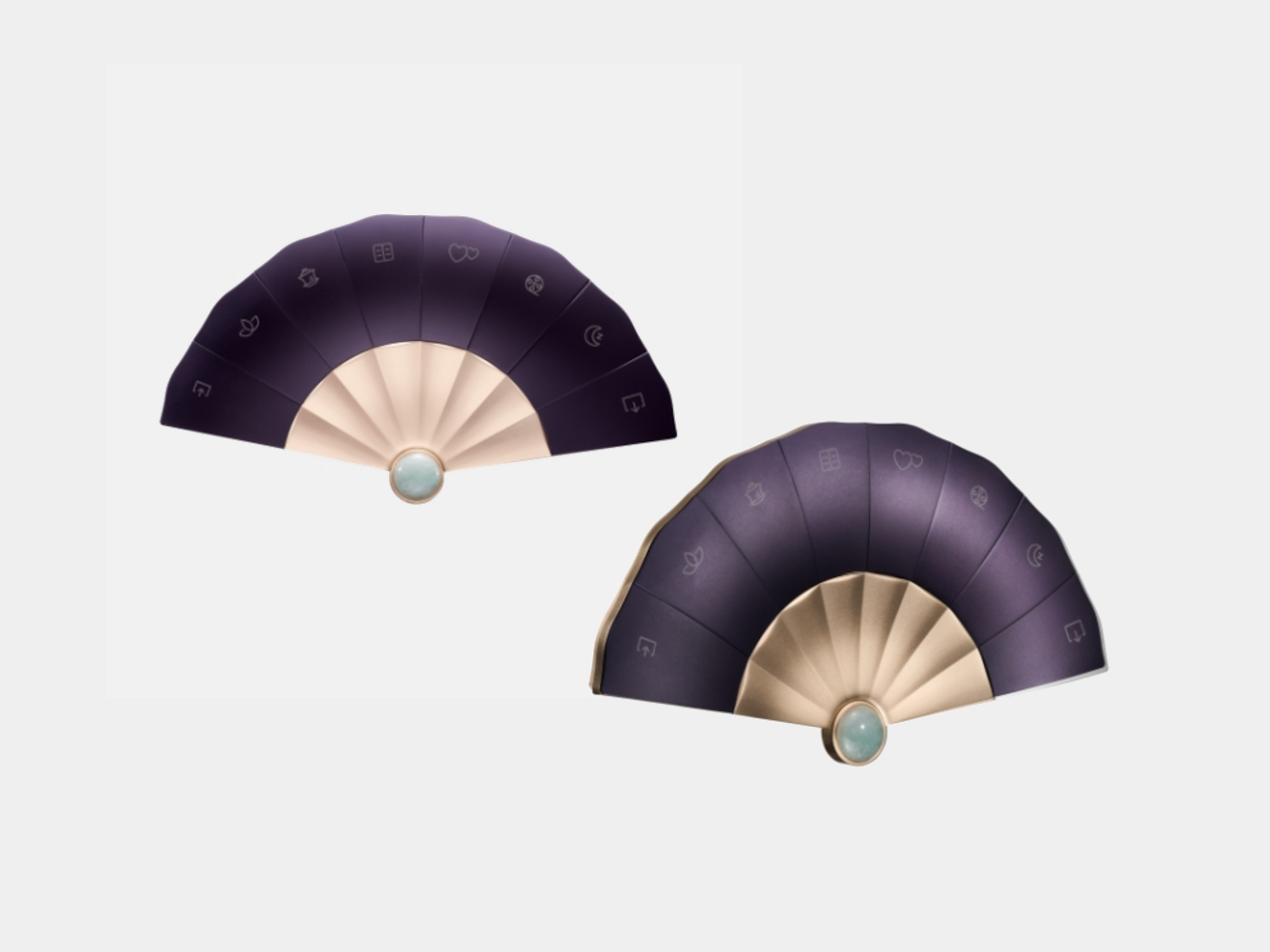
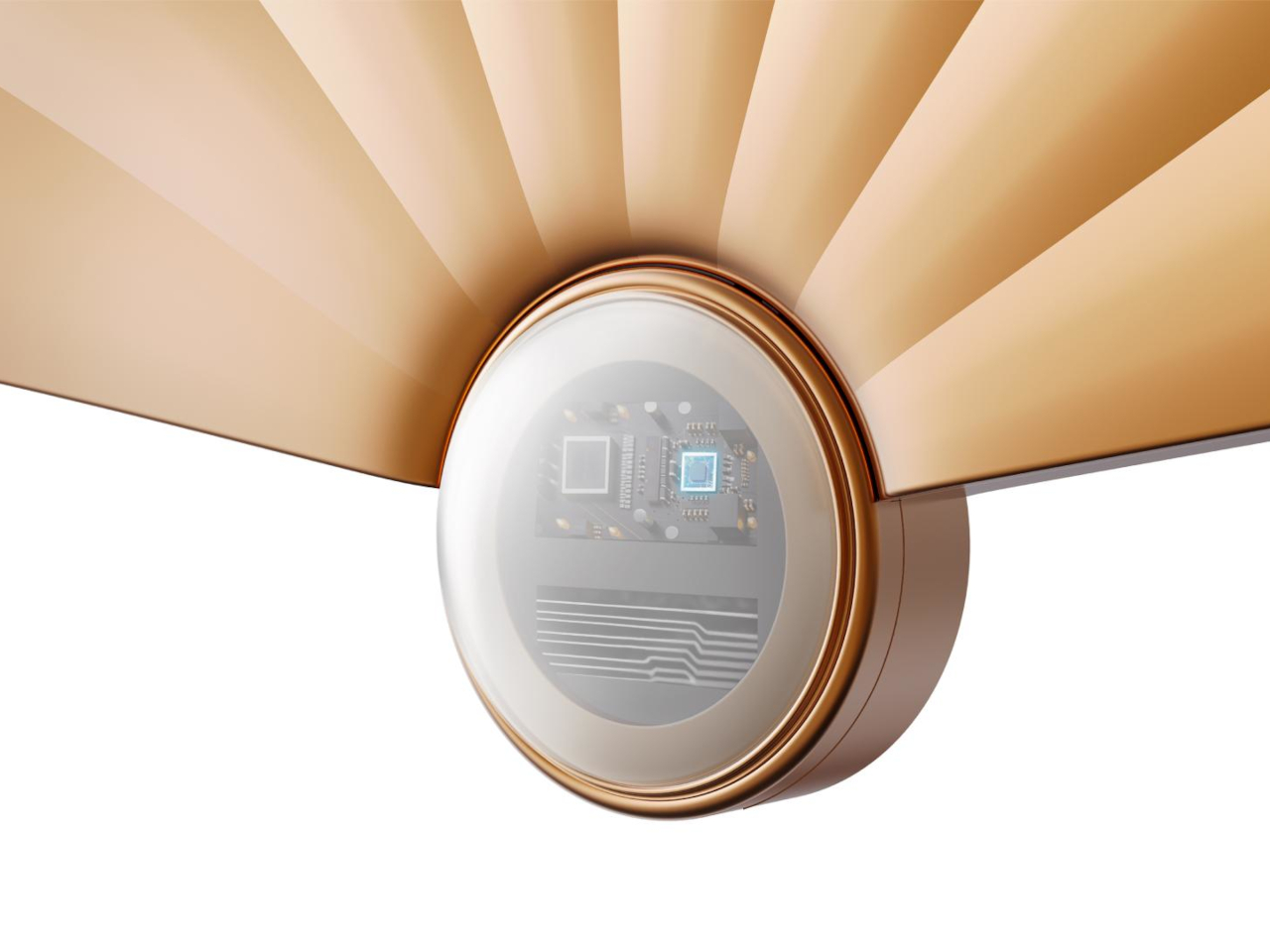
That centerpiece pendant is carved from natural Hetian jade, a material historically prized in Chinese craftsmanship, polished by hand rather than mass-produced. It sits at the base of the fan where the ribs converge, doing double duty as both the visual anchor and the housing for the temperature and motion sensors underneath. A jade certificate ships in the box, treating the stone as a verified material rather than a cosmetic add-on.
Sensors Hidden Where a Fan’s Handle Would Be
Motion detection lives inside that jade pendant, waking the panel’s touch display the moment someone walks close enough to reach for it, instead of leaving a screen lit and idle all day. A built-in temperature sensor reads the room and feeds that data straight into scene and automation logic, so a preset for movie night or afternoon reading can react to the actual conditions in the room rather than a fixed schedule.
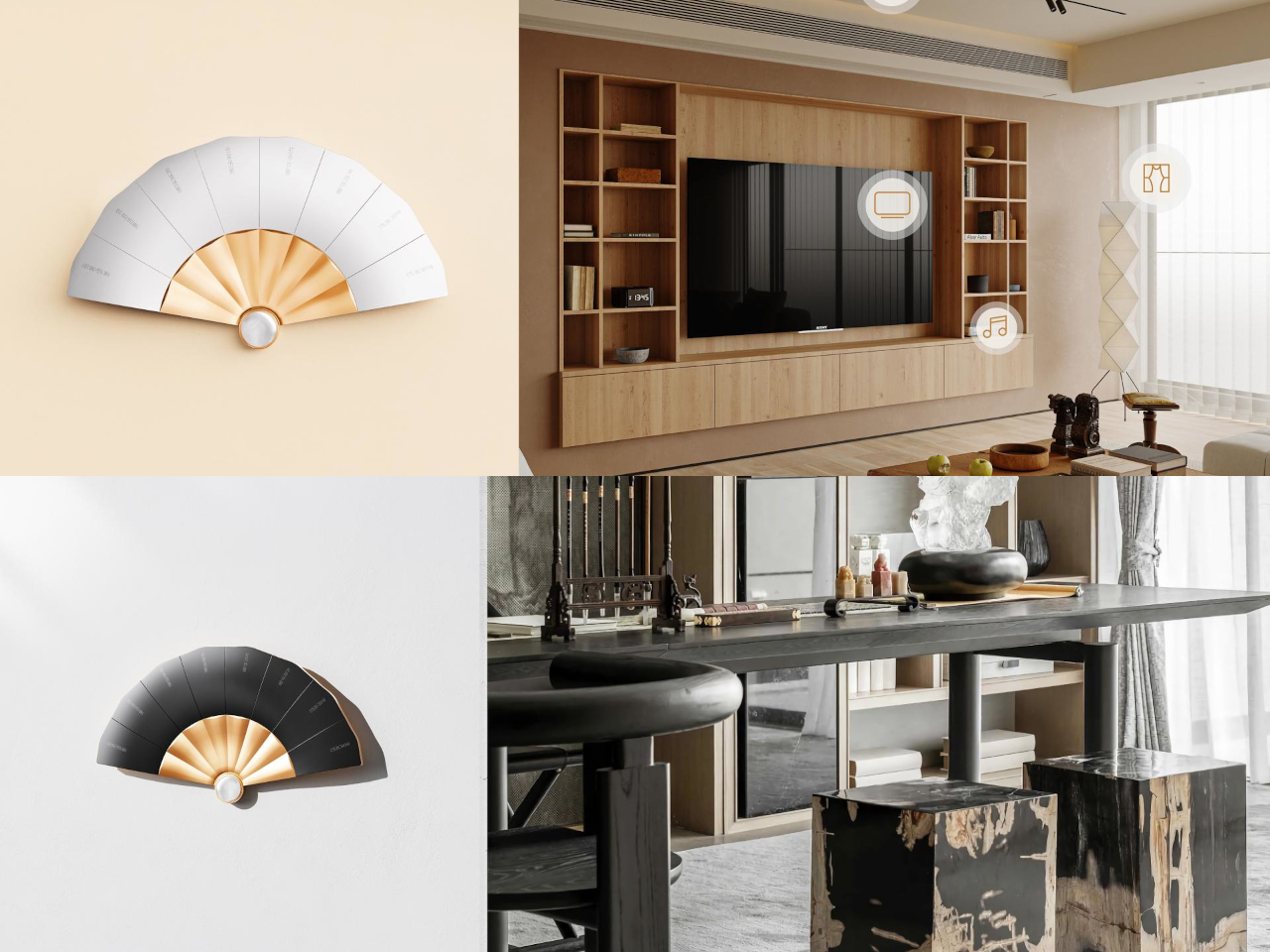
Each button supports laser engraving with custom text, meaning a household can label its own shortcuts instead of memorizing generic switch numbers. One button might trigger a reading nook’s lighting, another could dim everything down for a film, and a third could raise the curtains, all without opening an app or hunting through menus. The panel handles curtains, music, and broadcast scenes across a room without breaking that same physical interaction.
Wall-Mounted or Freestanding, By Choice
Unlike a fixed switch plate, Fanora can sit flush against a wall or rest on a desk as a standalone display, a flexibility built into its wiring rather than bolted on as an afterthought. That range means the same object can function as a hallway light switch in one home and a bedside control surface in another, without needing a separate model for each context.
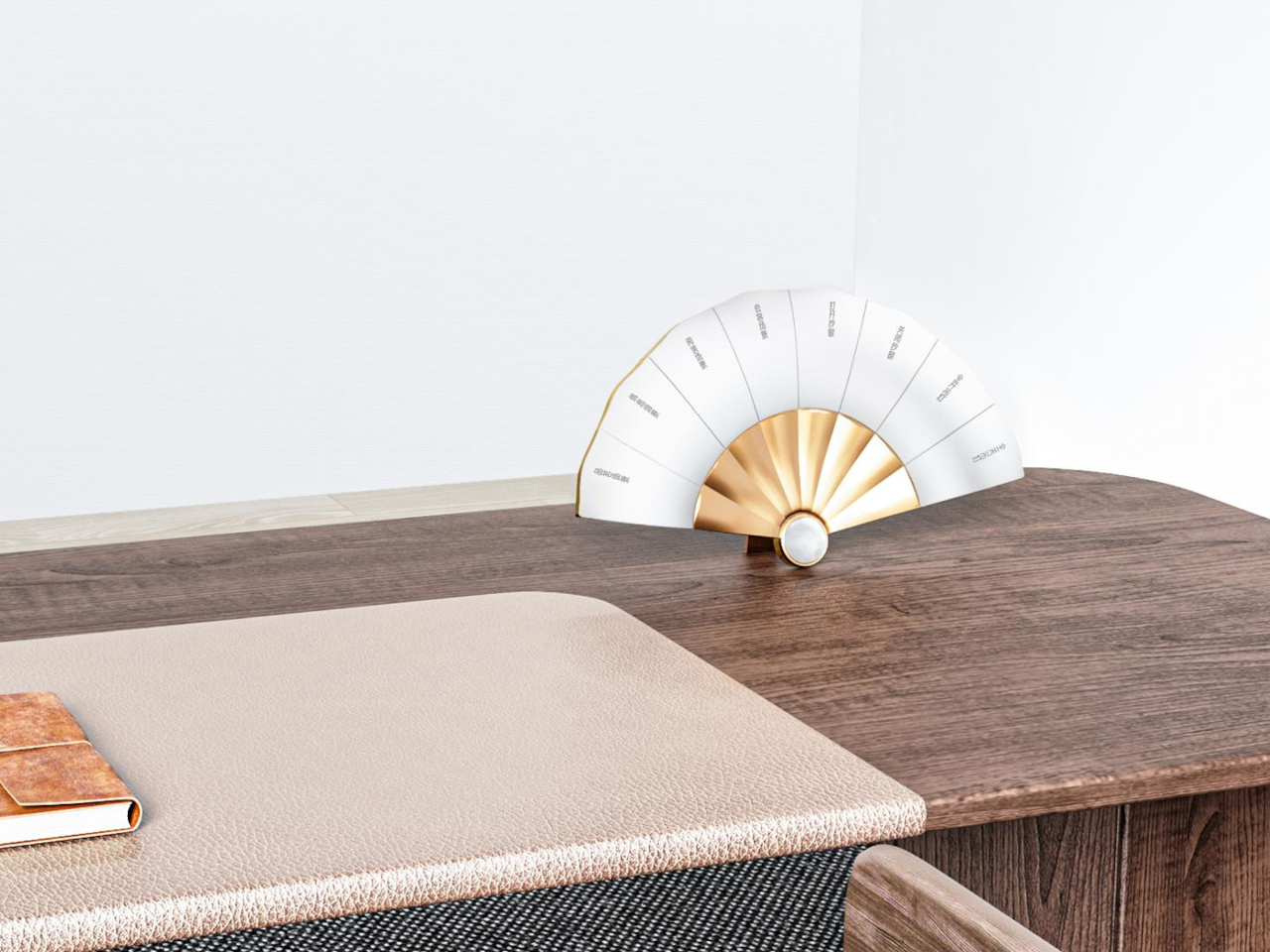
Customization extends to the jade pendant’s shape itself, letting a household choose a silhouette that fits their own taste rather than accepting one fixed design across every unit sold. That level of personalization treats the panel less like static hardware and more like a piece of furniture chosen for a specific room, which explains why a folding fan turned out to be the right shape for a light switch after all.
SHARE