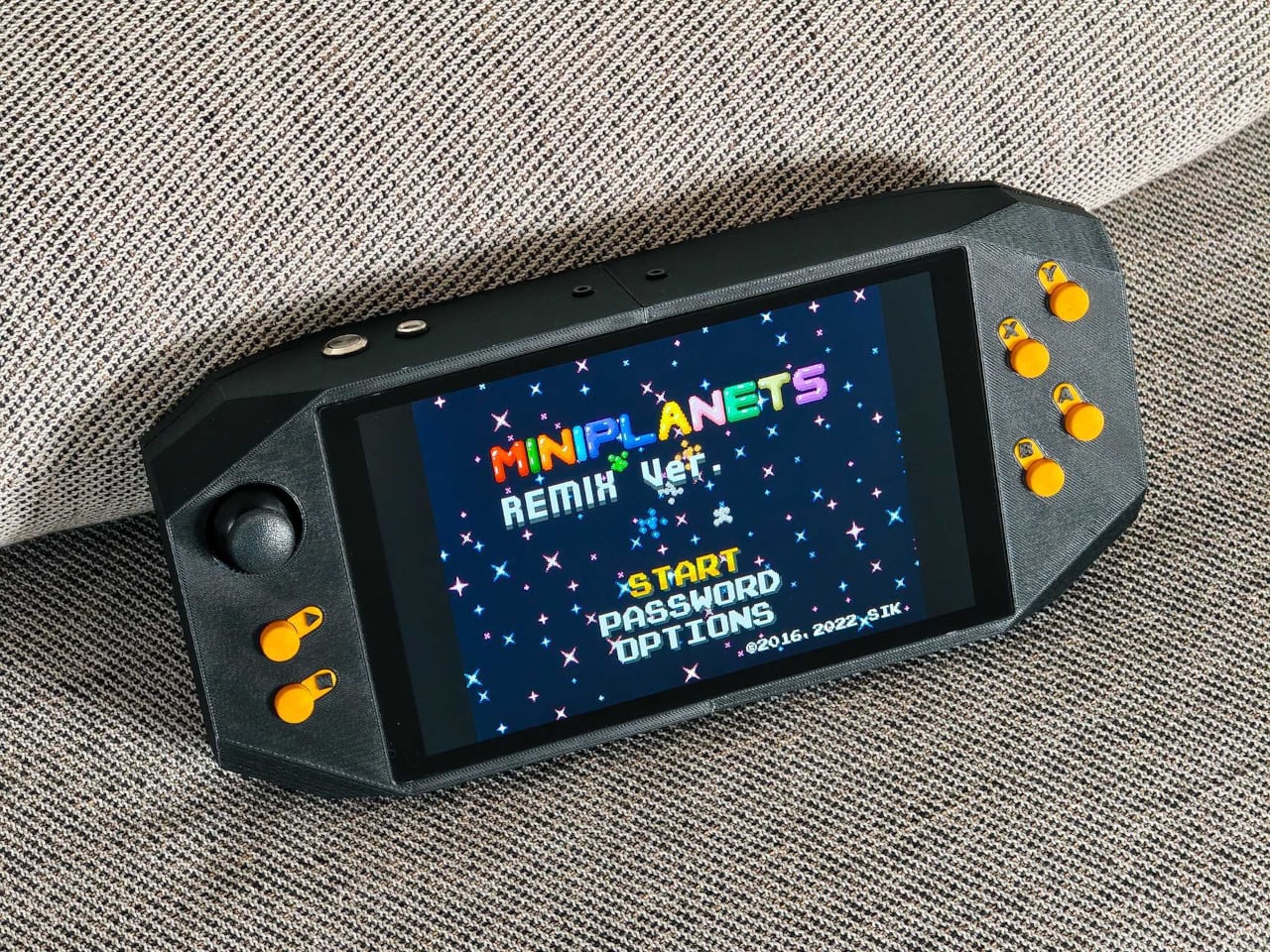
DIY handheld gaming has always had a ceiling for newcomers. Most builds require custom-designed PCBs, hard-to-find specialized connectors, and at least a few evenings spent with a soldering iron before anything turns on. Results from experienced makers can be impressive, but getting there has traditionally demanded an electronics background and a comfort with tools that many people simply don’t have.
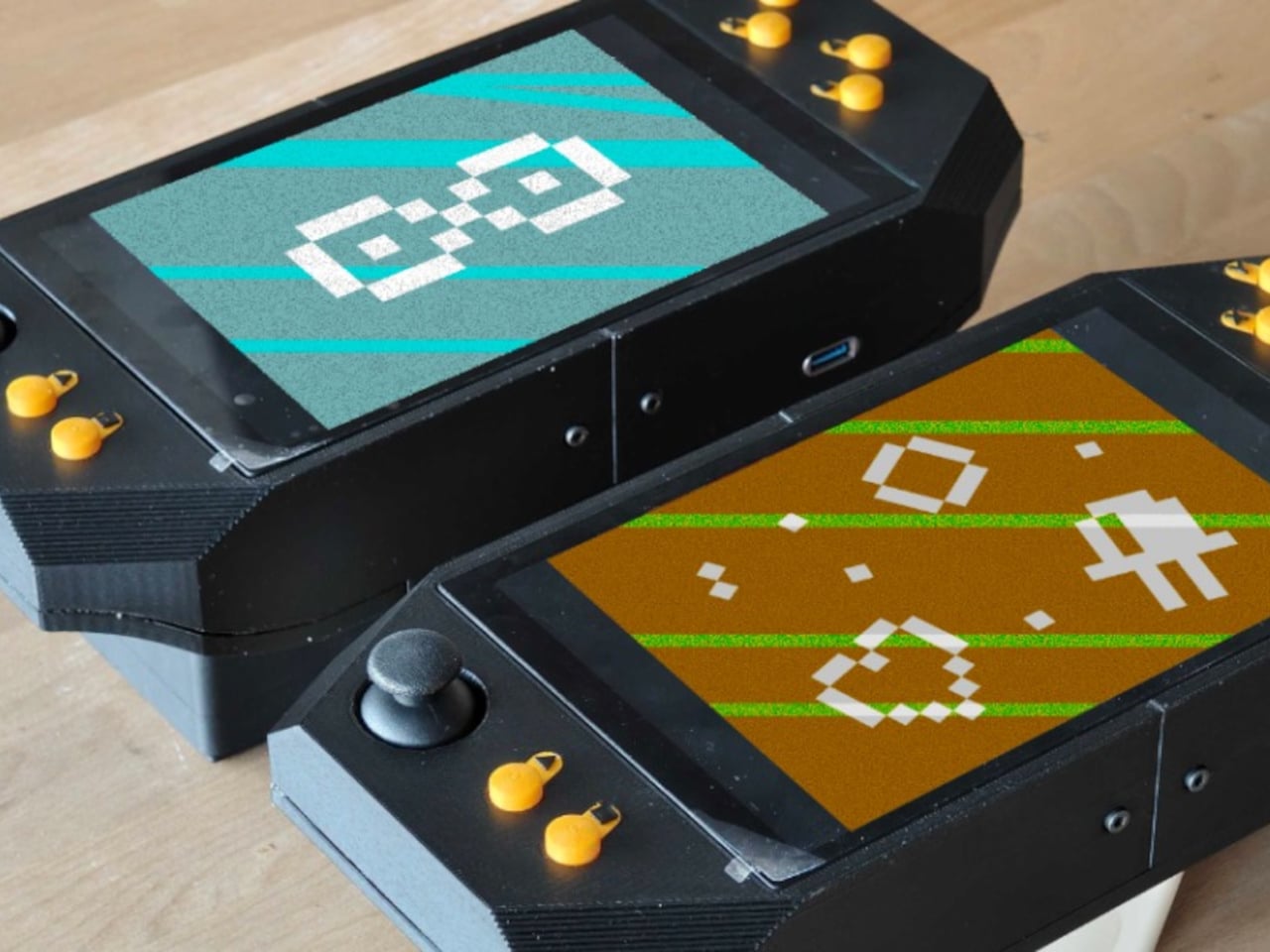
This Arduino UNO Q-based handheld console doesn’t ask for any of that. Every component can be ordered from a standard online retailer and assembled without soldering, making the build about as accessible as a maker project can get. The only parts requiring fabrication are the 3D-printed enclosure and buttons, which come together using heat-set inserts for a clean, professional-looking result that doesn’t betray its module-based origins.
Designer: zalmotek
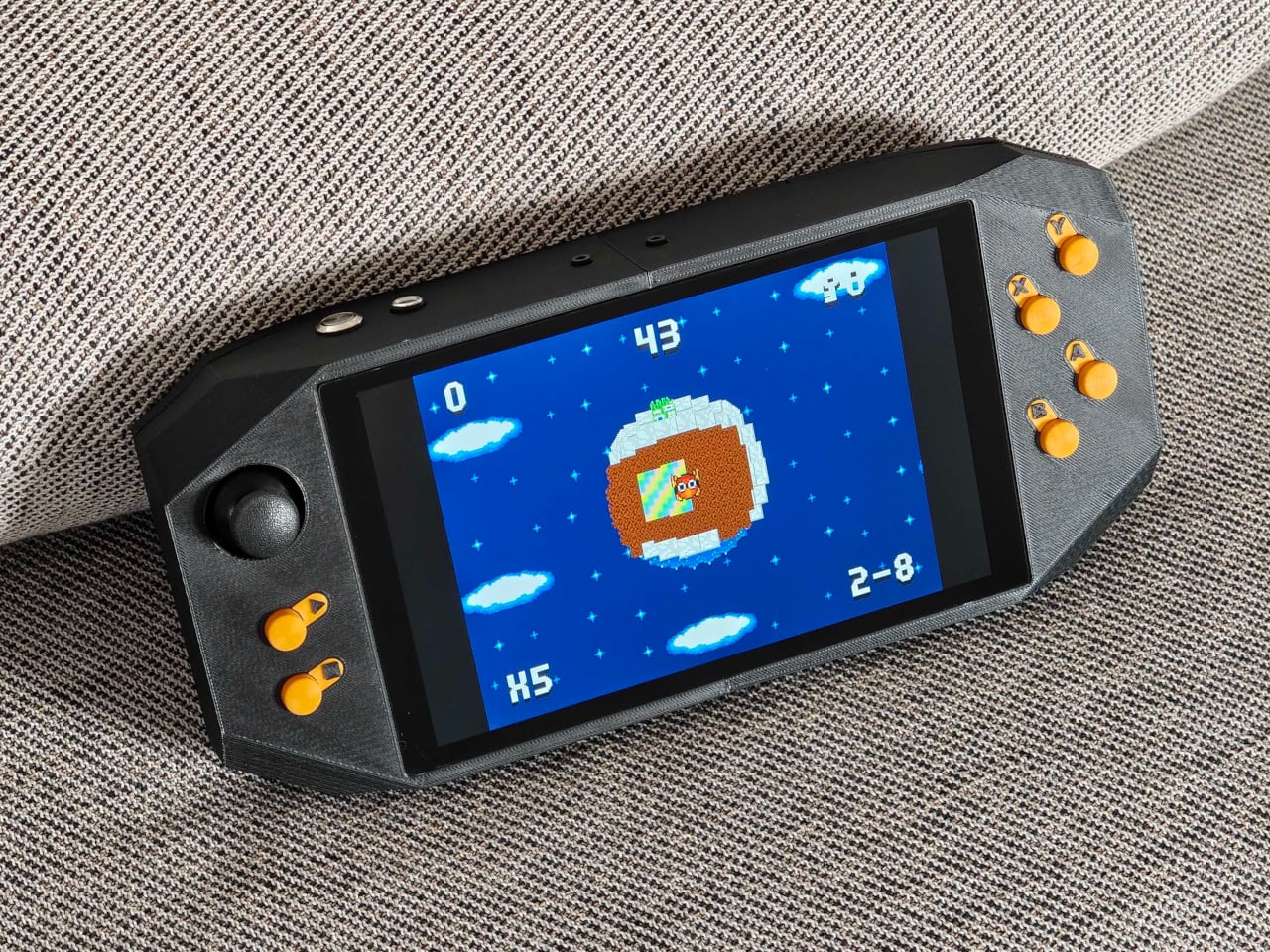
The hardware list reads like an afternoon’s shopping. At the center is the Arduino UNO Q, pairing a Qualcomm Dragonwing QRB2210 processor running Debian Linux with a dedicated STM32 microcontroller for real-time input handling. Modulino Buttons and a Modulino Joystick handle the controls, an Arduino UNO Media Carrier connects an 8-inch Waveshare touchscreen and an Adafruit speaker, and a Waveshare UPS module provides battery support.
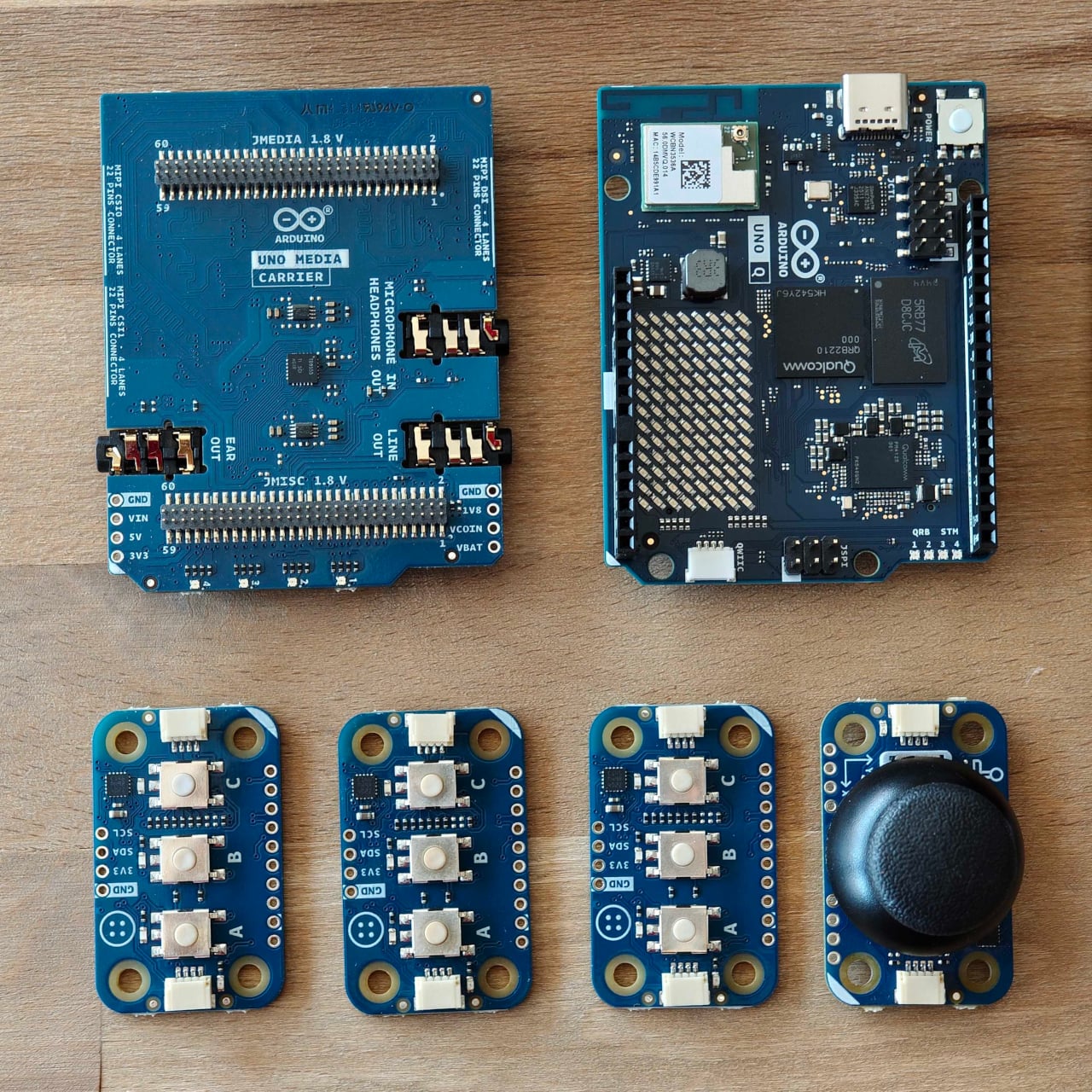
The software side is equally well thought out. The STM32 microcontroller monitors button presses and joystick movements, then passes that data to the Linux environment, where a Python daemon converts everything into standard USB gamepad commands. RetroArch handles the emulation without any complicated setup, so loading up a game doesn’t feel different from plugging a USB gamepad into a PC.
That smoothness pays off in practice. Sitting back with a handheld you built over a weekend and scrolling through titles from systems you grew up with, everything runs cleanly with proper controls and sound. It’s a bit chunkier than a commercial device, given the module-based construction, but the feel is more polished than the trade-off might suggest, especially for a build that skips custom PCBs entirely.
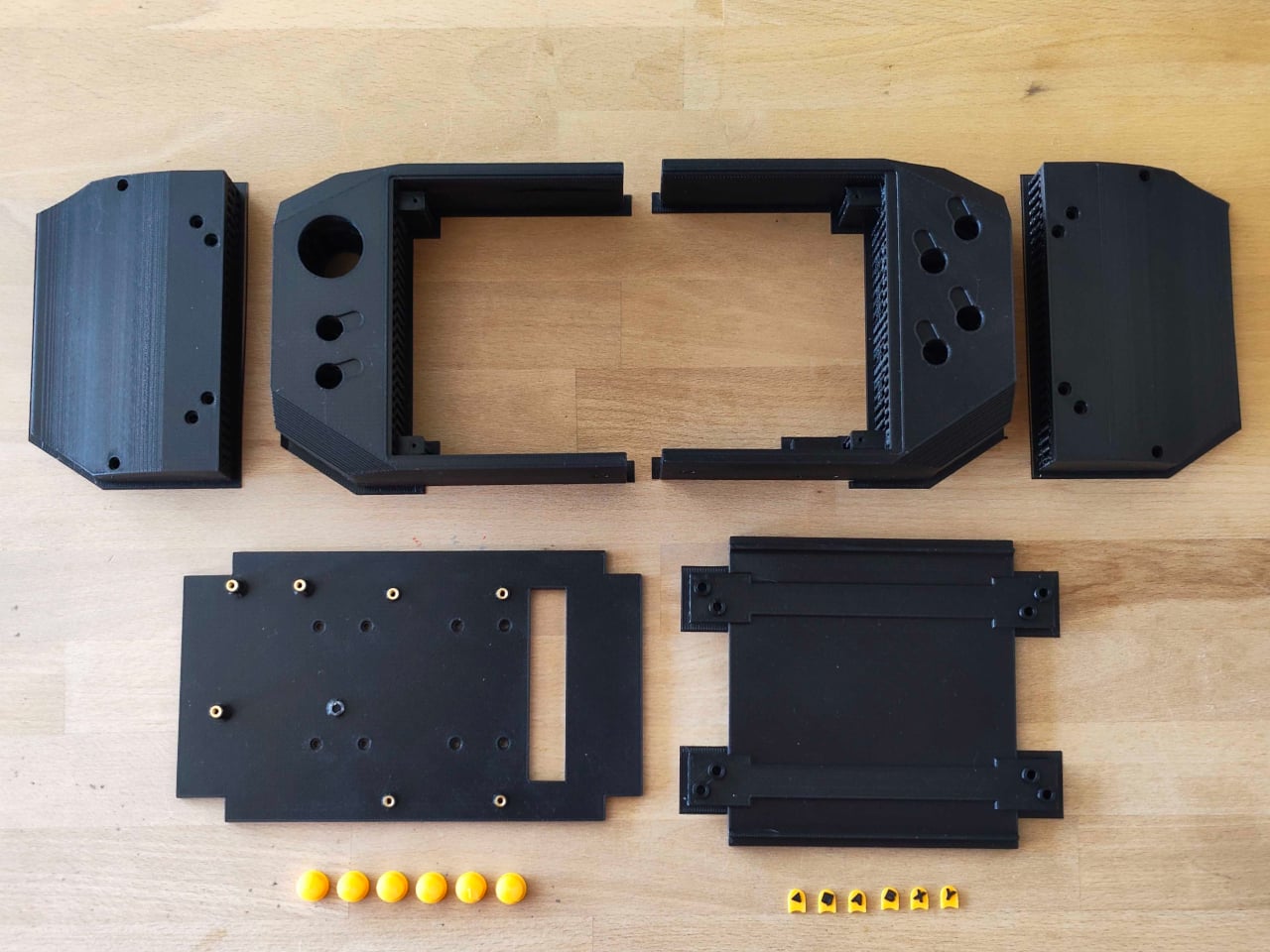
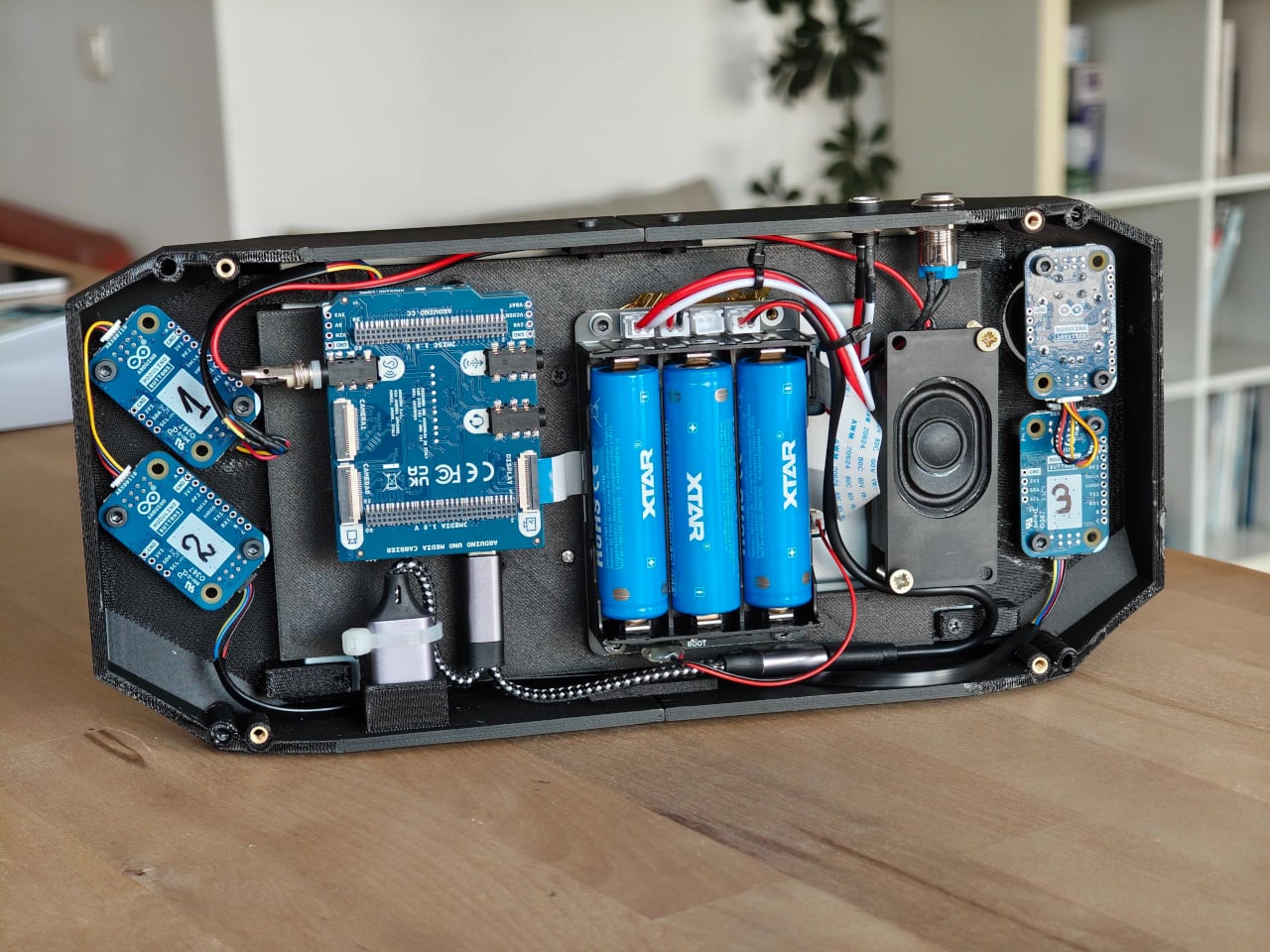
There’s also room to go further than emulation. The UNO Q can run the Godot game engine, which turns the same hardware into a development platform for original games. Between that and RetroArch’s support for a wide range of classic platforms, the console covers both ends of the gaming spectrum without requiring any additional hardware beyond what’s already in the build.
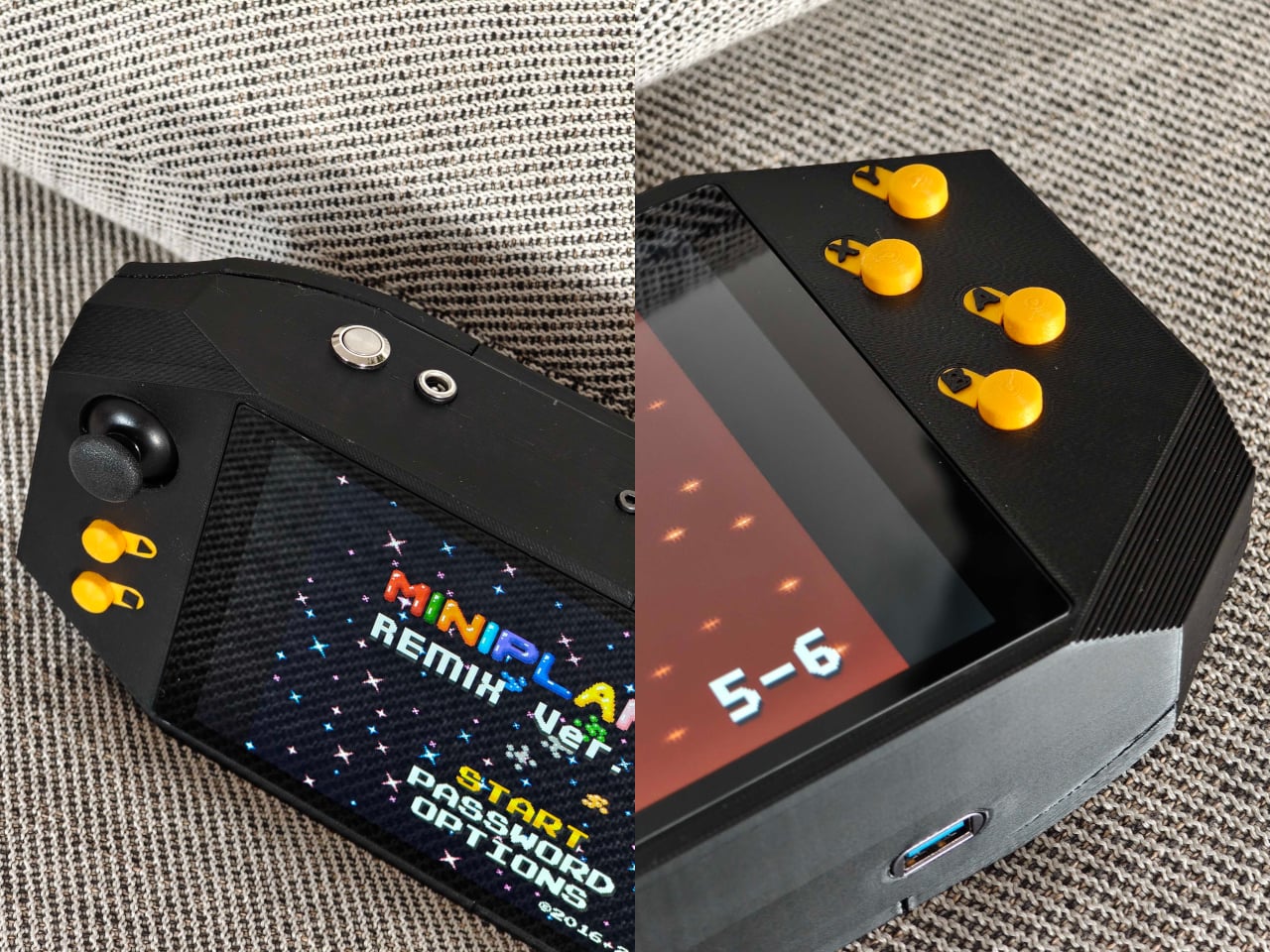
The full hardware list, assembly walkthrough, and complete source code are posted on Arduino Project Hub and GitHub, keeping everything open and reproducible. The documentation also frames the build as a starting point rather than a finished product, with options like swapping the display for a different size, redesigning the enclosure, or adding a Modulino Movement node for motion controls described as natural next directions.
None of that holds together without the right foundation, and the UNO Q’s dual-brain architecture provides it quietly. The STM32 handles time-sensitive inputs without lag while the Qualcomm processor manages the emulation stack, audio, and video at the same time. A software bridge connects the two, and clean communication between them is what keeps the console from feeling like a loose collection of modules.
SHARE