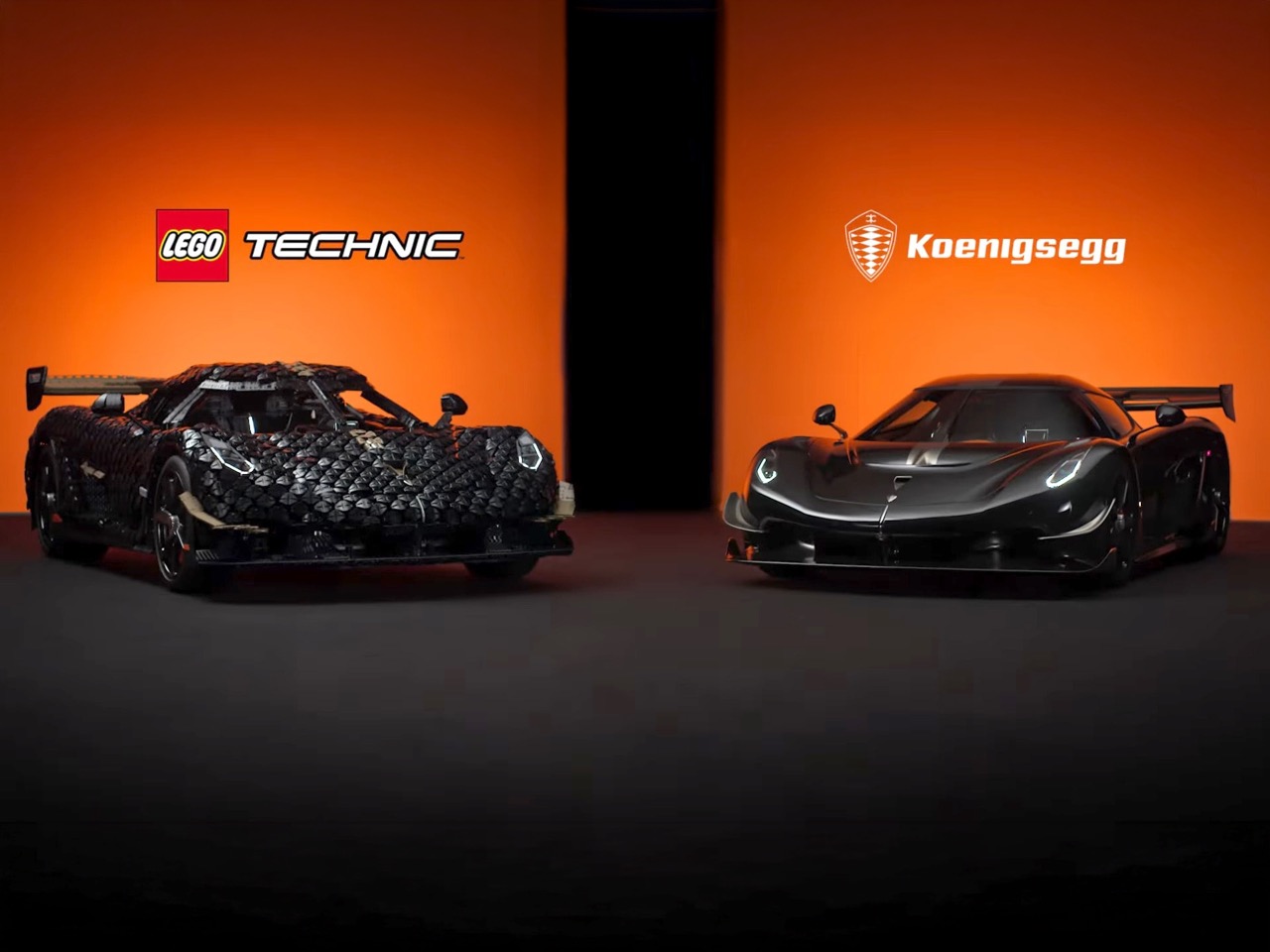
Three hundred twenty-seven thousand, nine hundred and six pieces. Every single one placed by a human hand, pressed into position by a human thumb, across 391 days and more than 9,400 hours of work. No robots, no automated assembly, no laser guided anything. Just people in a room in Denmark, snapping plastic together for over a year.
Here’s the part that should get your attention: they developed this exactly like a real car. Not “we glued bricks to a go-kart and hoped.” They ran it through aero stability testing to confirm the plastic skin would stay attached at speed, which matters a lot when your body panels are held on by nothing but clutch power. They loaded the suspension. They tested brakes. Things failed, because 327,906 individual connections give you a lot of places to fail, and each time the crew dragged it back, hunted down the weak point, reinforced it, and went out for another run. Trial and error, the oldest engineering method there is, applied to a toy. What came out the far end of that process was a LEGO car that will do 70 mph, which is a sentence I did not expect to write today.
Designer: The LEGO Group
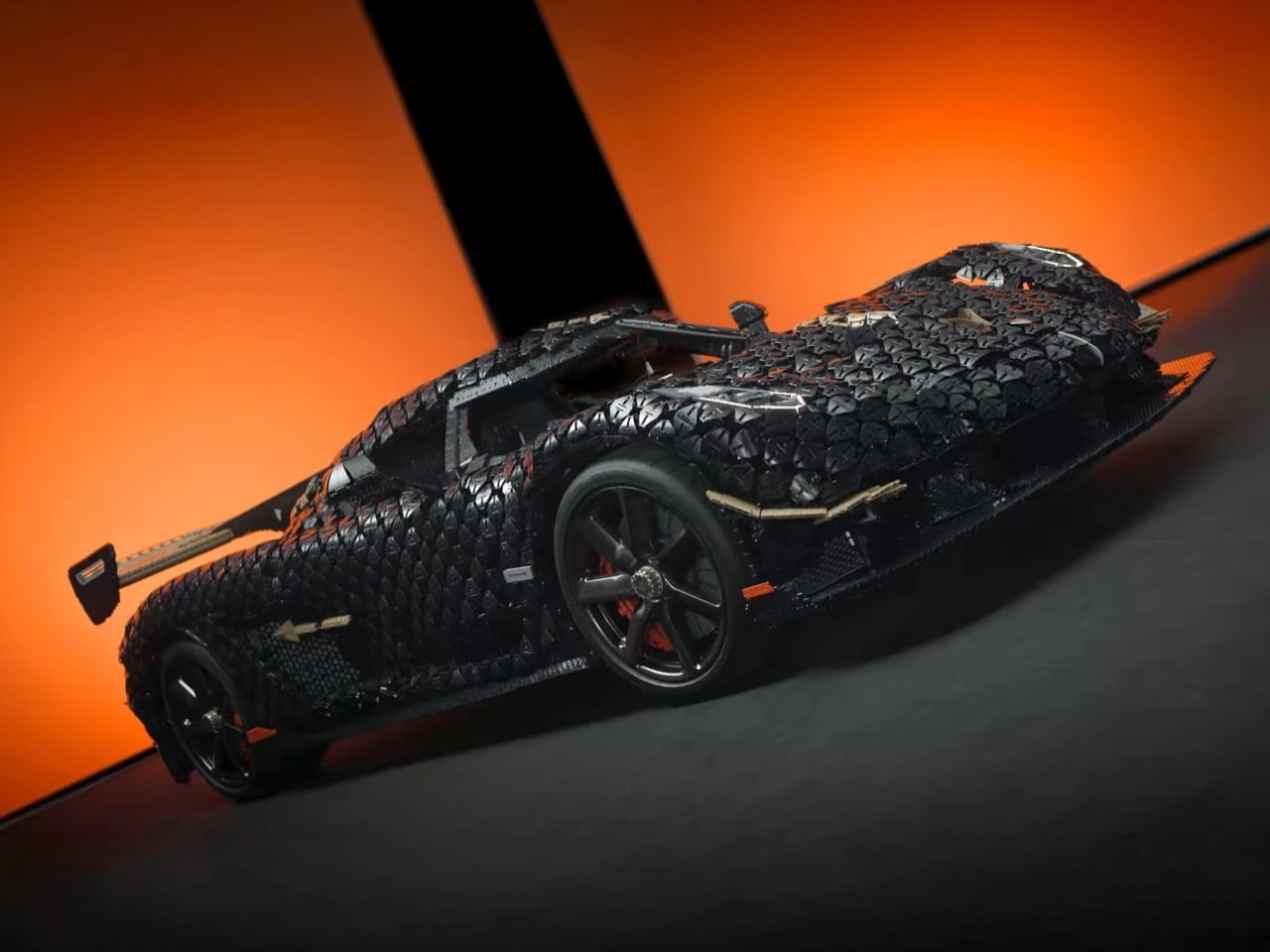
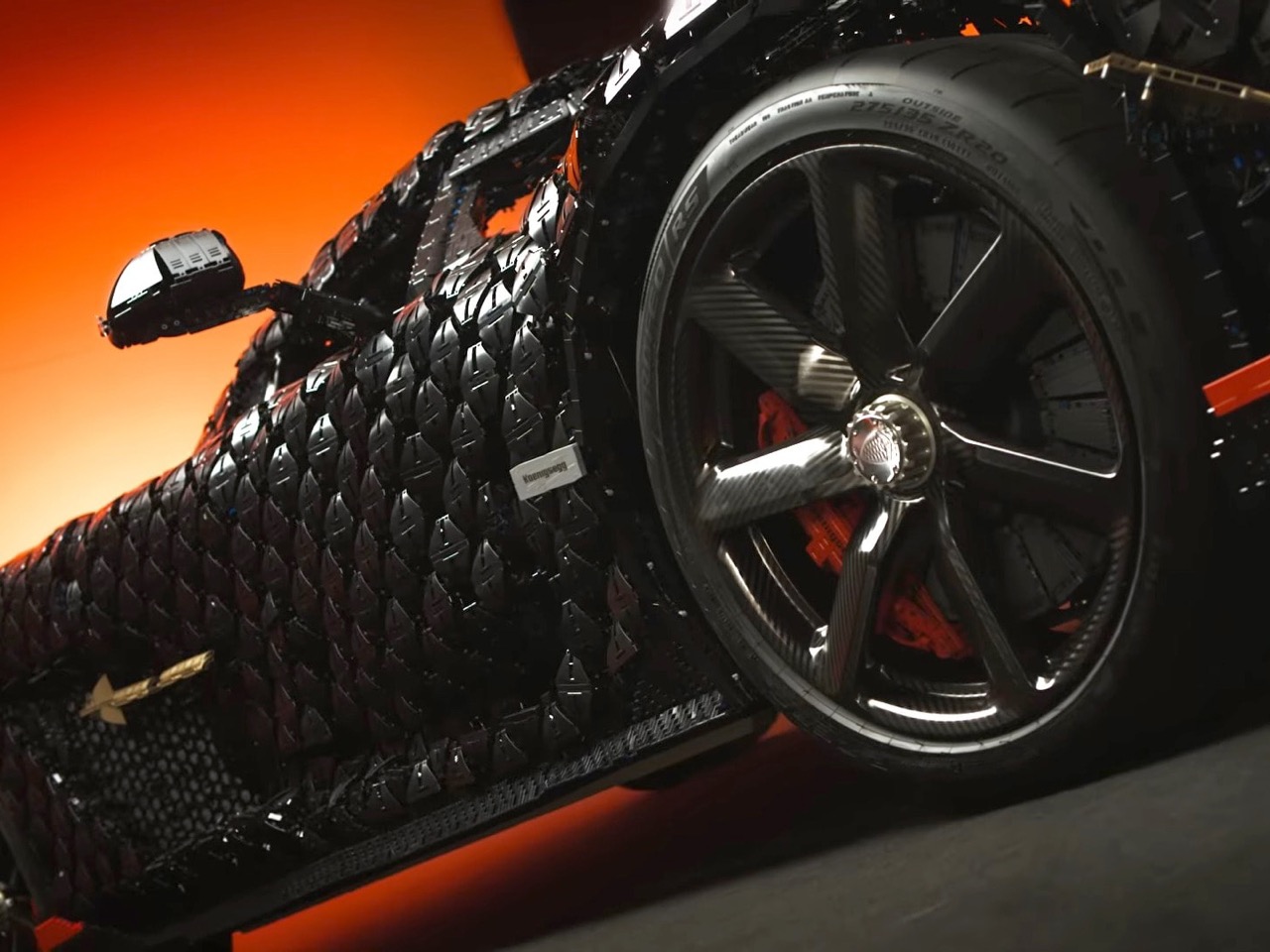
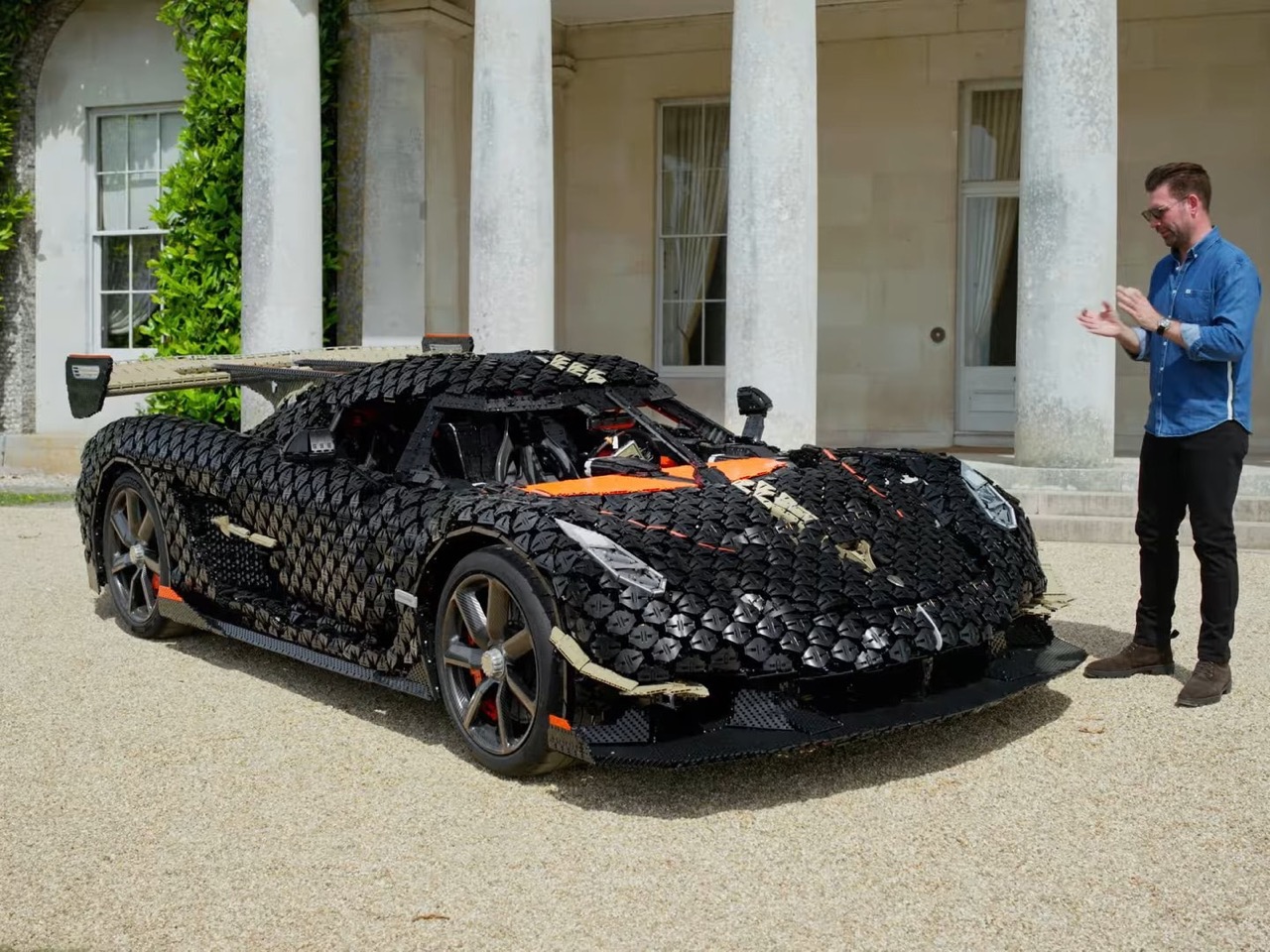
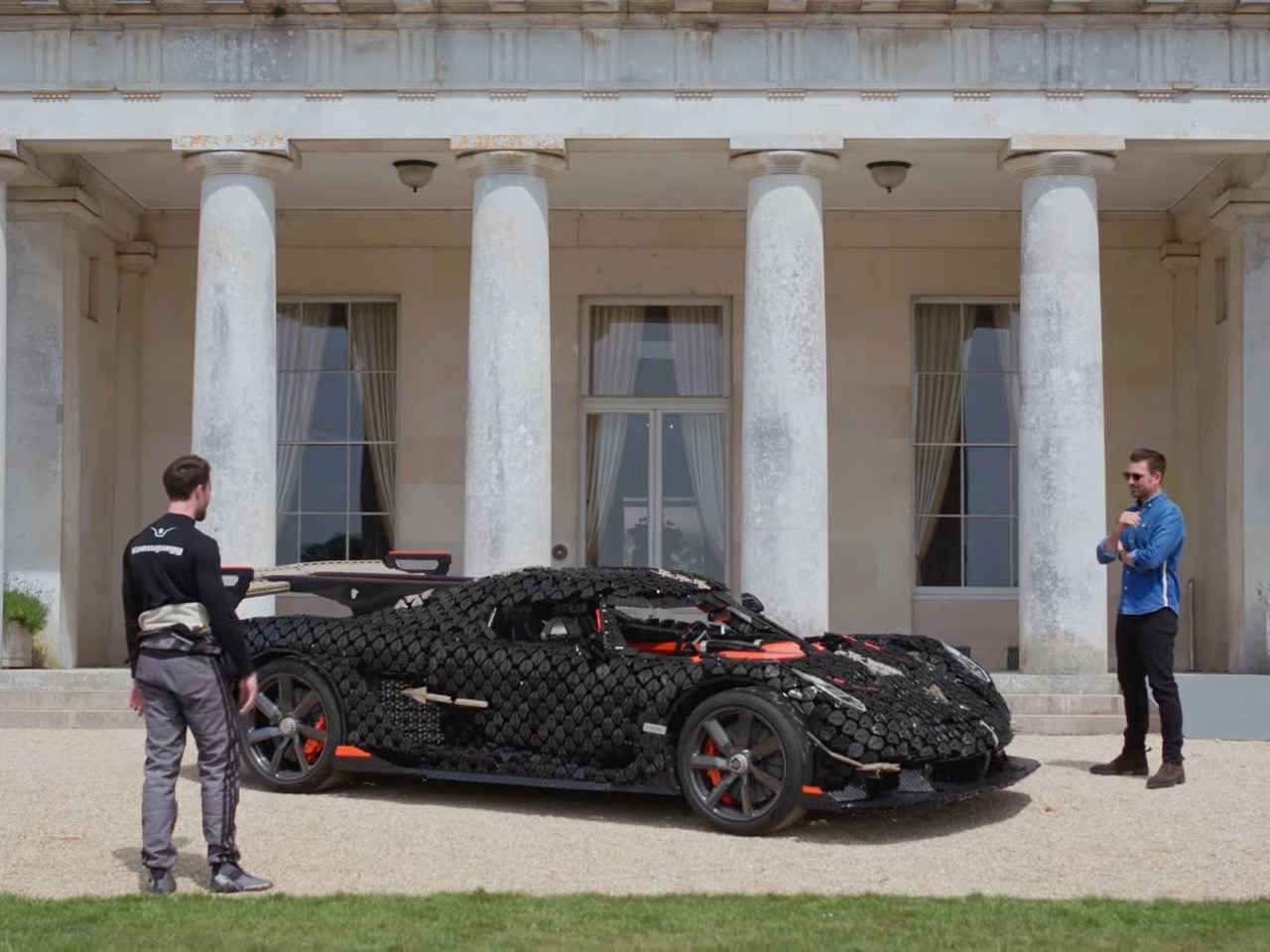
Thousands of small angular panels overlap in shingled rows across the nose, fenders and flanks, like scales on a very expensive fish, each one tilted slightly relative to its neighbor. A Koenigsegg’s surfacing is all compound curvature, the kind of double-bent carbon fiber that LEGO’s rectilinear system has no vocabulary for, so the team approximated it through faceted repetition instead. Step back and the eye reads a continuous curve. Step in and you can see the staircase. It’s the same trick LEGO’s sculpture teams use on large brick-built figures, and the only honest way to render an organic form in a system built on right angles.

Press one button on a Regera and the doors, front hood and rear clamshell all swing open at once, hydraulically, in perfect sync. Koenigsegg calls it Ghost Mode, and it exists for no reason beyond showing off the engineering underneath. The LEGO car does the same thing, automated, on 1,800 kilograms of plastic, with the dihedral synchro-helix doors rotating up and outward while the rear clam lifts behind them. That mass figure is the joke of the entire project. Christian von Koenigsegg built his reputation on drilling holes in bolts to save grams, and the real Sadair’s Spear comes in at 1,320 kg dry. The replica outweighs it by 480 kg, of which 400 kg is Technic elements alone. He engineered a 1,625-horsepower hypercar lighter than its own toy.
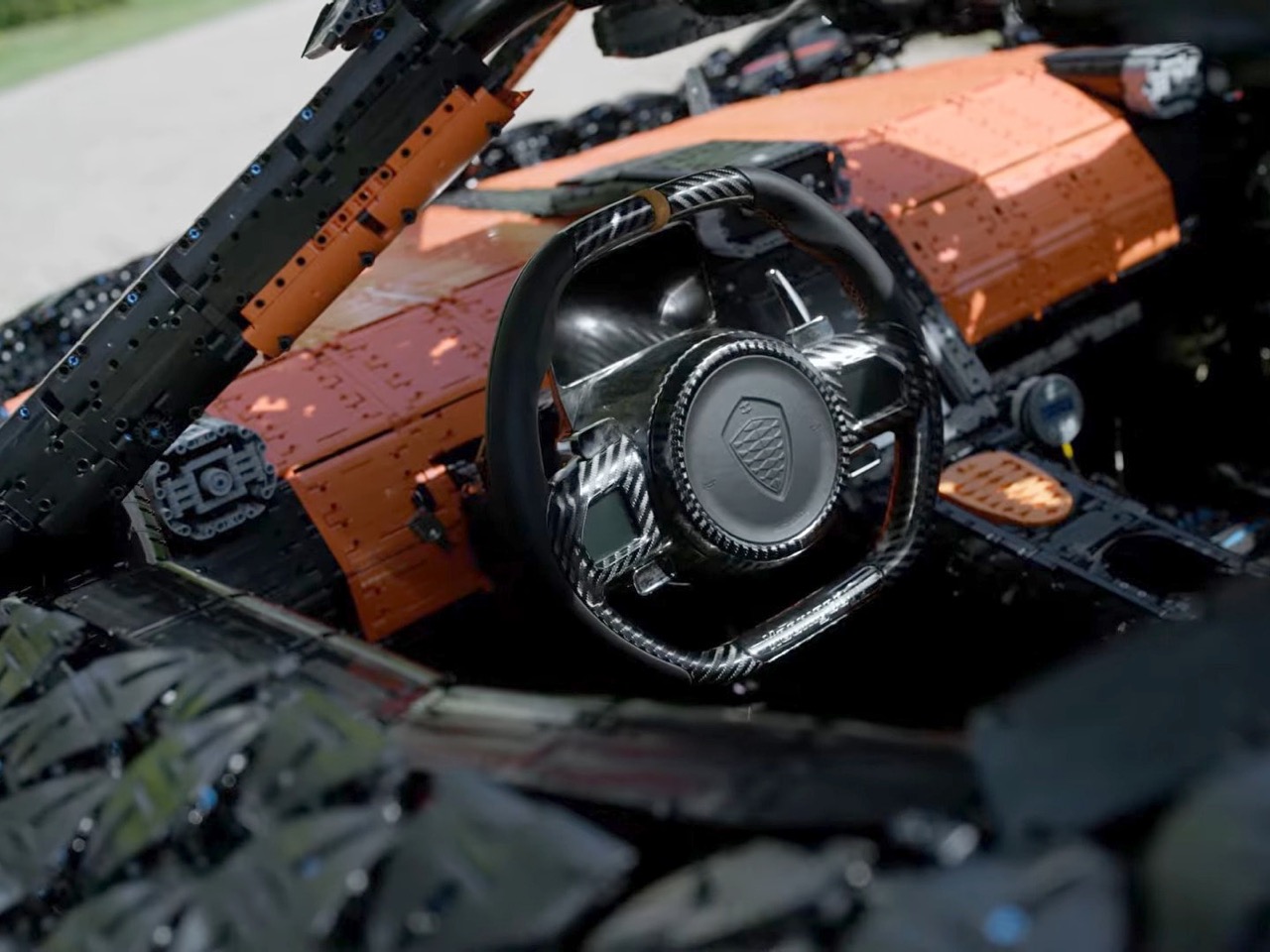
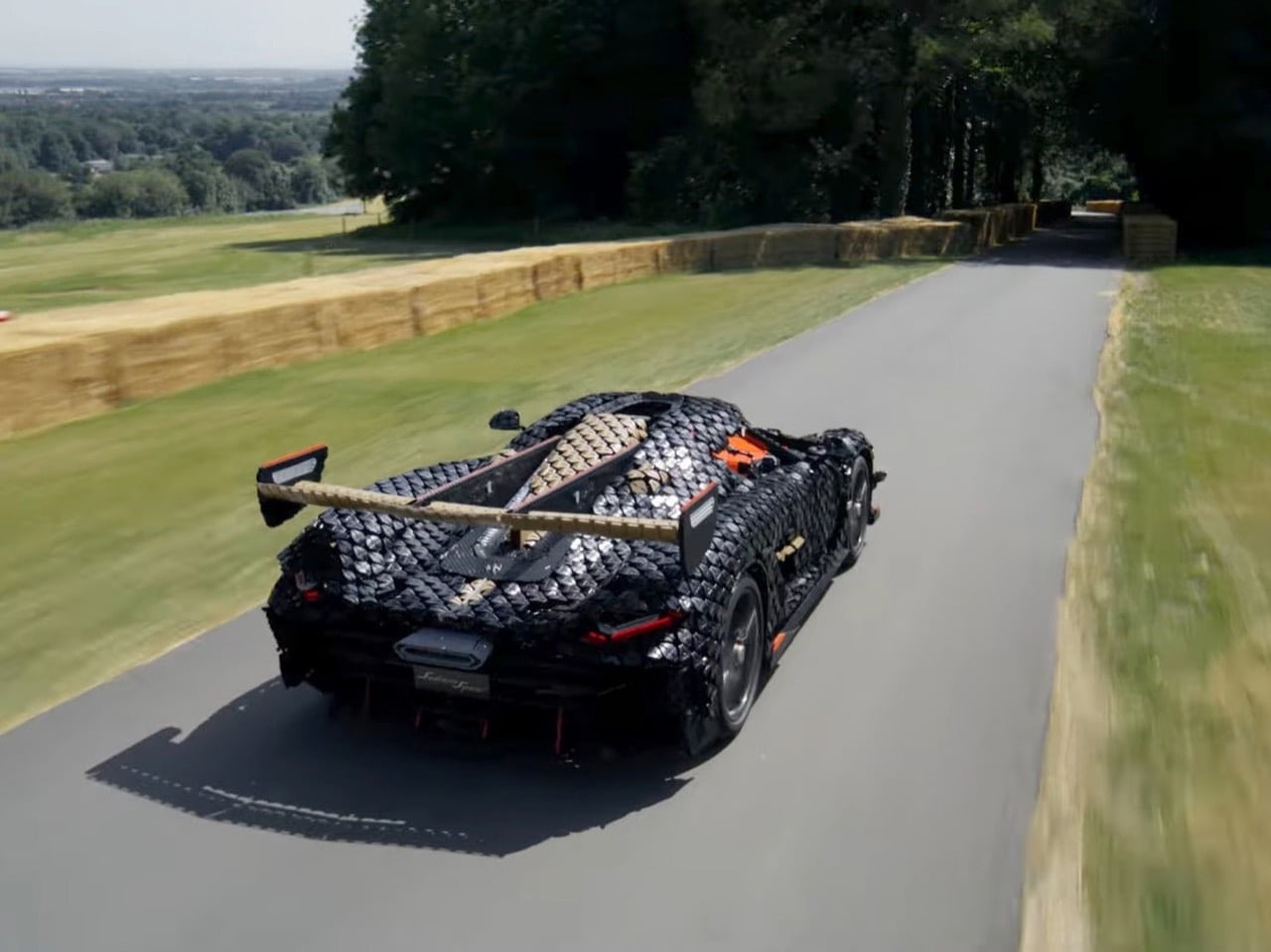
Markus Lundh ran the real Sadair’s Spear up the Goodwood hill in 47.14 seconds in July 2025 for a record that still stands, so LEGO handed him the brick version and pointed him down it instead, threading between the flint walls in the wrong direction. It hit 111 kph, more than double the previous LEGO big build record of 50 kph. Lundh got out and described it as incredibly smooth, said the brakes, steering and suspension all behaved, and admitted it reminded him of driving an actual Koenigsegg. He said this after sitting in an orange and black plastic cabin held together by the same clutch power that betrayed us all when the roof caved in on our childhood spaceships.
The 1:8 scale Technic set arrives at 4,104 pieces as the sixth entry in the Ultimate Car Concept Series, following the Porsche 911 GT3 RS, Bugatti Chiron, Lamborghini Sián, Ferrari Daytona SP3 and McLaren P1. It carries a working V8 piston engine, a nine speed sequential gearbox with a rotating gear indicator disc, Triplex suspension front and rear, and a manual Ghost Mode that raises the clam, doors and hood together. Twenty years of Technic supercar sets have been building toward this level of mechanical honesty. Watch your step in the pits, though. A stray piece from this one would be a nightmare to step on.
SHARE