The RV market has never asked more interesting questions of itself. Whether you are planning your first camping trip or refining years of experience on the road, 2026 is delivering some of the most considered mobile homes the industry has produced. From a $64,000 entry-level trailer built to make the lifestyle genuinely reachable, to six-figure touring coaches that rival boutique hotels in finish and detail, the conversation around what a motorhome can be has shifted significantly.
This roundup spans a wide price bracket and an equally wide range of design philosophies. Some of these are built for couples chasing quiet weekends. Others are built for people who refuse to leave their mountain bikes or surfboards at home. One is still a concept, but an important one. What links all five is a commitment to design that goes beyond the floor plan and asks bigger questions about how we want to travel.
1. Bürstner Signature SMT
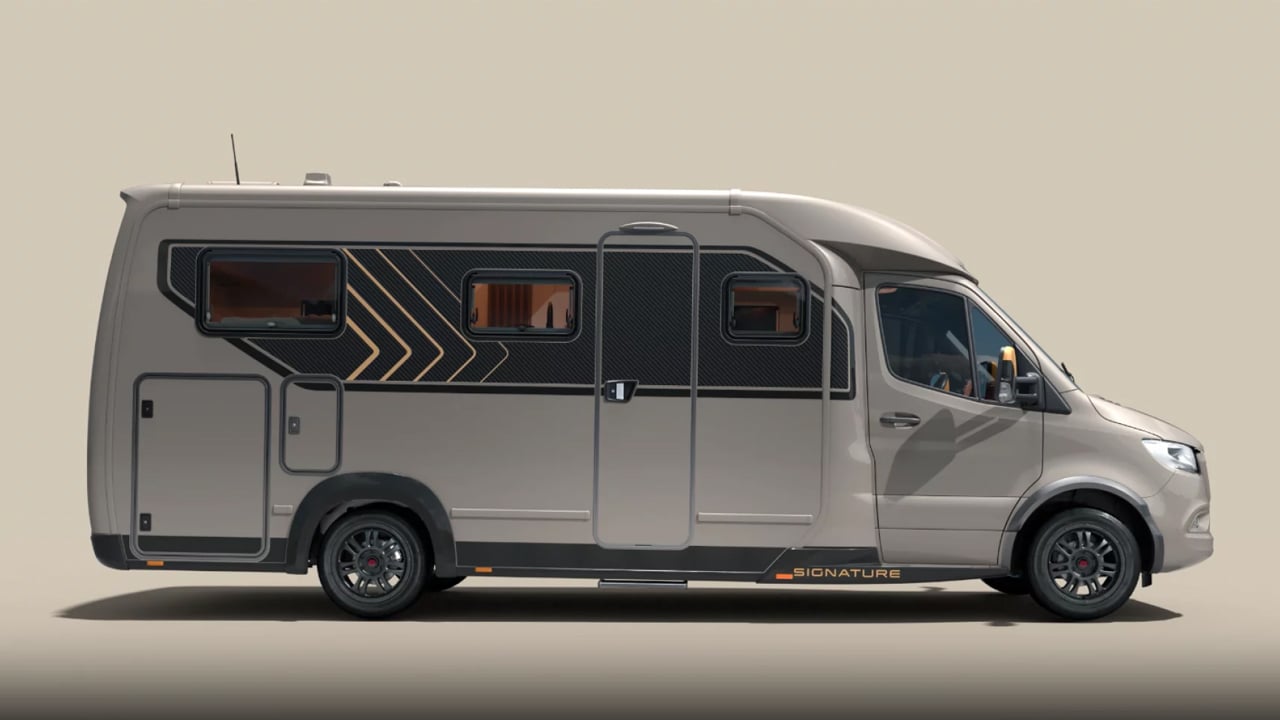
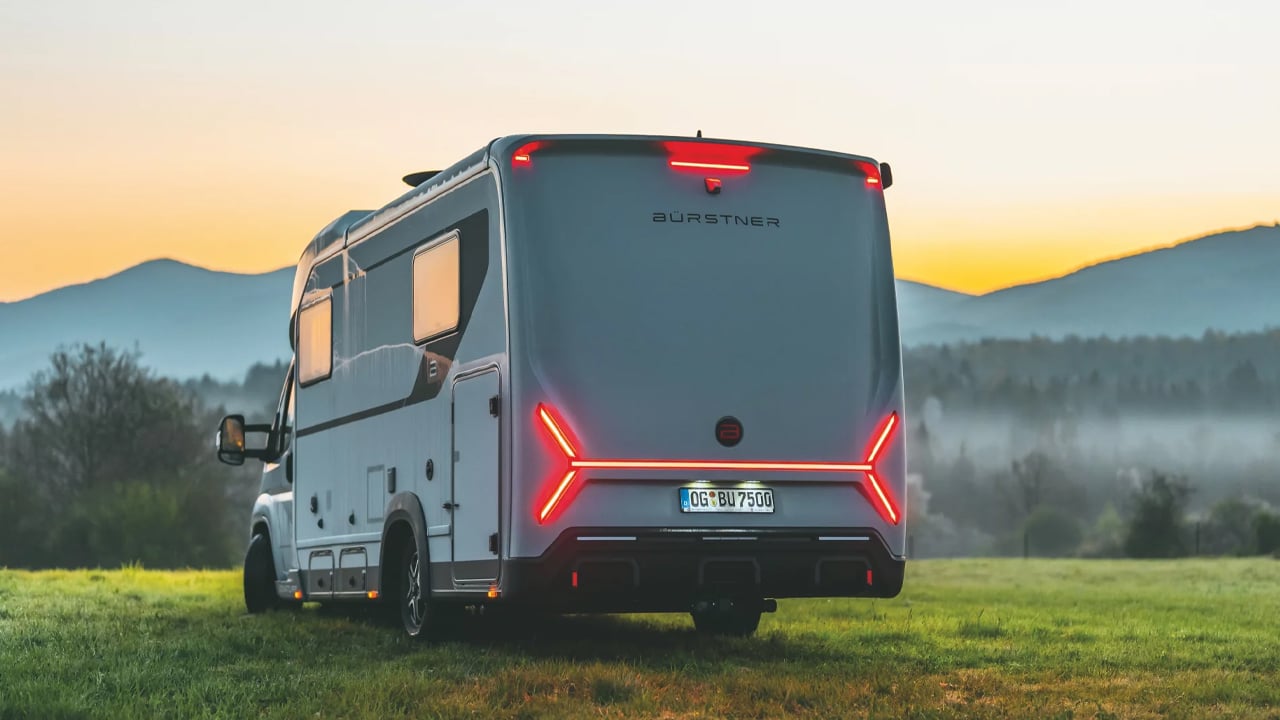
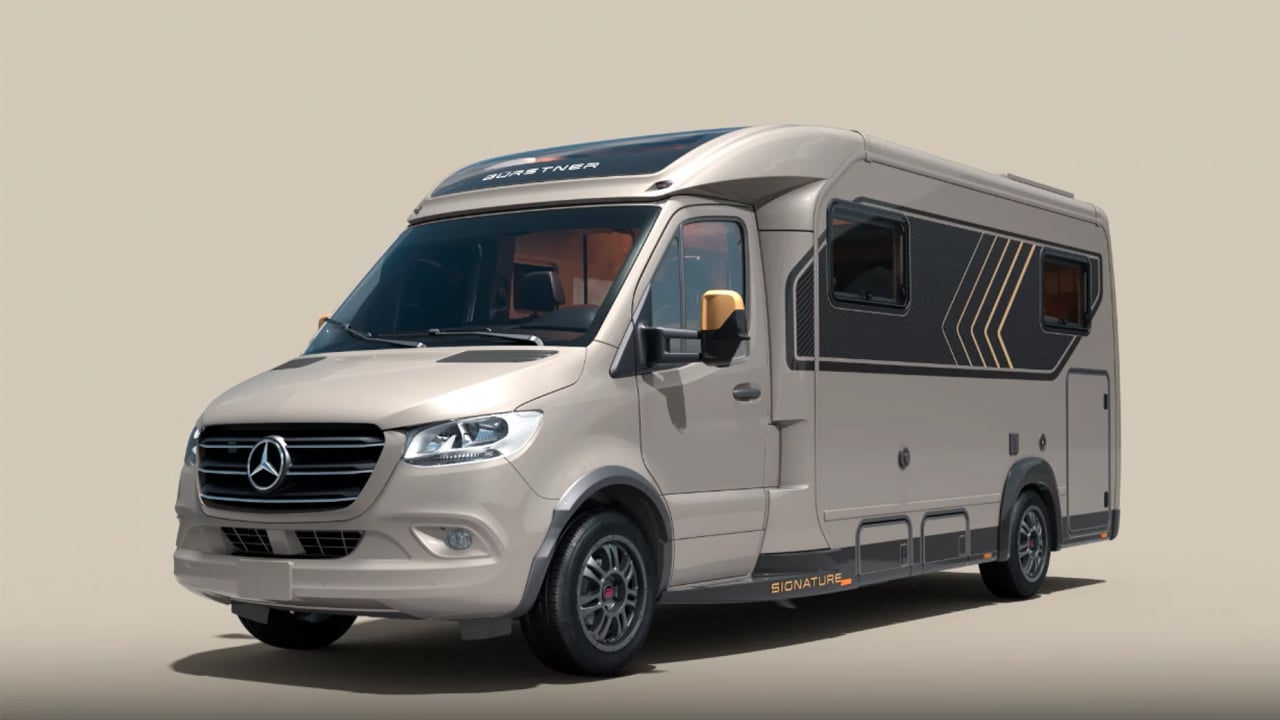
Germany’s Bürstner has spent years building some of the most carefully engineered compact motorhomes on the market, and the Signature SMT is their most resolved model yet. Built on a Mercedes-Benz Sprinter chassis and finished in fiberglass for a lightweight, durable shell, it leads with modularity. A privacy shutter between the kitchen and the rear bedroom means the space can be configured for a couple or adapted to host guests without sacrificing the feeling of a private retreat at the back.
For you, the Signature’s real strength is in what disappears. The drop-down double bed folds into the ceiling completely when not in use, returning the front lounge to full functionality. The retractable kitchen shelf doubles as a divider wall when raised. The bathroom’s sliding front wall retracts to free up the shower space. These are not gimmicks. They are genuine solutions to the tension between space and privacy that most motorhomes never quite resolve. Pricing starts at approximately $107,000 for the 735cm base model.
What we like:
- The retractable shelf that doubles as a bedroom privacy wall is one of the cleverest interior details in its class
- The raised roofline at the front gives the drop-down bed a genuinely comfortable clearance that most vans cannot match
What we dislike:
- European pricing and limited US dealer networks make purchasing and servicing more complicated for American buyers
- The modular interior requires occupants to actively manage transitions between configurations throughout the day
2. Leisure Travel Vans Unity TBX
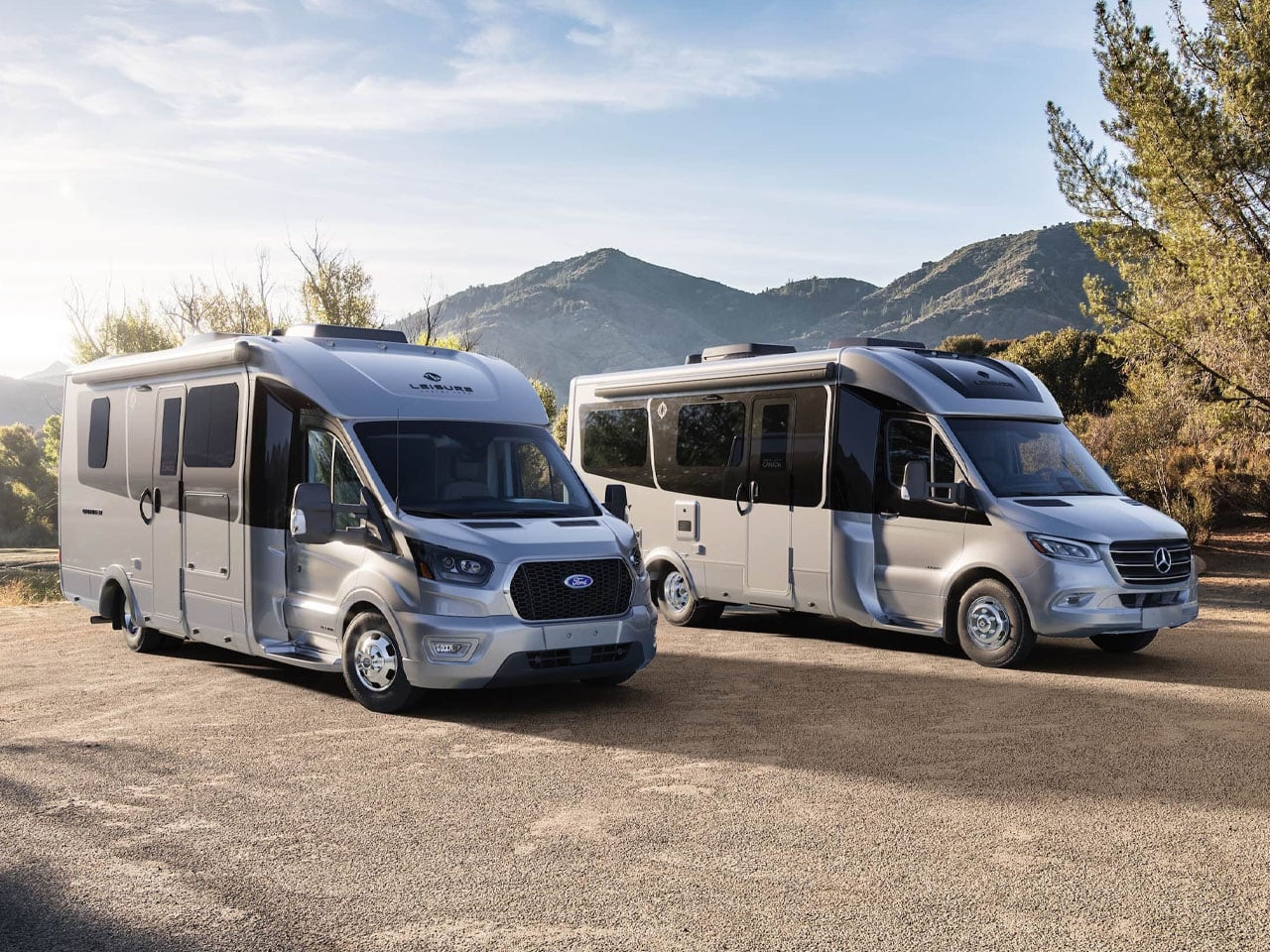
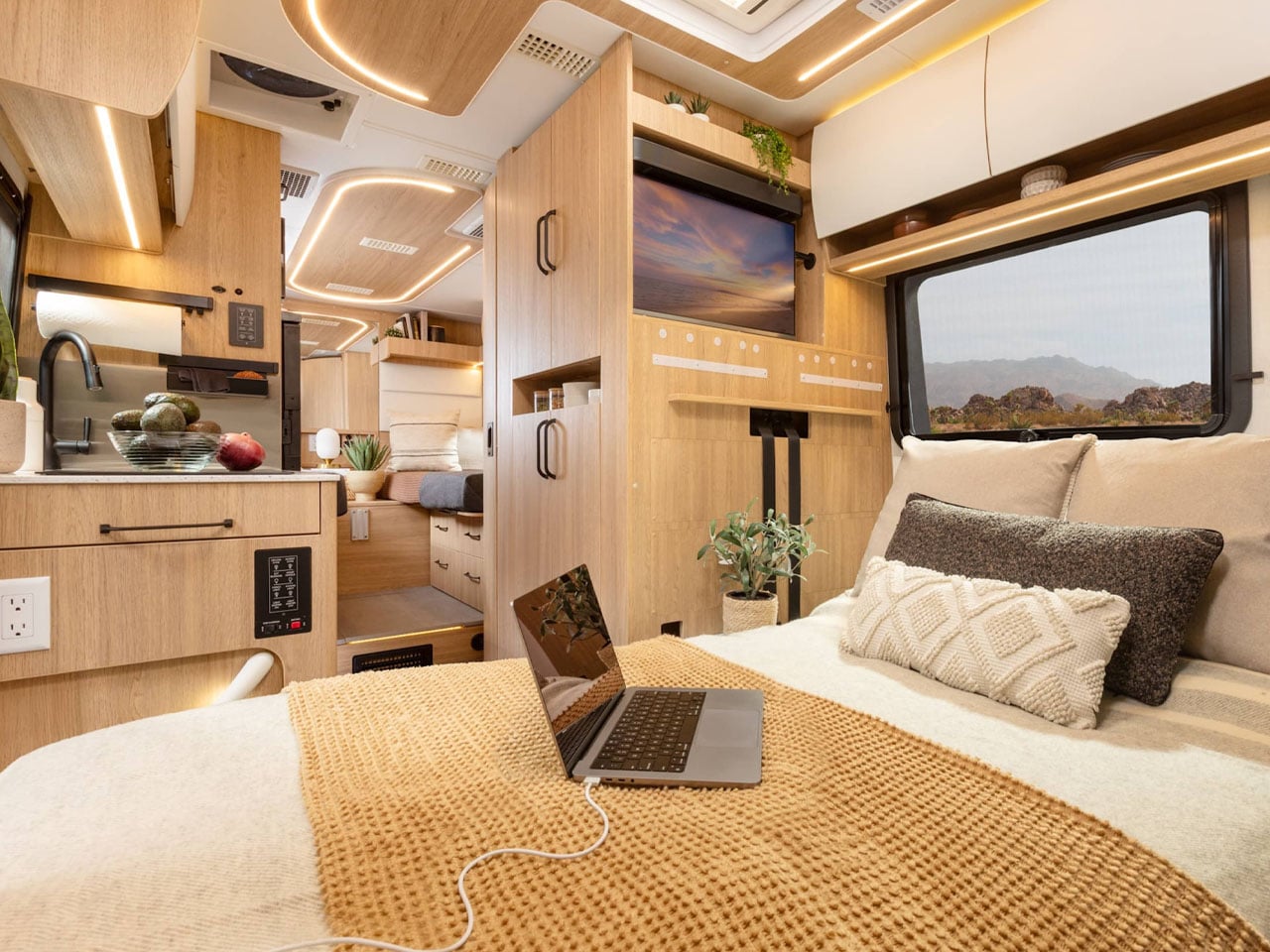
The Unity TBX is what happens when a luxury motorhome builder takes the idea of an adventure garage seriously. Built on a Mercedes-Benz Sprinter 3500, the 25-foot Canadian-made coach puts a 1,727-liter pass-through cabinet at the center of its design identity. That is not a storage afterthought. It is a decision that fundamentally changes what a motorhome can carry. Mountain bikes, surfboards, skis, fishing gear: it all fits, with 12- and 120-V outlets inside to charge electric bikes on the move.
For you, the TBX means you no longer have to choose between comfort and the gear that makes your adventures worth having. The interior sleeps four, with a convertible front lounge, twin beds in the rear, and a full kitchen featuring dual-burner induction, a compressor fridge, and a pull-out pantry. A 270-Ah lithium battery, 400 watts of solar, and AWD capability make this genuinely capable across all seasons. Starting at $237,000, it demands serious commitment, but it delivers a serious machine.
What we like:
- The 1,727-liter pass-through garage is genuinely functional and not a marketing add-on
- All-wheel-drive capability and four-season climate systems make it a credible year-round vehicle
What we dislike:
- The $237,000 starting price, rising to $245,000 for AWD, puts it well out of reach for most buyers
- At 25 feet, navigating tighter campgrounds and urban environments will require patience
3. Airstream Atlas 25RT
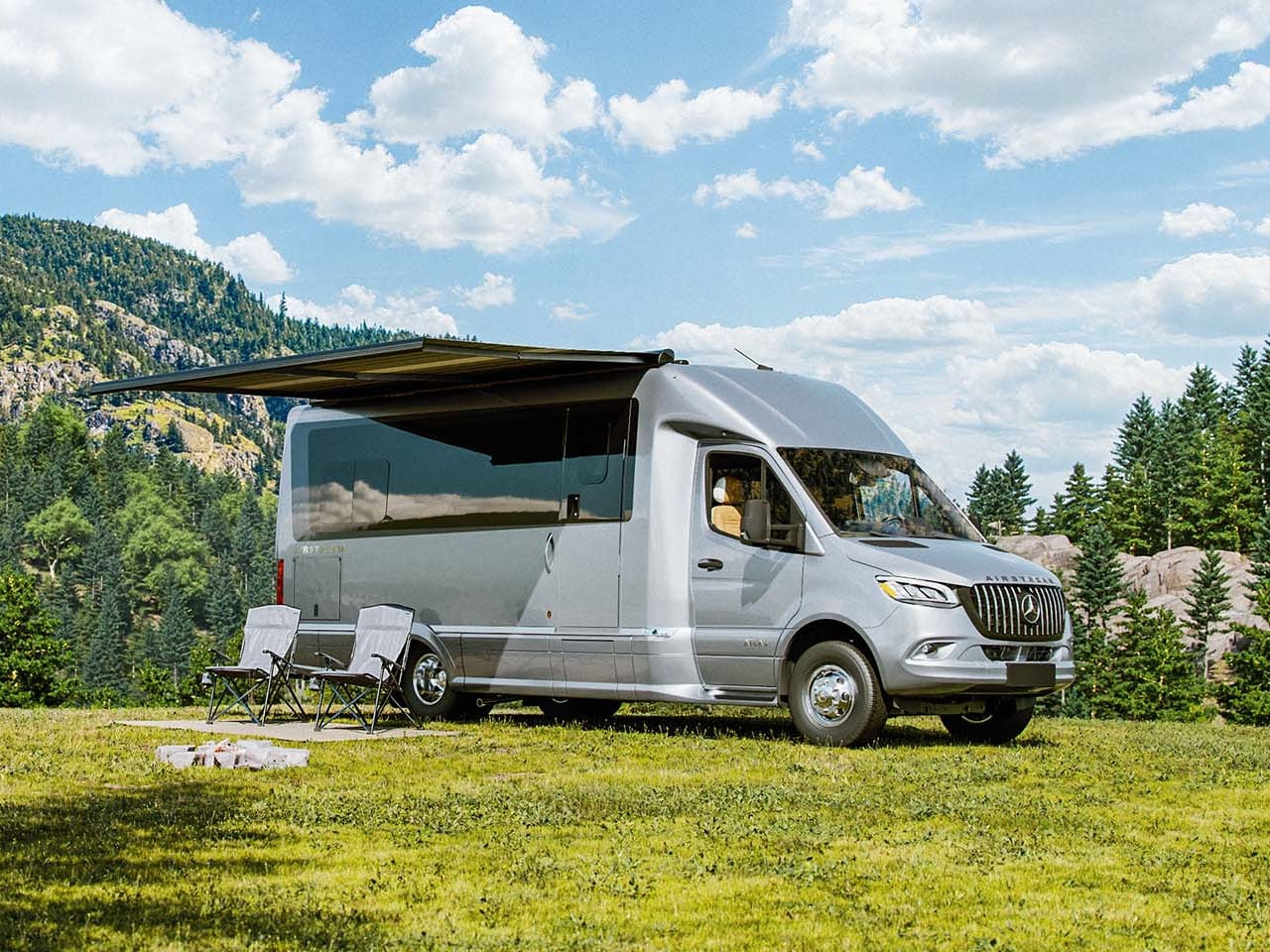
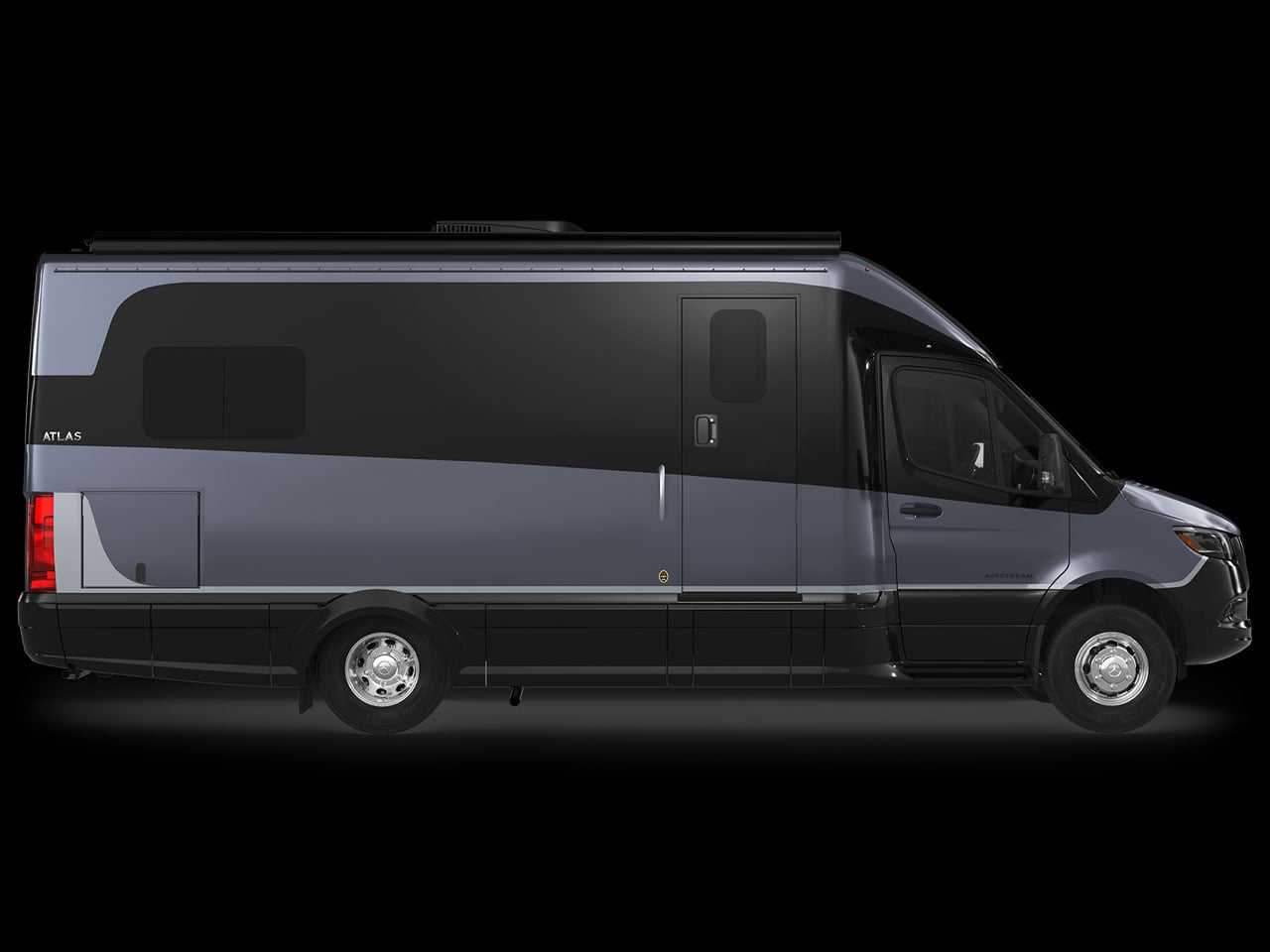
Airstream has a long history of making things feel more refined than their footprint has any right to suggest, and the Atlas 25RT applies that instinct to the Class B+ motorhome. At 25 feet, riding on a Mercedes-Benz platform, this is a touring coach designed for two people who want everything in one compact form: a proper galley, a split dry bath with a separate shower and toilet area, a twin bed layout in the rear, and a pass-through garage for outdoor gear.
What makes the Atlas 25RT feel genuinely suited to longer trips is the Garmin multiplex system, which centralizes lighting, climate, and onboard functions into a single interface. For you, that means less time managing controls and more time at the destination. The JBL stereo system with four speakers and a subwoofer makes evenings inside feel considered rather than compromised. At $290,000, it sits at the top of the Class B+ segment, but the Mercedes running gear and Airstream build quality justify the positioning.
What we like:
- The induction cooktop that stores in a drawer is a genuinely smart use of limited surface area
- The Garmin multiplex system simplifies onboard living in a way that makes a real difference over extended trips
What we dislike:
- A single floor plan with no alternatives limits flexibility for buyers with different space requirements
- Designed strictly for two, meaning families or groups looking for adaptability will need to look elsewhere
4. HYTTE by RE:BURO

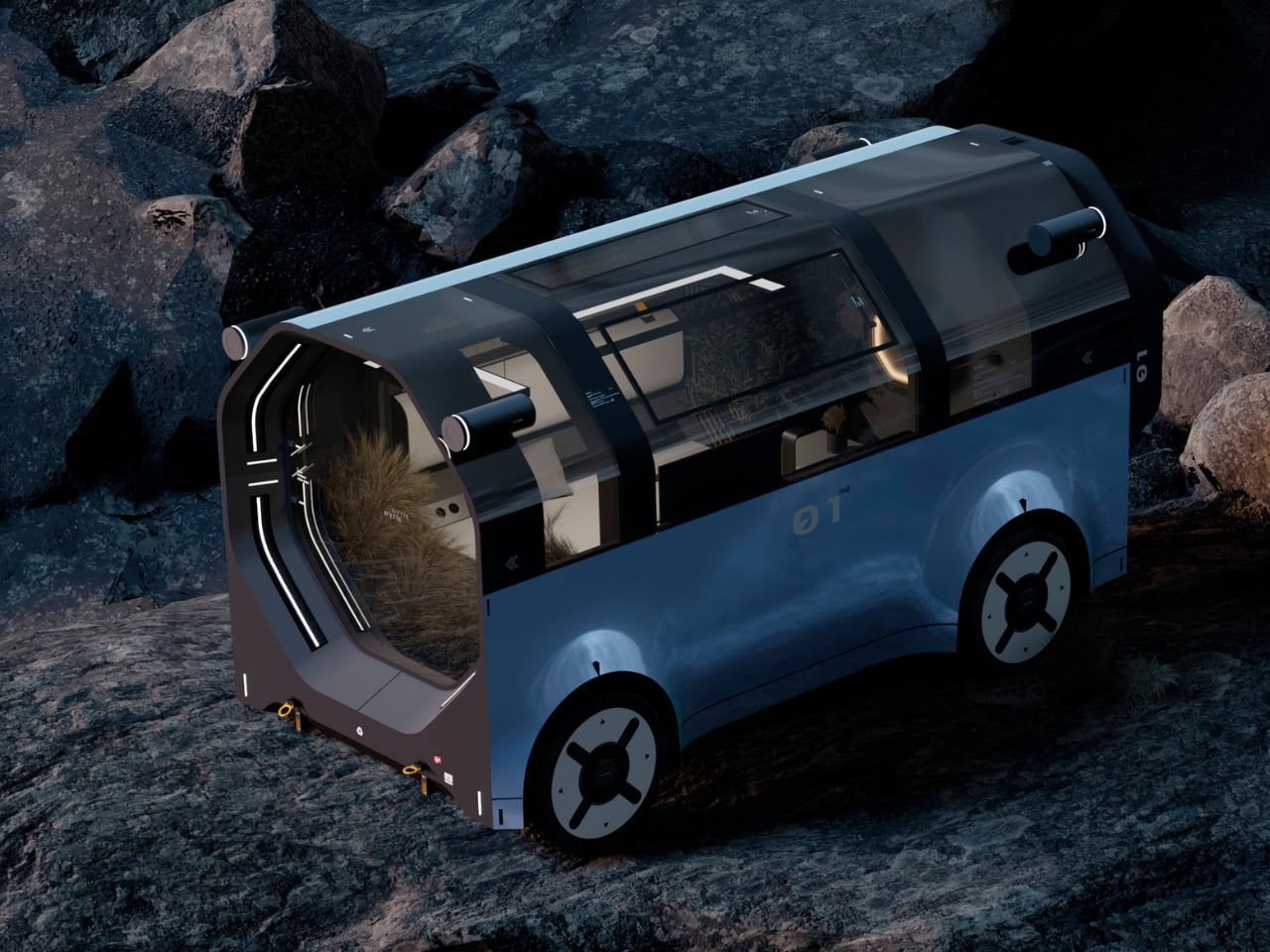
HYTTE is still a concept, but it is the kind of concept that asks better questions than most production vehicles bother to answer. Designed by RE:BURO, a studio describing itself as a bureau of technical aesthetics, the name draws from the Scandinavian tradition of the hytte, a simple countryside cabin. The exterior is dark, barrel-shaped, and compact, with a signature octagonal face framed by a red LED ring. It reads less like a motorhome and more like a piece of land architecture that happens to move.
What makes HYTTE worth taking seriously is the interior logic. An electric heater styled as a modern fireplace anchors the space psychologically, signaling rest in a way that no storage solution ever could. The modular chassis uses clamp-like grippers to bind the living compartment, allowing adaptation across different configurations. There are dedicated spaces for houseplants and pets, small details that reveal a design team thinking about how people actually inhabit a space. For you, HYTTE represents what the motorhome could look like with genuine architectural ambition applied from scratch.
What we like:
- The fireplace-style electric heater is an original way to define the emotional character of a mobile interior
- The modular chassis concept suggests a platform that could adapt to multiple configurations beyond a single fixed layout
What we dislike:
- HYTTE remains a concept with no confirmed production timeline or pricing, making it an inspiration rather than an actual purchase
- The compact barrel form may limit interior volume compared to more conventional motorhome layouts of similar overall length
5. Airstream World Traveler 17RB
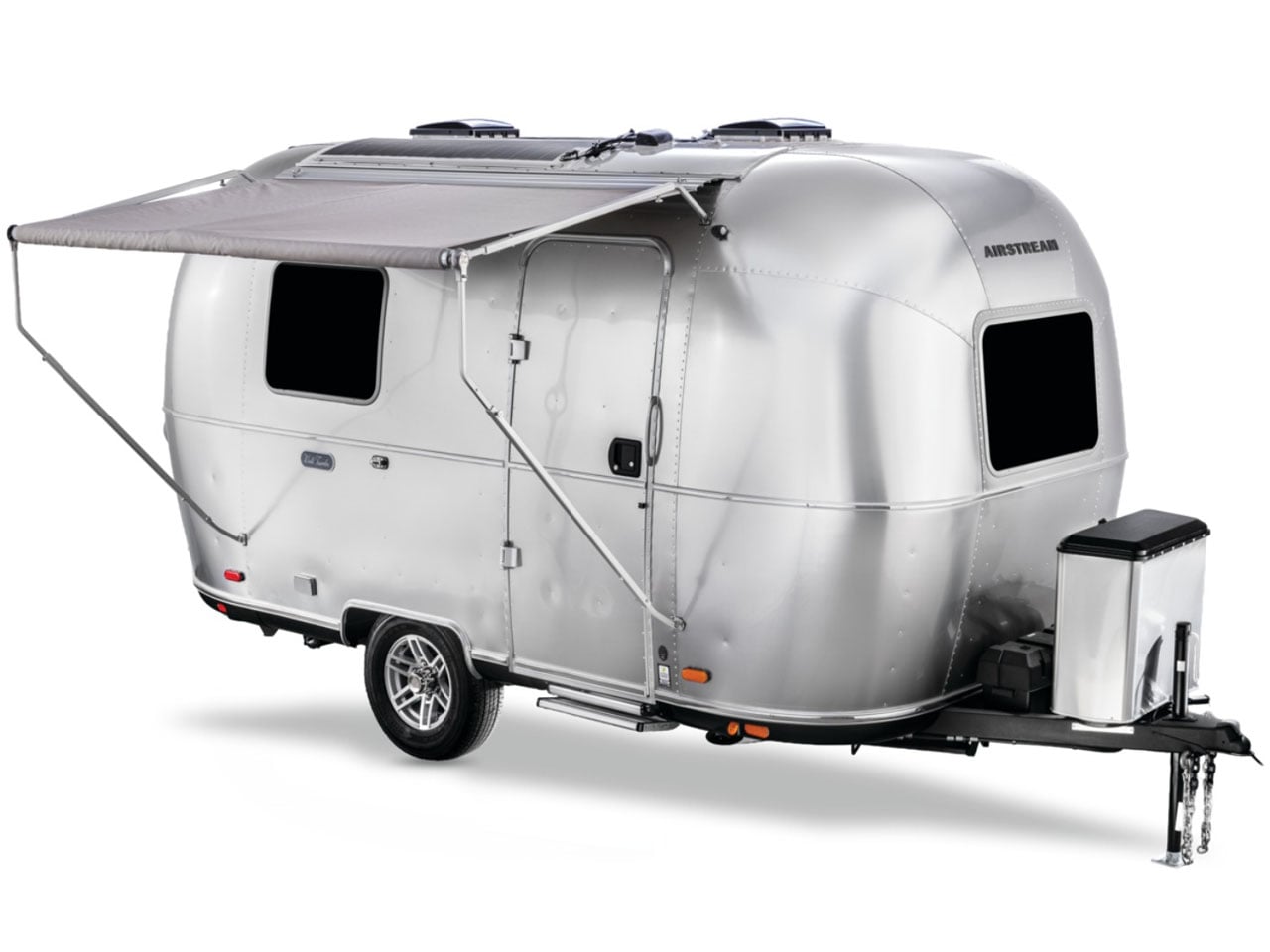
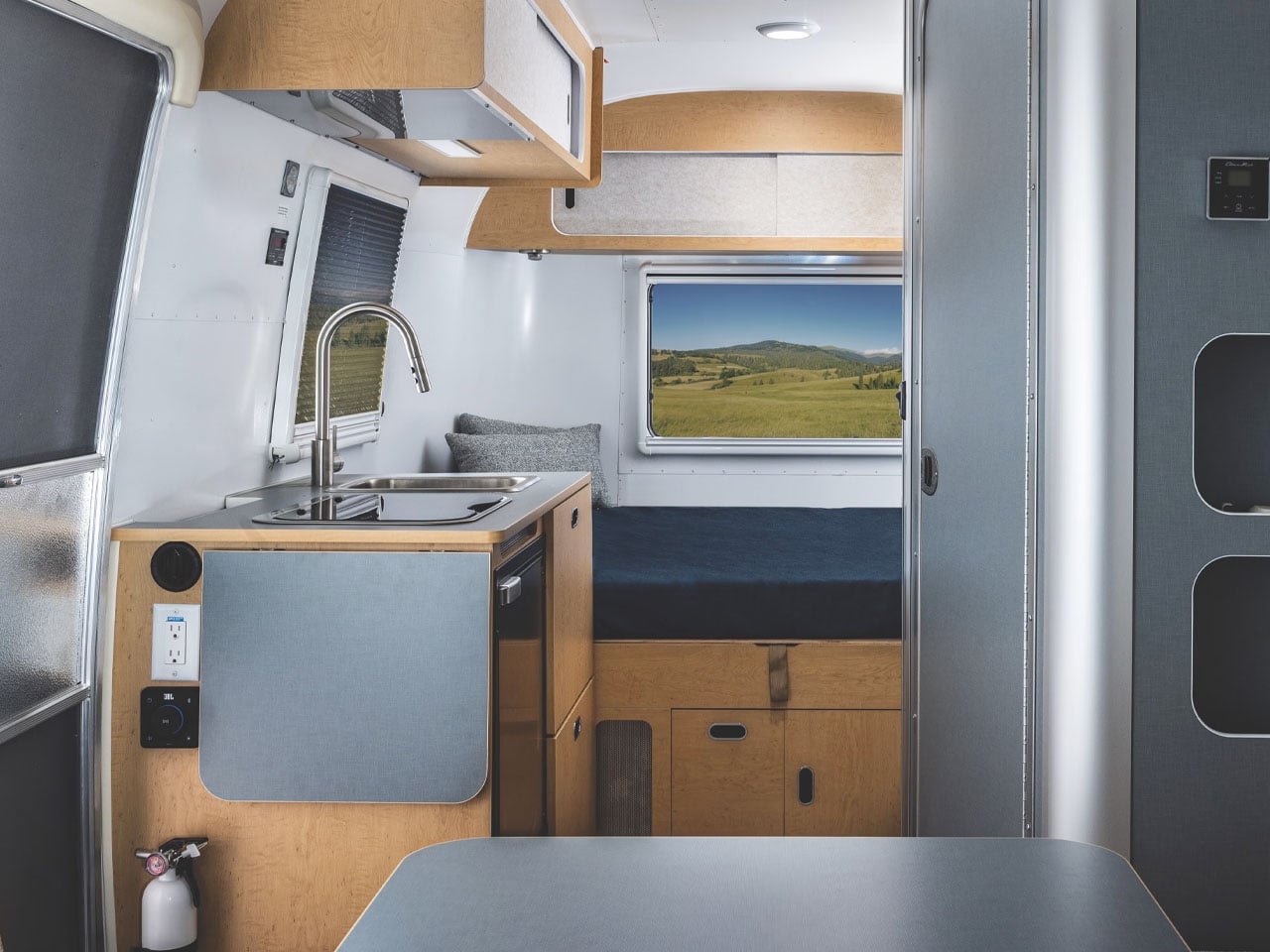
At $64,400, the World Traveler 17RB is the most accessible Airstream the brand has ever produced, undercutting the previous entry-level Bambi by $4,500. At 17 feet, it is lightweight enough to be towed by an SUV or a compact truck like the Toyota Tacoma or Ford Maverick, which immediately broadens who can realistically own one. The signature riveted aluminum shell is preserved on the outside, maintaining the Airstream identity even as the interior reflects the decisions made to hit the price point.
For you, the 17RB is a genuine entry point to a style of travel that usually costs considerably more. The Scandinavian-inspired interior keeps things clean with white aluminum walls and a choice of upholstery, while the extendable countertop and convertible dinette make the space work above its size. A 24-inch Smart TV, JBL audio, and Truma heating are included as standard. An optional 200W solar panel and 2.5 kWh lithium battery extend its capability into off-grid territory without needing a full electrical overhaul.
What we like:
- The most affordable Airstream ever made, without sacrificing the brand’s signature exterior design language
- A 3,500 lb GVWR makes it compatible with a wide range of tow vehicles most buyers already own
What we dislike:
- Smaller rectangular windows replace the wrap-around glass found on pricier models, which is the most visible cost-saving trade-off on the exterior
- The 2.1 cubic foot refrigerator is genuinely limited for anything beyond a short weekend trip
The Best RVs Ask More of Themselves
What the strongest RV designs of 2026 share is a refusal to treat the motorhome as a compromise. The Leisure Travel Vans and Airstream flagships push toward a level of finish that genuinely challenges what a home on wheels can offer. The Bürstner takes modularity seriously. The World Traveler 17RB makes the lifestyle reachable. HYTTE imagines what becomes possible when someone applies real architectural thinking to the category from the ground up.
Whether you are working with a $64,000 budget or closer to $290,000, the common thread running through all five is that design decisions make the difference. The cleverest storage, the most considered material choices, the layouts that genuinely account for how people move and rest in a small space: those are the things that separate a motorhome you simply tolerate from one you actually want to be inside.