The Netherlands has a space problem. It always has. With one of the highest population densities in Europe and a long cultural tradition of engineering its way out of geographical constraints, the Dutch have spent centuries figuring out how to fit more into less. So maybe it was only a matter of time before someone turned that exact tension into art and called it camping.
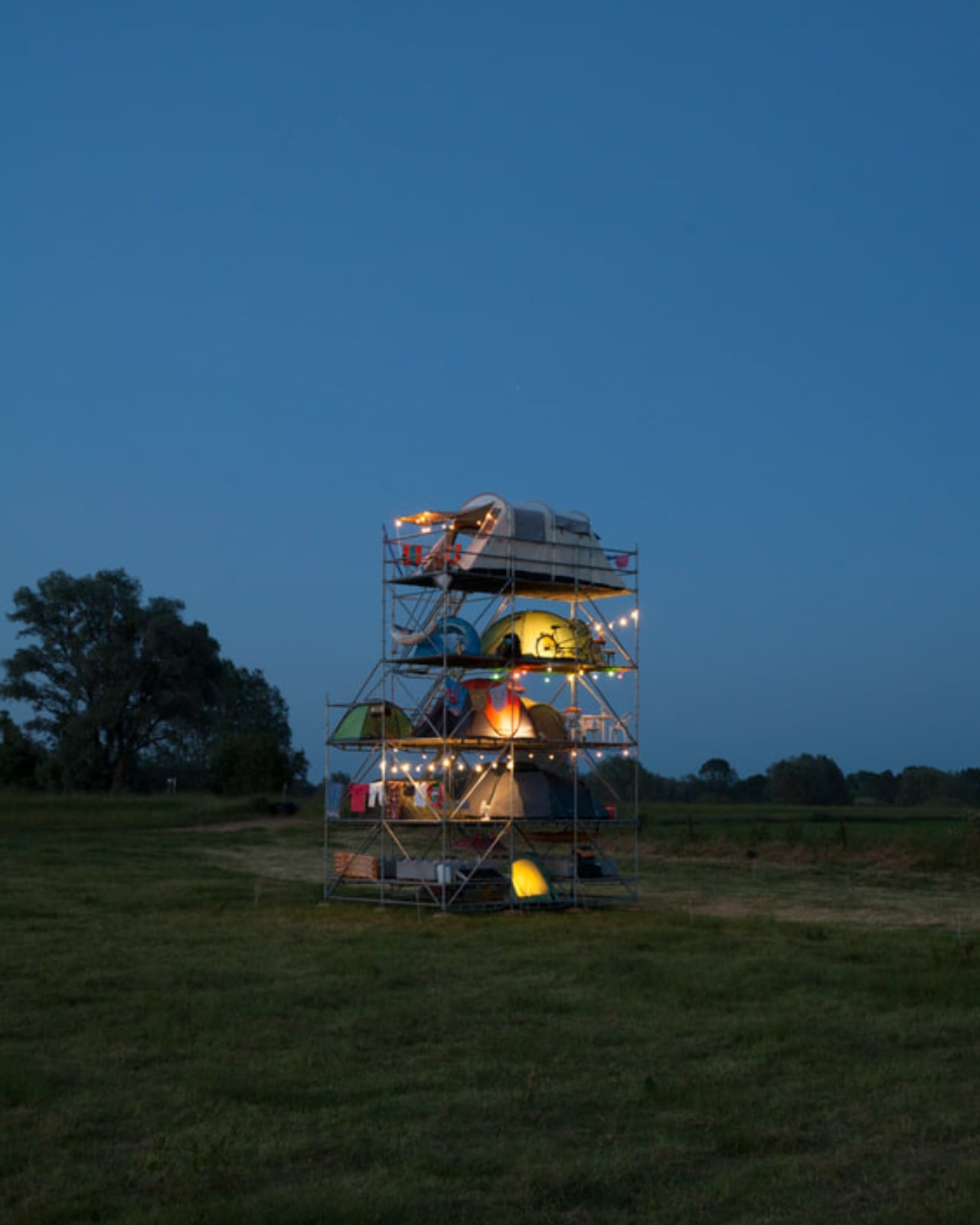
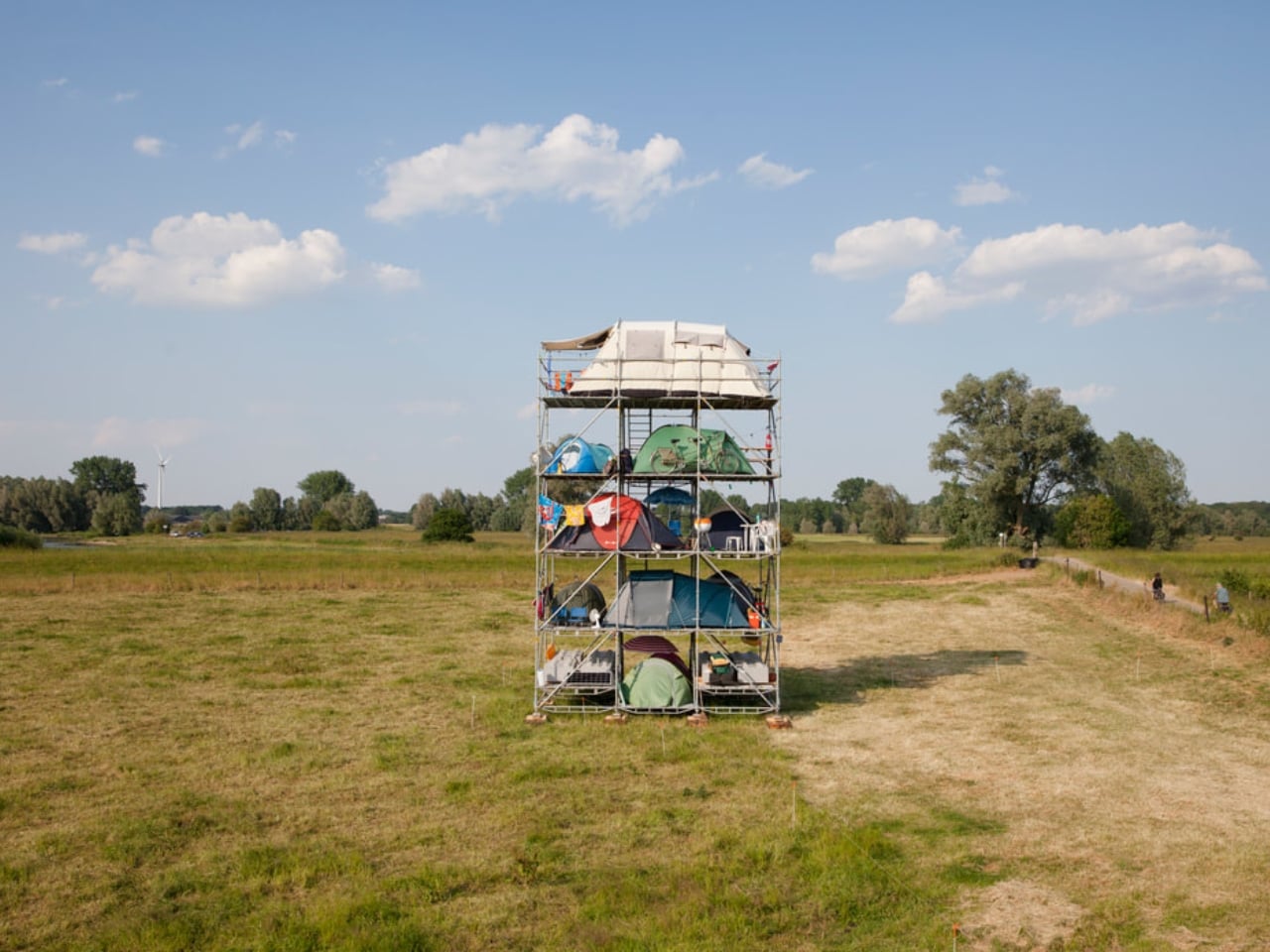
Dutch artist Willem de Haan did exactly that with his 2023 installation, Highrise Campsite: Nature City. The premise is straightforward and slightly absurd in the best way: twelve camping tents arranged vertically on an 11-meter (about 36 feet) tower of construction scaffolding, set against the quiet banks of the IJssel river in the Dutch countryside. String lights hang from the frame. The tents are pitched at each level like floors in a low-rise apartment block. And the whole thing sits in the kind of peaceful open field that makes you momentarily forget why anyone thought this was necessary. That’s the joke, and it’s also the point.
Designer: Willem de Haan
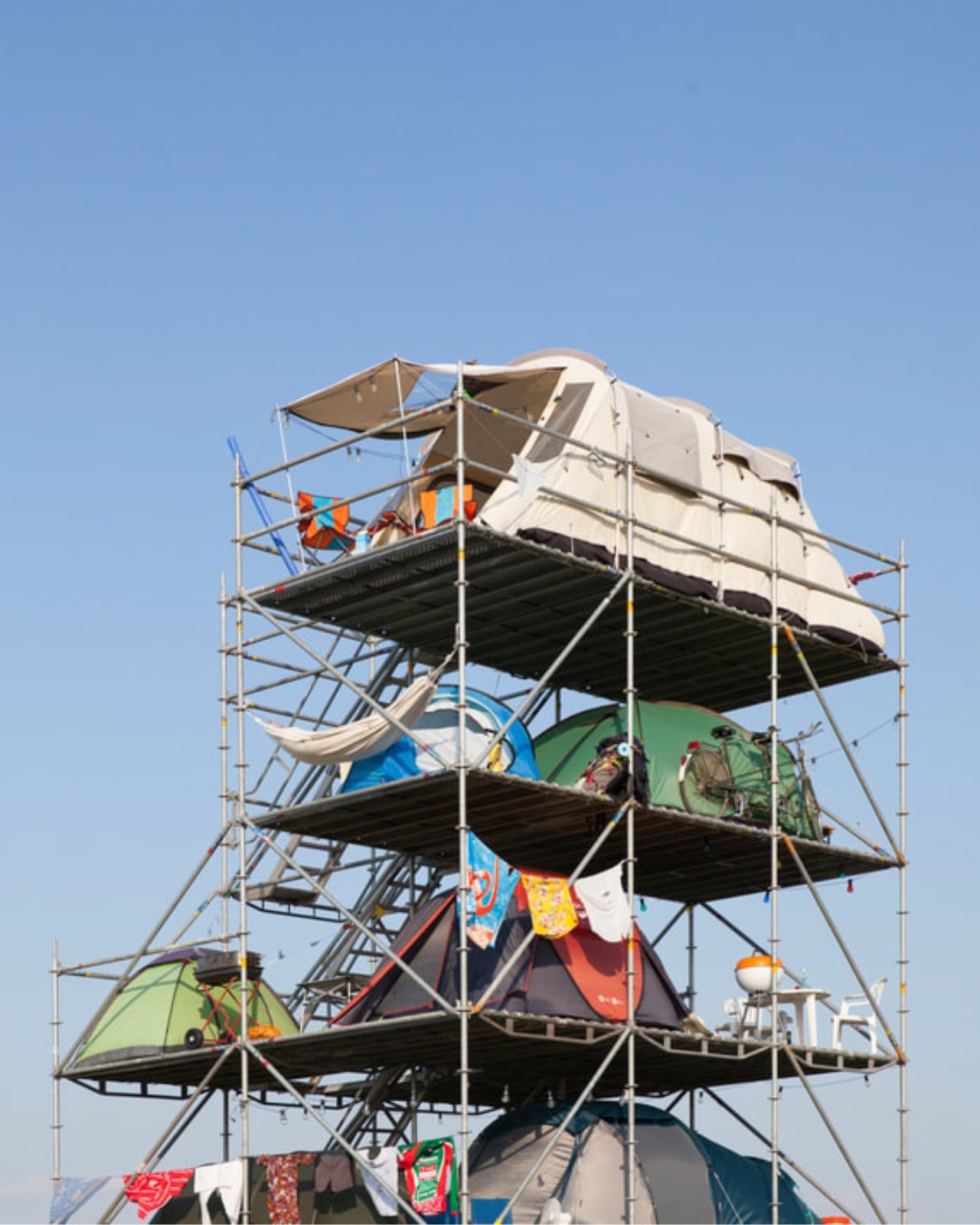
De Haan’s installation was first presented as part of IJsselbiënnale 2023 and later traveled to NDSM in Amsterdam. The materials are deliberately unromantic: scaffolding, gear, and fairy lights. There’s no bespoke fabrication, no premium finishes, nothing that says “this was expensive to make.” What it says instead is: we’ve run out of room, so we’re stacking things. Which is essentially what cities have been doing for a hundred years with apartment buildings, parking garages, and multi-level malls. De Haan just applied that logic to a campsite, plopped it in nature, and let the contradiction breathe.
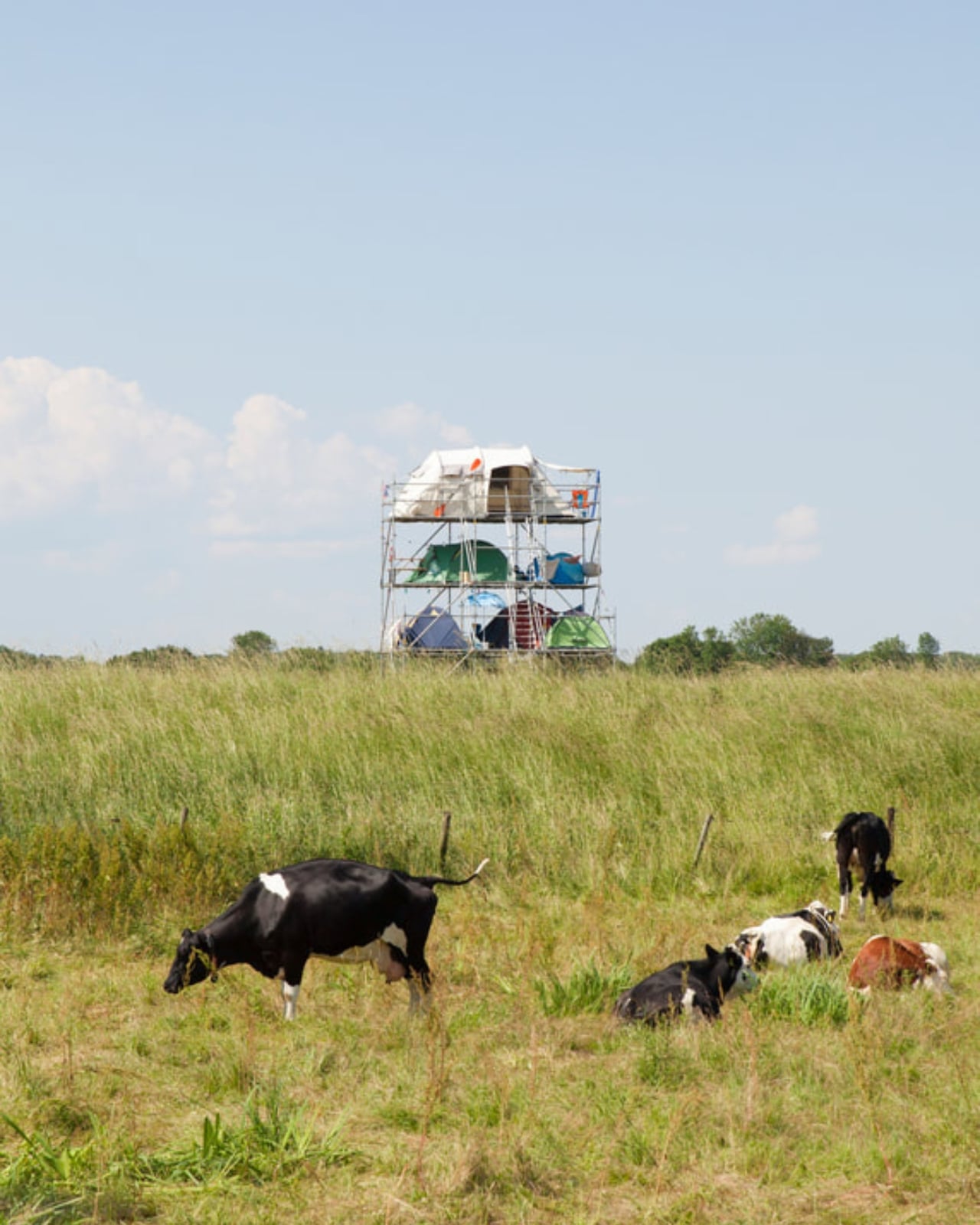
I’ve thought a lot about why this works so well as a piece of art, beyond just the visual novelty of it. Camping, at its core, is supposed to be an escape from exactly the kind of density and constraint that urban life imposes on us. We camp to get away from neighbors and deadlines and the feeling that someone else is always a floor above or below you. De Haan collapses that fantasy without being heavy-handed about it. He doesn’t put the structure in a city park or on a rooftop; he places it in a genuinely serene natural landscape, which makes the point land much harder. Even out here, the battle for space follows you.
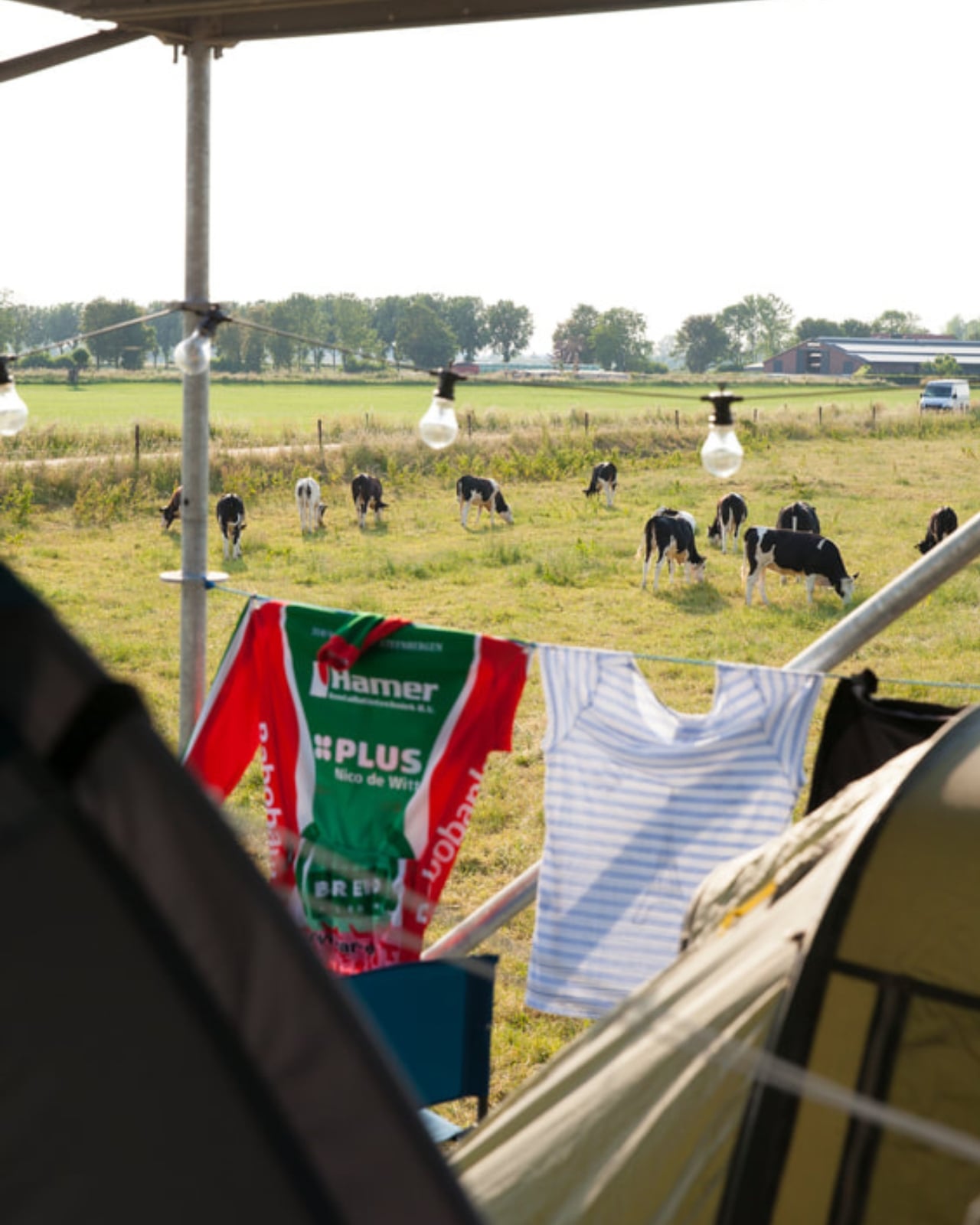
It’s the kind of art that rewards a second look. The scaffolding reads initially as something temporary, something that hasn’t been finished yet. Construction scaffolding is everywhere in urban environments precisely because it signals transition. The city is always mid-sentence, always becoming something else. Applying that visual language to a campsite turns the whole thing into a question: is this a solution or a warning? I suspect de Haan would say it’s both.
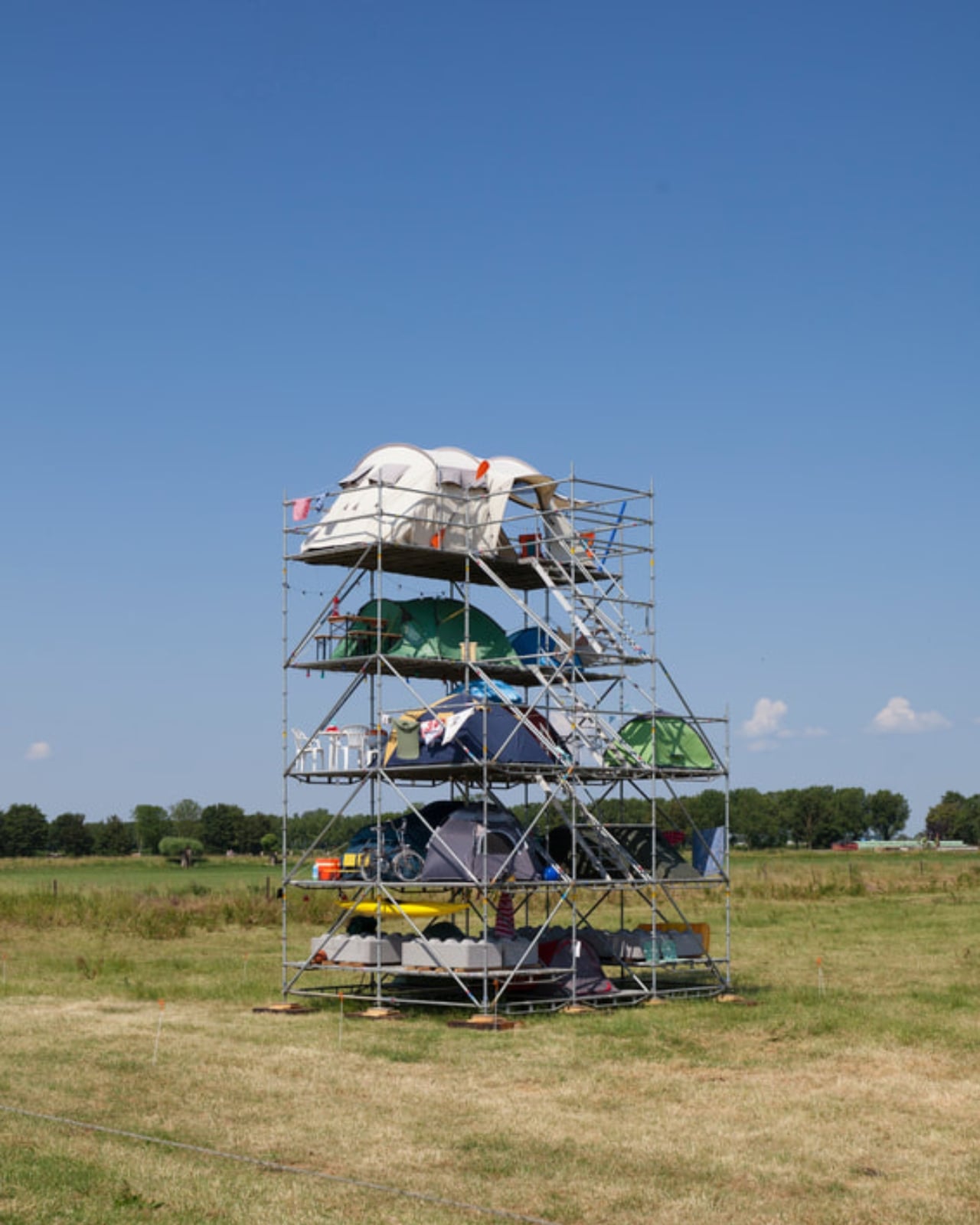
The installation also holds up against the broader housing conversation happening across Europe. The Netherlands, like most of Western Europe, is grappling with a serious shortage of affordable space. Urban density is rising, rural areas are under development pressure, and the idea of simply going somewhere open and uncrowded feels increasingly like a privilege. Highrise Campsite makes that tension visible without screaming at you about it. It’s quietly funny and quietly uncomfortable, which is exactly where the best social commentary lives.
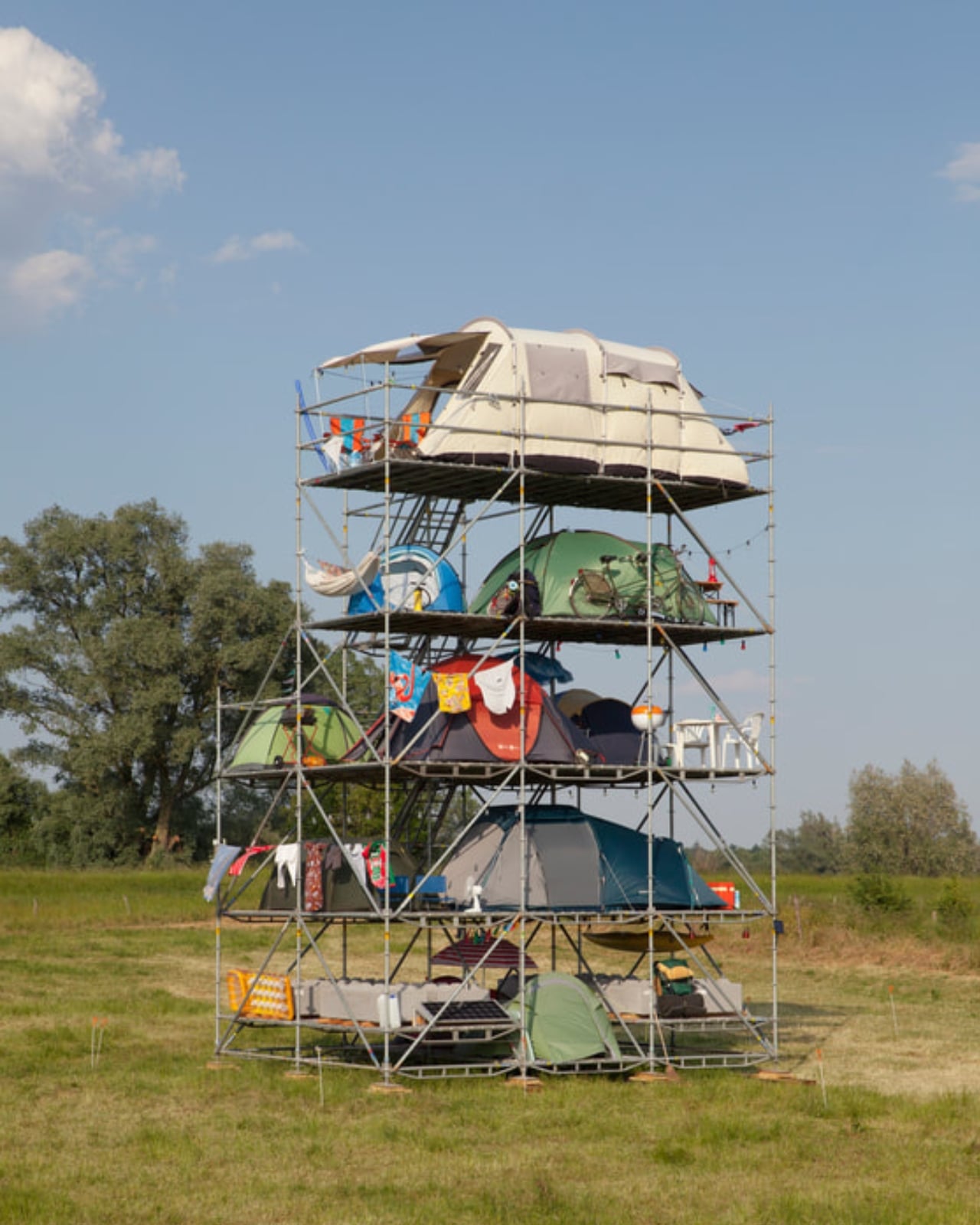
De Haan has a knack for that kind of duality. His work tends to take familiar forms and push them just far enough out of context to become unsettling. Twelve tents is still twelve tents. A scaffold is still a scaffold. But together, stacked vertically in an open field, they stop being themselves and start being a question about how we share space, whether that’s in a city, in the countryside, or eventually, at some point, everywhere in between.
The internet has had its expected moment with this one. It made the rounds, racked up likes, and got called both genius and dystopian in the same comment sections. I think it earns both labels. The best design tends to do that: look like a good idea and a terrible one at the same time, and leave you sitting with the tension.