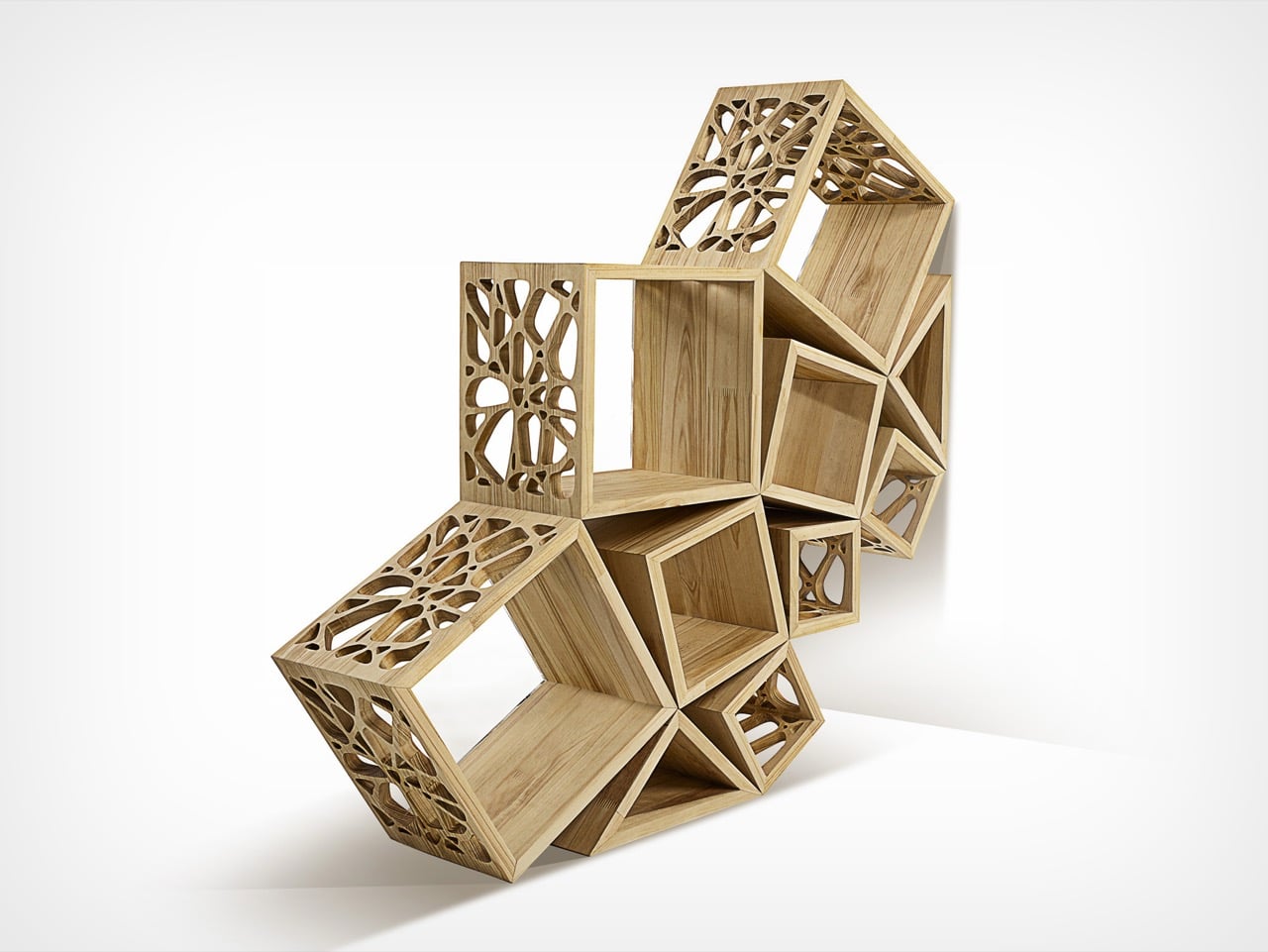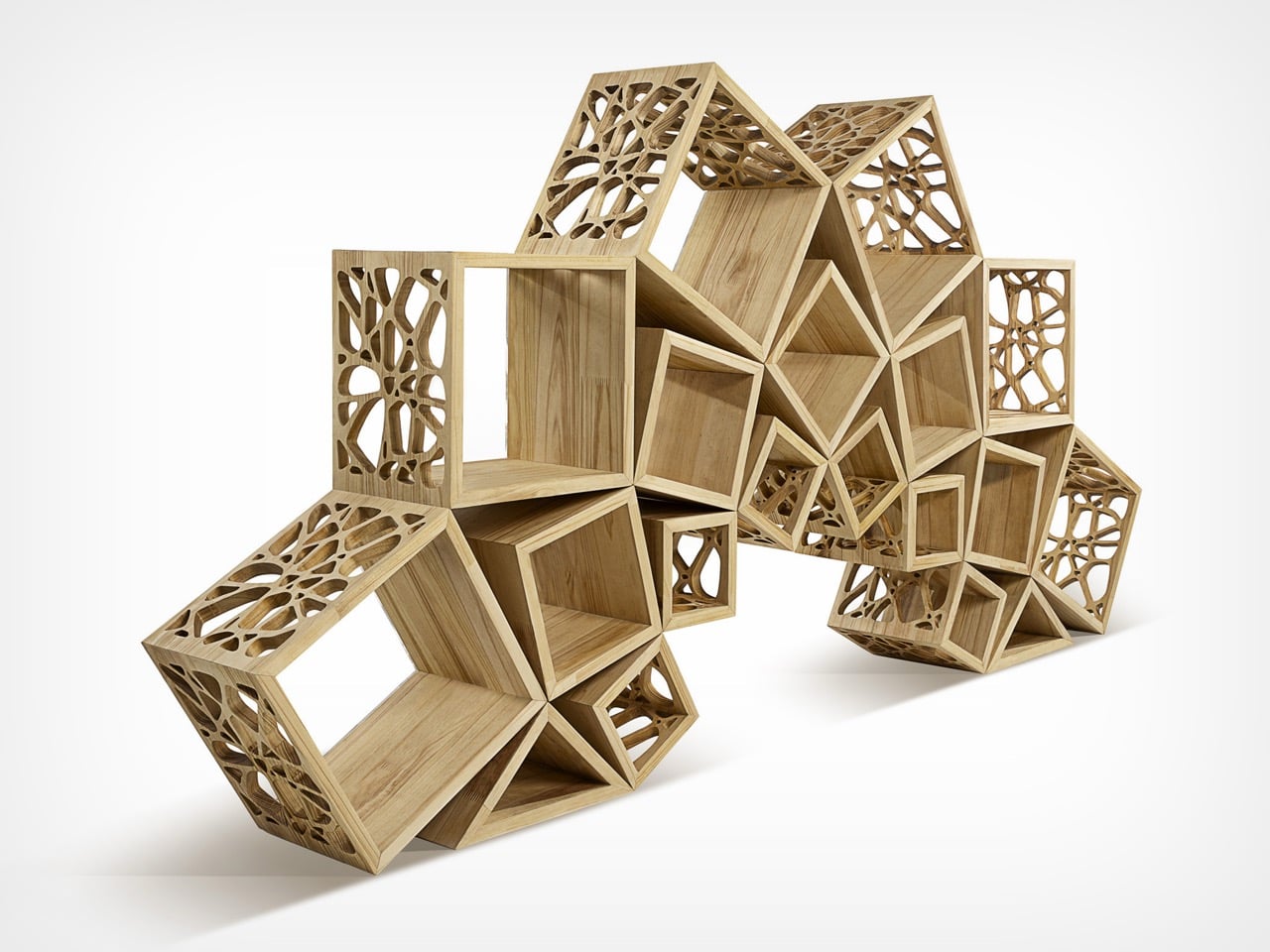
Fractal 9 began not as a formal design project but as a response to a simple, everyday need. The goal was to make use of an empty corner in the living room by creating something that felt meaningful in the space, not just a functional object. The intention was to design a piece that could quietly anchor the room while offering both aesthetic presence and practical value. Over time, what started as a personal experiment grew into a deeper exploration that ultimately led to the creation of Fractal 9, a modular sculptural furniture piece rooted in geometry, materiality, and conceptual depth.
At the core of Fractal 9 lies a strong relationship with mathematical principles, particularly the square, the golden ratio, and the number nine. These elements are not decorative references but foundational to the structure of the design. A significant turning point came when the first model was analyzed through the lens of the Digital Root, a mathematical concept that reduces numbers to a single digit. This analysis revealed meaningful numerical patterns within the form. What began as an intuitive structure gradually revealed an underlying mathematical coherence, suggesting that the design was guided by a deeper internal logic rather than chance.
Designer: Miguel Espejo
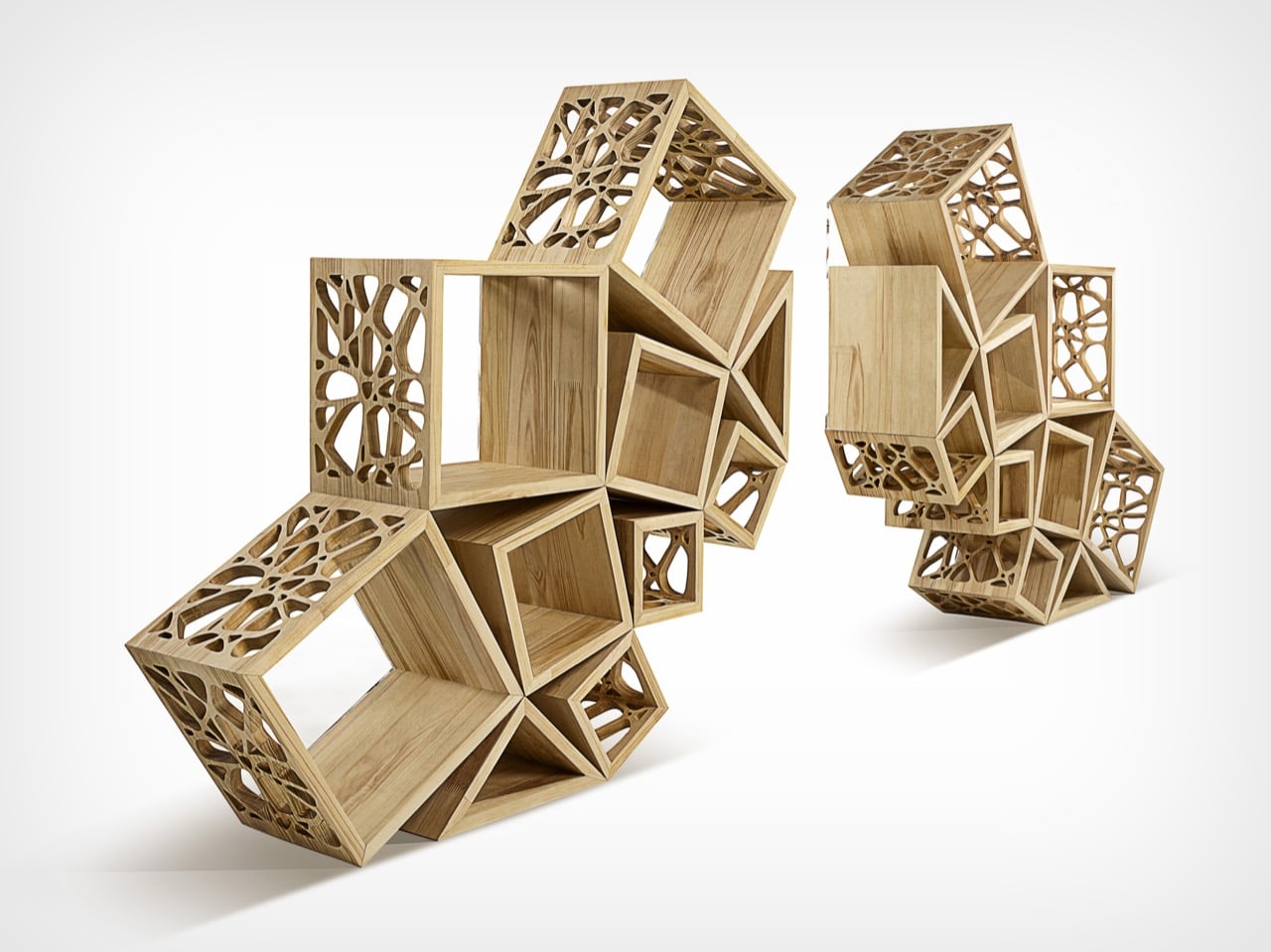
The design takes inspiration from fractal patterns found in nature, where forms repeat across scales while maintaining harmony and balance. This thinking informs the modular nature of the piece. Fractal 9 can function as a single integrated unit or be separated into two independent units, allowing it to adapt to different spaces and uses. Whether serving as a bookshelf, a display surface, or a sculptural centerpiece, the piece encourages interaction, experimentation, and creative reconfiguration.
The assembly system plays a key role in the user experience. The entire structure can be assembled using an Allen wrench, allowing the piece to be put together or taken apart without adhesives. This mechanical approach preserves the material integrity while offering flexibility and durability. Designing the connection system was one of the most challenging aspects of the project. The structure needed to be strong and stable while also appearing visually subtle so that the form remained uninterrupted.
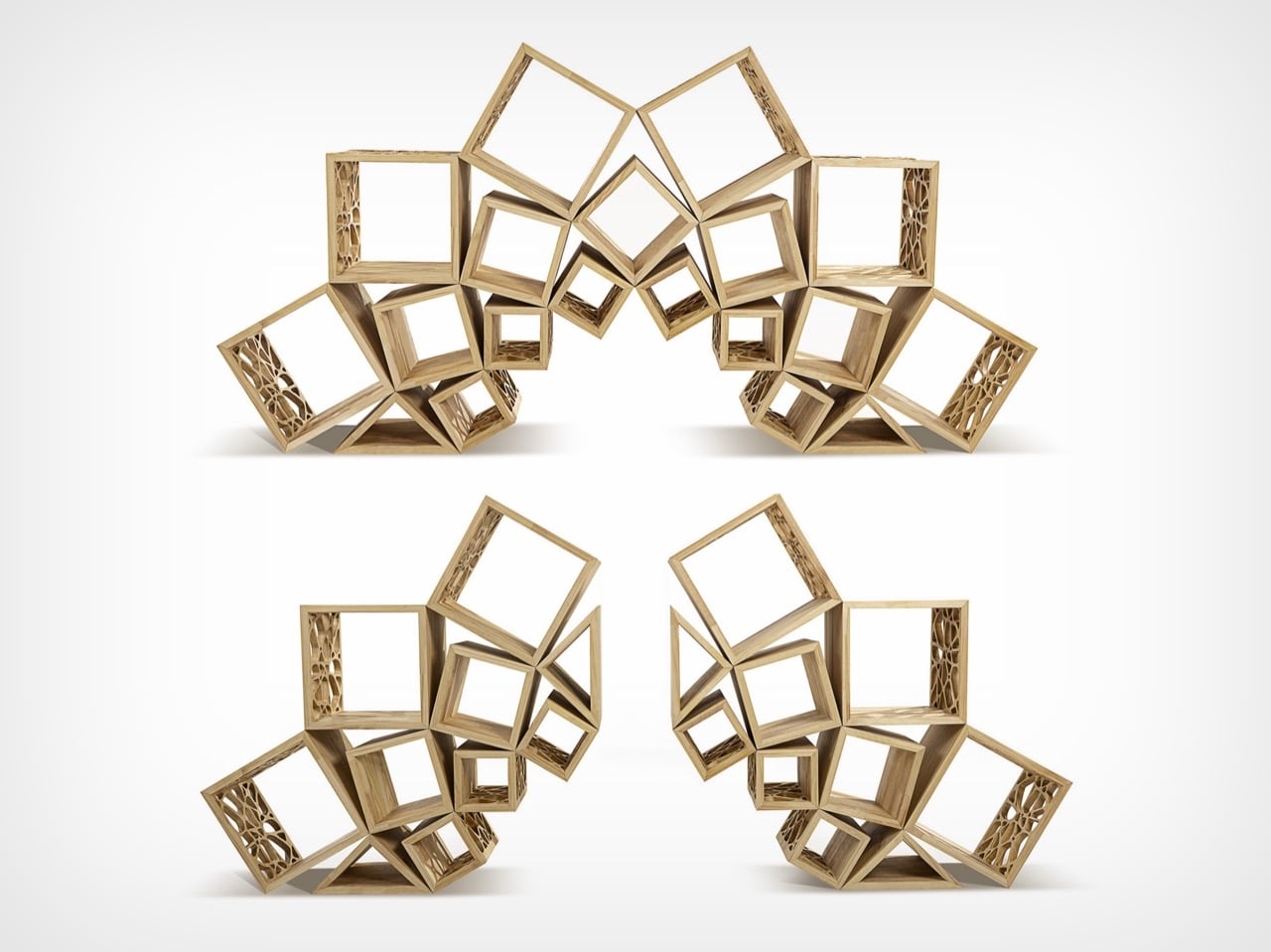
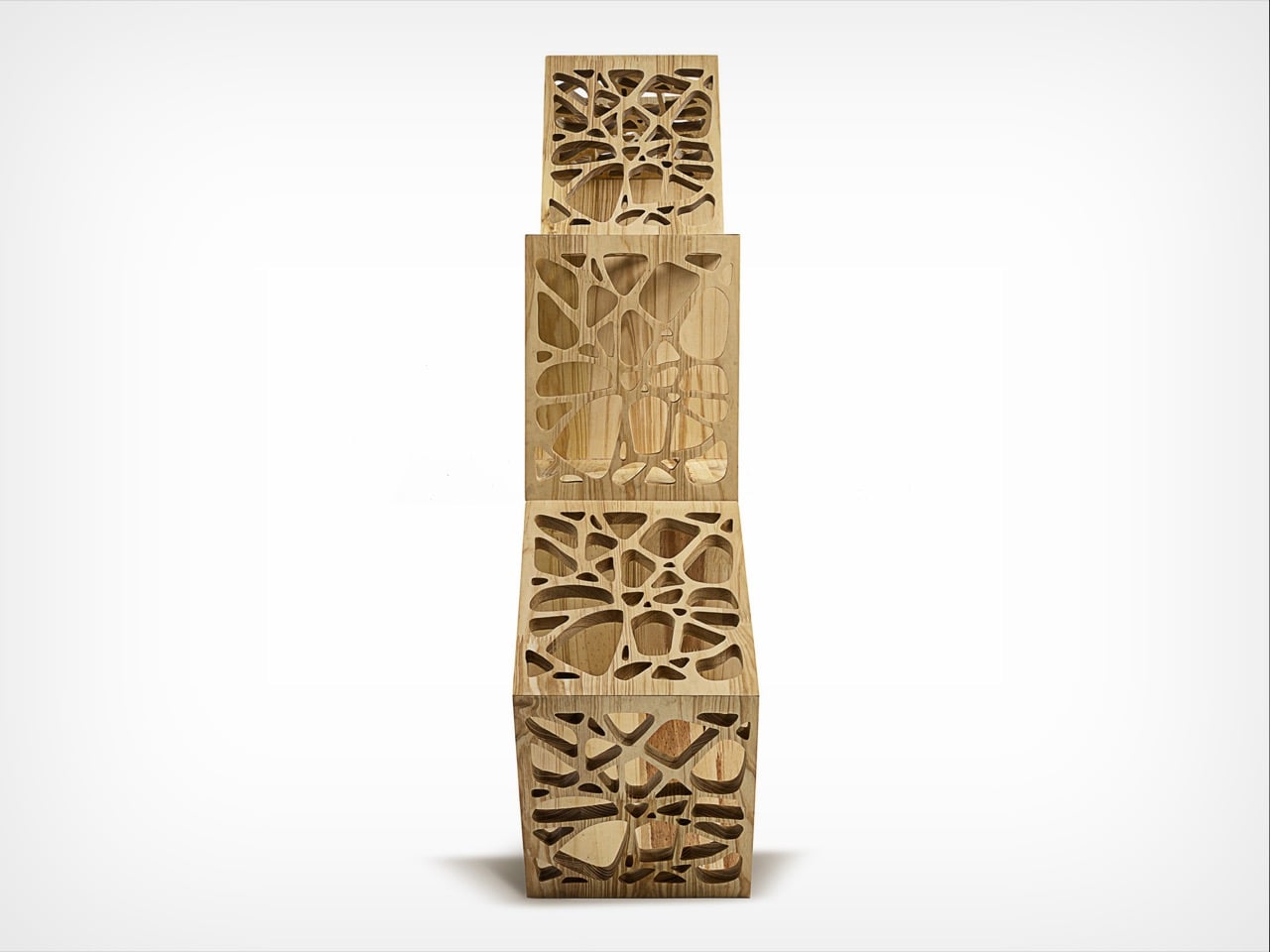
The choice of materials is central to the identity of the piece. FSC certified wood forms the structural base, reflecting a commitment to sustainable sourcing. Transparent acrylic components, produced using precise laser cutting, introduce lightness and clarity while allowing the structural connections to remain visible. Stainless steel fasteners provide strength and long term durability. A natural beeswax finish is applied by hand, enhancing the grain of the wood and adding a tactile warmth that complements the precision of the fabrication methods.
The development of Fractal 9 was supported by applied research. The aim was to validate the geometric and mathematical integrity of the design using the Digital Root method. Through careful measurement of angles, proportions, and modular relationships, recurring numerical patterns were identified. Stability tests conducted across different configurations confirmed the structural reliability of the system. These findings demonstrated that the design has potential beyond furniture, with possible applications in architecture, spatial systems, and educational contexts related to geometry and applied mathematics.
One of the most demanding aspects of the project was conceptual. Establishing a meaningful connection between the square, the golden ratio, and the number nine required extensive exploration and refinement. This process revealed a framework that extends beyond the object itself and opened the door to ongoing research into modular systems and mathematical structures in design.
Fractal 9 is ultimately an exploration of structure, meaning, and human interaction. By combining mathematical principles, sustainable materials, and modular adaptability, it reflects a belief in balance and interconnectedness. It is a reminder that design, much like nature, exists as part of a larger system where every element has purpose and contributes to the whole.