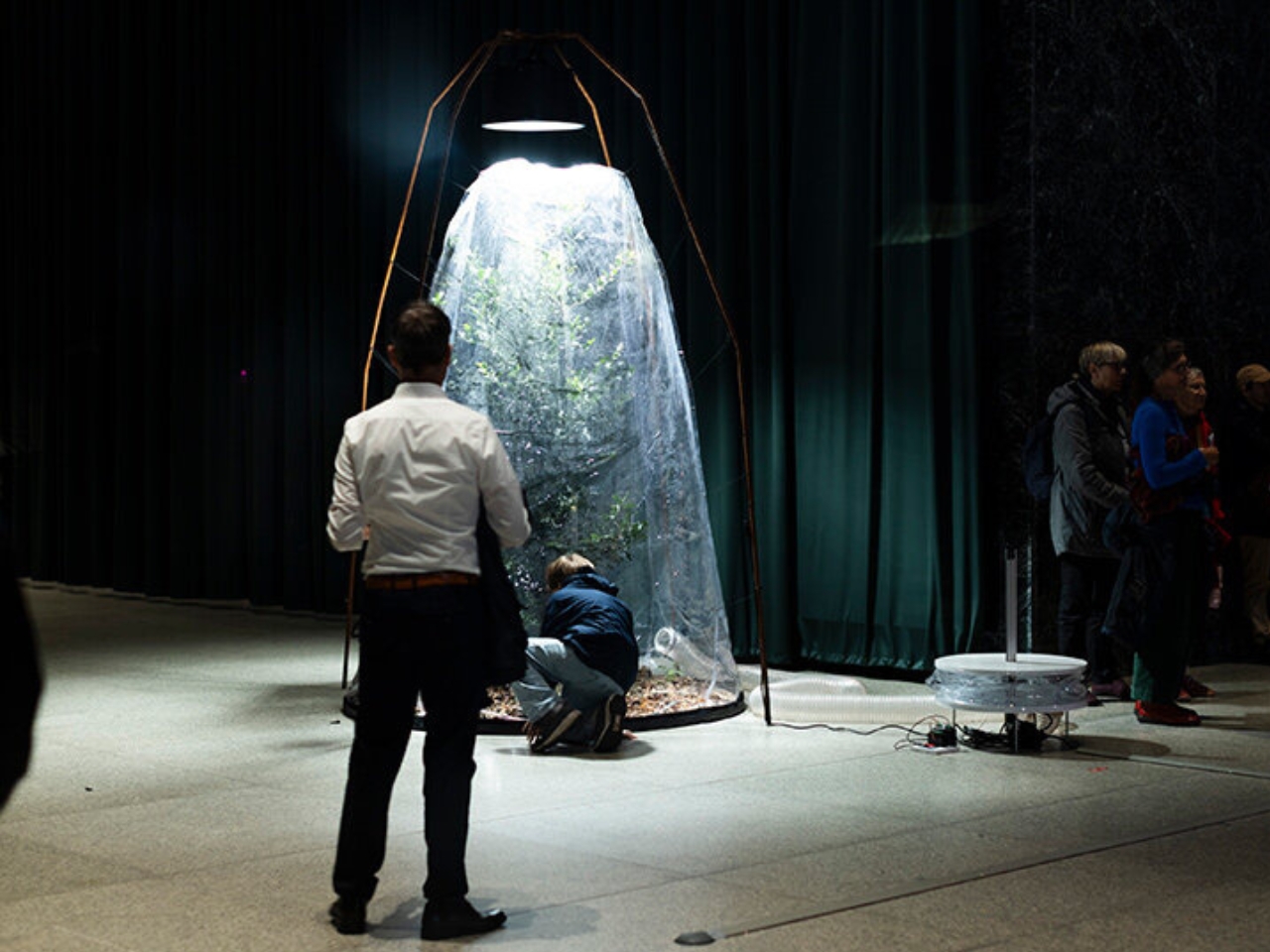
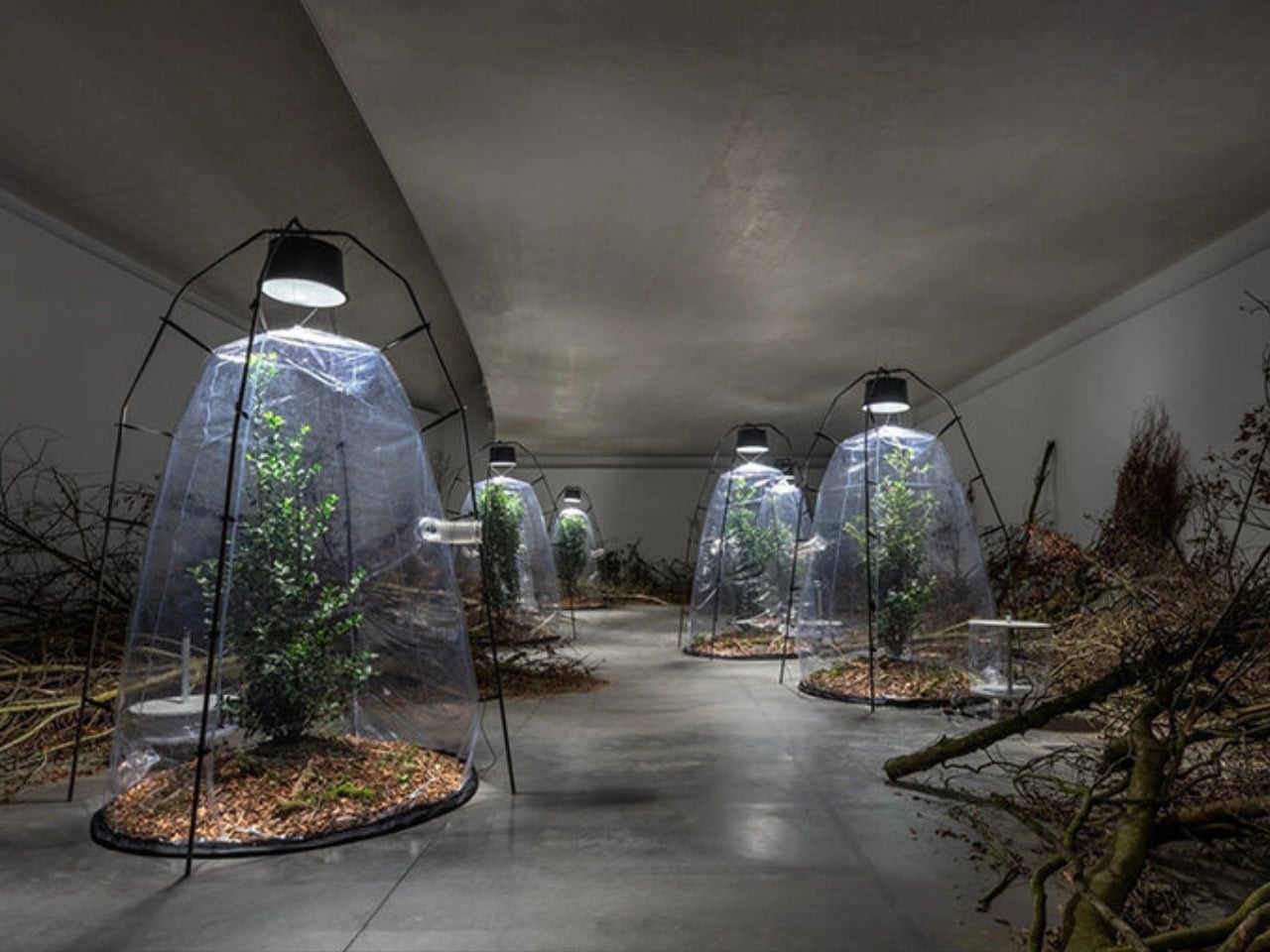
A tree wrapped in clear plastic and connected to machinery looks uncomfortably like a patient. That’s the premise of Lung Trees, an installation by Danish artist Rune Bosse that gives living trees the visual language of intensive care. Its subject is ecological breakdown, but the immediate problem it tackles is attention, making our dependence on healthy ecosystems feel tangible rather than abstract.
I like that Bosse doesn’t offer the reassurance of another clever environmental gadget. A tree inside a life-support chamber is an image of care, but also a fairly disturbing image of failure. The artwork makes room for both readings. It asks us to consider a future in which preserving nature means managing its survival one enclosed organism at a time, with all the responsibility that suggests.
Designer: Rune Bosse (photos by Victoria Tomaschko)
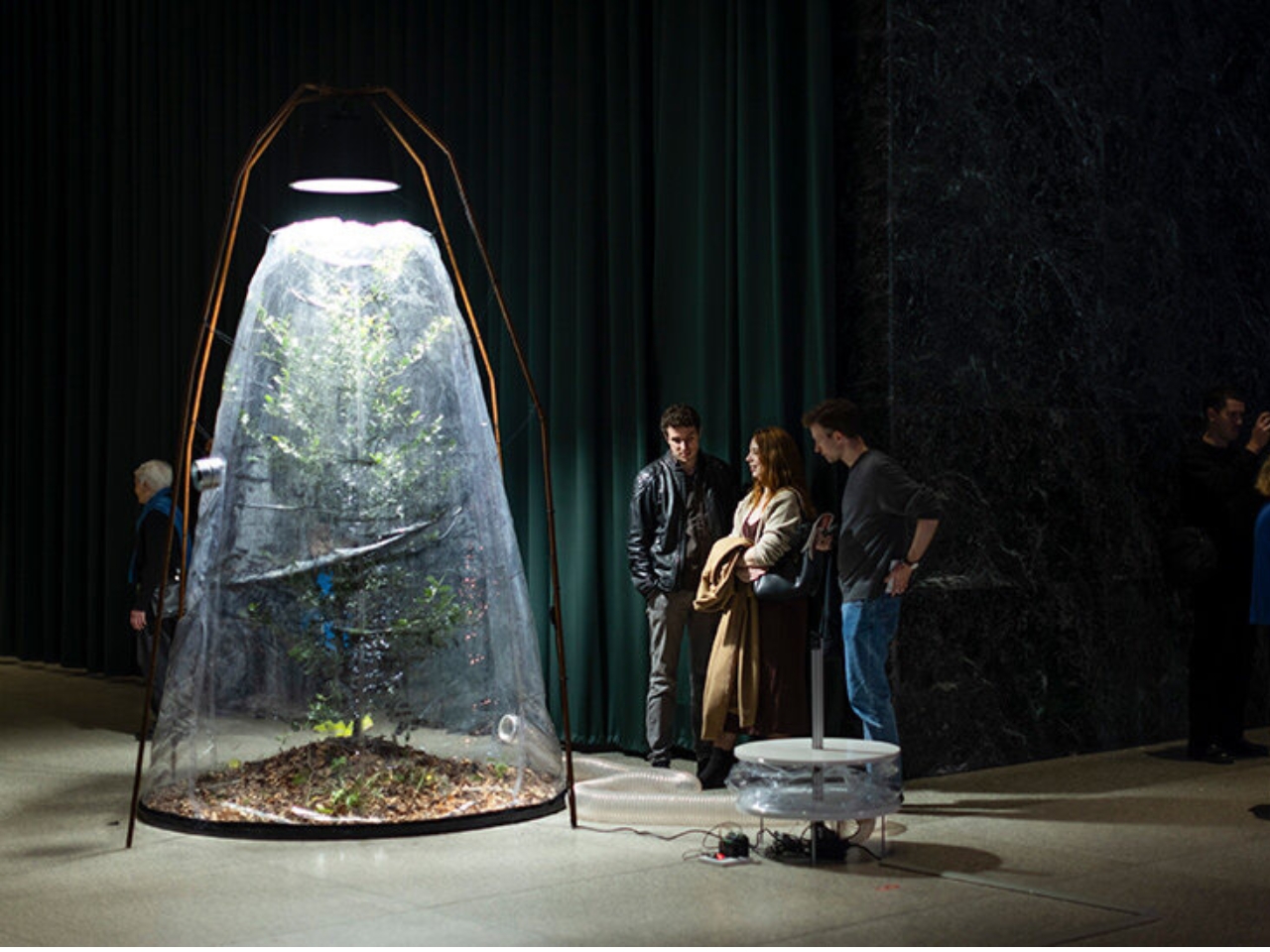
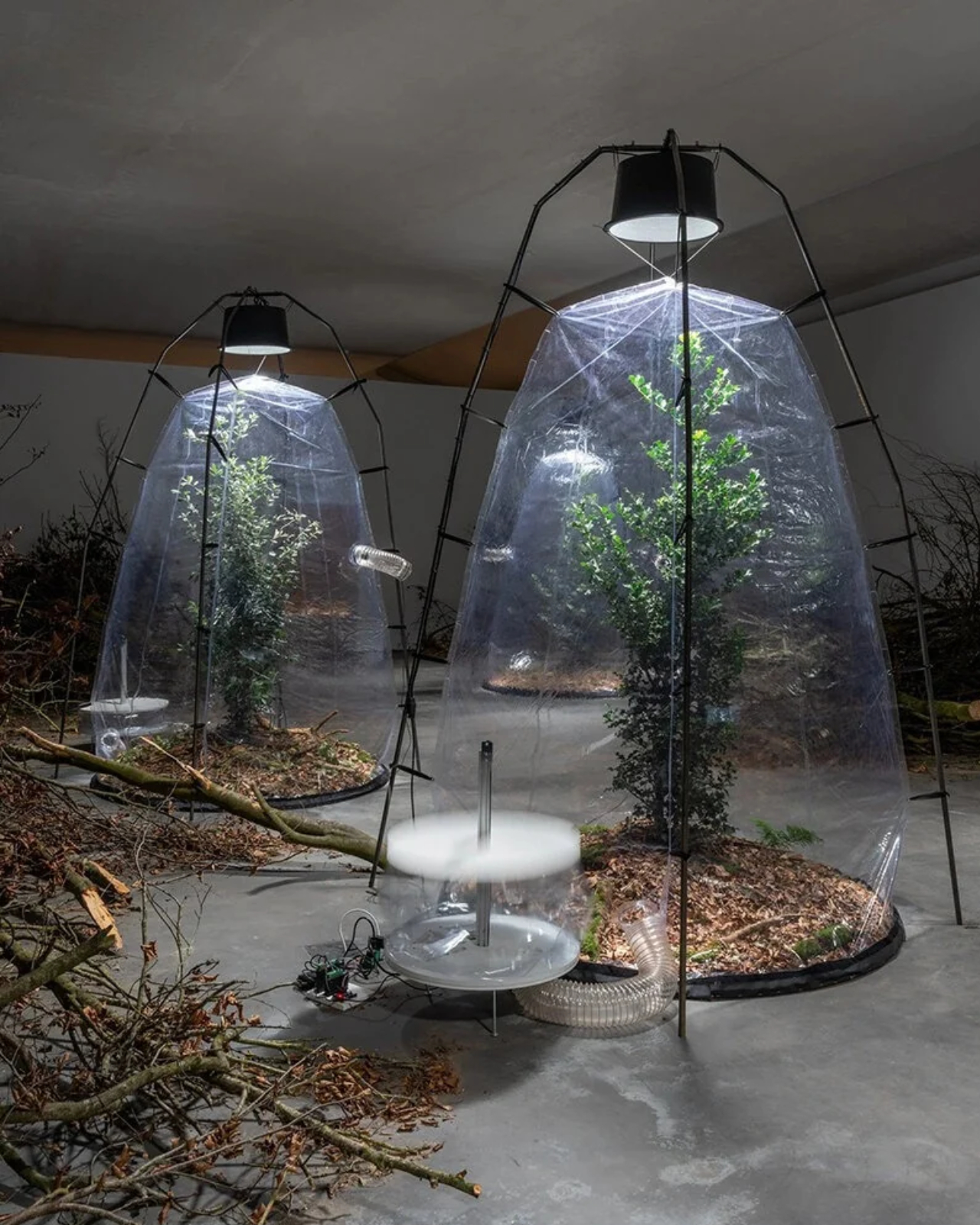
The mechanism becomes particularly clear in a related 2025 installation at Berlin’s Neue Nationalgalerie, titled Lungetræ / Lungenbaum. A living tree and a patch of forest floor sit inside a transparent PVC membrane supported by a metal framework. A respirator feeds air into the enclosure at intervals, making the plastic rise and fall like an oversized lung. That movement is a mechanical interpretation of the tree’s exchange with its surroundings, not the tree physically inhaling and exhaling like a person.
Photographs of the Berlin installation show a suspended lamp above the foliage, with flexible hoses running toward a separate apparatus on the floor. Fallen leaves cover the ground inside the enclosure. Those details matter. The forest floor keeps the work from reading as a houseplant in an elaborate display case, while the visible connections make its dependence on equipment immediately legible. For me, the exposed hardware carries as much of the story as the tree.
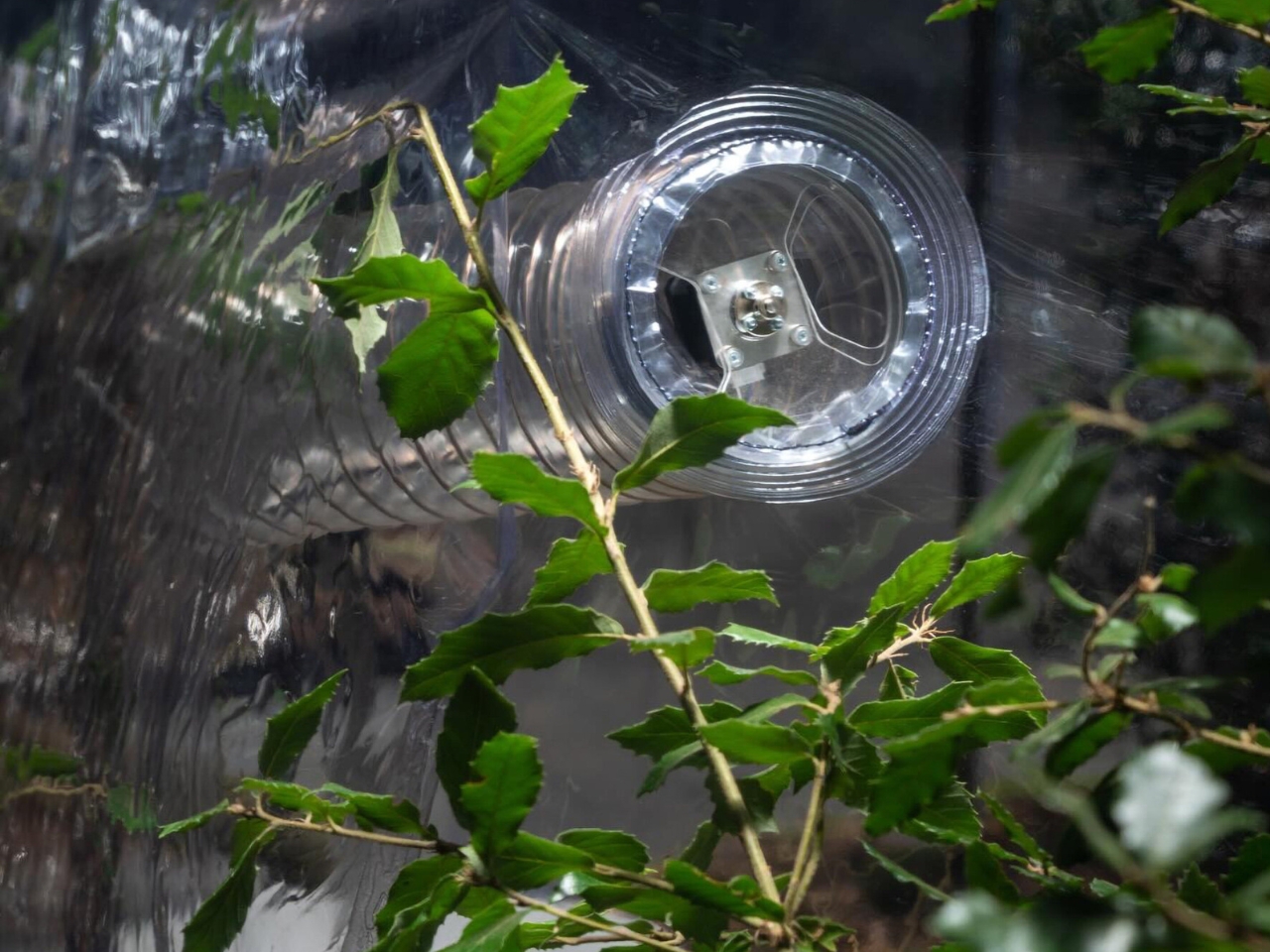
The transparent membrane is an especially effective choice. You can see the organism being protected, yet the barrier also separates it from everything outside. I read that as the installation’s central tension: protection can start to resemble confinement. A polished, opaque enclosure would conceal too much of that relationship. Here, the plastic allows the tree to remain visible while making its isolation impossible to overlook. It’s an unsettling use of an otherwise ordinary material. Lung Trees belongs to a longer-running practice, rather than a newly launched piece of environmental technology. The center describes living trees wrapped in plastic and sustained by artificial lighting and machinery, positioning the work as a vision of ecological vulnerability.
Bosse’s relationship with trees extends beyond their usefulness as symbols. His education includes both fine art and forest and nature technician training. At Oremandsgaard in Denmark, he works with growing trees in an outdoor forest laboratory, bending and guiding them into living sculptures. In an interview published by the Danish Association of Visual Artists, he described wanting to work with living nature after becoming frustrated with having to kill plants for museum works.
That background makes the installation more interesting to me. Keeping a tree alive introduces obligations that a fabricated tree wouldn’t bring. The gallery display becomes an act of maintenance, and the equipment is evidence of that obligation. Still, I wouldn’t read the work as a practical blueprint for rescuing forests. Its force comes from showing how limited and uncomfortable that kind of rescue might look when reduced to a single, carefully managed enclosure.
I don’t need Lung Trees to predict the future accurately for its image to work. The tree is alive, the machinery is visible, and care looks complicated rather than effortless. My lasting impression is of how much attention the enclosed tree demands. That feels like a useful measure to carry outside the gallery: the effort required to sustain one isolated organism makes leaving room for a living forest seem considerably less extravagant.