You know the shot. Double doors bang open, a gurney comes flying down the hallway, and five people in scrubs jog alongside it yelling numbers at each other. Someone’s holding an IV bag over their head like a trophy. Someone else shouts “We’re losing him!” and the camera shakes for extra drama. Every medical show from ER to Grey’s Anatomy has filmed some version of this scene, probably a dozen times a season. It’s great television. It’s also a lot of very expensive people pushing one bed.
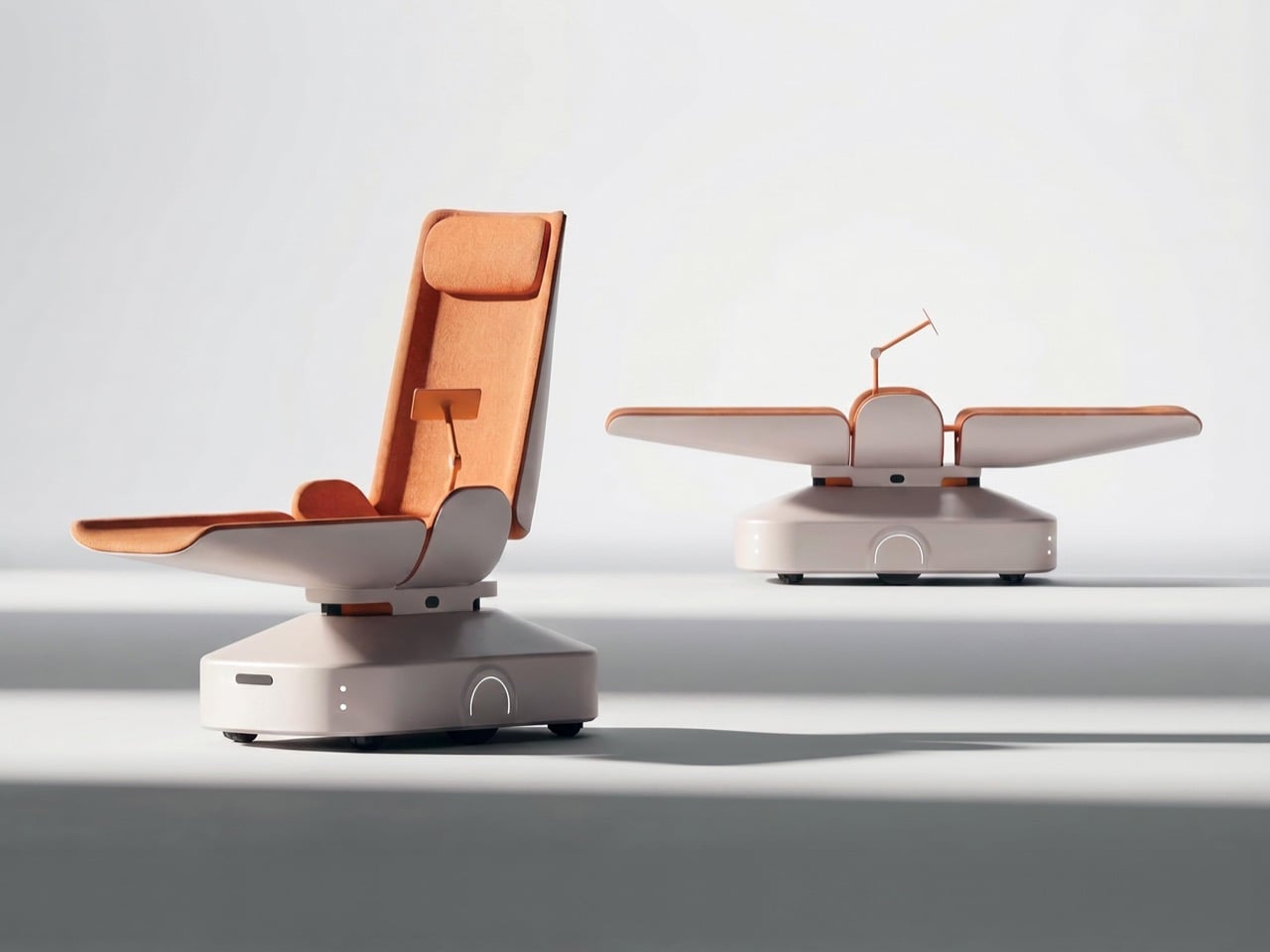
Seoul-based studio BDCI looked at that scene and apparently thought, what if the bed just drove itself? Their Autonomous Clinical Mobility concept, a 2026 Red Dot Design Concept winner, is a self-navigating hospital chair that ferries patients between diagnostic rooms, then reclines flat into a bed so you can get scanned, poked and checked without climbing off. It’s built for routine outpatient visits, so nobody’s yelling “Stat!” here. The idea still holds, though. The staff stay put, and the patient comes to them.
Designer: BDCI (Team Leads: Lee Seomin, Lee Gwongak)
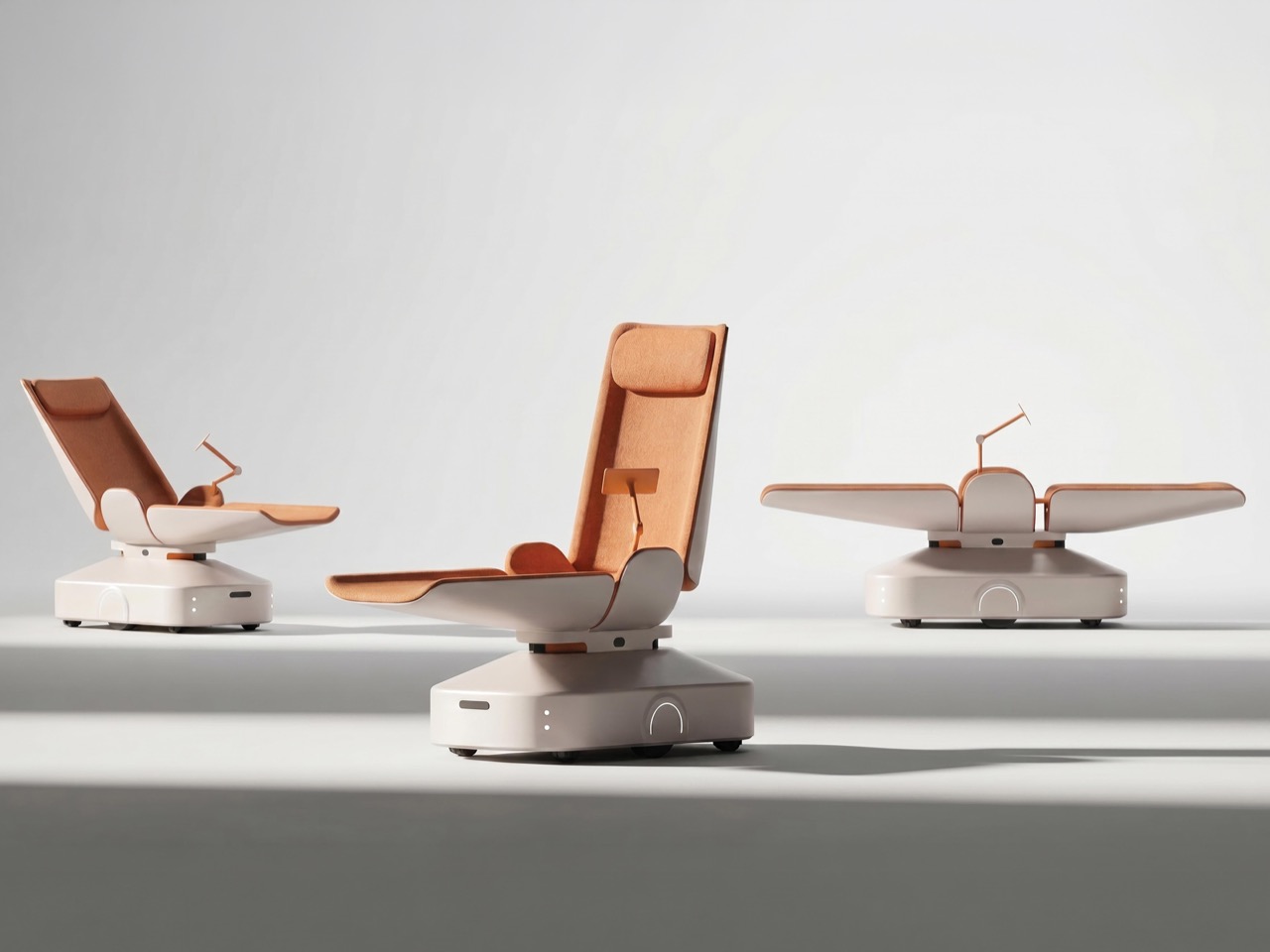

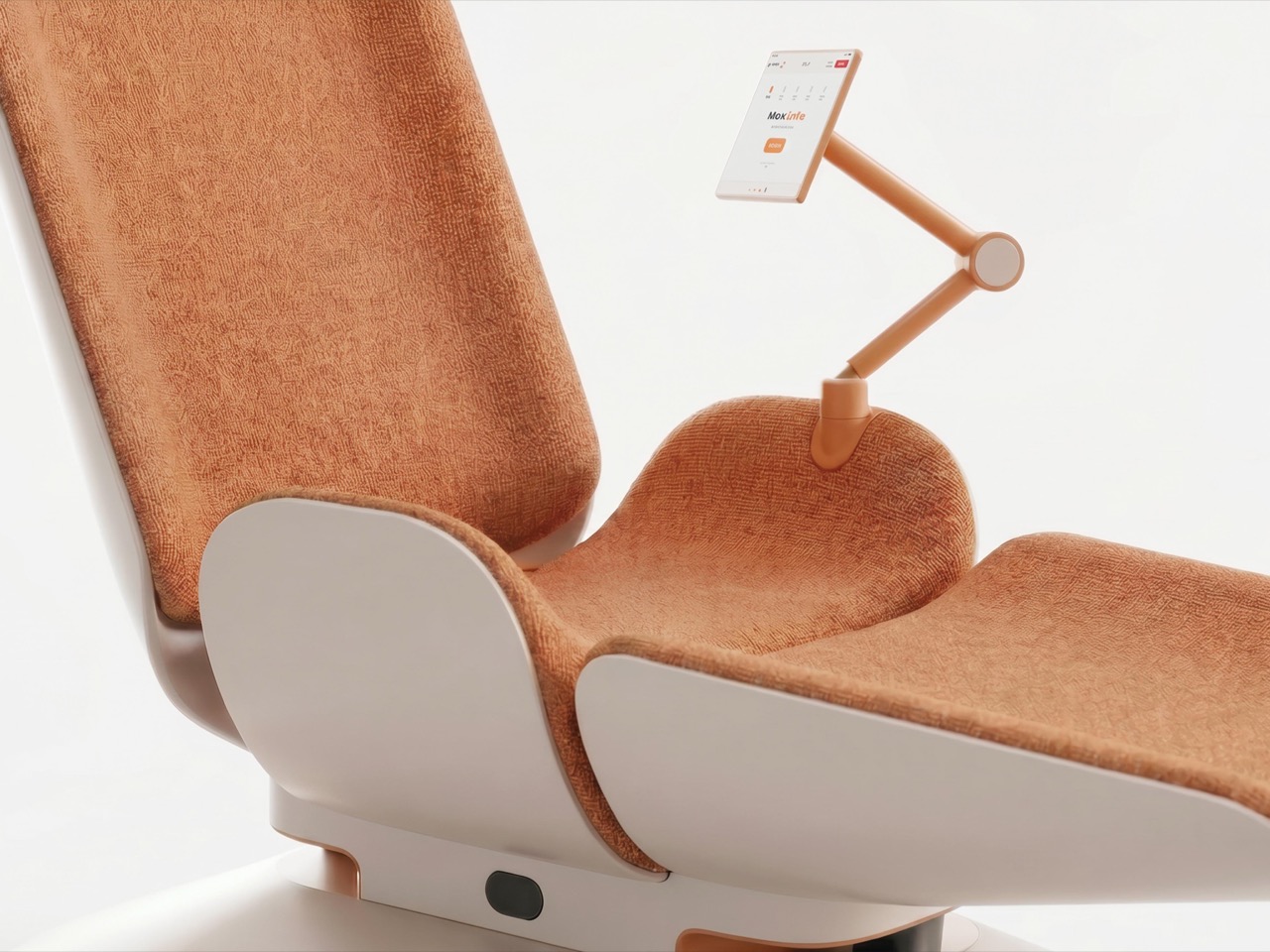
Visually, this thing lives a world away from the squeaky beige gurney you’re picturing right now. The base is a soft, rounded pod in warm greige with tiny LED dots and a glowing arch on its flank, a bit like a friendly robot vacuum that started going to the gym. On top sits a seat built from curved shell panels, with little wings that hug your hips like flower petals. Everything is wrapped in a textured burnt orange fabric that feels closer to a boutique hotel lounge than a hospital ward. BDCI says the textile is antibacterial and the cushions are modular, so they can be swapped and cleaned between patients.
The cleverest trick happens when it’s exam time. The backrest drops, the legrest rises, and those hip petals fan outward until the whole chair lies completely flat, looking a lot like a tiny airplane seen head-on. That means no awkward shuffle from wheelchair to exam table, which anyone who has helped an elderly parent through a clinic visit knows is the hardest part of the day. Panasonic tackled a similar headache years ago with Resyone, a care bed that splits in half to become a reclining wheelchair, and it became the first product to earn the ISO 13482 safety certification for personal care robots. BDCI takes that same thinking and puts it on wheels that steer themselves.
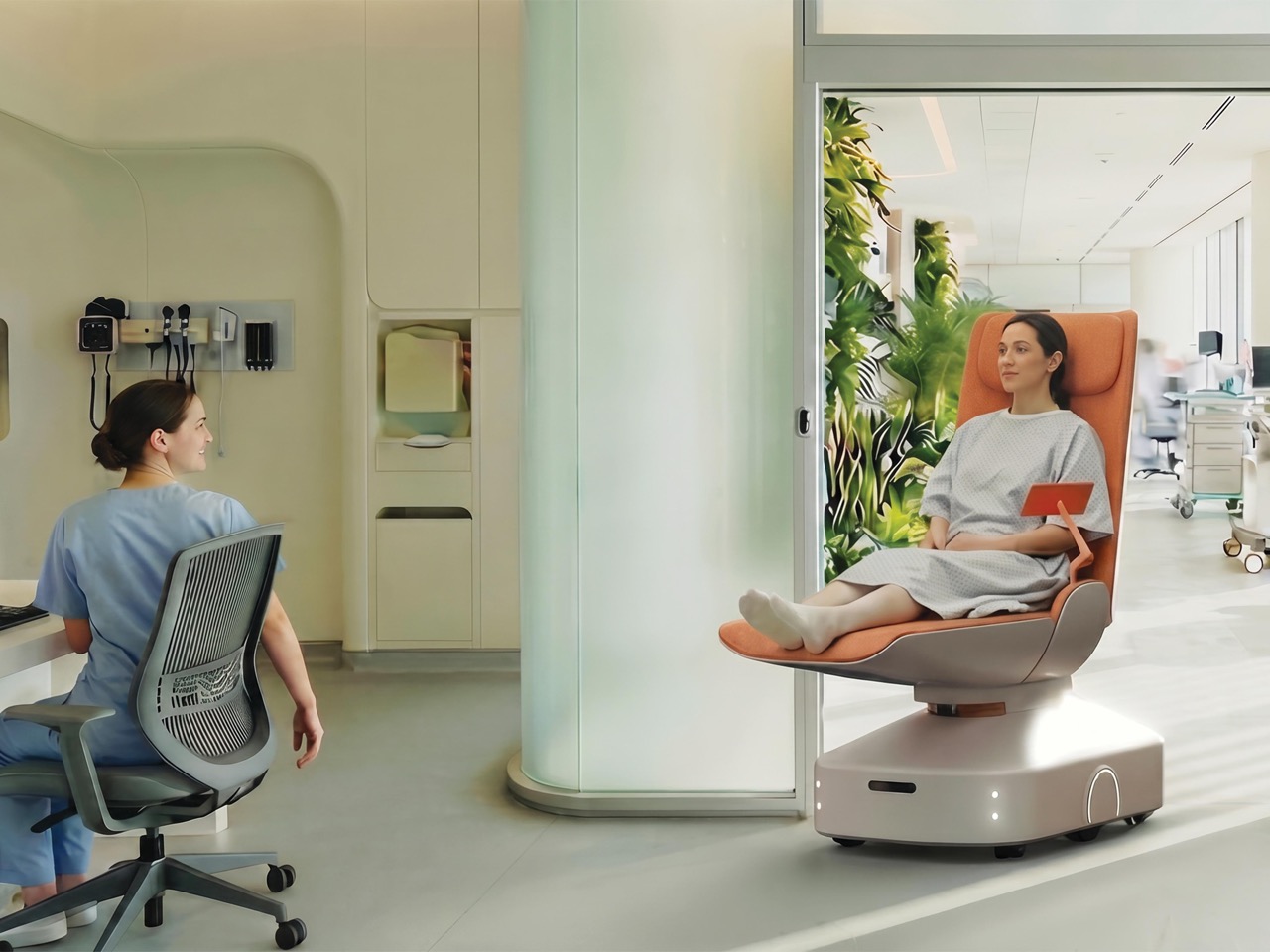
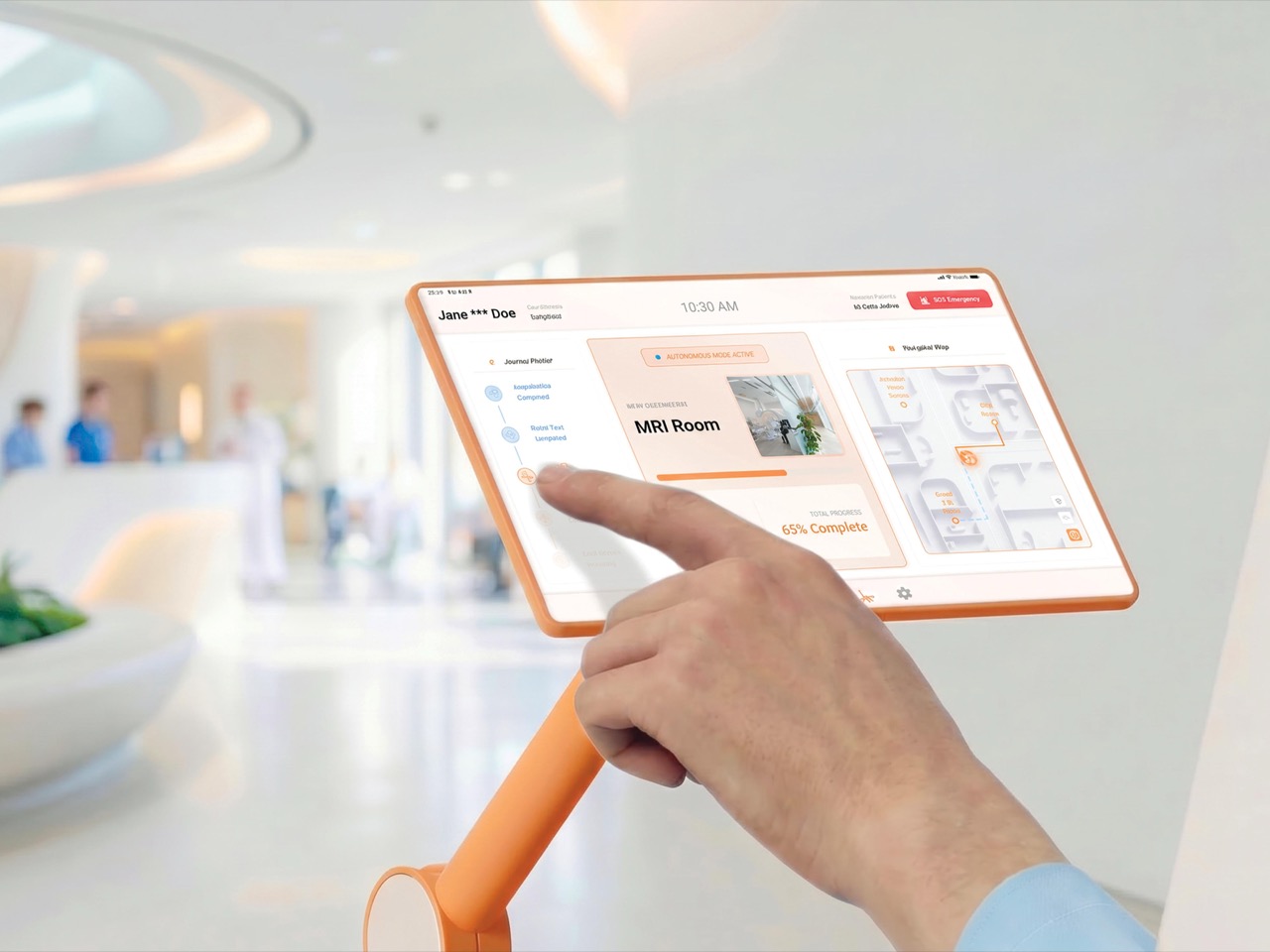
Steering is where the AI comes in. The concept plugs into the hospital’s clinical workflow, figures out which tests you need, and plots a route that keeps you out of the longest queues. An orange articulated arm holds a tablet showing your next stop, a live floor map, a progress bar for your entire visit, and a big red SOS button for when you’d like a human, please. Self-driving wheelchairs already roam a few real buildings, too. WHILL brought its autonomous chairs to Keio University Hospital in Tokyo back in 2020 to help patients who found walking a giant hospital difficult or stressful.
Okay, the elephant in the hallway. Patients in matching gowns, reclining on rolling loungers with screens at face level, gliding along glowing lanes… BDCI’s renders look an awful lot like the Axiom from WALL-E. Pixar meant that as a warning about humans who stopped moving, though a sick person in a hospital gown has fairly earned the right to be chauffeured. There are practical wrinkles to sort out, like the fact that a battery-packed robot can’t roll into an MRI scanner room, and that hospitals usually favor wipeable surfaces over fabric. Still, given the choice, I’d take a calm orange chair over a sprinting crowd of extras any day.