A pet bowl doesn’t need a paw print to explain who it’s for. I have nothing against playful pet accessories, but I don’t think feeding a dog should require accepting a small patch of visual chaos on the kitchen floor. If you’ve chosen your cabinets, flooring, and furniture with care, the bowl deserves some consideration, too. It stays out long after dinner, making it part of the room rather than a temporary visitor.
Origen approaches that everyday mismatch with a low ceramic form and very little decoration. Designed by Gustavo Rodríguez and Estefanía Agudelo of Estudio Gris in Medellín, Colombia, the pet bowl design gives food and water a deliberate place within the home. Instead of treating pet accessories as a separate aesthetic category, it borrows the restraint you might expect from a favorite piece of tableware.
Designers: Gustavo Rodríguez & Estefanía Agudelo
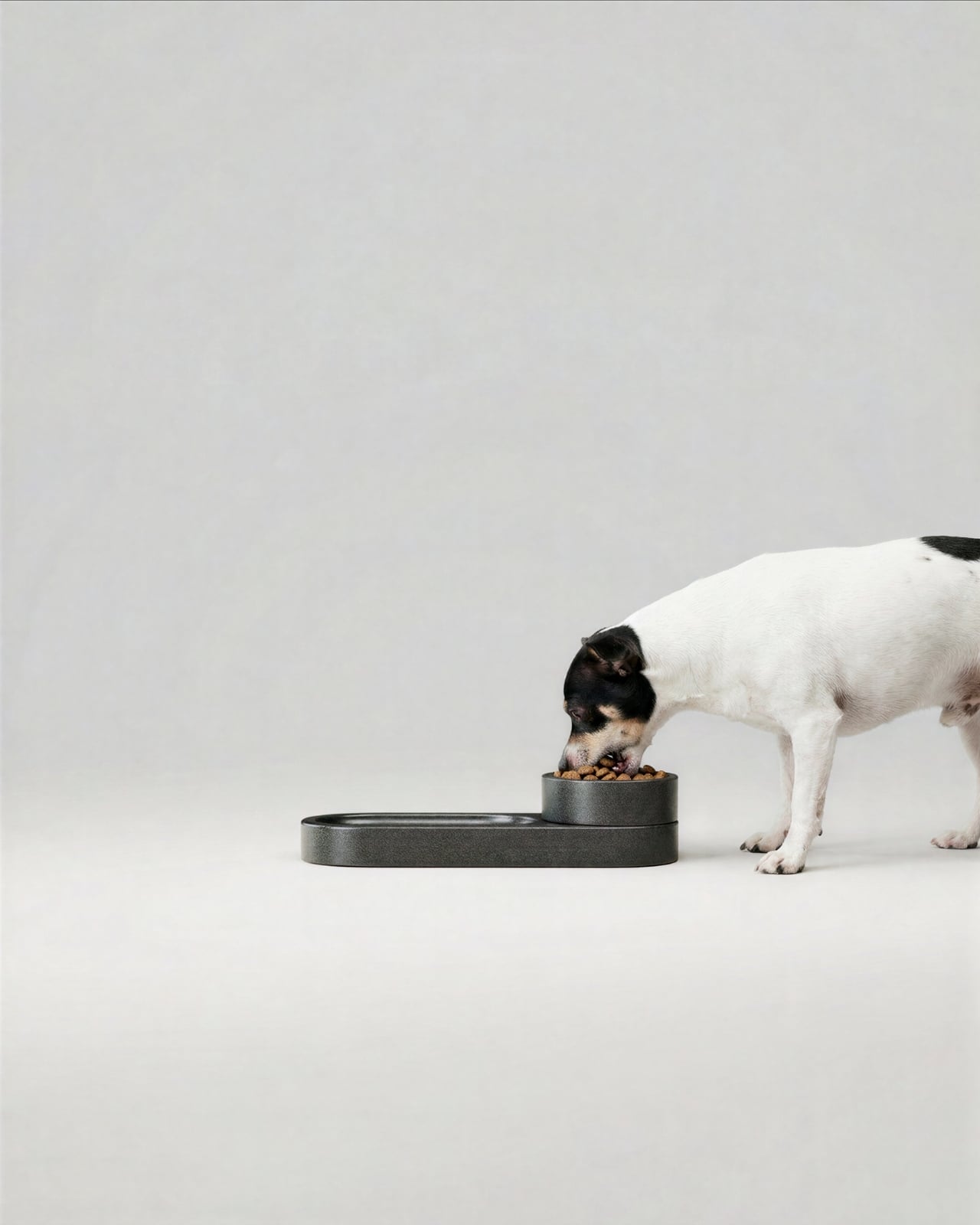
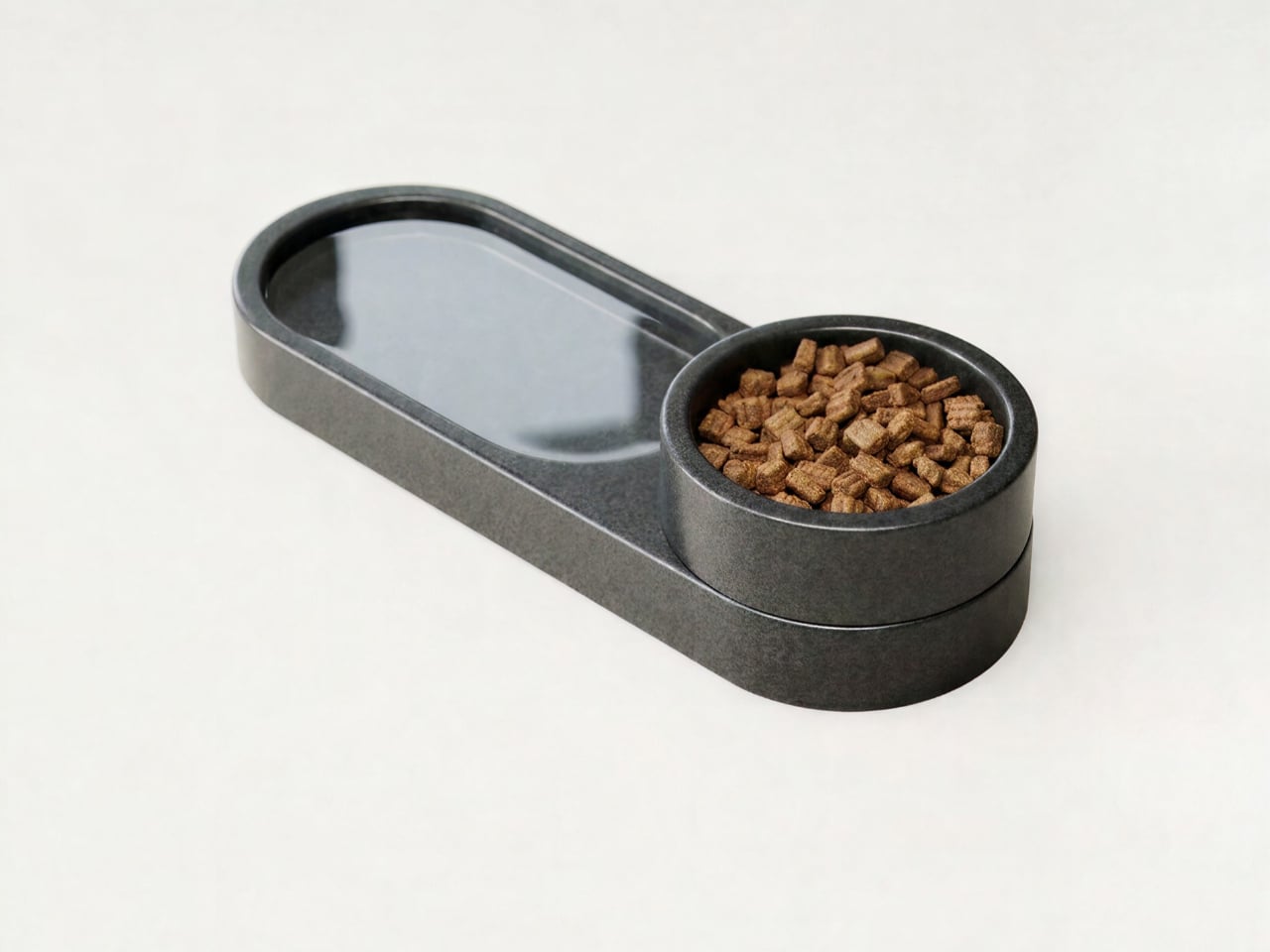
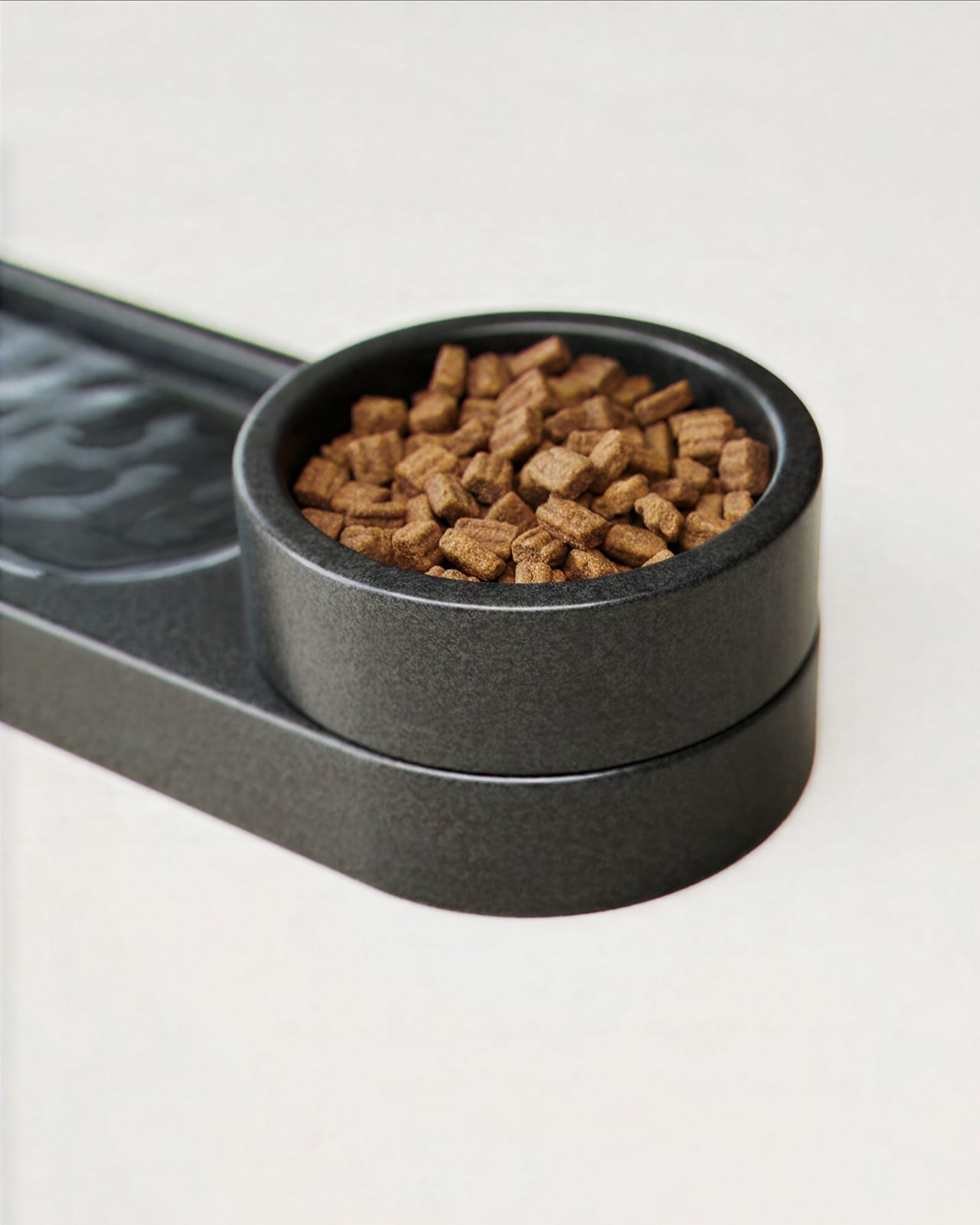
The double format combines an elongated water basin with a circular food bowl at one end. That round section sits higher, introducing a small change in elevation without adding a separate frame or legs. From above, the arrangement resembles a serving dish. From the side, the thick perimeter gives it a grounded appearance. The capsule outline keeps the two feeding areas visually connected without making them identical.
That raised circle is the most expressive detail. It interrupts the long outline just enough to keep the piece from looking like a generic tray. The food bowl’s cylindrical wall lines up with the rounded end beneath it, creating a compact stack of related shapes. I like how much character comes from that small adjustment. A decorative pattern would almost feel redundant.
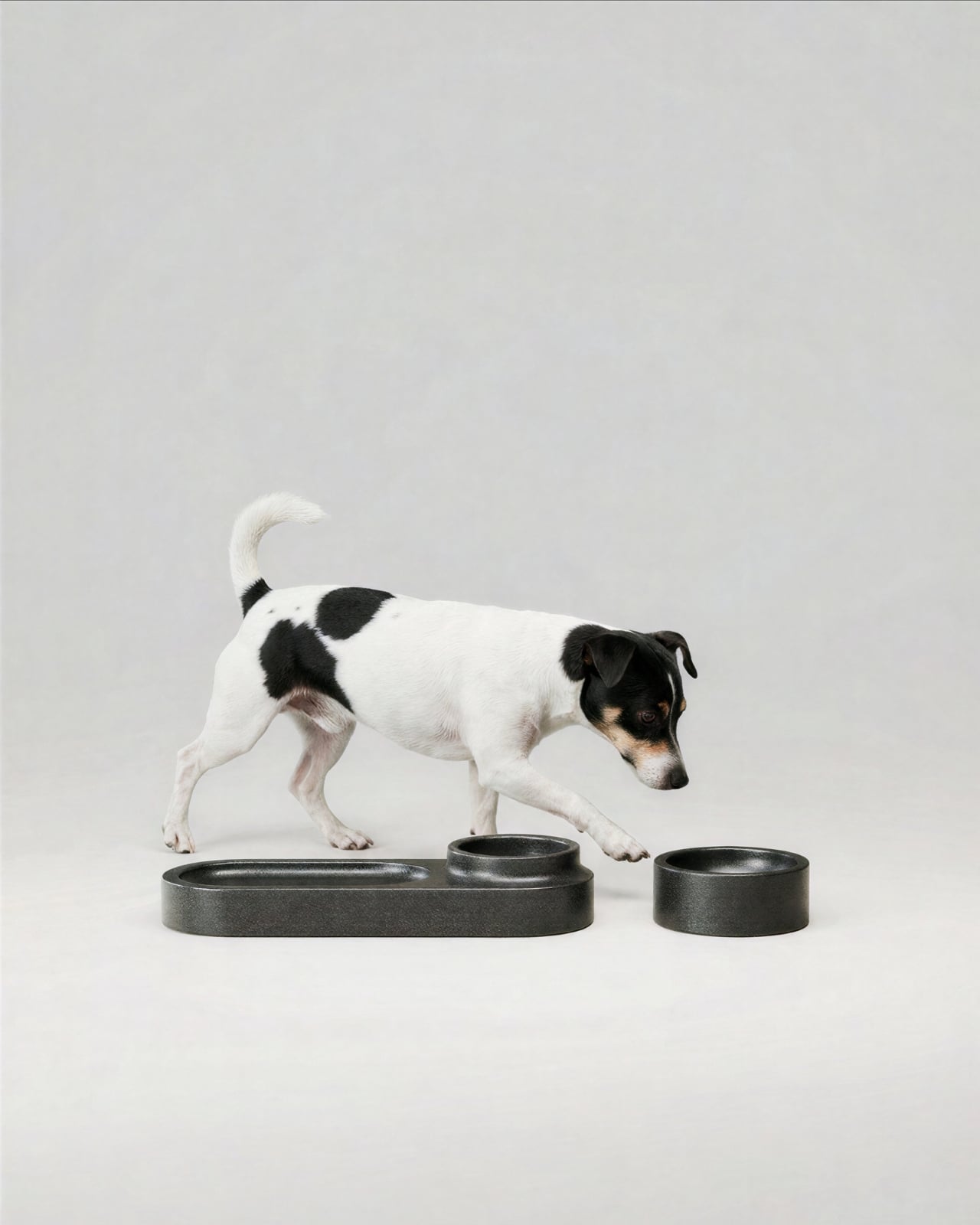
Origen also has a single format, a standalone round bowl that carries over the same thick walls and restrained proportions. It looks complete on its own rather than like an accessory missing its base. For households that prefer to keep feeding locations separate, that offers another arrangement without introducing an entirely different object. The family resemblance comes through in the profile and finish.
Ceramic gives those proportions a practical purpose. Estudio Gris says the thick walls are intended to provide enough weight to keep the bowl in place during meals. Anyone who has watched an eager dog push a lightweight dish across the floor will recognize the appeal. Still, weight isn’t the same as a nonslip base, and I wouldn’t assume the design can resist every enthusiastic eater without trying it.
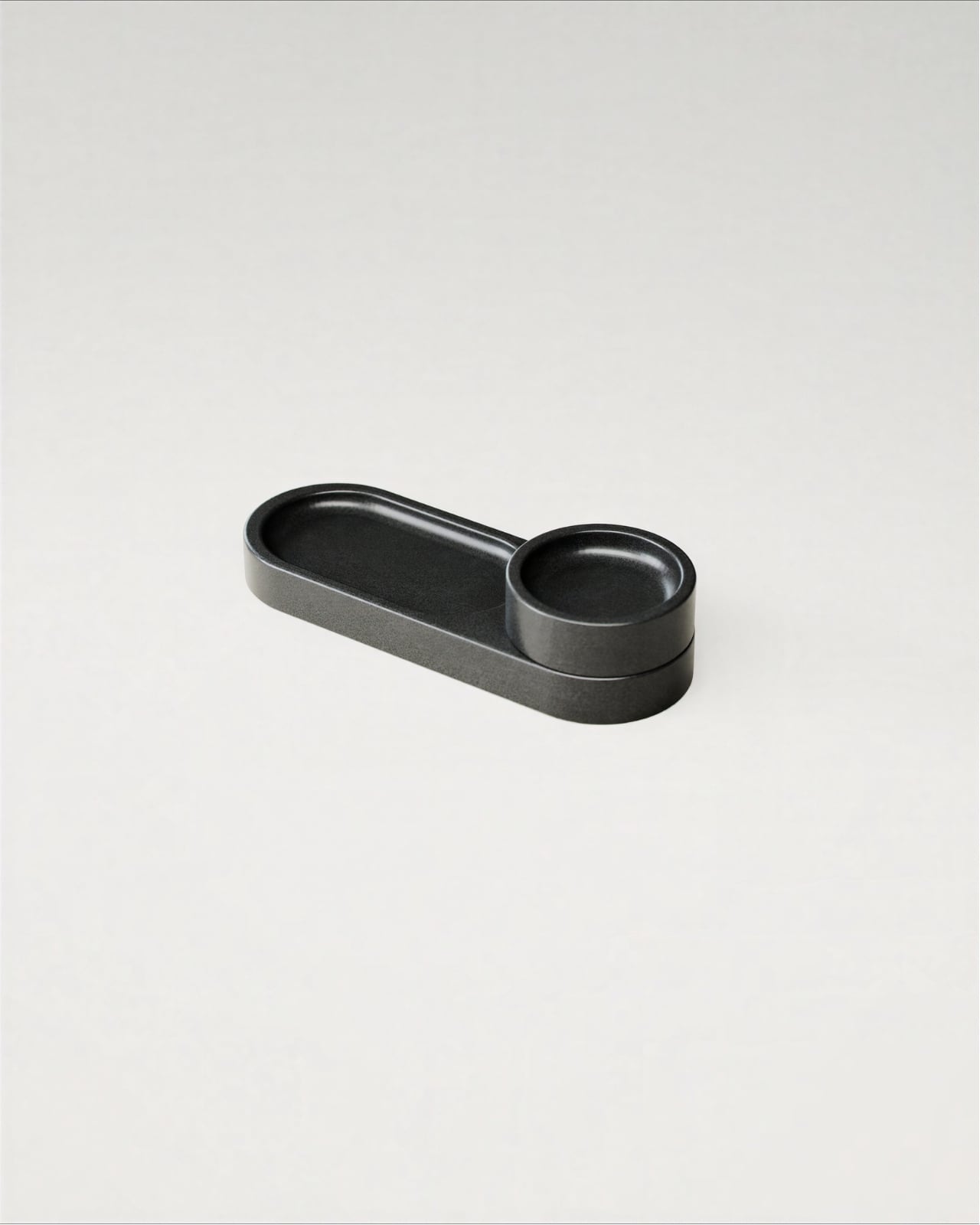
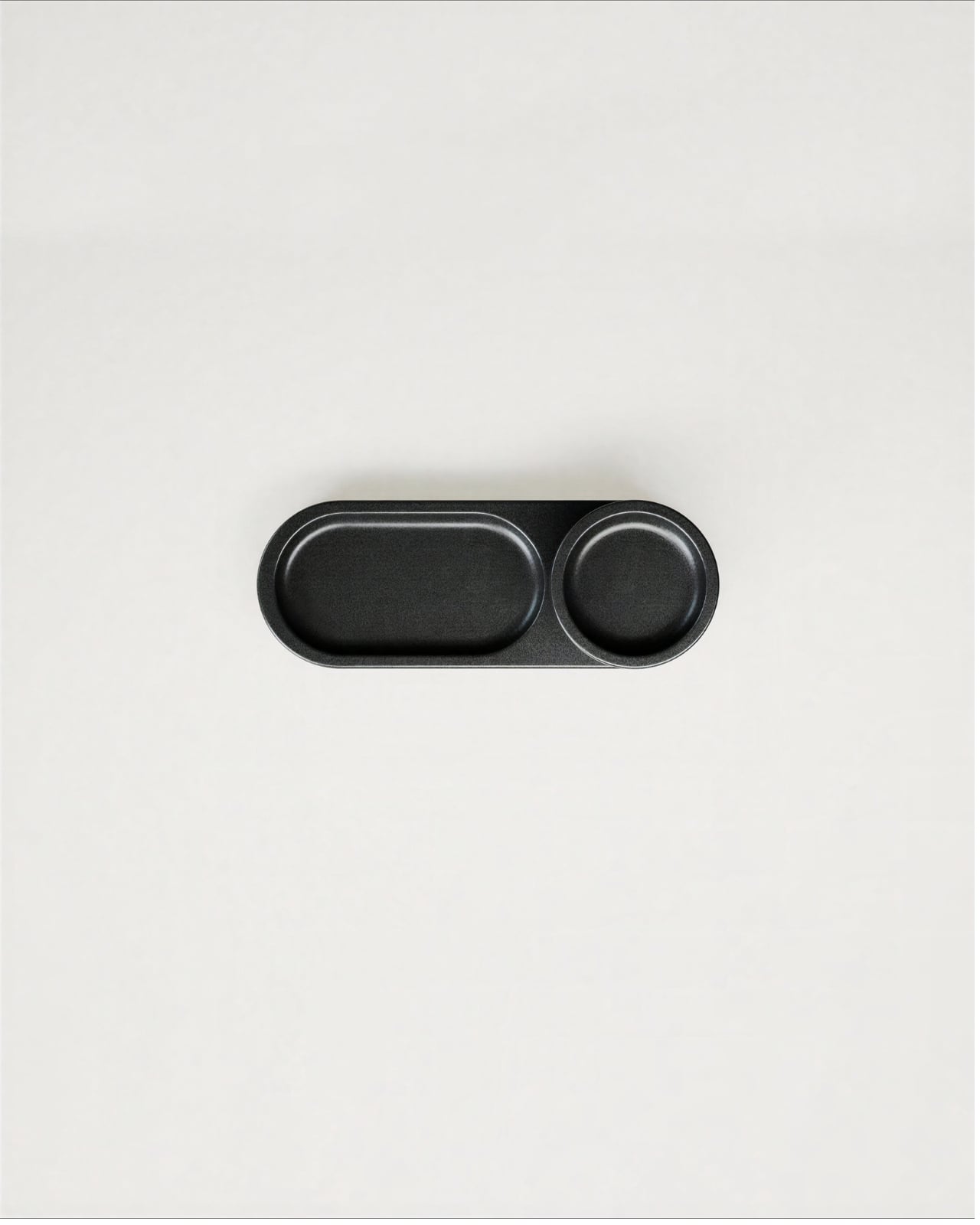
The matte finish does considerable visual work, too. Its charcoal tone has a fine, mottled appearance, with soft highlights tracing the rounded lips. It feels closer to tableware than pet-store equipment. Against wood cabinets or a concrete floor, I can imagine it settling into the room rather than becoming its own little focal point. That subtlety is the attraction, not a lack of personality.
Estudio Gris calls its approach introverted design, a fitting description for an object whose appeal depends on details you notice gradually. The rounded corners soften its substantial outline, while the shallow body keeps the feeding station close to the floor. Nothing about that guarantees the right fit for every animal, of course. Bowl depth, capacity, and feeding height still matter more than whether it matches the kitchen.
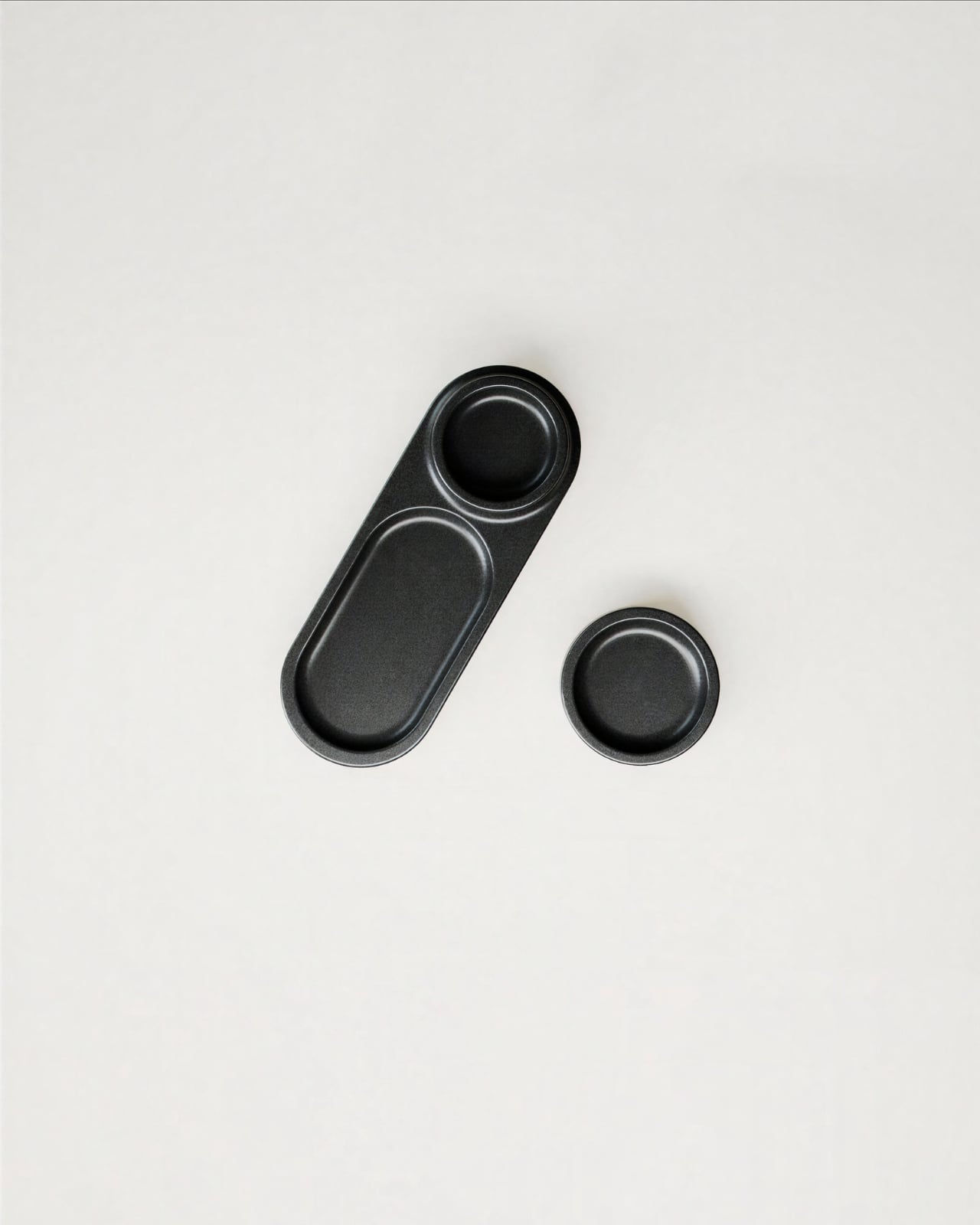
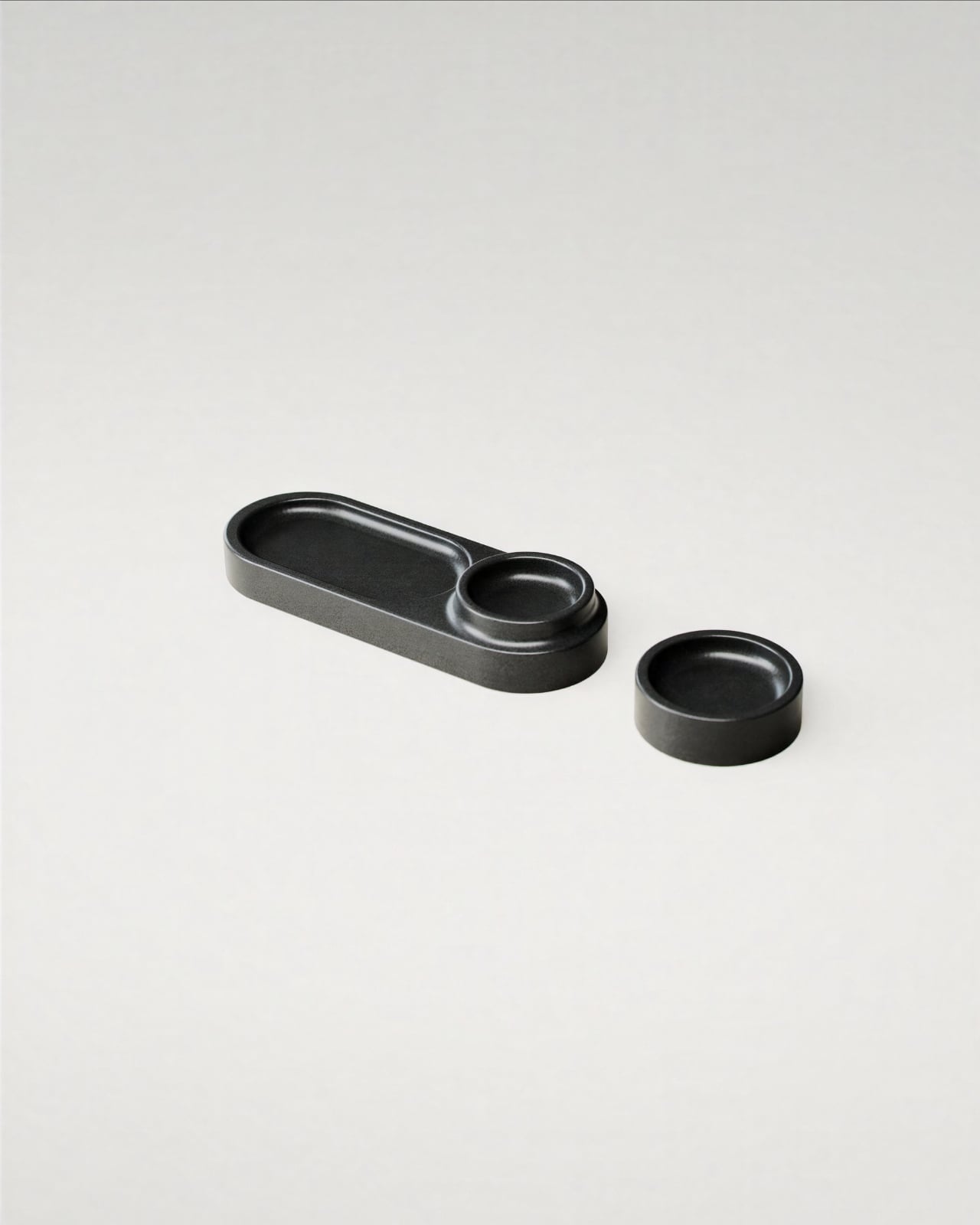
Those practical questions remain open. Dimensions, capacity, cleaning instructions, pricing, and retail availability haven’t been confirmed, so Origen is better considered here as a design proposition than a shopping recommendation. Ceramic also brings the familiar tradeoff of breakability. I’d want to know how manageable the longer format feels when full of water, particularly during the daily trip between the floor and the sink.
Even with those questions, I appreciate the care given to an object usually selected in a hurry. A feeding bowl occupies an unusually visible corner of domestic life, yet it rarely gets the attention given to the dishes inside a cabinet. Origen makes that imbalance worth noticing. Its strongest gesture is simply giving a permanent household object a shape that looks as though it belongs there.