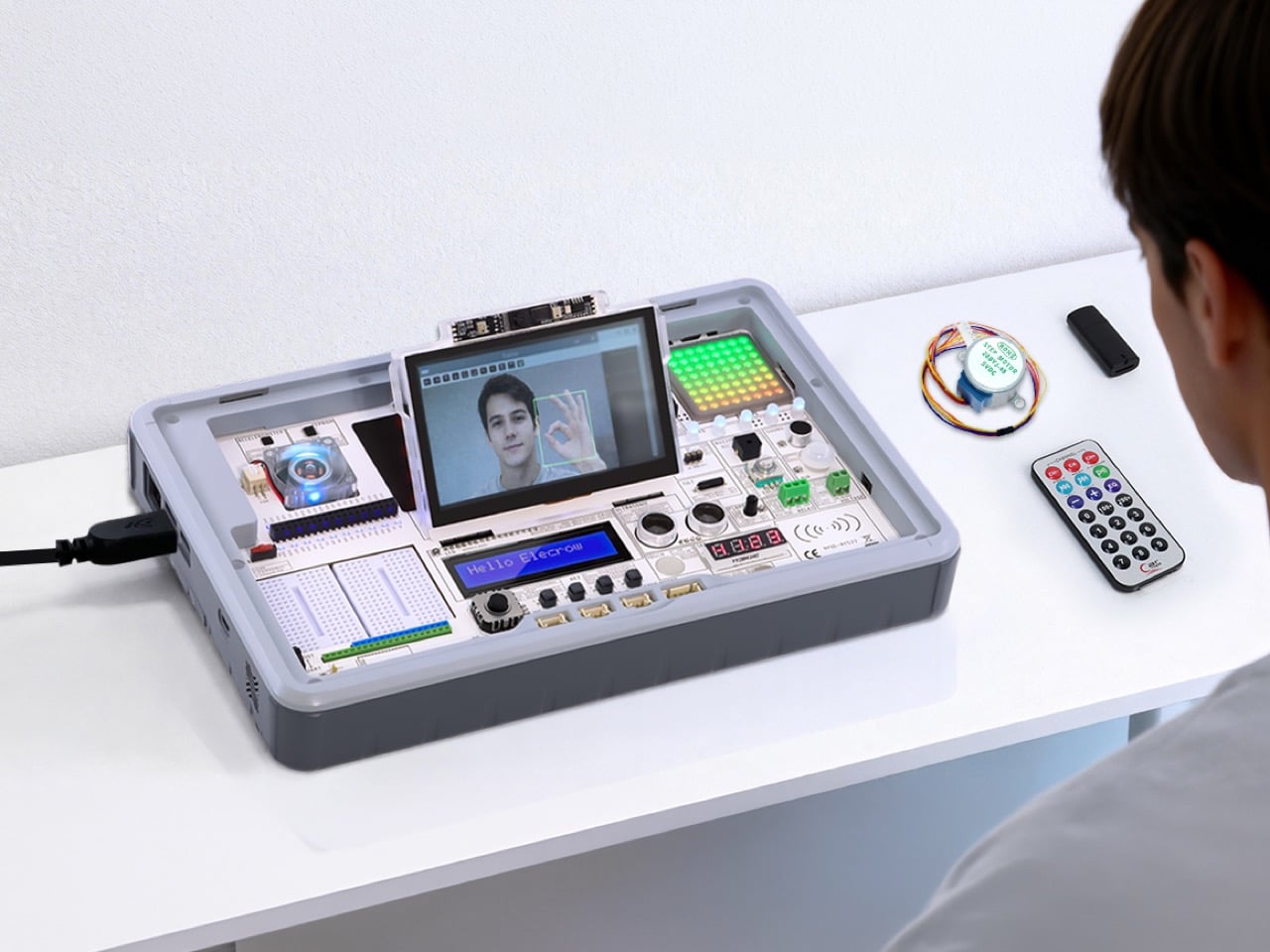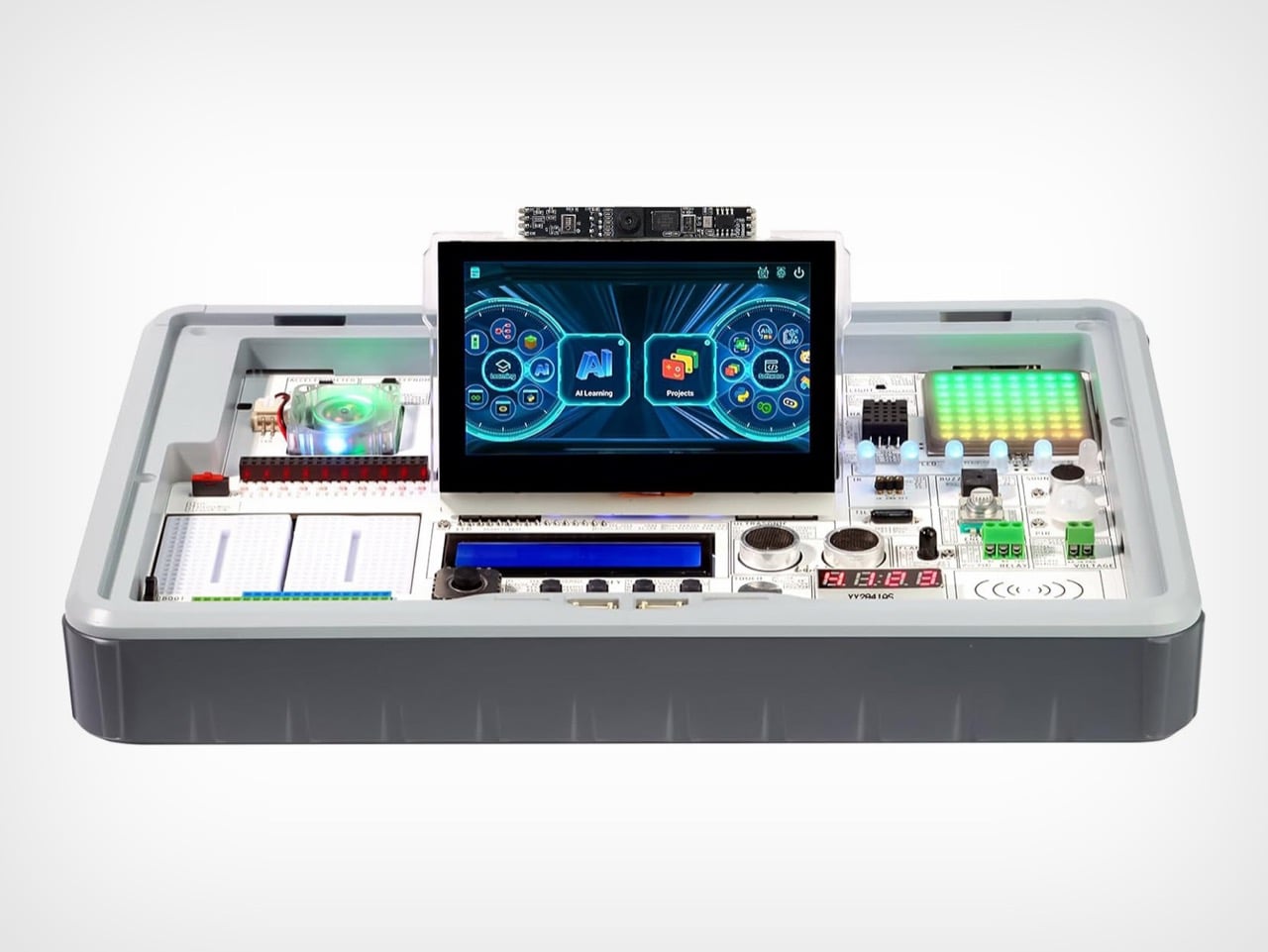
Remember those Radio Shack project kits with the spring terminals, where you bent wires into a working radio and felt like Tony Stark? Elecrow’s CrowPi 3 is that feeling, updated for a world where the thing kids want to build is a chatbot. It is a Raspberry Pi 5 learning station with 41 built-in sensors and modules, a camera, a microphone, and a 4.3-inch touchscreen. The courses run from blinking an LED to face recognition and voice control, plus plugging in LLMs like ChatGPT, Gemini, and DeepSeek. Kids already talk to AI all day, so Elecrow figured they should get to build one.
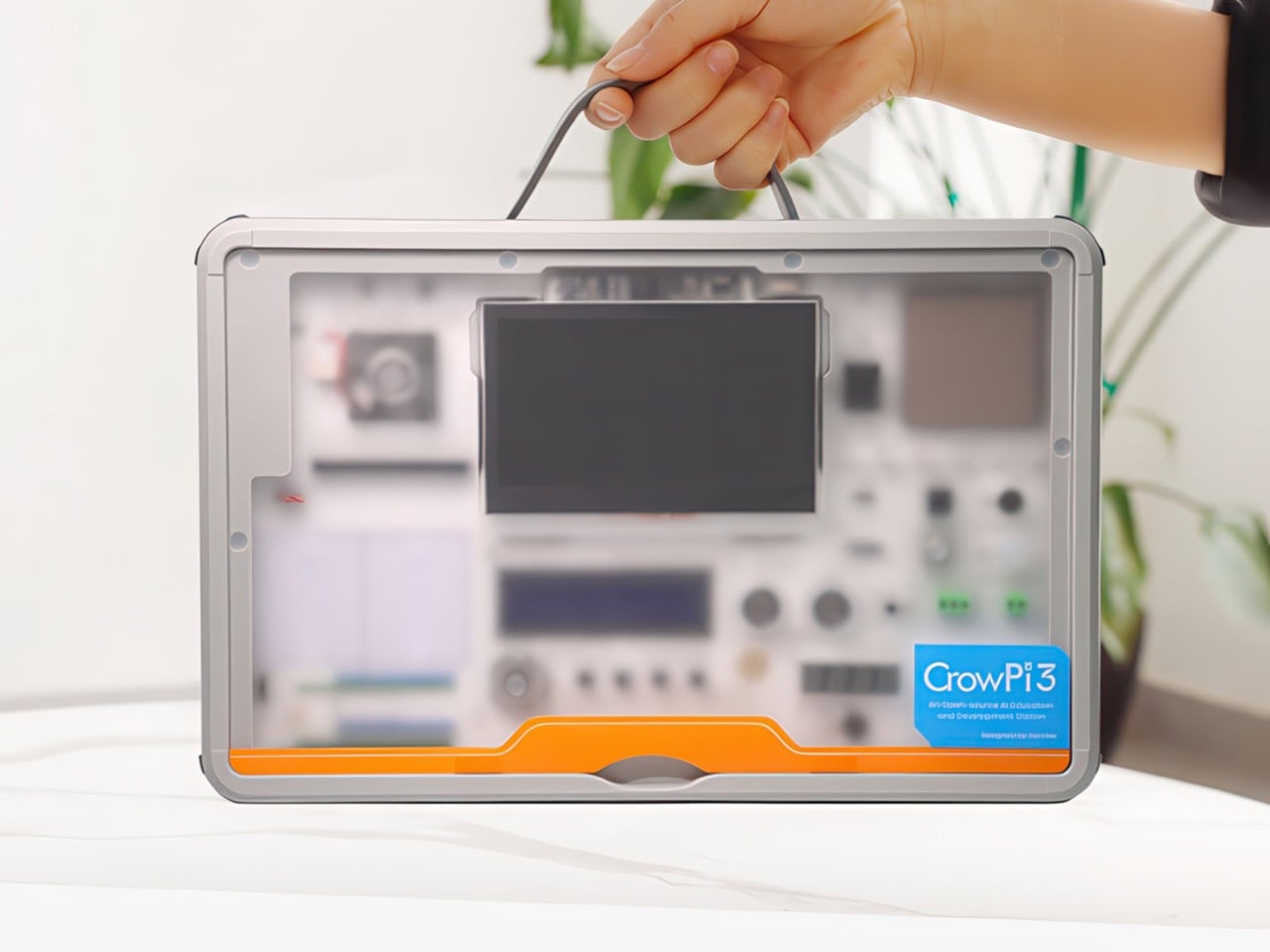
The CrowPi 3 ships in a bumpered gray briefcase with a frosted magnetic lid, a fold-out handle, and an orange pull tab, which makes it the friendliest cyberdeck I have seen. For the uninitiated, that is a DIY computer built into some rugged container, usually with a Raspberry Pi for a brain and a lot of sci-fi attitude. Most of them cost their builders a few weekends of 3D printing and swearing, while this one arrives finished. The faceplate is silkscreened with labels and pin numbers, so the board doubles as its own wiring diagram. A middle schooler can legally carry the whole thing onto the bus, and I did not own anything this cool at that age, so I am only slightly bitter.
Designer: Elecrow
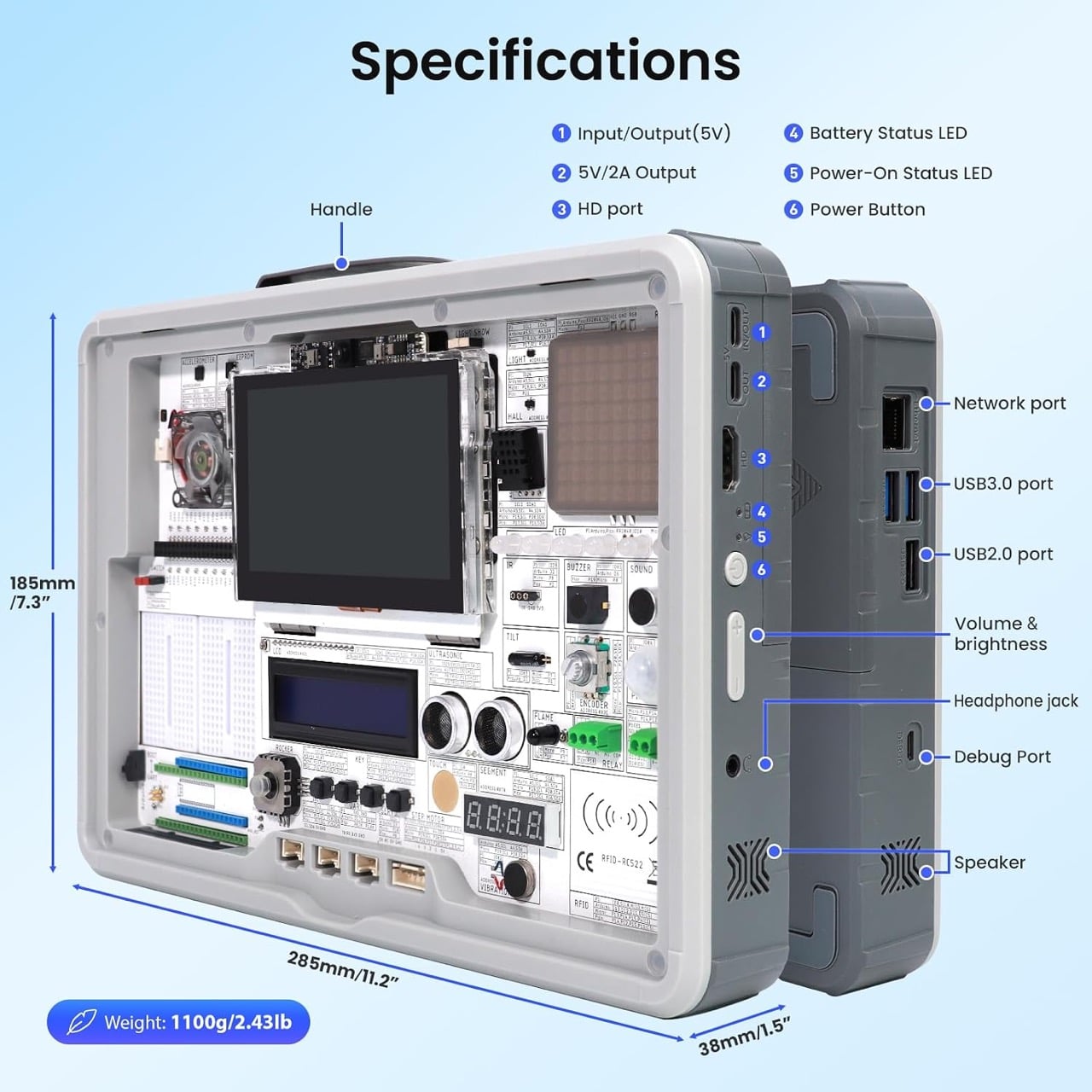
Every module gets its own labeled cell, so the ultrasonic sensor, buzzer, tilt switch, RFID reader, and flame sensor sit in plain view instead of hiding behind a lid. That layout is the best teaching decision in the box, since a kid can point at the part they just coded and watch it react. Two breadboards on the left handle custom circuits, and a Pico, Arduino Nano, or micro:bit can join the Pi 5 on the same board. The unit measures 11.2 by 7.3 by 1.5 inches (285 by 185 by 38mm) and weighs 2.43 pounds (1,100g), about a hardcover textbook. Elecrow calls the design open source, with resources on GitHub.
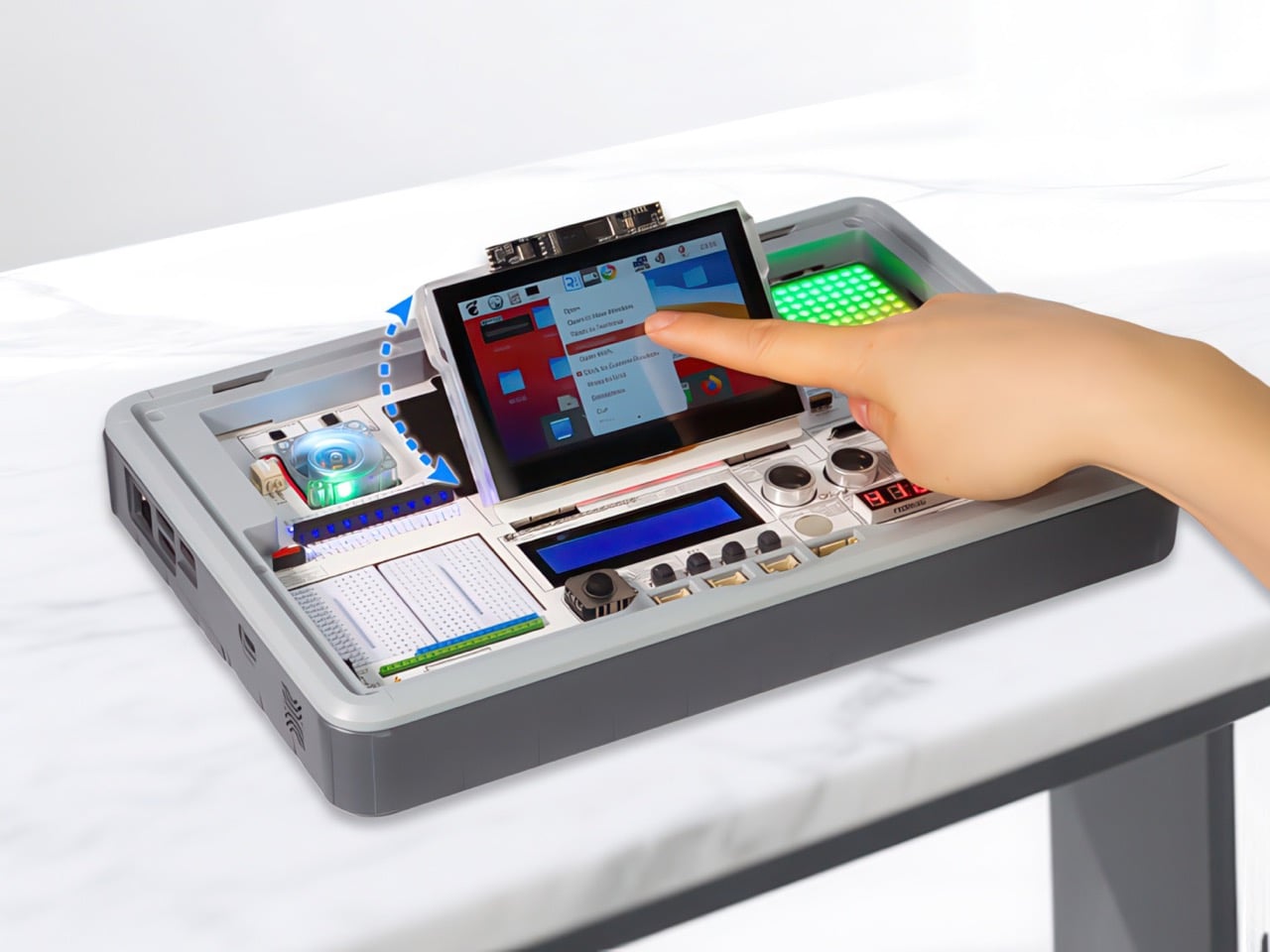
The touchscreen is the one part of the faceplate that moves, folding flat or flipping forward for a better angle. A 2MP camera sits on a small bar above it like a laptop webcam, which is exactly where a face-recognition lesson wants it. At 800 by 480 pixels and 300 nits, the screen suits status readouts and debug info, and the It’s FOSS reviewer found the custom learning interface doesn’t display properly at that size. The full-size HDMI port solves that, so a bigger monitor can take over once the real coding starts. The RGB cooling fan got a gripe too, loud for its size and always spinning, though the same reviewer cheerfully called silencing it a free coding exercise.
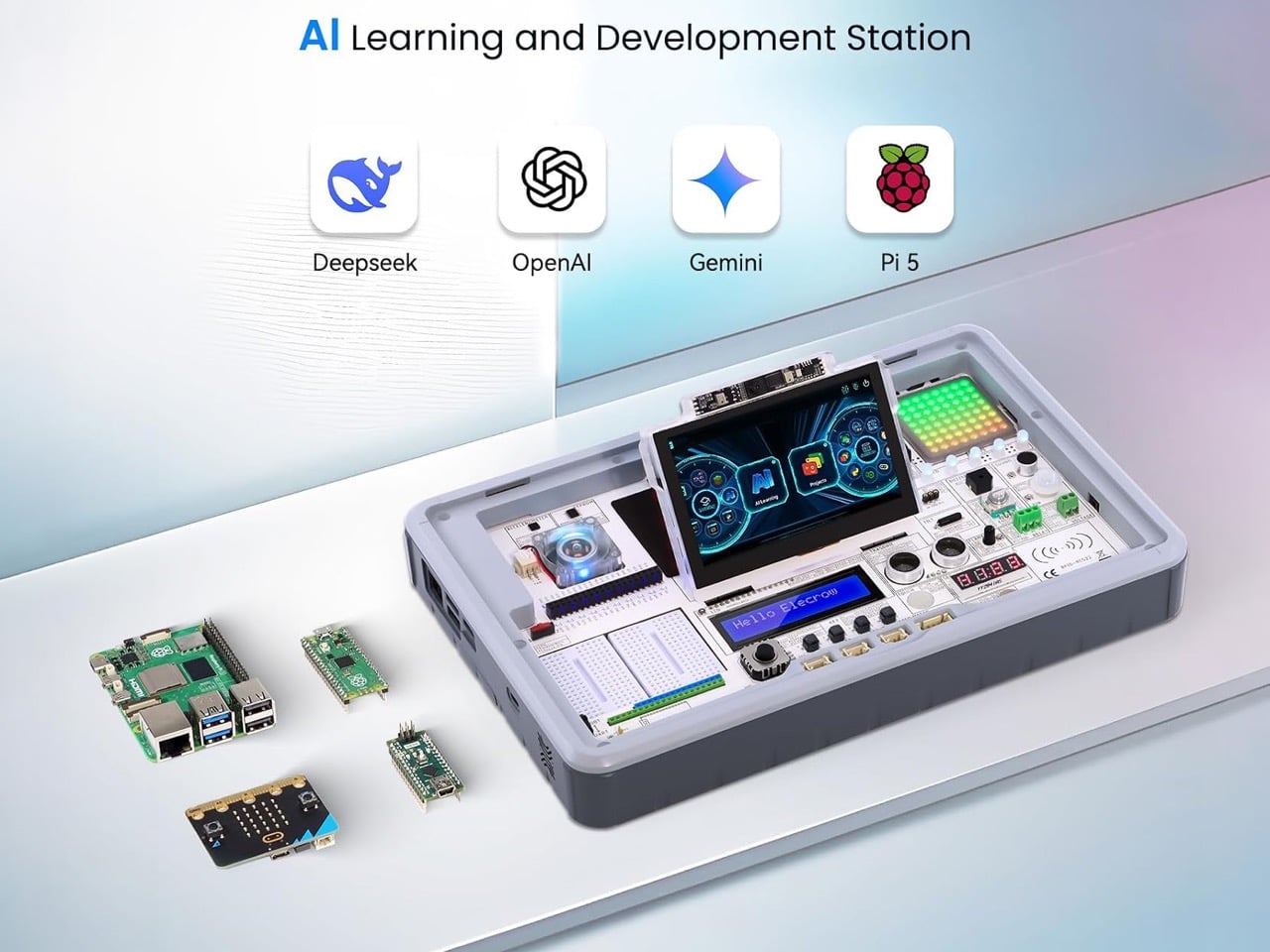
The AI curriculum covers OpenCV (an open-source computer vision library) image processing, object tracking, face recognition, QR codes, pedestrian and car detection, and speech recognition. Elecrow says there are 180+ lessons in total, which is a lot of homework disguised as fun. The LLM lessons connect the board to ChatGPT, Gemini, and DeepSeek, and since a Pi 5 can’t host models that big, expect those to lean on online services. Elecrow’s project ideas are pleasantly small, like a voice-activated night light or a piggy bank that recognizes coins and plays a sound for each deposit. There is also a Minecraft course where tapping an NFC card spawns TNT, which is how you sneak Python into a kid’s weekend.
Raspberry Pi’s own 500+ answers a simpler question: what if the whole computer lived inside a keyboard? For $200 you get 16GB of RAM, mechanical keys, and a 256GB SSD, which makes a fine desktop and a poor science fair. It has no joystick, no ultrasonic sensor, and no flame detector, which are the things a kid actually wants to poke. The closest direct rival is the Joy-Pi Advanced, a Pi 4 kit that TechRadar put above $470 while comparing it to the CrowPi 3’s Kickstarter pricing. The CrowPi 3 is the one that sells the poking.
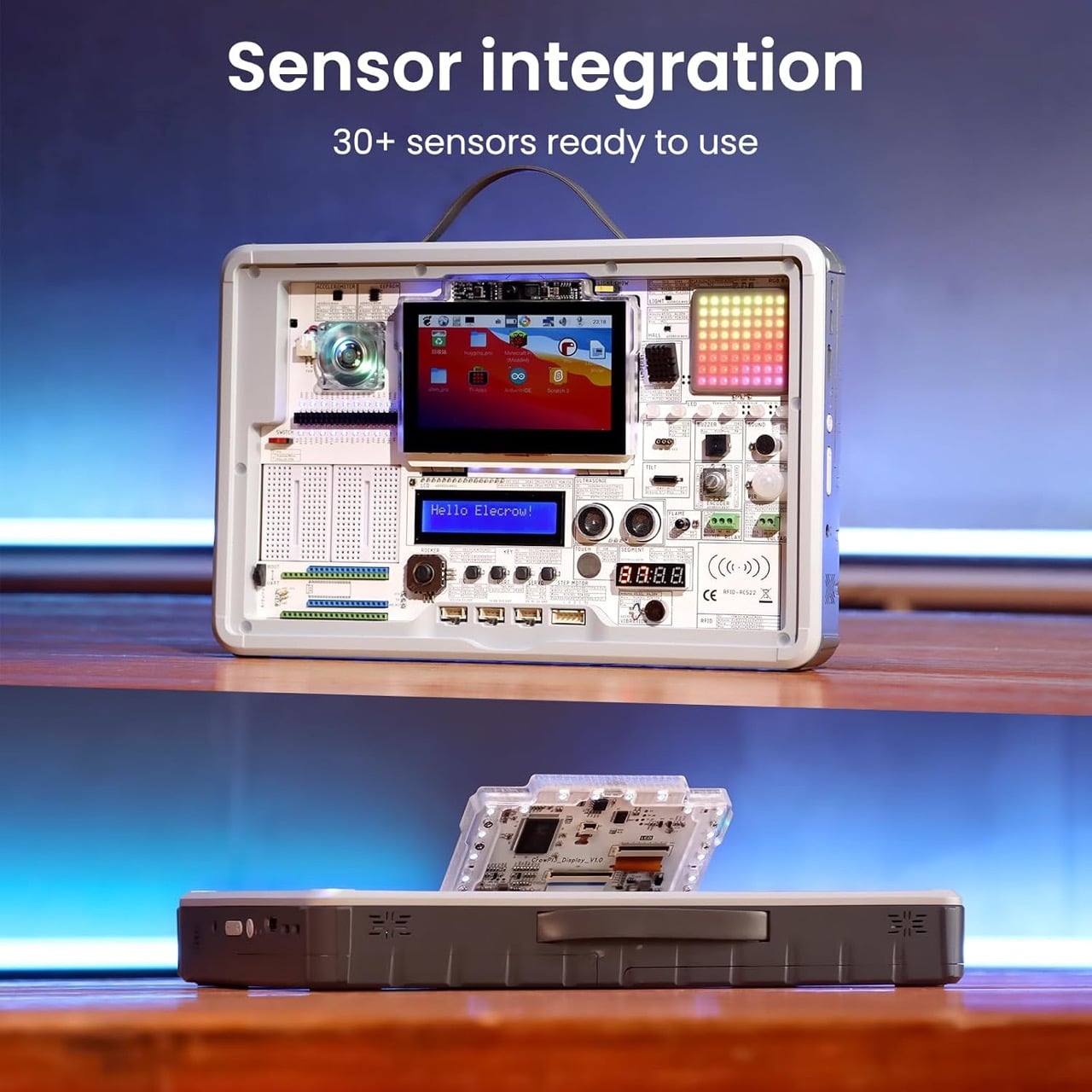
The original CrowPi hit Kickstarter in 2018 with a Pi 3B+ and a carry case, and the CrowPi 2 later fit in over 22 sensors and modules. The CrowPi 3 nearly doubles that count and adds the AI courses, plus Pico and micro:bit support that the earlier kits never had. Makers who build briefcase cyberdecks from scratch will get the appeal immediately, since this one skips the modeling and wiring marathon. The sensors come pre-wired and the lessons come already written. That is a fair trade when the person at the desk is eight.
Elecrow sells two kits, and the gap between them is a Raspberry Pi. CNX Software’s December 2025 roundup had the Basic Kit at $229 on Elecrow’s store and the Advanced Kit at $439, with the Advanced Kit listed at $599 on Amazon, so check that listing for today’s price. The Basic Kit expects you to bring a Pi 5, while the Advanced Kit adds a 16GB Pi 5, a wireless keyboard and mouse, two 18650 batteries, and two game controllers. Kids will spend the next decade chatting with AI, and the Radio Shack kids turned out fine because someone let them open the box. Somebody will build a piggy bank that judges your coins, and honestly, I would back that.