Smart home hardware has a quiet, persistent problem nobody bothers fixing: physical switches and sliders forget the truth the moment someone changes a light from their phone instead. A dial stays wherever it was left, even after the bulb it supposedly controls has dimmed to nothing through a voice command in another room. One maker’s walnut console solves that mismatch directly, using motorized faders that physically move themselves to match whatever’s actually happening in the house.
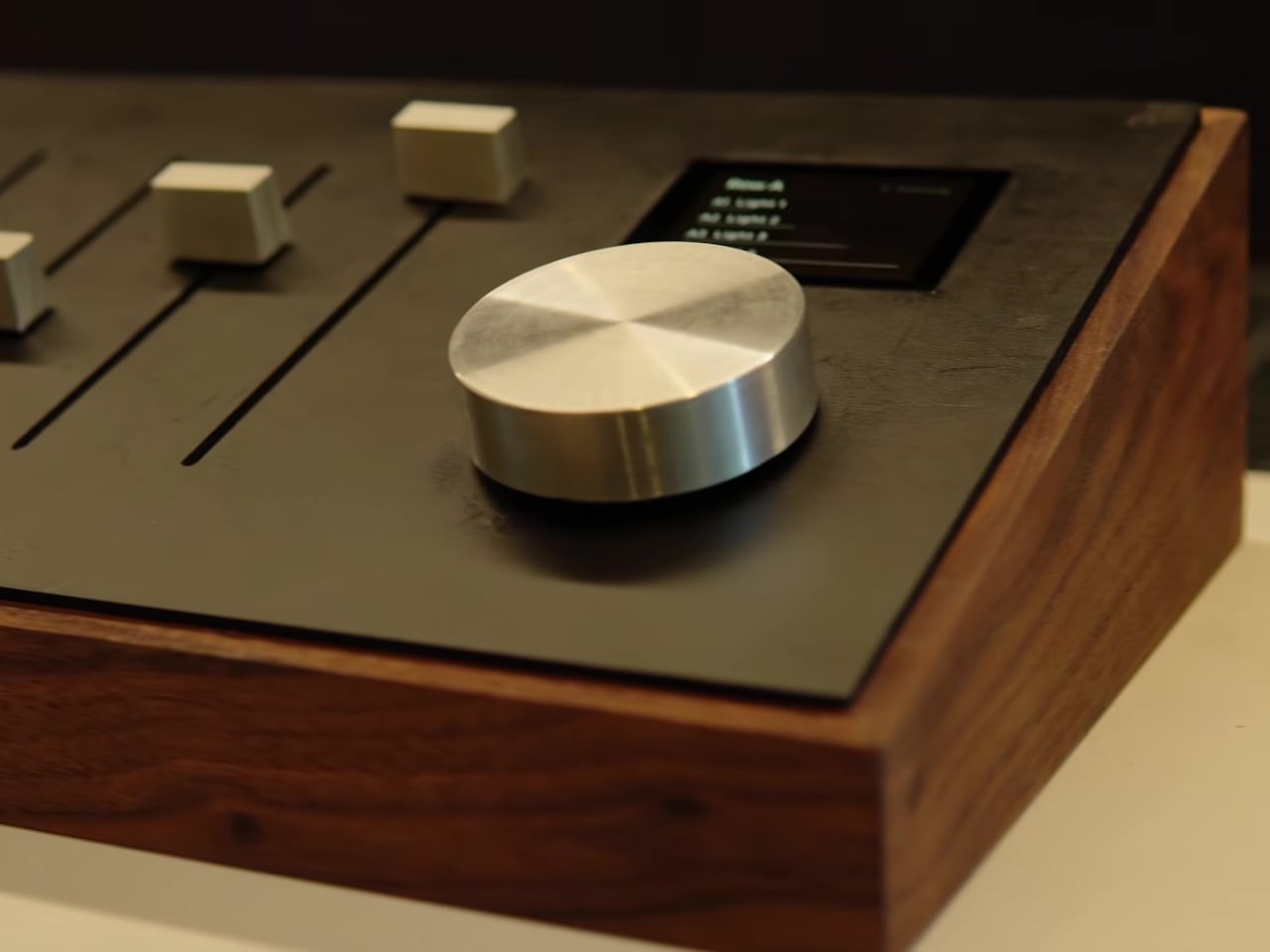
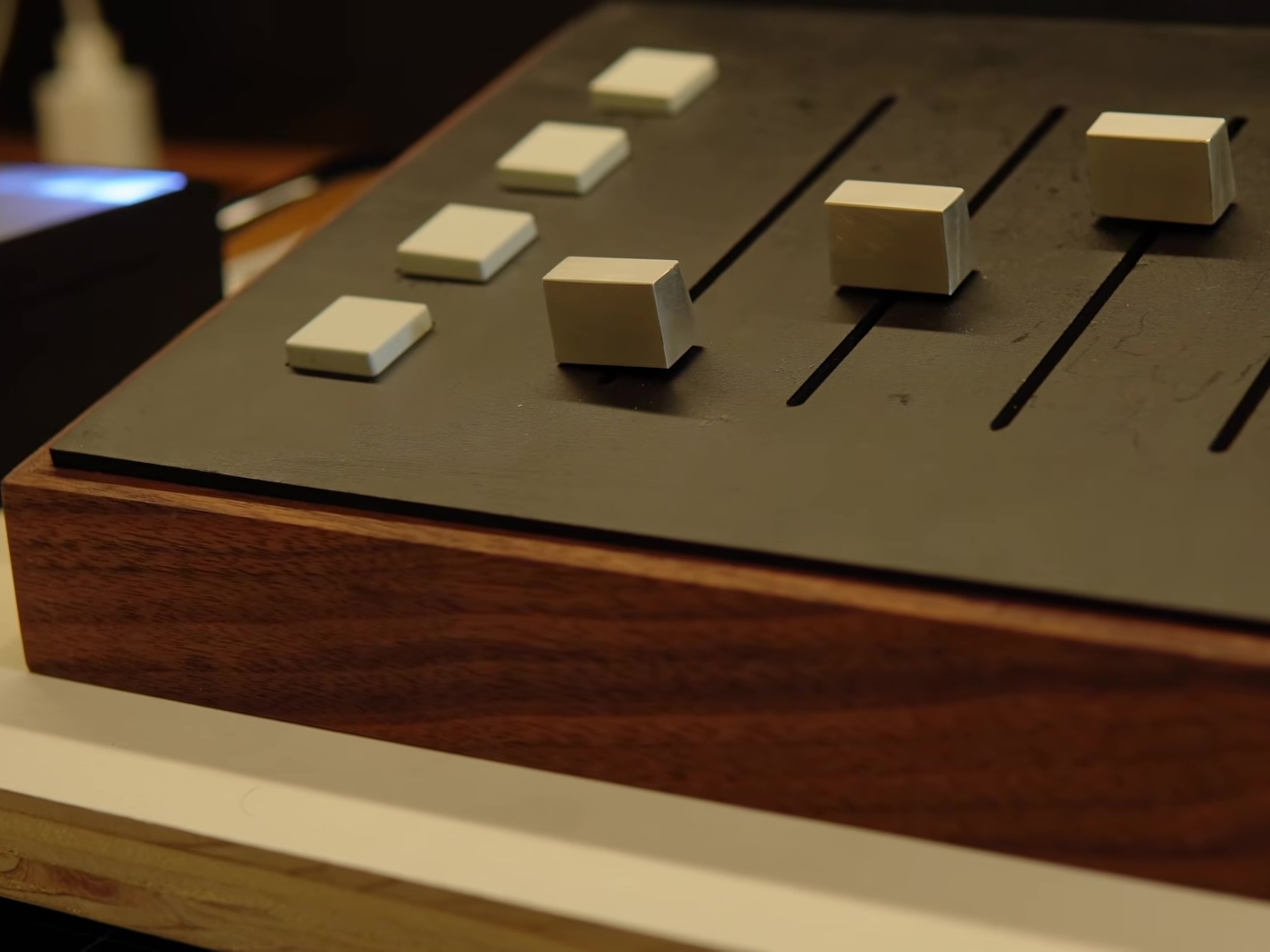
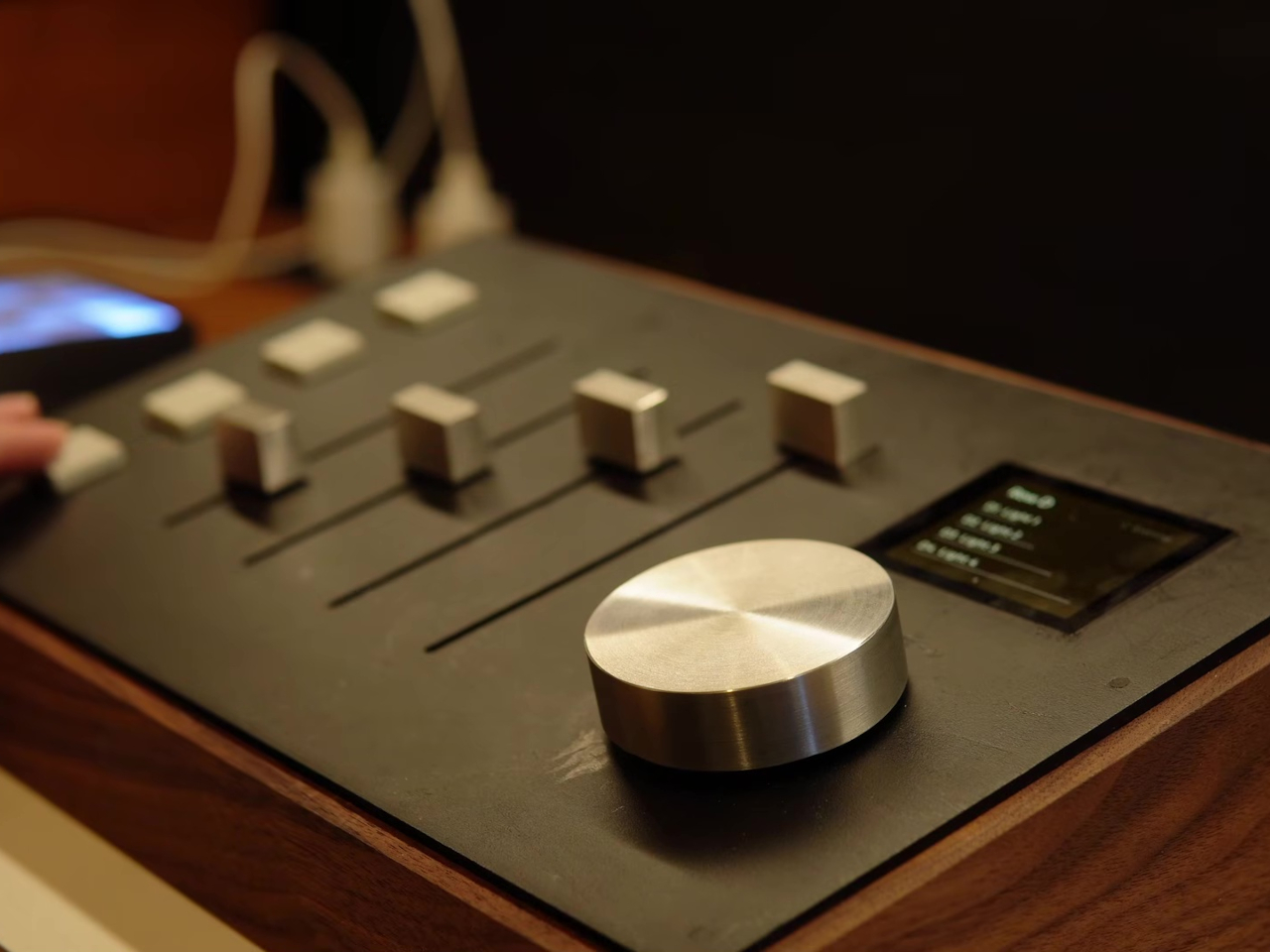
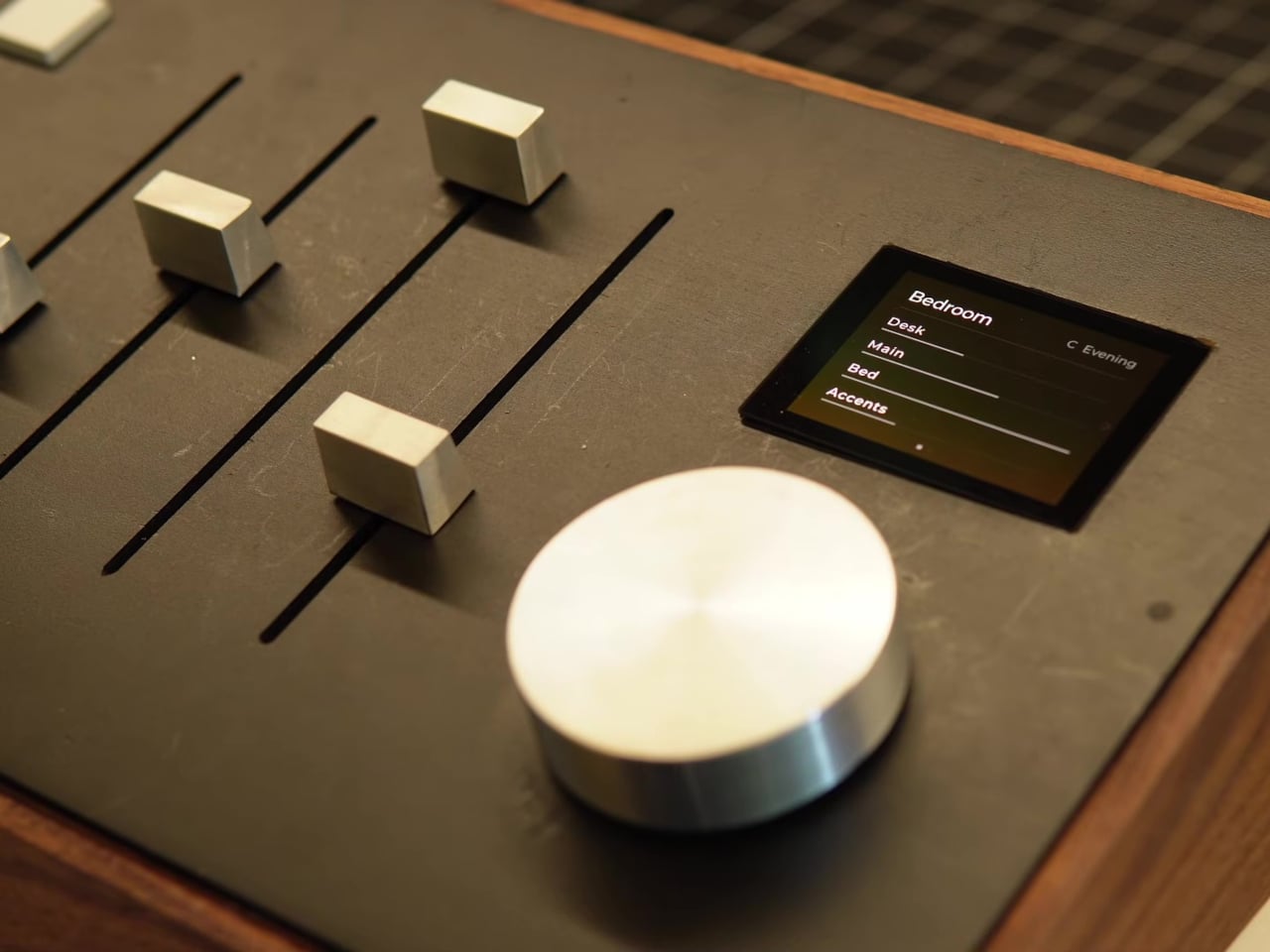
The mechanism borrows straight from professional audio mixing desks, where motorized faders have handled exactly this kind of state tracking for decades. A large aluminum knob on the console cycles through banks, each one representing a different room or light group, shown on a small built-in display. The moment a new bank gets selected, all four faders glide on their own to wherever that room’s lights currently sit, no manual resetting required.
Designer: Alex Dufetel (Sacreblue Studio)
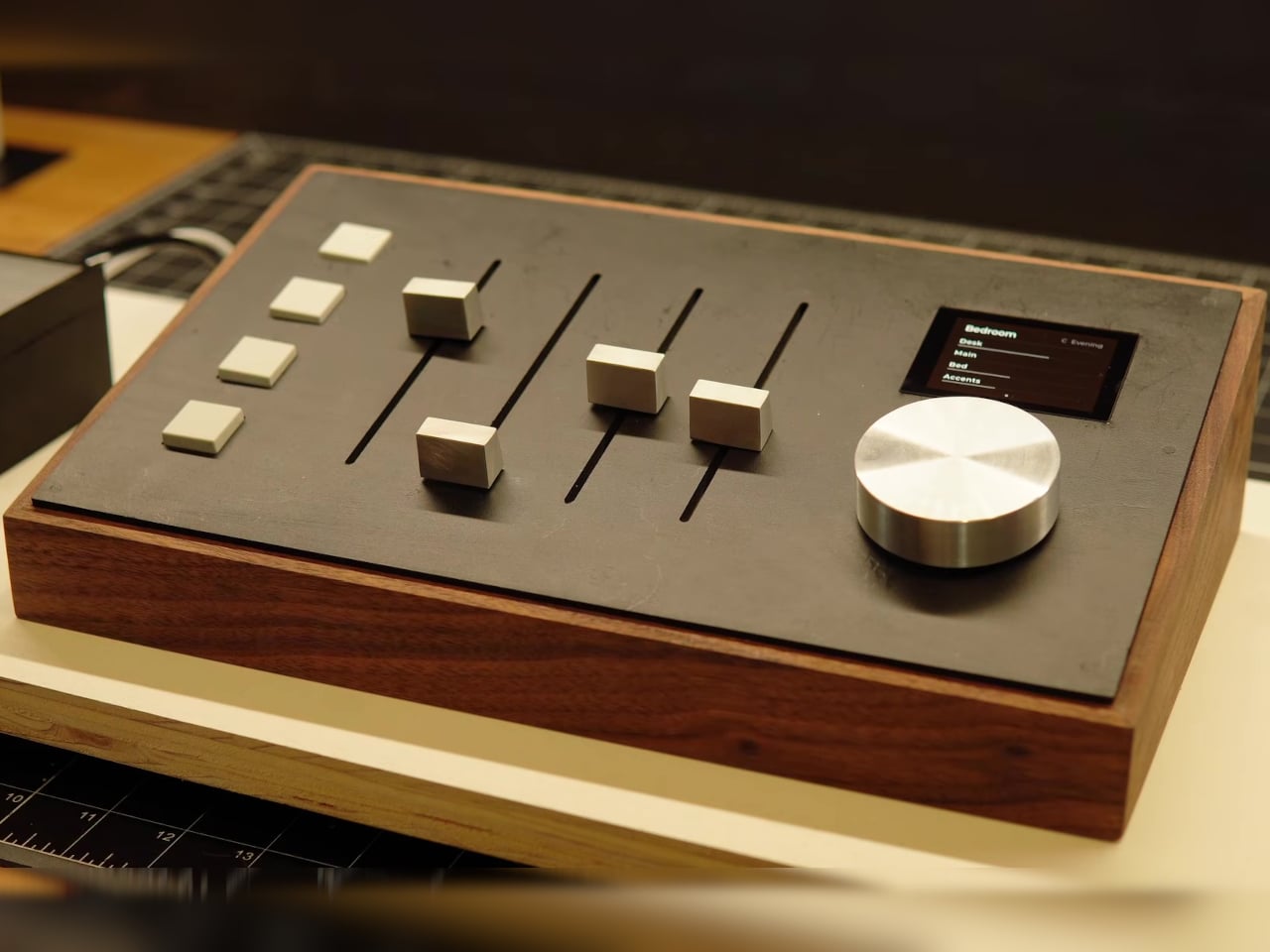
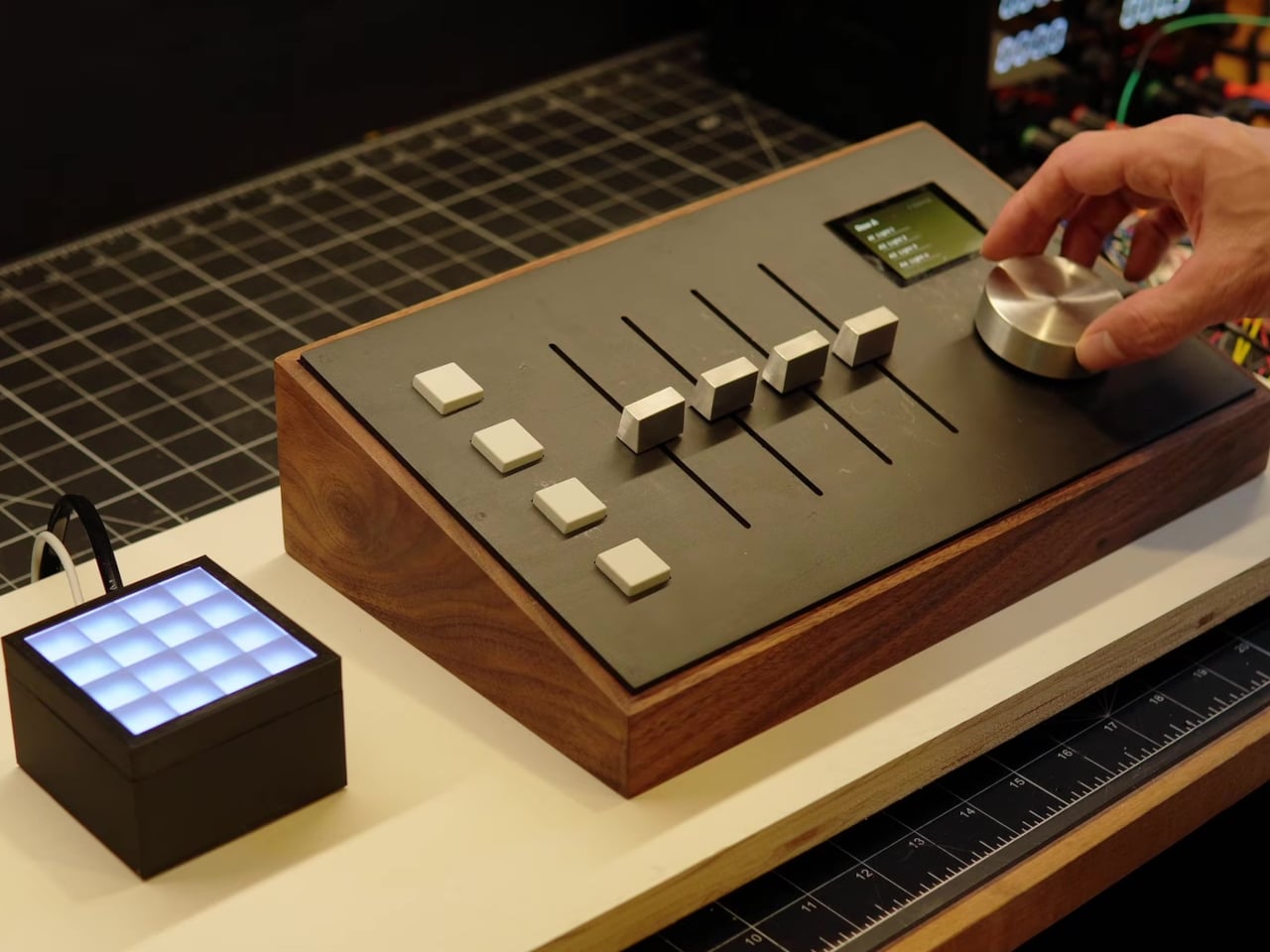
That synchronization runs in both directions, which is the detail that actually matters here. Dim a bedroom light from a phone app while sitting on the couch, and the console’s fader for that room quietly slides to match, entirely unprompted. It’s a small piece of choreography that turns a static piece of furniture into something that stays honest about the state of a house, rather than just accepting whatever position it was left in.
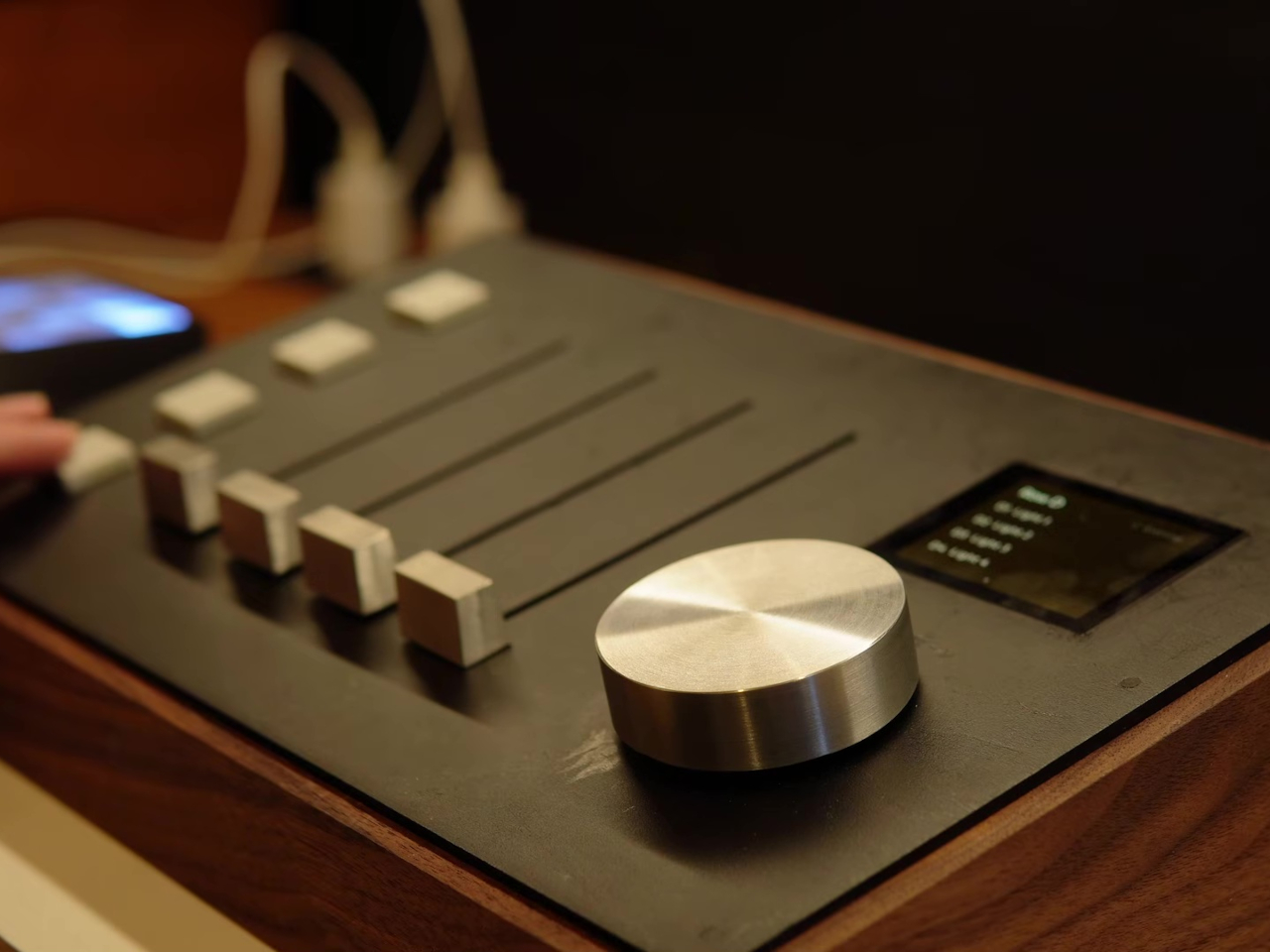
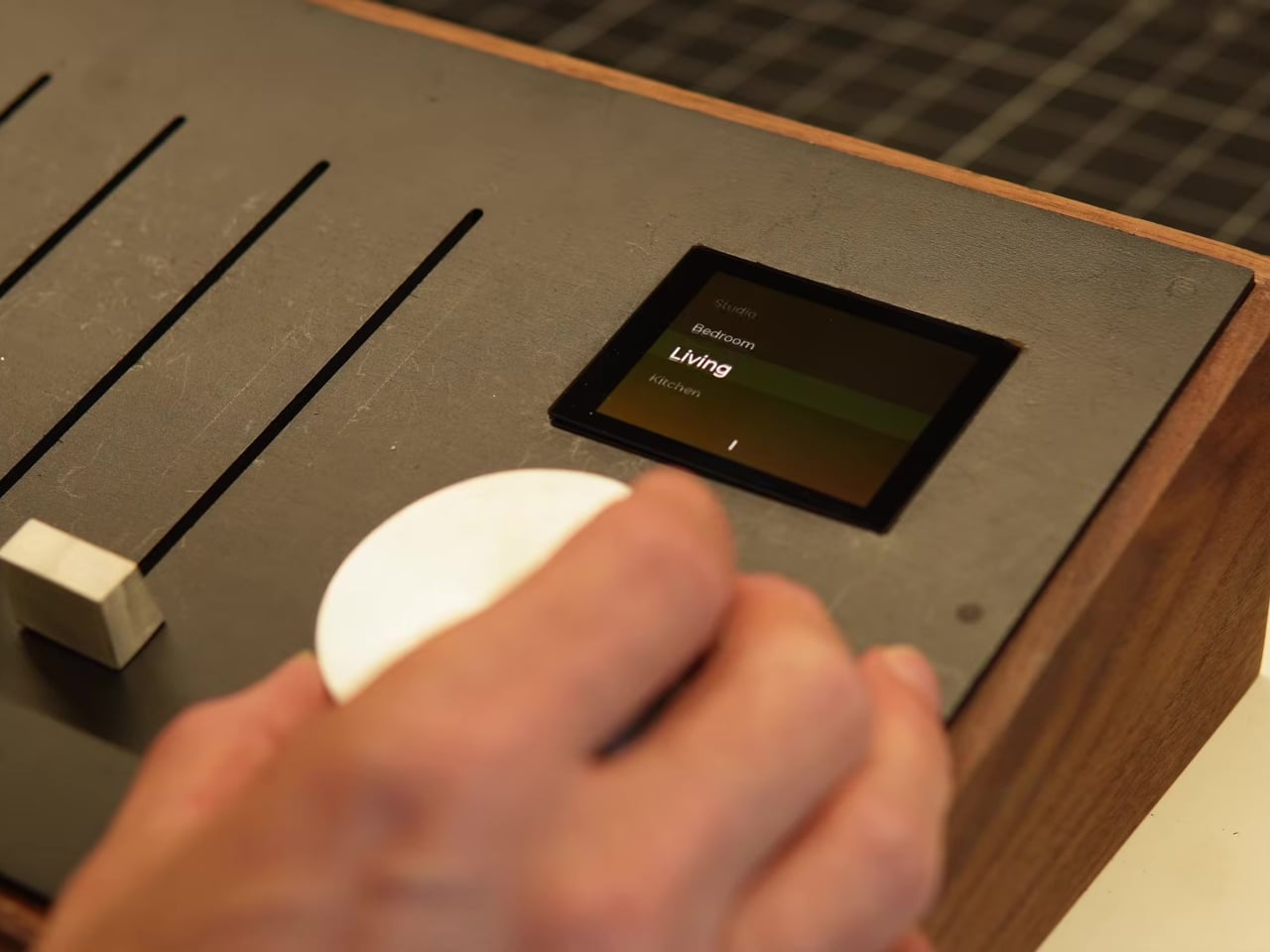
Four buttons sit beside the faders, handling lighting presets rather than individual brightness levels. Their assigned function changes depending on which room bank happens to be active, so a single row of buttons effectively serves every room in the house without needing a dedicated switch panel screwed into every wall. Pressing the same physical button in different rooms triggers a completely different lighting mood each time.
Building and testing all of this against sixteen actual light fixtures scattered through a house would slow any project down considerably. Instead, a compact 4×4 grid of small diffused LEDs stands in for the real thing, with each row representing one room’s bank of four lights. That miniature rig let the whole system get debugged safely on a desk before ever touching a single fixture wired into the house’s actual power.
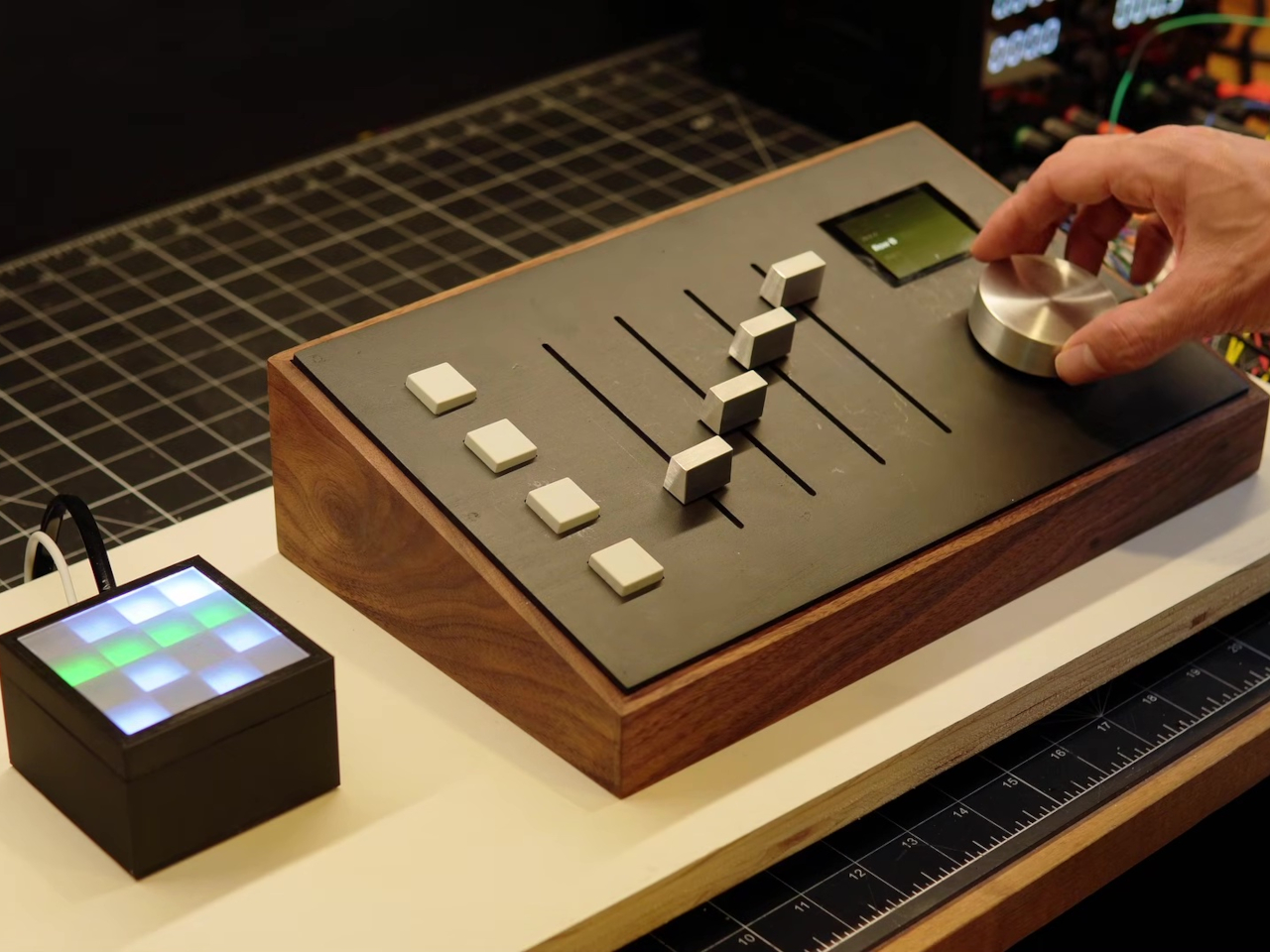
Materials do plenty of the storytelling here too. The body is solid walnut rather than injection-molded plastic, and the rotary knob along with the fader caps came off a CNC machine cut straight from aluminum stock. Even the current painted-wood faceplate, a placeholder ahead of a planned black anodized aluminum version, already reads closer to a finished audio interface than a hobbyist circuit board bolted into a project box.