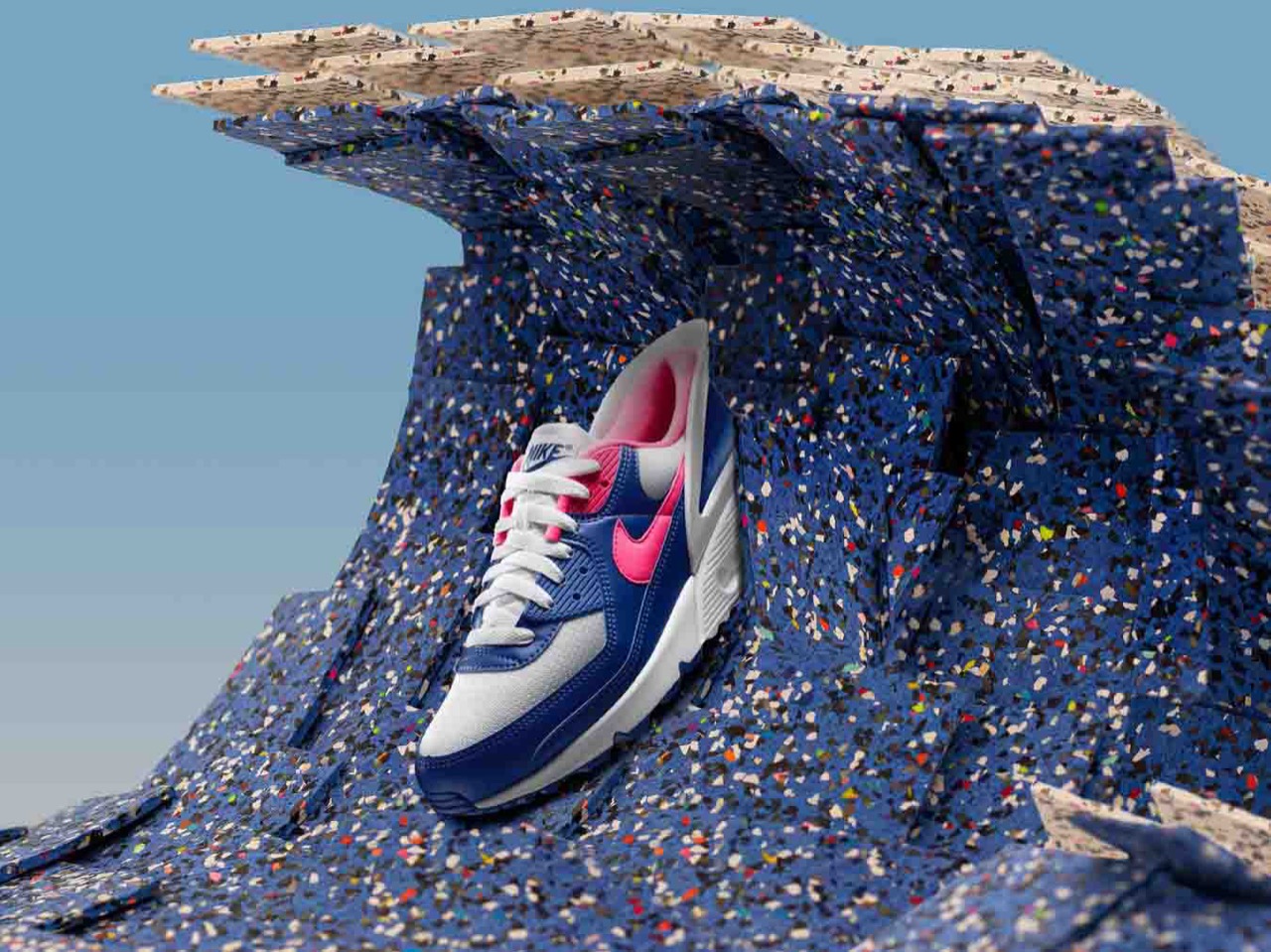
Every sneaker eventually dies, and most of them die badly, tossed into a landfill where the rubber outsole will outlive everyone who ever wore it. Nike has spent over three decades trying to intercept that fate with Reuse-A-Shoe, a program that grinds old kicks and factory scraps into a material called Nike Grind. What started as a scrappy basketball court test at a Nike facility in Oregon has since gone into more than a billion square feet of sport surfaces worldwide. Now it has landed somewhere I did not expect, as commercial flooring backed by the largest flooring manufacturer on the planet. Mohawk Group just folded a small Nike Grind partner called Hero Flooring into its lineup, and the headline product is called Hero Rubber made with Nike Grind.
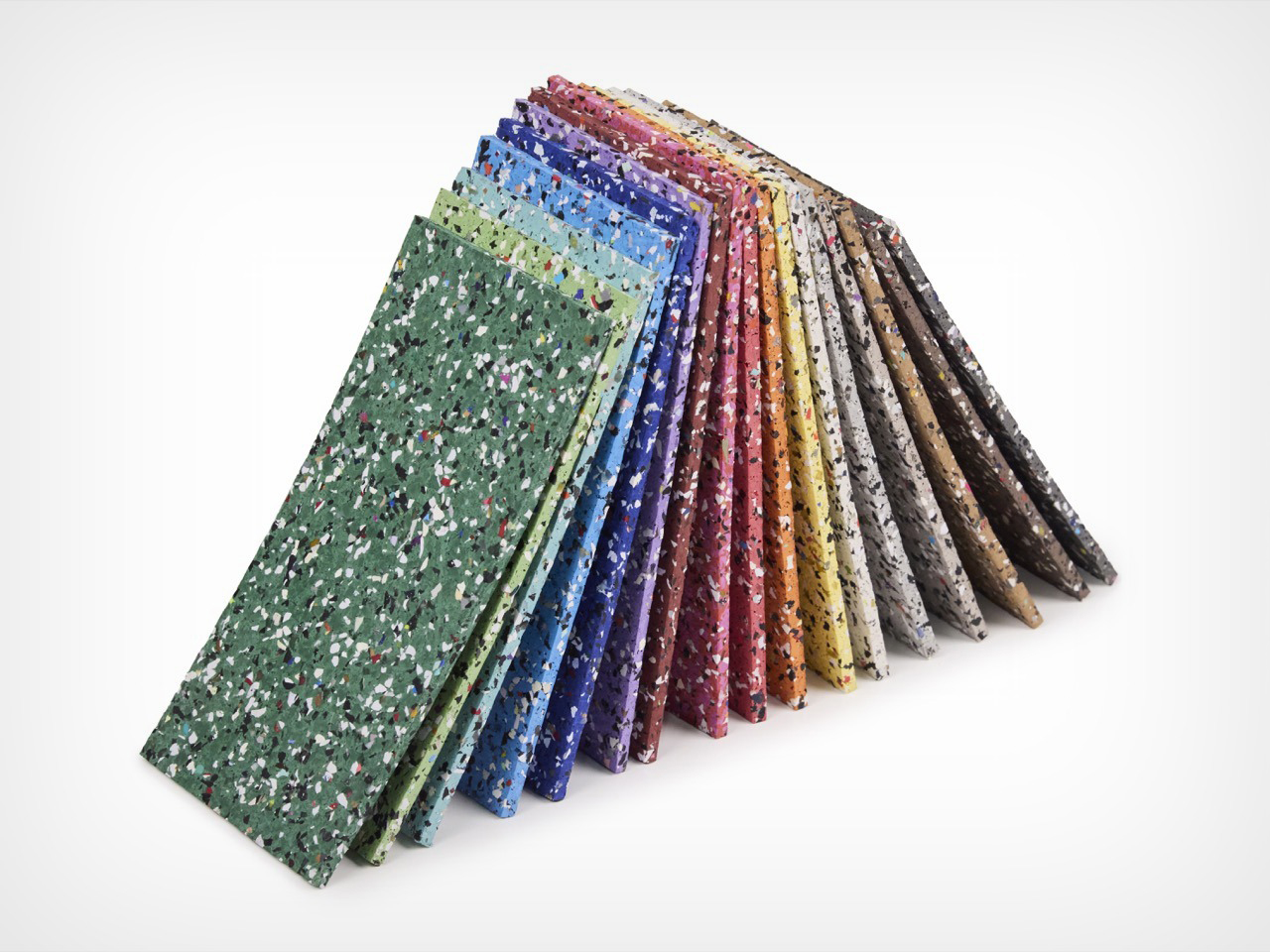
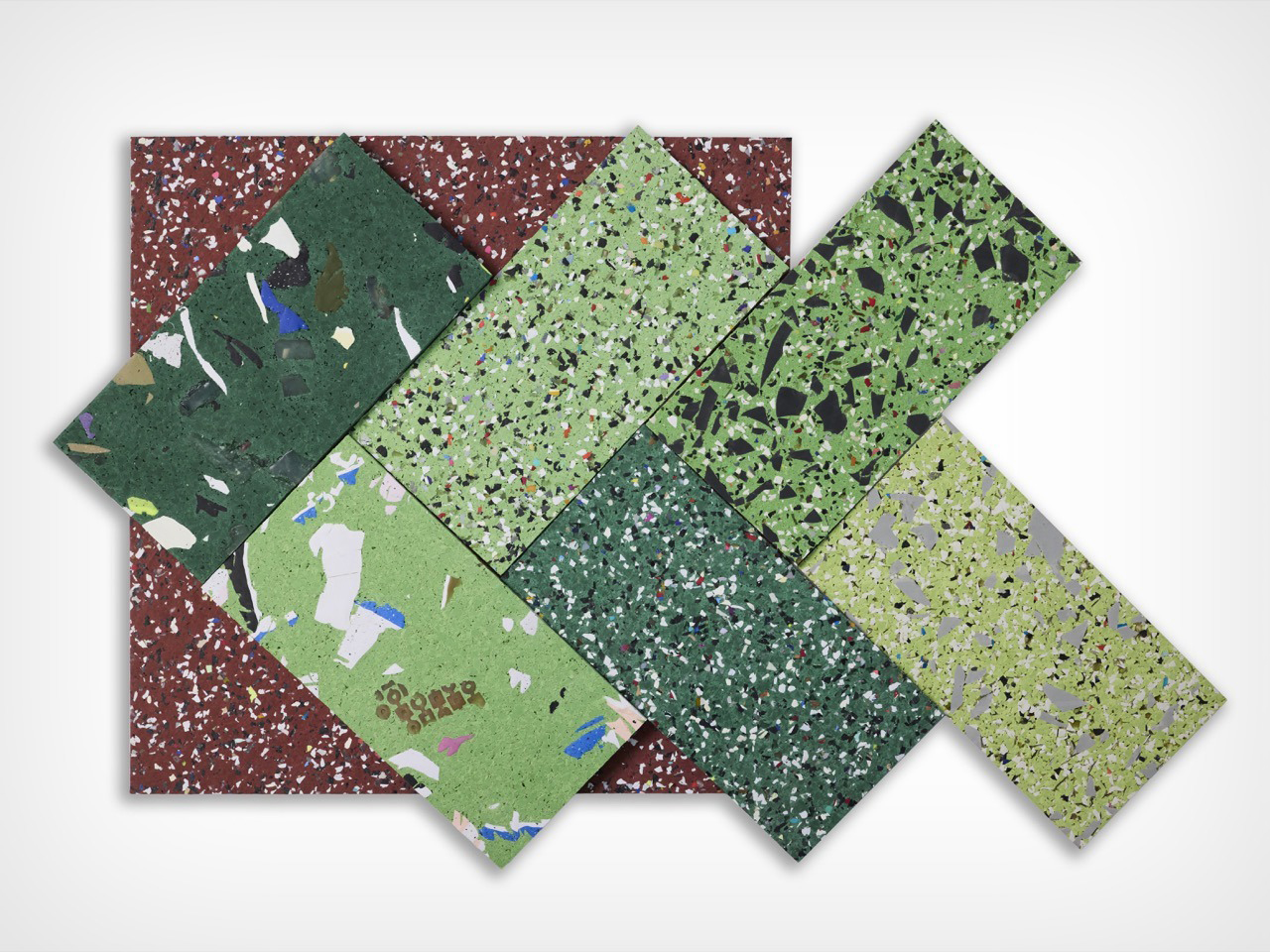
Reade Palmer, a former rower, founded Hero Flooring (now part of Mohawk Group) in 2014 and spent years pitching Nike before landing an official partnership in 2020. The result is a rubber flooring program built entirely around the size of the recycled granule, with three current styles called Original, Vitality, and Axis. Original uses the finest Nike Grind for a tight uniform speckle, Vitality blends two granule sizes for a terrazzo effect, and Axis goes bold with visible sneaker outsole chunks. All three ship in 17 colorways, skip recycled tires (so no tire odor, a real complaint with rival rubber floors), and carry FloorScore and Declare Red List Free certification. It has already won recognition from the AZ Awards, HiP Awards, and Best of NeoCon, and now rides Mohawk’s distribution into design firms nationwide.
Designer: Reade Palmer (Mohawk Group)
A big chunk of the shoes feeding Nike Grind come from drop bins sitting inside actual Nike stores, which means this floor started life as somebody’s actual Nikes. Grind them up, press them flat, install them in a gym, and now you have got people in fresh Nikes squatting and sprinting on top of dead Nikes. Old shoe, new shoe, same brand, same square footage, closing the loop in the most on-the-nose way possible. I keep picturing some guy doing burpees completely unaware he is standing on last year’s Pegasus.
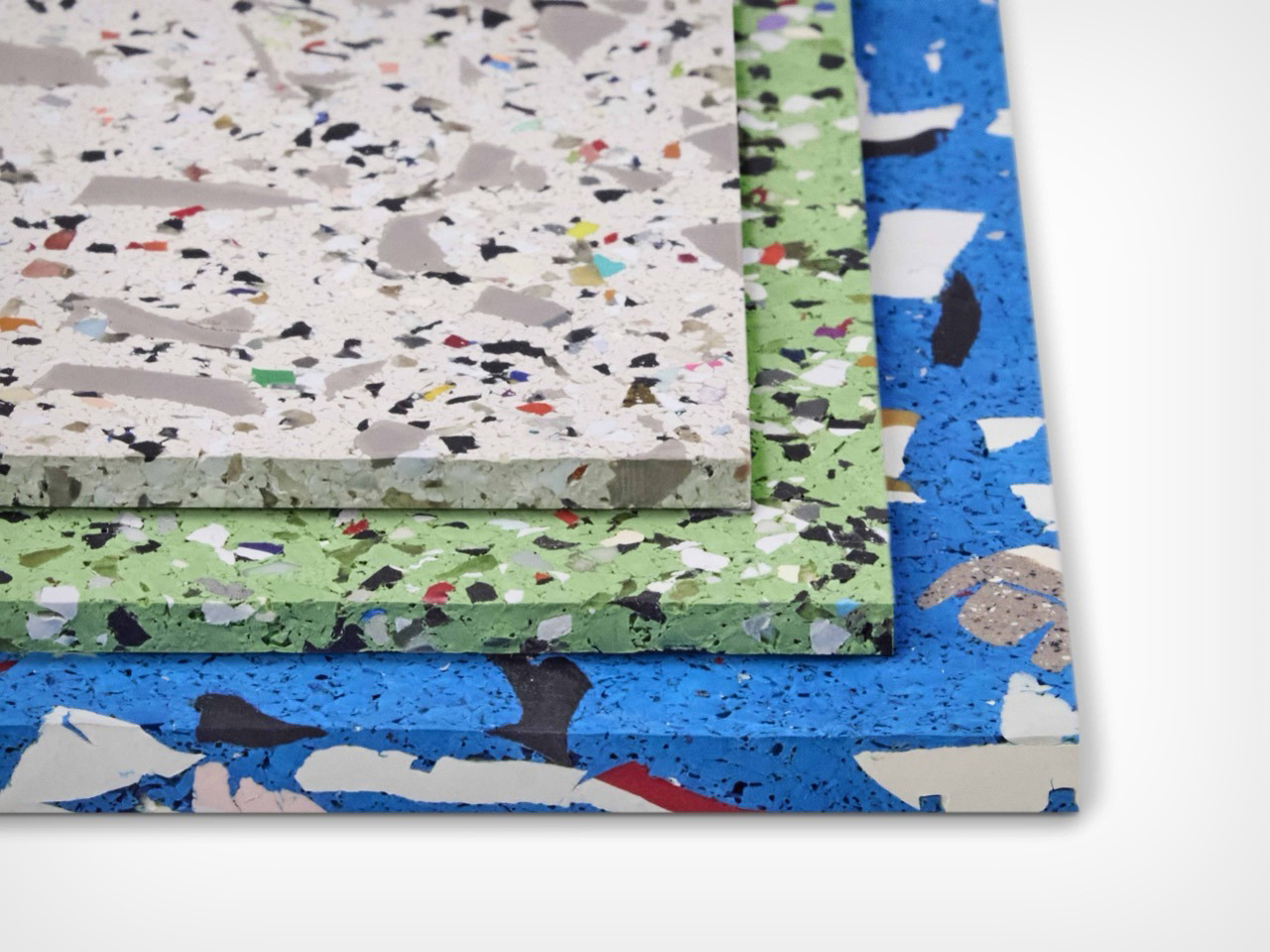
The three styles are basically the same trick shot at three different zoom levels. Original is the tightest and calmest of the bunch, a fine confetti speckle that would not look out of place in an office lobby that does not want to shout about being made from garbage. Vitality loosens the grain up, mixing two granule sizes so it starts looking like actual stone terrazzo instead of a printed knockoff of it. Axis is the one that goes for broke, with chunks big enough that you can actually clock they used to be a shoe sole. It is basically the difference between whispering “recycled” and yelling it, and I respect that all three options exist under one roof.
Axis is rated for actual athletic use under ASTM F2772, with an energy restitution score of 87.3 percent, meaning it eats a chunk of the impact when you drop a barbell instead of letting your knees eat it instead. Every style skips crumb rubber entirely, which matters more than it sounds like it should, because regular rubber gym flooring made from old tires smells like, well, old tires. Add FloorScore certification, a Declare Red List Free label, and a verified environmental report card, and you have got a floor that is doing its homework. The one thing I could not dig up anywhere, not on Mohawk’s site and not on Architizer, is a price. So budget for a phone call to a rep before you fall in love.
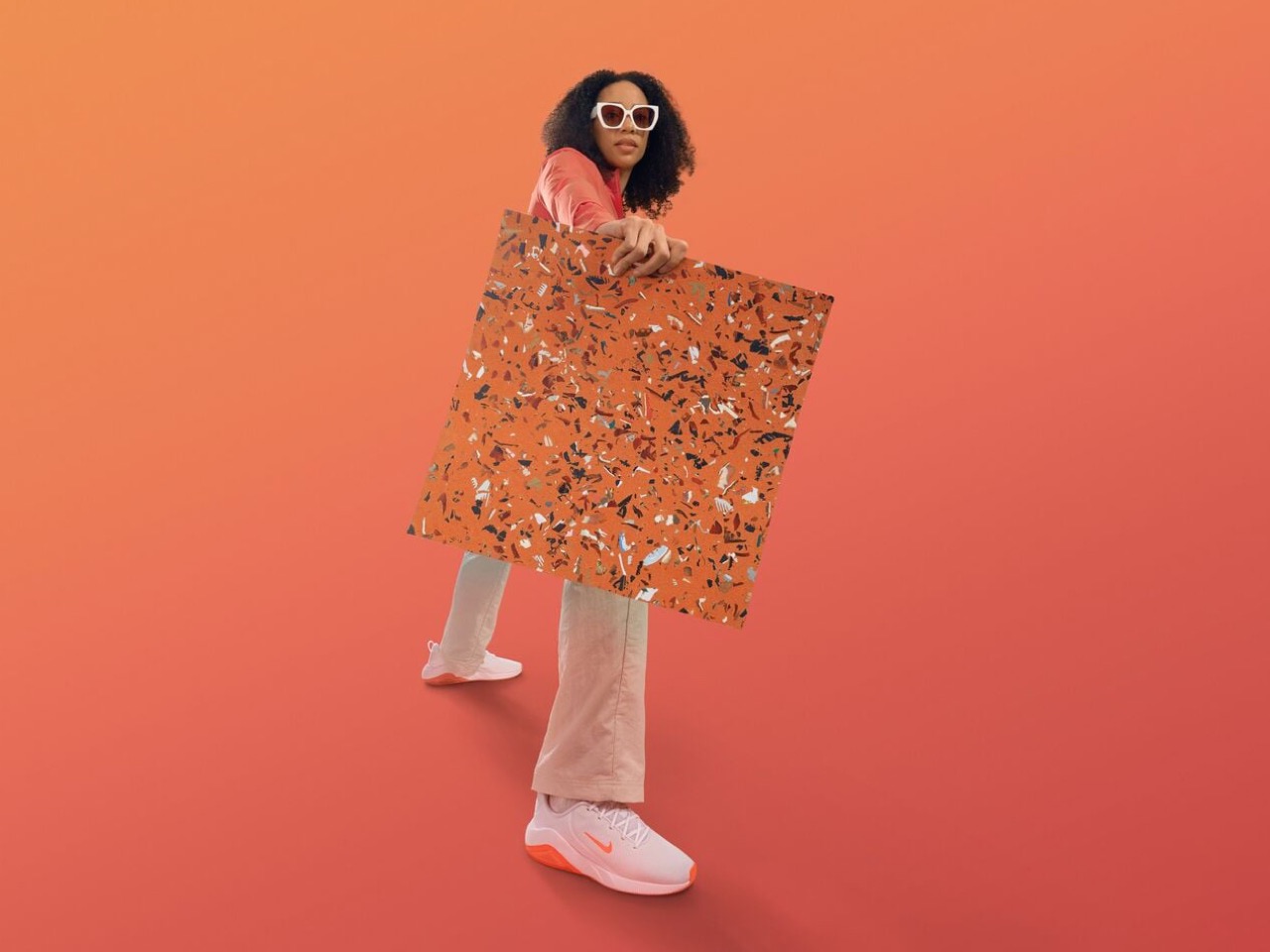
What I like most here is that this floor is not embarrassed about where it came from. Most recycled flooring tries to hide the recycled part, smoothing everything into a boring gray so nobody clocks the backstory. Hero Rubber does the opposite, letting actual shoe chunks sit right there on the surface for anyone paying attention. You show up to lift, you are standing on somebody else’s old kicks, wearing your own current pair, and the floor does not let you forget it. That is a better sustainability pitch than most brands manage with an entire ad campaign.
SHARE