Pick up almost any pepper mill in an average kitchen drawer and you’ll notice the same small, dumb problem: you have to guess which part twists. Is it the top? The bottom? Do you squeeze and turn, or hold still and crank? Manufacturers have spent decades solving how a grinder crushes peppercorns and almost no time solving how a hand is supposed to hold the thing in the first place.
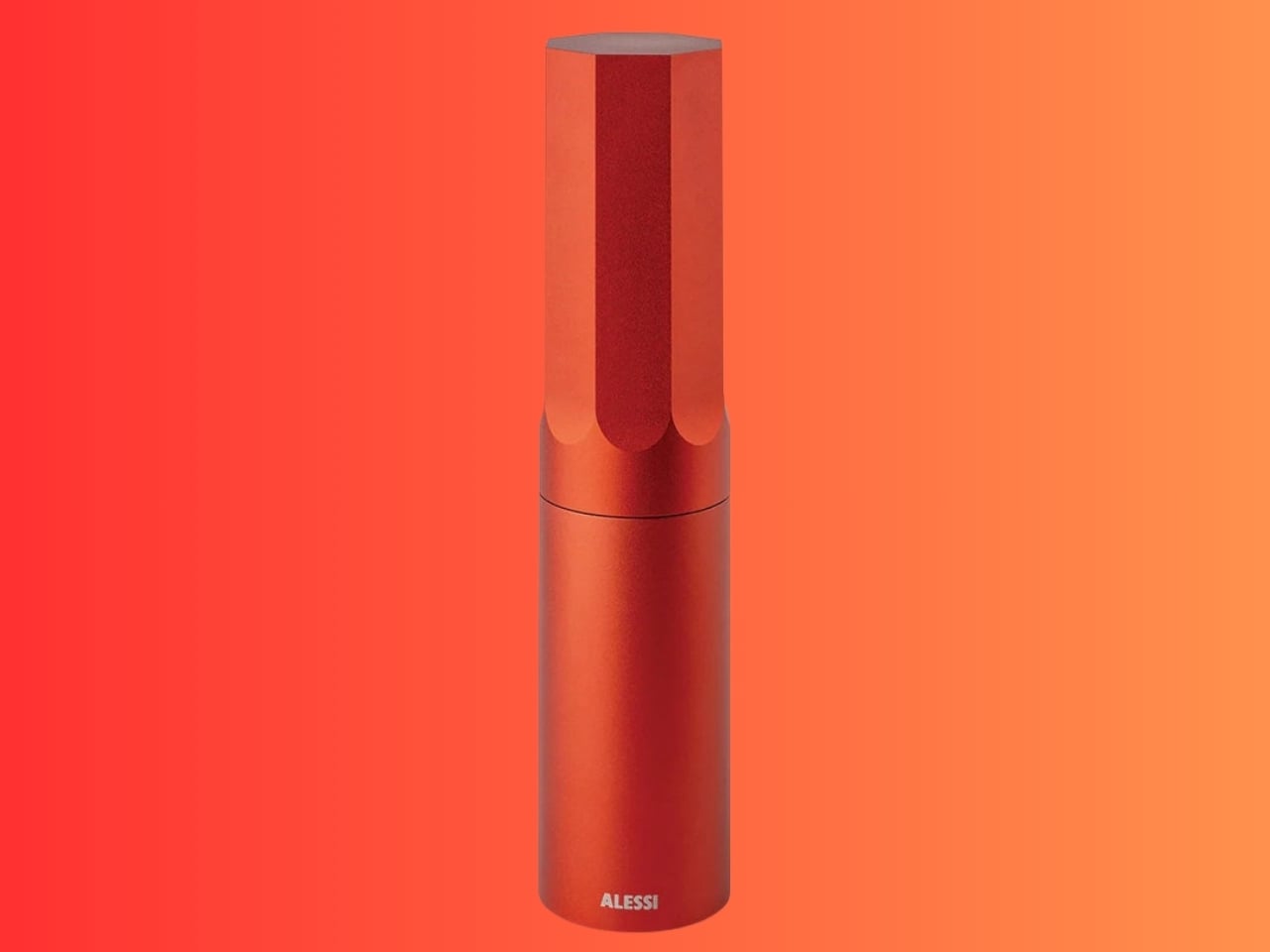
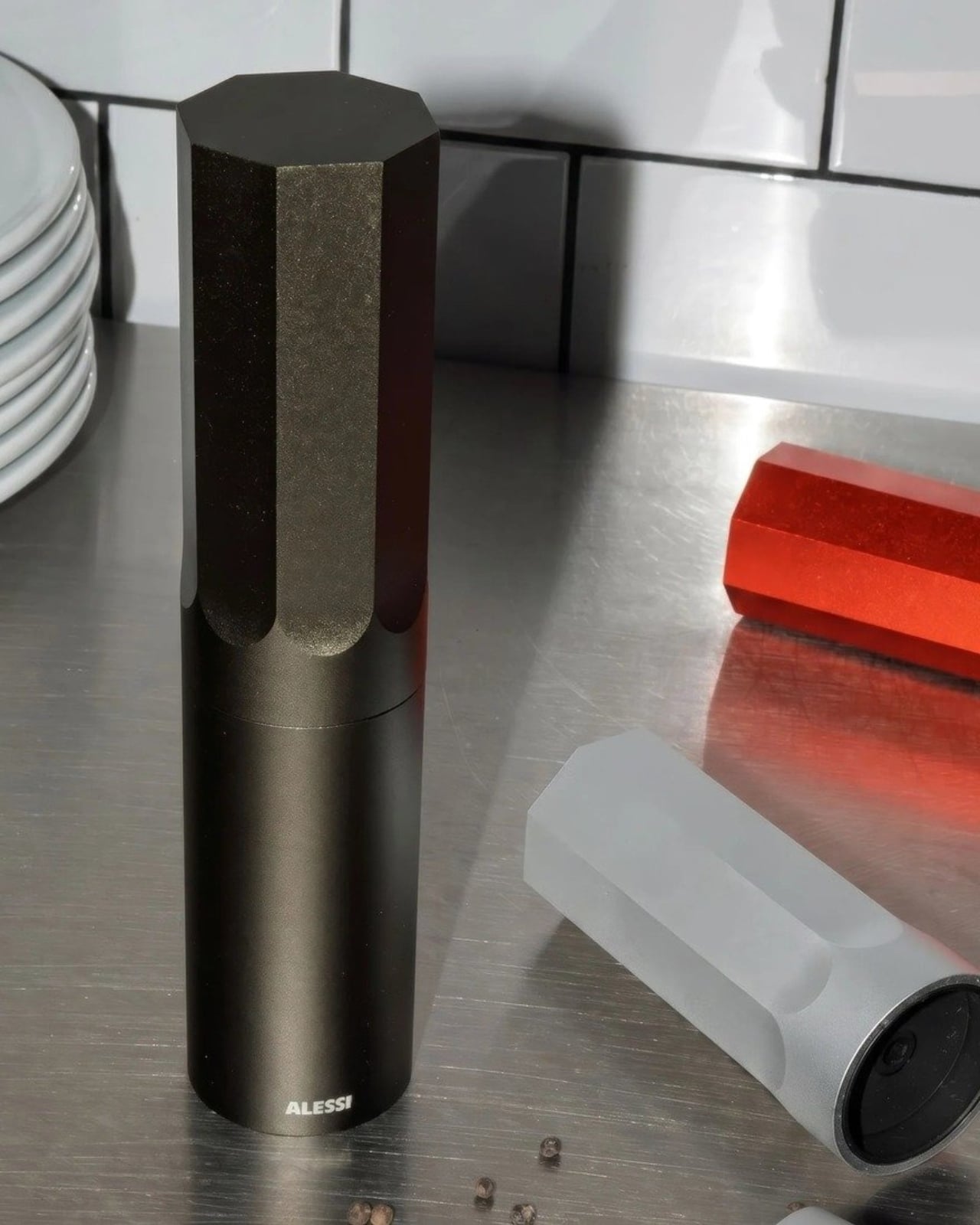
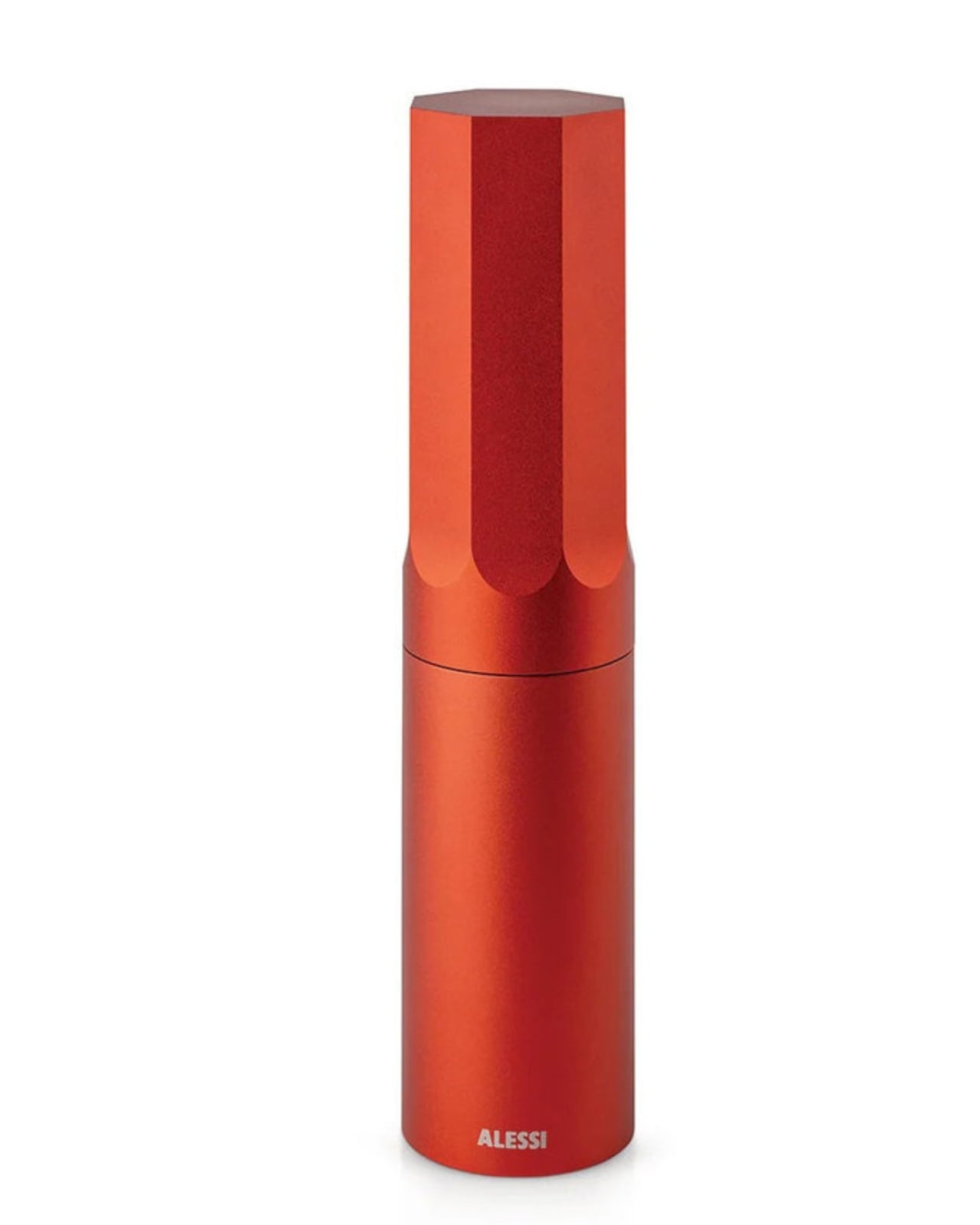
Konstantin Grcic’s new KG01 for Alessi fixes exactly that, and it does it with a trick so simple you wonder why it took this long. The body starts as a smooth cylinder up top, then shifts into an eight-sided, octagonal shape lower down. Your fingers find that transition instinctively. The shape itself tells you where to grip and where to twist, no instructions, no fumbling, no accidentally spinning the wrong half and dumping salt across the table. That’s the kind of design problem I find genuinely satisfying to see solved, because it’s invisible until someone points it out, and then it’s all you notice. A grinder’s form has to communicate its function without a single word of explanation, and Grcic clearly took that as a personal challenge rather than a footnote.
Designer: Konstantin Grcic for Alessi
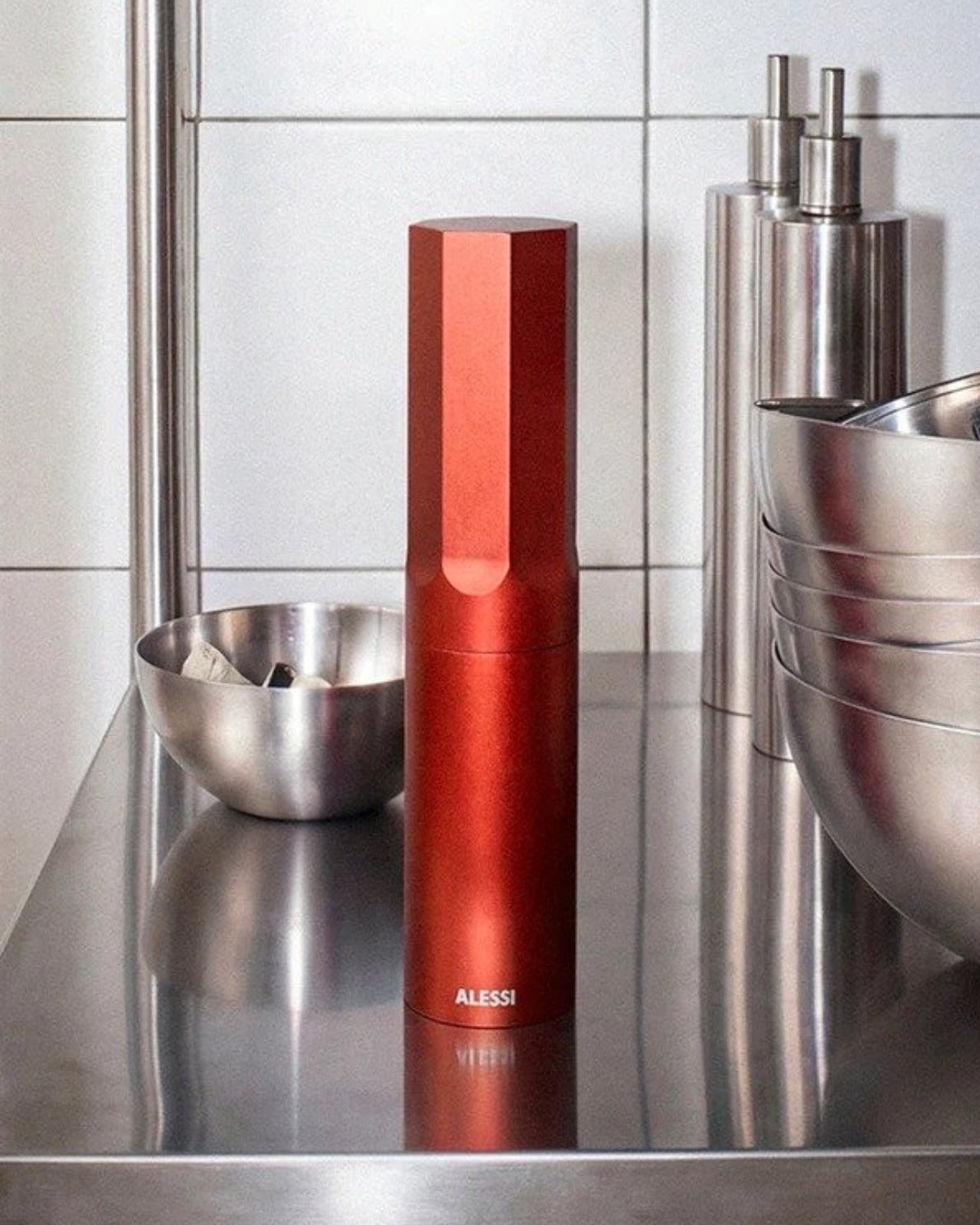
Grcic isn’t chasing novelty for its own sake here, either. He trained as a cabinetmaker before studying at the Royal College of Art in London, and his Berlin studio has spent decades making objects that lean industrial without feeling cold. That background shows up in the KG01. It’s machined from a solid block of aluminum, sandblasted for a matte, slightly grippy texture, and finished with an anodized coat that keeps it from looking like shop equipment that wandered onto your dinner table. Alessi describes it as standing “upright and emblematic like a king on a chessboard,” which sounds like marketing copy until you actually see it next to a wine glass and realize the comparison is fair.
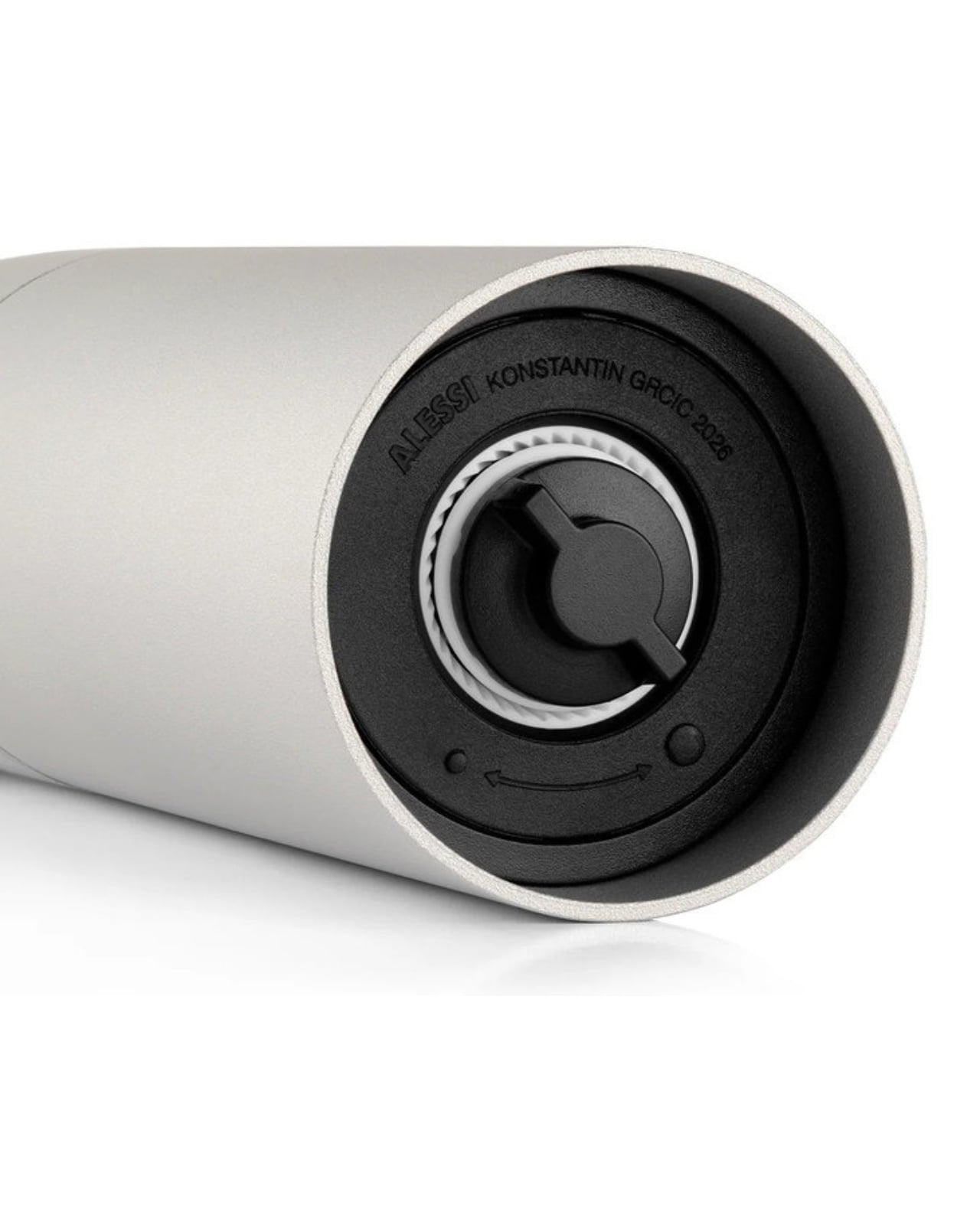
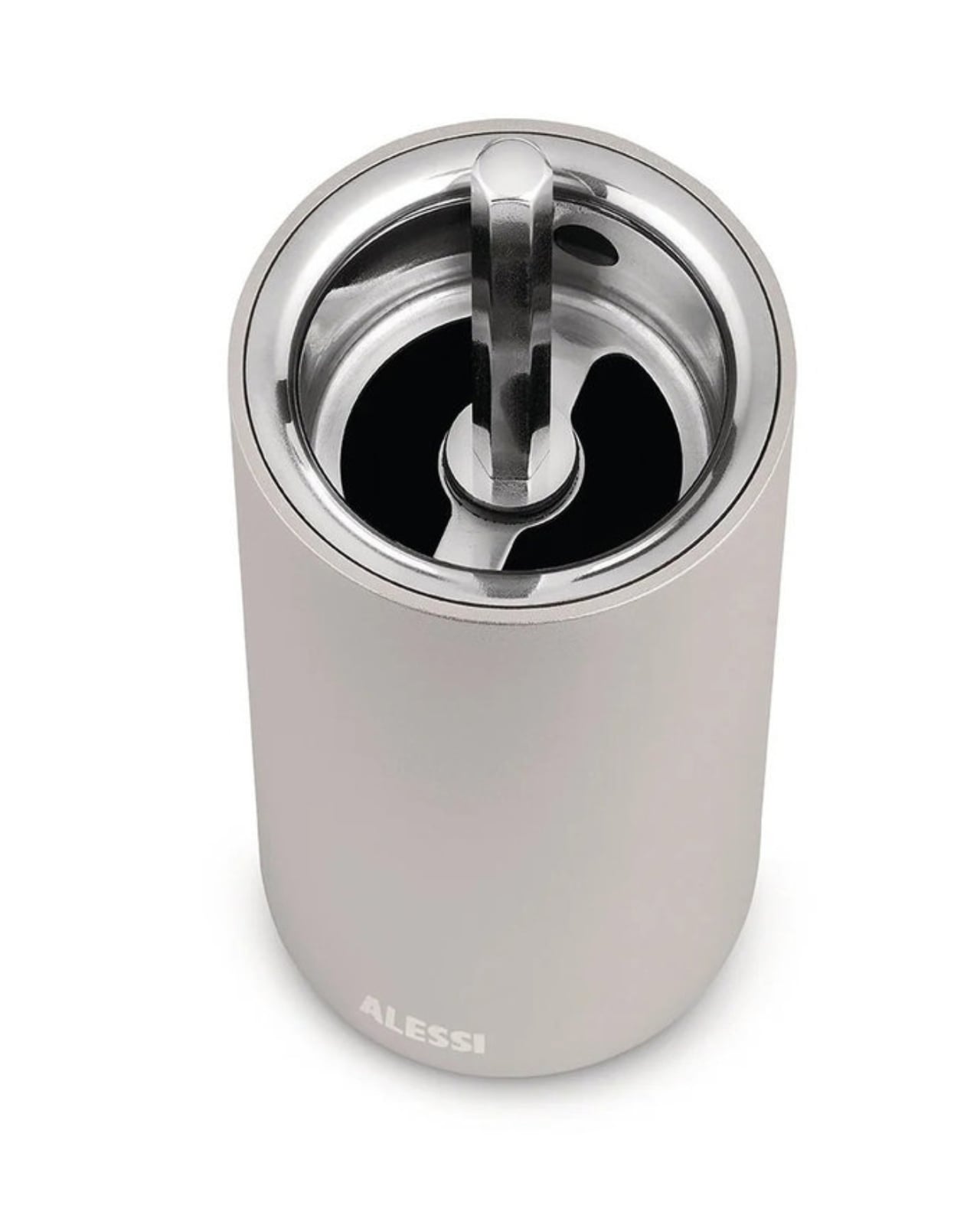
Inside, there’s an adjustable ceramic grinding mechanism built to handle peppercorns, coarse salt, and dry spices, and you can dial the coarseness from fine to chunky by twisting a setting at the base. At roughly 8.5 inches tall, it has real presence on a table without tipping into novelty-object territory. It comes in raw aluminum, a dark grey finish, and a red version that reads more like a piece of hardware than a kitchen accessory, in the best way.
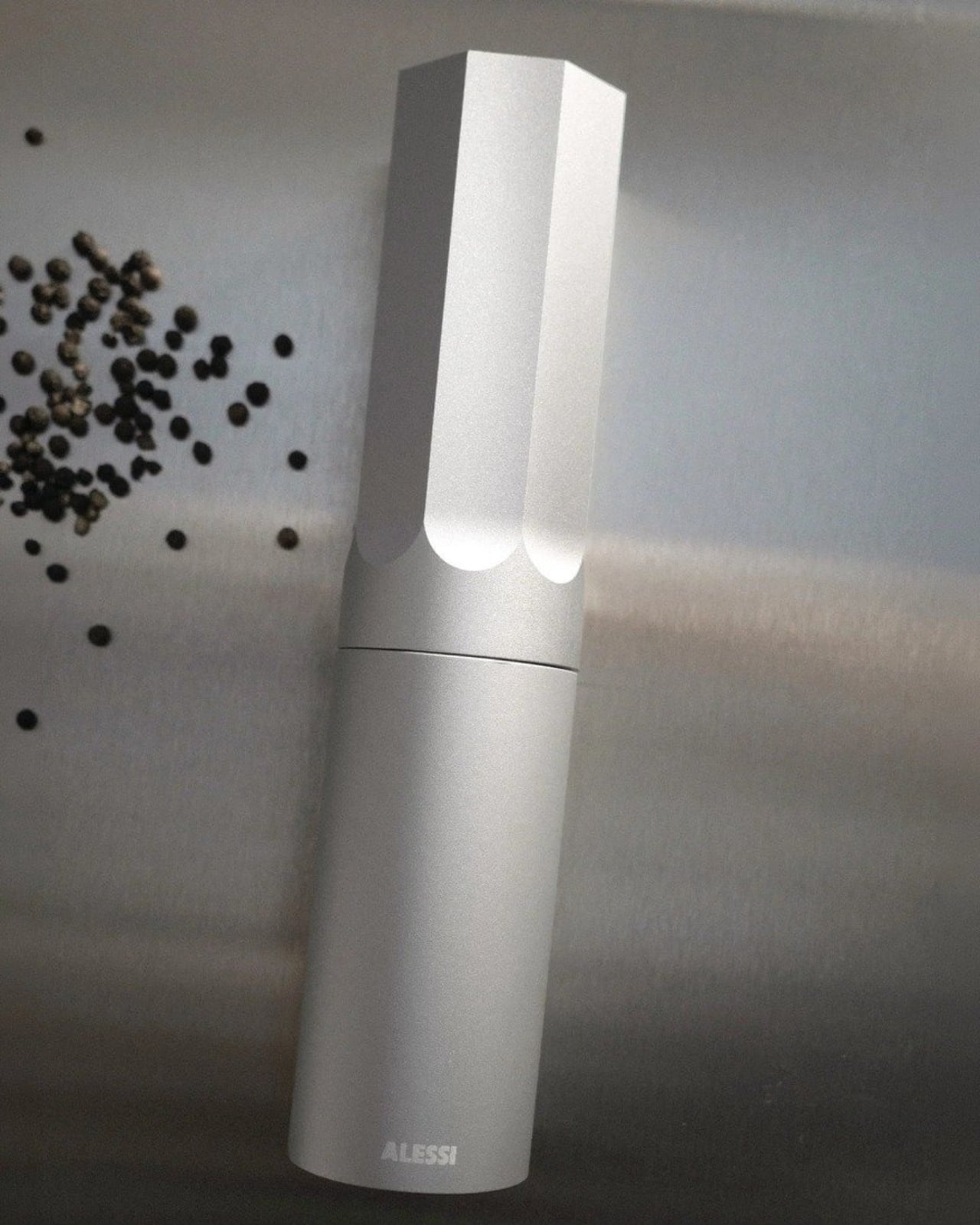
None of this is revolutionary in the sense of new technology. Grinders have used ceramic mechanisms for years, and adjustable coarseness isn’t new either. What’s actually different is the confidence of the shape. So much tableware today tries to disappear, all soft curves and neutral tones designed to offend no one and be remembered by no one. The KG01 refuses that approach entirely. It looks like a tool, reads like a sculpture, and somehow manages to be more comfortable to use than the friendlier-looking mills it’s replacing.
At $175, it’s priced like the design object it is rather than the kitchen gadget it also happens to be, and that’s worth being upfront about. This isn’t an impulse buy next to the register at a home goods store. It’s closer to the kind of piece you put on a wedding registry or buy yourself after walking past it at a design shop and thinking about it for a week straight. Alessi has built an entire business on that exact instinct, turning everyday objects into things people want to display, and the KG01 fits comfortably into that lineage.
What sticks with me isn’t the price or even the aluminum. It’s the fact that a company still bothers to ask a well-known designer to rethink something as small as where your hand goes on a pepper mill. Most of the objects we touch every day were never designed with that kind of attention. The KG01 was, and you can feel it the first time you pick it up and just know what to do.
SHARE