A pile of fresh herbs has a way of becoming a much larger project once the chopping starts. Leaves spread across the board, little pieces escape the blade, and suddenly you’re gathering everything back into the middle for another pass. It’s a small kitchen annoyance, but exactly the sort of thing that deserves a thoughtful design response.
NUO, a knife-and-cutting-board set by Münire Çalışır, addresses that familiar scatter by giving the cutting surface a shallow hollow. Developed as a student design project at Burg Giebichenstein University of Art and Design Halle, the set treats the board and blade as partners. I like that the idea starts with the interaction between two everyday objects rather than another gadget demanding counter space.
Designer: Münire Çalışır
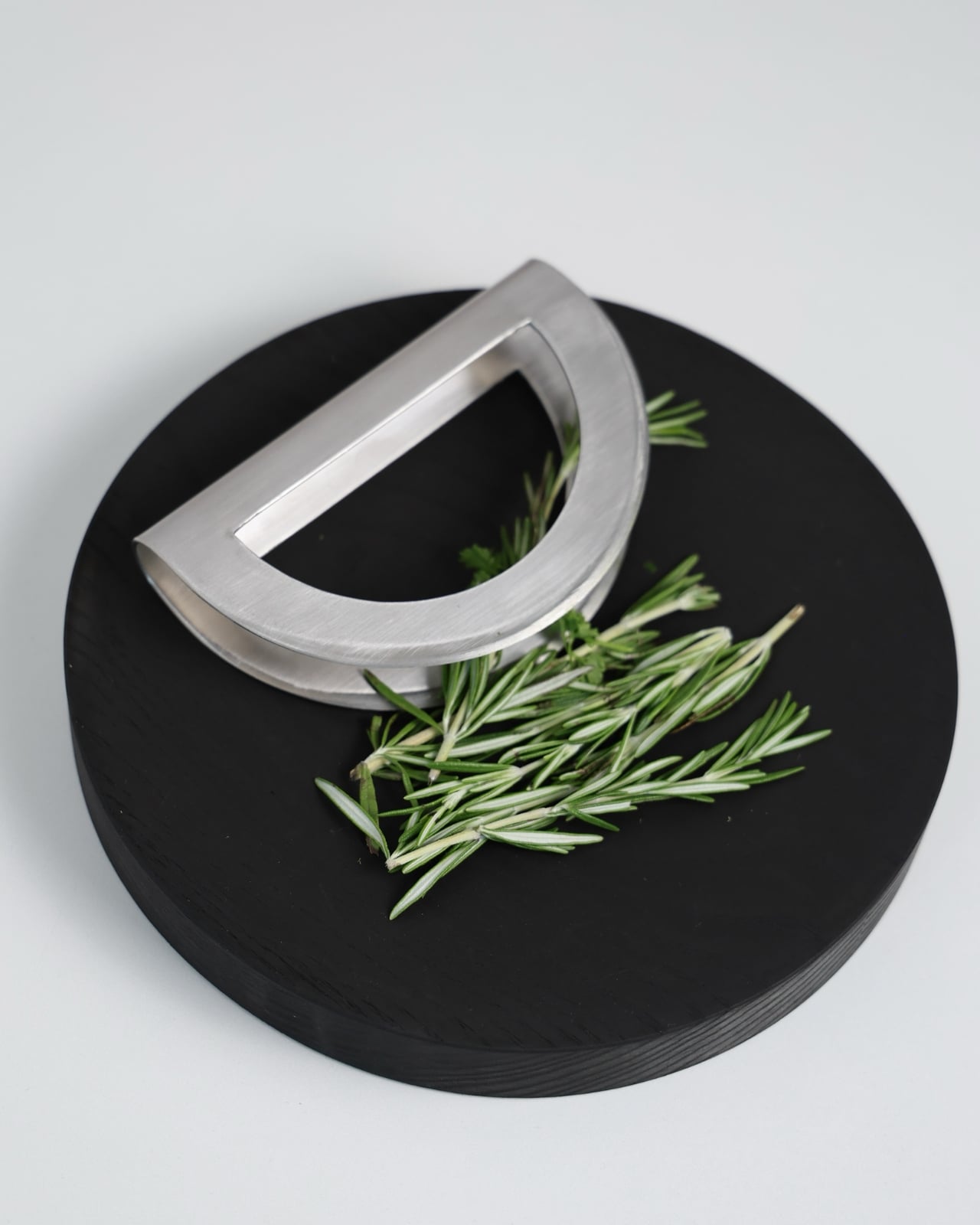
The ash board’s recessed surface is intended to keep ingredients gathered while guiding the knife’s rocking movement. It also provides a resting place for the blade. That gives the depression a convincing reason to exist beyond looking sculptural. A flat board leaves all the coordination to the cook. Here, the surface is designed to participate, encouraging the ingredients and the cutting action to stay in the same area.
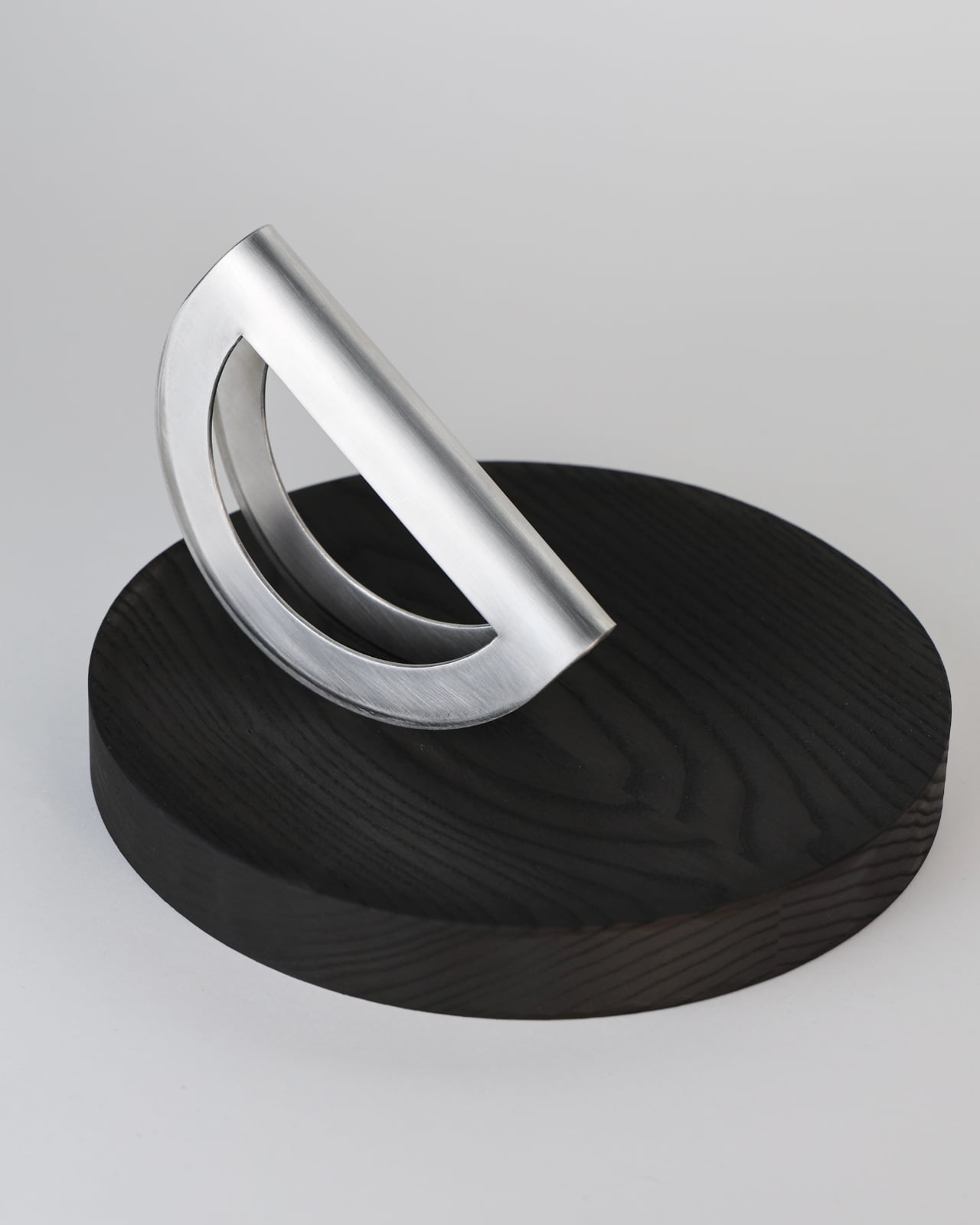
Visually, the pairing is striking without requiring much explanation. The dark, circular board has pronounced wood grain and a substantial-looking edge. Above it sits a silver knife that resembles a folded metal disc, with an open center and a broad grip across the top. In the supplied photographs, the contrast makes both pieces easy to read: a dark surface underneath, a bright cutting tool above.
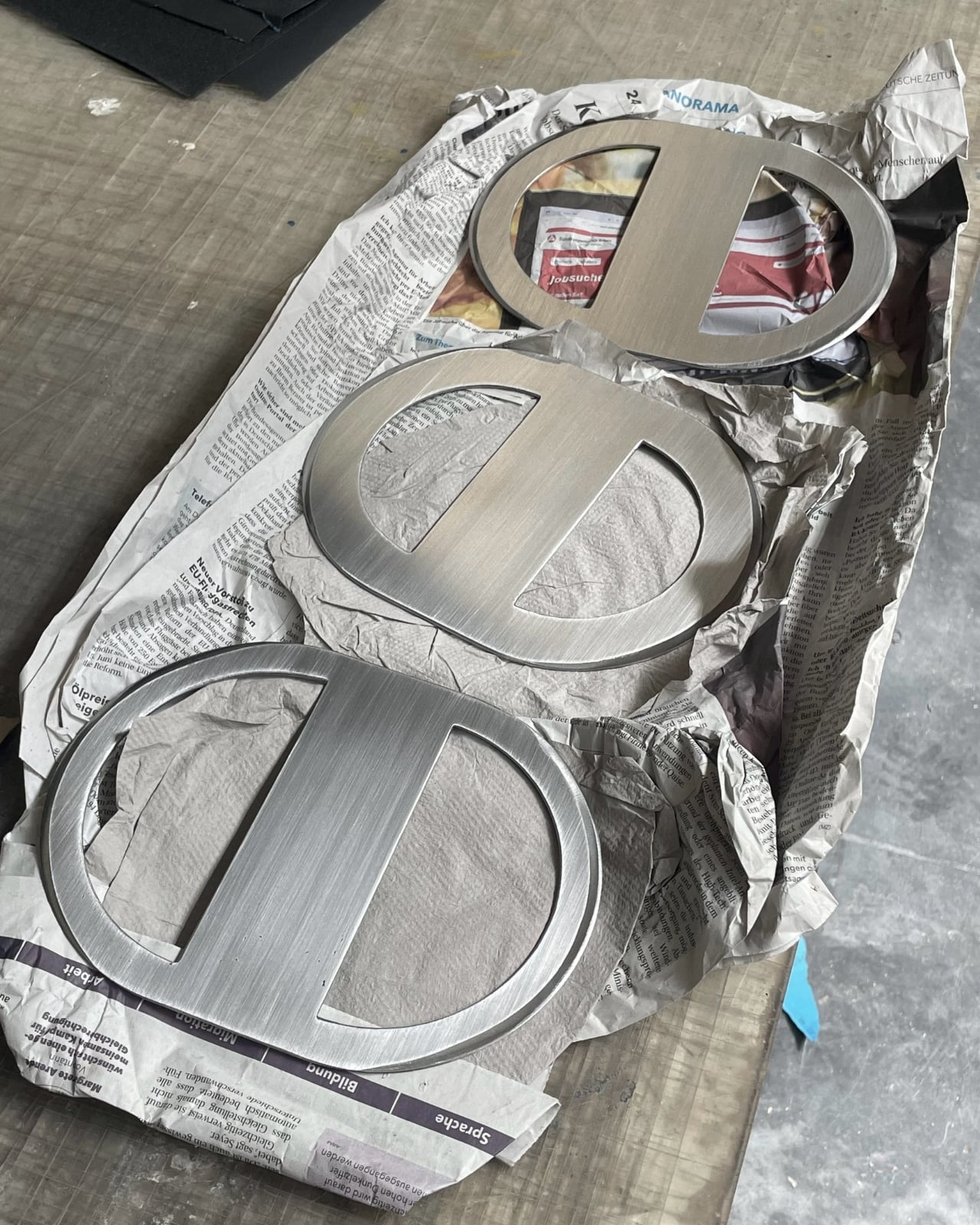
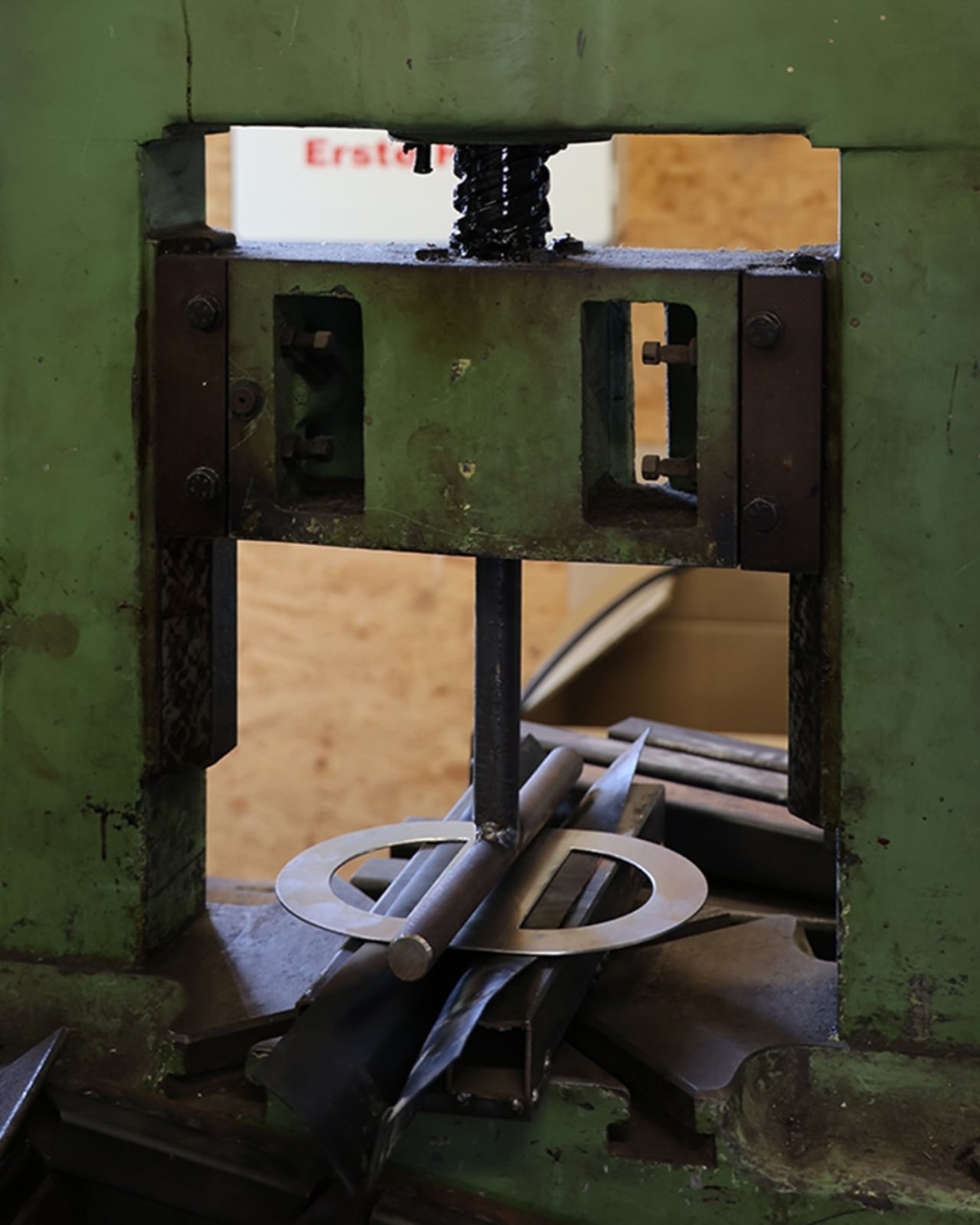
The knife begins as a water-jet-cut sheet of stainless steel. A central pressing operation gives it a three-dimensional form, bringing the handle and blade together in one component. The process photographs are particularly satisfying because you can follow the relationship between the flat blank and the finished object. The handle doesn’t appear as an accessory attached afterward. It emerges from the same piece of material that becomes the cutting tool.
According to the project description, the cutting edge’s radius supports a natural rocking motion, while the knife’s own weight reduces the effort needed to cut. Those are design intentions rather than benefits I can confirm from using it. Still, the relationship between the curved edge and the hollowed board makes the proposed movement understandable. You can see what your hand is supposed to do.
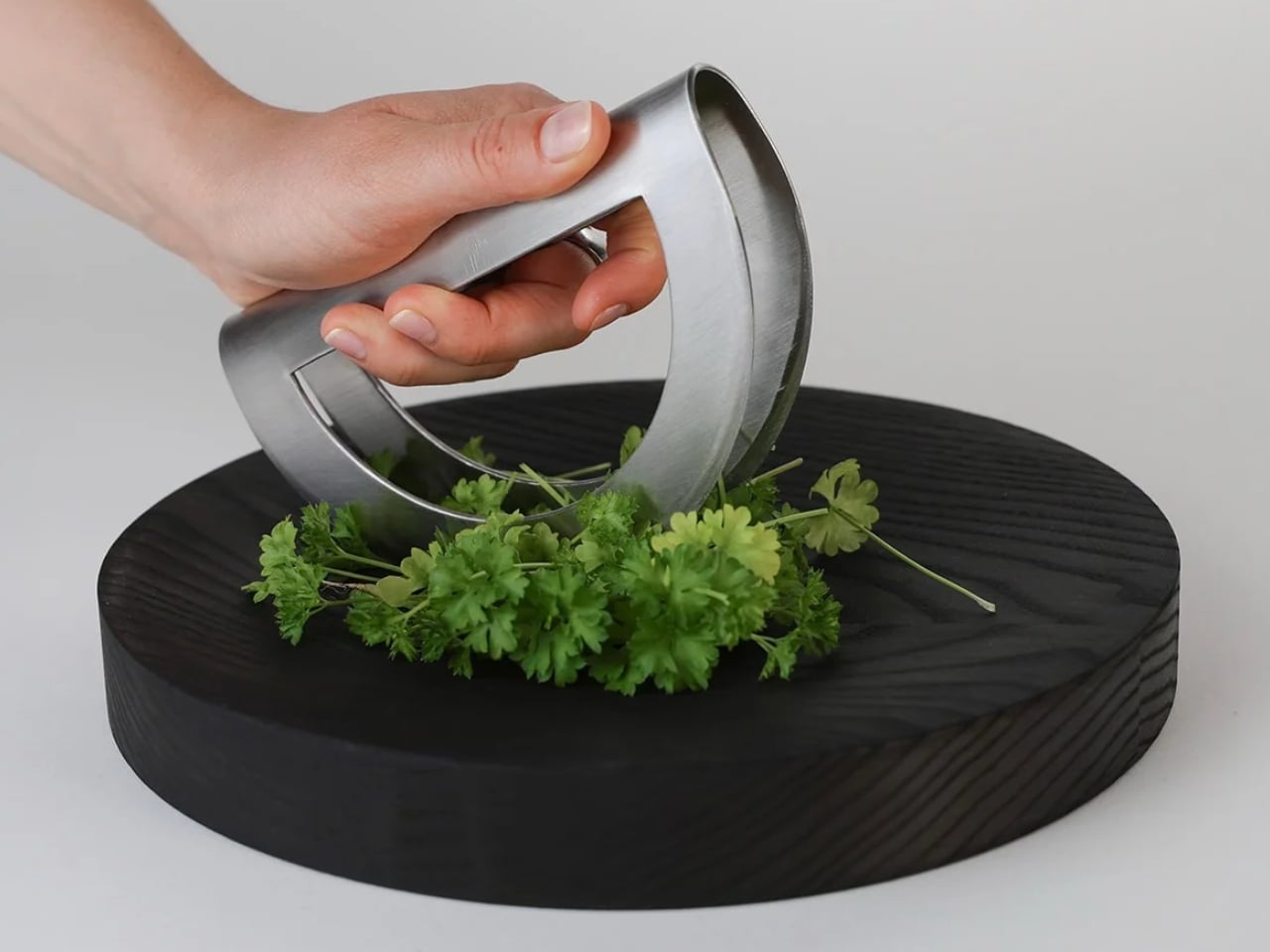
The photograph showing the knife in use helps here. Fingers curl through the opening beneath the grip, while the thumb rests along its upper surface. The hand sits above the cutting area rather than extending from a long handle to one side. To my eye, that gives NUO an approachable quality, even though its silhouette initially looks more like a small sculpture than kitchen equipment.
I’d be interested in the grip over a longer prep session. An all-metal handle can look beautifully resolved, but photographs can’t tell us how it feels with wet hands or how different hand sizes fit the opening. Those questions matter more than whether the set looks good beside a bowl of ingredients. A specialized tool needs to earn its place through the task it performs.
The board raises another useful consideration. Its concavity is central to the idea, so I wouldn’t judge it as a replacement for a large, flat prep surface. I’d consider it for focused jobs involving herbs, where keeping a small pile together is the point. That narrower role makes sense to me. Kitchen tools become less convincing when they promise to handle every possible dinner.
My favorite choice is giving the knife somewhere to rest within the working surface. It acknowledges the pauses between cuts, when you reach for another ingredient or turn toward the stove. NUO’s appeal lies in that attention to the whole task. The sculptural shape gets your attention; the small accommodation for an ordinary kitchen moment gives it a reason to hold it.