Tech shows have always been about what’s next, and for a while that meant displays, processors, and connectivity standards nobody could fully explain. The “next” that keeps showing up now is a lot more personal. AI that tracks your muscle tension and adjusts a massage roller’s pressure in real time. Exoskeleton hardware that detects your activity type and switches support modes in under 200 milliseconds. Earbuds running a transcription service across 78 languages in the background while you go about your day. The body has become the most actively developed platform in consumer technology, and the hardware being built around it is finally starting to match the ambition.
Hearing protection for children. Clinic-style oral care without the clinic. Underwater AR navigation that projects real-time depth, air, and directional data into a diver’s field of view. Scalp wellness built around making hair loss treatment less of a chore to stick to. An AI sports camera that follows the action in 4K without anyone behind the lens. These brands at the Global Connect Show at IFA 2026 cover wildly different ground, and that breadth is exactly what makes them worth pulling into one roundup. Here’s our full breakdown.
Covamio S1: Five Therapies, One Shoulder Wrap
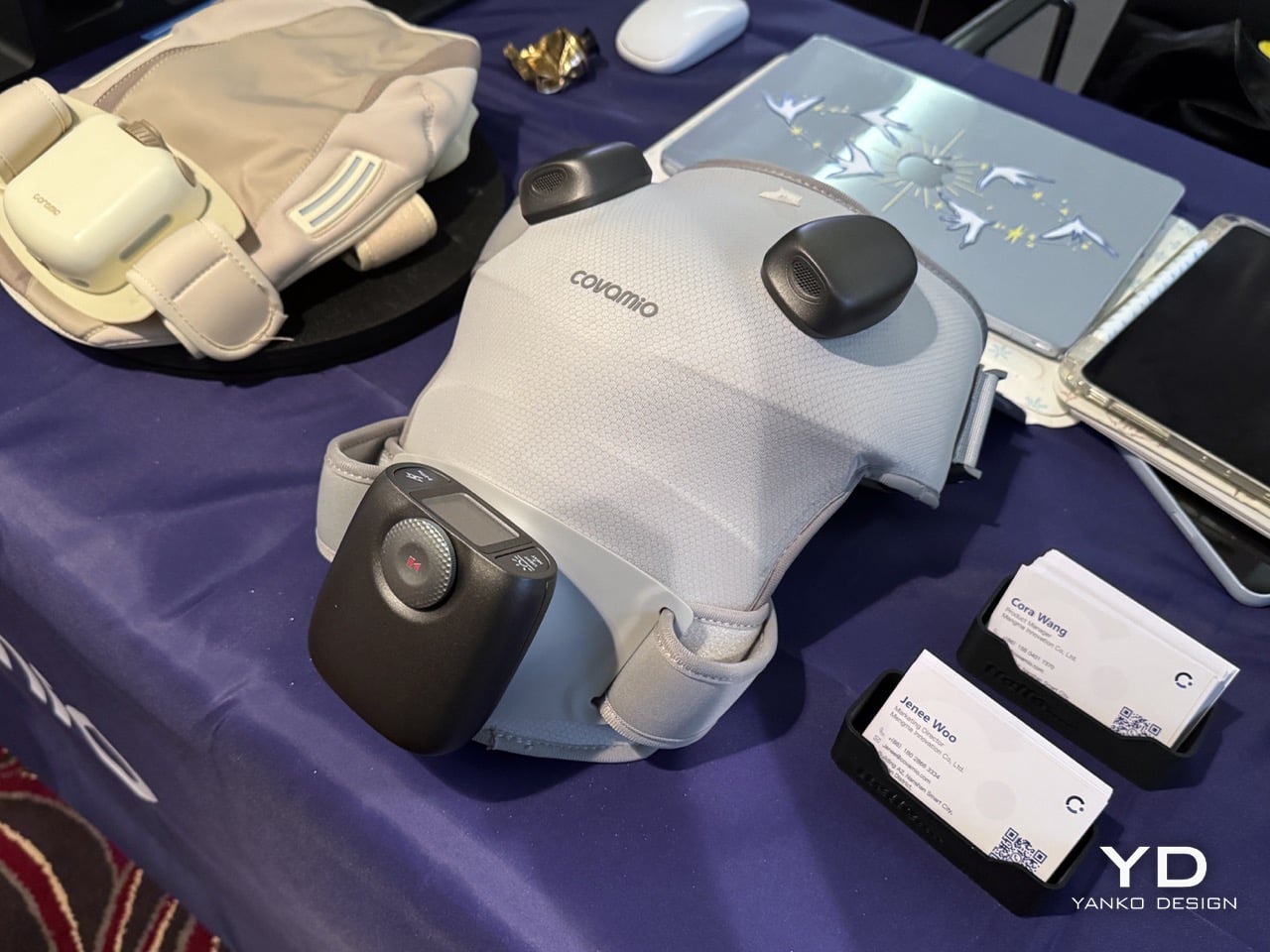
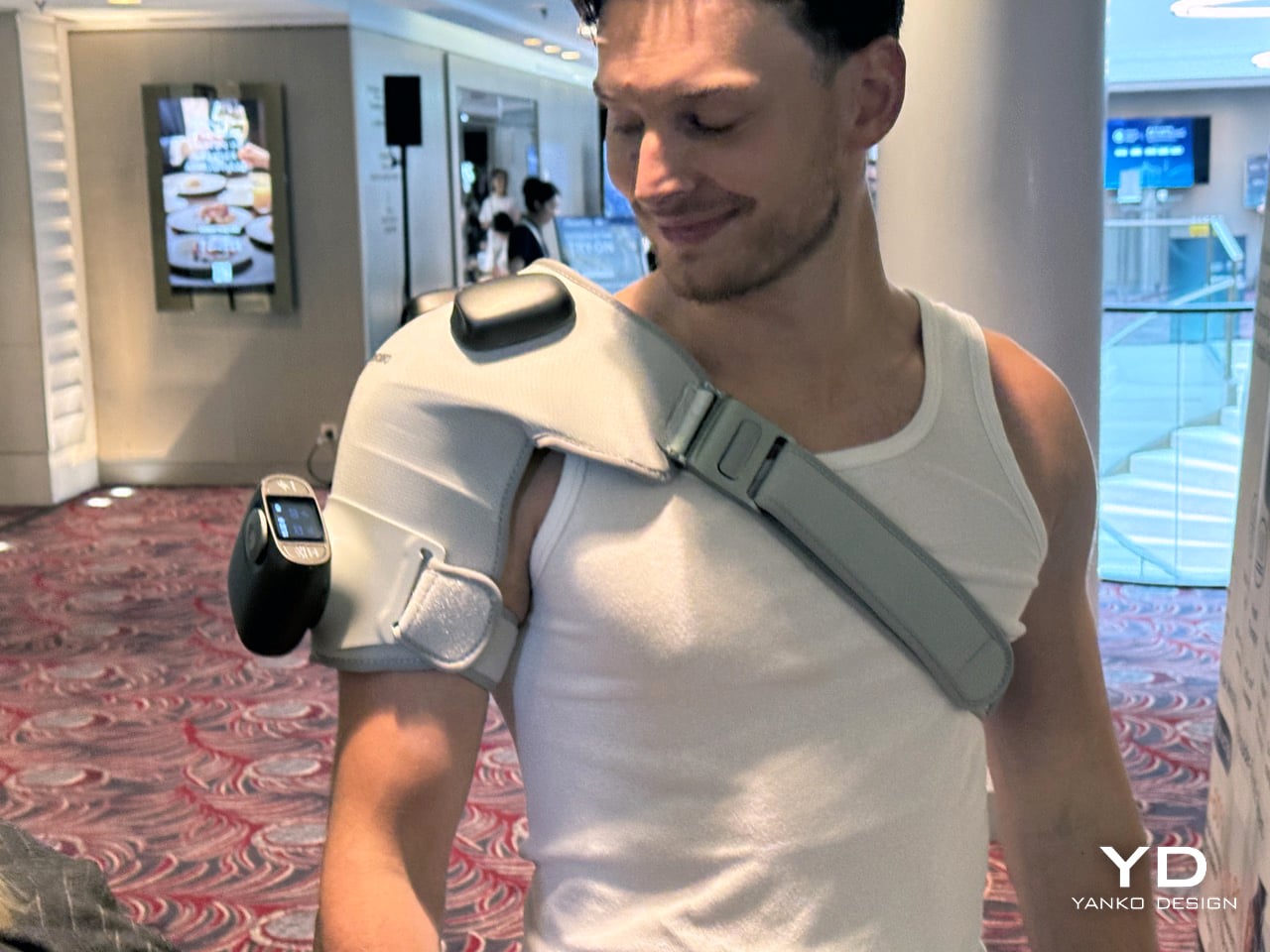
The shoulder is a weird body part to build around. Covamio picked it deliberately as one of the most complex wearable rehabilitation scenarios, citing high daily use, complex movement and stability demands, common pain and stiffness, and a clear need for ongoing support. The S1 is their answer to what a device shaped specifically around that complexity should look like. The core proposition is consolidating five therapy modalities into one wearable: their proprietary M-sti matrix electrical pulse system running TENS and NMES programs for pain and muscle activation, red and near-infrared light for photobiomodulation, zoned heat for pre-session warmup, adaptive compression to hold everything in contact while the shoulder moves, and AI-assisted sensing monitoring fit, contact, temperature, and output during each session. The specific choice to use dry electrodes stands out, since it removes the gel-pad consumable that most TENS units depend on, which is quietly one of the more practical design decisions in the whole package.
Where the S1 gets more ambitious is the platform layer. Covamio frames this as the first node in a system rather than a standalone gadget, with a three-part software platform covering device-side sensing and control, user applications for guided sessions and activity history, and professional tools that aggregate device activity, user feedback, and progress for clinician review. The roadmap is stated openly: S1 establishes a foundation for future systems built around other joints, each wearable shaped to its own anatomy but connecting through the same platform. That’s a meaningful architectural bet, positioning the wrap as infrastructure rather than a one-off product. Worth flagging, this is still pre-commercial, and hard specs like pricing, dimensions, weight, battery figures, and wavelength details for the light therapy are not yet public. What’s available is the design reasoning, and on that front, it’s a thoughtful pitch for what shoulder recovery hardware should be doing right now.
XbotGo Falcon: The Sideline Camera That Already Knows Where the Ball is Going
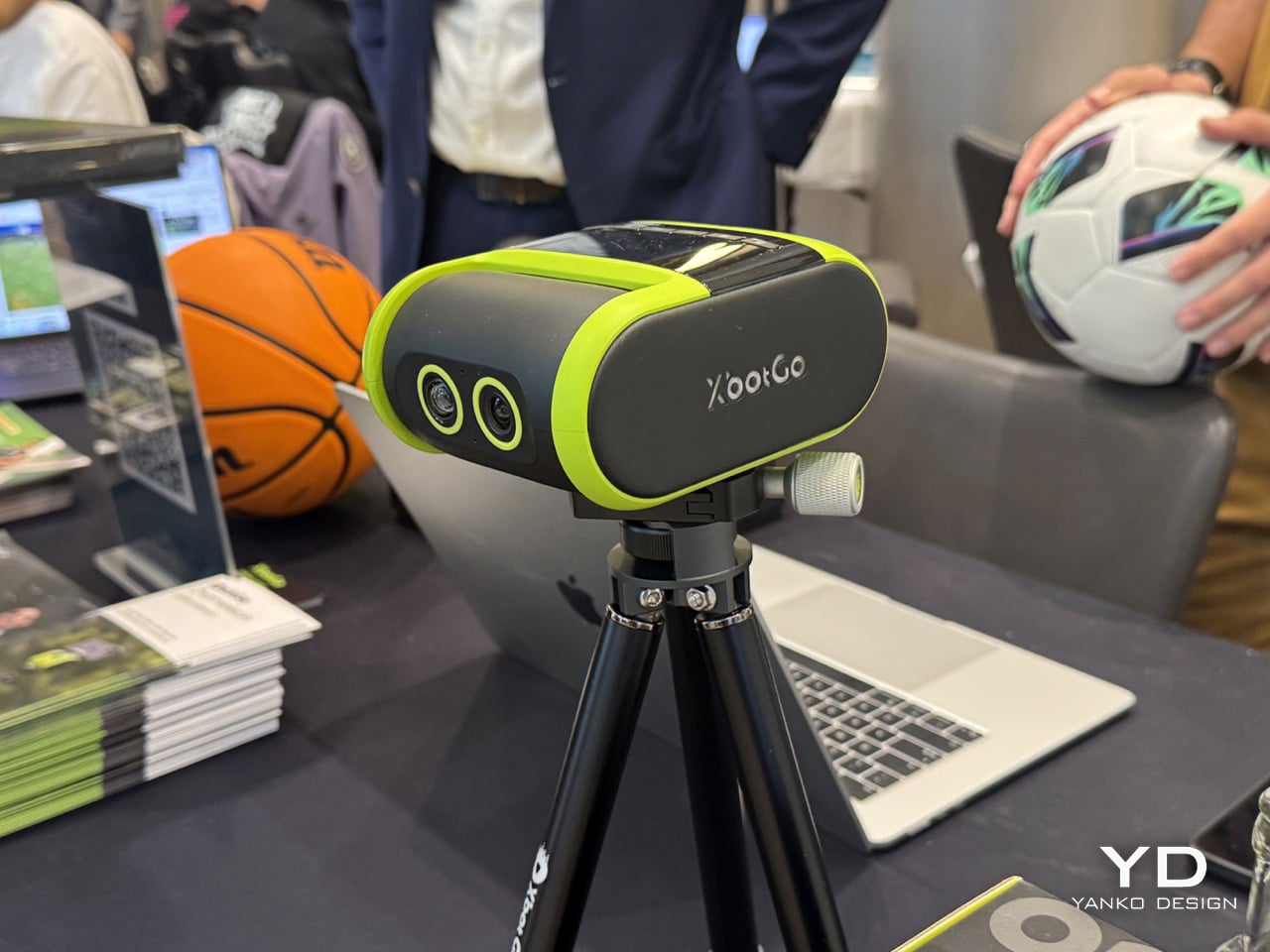
AI auto-tracking cameras for sports have been around for a bit, mostly in the form of school and club-level systems that require installation, licensing fees, and a monthly subscription just to access the footage you already paid to record. XbotGo is taking direct aim at that model. The Falcon is a compact, 544-gram, dual-lens camera built around a 1/1.8″ Sony CMOS sensor shooting true 4K, with a 106-degree wide-angle tracking lens working alongside the recording lens so the system always knows where the action is. A 6-TOPS AI processor handles the motion intelligence onboard, with 360-degree panoramic rotation and 160 degrees of ground-to-sky tilt giving it coverage across sports as varied as soccer, basketball, lacrosse, pickleball, and badminton. Zone Mapping lets you lock the play area through the XbotGo app so the tracking stays disciplined and doesn’t chase the wrong thing. Battery life runs to 4.5 hours, it’s IPX5 rain-resistant, and setup is fast enough that you’re recording before the warm-up is over.
The pricing sits at $799, and critically, the core AI tracking and recording intelligence comes with no ongoing subscription, which is a meaningful differentiator in a market where competitors have leaned hard into recurring revenue from the very features users expect to work out of the box. On top of that, live streaming to YouTube and Facebook is built in and free, with a Live Scoreboard overlay and AI-generated highlight reels that clip the best moments automatically. XbotGo was founded by Dr. David Tan, a computer vision researcher who reportedly built the Falcon partly out of frustration from trying to film his own kid’s games. That origin story shows in the design philosophy: this is a camera built for the parent on the sideline and the coach with no camera operator, not for a broadcast crew with a van full of gear.
iClever QuietShield Q950: The Kids’ Headphone That Actually Takes Hearing Seriously
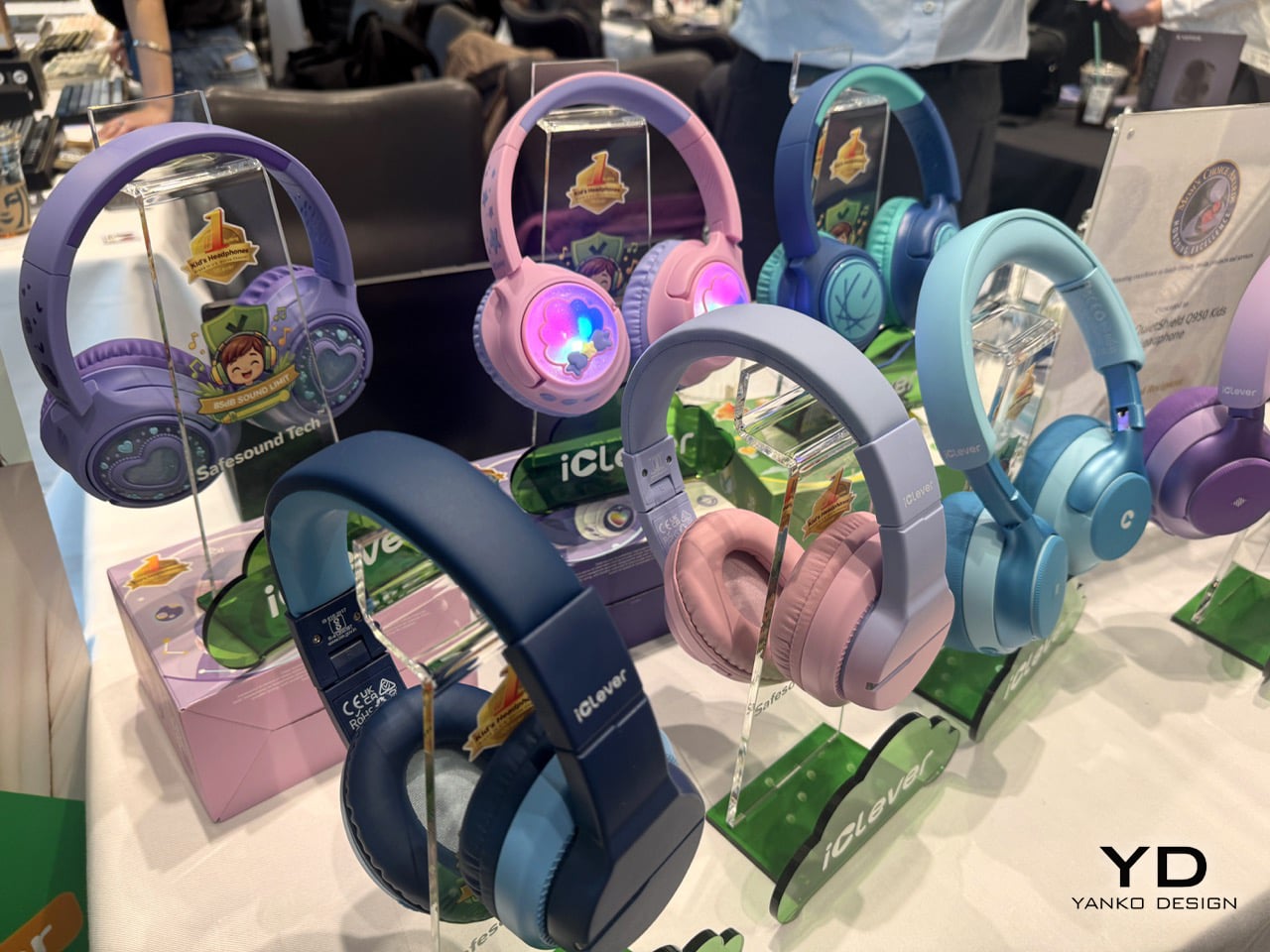
We covered the iClever Q950 back in July when it quietly became one of the more impressive sub-$70 audio products of the year, with our writer noting it was good enough they might use it themselves. The headline credential hasn’t changed: the Q950 is the world’s first kids’ headphone to earn TÜV Rheinland Hearing Care Certification, capping volume at 80dBA and delivering hybrid ANC with up to 35dB of noise reduction. That ANC works in wired mode too, which matters on planes and in classrooms where a dead battery shouldn’t mean a loud environment. It also picked up the 2026 Red Dot Award for Industrial Design, which makes it a rare thing in consumer audio: a children’s product that got taken seriously by industrial design judges.
The build is worth talking about. High-strength POK headband construction and reinforced metal hinges provide enhanced resistance to bending and drops, validated through SGS-certified 3,000-cycle twist durability and drop testing. The ear cups rotate 90 degrees to reduce pressure on younger heads, there’s auto-pause when the headphones come off, and Bluetooth 6.0 keeps the connection stable and low-latency. Battery life runs to 60 hours with ANC off, 35 hours with it on. At $54.99 on sale, this is the headphone category doing the right thing at the right price.
Viaim Rise: The Earbud Case That Thinks Faster Than You Do
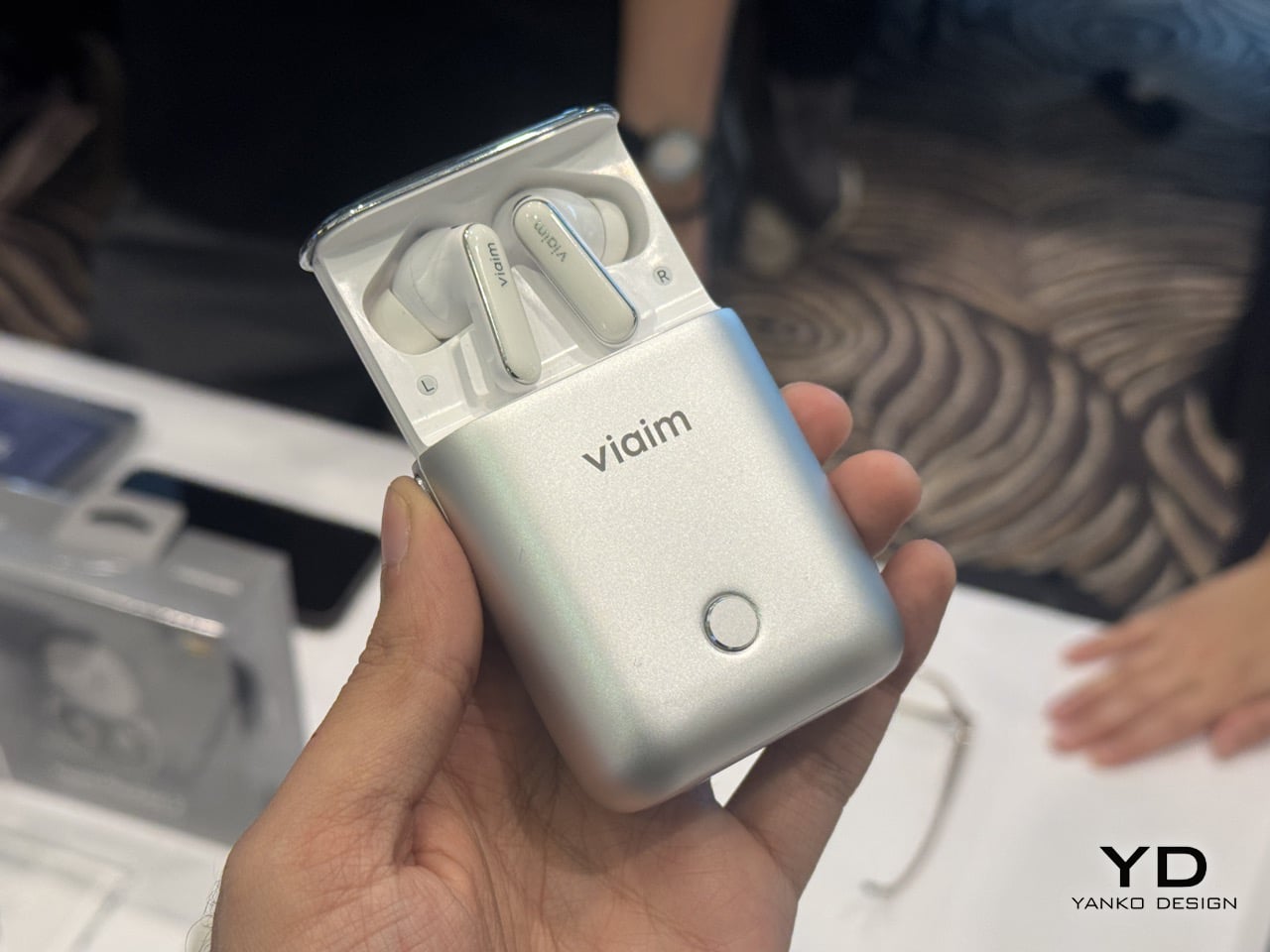
The AI note-taking space has gotten crowded fast. Standalone recorders, transcription apps, dedicated meeting hardware. What Viaim is doing with the Rise is trying to collapse all of that into something you were already going to put in your ears. The Rise is an AI Agent Earbuds system built around premium earbuds and a press-to-rise smart case that captures every meeting, call, and piece of content shaping your work, then turns it into editable notes, ready-to-send follow-ups, and agent-handled tasks. The case interaction is the hook: a mechanical press-to-rise structure opens the case and triggers instant capture with no app, no unlock, no interruption. One tap records calls, live meetings, media, and simultaneous interpretation across 78 languages and 145 accents, and the smart case captures even when the buds are off. Switch on Ambient Listening and it builds memory in the background without retaining the underlying audio.
The hardware underneath is serious. An 11mm and 6mm dual driver sits alongside an 11-mic array with VPU bone-conduction denoising, and the USB-C smart case doubles as a 3-mic PC recorder, with Bluetooth 5.4, Apple MFi, Google Fast Pair, Find My, and IP55 rated. On the software side, Space Intelligence connects recordings, documents, and project history, while Vitana, viaim’s built-in AI assistant, surfaces new risks, decisions, and next steps the moment they emerge. Task Broker routes user-approved actions into Google Workspace, Codex, Claude Code, Cursor, and Copilot, with more integrations rolling out through 2027. The Rise launched on Indiegogo on August 31, 2026, which makes IFA its first major hardware show outing, and the timing feels deliberate. This is a product that wants to be seen.
AREX ONE: The Dive Mask That Turns Your Entire Field of View Into a Dashboard
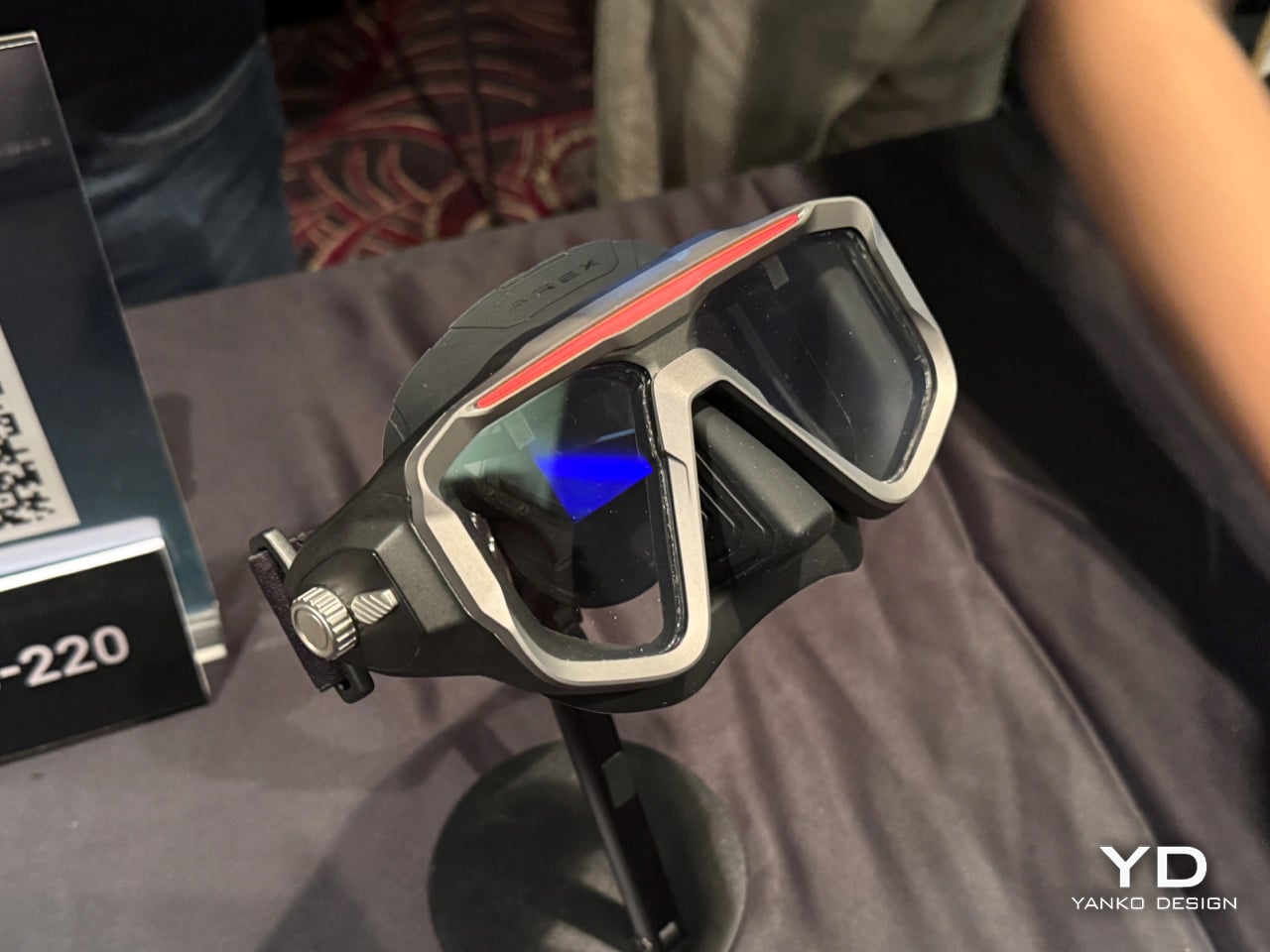
Dive computers have always had an uncomfortable irony at their core. The device keeping you safe underwater sits on your wrist, which means every critical check requires you to pull your gaze away from the environment you’re actively navigating. Underwater, that life-saving data living on your wrist means constant checking and occupying your hands during critical moments, and when your attention leaves the dive, risks arise. AREX is building its entire pitch around fixing that. The AREX ONE is positioned as the world’s first AR dive computer mask, projecting all the information you’d normally glance down at directly into your natural field of view. It’s the kind of form-factor shift that sounds obvious in hindsight, and the kind that tends to make an entire product category look overdue.
The feature set covers a built-in dive computer, AR data, a marine ID scanner, personalized RGB lights, a 120-meter depth rating at 13 ATM, tank data display, 40-hour battery life, in-sight air integration, an intuitive control dial, and a unified digital ecosystem. The dive computer side runs on an independent logic board processing real-time sensor data and ZHL-16C algorithms, which is the same decompression standard used in serious technical dive computers from Shearwater and Suunto. The modes scale from a minimal immersive mode all the way to a full technical mode with PPO2, tissue saturation charts, and gradient factors. Then there’s the marine life identification feature, which frames marine life in your natural field of view to instantly scan and identify species, turning a hammerhead passing by into a labeled data card without breaking your focus. It comes with three attachable modules: a Marine ID Scanner, a TX Pressure Pod, and a Sync Dive Torch, each feeding into the same in-mask display. The Kickstarter launch puts it in the crowdfunding category for now, but the hardware ambition here reads like something that’s been genuinely thought through, not just rendered.
Ascentiz H Series: Exoskeleton Hardware for Hikers, Commuters, and Everyone in Between
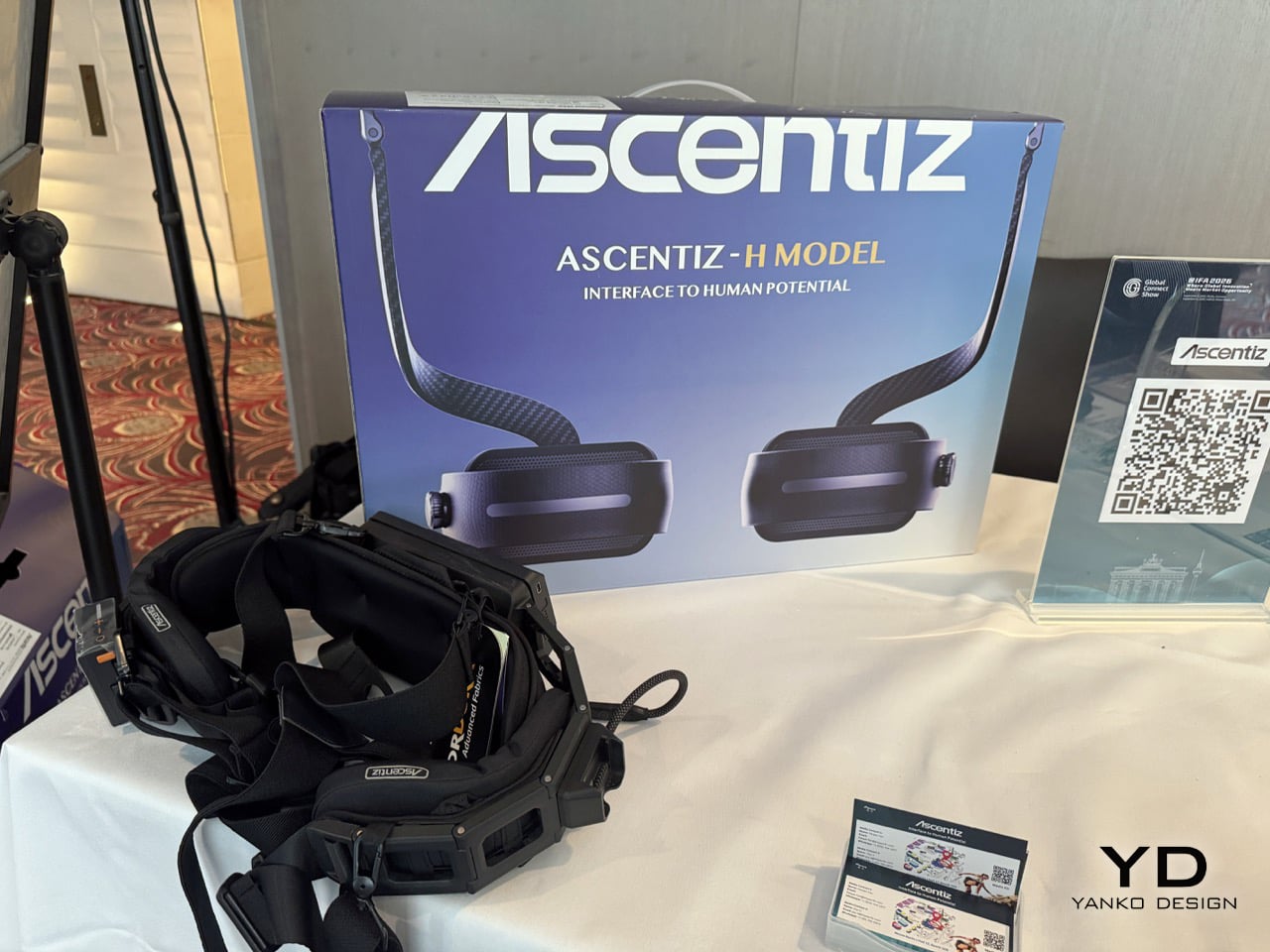
Ascentiz has been at this since 2023, building modular exoskeleton hardware that clips onto your hips or knees depending on what your body needs that day. We’ve covered them on YD before, and the brand has only gotten sharper since. The bigger picture Ascentiz is working toward is a full modular ecosystem, lower body now, upper body eventually, rather than a single fixed device you’re stuck with. The H Pro and H Ultra are the current center of that ecosystem, and both run on an AI MOTION engine that recognizes 12 terrain types on the Pro and 16 on the Ultra, covering everything from slow walks and sprints to stair climbing, cycling, and full hike up and down modes. Both models come in at around 2.5kg, operate at under 35dB, and carry IP54 weatherproofing, which covers the kind of conditions you’d actually want to wear an exoskeleton in. Kinetic energy recovery comes standard on both, charging the battery while the system is actively driving you forward.
The H Pro is the everyday option, built for fitness, commuting, and lighter outdoor use, with a 25km assisted range and a price of $1,499. The H Ultra is built for longer, harder journeys, with Toray T700 carbon fiber and a titanium-alloy Exo-Belt, a dual-battery setup, and an assisted range of up to 50km. It also adds a Boost Mode the Pro doesn’t carry, bumps motor torque from 22Nm to 24Nm, and upgrades the fabric from waterproof-coated nylon to Event waterproof and breathable material, which is the kind of detail that separates a product that’s been actually tested outdoors from one that hasn’t. Both units are airplane-portable and charge fully in 65 minutes via Type-C at up to 100W. The Ultra sits at $1,999, and between the materials, the range, and the extra terrain intelligence, the $500 gap makes reasonable sense. The hardware has already picked up the iF Design Award, Red Dot, and several others, which tracks for a company that’s clearly been thinking hard about what wearing one of these things should actually feel like.
ROOTIQUE DUO: Because the Real Problem With Hair Loss Treatment Is Discipline
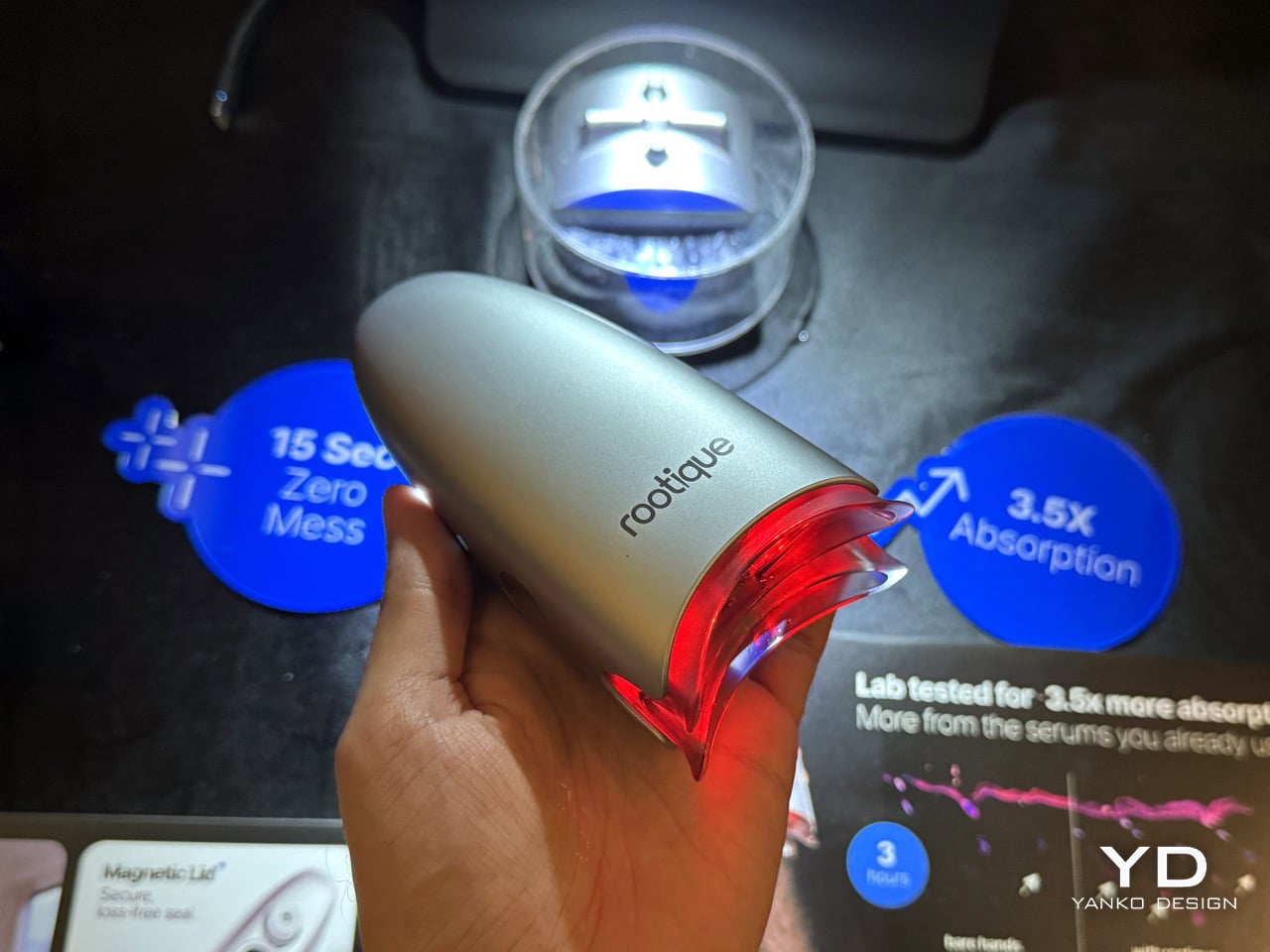
The data sitting behind ROOTIQUE is blunter than most brands would choose to lead with. A 2023 study in Dermatology and Therapy found that 86.3% of patients discontinued topical minoxidil treatment, not because it failed to work, but because the application process was messy, inconsistent, and easy to skip. ROOTIQUE is built entirely around that dropout problem. The DUO is the world’s first micro-misting hair tonic applicator, and its core argument is simple: consistency is the treatment as much as the tonic. IntelliMist converts tonic into 0.005mm mist particles delivered directly to the follicles, bypassing the hair fibres that absorb most of what people apply by hand. The result, per independent fluorescence-tracer testing, is up to 3.5x absorption compared to bare-hand application.
The DuoTrace teeth part the hair gently for direct-to-scalp delivery, a 660nm red light at clinically recognized wavelength supports follicle health simultaneously, and the whole session takes 15 seconds with zero residue on the hands. The 5ml tank holds enough for multiple sessions, charges to up to 40 uses, and is travel-ready without cords. One beep signals 1ml dispensed, two beeps means you’re done, so there’s no guesswork on dosage. ROOTIQUE claims 50% less tonic wasted compared to manual application, and 56% of customers self-reported increased consistency after switching to DUO. For a product category where quitting early is the norm, turning a messy two-minute ritual into a 15-second routine is, genuinely, the whole product.
GLYDE Auto-Fade Clipper: The Clipper That Finally Handles the Part You Can’t See
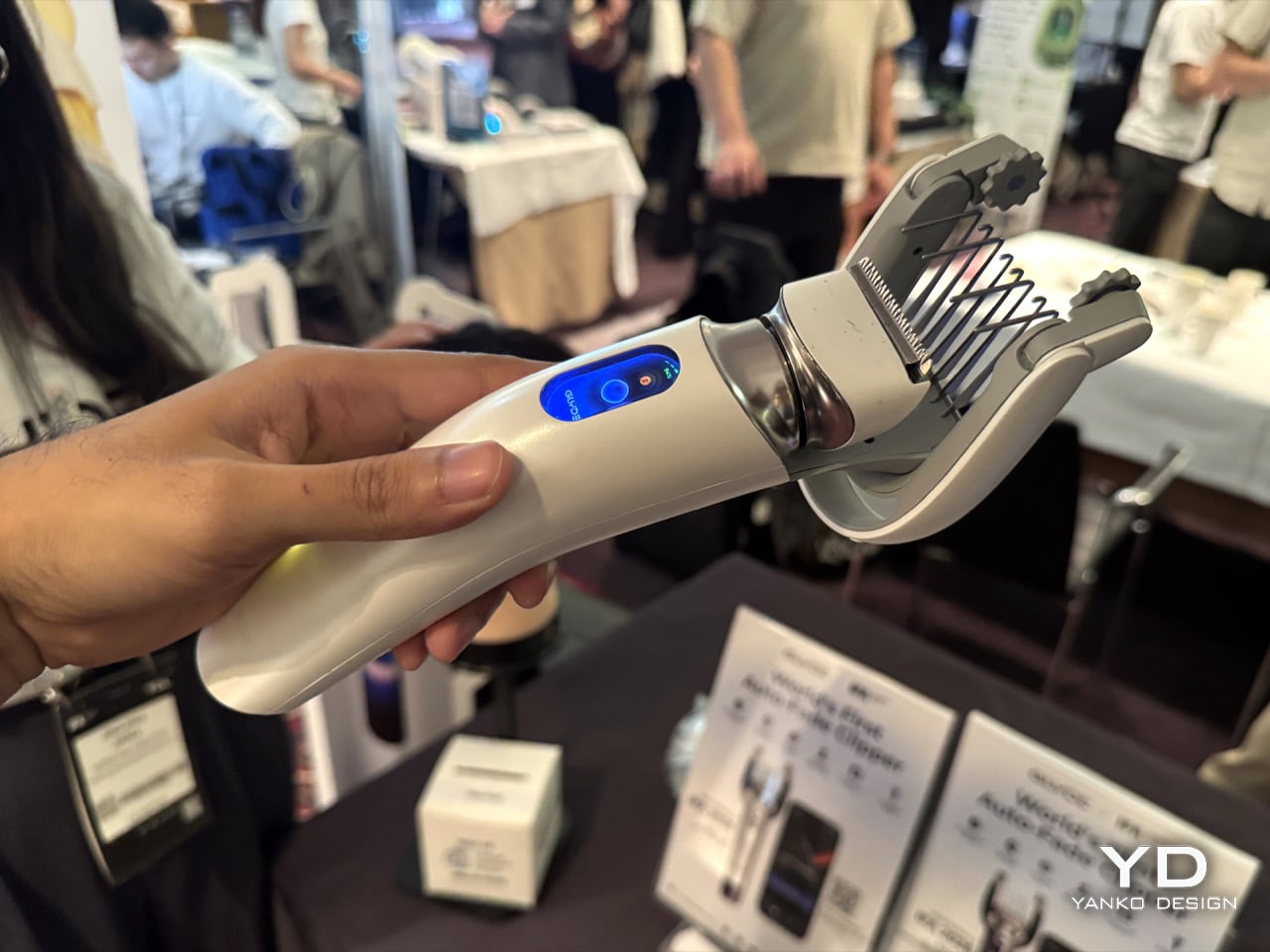
For most people who cut their own hair, the actual clipping is manageable. The part that breaks everything is the fade, that gradual transition between different lengths on the sides and back that barbers make look effortless. A home user can’t see the back of their own head, can’t simultaneously judge angle, distance, and cutting length, and one wrong pass leaves a harsh line that’s impossible to fix without cutting shorter. GLYDE, the debut product from Shenzhen-based Kuaiku Innovation, is built entirely around solving that one problem. Working with a wearable Fade Band, GLYDE tracks where the clipper is relative to the fade line and adjusts the blade in real time, handling the gradual blending that makes fades so difficult and helping users get cleaner, more consistent results at home. It also solves the consistency problem by storing hairstyle profiles digitally. Once users dial in a fade they like, they save it and recall it with a single tap, and the clipper reproduces the exact same parameters every session.
That search for the right product took nearly three years, with no auto-fade clipper to reference, no established technical roadmap, and no competitor to reverse-engineer. Every mechanism and algorithm had to be defined and validated from scratch. What IFA is seeing is the result of that work, refined after an on-site CES survey where more than 60 percent of respondents said their primary concern was maintaining the sides and back, not getting a full haircut. GLYDE deliberately breaks from the traditional clipper aesthetic, with a cold-toned minimal body, polished stainless steel accents, and a signature LED light orb that reads more like consumer electronics than a grooming tool. Hardware specs for the current prototype include a 2600 mAh battery, approximately two hours of runtime, Bluetooth Low Energy, USB-C charging, a 1.47-inch display, and a weight of about 370 grams. It is still a pre-production prototype with pricing TBD, but the product logic is already sharp: GLYDE believes that a portion of men’s haircutting, especially fade maintenance, will follow the same trajectory shaving did when the electric razor moved it from barbershop to bathroom counter.
OCJOY Air-Streaming Oral Cleaner: The Dental Clinic Protocol That Now Lives on Your Bathroom Counter
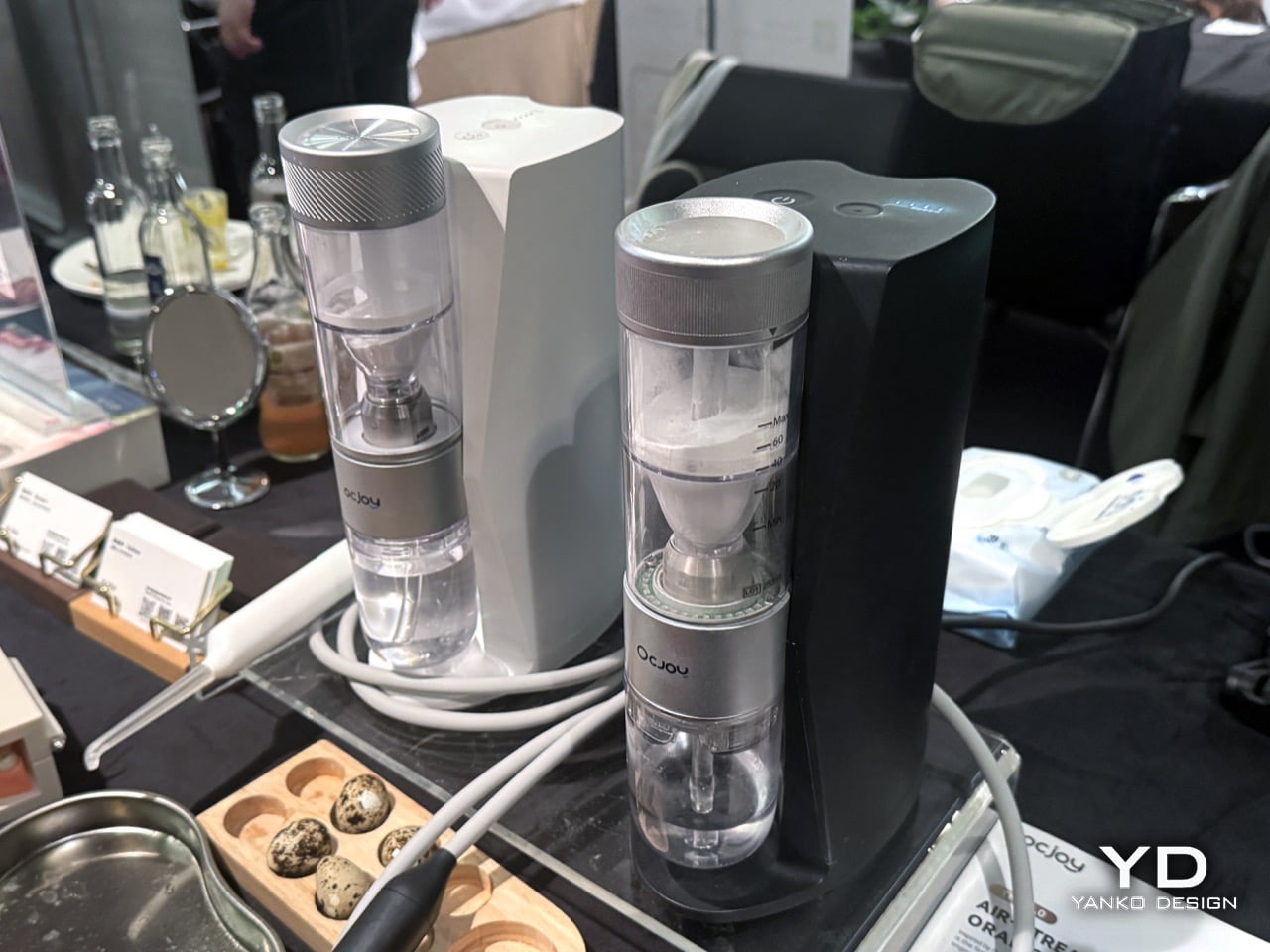
Plaque gets all the marketing attention in oral care, but the real problem is biofilm, the structured bacterial colony that anchors to enamel, builds a protective shield, and starts rebuilding within hours of brushing. Bristles only clean where they make contact, leaving grooves, pits, and gumline areas routinely untouched. Water flossers reach the gaps but carry no active cleaning agent. OCJOY’s answer is Air-Streaming Technology, built on Guided Biofilm Therapy (GBT), a Swiss clinical protocol designed to gently lift biofilm using precisely controlled air, water, and fine food-grade powder. Until now, GBT has been available only in dental practices; OCJOY makes it practical for daily use, delivering a clean that bristles or water alone cannot achieve. The proprietary TriMatter system propels millions of fine particles across enamel surfaces and into grooves, pits, and interdental gaps, disrupting biofilm exactly where water flossers cannot reach.
Independent lab testing puts numbers behind those claims. In 20 seconds, OCJOY removed 99.9% of biofilm, compared to 9.2% left behind by an electric toothbrush under the same conditions. Surface stains from coffee, tea, wine, and tobacco cleared at 88% to 100% without bleach, and a 100-participant study recorded visible whitening of 2-3 shades within 3-7 days. Traditional oral care demands four separate tools, a water flosser, toothbrush, dental polisher, and mouthwash, taking up to 15 minutes for a thorough clean; OCJOY consolidates all of that into a single device in approximately three minutes. The powder chamber holds enough for about 20 uses, the 150mL magnetic water tank lifts out, refills, and snaps back in seconds, and a single tap triggers an automatic self-cleaning cycle that blows out residual moisture and flushes internal pathways to prevent clogs. Clinicians from USC, Shanghai Jiao Tong University School of Medicine, and West China Hospital of Stomatology have evaluated the technology and recommend it for daily cleaning between professional visits.
Merach Treadmills & Rowing Machines: China’s Fitness Juggernaut Makes Its IFA Debut
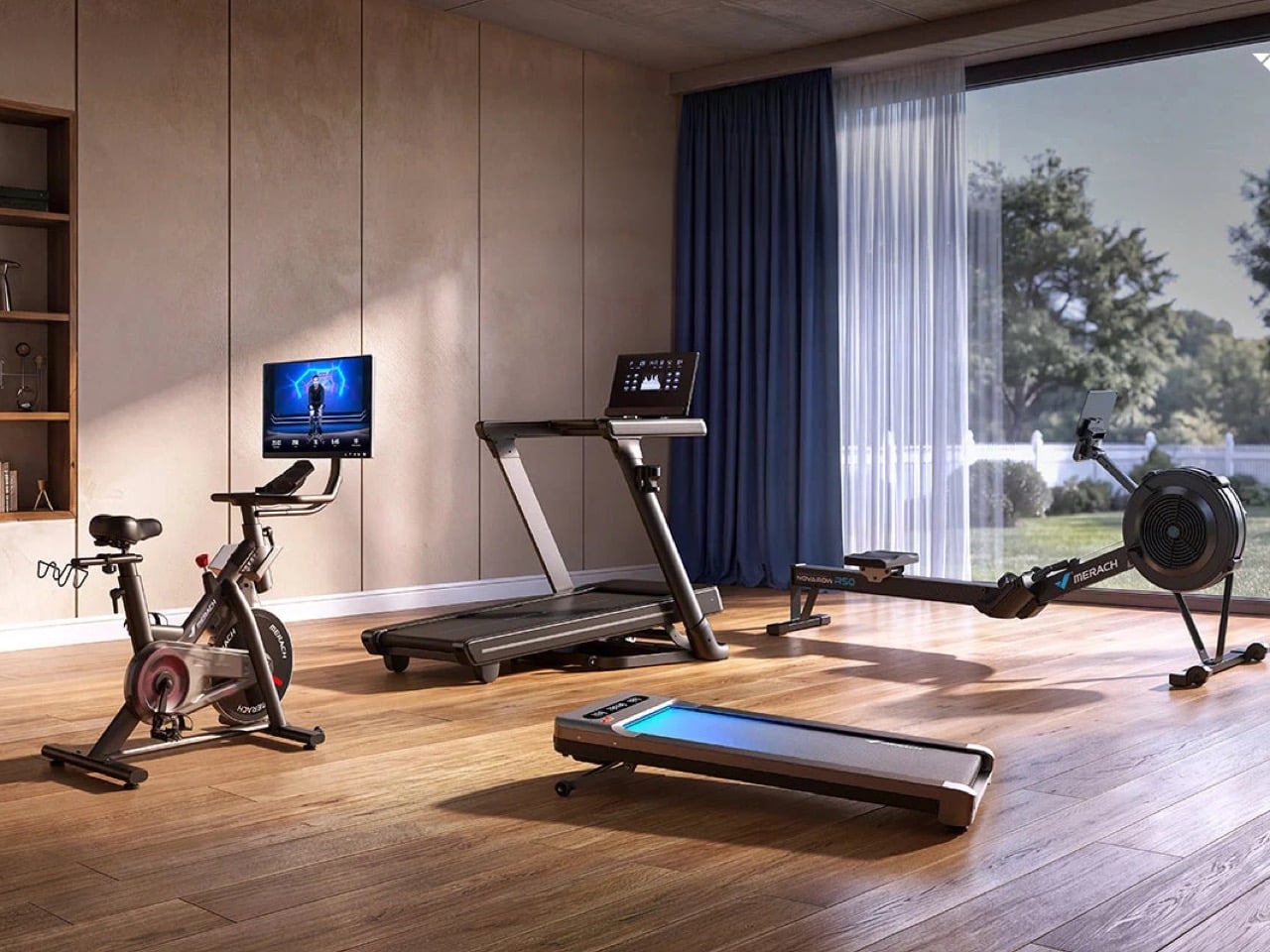
Founded in 2018, Merach climbed to the top of China’s fitness hardware market in a short window, building a lineup around products that treat home space as a constraint worth designing around rather than ignoring. Their rowing machines run on magnetic resistance systems with multiple adjustable levels and Bluetooth app connectivity, letting users track strokes per minute, output, and workout history without a subscription gate in the way. The walking pads fold thin enough to slide under furniture and run on motors quiet enough for apartment living, a combination that turns out to be genuinely rare at this price tier. Stationary bikes round out the core range with foldable frames and app-paired resistance adjustment, keeping the footprint manageable even when the workout is serious.
Showing up at IFA for the first time, despite already being a recognized name in European and North American markets, puts Merach in an interesting position. The brand built its international following largely through e-commerce and community word-of-mouth, so the audience arriving at their Berlin booth has often already bought something, watched a review, or at least seen the name float past. IFA gives that existing relationship a physical layer, a chance for buyers to grip a rowing handle or step onto a walking pad before committing. For a brand that converted most of its global audience through a screen, that kind of face-to-face engagement at one of the world’s biggest consumer tech stages is a logical next step.
RheoFit A1 and A1 Lite: Recovery Tech for People Who Are Tired of Doing Recovery Manually
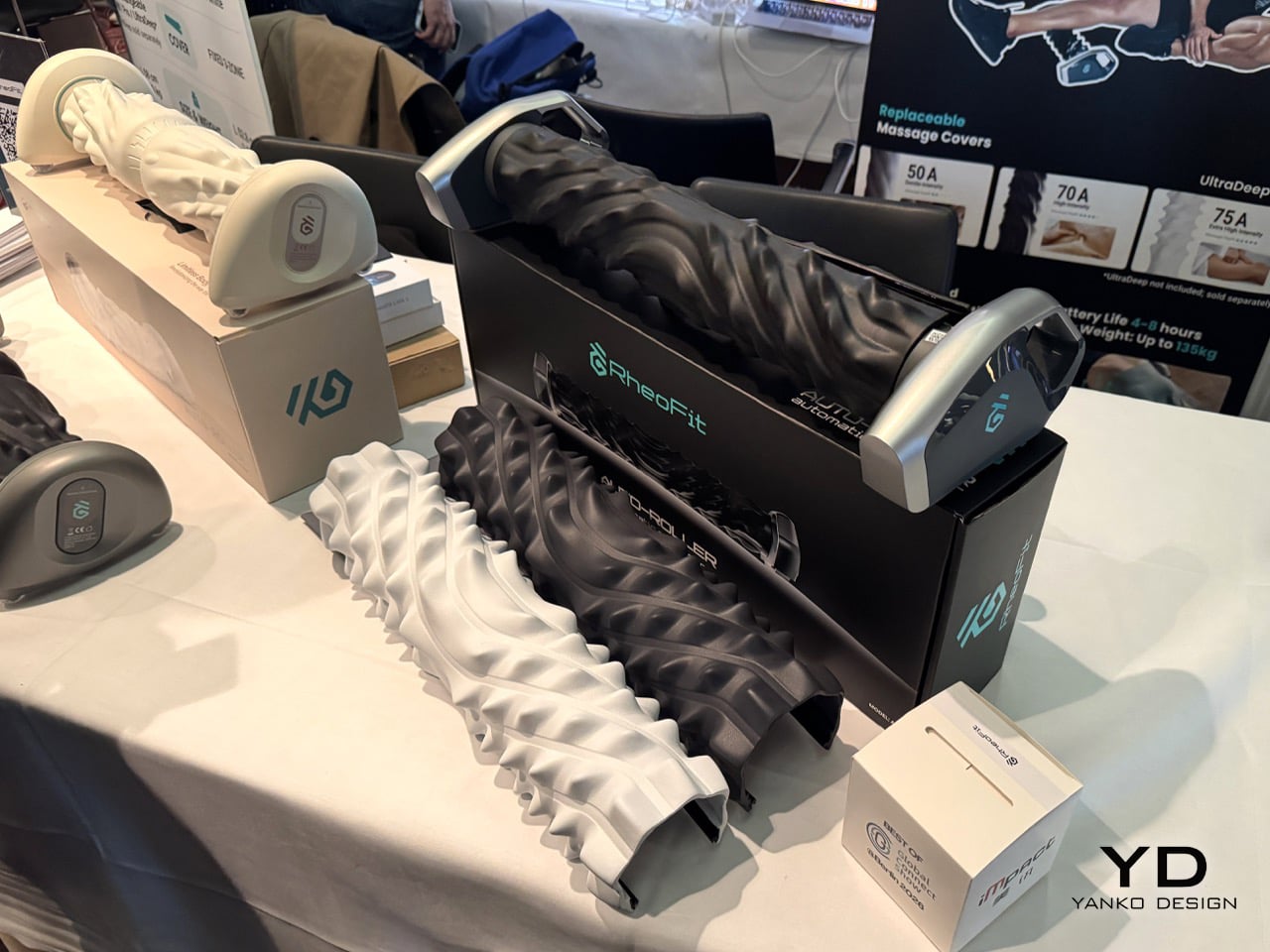
Recovery gear has spent years pretending that adding vibration is enough to count as innovation. RheoFit goes in a much smarter direction. The A1 and A1 Lite are automatic massage rollers built around the idea that post-workout recovery should be as hands-free as possible, which immediately makes them stand out in a market full of massage guns, static foam rollers, and devices that still expect you to twist yourself into awkward positions after leg day. RheoFit frames the product around rehabilitation medicine and AI, with both rollers designed to detect body contour and weight distribution, identify key muscle groups, and generate a personalized massage plan through the app. That makes the whole category feel less like gym equipment and more like body-aware hardware, the kind of product that understands recovery as a system instead of a single feature.
The A1 is the more robust version, supporting up to 300 lbs while weighing 5.4 lbs, with 4 to 8 hours of use per charge and up to two weeks between charges depending on usage. It comes with two interchangeable massage surfaces, a high-intensity serrated roller with 70A Shore hardness for deeper, knuckle-like pressure, and a gentler 50A soothing roller shaped for a broader palm-fit feel. The A1 Lite keeps the same core promise but trims the package down into a more portable format, weighing 4.4 lbs, supporting up to 250 lbs, and adding a more targeted recovery pitch with 15 recovery positions that include full-body, targeted, and upper-back modes. Together, they make a strong case for the next phase of wellness hardware, where the roller finally rolls itself and your body gets treated like something technology can actually learn from.