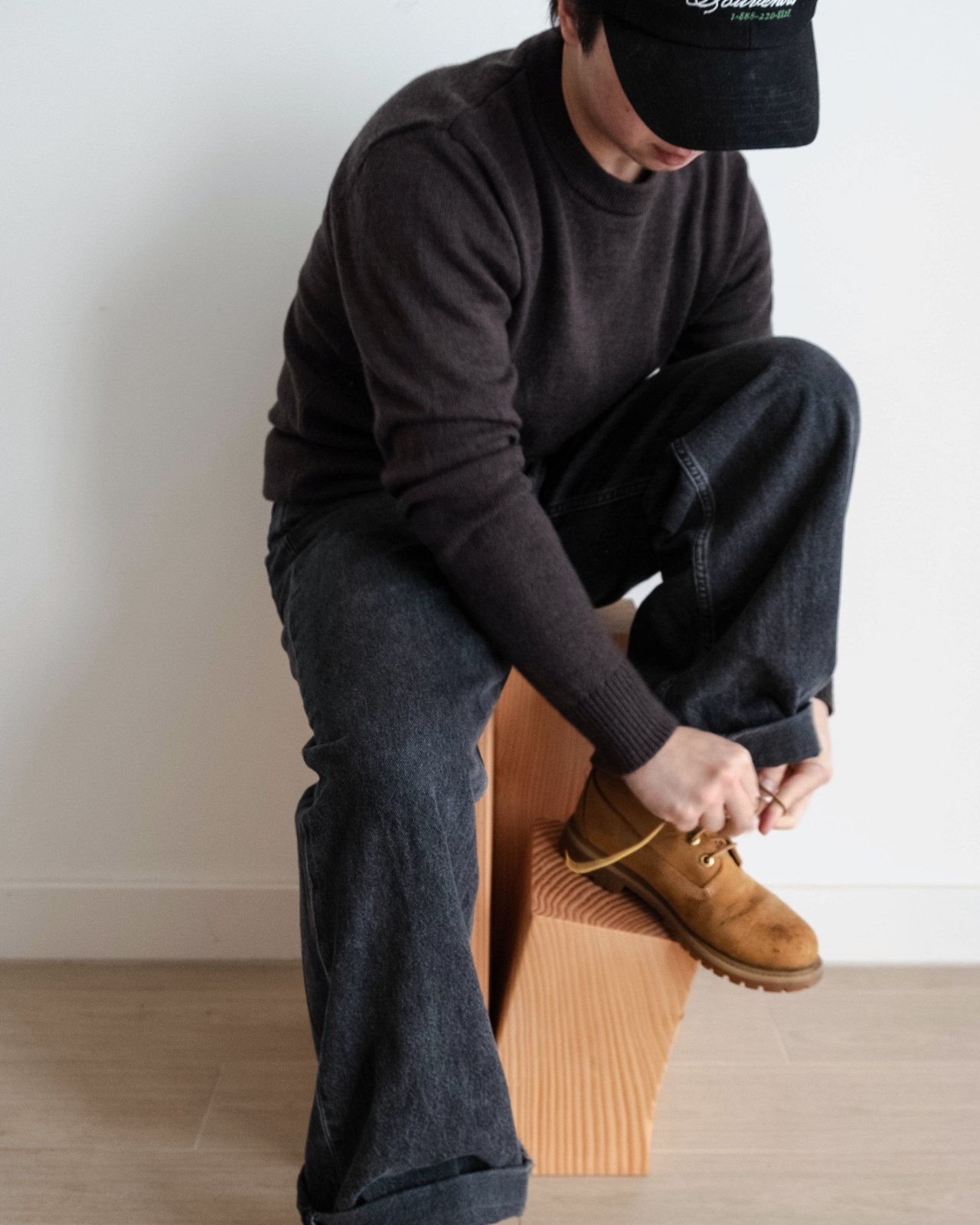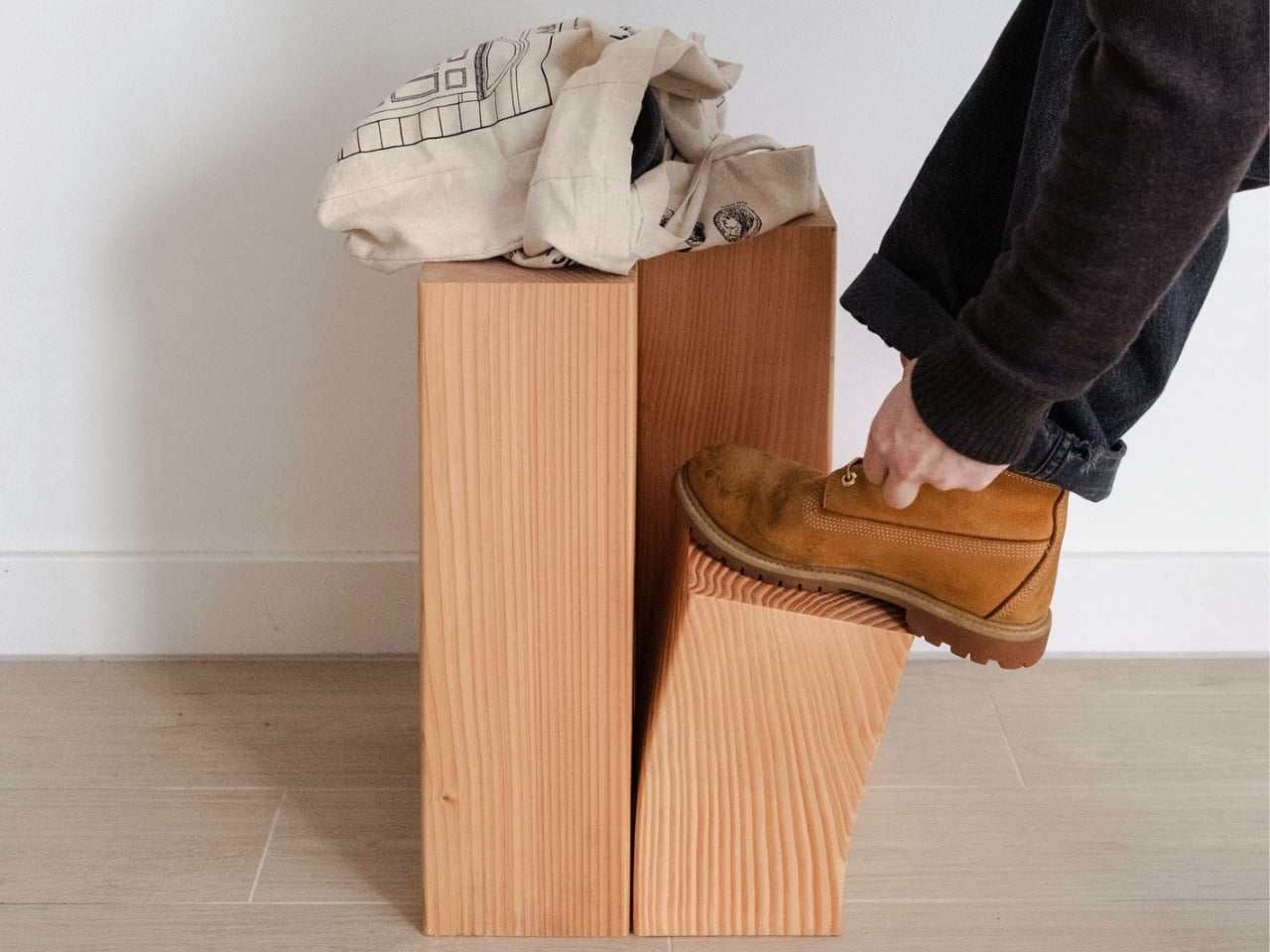
Tying your shoes in the entryway shouldn’t feel like a balance test, but it usually does. You hop on one foot, grip the doorframe or a console table that wasn’t built for that kind of abuse, and hope you don’t tip over before the laces are done. It is a tiny, daily inconvenience that most American homes have quietly accepted, because the entryway is rarely treated as a space worth designing for. Stephen Chan decided to fix that with a step stool built from Douglas Fir, one with a single offset block positioned at exactly the right height to rest a foot while you knot your laces, and it is well-crafted enough that hiding it in a closet would feel like a waste.
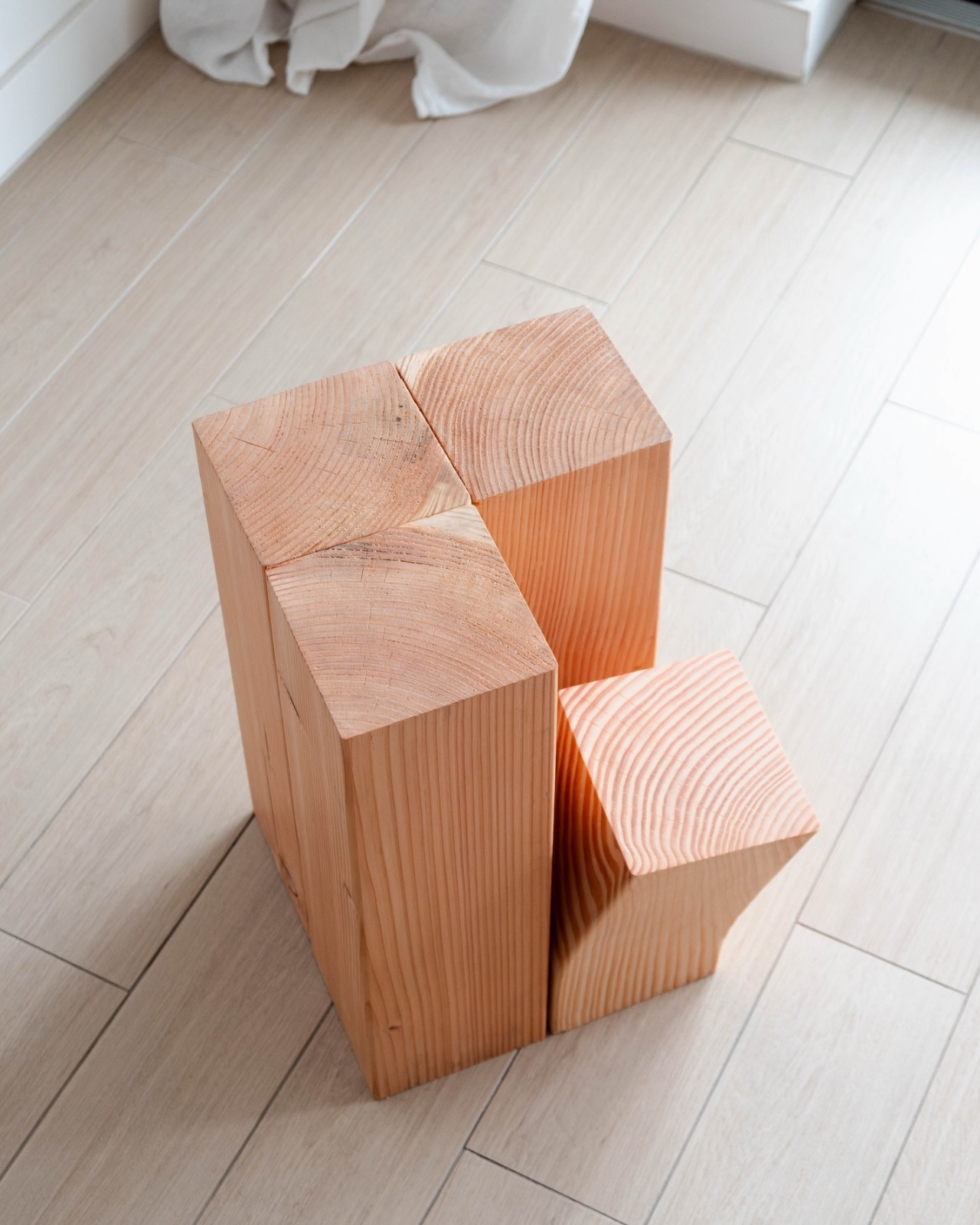
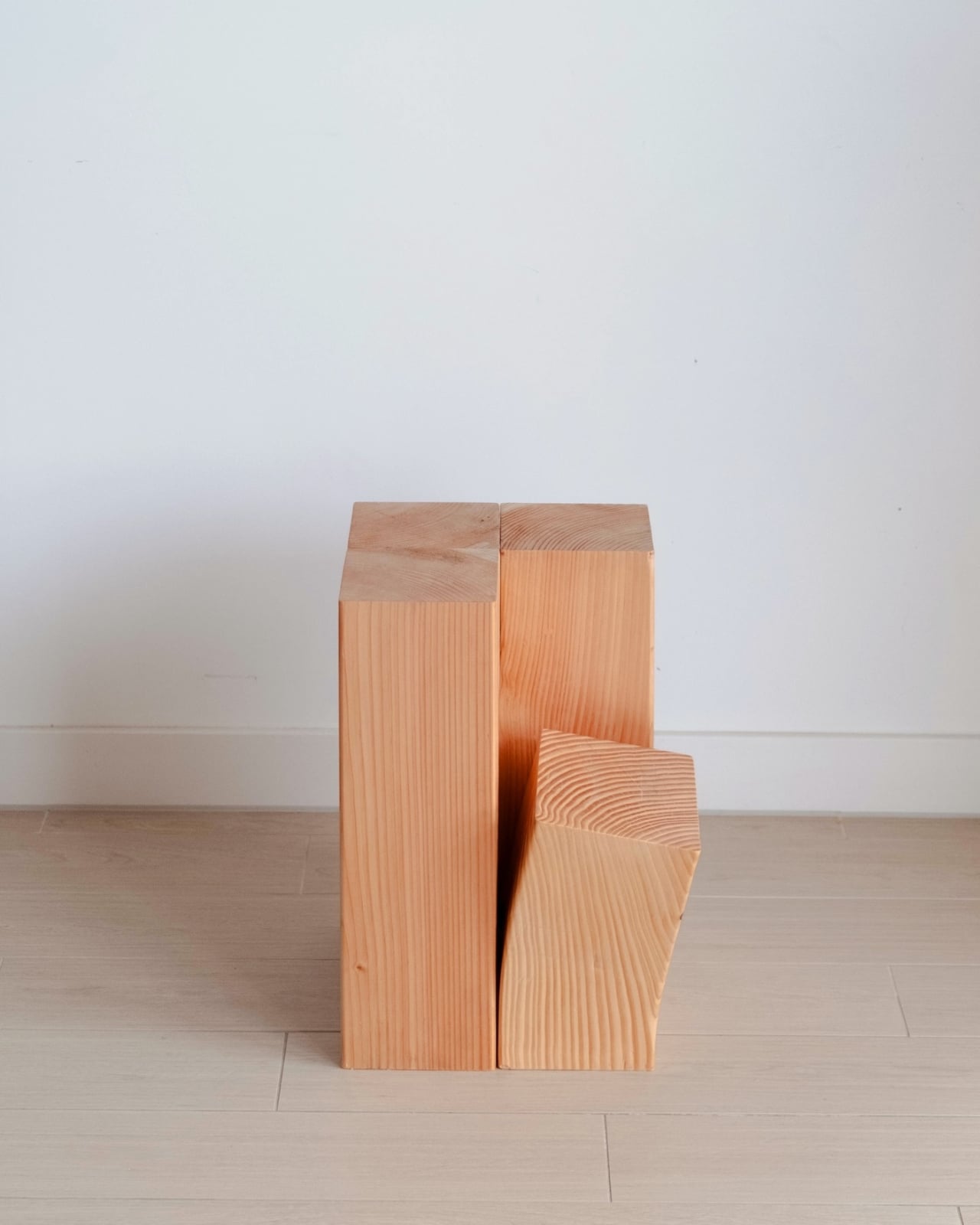
That combination is rarer than it should be. Most step stools look utilitarian by design, the kind of thing you tuck behind a door and drag out only when necessary. Chan’s version refuses that fate. The composition reads as a cluster of rectangular volumes grouped together, with one shorter block offset to one side to create a natural foot ledge. It is immediately functional without a label or instruction, and the geometry is clean enough that it reads as sculpture before it reads as utility.
Designer: Stephen Chan
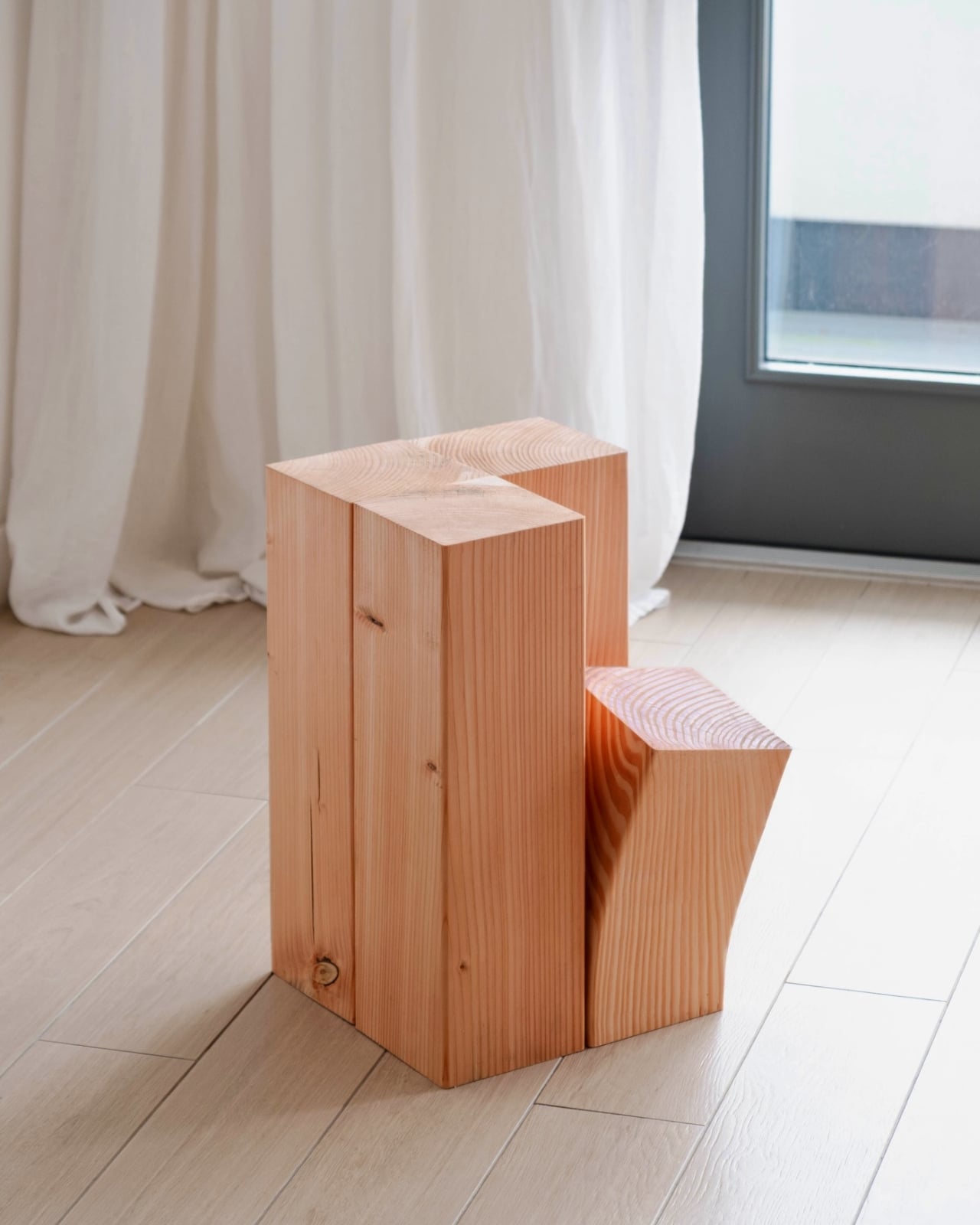
The material choice matters here. Douglas Fir is a Pacific Northwest species, pale and straight-grained, and Chan finishes it in hardwax oil rather than a thick lacquer, so the surface stays matte and raw-looking rather than polished and precious. The wood still feels like wood, with the grain visible and the texture honest. At 300 by 300 by 480 millimeters, the proportions are heavy but not oversized, solid enough to trust with real weight, compact enough to fit in a New York apartment entry without dominating it.
American design right now leans into curves and soft materials, bouclé everything, rounded edges that signal comfort and approachability. Chan goes the other direction entirely. The stool is blocky and angular, closer in spirit to a Donald Judd sculpture than anything you would find at a furniture chain. That is not a criticism. The right-angle joinery is precise and the overall form has the kind of quiet confidence that does not need softening to work in a home. It earns attention without demanding it.
There is a specific context this piece fits into that Chan actually illustrates in his own photos, where he is pictured lacing up a pair of Timberland boots on it. That single image places the stool in a very familiar scene: the entryway of a house in a state with real winters, where work boots and rain boots live by the door out of necessity. Douglas Fir itself grows in that same region, so the material and the use case are quietly connected in a way that feels considered rather than coincidental.
The stool does not try to multitask. It is not a side table or a plant stand or a storage unit with a hidden compartment. It has one job and it does that job with more precision than furniture at twice the price usually offers. That kind of restraint is genuinely rare in a market that rewards versatility over specificity, where every piece of furniture is expected to justify its footprint by doing three things at once. Sometimes the better answer is an object that solves one unglamorous problem extremely well and looks good doing it.
Nobody has ever really solved the entryway stool in a way that made you want to keep it visible. Chan’s version makes the case that the reason most of them get tucked away is not the category, it is the execution. When the craftsmanship is there and the geometry is intentional, a step stool can actually belong in the room rather than hiding from it. Chan’s work is on Instagram at @stephen_____chan. If you follow design accounts, it is worth a look.