For most of the last decade, if you wanted to actually build and train a robot, you needed one of three things: a university lab, a five-figure budget, or a job at a tech company willing to foot the bill. The tools existed, but the entry price kept ordinary curious people locked out of the room. That gap between “I want to understand AI in the physical world” and “I can actually afford to try it” has been the quiet, unglamorous problem holding back a whole generation of hobbyist roboticists.
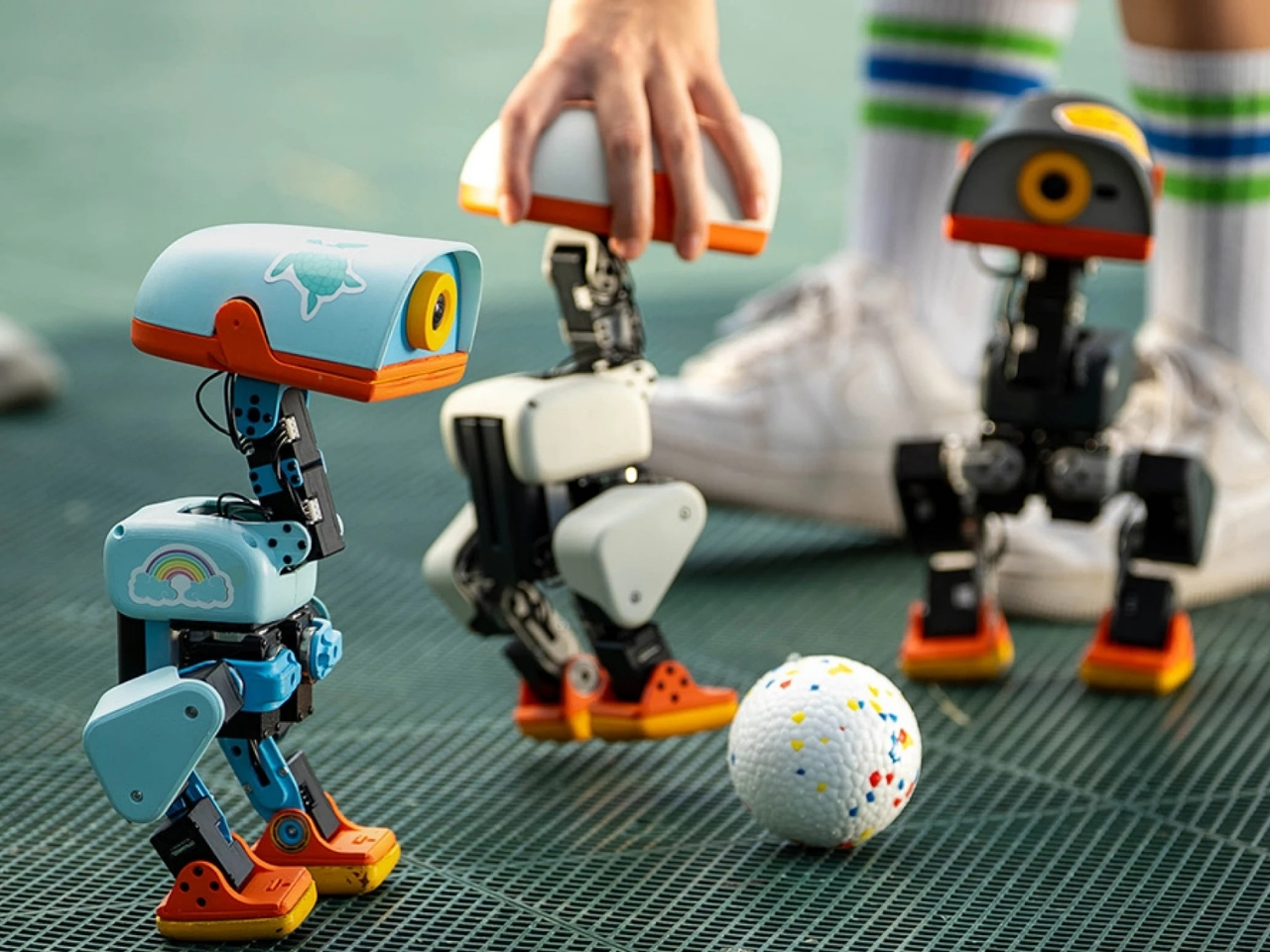
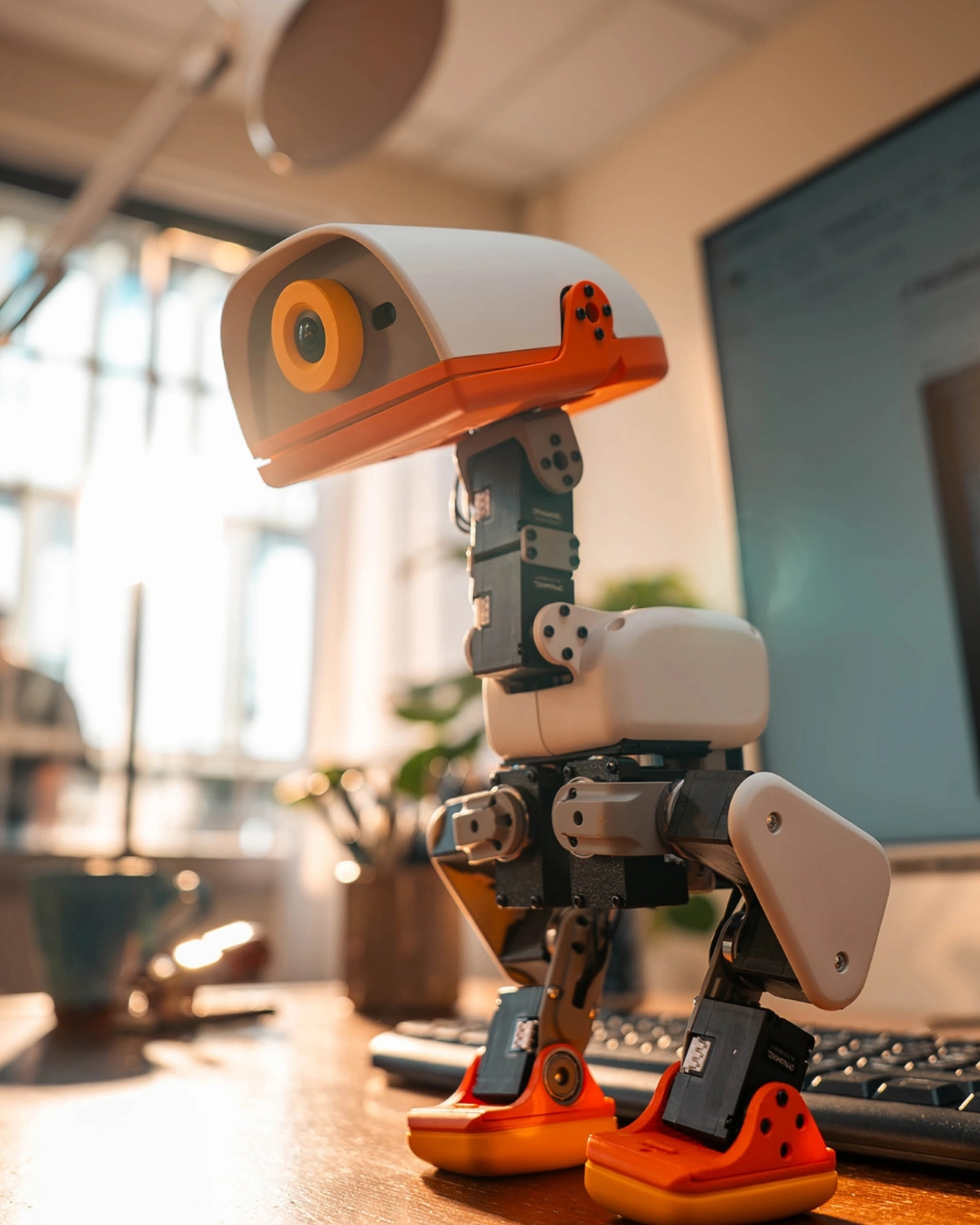
Microduck, the new pre-order from French robotics company Pollen Robotics and AI platform Hugging Face, closes that gap for $399. It is a 25-centimeter biped that walks, sits, crouches, picks small objects up with its beak, and gets back up on its own after a fall. It even roller-skates. Under a shell built with 15 motors, a camera, a depth sensor, and two IMUs, it runs on fully open-source software, which means you are not just buying a cute desk companion, you are buying a real, hackable platform for training reinforcement learning models on hardware you can hold in one hand.
Designer: Pollen Robotics
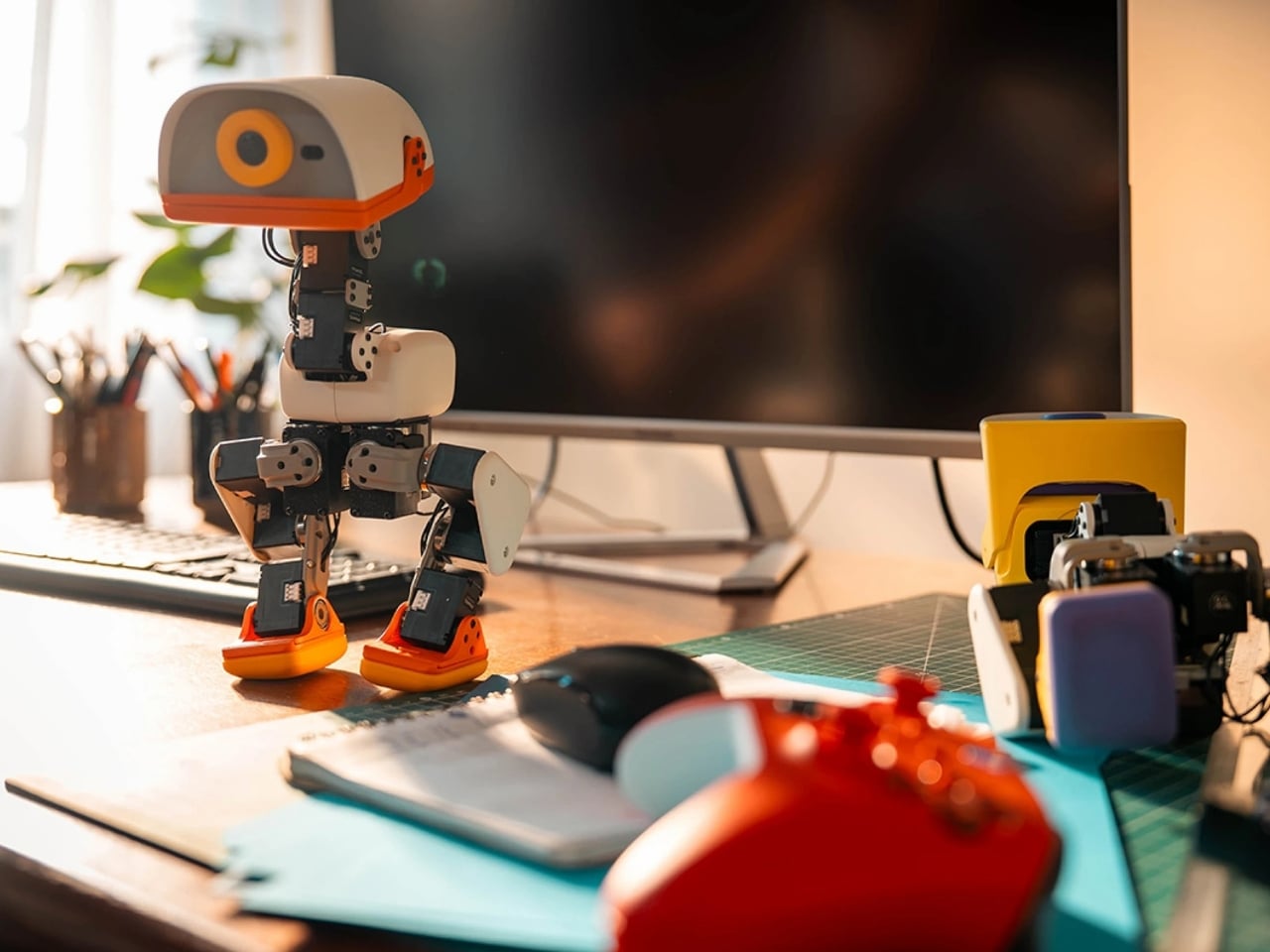
Pollen Robotics is not new to this space. Last year the team launched Reachy Mini, a small desktop robot built purely for face-to-face interaction, and more than 10,000 of them found homes with developers and tinkerers around the world. Microduck is what happened when that same team asked a different question: what if the robot did not stay on the desk at all, but actually moved through your house? That shift from stationary companion to mobile, fallible, get-back-up-and-try-again machine is, to me, the more honest representation of what learning robotics actually looks like. Real robots fall down. Good ones figure out how to stand back up.
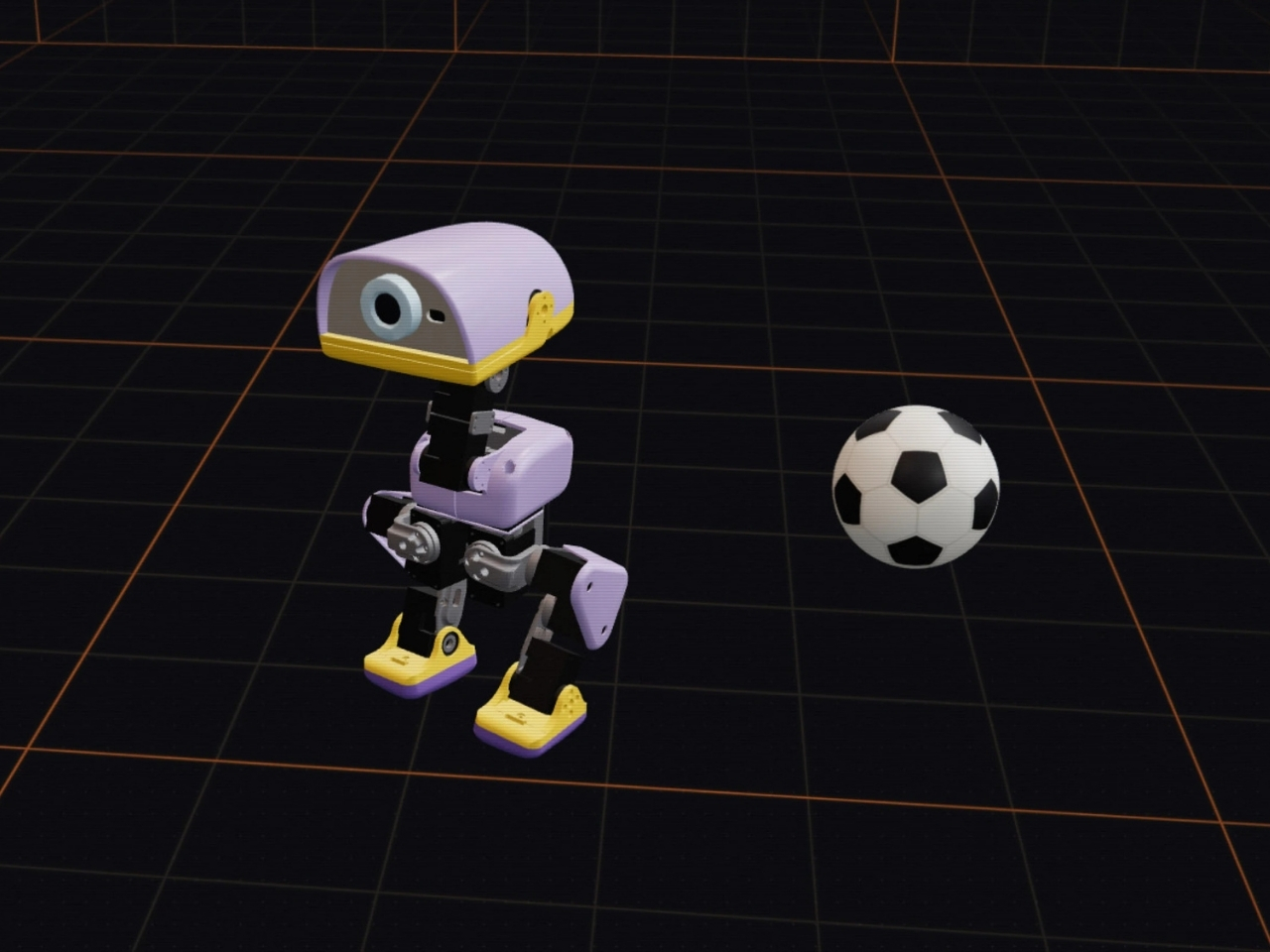
I will admit the duck framing initially struck me as a marketing gimmick, the kind of cute mascot skin slapped onto serious tech to make it more shareable. But the more I read about the design choices, the articulated beak that doubles as a gripper, the roller-skate foot swap, the four soft colorways named Cream, Graphite, Lavender, and Sky, the more it felt deliberate rather than decorative. A humanoid robot falling over looks like failure. A duck robot falling over and waddling back up looks like a duck being a duck. That emotional permission to fail without embarrassment might be the smartest design decision in the entire product, because it lowers the psychological barrier to experimentation just as much as the price tag lowers the financial one.
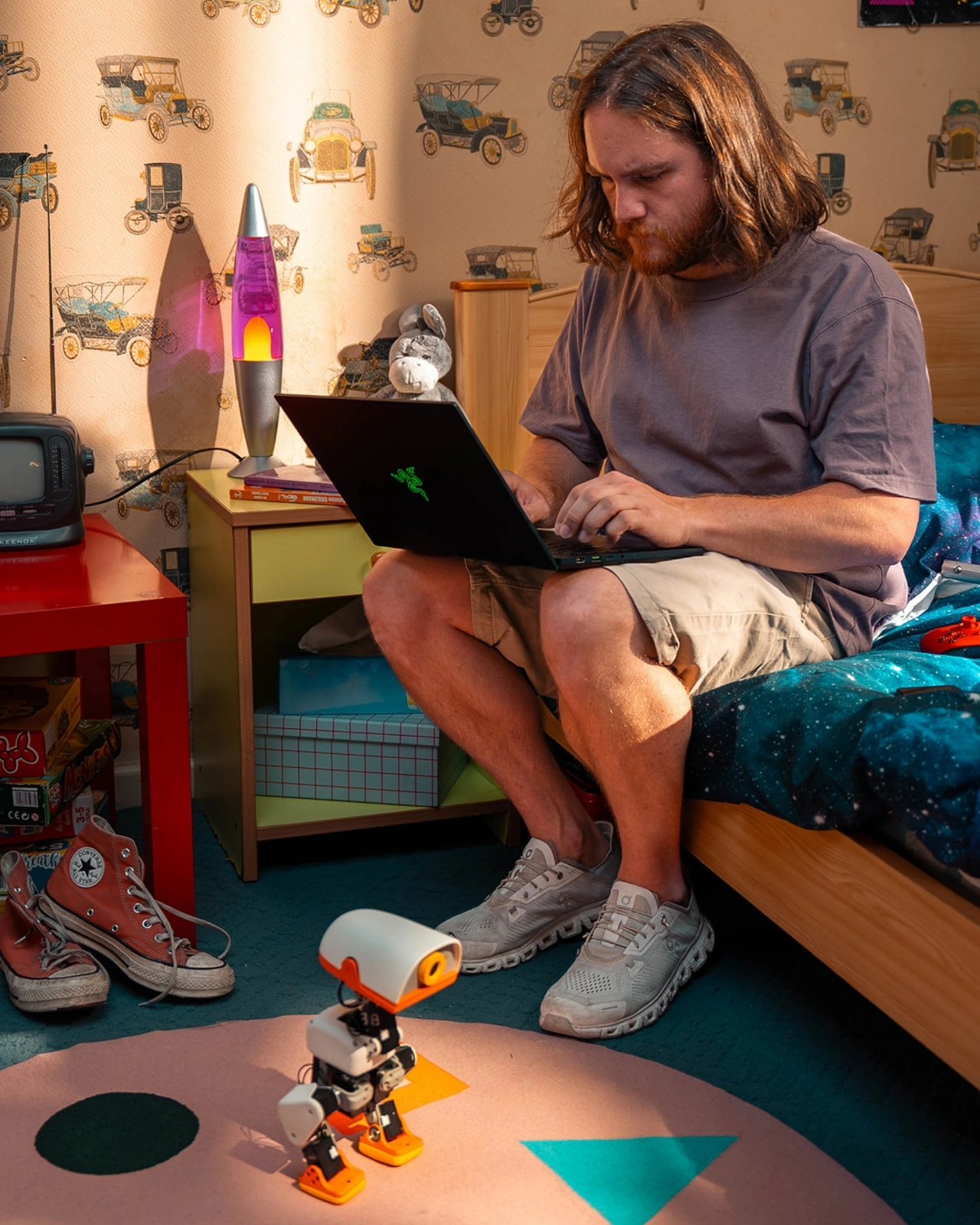
Weighing in under 800 grams and priced before taxes and shipping, Microduck ships to North America, Europe, and the UK before Christmas 2026. Hugging Face CEO Clem Delangue called it part of an effort to “democratize physical AI and world models,” and whatever you think of Silicon Valley mission statements, the market response backed it up fast. Within roughly a day of pre-orders opening, demand reportedly pushed sales past the $26 million mark and the duck went to backorder. That is not a niche hobbyist purchase pattern. That is a signal that a lot of Americans, tech-curious but priced out of serious robotics until now, were simply waiting for an affordable, unintimidating way in.
There is a broader mood shift happening in how the country talks about AI right now, somewhere between exhausted and skeptical, tired of chatbots that talk in circles and promises that never quite land in the real world. Microduck feels like a small, tangible answer to that fatigue. You cannot hug a language model or watch it recover from a stumble. You can with this. For $399, families, students, and weekend tinkerers get a genuine on-ramp to physical AI, not a toy pretending to be smart, but a real machine willing to be clumsy in front of you while it learns.
Pollen Robotics has been upfront that Microduck will not solve robotics’ hardest problems, and it should not have to. What it offers instead is something rarer than a breakthrough: a starting point that is actually within reach.