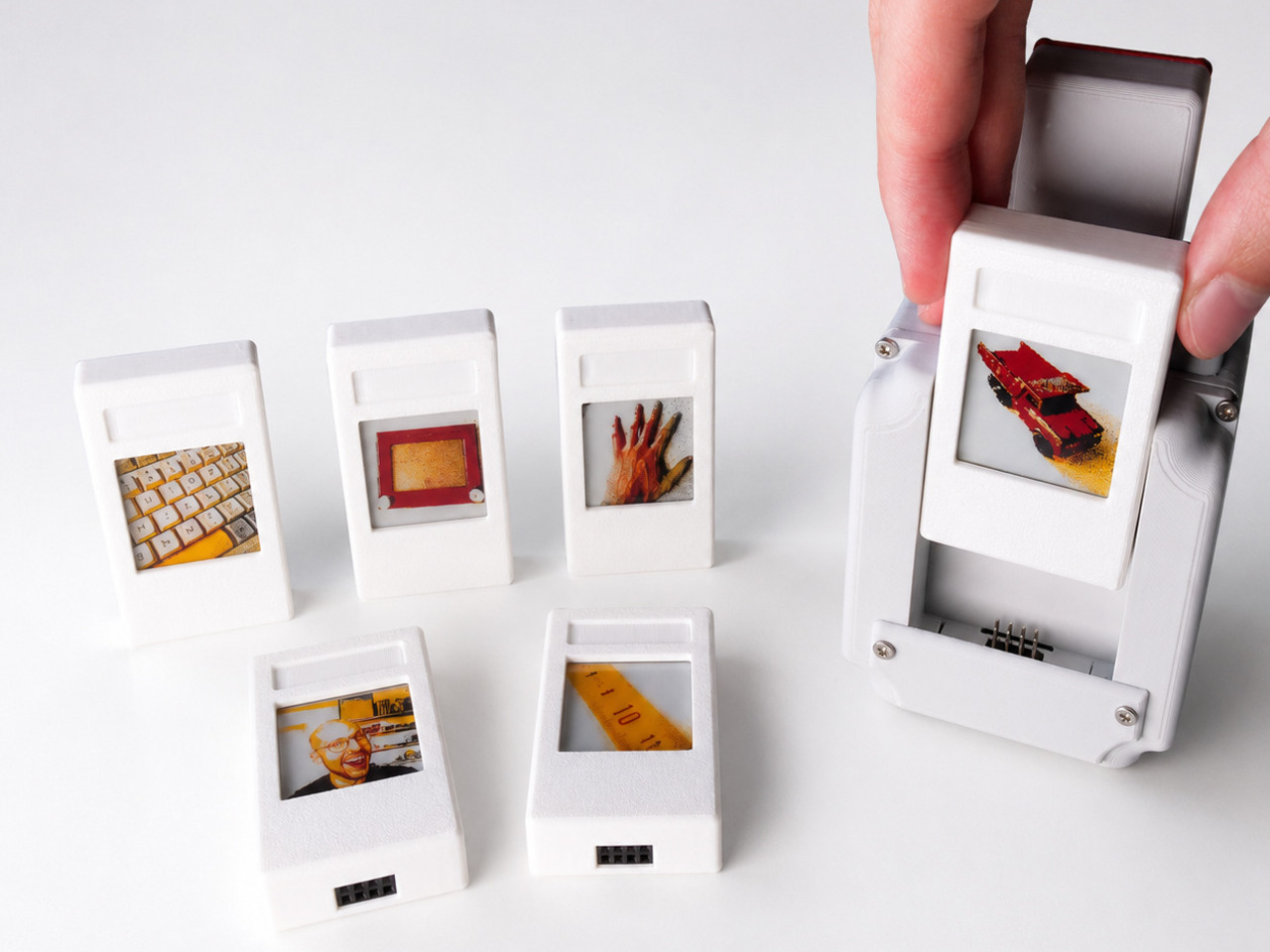
Every digital photo you’ve ever taken lives the same way, buried in a folder, scrolled past, forgotten within the hour. The Camera with Digital Film refuses that fate for its images. It captures a scene digitally, then commits that single shot to a small e-paper cartridge you can pull out, prop up, and actually look at, closer to a printed photograph than anything living inside a phone.
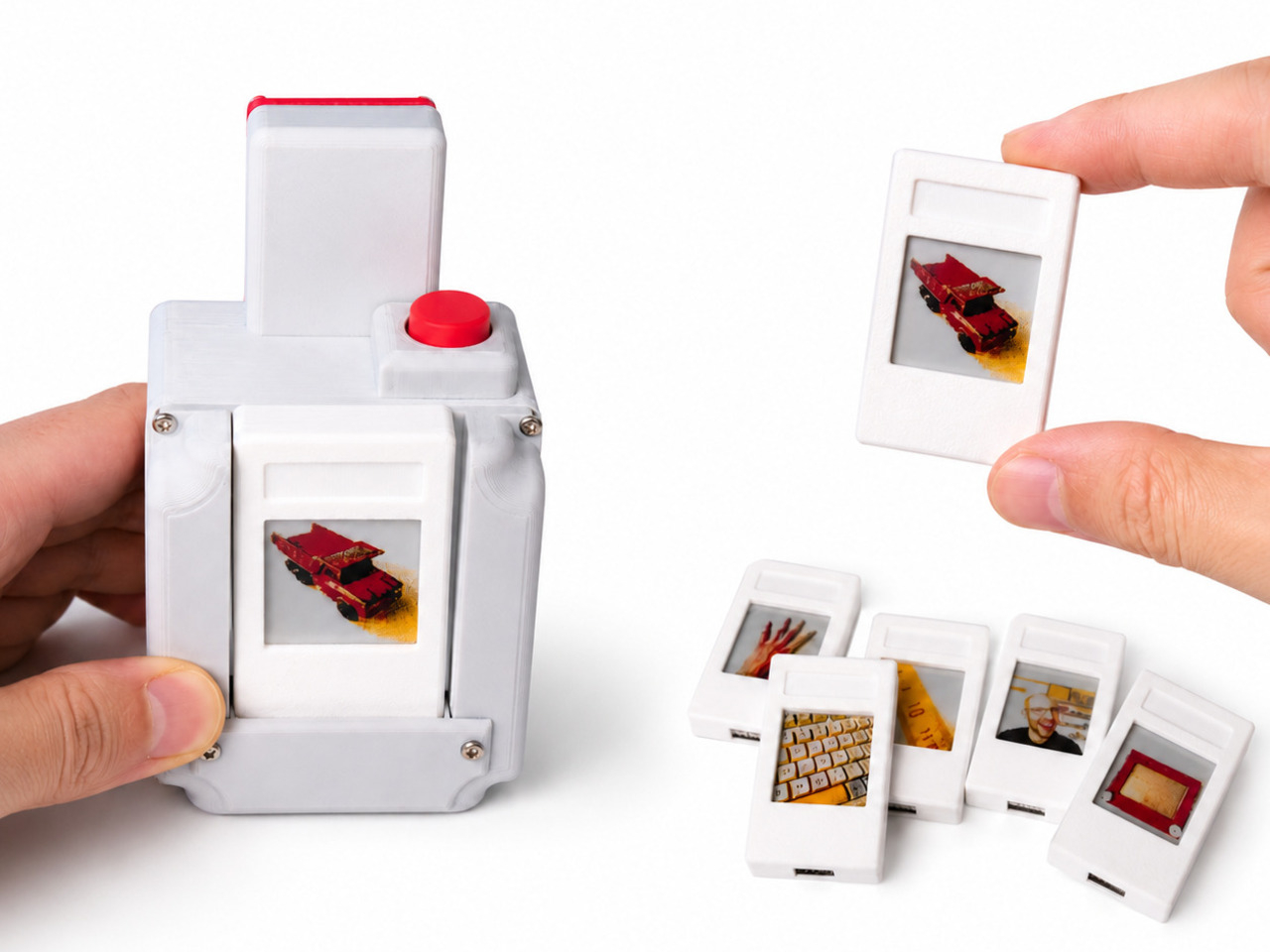
The trick sits in the cartridge itself. Slide it into a slot at the top of the boxy 3D-printed body, press the shutter, and a Raspberry Pi with a 5-megapixel camera module does the capturing. The e-paper screen inside that cartridge then flickers and settles into a finished image built from just four colors, black, white, red, and yellow, giving every photo the flattened, graphic quality of a screen print rather than a snapshot.
Designer: Jens (Strange Inventions Lab)
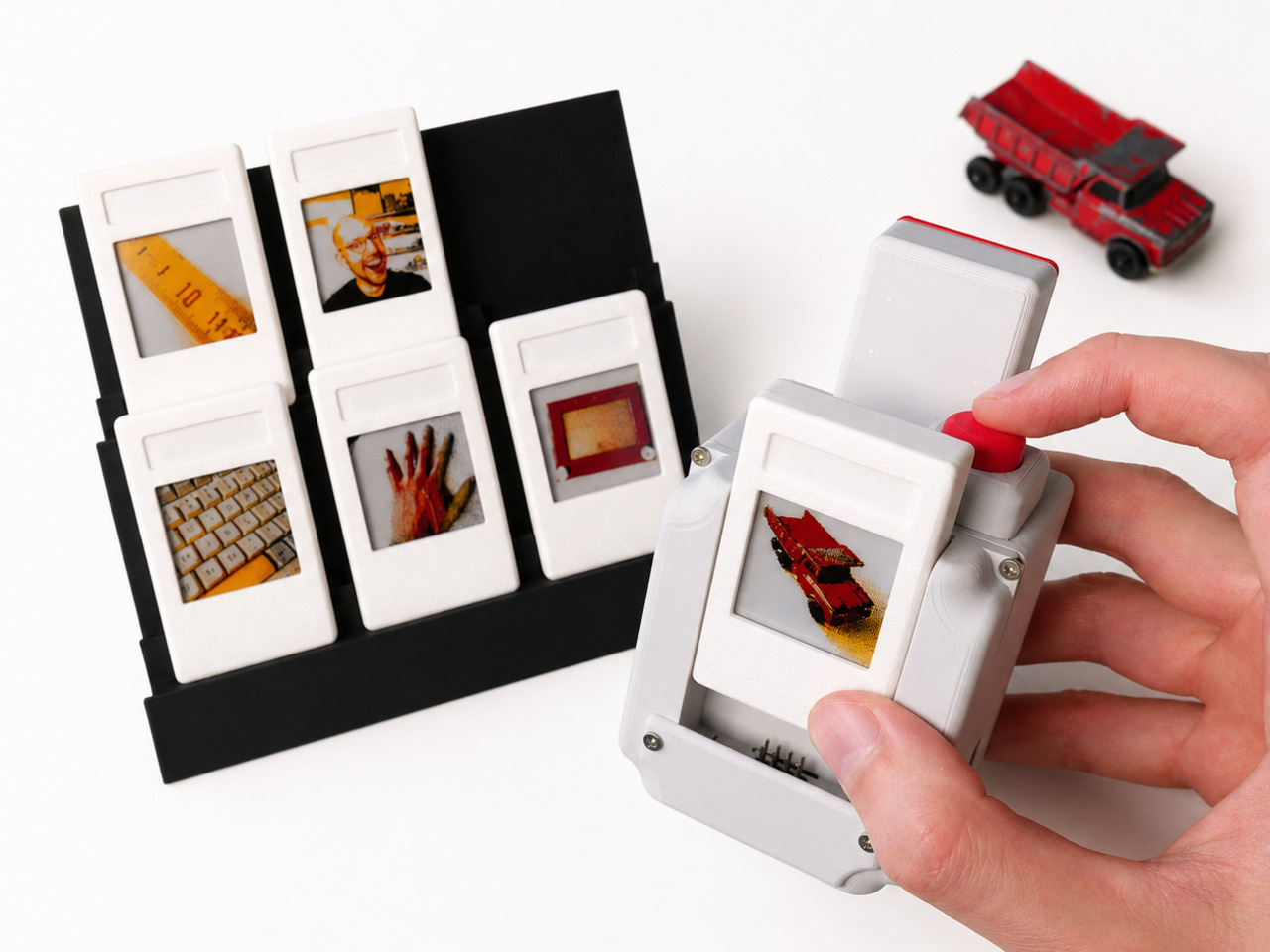
That four-color limit isn’t a technical shortcoming so much as a deliberate constraint. Before the image locks in, a script reduces the raw capture down to that palette while letting contrast, brightness, saturation, sharpness, and dithering get tuned until the picture actually looks intentional on a screen that small. The result rewards patience over speed, closer to darkroom fussing than instant gratification.
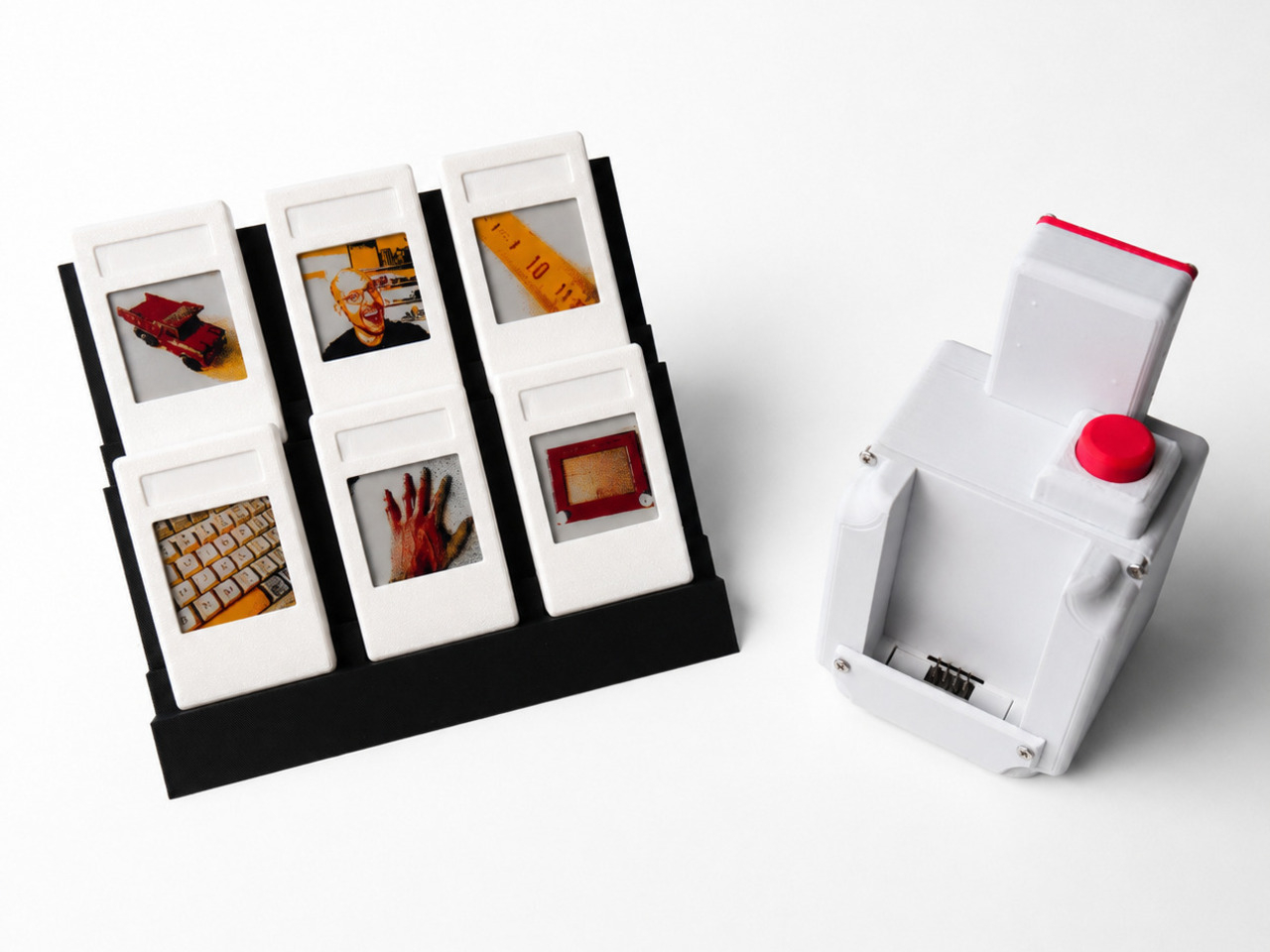
Pull the cartridge free afterward, and the photo doesn’t disappear. E-paper holds its image even with the battery removed, so that little rectangle becomes a physical object you can lean against a monitor or stick to a fridge door, exactly the kind of permanence chemical film offered and most digital cameras never bothered to replicate. Slide it back in later, though, and the same cartridge accepts a brand new shot, erasing the old one entirely.
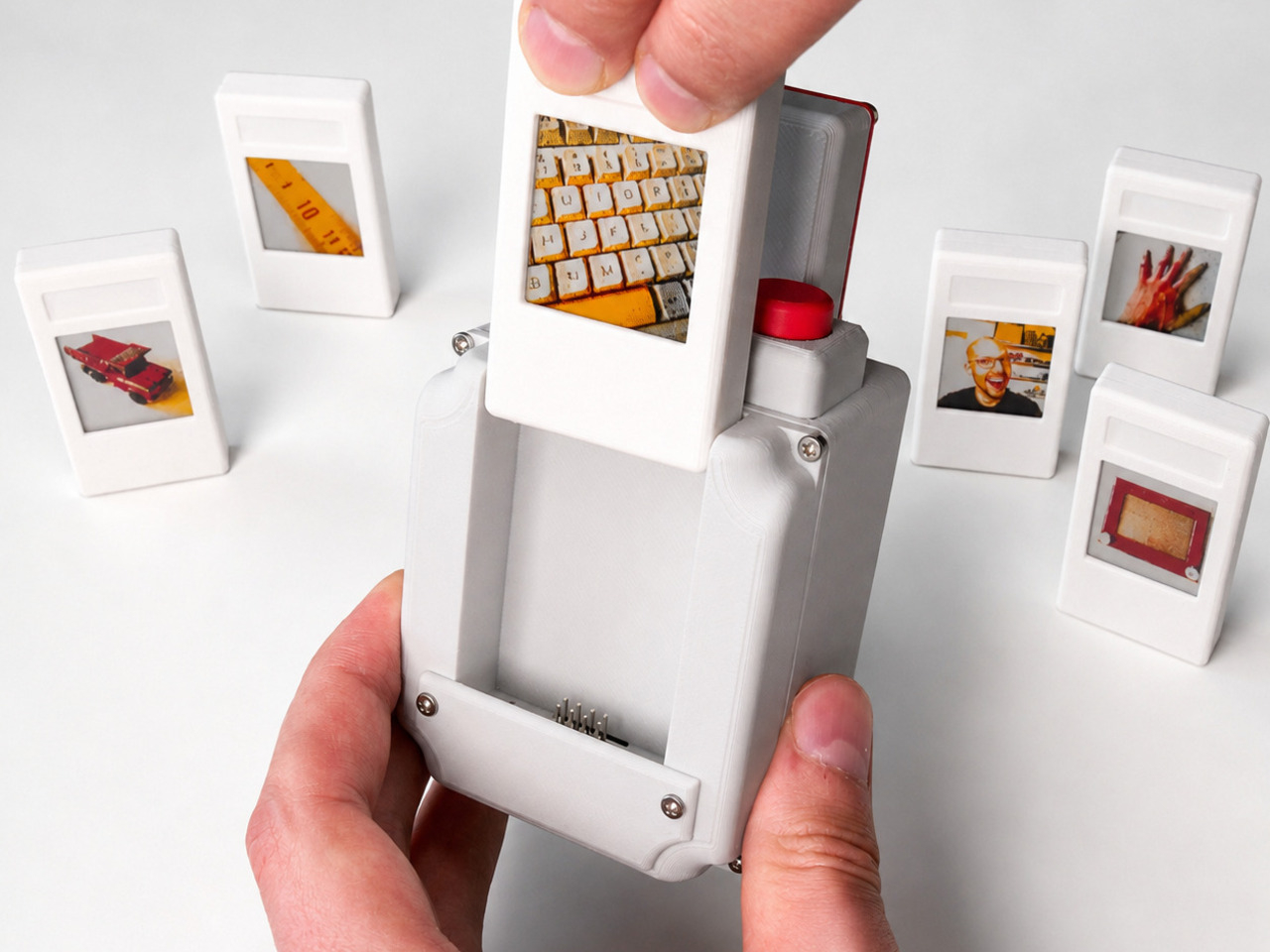
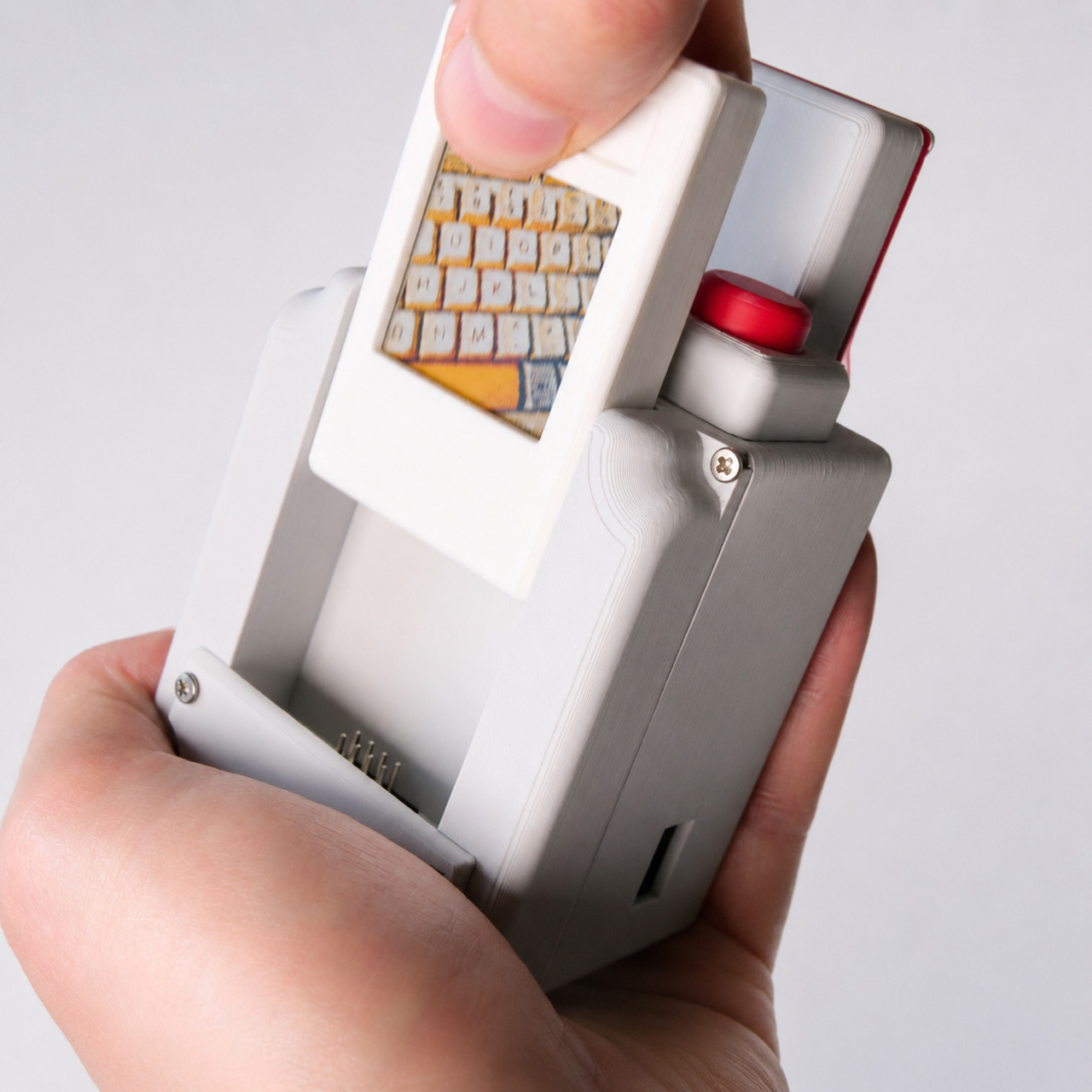
That’s the real design move here: film that behaves like film until you decide otherwise, then behaves like a hard drive instead. No single cartridge is precious in the way a Polaroid frame is precious, since nothing is technically lost by overwriting it, yet each one still holds its picture with enough physical weight to feel worth keeping around for a while first.
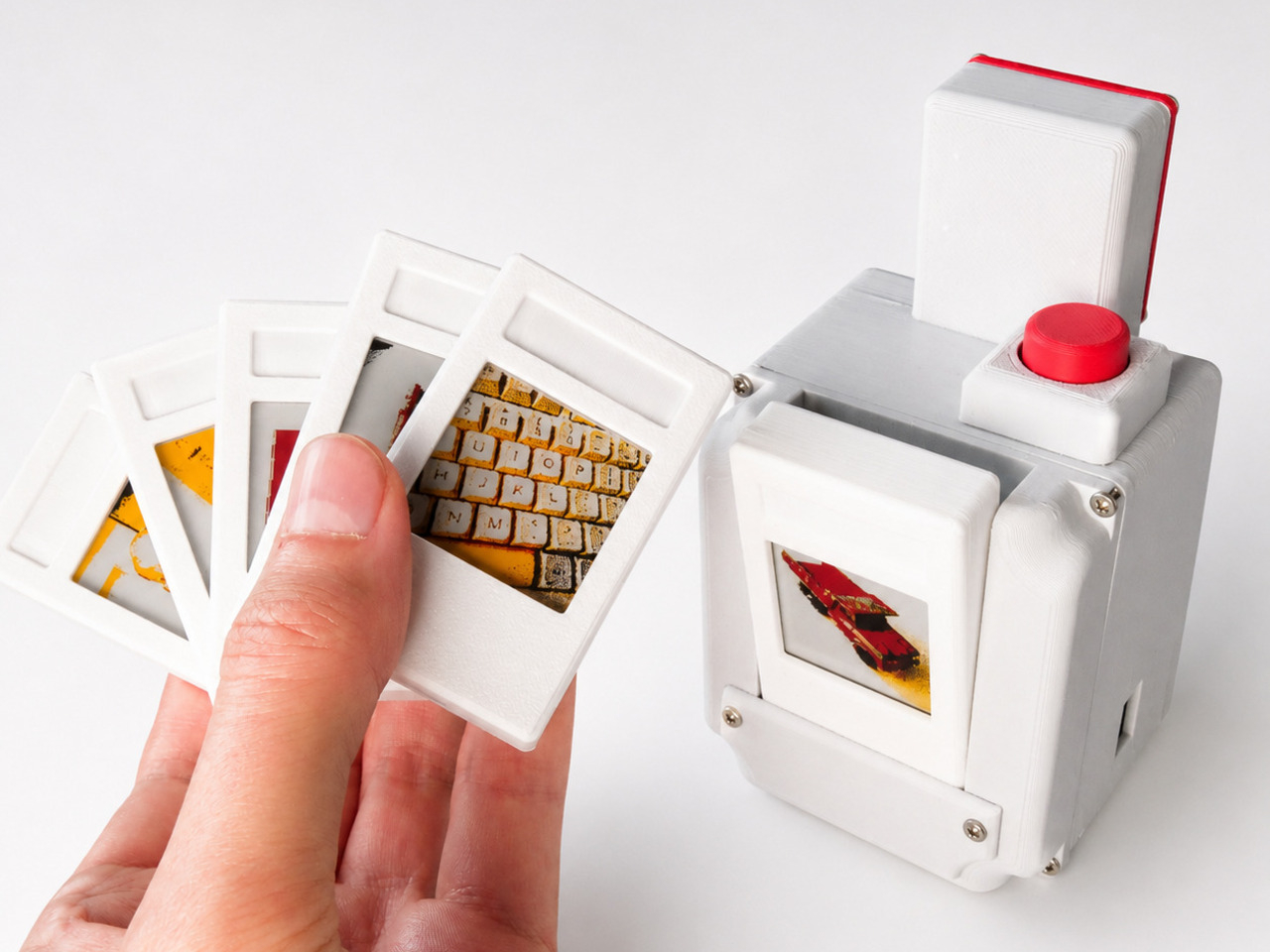
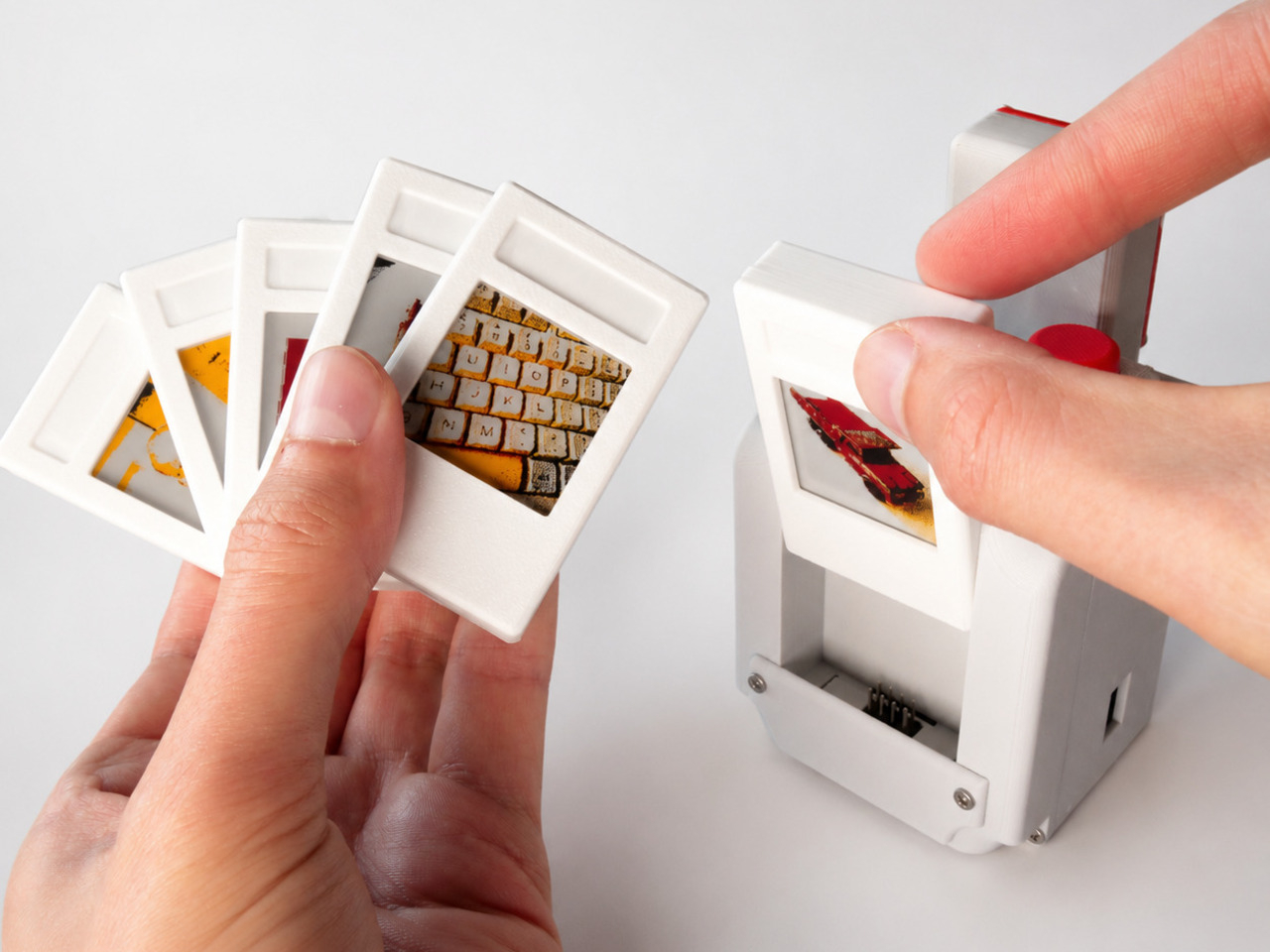
The build itself skips screws entirely, relying on header pins to hold the cartridge snug against its contacts, with a small grab tab added later so removing a used cartridge doesn’t turn into a fight. It’s a minor detail, but one that matters for a device whose entire personality depends on how satisfying that swap feels in the hand, less like ejecting a memory card and more like pulling a photo out of a machine meant to produce them.
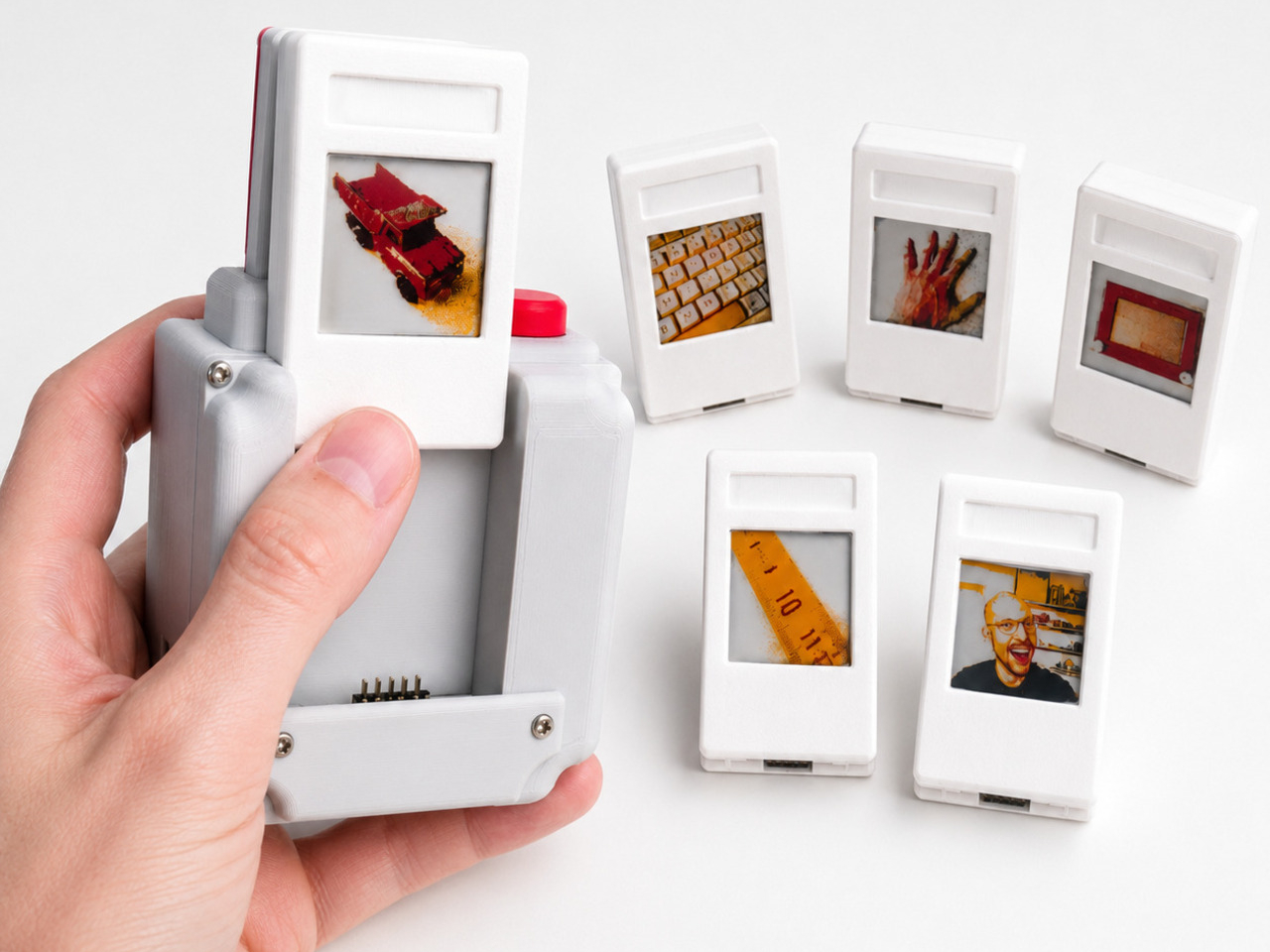
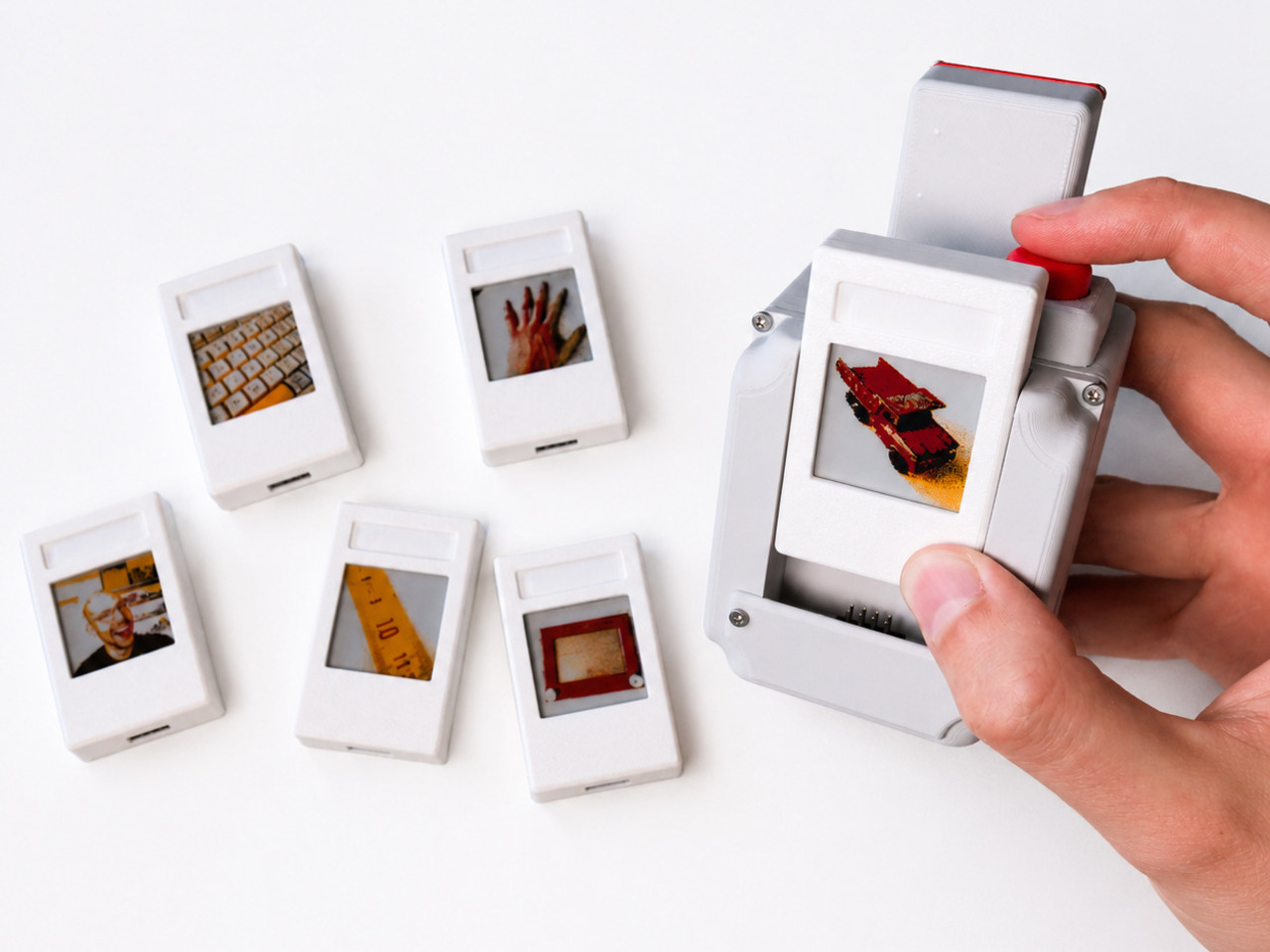
There’s a quiet argument buried in this project about what digital photography gave up along the way. Endless storage solved scarcity but erased the ritual of a photograph actually existing somewhere outside a screen. This camera doesn’t try to out-spec anything on the market. It just asks what happens when a picture has to earn a place in a slot before it’s allowed to disappear.