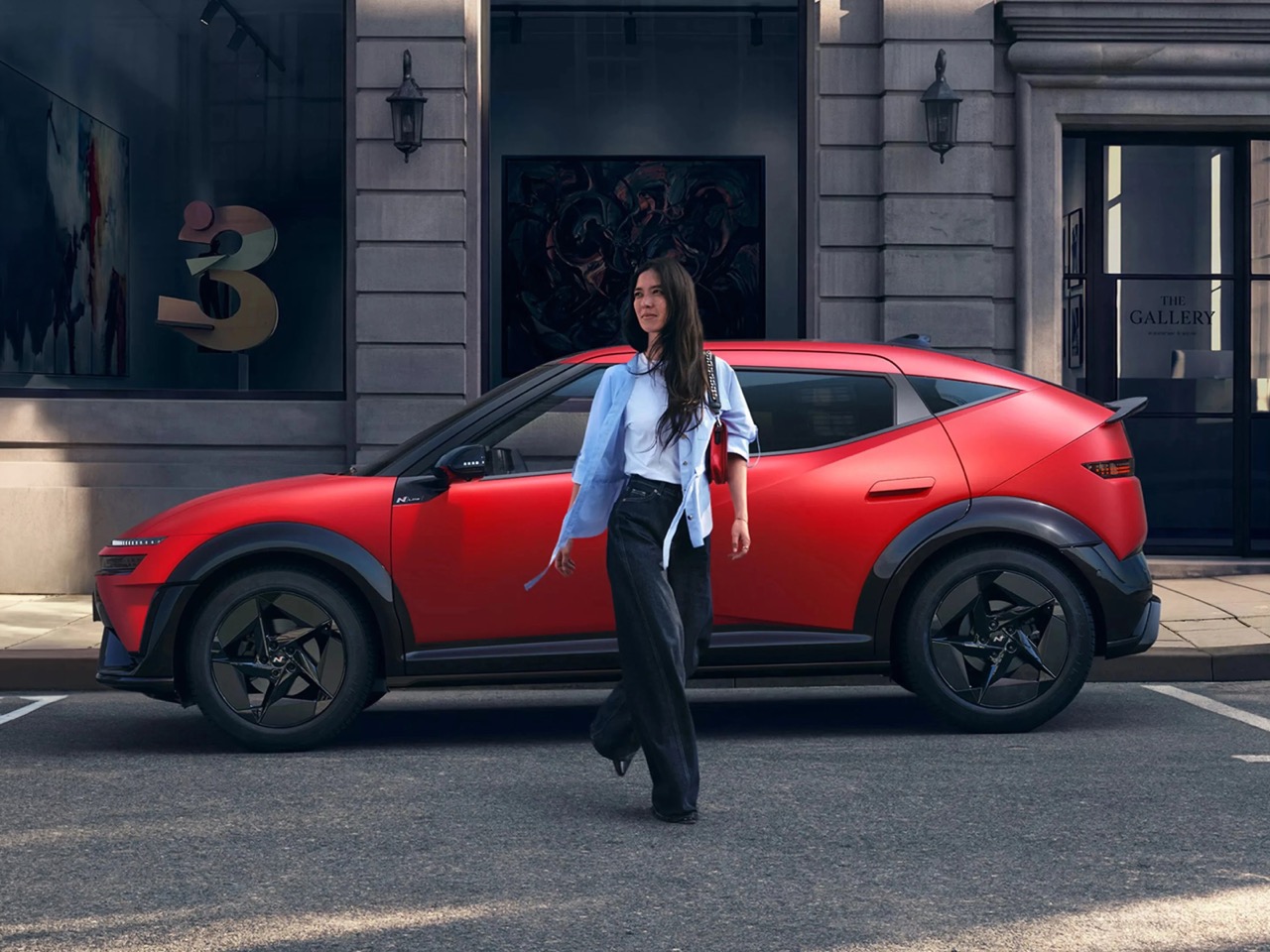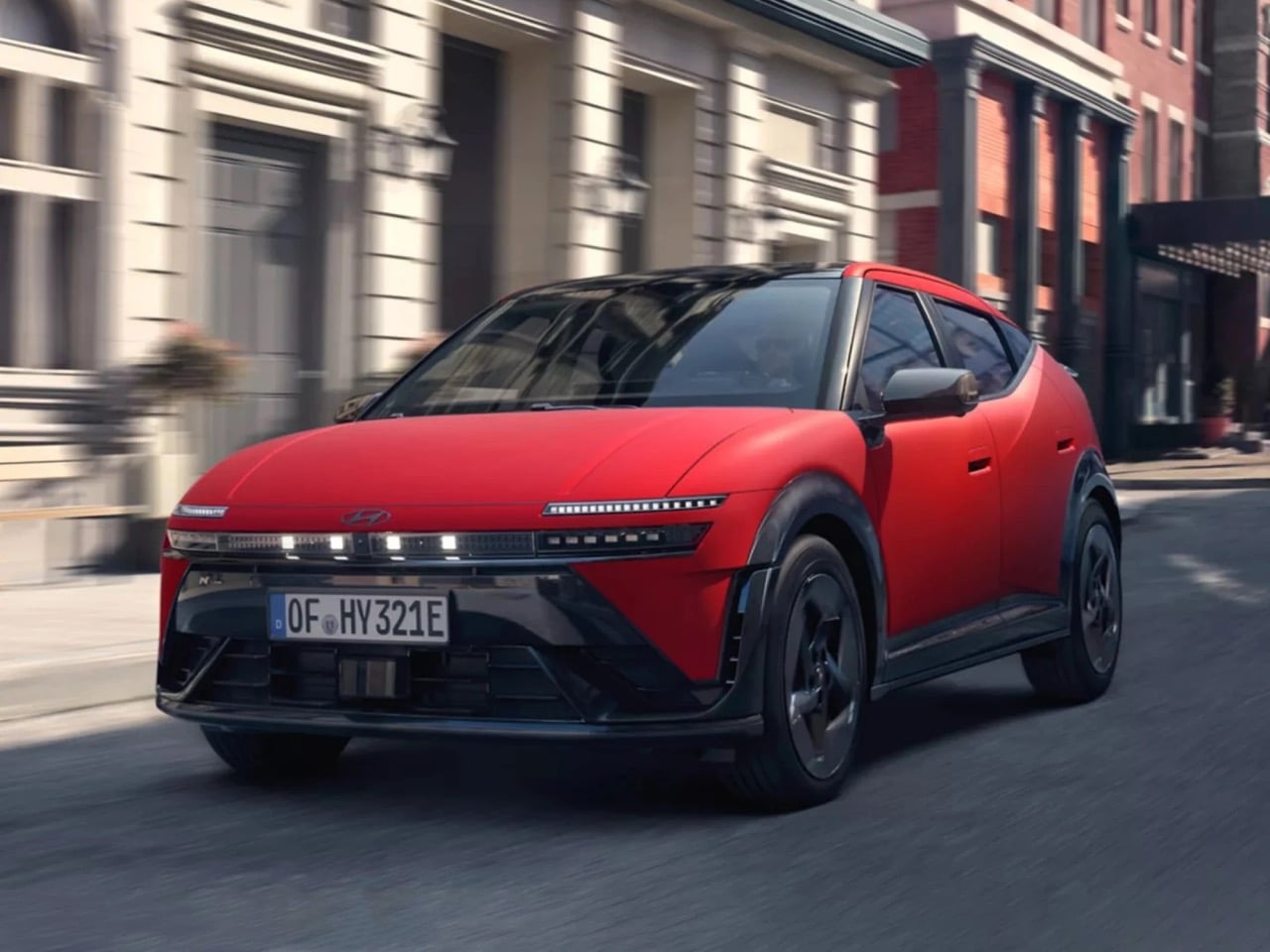
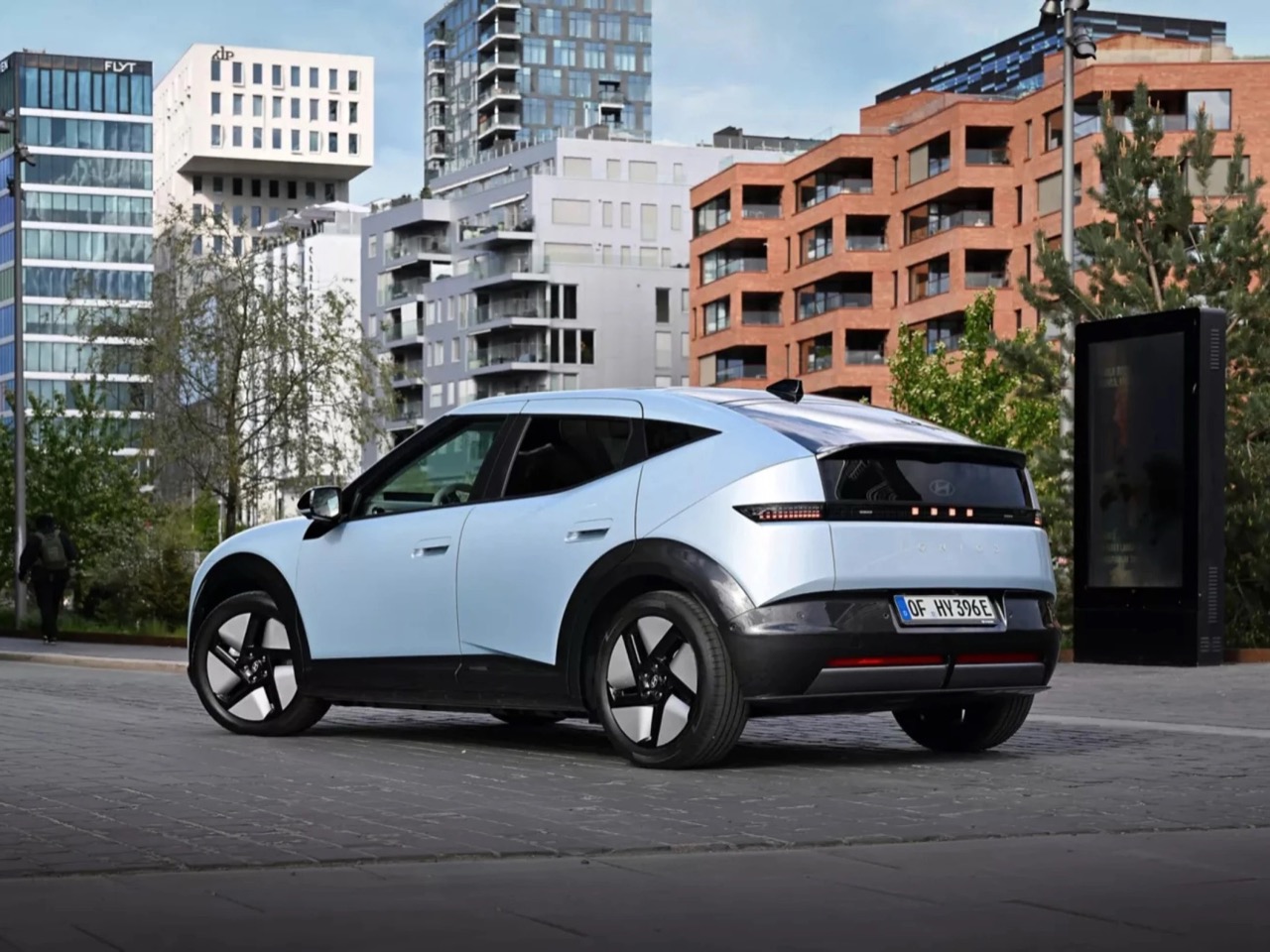
Here’s the Ioniq 3. It costs about as much as a well optioned Camry, it looks like nothing else in its price bracket, and you will never be able to buy one in the United States. Not because it failed some test, not because Americans don’t want small cars anymore, though we clearly don’t buy them. Hyundai built this thing specifically for European roads and European wallets, and then, somewhere in a boardroom, decided the math for shipping it here simply doesn’t work. So enjoy the photos. That’s about as close as most of us are going to get.
Hyundai unveiled it at Milan Design Week of all places, which already tells you this car cares more about form than your average econobox. Flat roofline, four pixel dots spelling “H” in Morse code above the grille, an interior built around furniture design instead of dashboard clutter. It’s a compact hatchback with a starting price around thirty grand and a face circular enough to make you nostalgic for the Beetle era. It is, by most measures, a properly cool small EV. It just also happens to be built in Türkiye, which under current tariffs might as well be built on the moon.
Designer: Hyundai Design Center
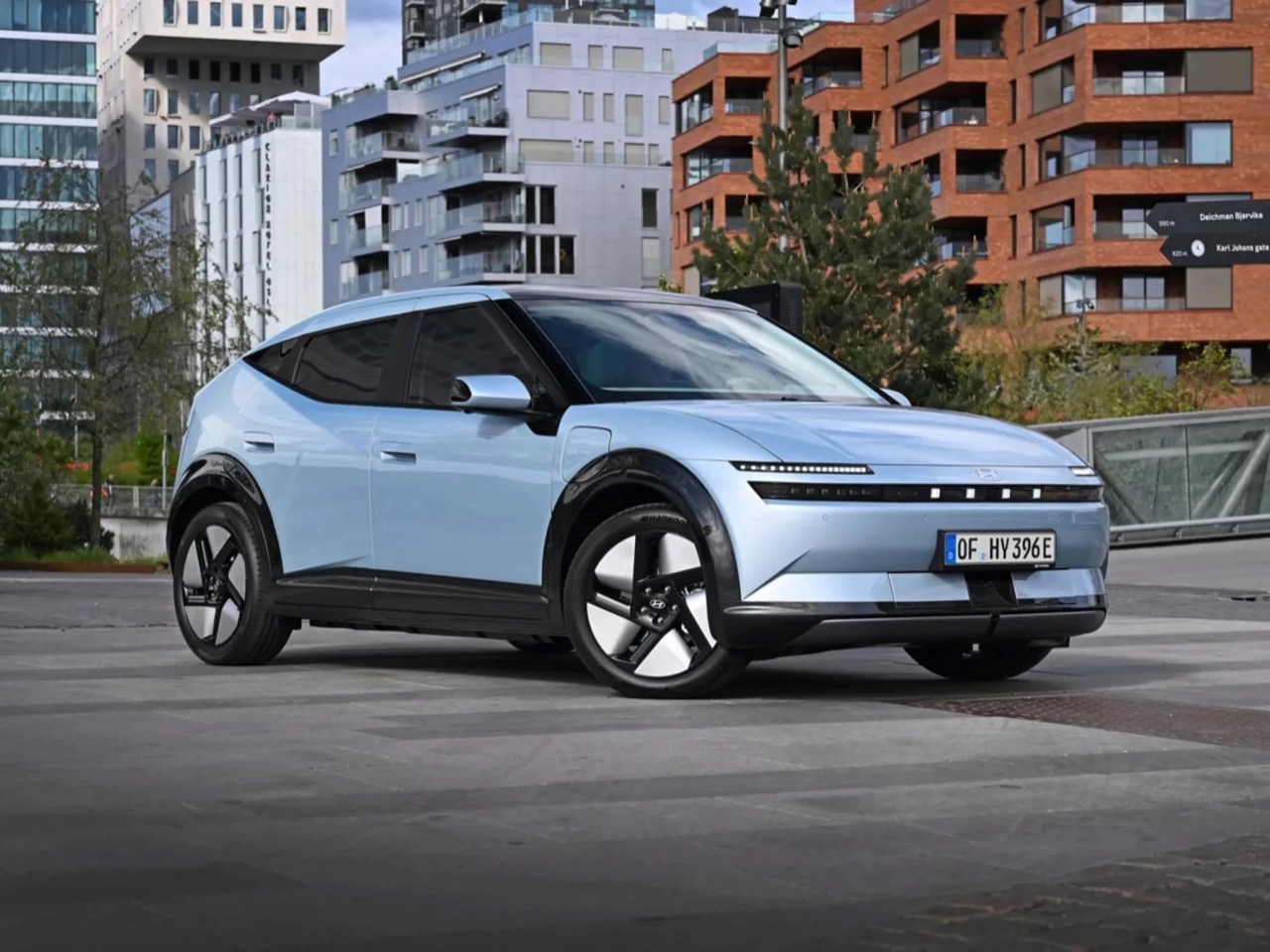
The whole thing runs on what Hyundai calls “Art of Steel,” a design language born from the fact that Hyundai is one of the only automakers left that actually makes its own steel. Instead of pretending that’s boring industrial trivia, the design team leaned into it, sculpting the Ioniq 3 around how sheet metal actually bends and holds tension. The result is the “Aero Hatch,” a silhouette with a roofline that runs dead flat over both rows of seats before diving into a rear spoiler like it just remembered somewhere else it needs to be. That flat roof isn’t decoration. It buys rear headroom while the tail does the aerodynamic heavy lifting, landing a drag coefficient of 0.263 that Hyundai is calling class leading.
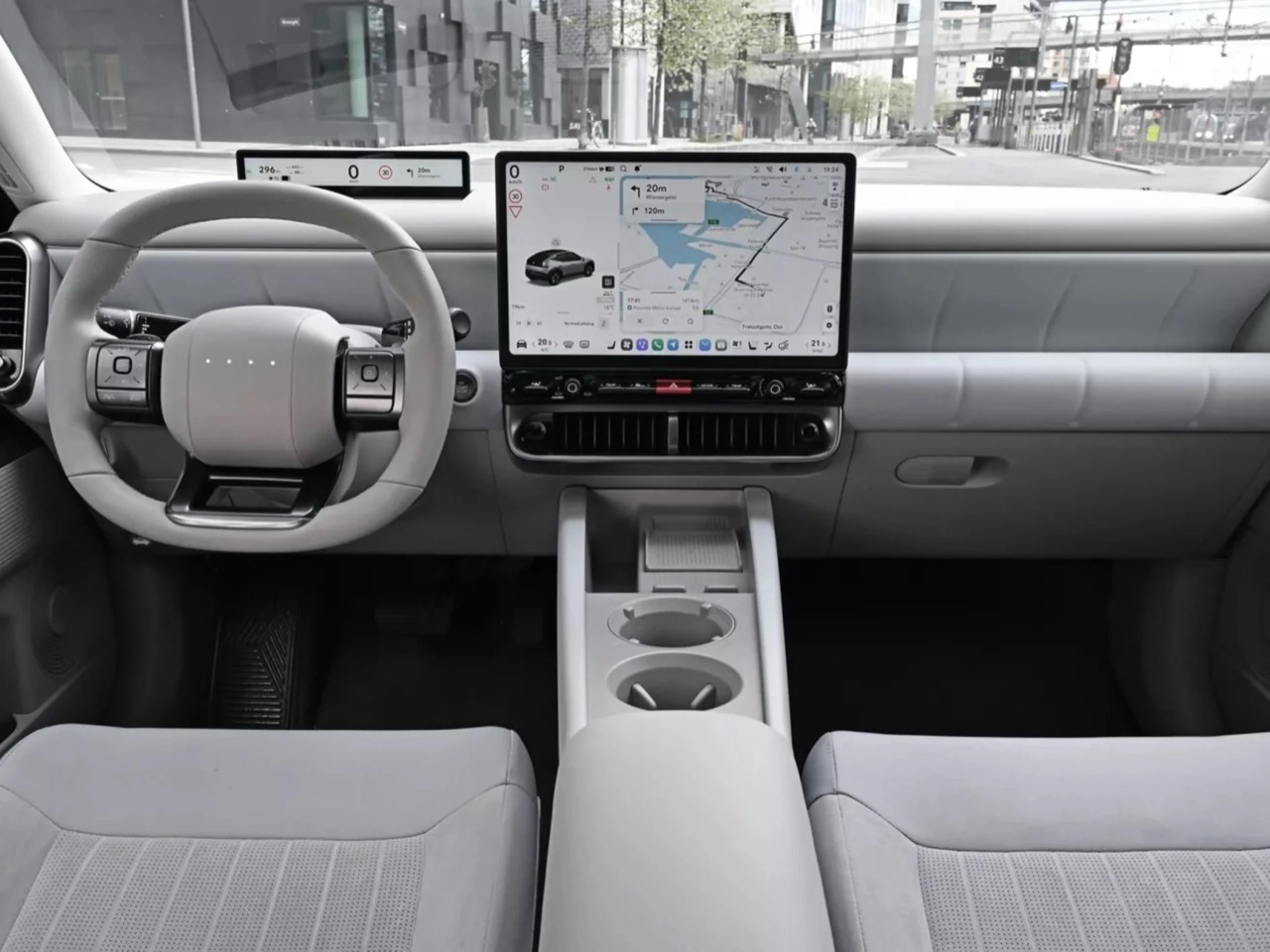
Step inside and the car keeps making its case. Hyundai calls the layout “Furnished Space,” meaning the cabin is arranged more like a piece of living room furniture than a traditional dashboard, with an open floating center console and seat fabrics pulling references from 1970s Italian furniture design. There’s a hidden underfloor bin called Megabox tucked beneath 322 liters of regular boot space, bringing total capacity to 441 liters in a car barely over four meters long. Materials lean sustainable without making a big show of it, recycled PET seat coverings, a steering wheel wrapped in corn derived synthetic leather. None of it screams for attention, which somehow makes it land harder.
The numbers back up the styling. Two battery options, 42.2 kWh and 61 kWh, get you 213 and 308 miles respectively on the WLTP cycle, running through a 400 volt architecture rather than the fancier 800 volt setup found on the Ioniq 5. That’s the quiet trick behind the low price. UK trims start at £22,245 for the entry Advance and climb to £31,945 for the sportier N Line Evo, with a 10 to 80 percent DC charge landing around 29 minutes across the lineup.
Here’s the annoying part. The Ioniq 3 rolls off the line at Hyundai’s İzmit plant in Türkiye, and current US tariff policy makes importing anything built there financially pointless. Meanwhile Hyundai has already trimmed its US EV lineup this year, pausing the Korea built Kona Electric and dropping the standard Ioniq 6, leaving the $35,000 Ioniq 5 as the brand’s de facto entry point stateside. That’s an awkward position to be in when Kia, Hyundai’s own sister brand, is bringing the smaller and cheaper EV3 to America instead.
So no, you can’t have the Ioniq 3, and pretending otherwise would be lying to you. What you can do is watch it become the car every European hatchback rival now has to answer to, while wondering why the industrial base making the case for small, affordable EVs keeps getting built everywhere except here.