The last time I really thought about what my outfit was doing for me, I was considering whether my summer dress made me look like I was fashionable or it was just perfect for the hot weather. Simon Weckert has me rethinking the question entirely. Do my clothes do something for me other than protect me from the elements or make me look cool? Can they be about something more?
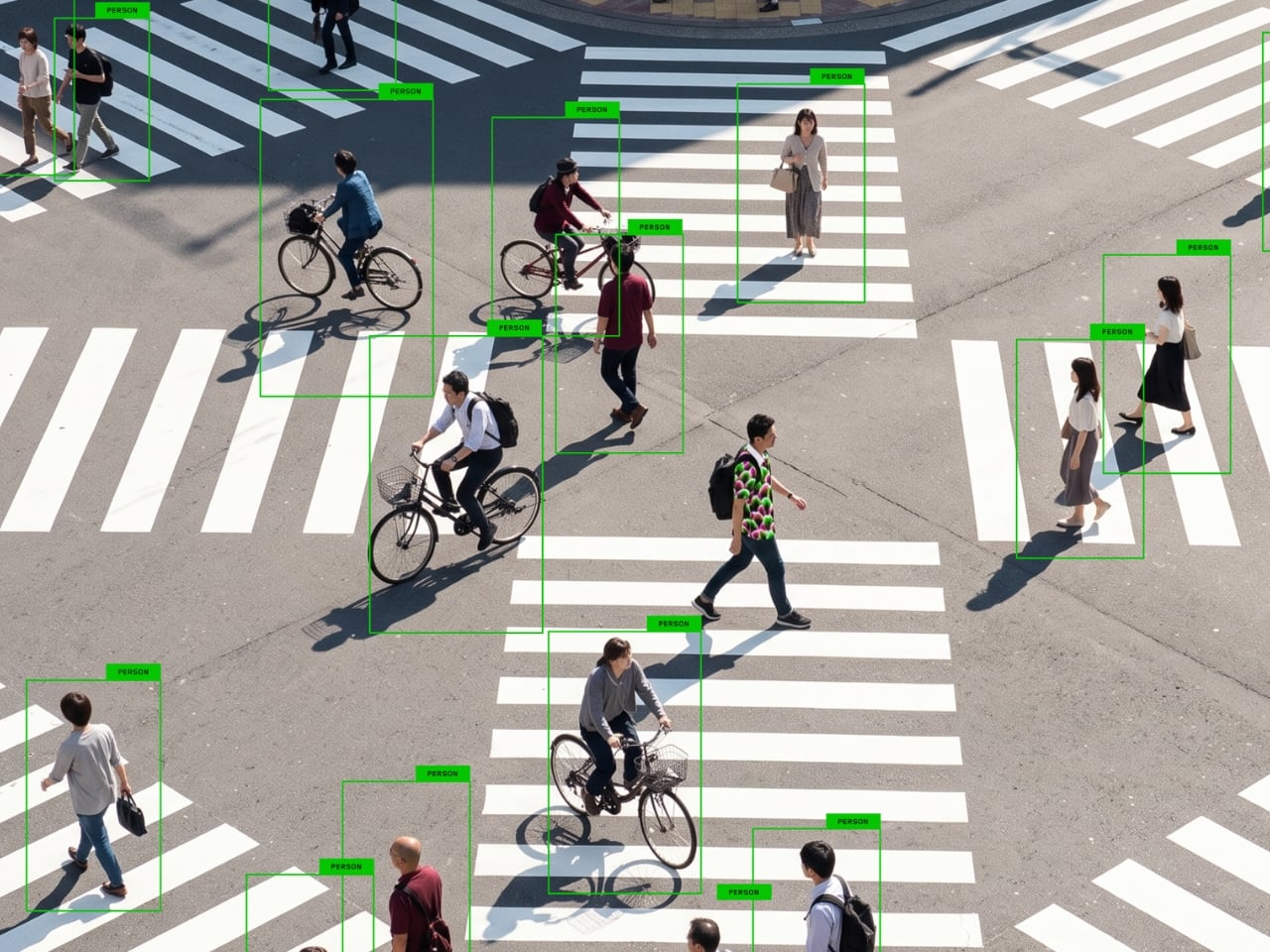
The Berlin-based artist recently unveiled Digital Camouflage, a conceptual garment collection that does one very specific, very remarkable thing: it makes you invisible to AI. Not invisible to the human eye, obviously. You’d still be fully, stylishly present to anyone walking past you. But to the surveillance cameras powered by AI-based person detection systems that increasingly populate airports, streets, and public spaces, you essentially cease to exist. That’s not a metaphor. It’s the engineering.
Designer: Simon Weckert
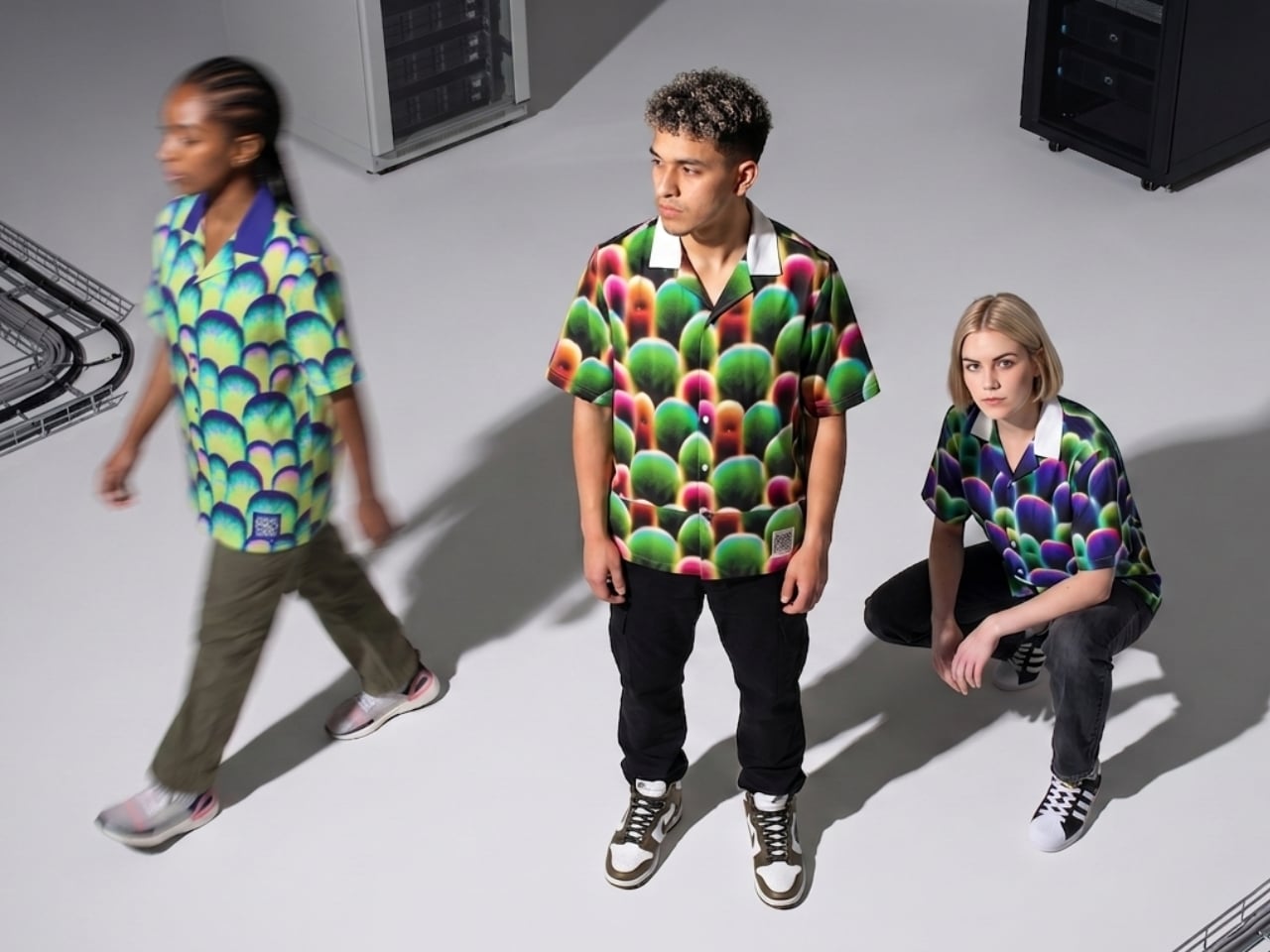
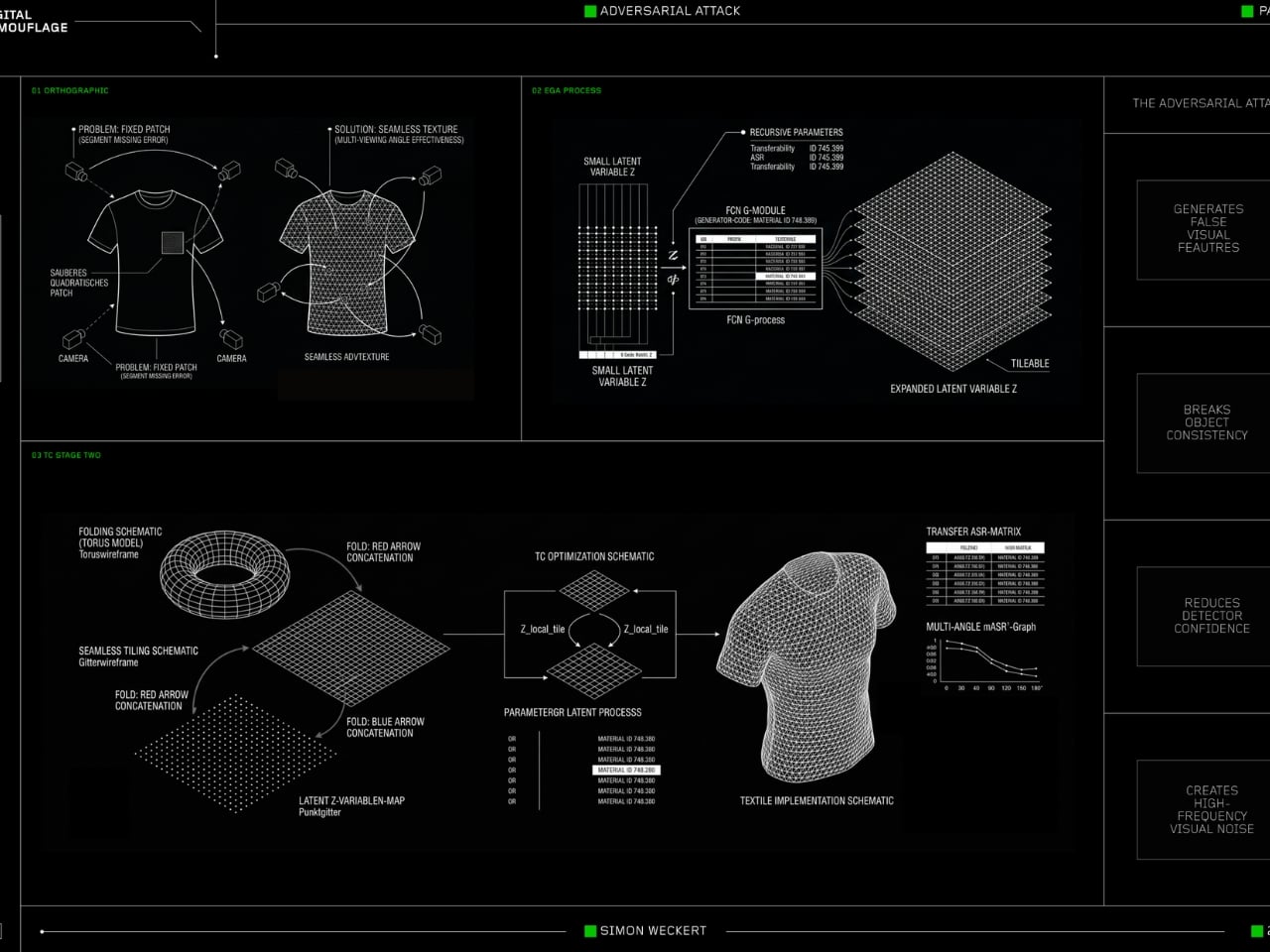
The collection works through what researchers call an adversarial attack, a method of manipulating visual data so that a machine misreads what it’s looking at. The garments are printed with a continuous, generative pattern that floods AI recognition systems with computational noise. The algorithm looks at you, processes the visual information, and fails to register a person. You’re there. The camera sees you. But the machine watching through it draws a blank.
At first glance, the clothes look like bold graphic fashion. The kind of abstract print that could easily headline a capsule collection or land on an editorial mood board. The technical function is completely hidden in plain sight, which is, when you think about it, a fairly elegant bit of design irony.
Previous anti-recognition designs relied on fixed printed patches, a kind of static visual disruption that quickly lost effectiveness when fabric folded or camera angles shifted. Weckert’s collection uses a continuous adversarial texture across the entire garment surface, designed to hold up against both movement and perspective change. It’s not a sticker. It’s the whole jacket.
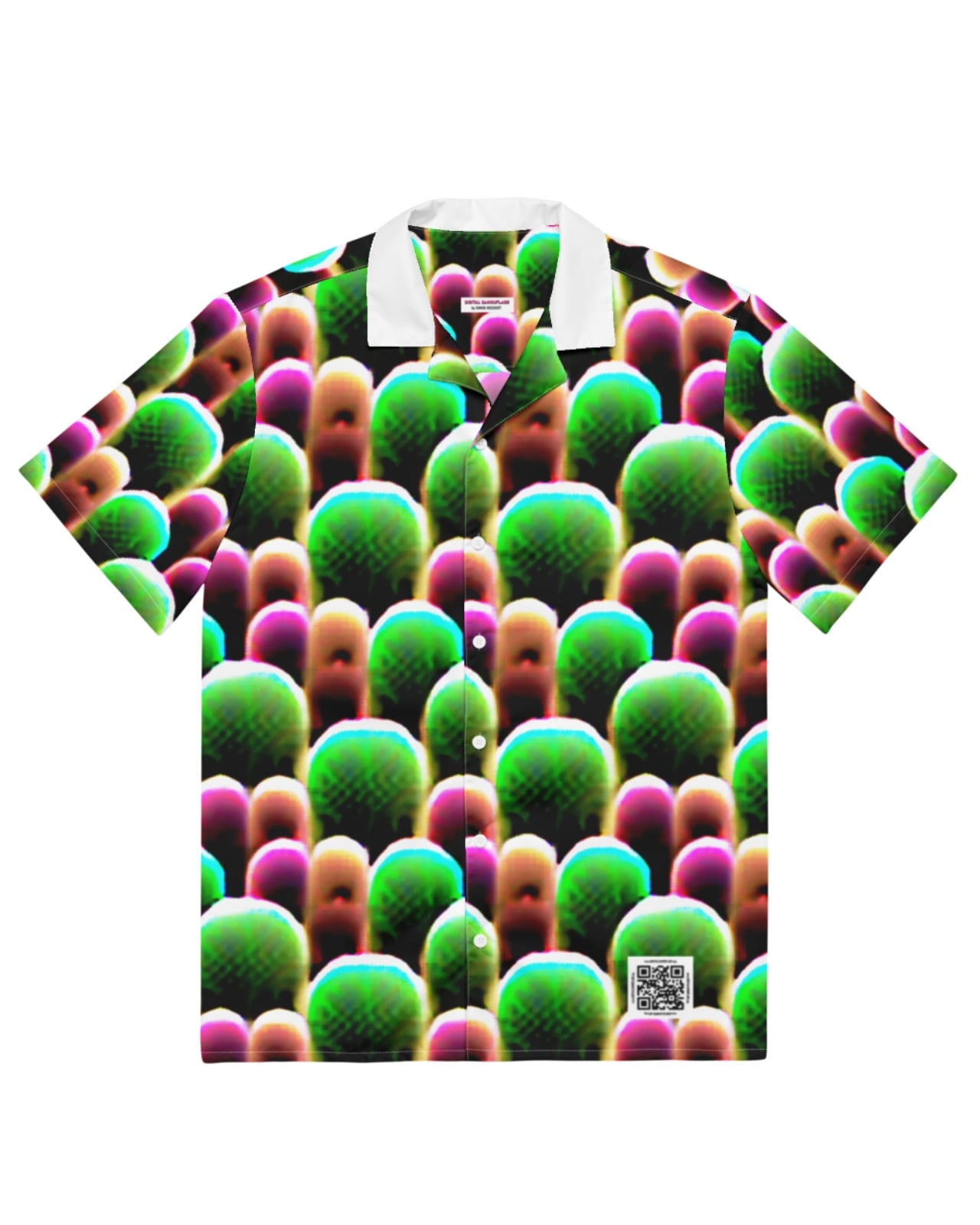
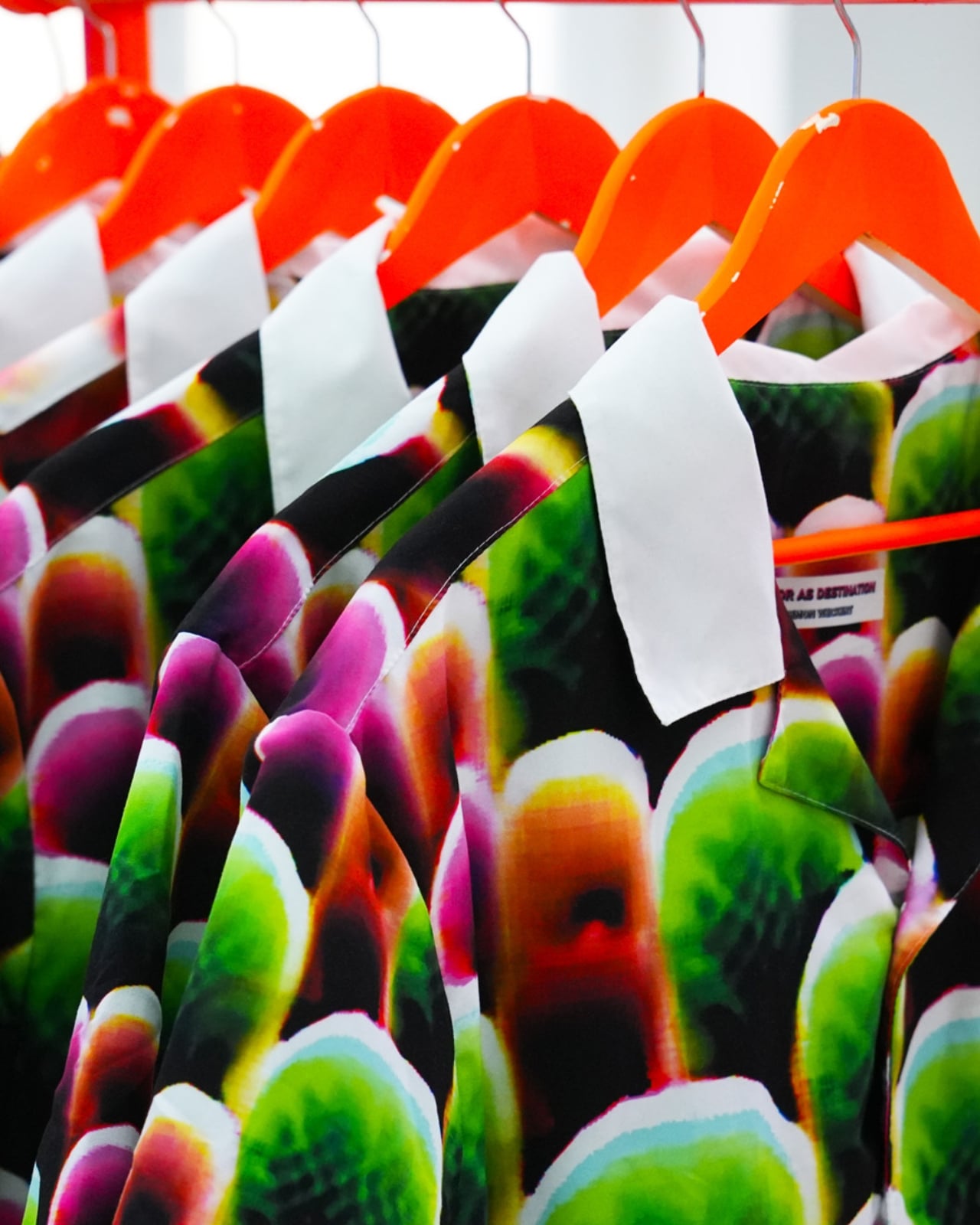
The collection is manufactured in Latvia from a blend of 65% recycled polyester and 35% polyester, with the adversarial pattern applied through digital textile printing. For something that sounds like it belongs in a speculative fiction exhibit, it’s a remarkably practical construction.
And yet, the project lives comfortably in conceptual territory. Weckert is not selling these at retail. Digital Camouflage was exhibited at Ars Electronica Festival 2025, which carries a certain kind of cultural weight. Ars Electronica has long been the venue where designers and technologists come to ask uncomfortable questions rather than offer comfortable answers. Showing the work there feels deliberate. This isn’t a product pitch. It’s a provocation.
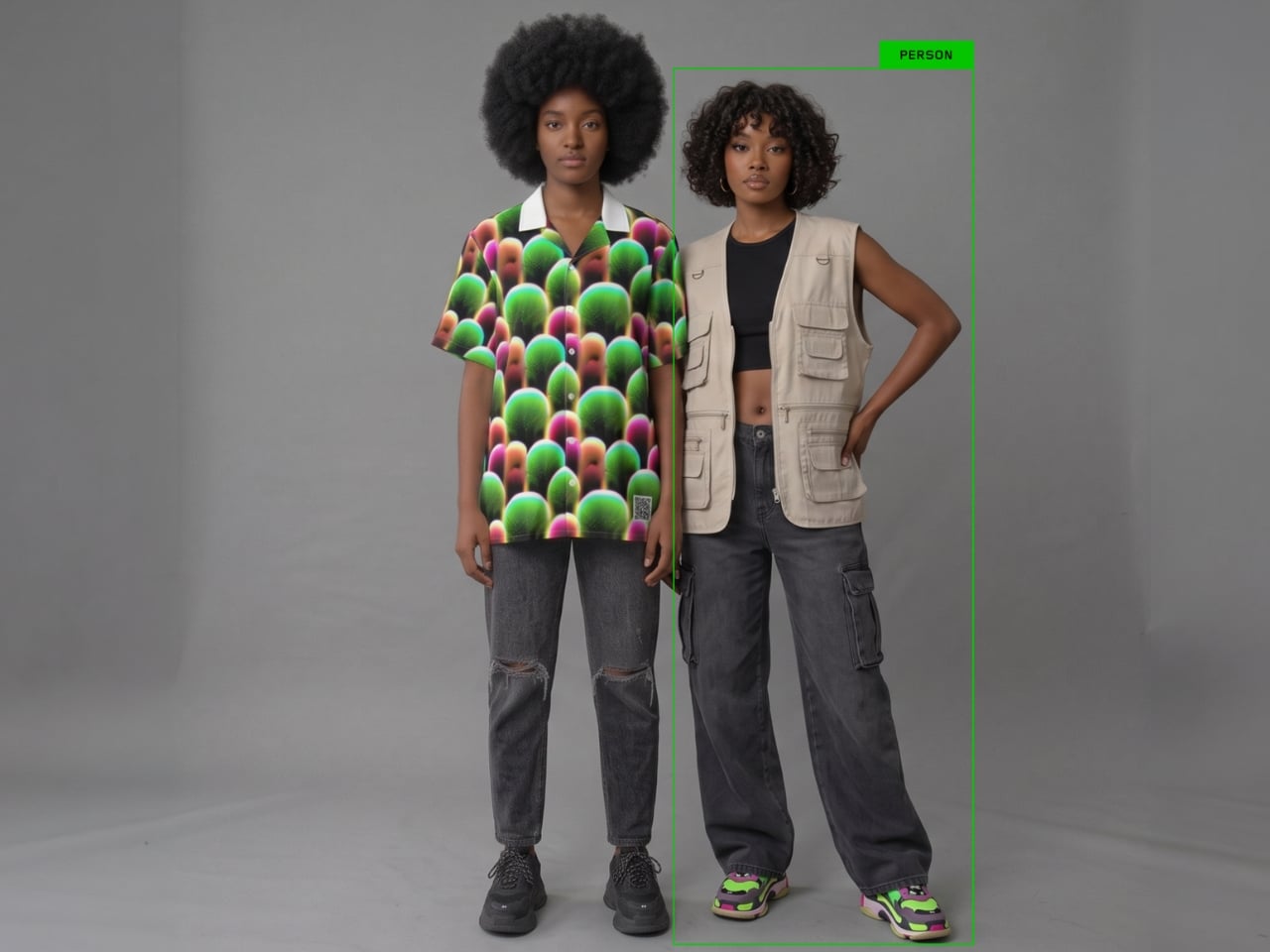
I think that tension is exactly where the project is most interesting. The garment works, or is designed to work, but its purpose is as much about raising the question as answering it. Who should have the right to walk through a public space without being catalogued? At what point does automated surveillance stop being a security tool and start being a form of ambient control? Weckert isn’t handing out a manifesto. He’s handing out a jacket.
The fact that we even need clothes that hide us from cameras is worth pausing on. Digital surveillance infrastructure has expanded so quietly and so consistently that most of us have simply accepted it as background noise. AI-powered cameras now occupy the same mental category as streetlights: ubiquitous, impersonal, unremarkable. Weckert’s collection interrupts that acceptance, not through argument, but through design.
Fashion has always been a negotiation between the self and the seen. We dress for impressions, for identity, for protection against the cold. Adding protection against algorithmic recognition to that list feels like a genuinely new chapter in a very old human conversation about who gets to see us and on whose terms.
Whether or not Digital Camouflage ever becomes something you can actually buy, it has already done its most important work. It made an abstract threat feel like something you can put on your body. And sometimes that’s all it takes to make people start paying attention.

SHARE