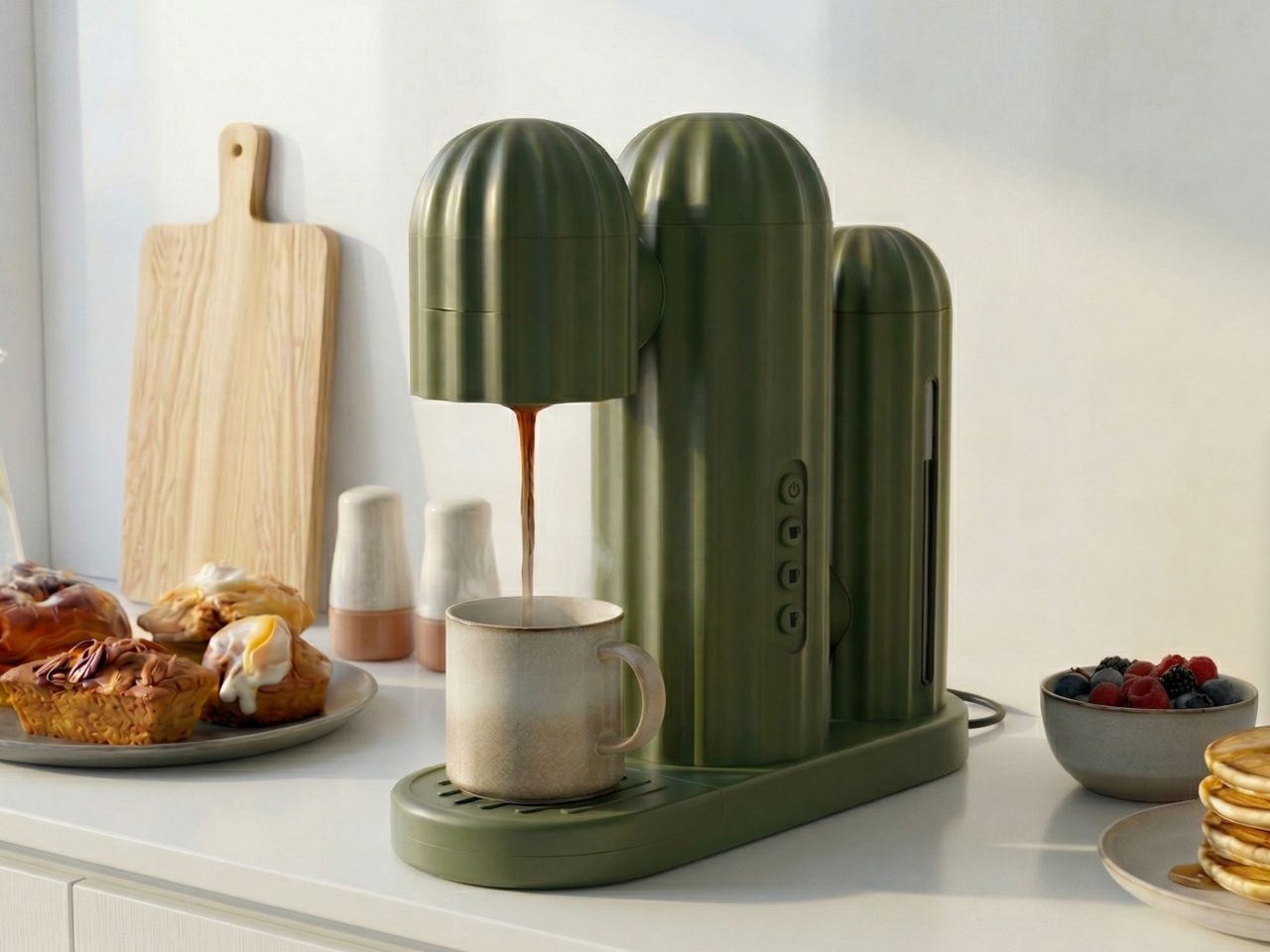
Most coffee machines are designed to fit in. They sit quietly on kitchen countertops, dressed in familiar shades of black, silver, or white, with little to distinguish one from another. Their purpose is straightforward: make coffee, look reasonably sophisticated, and occupy as little visual attention as possible. But what if a coffee machine had a personality of its own? What if the appliance you reach for every morning could be as expressive as the objects you deliberately choose to decorate your home with? Cacto, a capsule coffee machine, approaches this familiar kitchen essential from an entirely different perspective.
Taking inspiration from the cactus, Cacto brings an unexpected sculptural quality to an appliance that has largely settled into a predictable design language. The cactus is an interesting reference point. It is bold, instantly recognizable, and comfortable standing apart from its surroundings. Its unusual shape gives it character, while its ability to thrive in challenging environments makes it a compelling symbol of independence. These qualities are translated into Cacto’s physical form, creating a coffee machine that feels more like a carefully selected design object than another countertop appliance.
Designer: Anjali Kalamkar
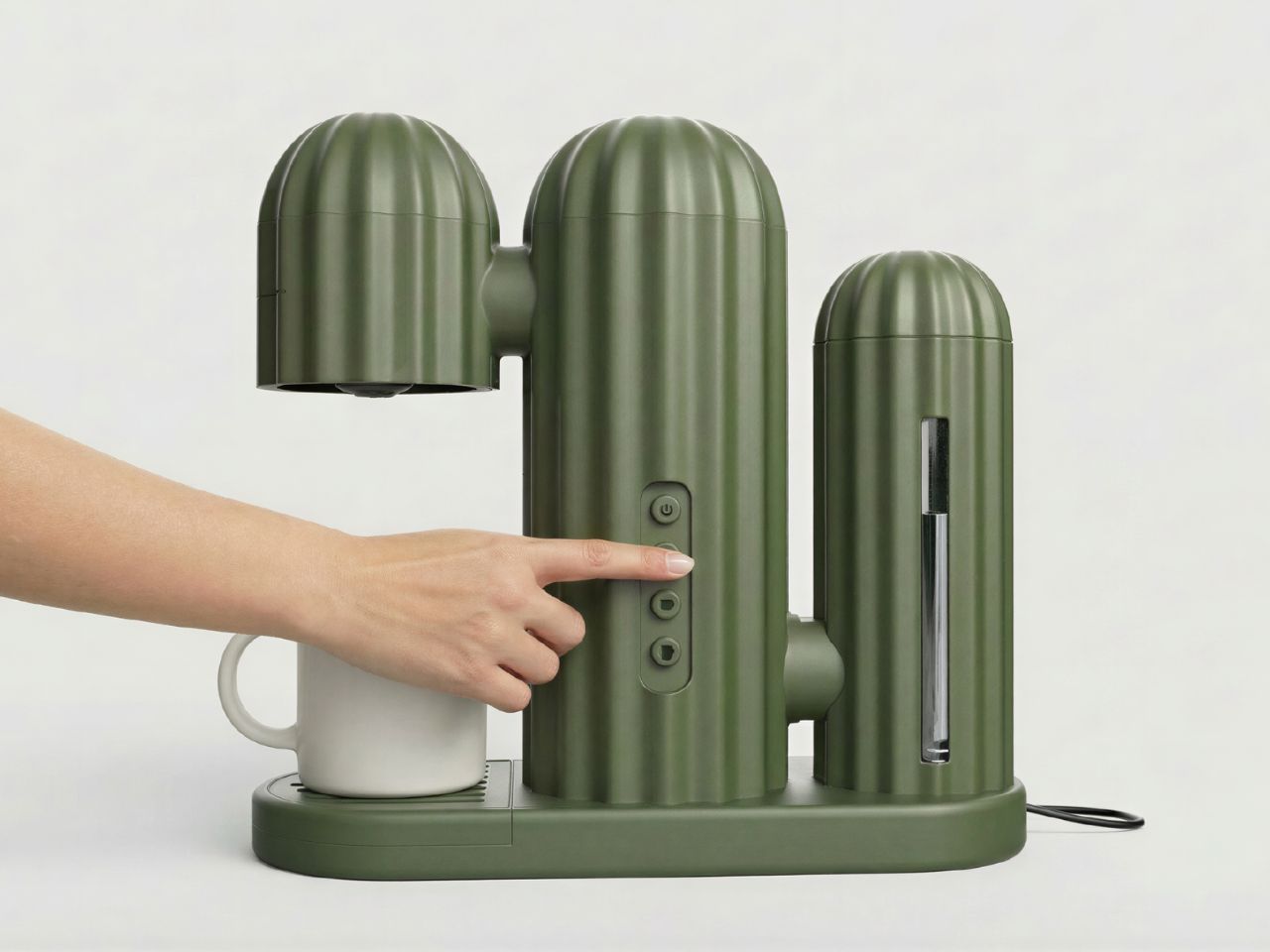
One of the more interesting aspects of Cacto is how its appearance changes depending on where you stand. Its form is designed to offer distinct visual expressions from the front and sides, encouraging people to appreciate the object from multiple perspectives. This consideration makes a difference in how the machine occupies a space. Most kitchen appliances have a clearly defined front, with the remaining surfaces receiving considerably less design attention. Cacto treats the entire object as an opportunity for expression. It is meant to be seen, admired, and kept on display, even when nobody is making coffee.
Behind its unconventional appearance is a philosophy drawn from the idea of the Bourgeois Bohemian, commonly referred to as BoBo. The concept describes individuals who place greater importance on authenticity, independence, and personal experiences than on conventional markers of success. Their choices are guided by what feels meaningful to them, even when those choices challenge popular tastes or expectations. It is a mindset that makes the cactus an especially fitting inspiration. The plant survives through adaptation, maintains its distinctive character, and grows according to the conditions around it without losing its identity.
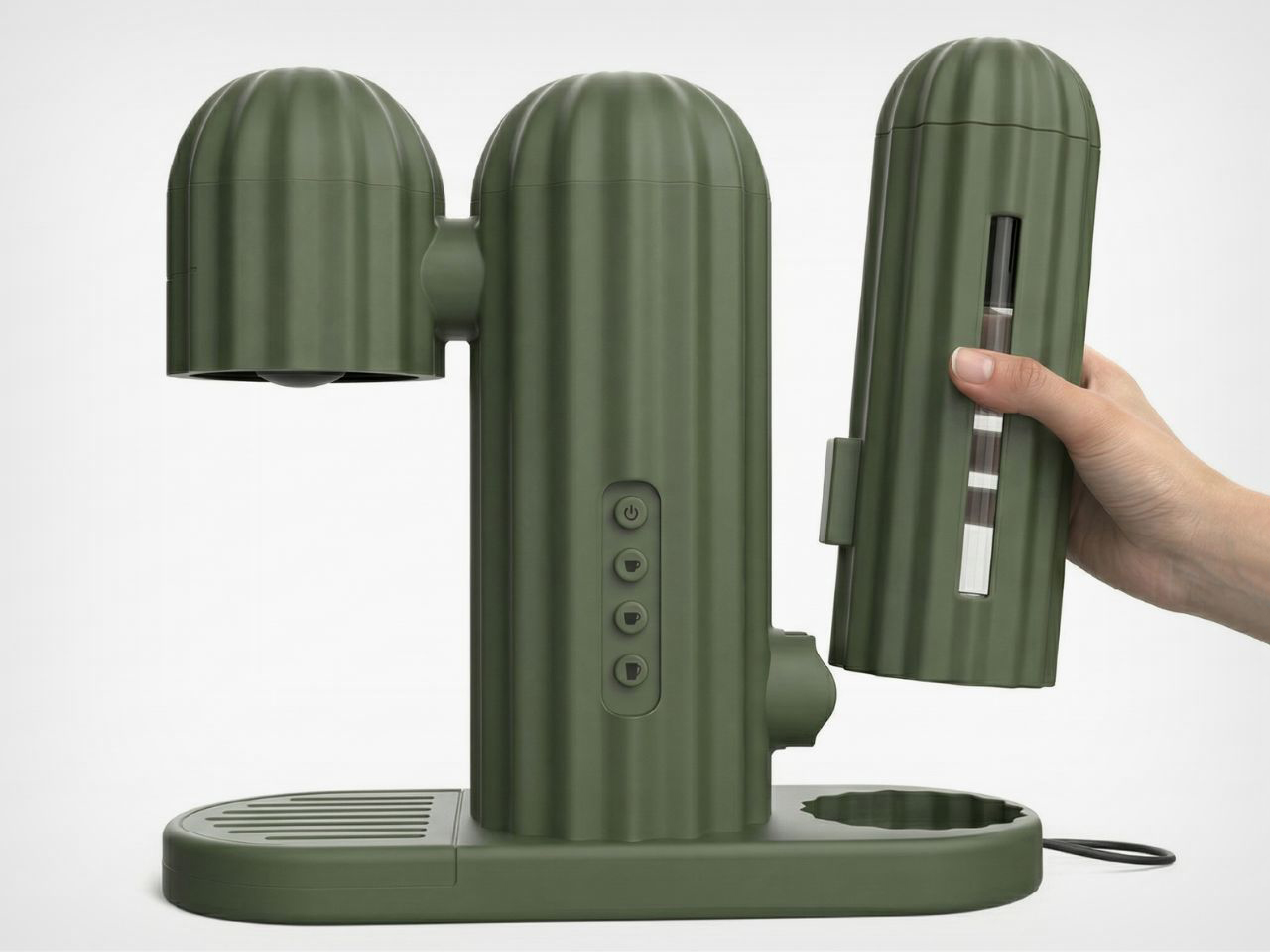
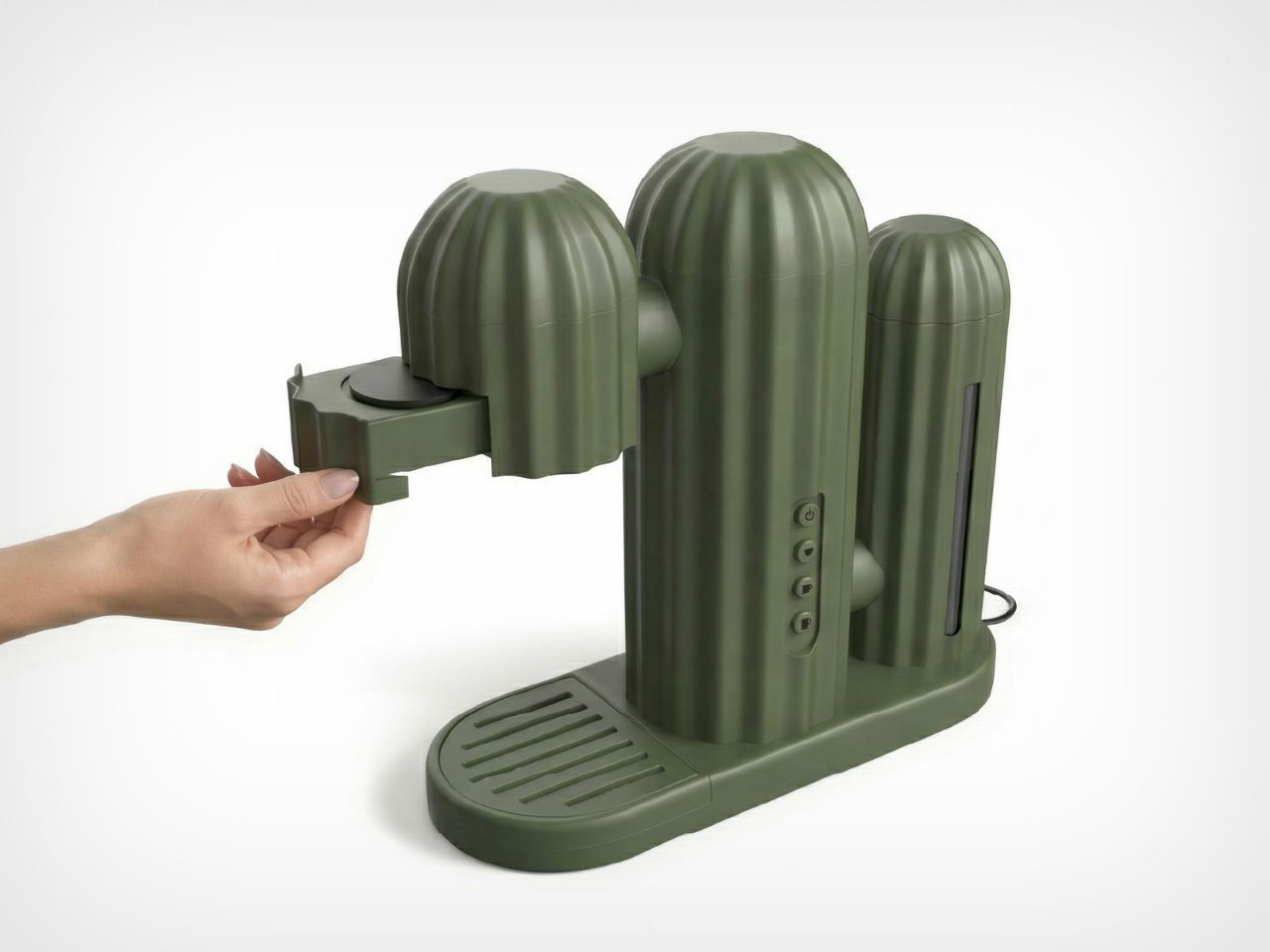
Cacto uses this connection to explore what individuality might look like in everyday product design. For someone who identifies with the BoBo philosophy, choosing an object for the home is about more than its practical function or perceived status. It is an extension of personal taste. A coffee machine does not necessarily need to disappear into a coordinated kitchen aesthetic to be considered well designed. It can introduce contrast, spark curiosity, and become a small reflection of the person who owns it.
That thinking extends to the experience of making coffee itself. For many people, brewing a cup is one of the first familiar actions of the day, often completed almost automatically while preparing for everything that follows. Cacto invites a slightly different relationship with that routine. Its expressive presence gives the user something to engage with beyond the simple act of preparing a drink. The machine becomes part of a personal ritual, encouraging a moment of attention toward an activity that can otherwise feel entirely ordinary.
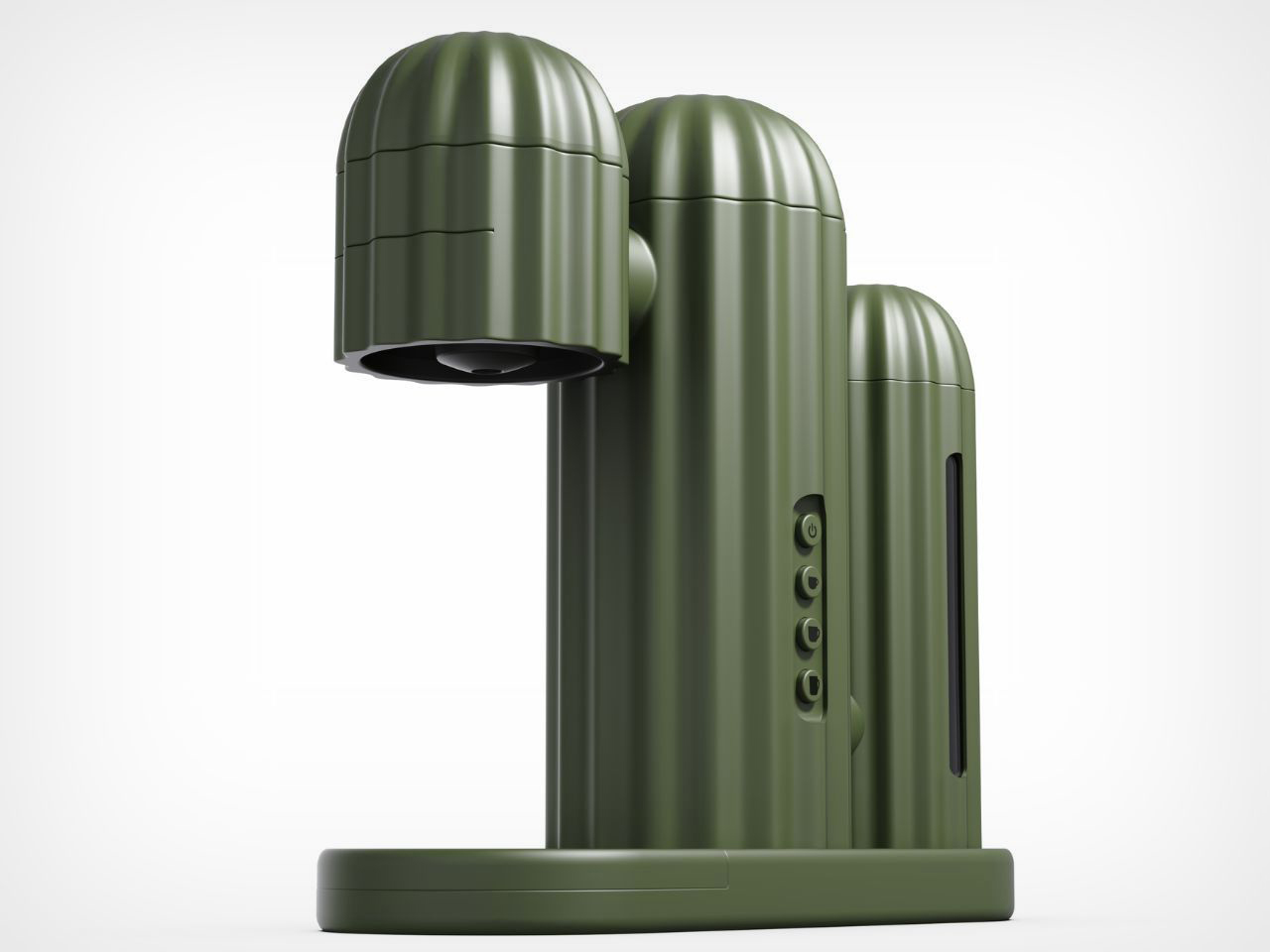
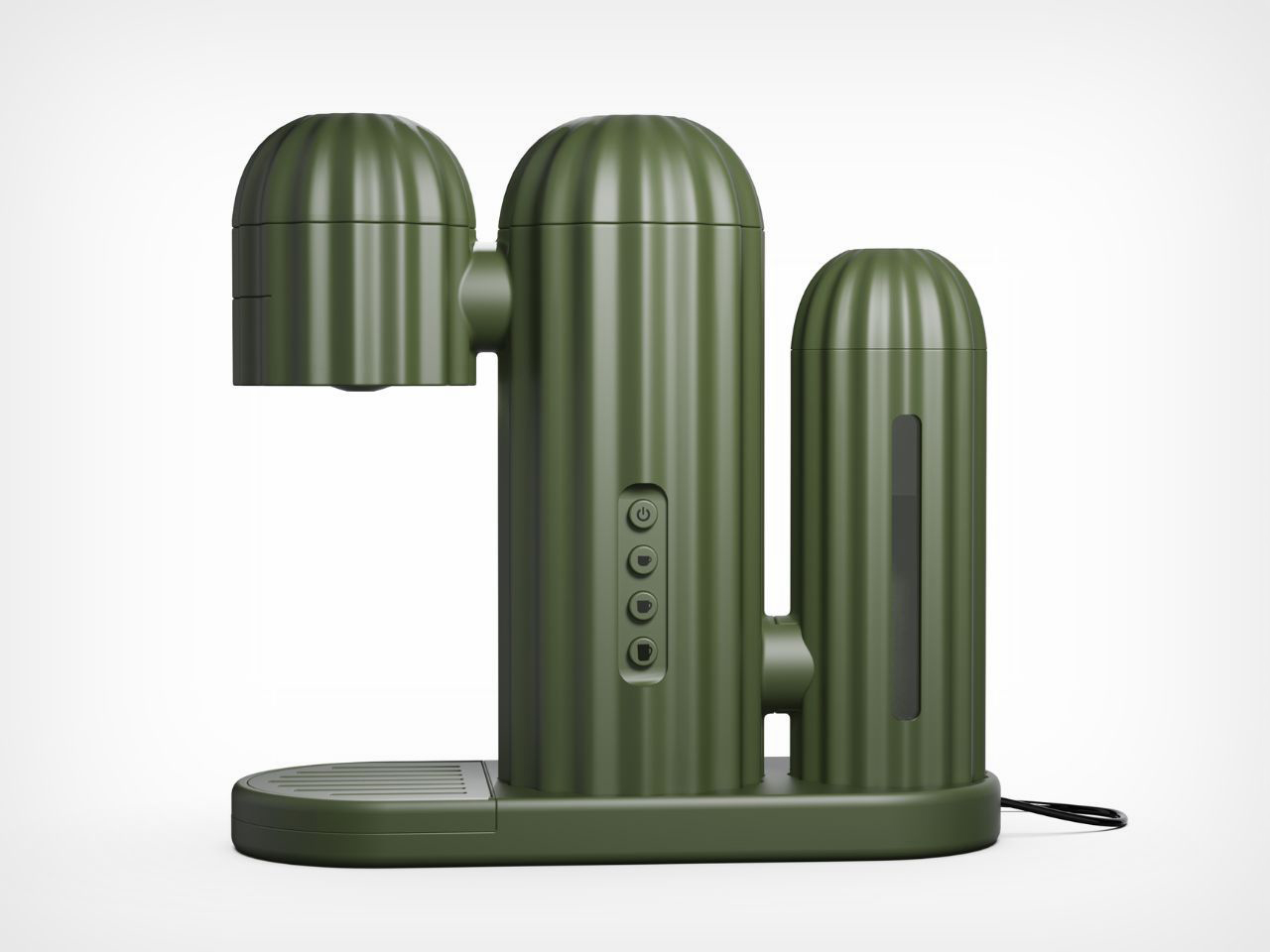
There is also something refreshing about the choice to bring such a distinctive personality to a capsule coffee machine. This is an appliance category commonly associated with convenience, efficiency, and compact forms. Cacto retains that familiar product identity while questioning the expectation that convenience should come packaged in a restrained, universally appealing exterior. Its design suggests that even functional objects can accommodate eccentricity and character without needing to justify their presence through additional features.
Cacto’s appeal lies in its willingness to challenge something as familiar as the kitchen coffee machine. It asks why everyday appliances should follow the same visual conventions when the people using them have such different personalities and preferences. By bringing the independent spirit of the cactus into a daily coffee ritual, Cacto gives an ordinary object a more personal presence. And in a kitchen filled with appliances designed to look increasingly alike, a coffee machine that confidently stands out feels like a welcome change.