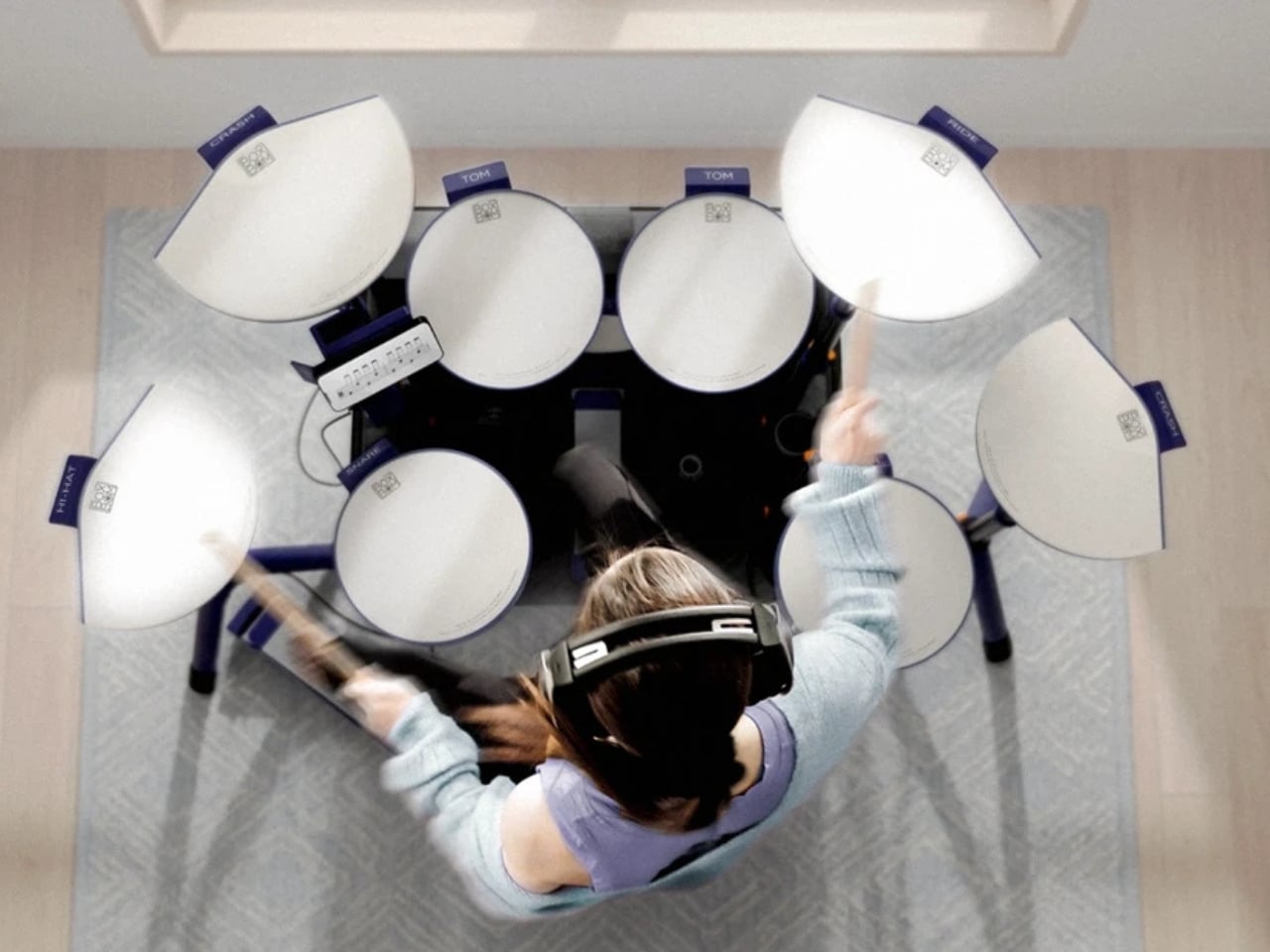
Picking up the drums has always come with a quiet, frustrating tax. Before you’ve played a single beat, you’re already being asked to make a significant financial commitment, figure out where to put a massive piece of equipment, and accept that your neighbors might hate you. For most people, that’s where the dream ends. Not with failure, but with logistics.
Xiaoyu Yu, a graduate from the Umeå Institute of Design’s class of 2026, noticed this gap and did something about it. Her project, Boxboom, is a rental-based, foldable electronic drum kit designed specifically for first-time players. On paper, it sounds straightforward enough. In practice, it reframes the entire conversation about what a beginner drum experience should actually look like.
Designer: Xiaoyu Yu
The existing drum market is oddly shaped. At the entry level, you get cheap kits that feel nothing like playing real drums. At the high end, you get electronic kits that come closest to replicating acoustic feel, but they’re expensive, require serious space, and carry the weight of a long-term commitment for someone who isn’t even sure they like drumming yet. As Yu observed, the market offers little for true beginners. Boxboom identifies that gap clearly: the problem isn’t that beginners can’t learn, it’s that the tools were never really designed around them to begin with.
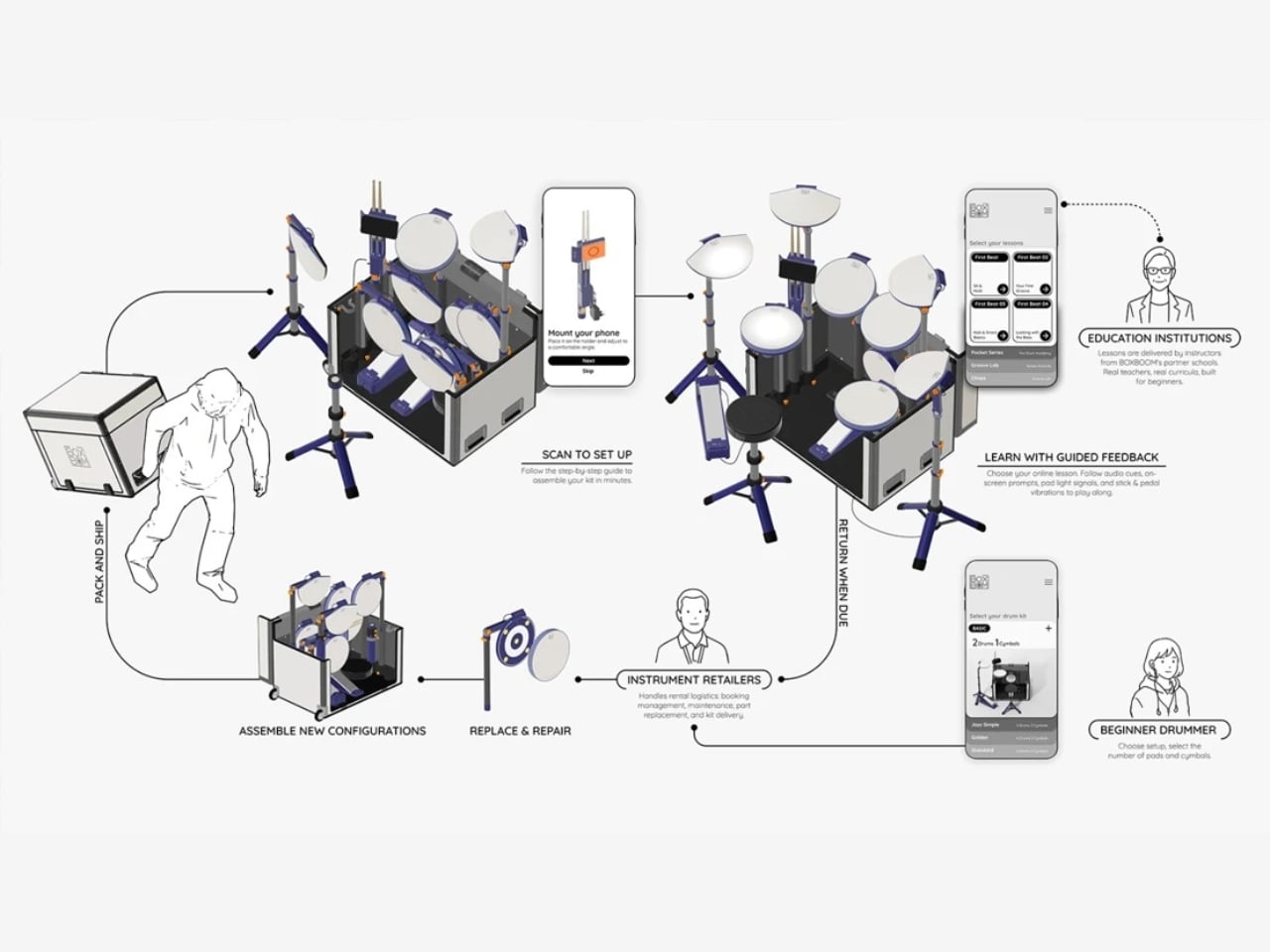
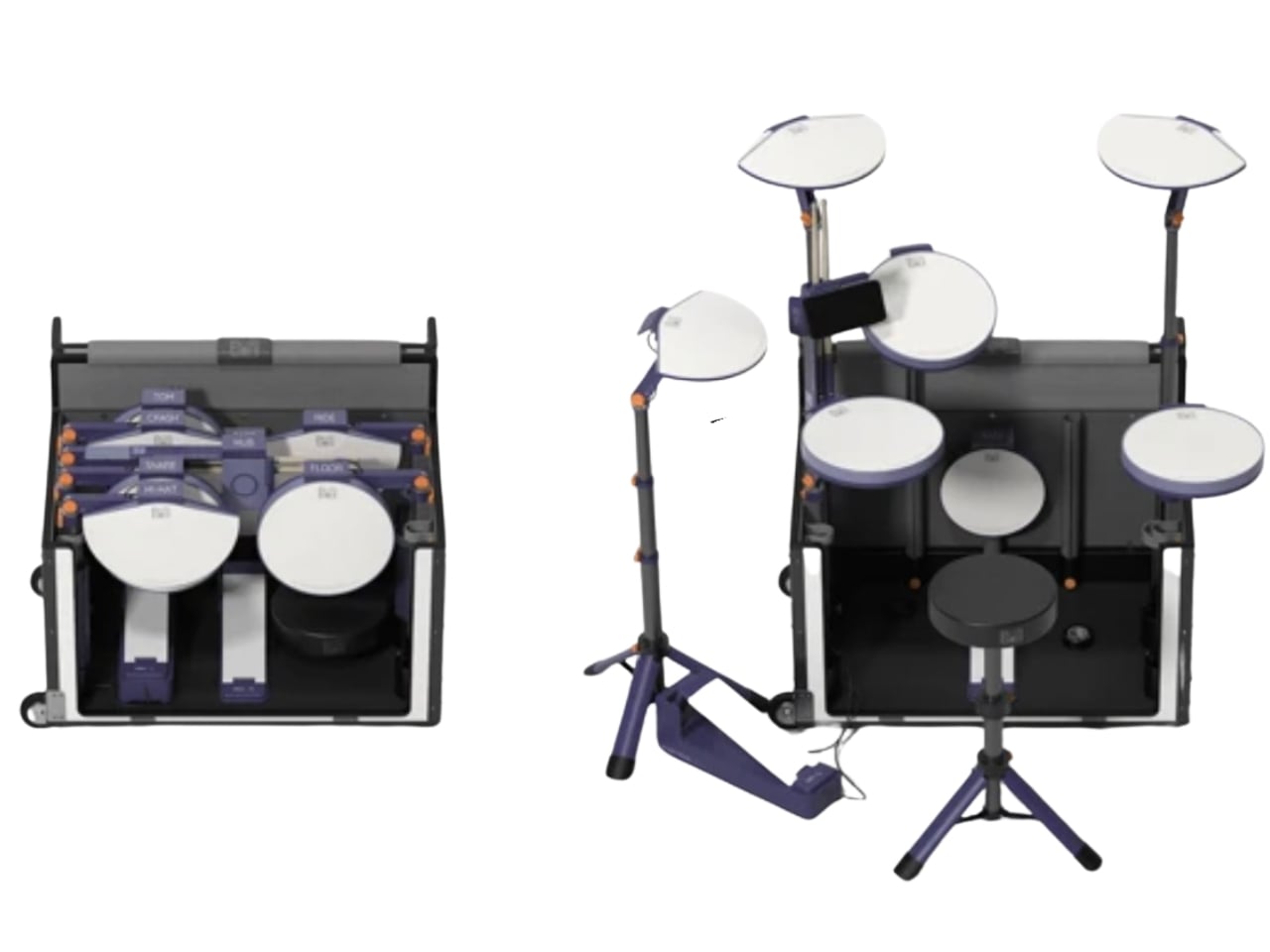
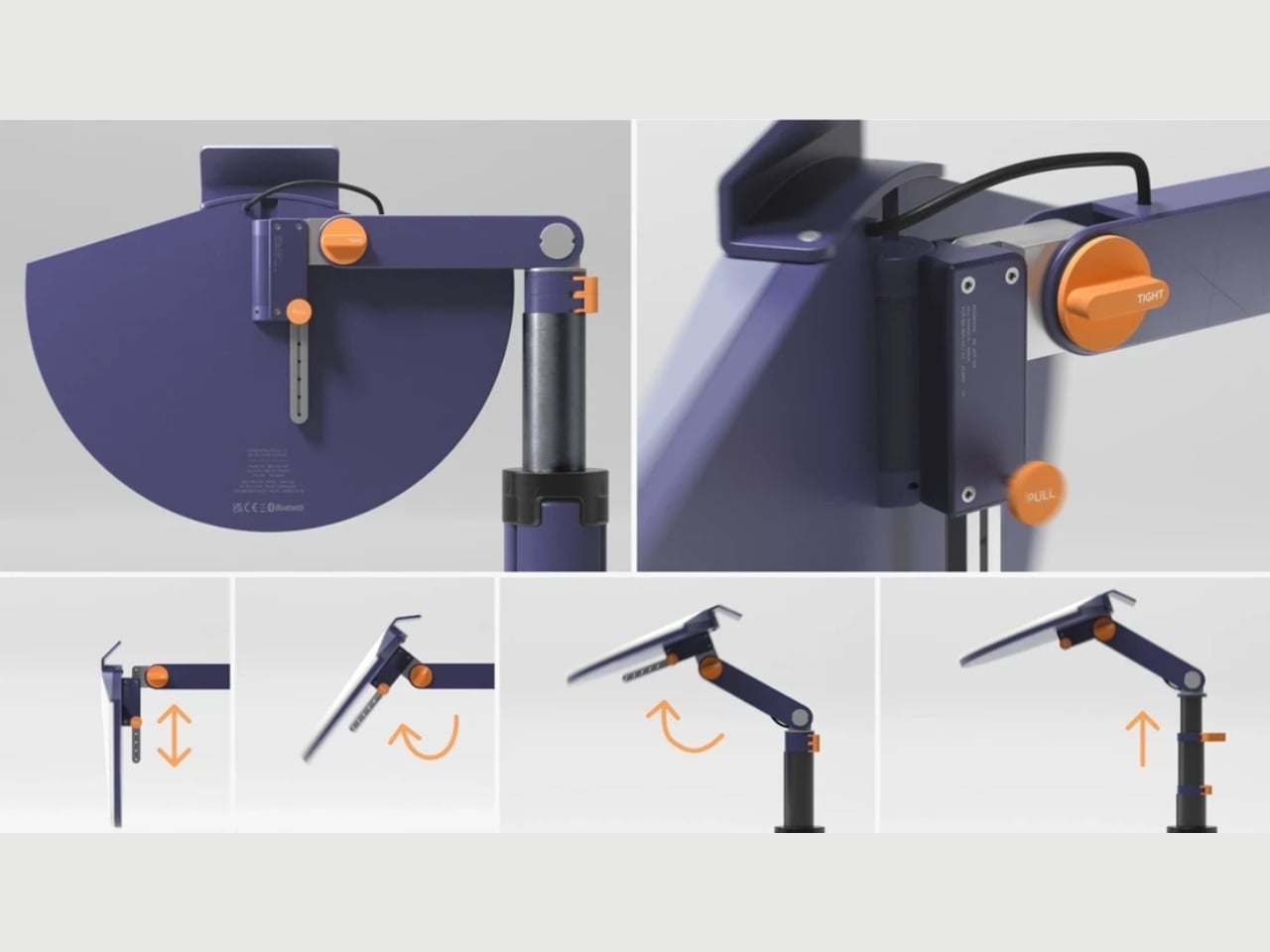
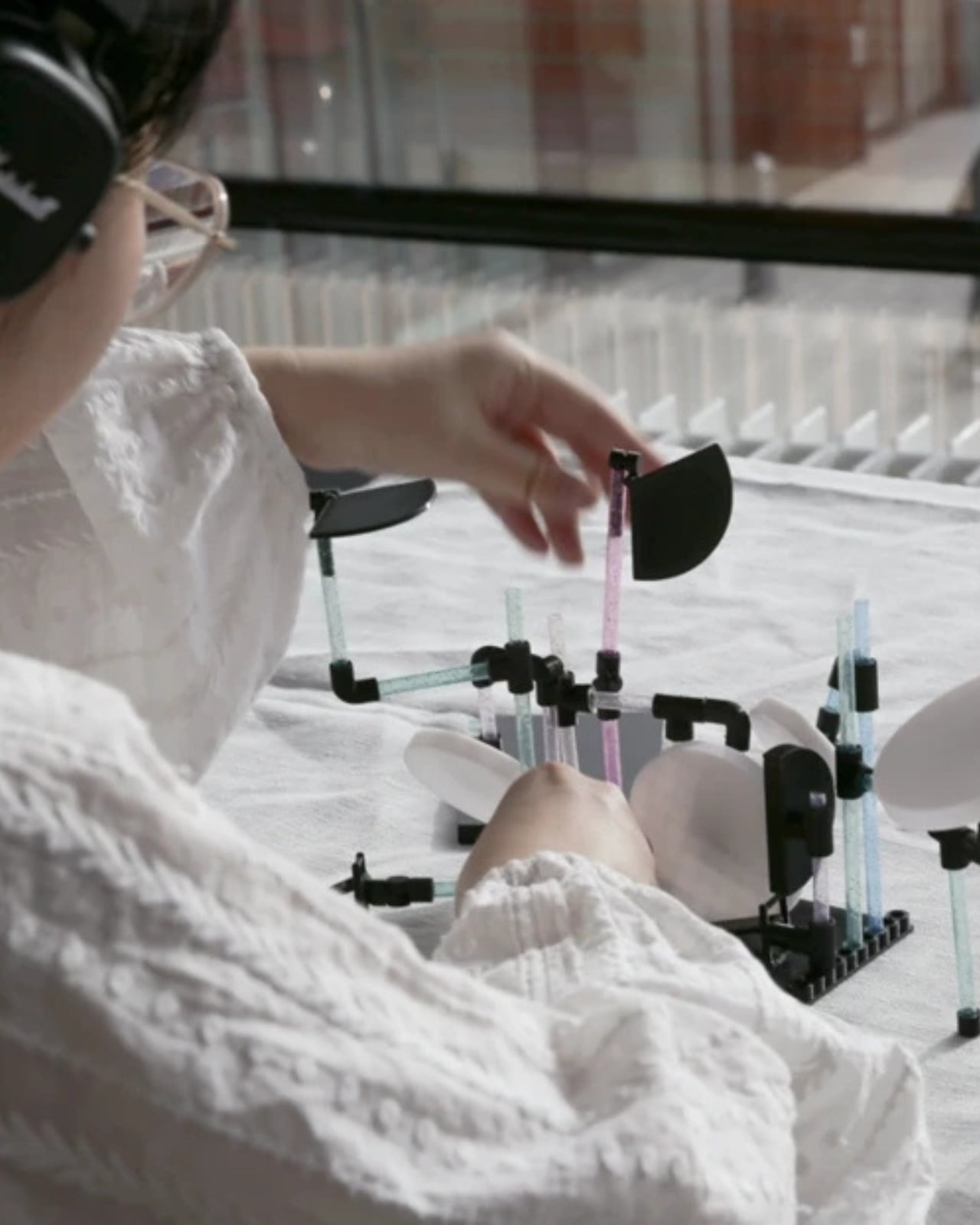
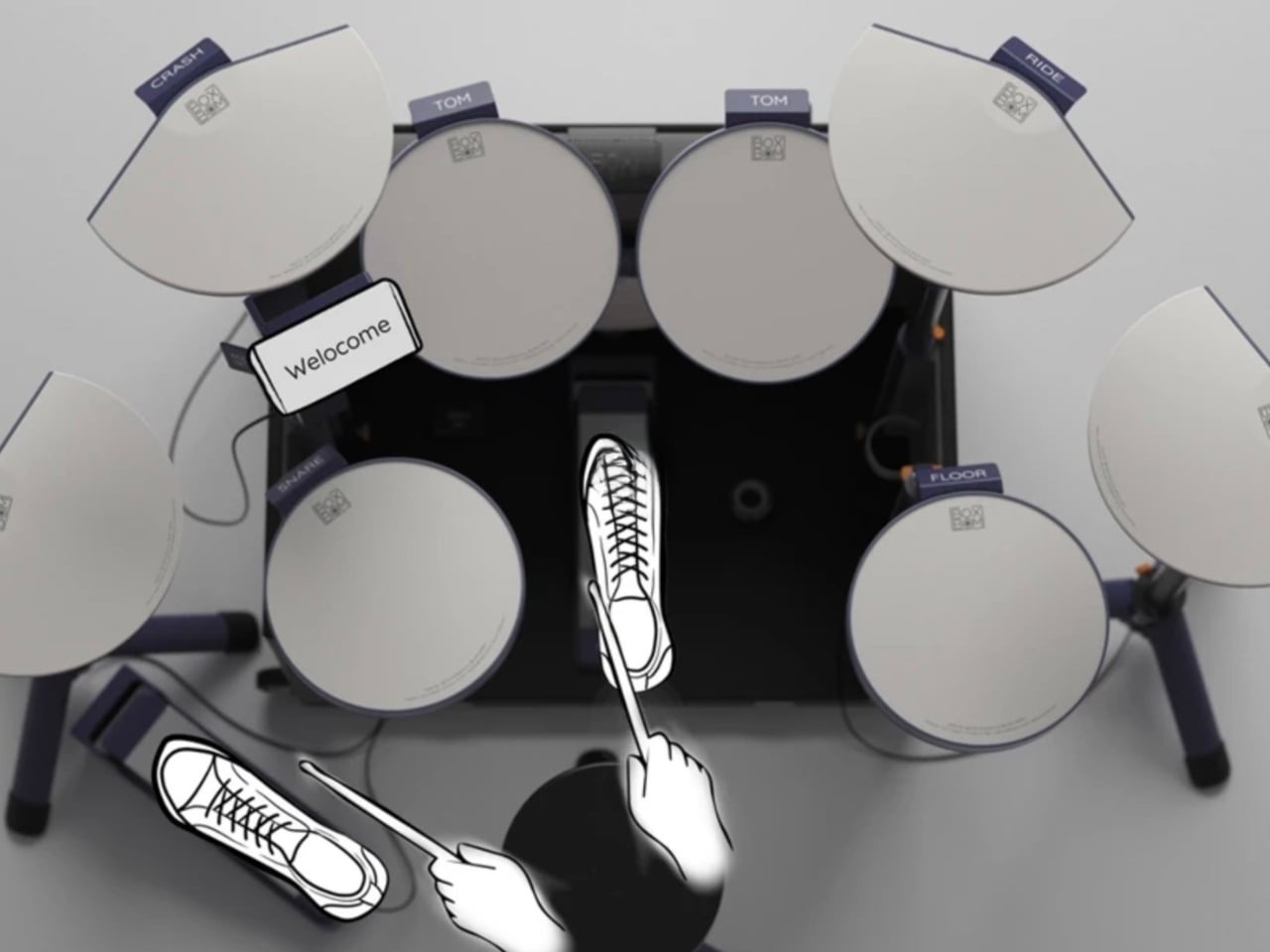
The physical design is worth appreciating on its own terms. Boxboom unfolds from a compact box into a fully functional drum configuration. Modular joints allow for quick setup and flexible arrangement, which means you’re not stuck with one rigid layout that doesn’t suit your body or your room. Parts are designed to be replaced individually, a detail that matters a lot for longevity. When a product is rentable, it has to survive multiple users, multiple moves, and the general roughness of being a learning tool. The design accounts for all of that without looking like it’s trying too hard.
What makes Boxboom more than just a folding drum kit is the service thinking built around it. Yu designed a three-sided ecosystem connecting users, rental shops, and drum training institutions through an online booking and delivery system. You’re not just renting a piece of hardware. You’re entering a structure that connects you to learning, not just to ownership. That shift matters more than it might seem. Ownership, it turns out, is one of the biggest barriers to entry, not a lack of enthusiasm.
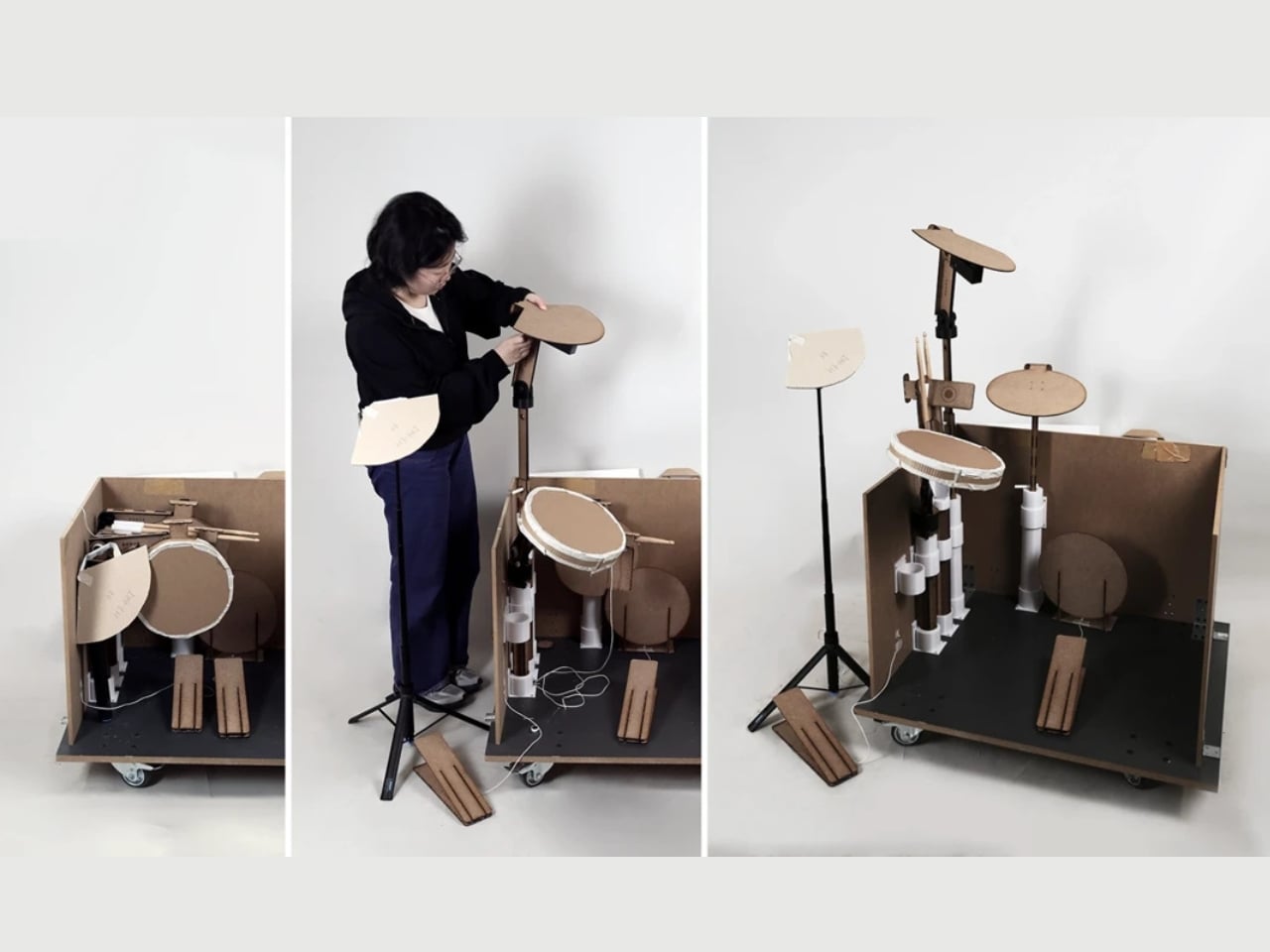
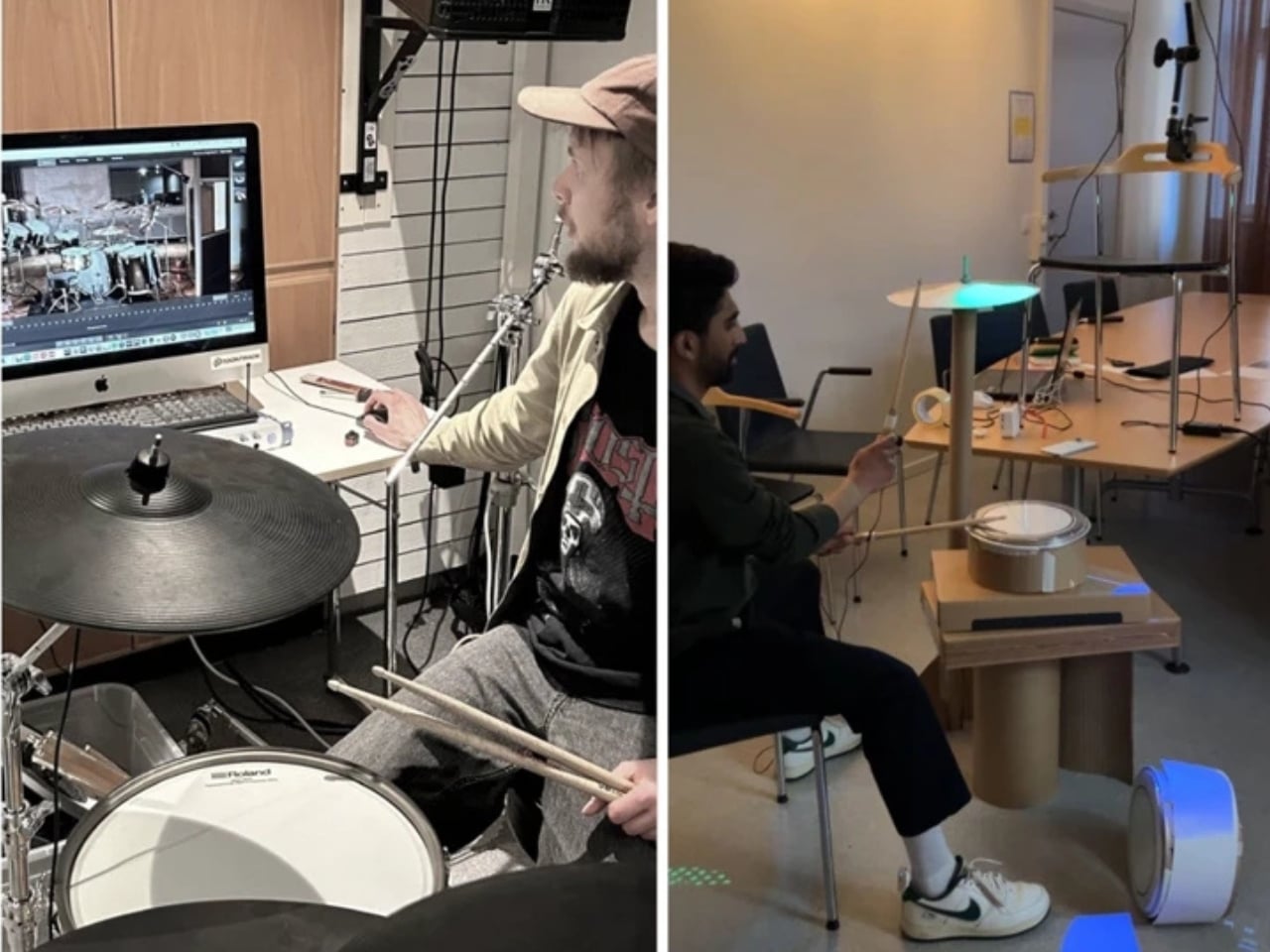
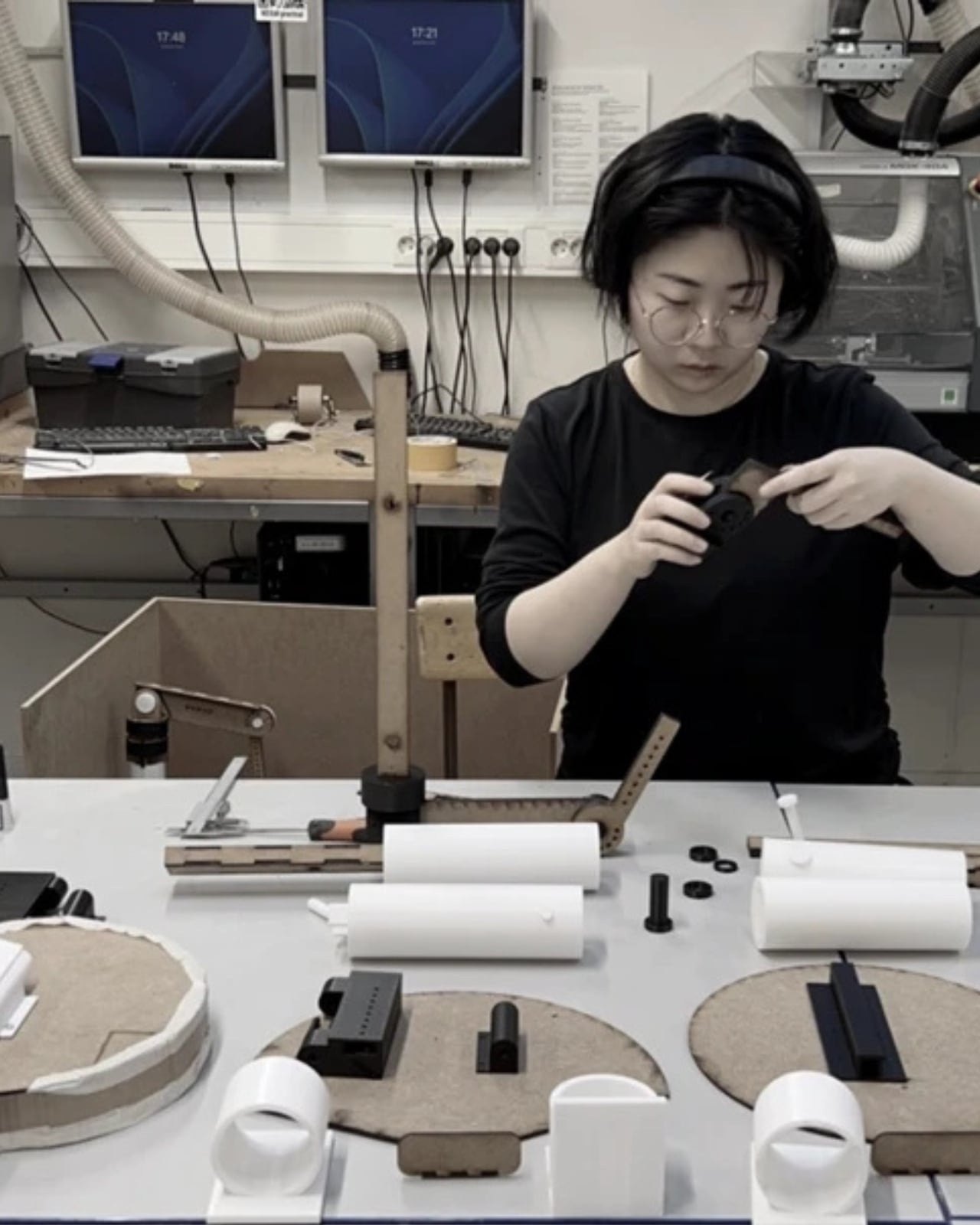
The research behind the project is just as considered. Yu conducted field research at Umeå Music School and Toontrack, a leading drum sound engine company, to understand how beginners experience rhythm and what it genuinely takes for a kit to support early learning. The design process ran from 1:10 scale models all the way to full 1:1 prototypes, testing folding logic and setup sequences until the physical experience matched the idea. A central Hub integrates a phone holder, power panel, and teaching stick storage dock into a single arm. The whole system is organized around one driving question: how can a drum kit itself teach you to play?
That question is what separates Boxboom from the many beginner-focused products that quietly shrink their ambitions and rebrand it as accessibility. Yu isn’t simply lowering the financial barrier. She’s rethinking the relationship between a learner and their instrument entirely. Most musical tools are designed with the assumption that you already know what you’re doing. Boxboom assumes you don’t, and it respects you for exactly that.
Graduation design projects like this tend to get filed away a little too fast. They show up at exhibitions, earn some well-deserved attention, and then disappear before anyone asks whether they could actually become something real. Boxboom feels like it deserves a longer conversation than that. The drumming market hasn’t seen this kind of structural rethinking in a long time, and the problem it’s addressing is genuinely underserved.
Whether Boxboom ends up in production or remains a concept, it already does something worth noting: it makes you wonder why nobody asked these questions sooner. Drums have always been for everyone. The design just hadn’t caught up yet.
SHARE