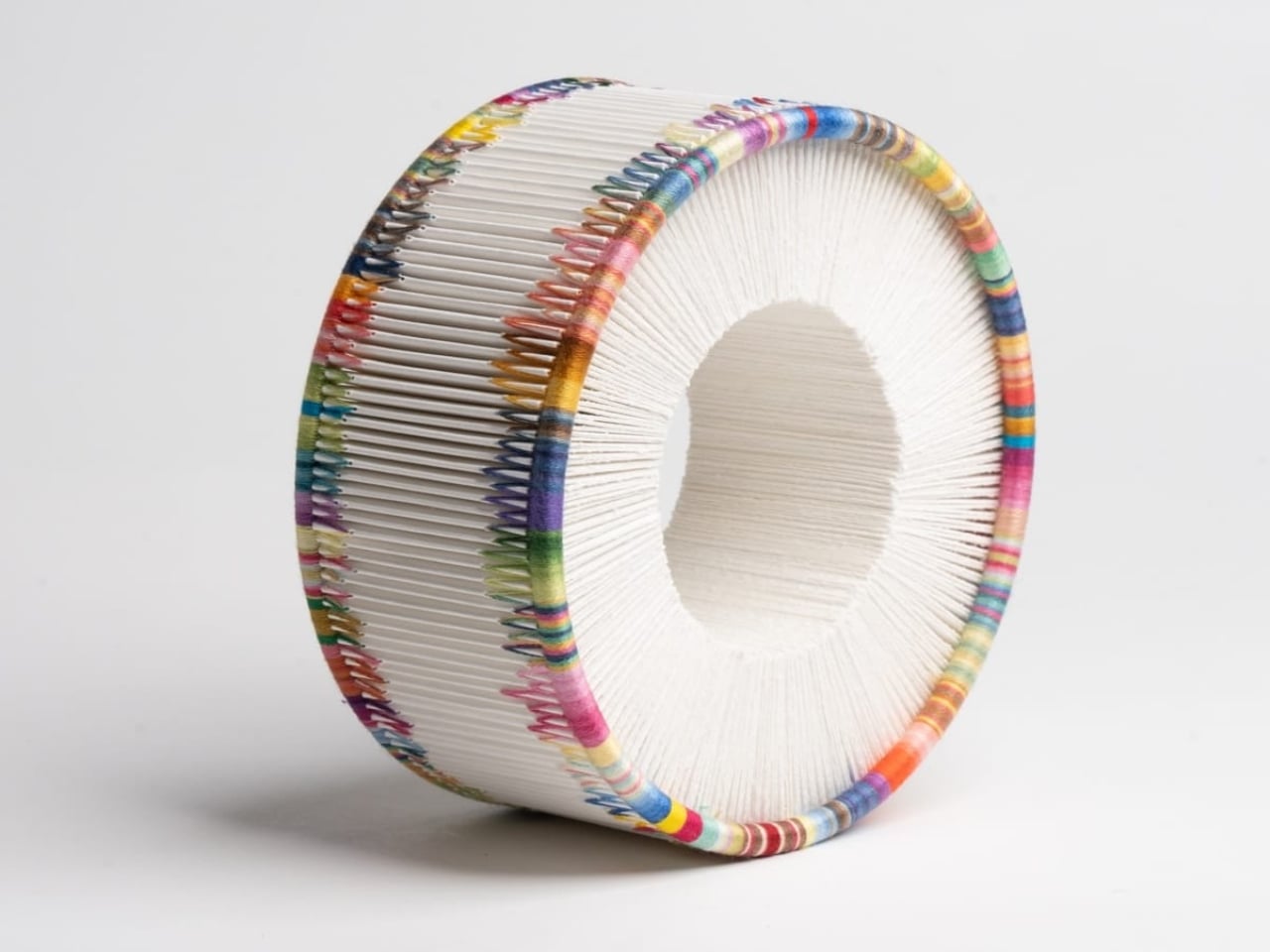
Every book you have ever held has a secret. Not a story buried between its pages, but a structural one, a quiet piece of craftsmanship stitched along the spine that most people never think to look for. A new work by Singaporean artist Adelene Koh not only knows about it. It makes it the entire point.
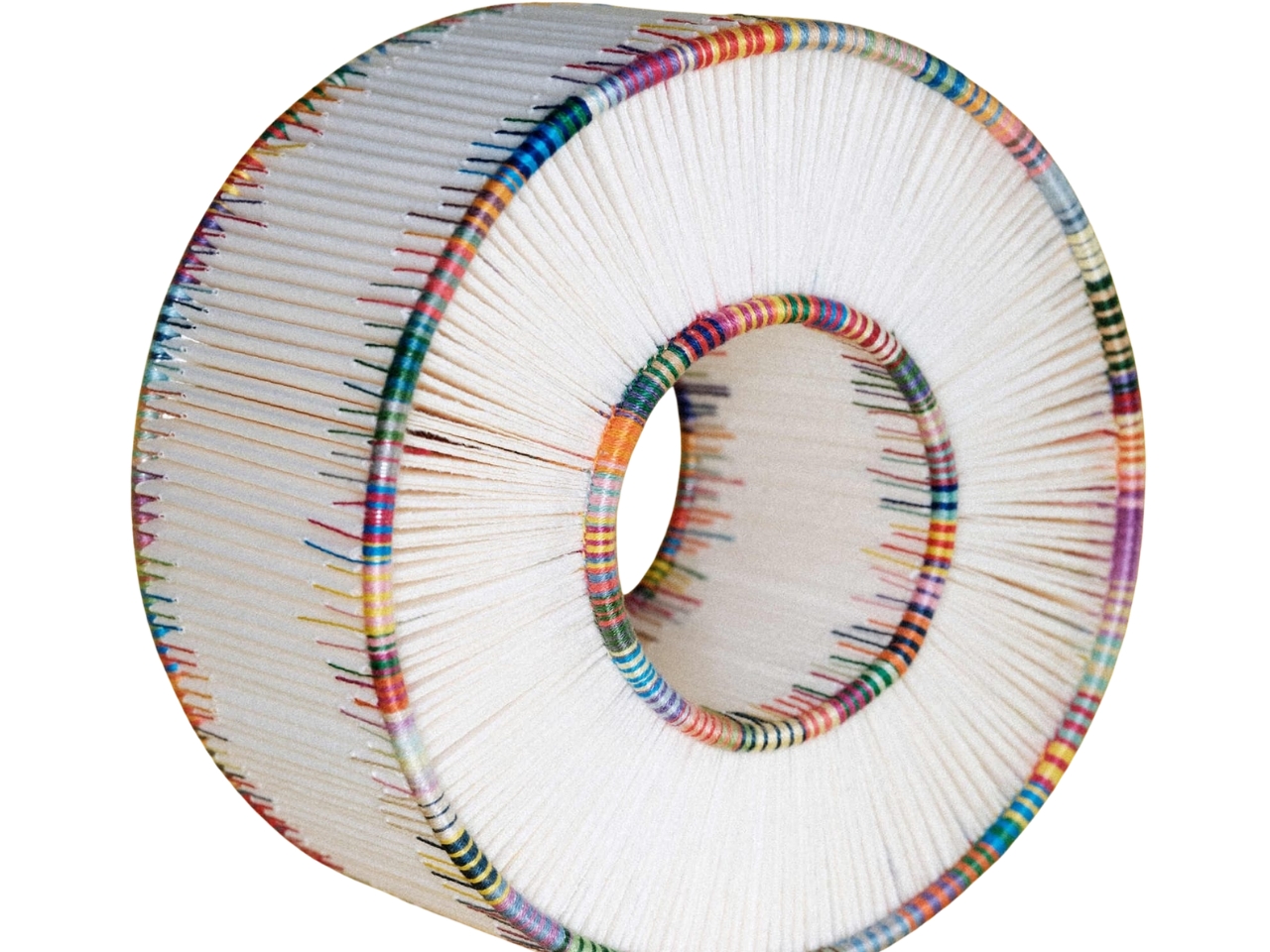
“Endless” (2025) is a large, ring-like sculpture built from paper, embroidery threads, and aluminum wire. It is meditative in form, circular in structure, and resembles a torus. It is also, depending on how much you know about bookbinding, either immediately legible or completely mysterious. Either way, it stops you. The scale of it, the density of color, the almost compulsive repetition of its construction, all of it registers before you even begin to understand what you are looking at.
Designer: Adelene Koh
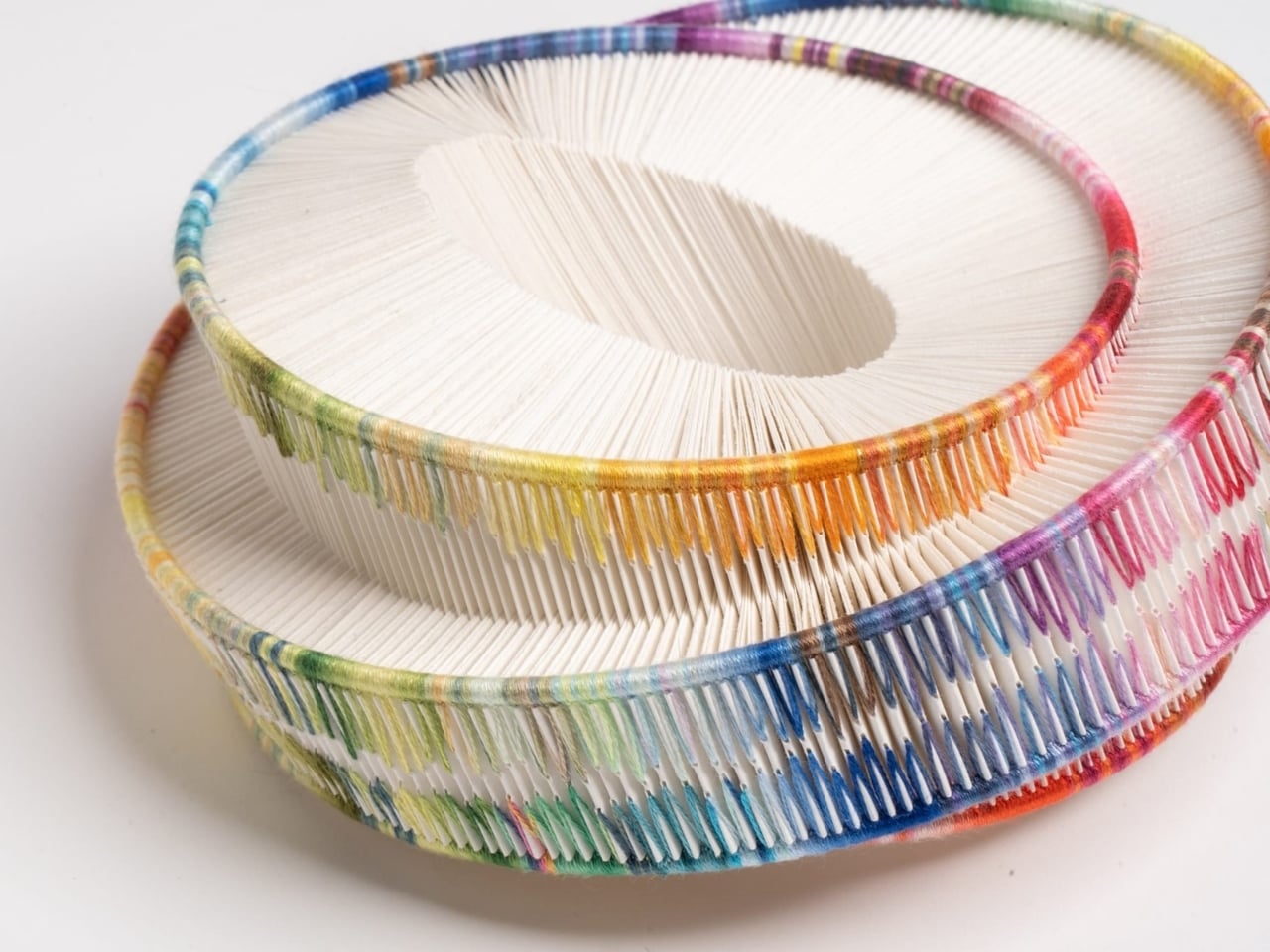
What you are looking at is an endband. Or rather, what an endband becomes when it is freed from the book it was always meant to serve. If you have never heard that word, you are in good company. The endband is a structural and decorative element sewn along the head and tail of a book’s spine, a strip of colored thread that adds reinforcement and a quiet finishing touch. It is the part that usually disappears the moment a cover is glued on. Most readers never see it. Most of us never think to ask what is actually holding a book together. “Endless” takes that hidden element and builds an entire object around it, blowing the endband up into something that can finally be seen on its own terms.
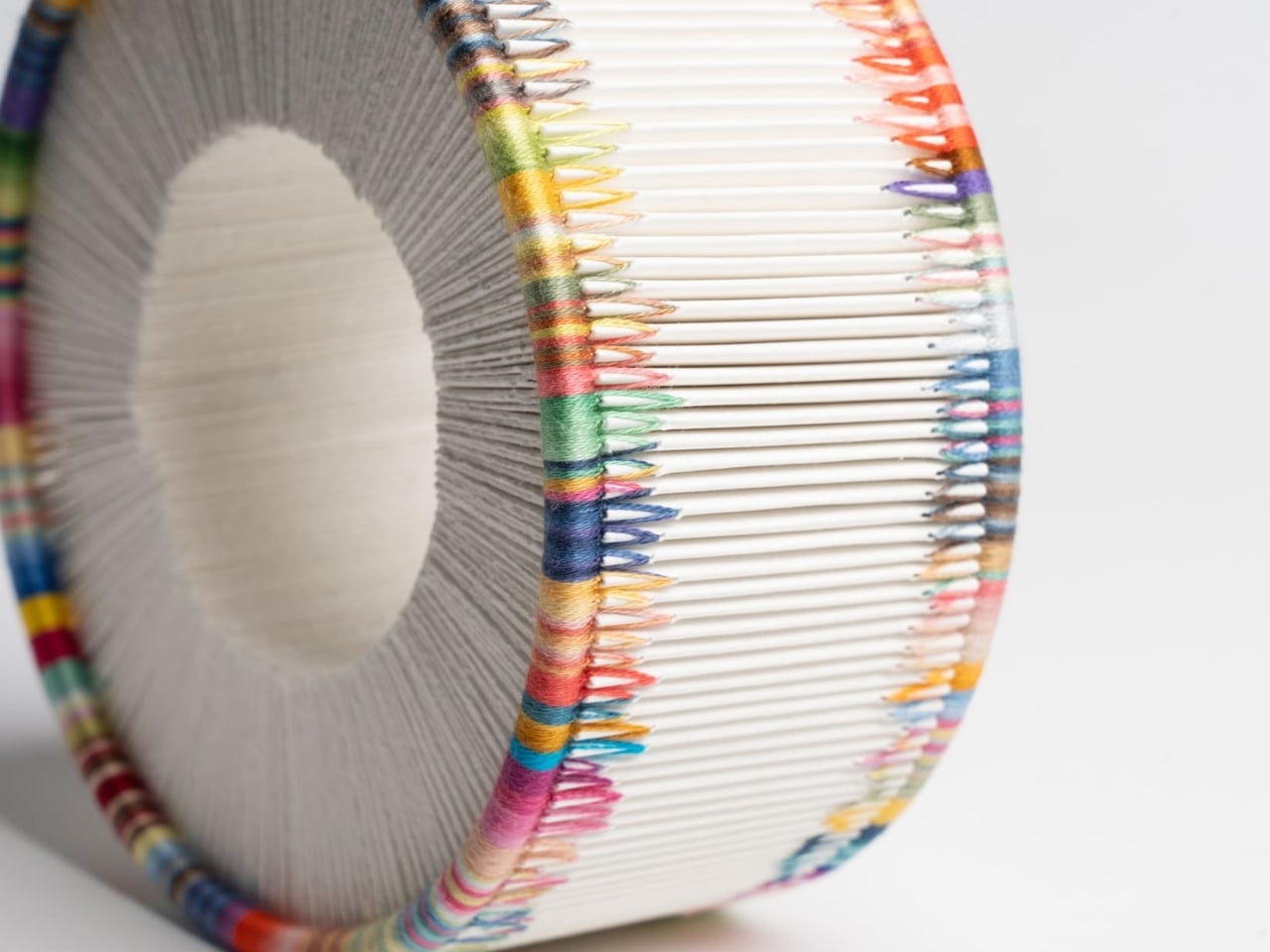
The construction method is as considered as the concept. Koh used the front bead method, an 18th and 19th century English sewing technique, worked around a single aluminum wire core. Into that structure she integrated hand-folded and hand-cut pages formed into quires, with additional folds along the fore-edge. The result is not just visually striking but physically demanding to comprehend. The labor embedded in the piece is immense, and the closer you look, the more apparent that becomes. It is the kind of object that rewards slowness and punishes a quick glance.
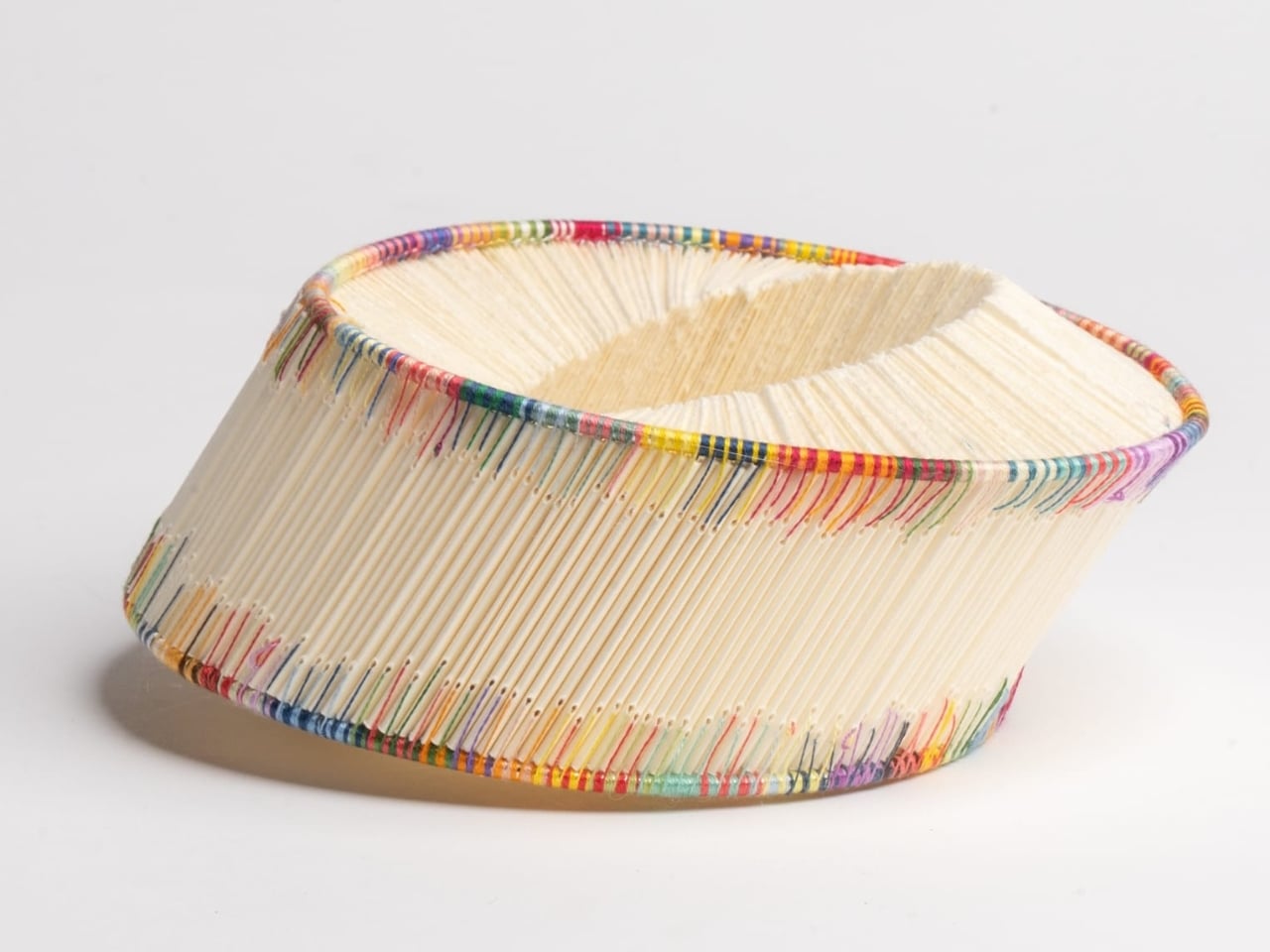
The material choice deserves its own attention. Paper is usually the fragile thing in the room, the thing that tears, yellows, and eventually dissolves. Here, it becomes the structural backbone. It holds the entire form in place. That inversion feels intentional, a kind of material optimism that refuses to accept the obvious hierarchy between what is precious and what is expendable. Thread, wire, and paper, three materials associated with impermanence, come together to produce something that feels permanent and resolved.
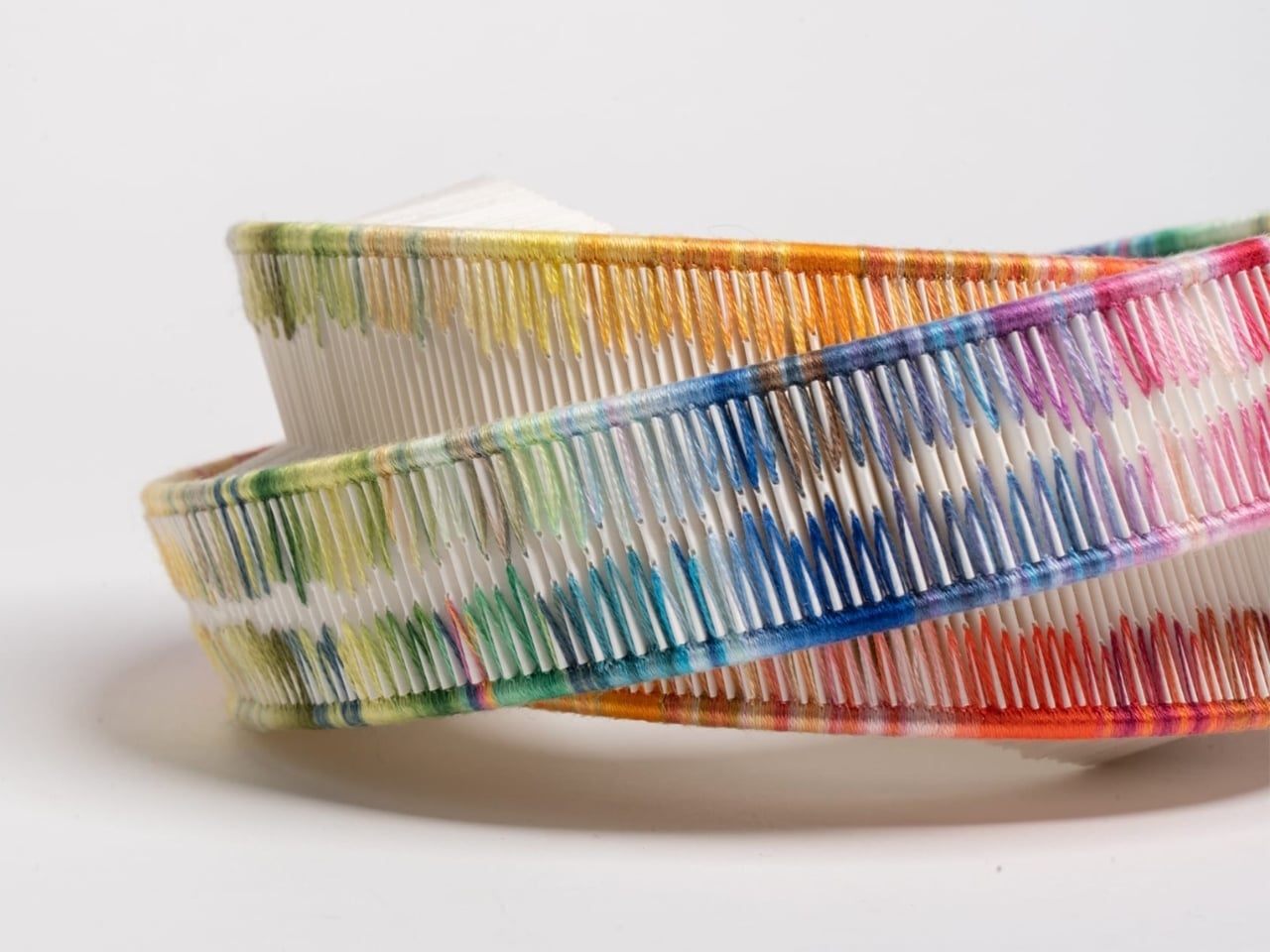
“Endless” was shortlisted for the 2026 Loewe Foundation Craft Prize, one of the more prestigious recognitions in contemporary craftsmanship, and the piece carries the weight of that context well. The prize consistently spotlights work that sits at the intersection of tradition and innovation, and this fits squarely in that space. It is technically rooted in centuries-old bookbinding practice while producing something that looks entirely contemporary. That balance is genuinely difficult to achieve, and rarer than it should be.
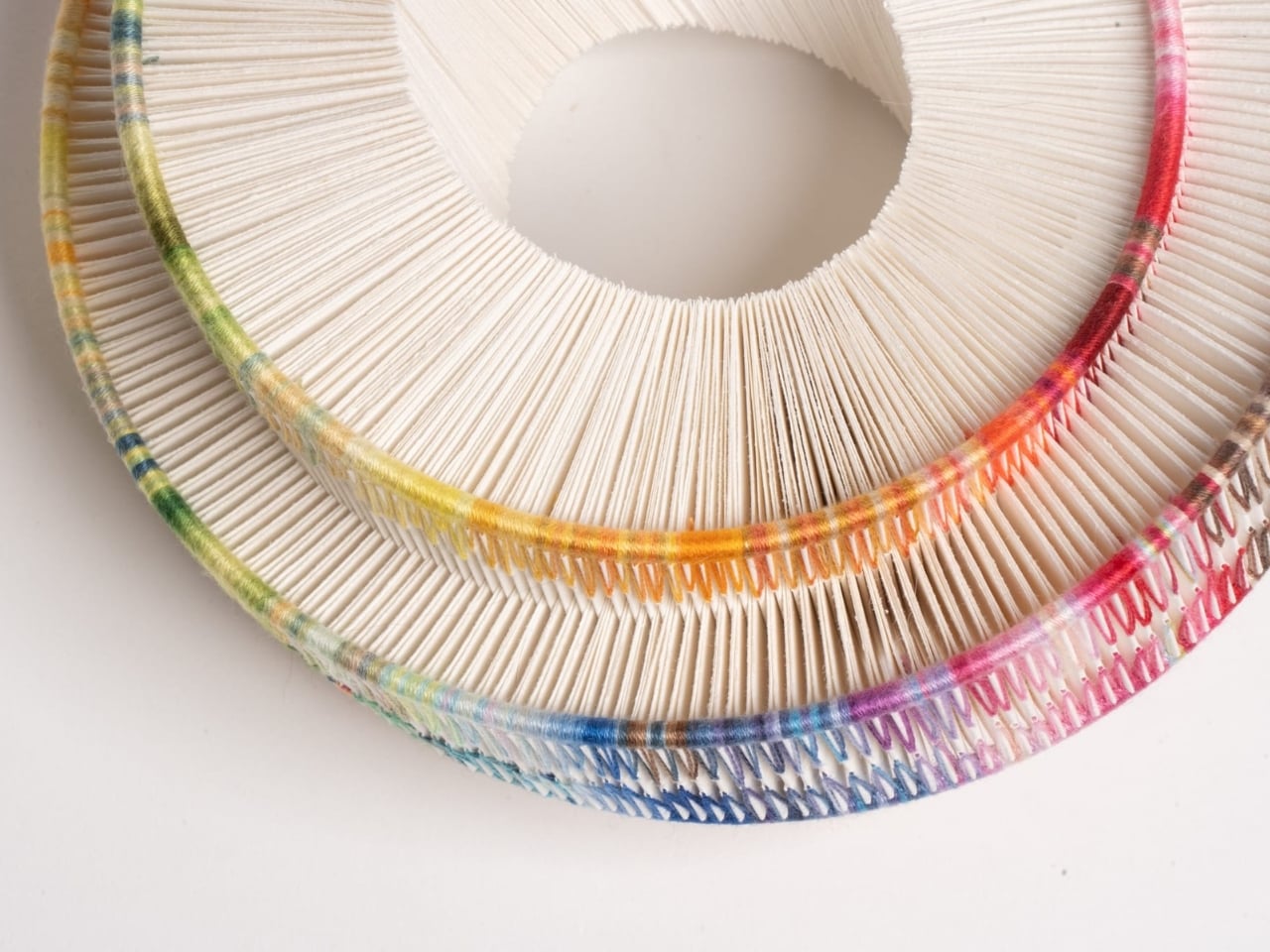
I keep thinking about what the design is actually arguing. We tend to celebrate the surface of things: the cover, the finish, the outer form. The integrity of any well-made object usually lives in the parts nobody shows you. “Endless” makes that invisible infrastructure visible, and in doing so, asks a quiet but pointed question about what we choose to hide and what we choose to show.
The 2026 prize was ultimately awarded to South Korean artist Jongjin Park for “Strata of Illusion,” selected by a jury that included architect Frida Escobedo, designer Patricia Urquiola, and curator Abraham Thomas. But the shortlist carries its own weight, and the presence of “Endless” on it feels like a signal worth paying attention to. Bookbinding rarely gets the cultural spotlight it deserves. As a design object, “Endless” makes the strongest possible case for why it should.
SHARE