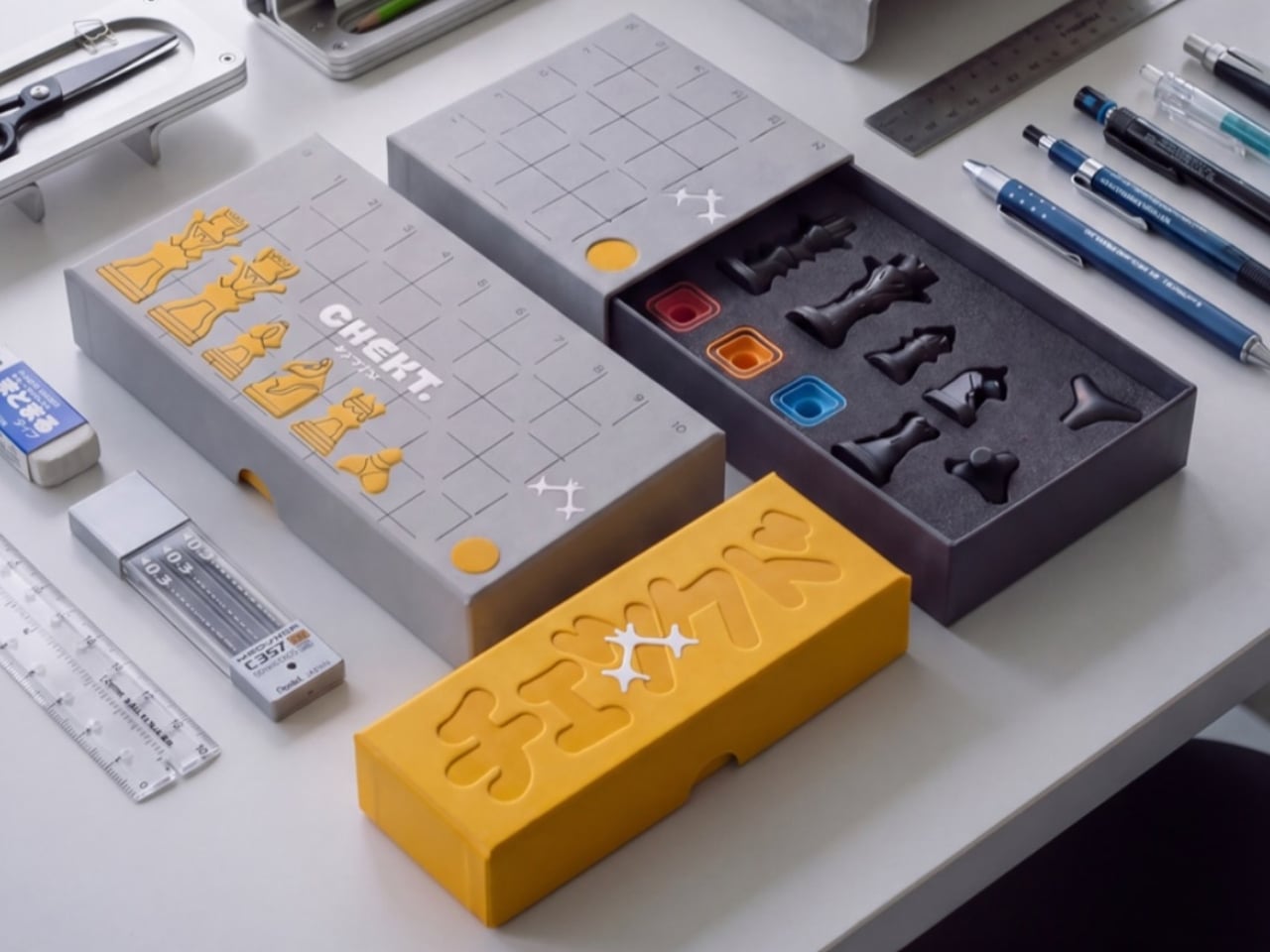
Chess has had its design moments before. The Bauhaus crowd took a swing at it in the 1920s. The Staunton standard has been the global norm since the 1800s, and somehow nobody’s fully managed to unseat it. Every generation eventually looks at the board and decides the pieces deserve a second opinion. Right now, that reinterpretation is coming from a 23-year-old UK-based 3D artist named Jess Wiseman, operating under the handle @chesslwiseman, and his set is called CHEKT.
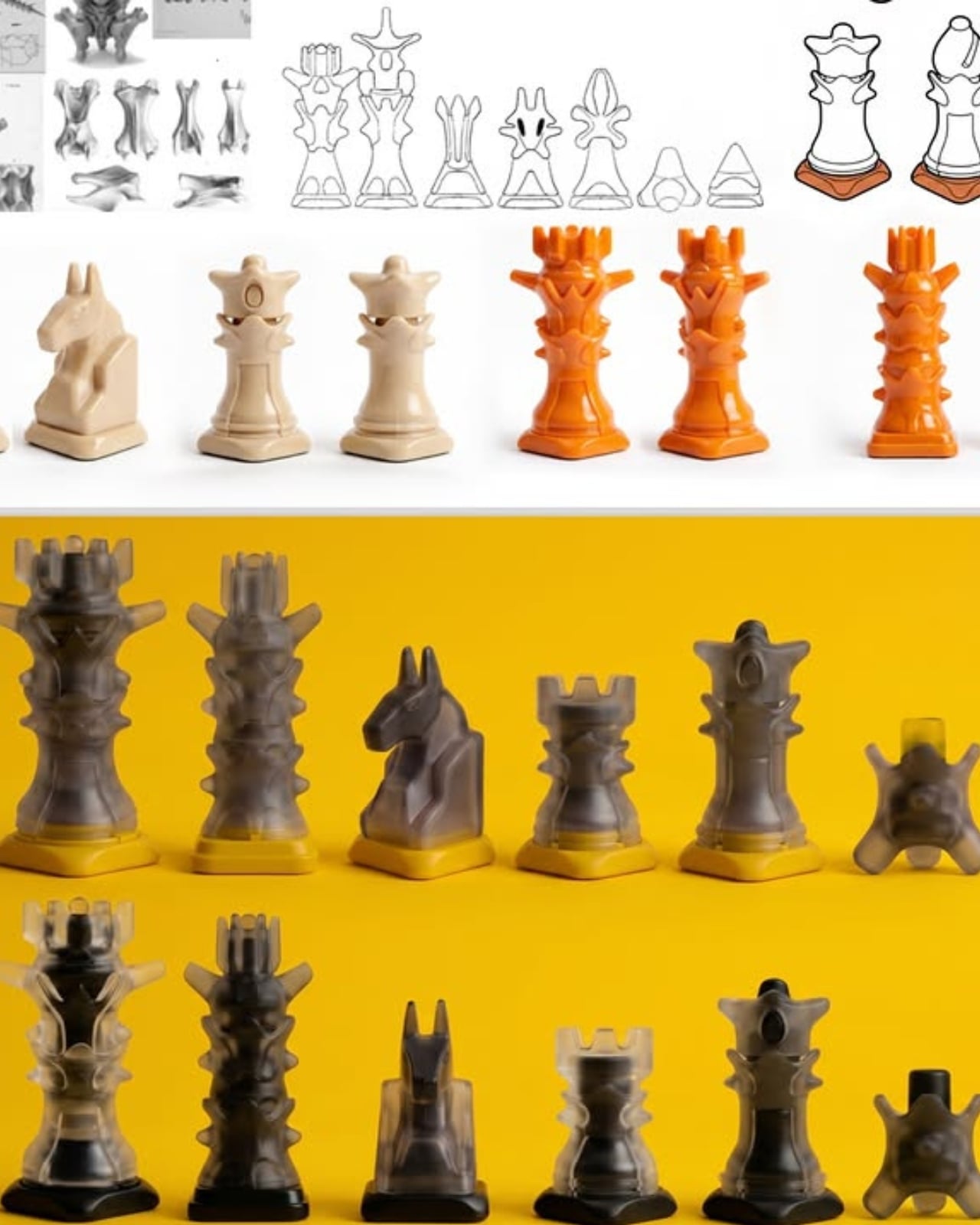
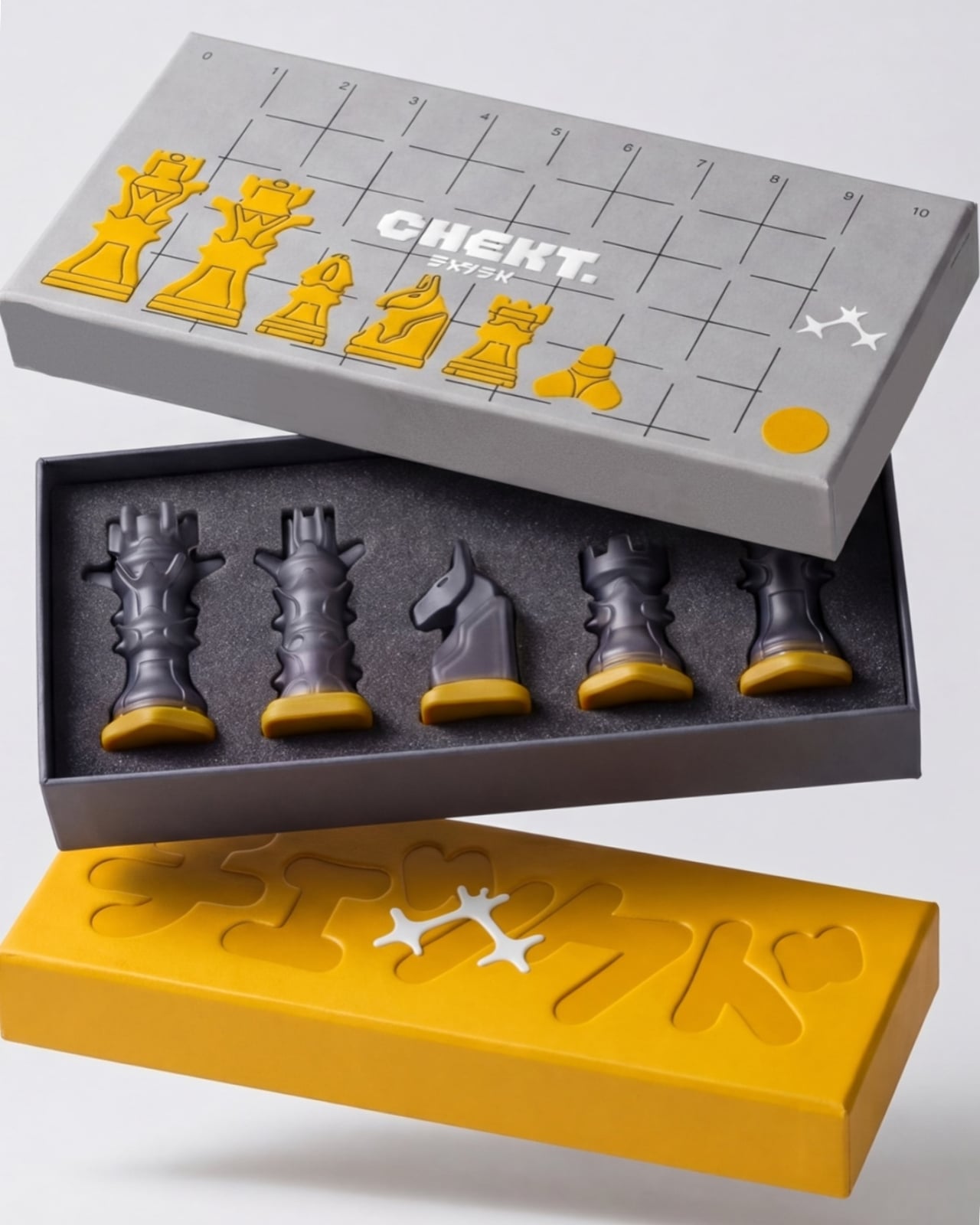
The photographs alone are enough to stop you mid-scroll. Six pieces nestled into tight foam cutouts, each one precision-milled in matte obsidian with a warm cream undertone that catches light differently depending on the angle. Wiseman designed them entirely from scratch, replacing the traditional Staunton silhouettes with sculptural, geometric forms that still read unmistakably as their archetypes. The queen is still regal. The knight still suggests a horse. But the language they’re speaking is architectural rather than decorative, all sharp edges, weighted bases, and deliberate negative space that makes each piece feel like a standalone object worth studying on its own terms.
Designer: Jess Wiseman
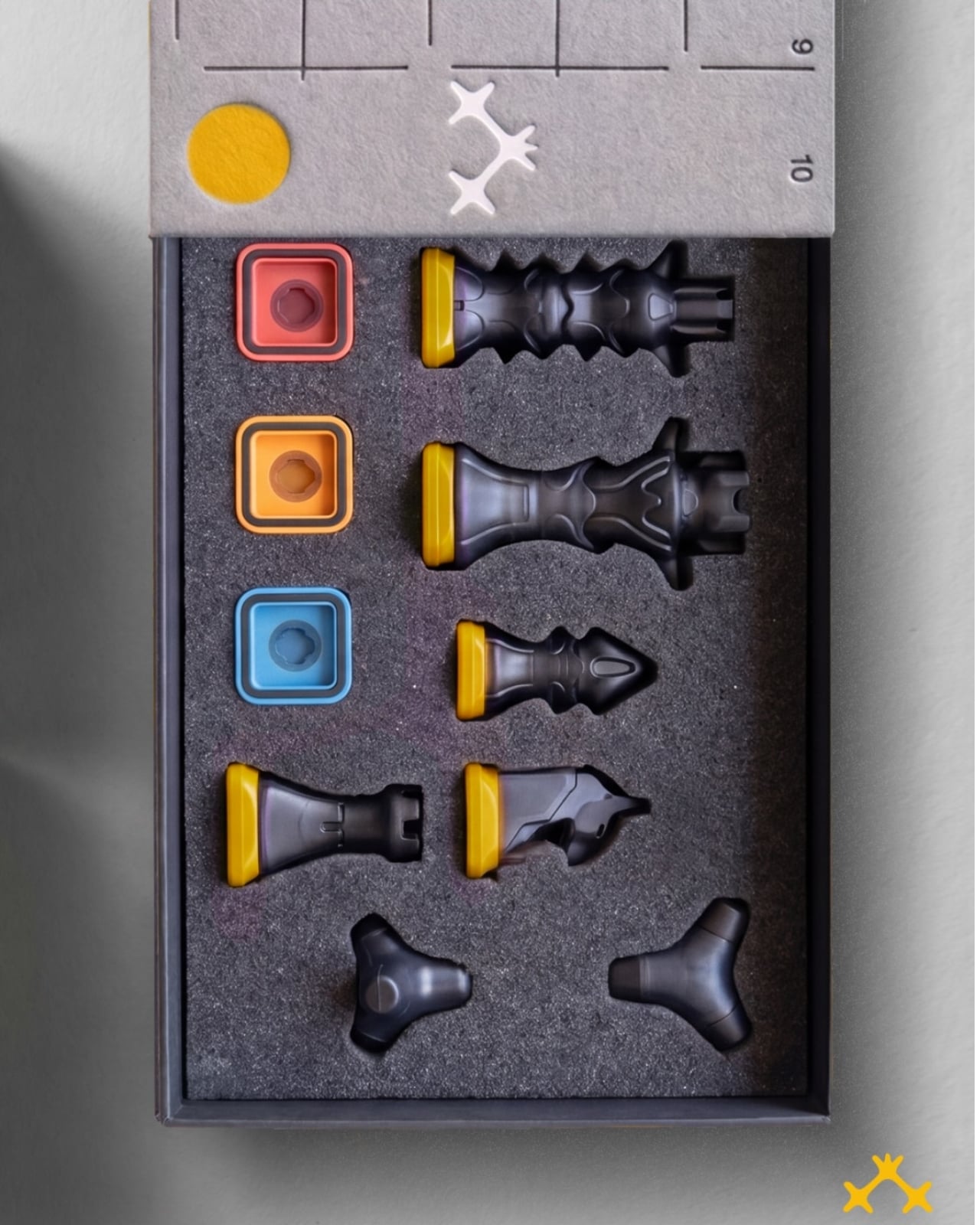
That commitment to negative space runs through the entire set. The pieces are designed with rhythmic repetition across the grid in mind, so when they’re arranged on the board, the composition has a visual logic that goes beyond the game. It doesn’t just look like a chess set mid-play. It looks like an installation. That’s a hard balance to strike without the pieces feeling cold or inaccessible, and Wiseman manages it without sacrificing the tactile quality that makes a chess set satisfying to actually handle.
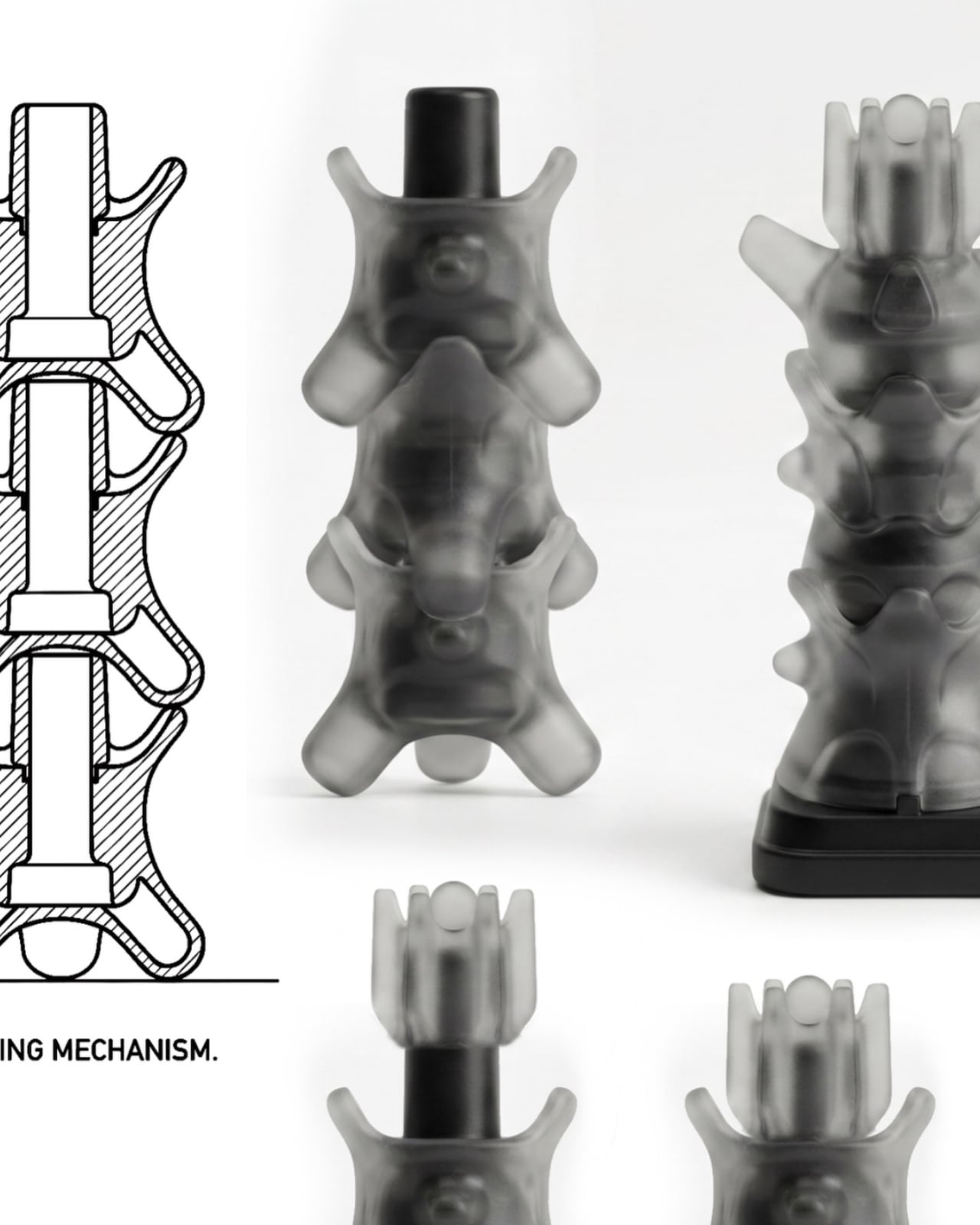
The stacking mechanism is where the engineering becomes genuinely difficult to look away from. Cross-section diagrams reveal an internal locking system built directly into each piece, allowing them to stack and store compactly without compromising their form. The pieces are also magnetic, keeping them grounded during play. It solves the oldest tension in chess set design: something this considered should also be able to travel. CHEKT. was built to do both, and the construction makes that clear without needing to announce it.
The packaging is what really gets me, though. Packaging is almost always the afterthought, the thing that ends up in recycling within ten minutes of a product arriving. Here it functions as a co-equal part of the design language. The main box is a muted gray with an illustrated coordinate grid and gold line drawings of the pieces printed on the lid. Below that, a dark foam tray holds each piece in a custom-cut pocket alongside three colored marker squares in red, orange, and blue. Then there’s the separate mustard yellow storage box, embossed with CHEKT. lettering and graphic iconography in a way that reads like a limited-run streetwear release. Stack the whole thing on a desk and it doesn’t look like something waiting to be put away. It looks like it’s already home.
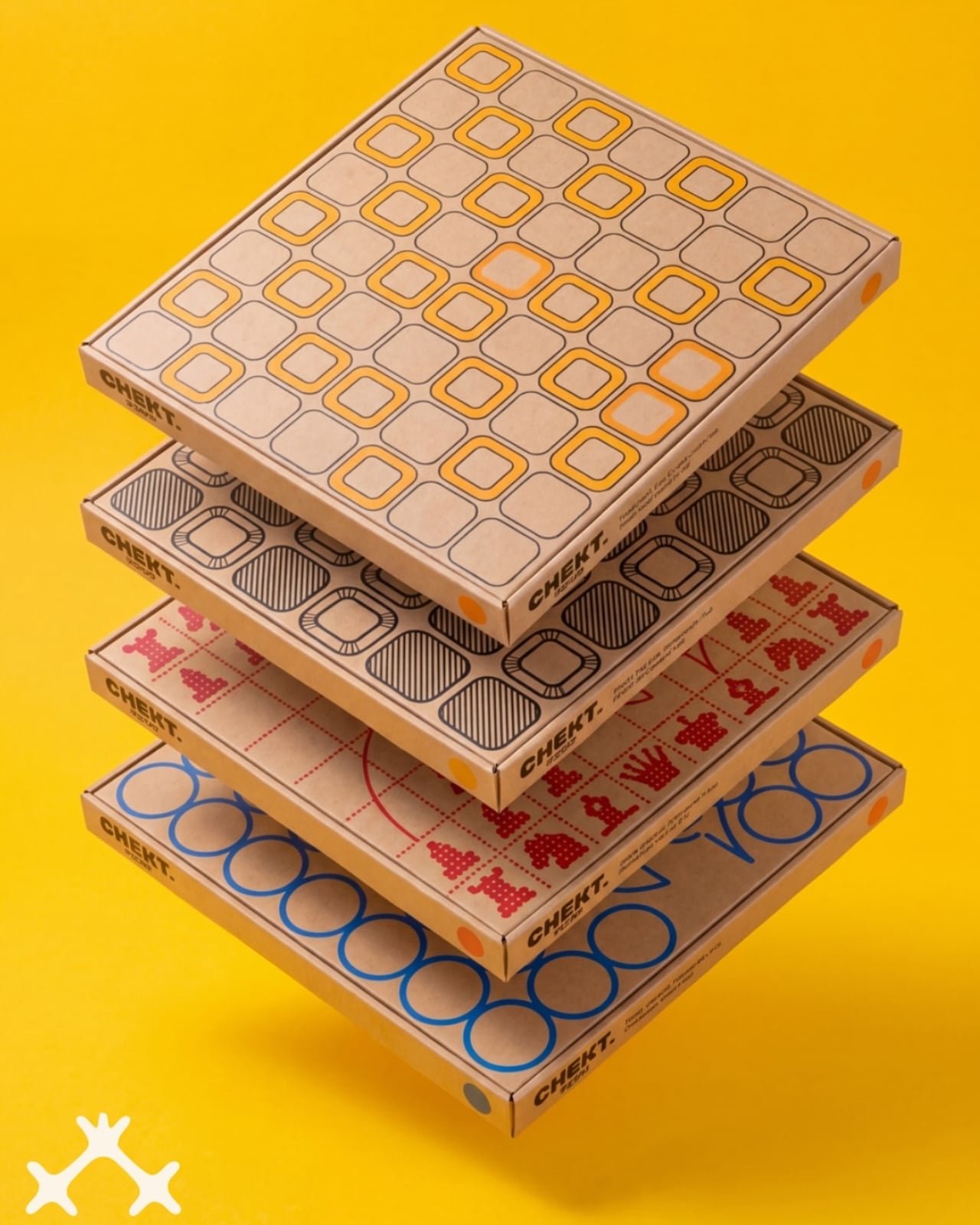
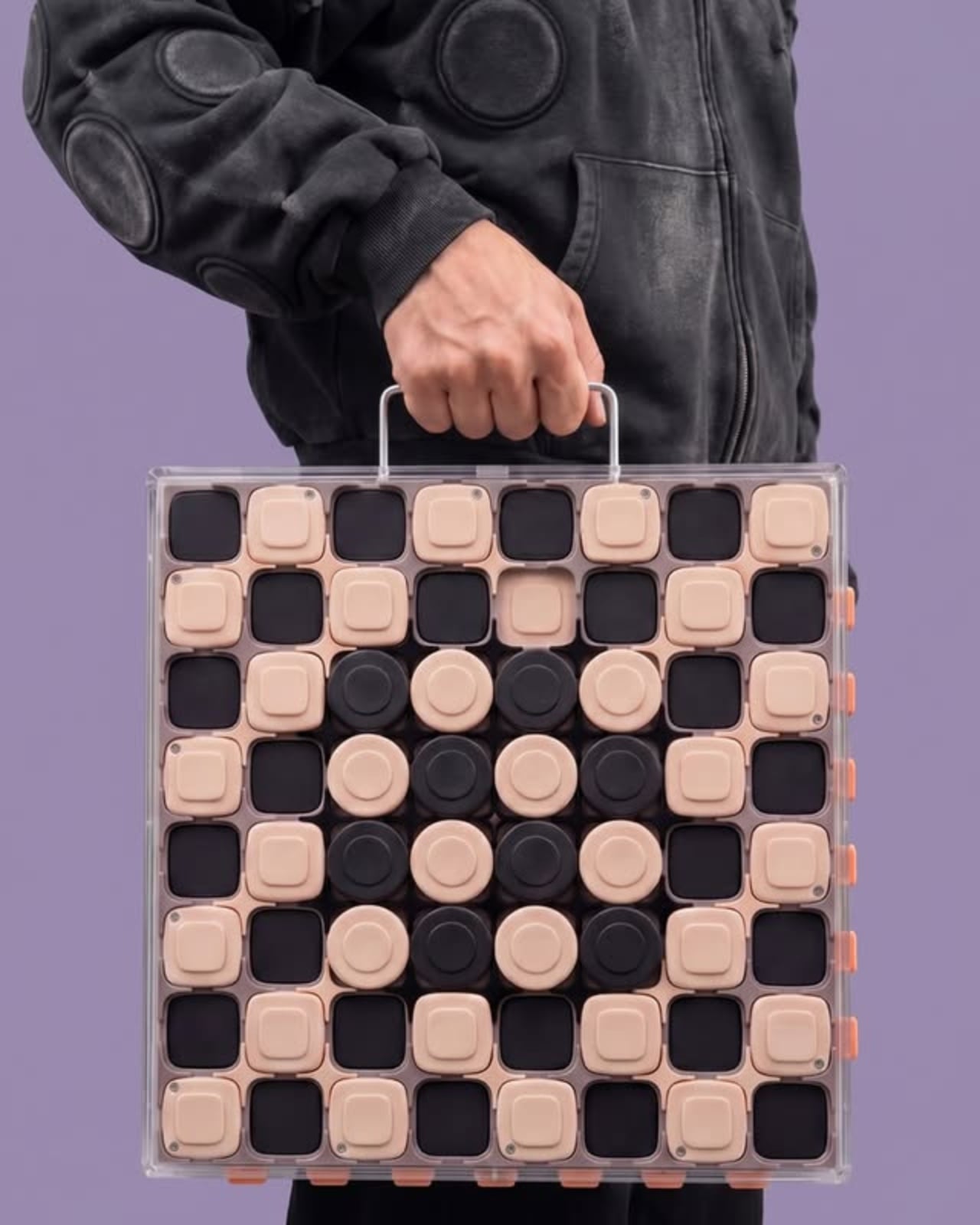
CHEKT. also comes in multiple board packaging editions, each one with a different graphic treatment on its kraft paper exterior. One uses full geometric abstraction, another halftone circles, a third illustrated chess piece silhouettes in pop-art red. They look nothing alike and yet they feel entirely consistent. That kind of visual coherence across variations is harder to achieve than it seems, and Wiseman pulls it off without apparent strain.
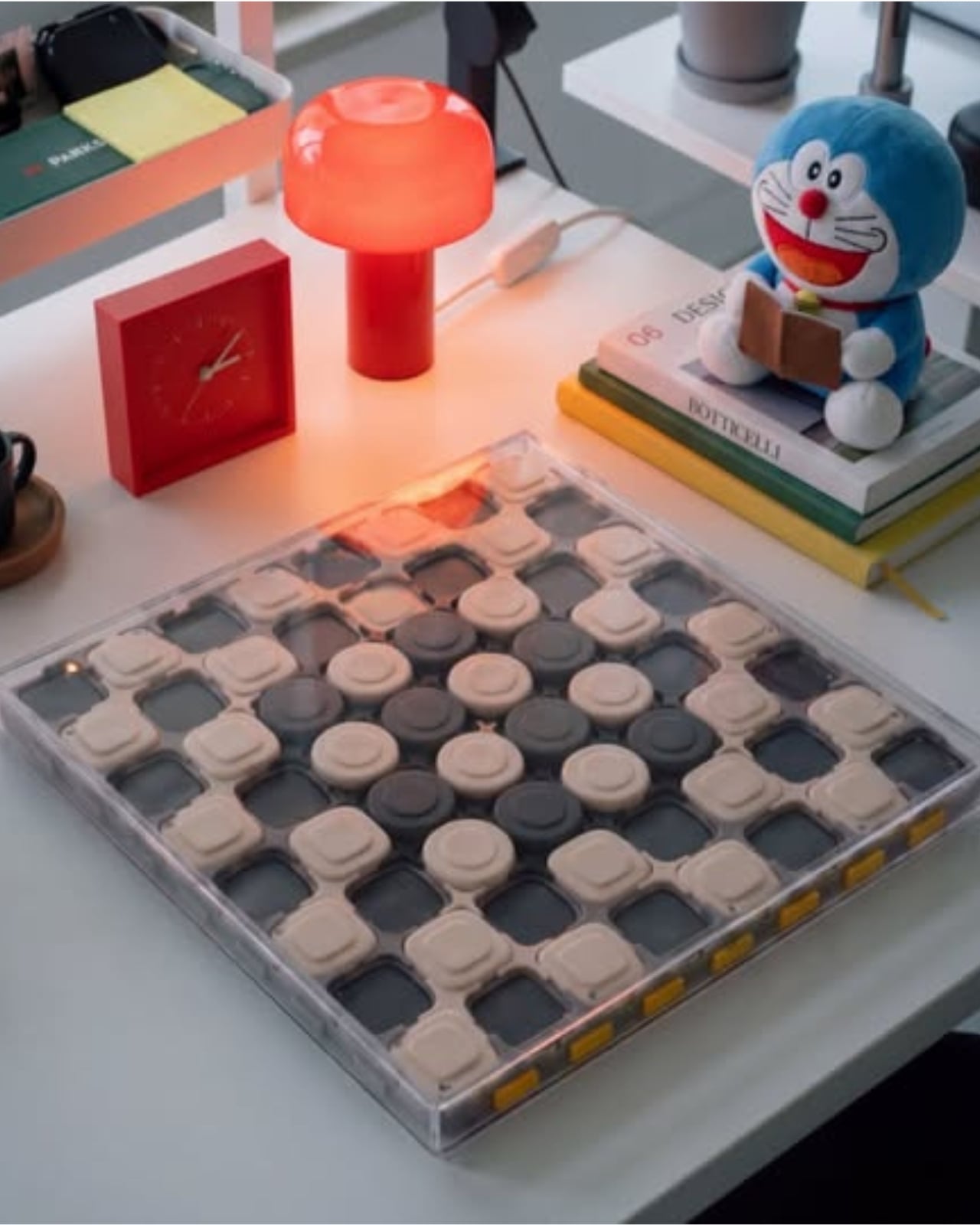
That small detail of the colored marker squares says a lot, actually. Their presence shifts the whole personality of the set. It signals that CHEKT. was designed for actual play, for real people sitting across from each other, not just for a shelf or a coffee table book. That feels like a deliberate philosophical choice, and it’s one worth noting.
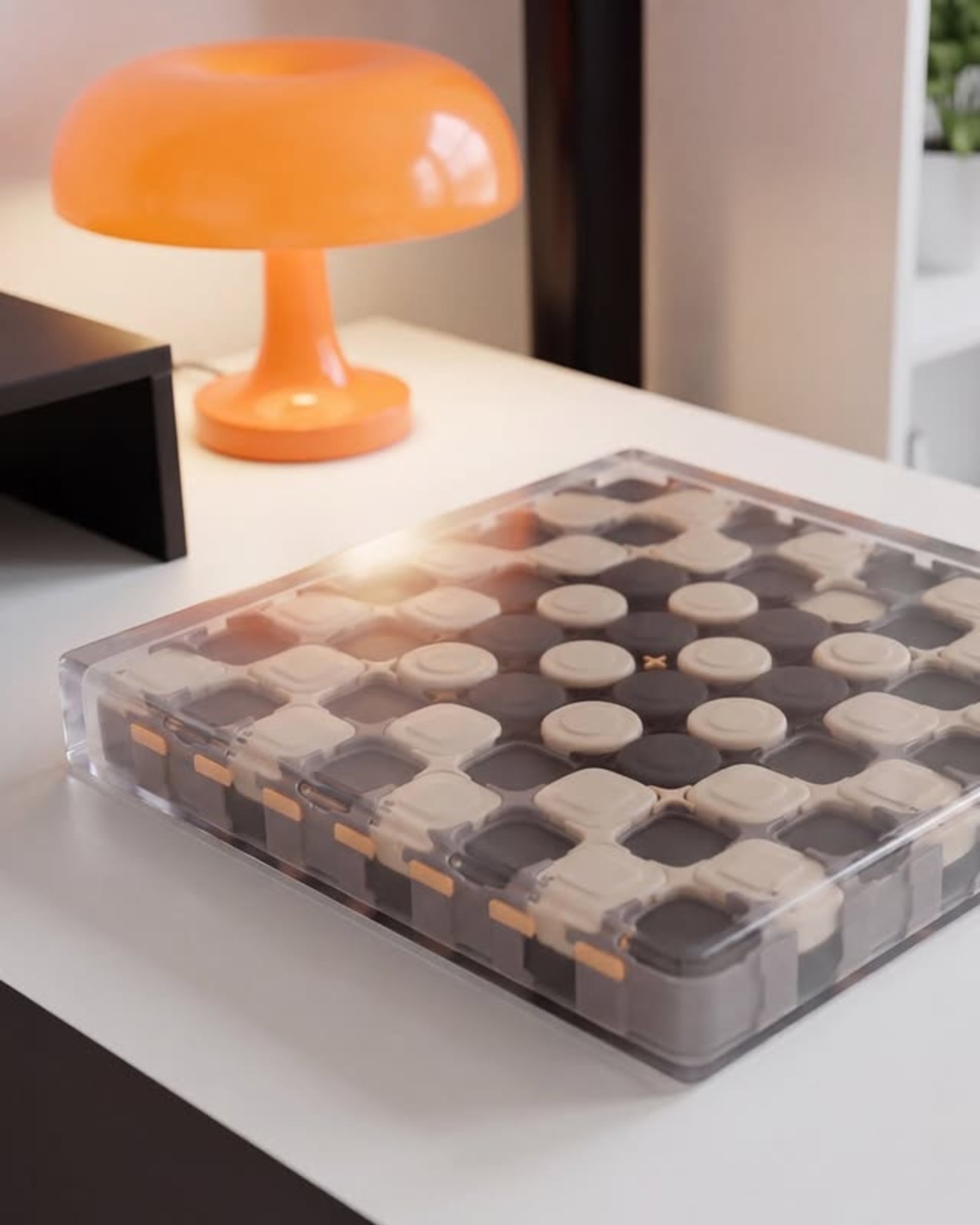
Wiseman’s background covers 3D animation, visual effects for artists like Doja Cat and Lil Nas X, and lifestyle branding through his label Figuregot. All of that cross-disciplinary range shows up in how this project holds together. It doesn’t look like a chess set designed by someone who only knows chess. It looks like a chess set designed by someone who understands what objects are truly capable of, and decided to prove it.
SHARE