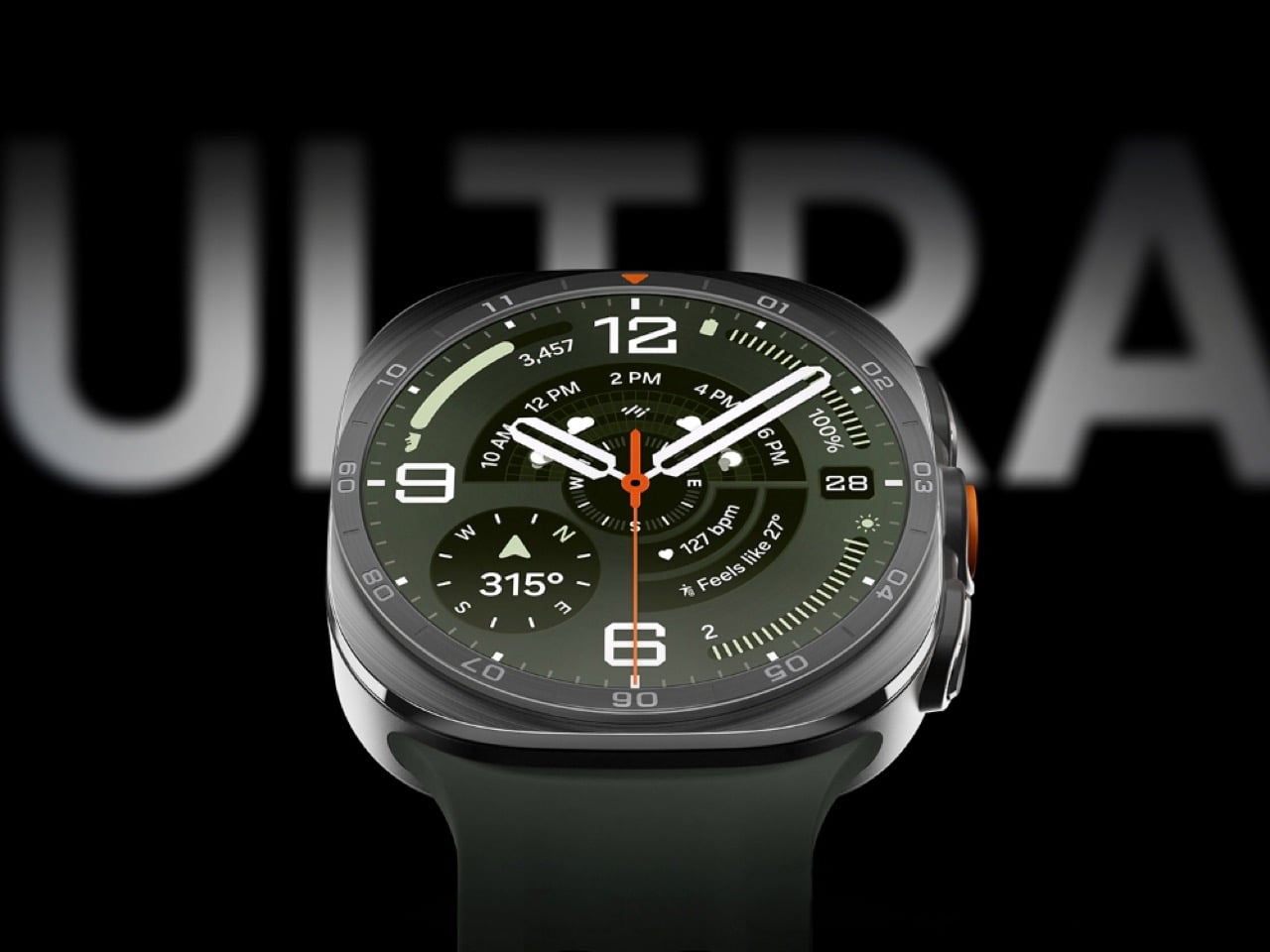
I’ve tried on almost every rugged smartwatch worth talking about at some point, Garmin’s Fenix line, the Coros Vertix, Apple’s Watch Ultra, a few G-Shocks that technically count as smart now. And every single one turned my wrist into a doorstop. Titanium and steel cases solve durability by adding mass, and mass has a way of showing up as thickness, the one spec nobody brags about in a press release. Samsung’s original Galaxy Watch Ultra fit right into that pattern, a genuinely capable watch that still felt like strapping a hockey puck to your arm. So when Samsung says the Galaxy Watch Ultra2 shed 12% of its case height, that’s worth a second look, because that number usually comes at the cost of battery, and Samsung didn’t make that trade this time.
The new Ultra2 measures 10.7mm thick, down from 12.1mm, while its battery grew 35% to 800mAh. For comparison, the Apple Watch Ultra 3 still ships in the same 14.4mm case Apple has used since 2023, meaning Samsung’s rugged flagship is now meaningfully thinner than Apple’s. It comes in one 47mm size, priced at $699.99, up for preorder now with an August 7 release. The case shape hasn’t changed though, and that squircle silhouette is, well, it’s something.
Designer: Samsung Electronics
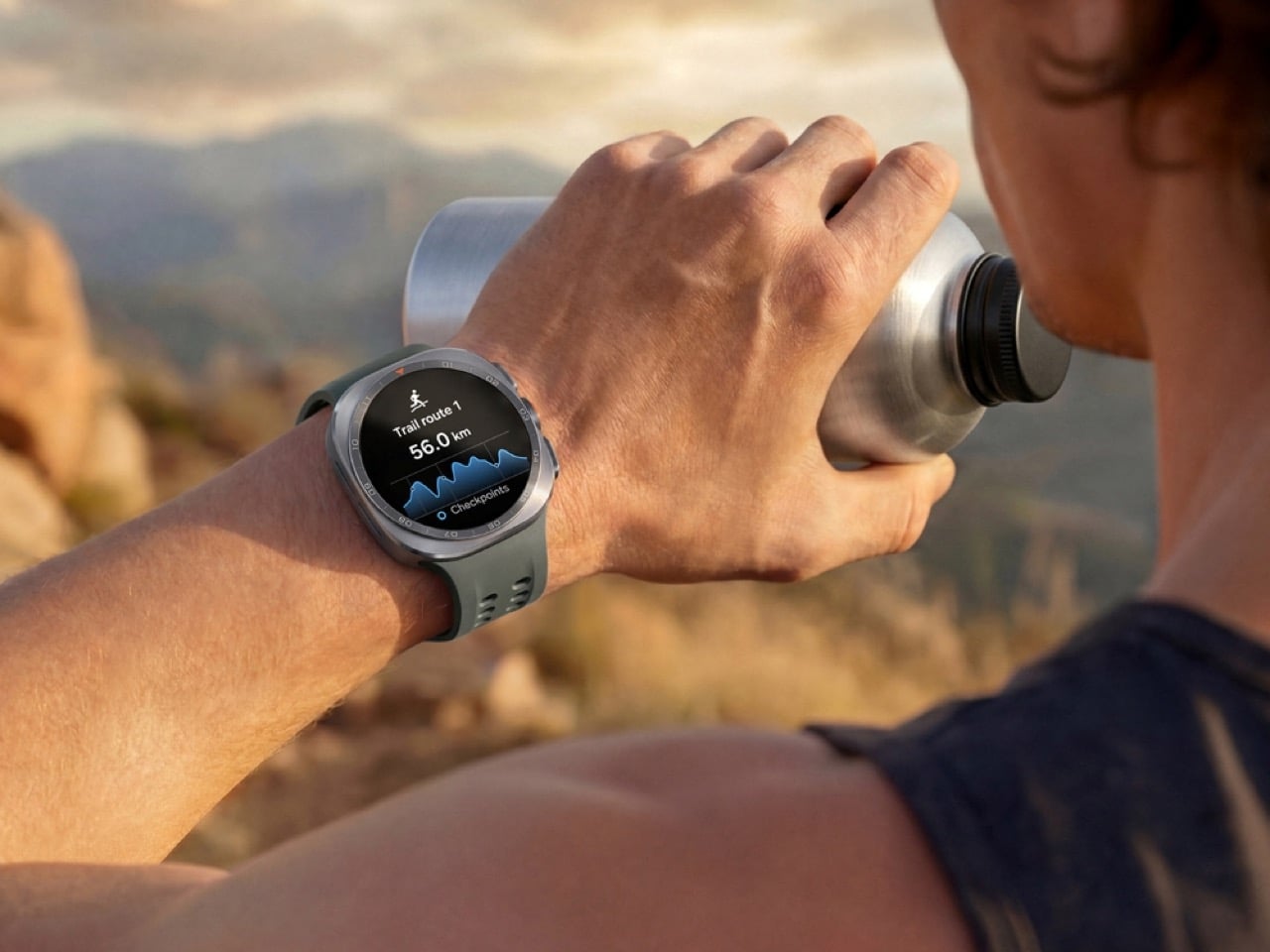
The trick isn’t hiding in the tooling, it’s in what Samsung tore out of the motherboard this year. Swapping the in-house Exynos W1000 for Qualcomm’s Snapdragon Wear Elite isn’t just a performance story, it’s a real estate story, since a different chip package almost always means a different board footprint underneath the display stack. Shrink or flatten that board and you free up vertical space for exactly the two things Samsung actually wanted more of, glass and battery. That’s likely how a watch gets thinner and holds 35% more charge in the same breath, a trade that usually isn’t available to engineers. The one wrinkle is that the Ultra2 is about a gram heavier than before, which tells me some of that freed space went right back into denser cell chemistry rather than thinner titanium.
Every hands-on published this week reaches for the same word to describe that flat-topped case, polarizing, as if refusing to be a circle is some kind of design crime. I’d push back on that read, because the squircle is doing real functional work, not just standing out at a Samsung keynote. A flat bezel lets Samsung etch actual hour numerals into the metal for a glanceable readout, something a curved rotating bezel can’t do nearly as cleanly. It also gives the sapphire front a flush, uninterrupted seal against the frame, which matters more once you’re strapping this thing on for a dive. Casio figured this out decades ago with the square DW-5600, a shape divers and soldiers kept buying long after round watches became fashionable again.
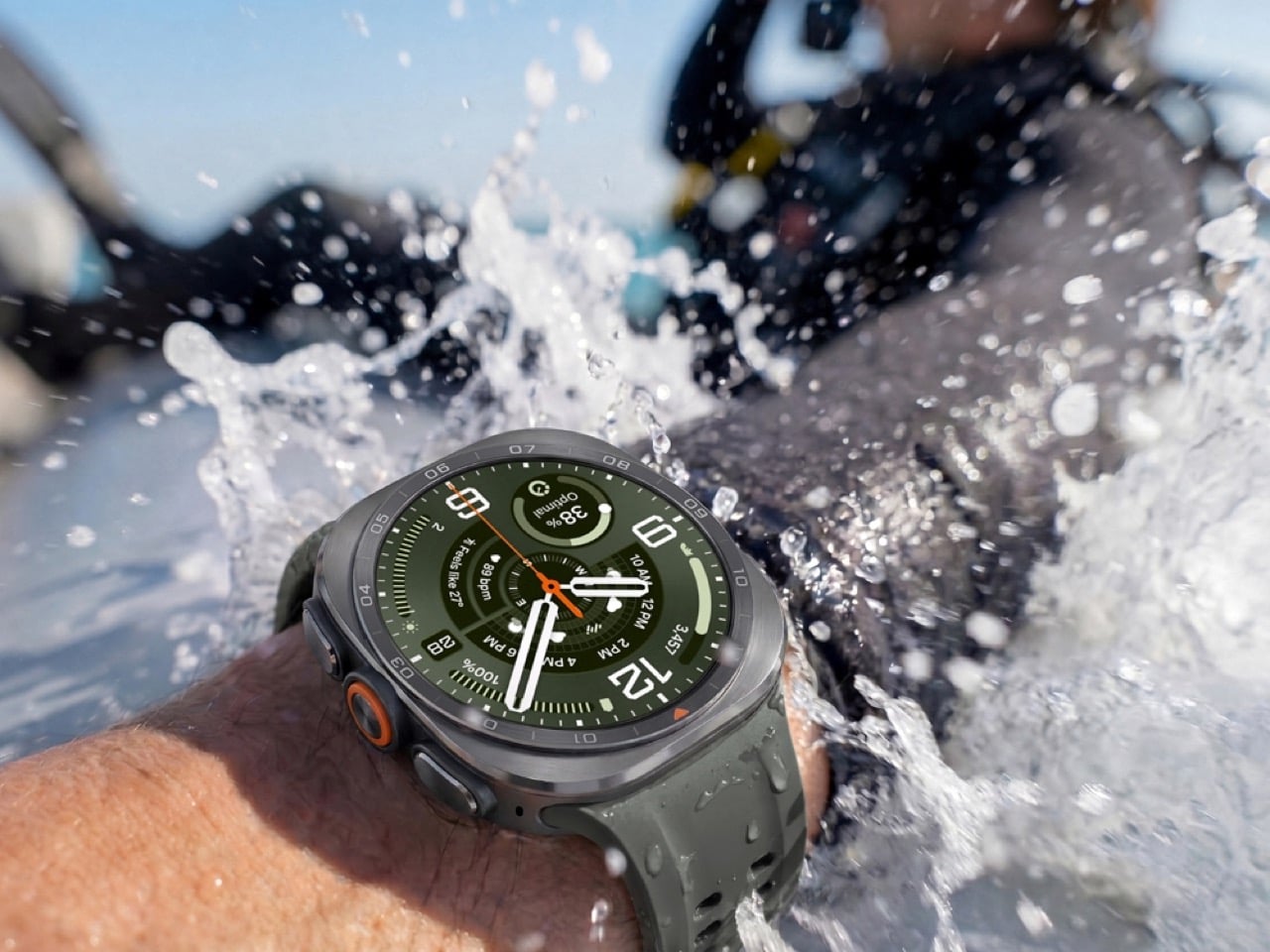
That instinct pays off literally underwater this year, since the Ultra2 is the first Galaxy Watch to earn EN13319 certification for dive instruments, alongside IP69K and 10ATM. Professional dive computers from Suunto and Shearwater have never been round for the same reason Samsung’s case isn’t, a flat face reads better through a mask and seals better against water pressure. The watch auto-detects submersion and logs depth, time and temperature on its own, while a dedicated Mares app arriving later this year unlocks ascent tracking and safe dive limits. Samsung says that partnership stays exclusive to the Ultra2 for two years, which is a long runway on Wear OS. All of that ships for $699.99, a full $100 under Apple’s Ultra 3, in a case that’s now thinner than Apple’s too.
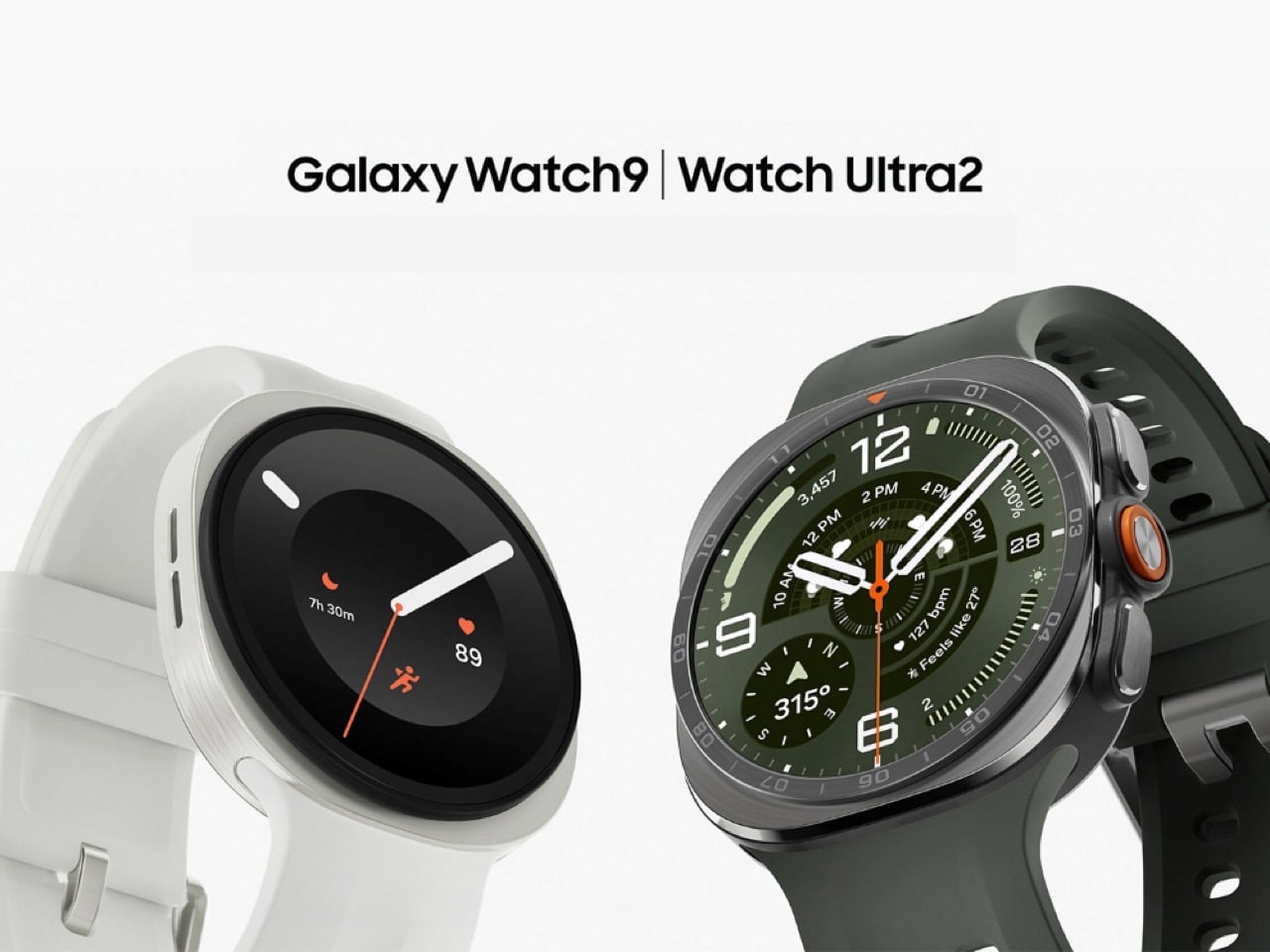
None of this makes the Ultra2 a subtle watch, and it was never trying to be one. What it proves is that Samsung finally stopped treating “rugged” as a synonym for “thick,” which is a harder engineering problem than adding another millimeter of titanium ever was. Whether the Mares app actually delivers a usable dive computer later this year will decide if that squircle earns its keep beyond marketing slides. Until then, the case shape stops looking like a stubborn styling choice and starts looking like the reason the rest of this watch works at all.