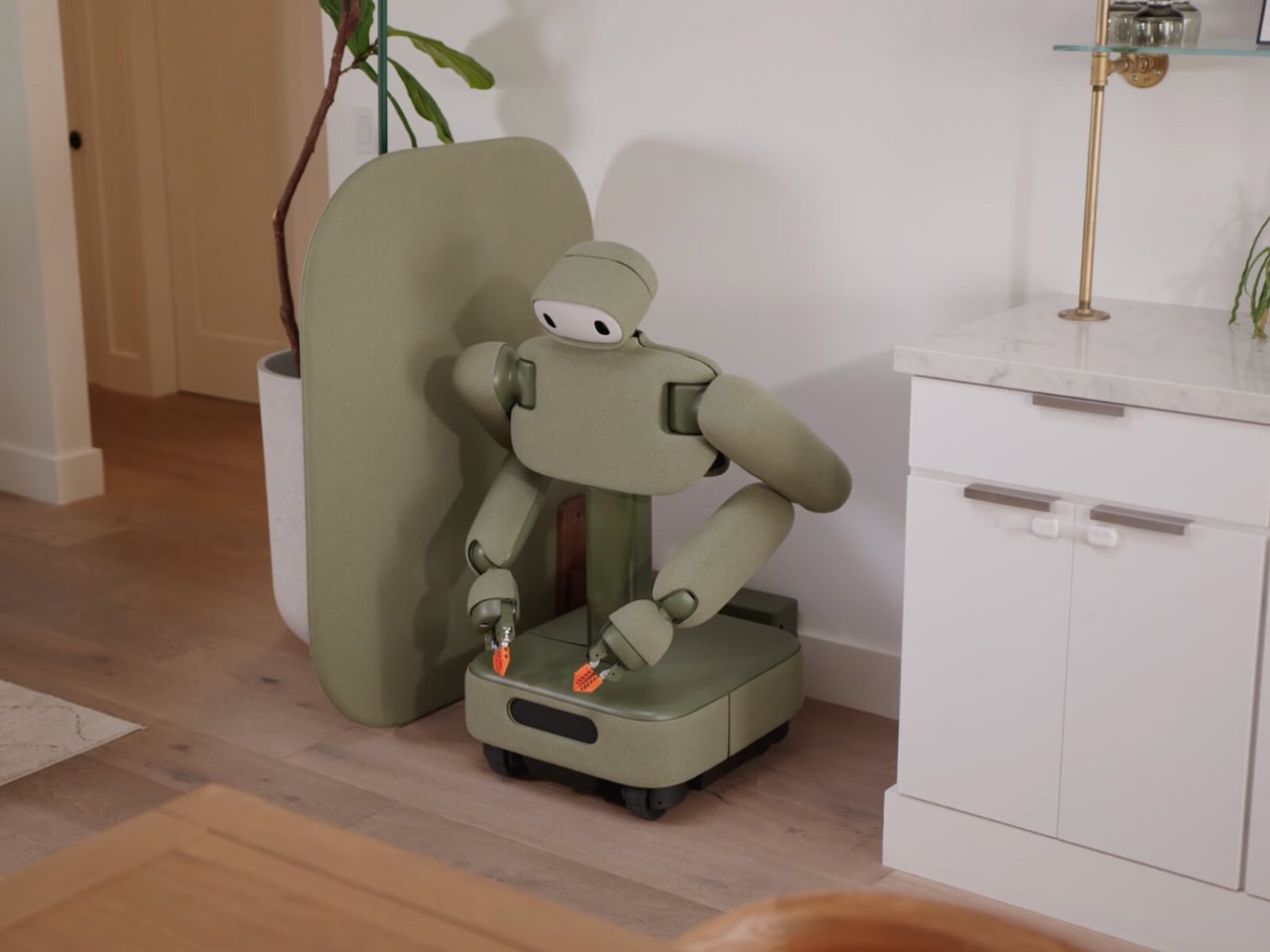
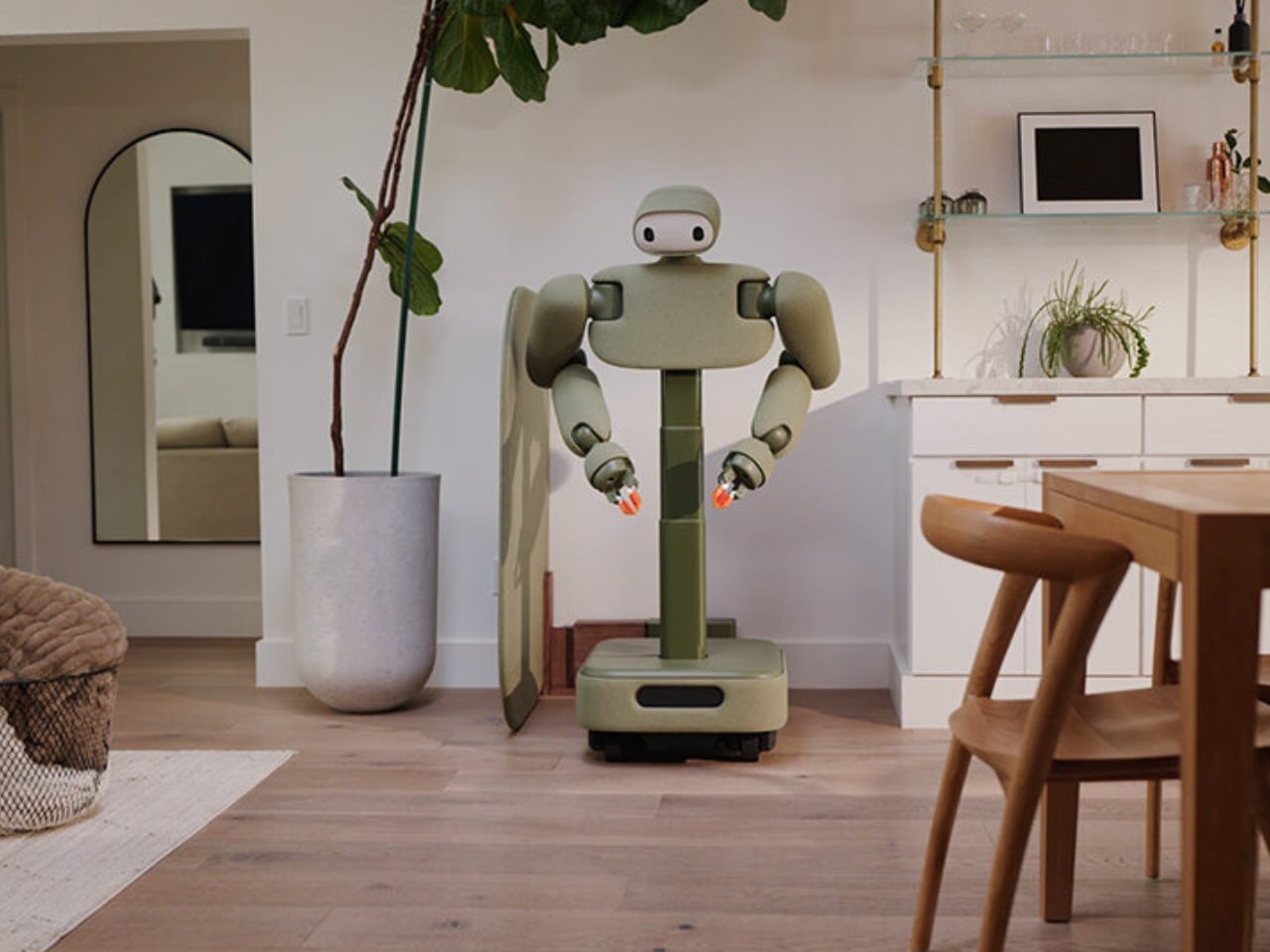
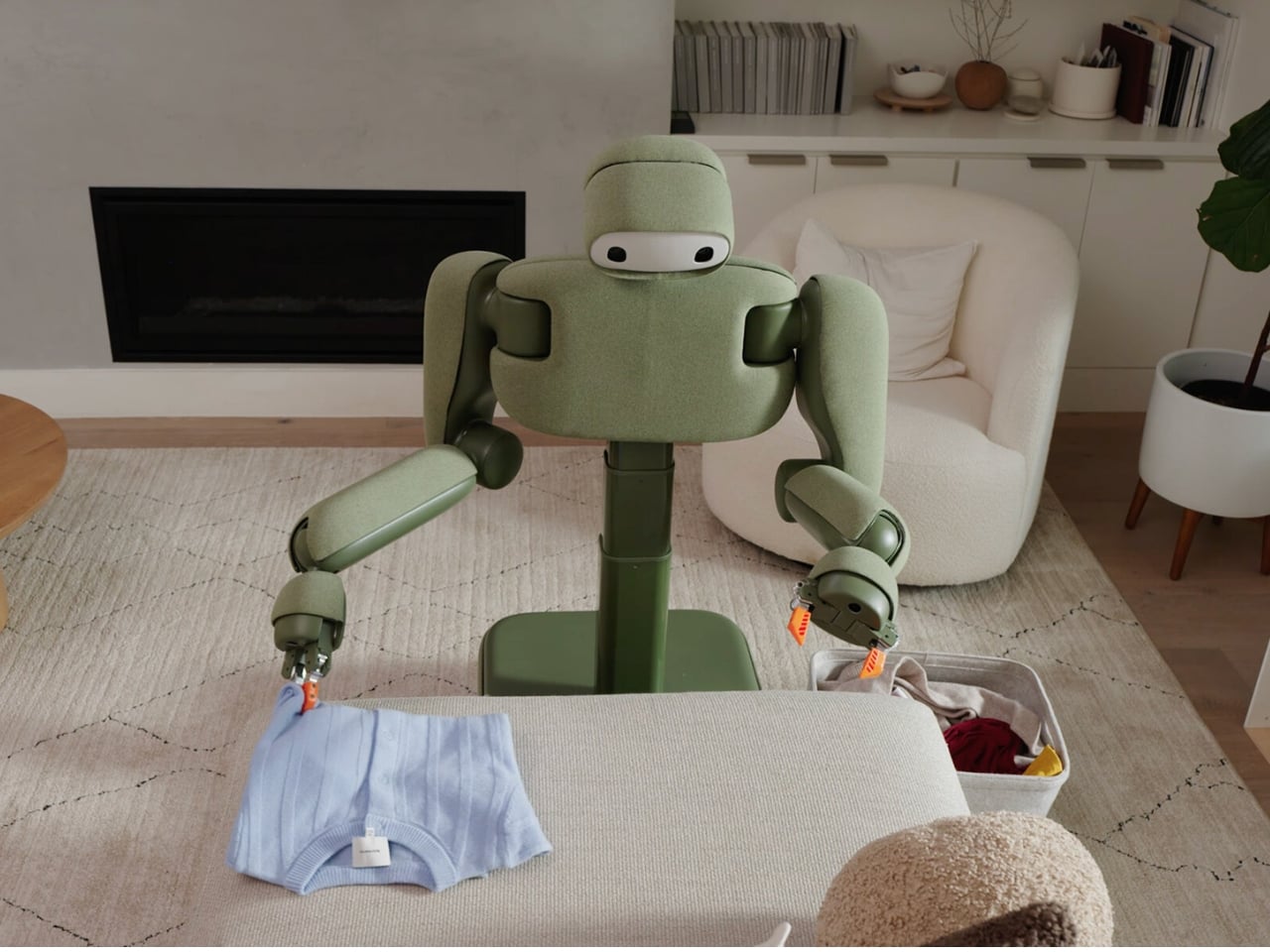
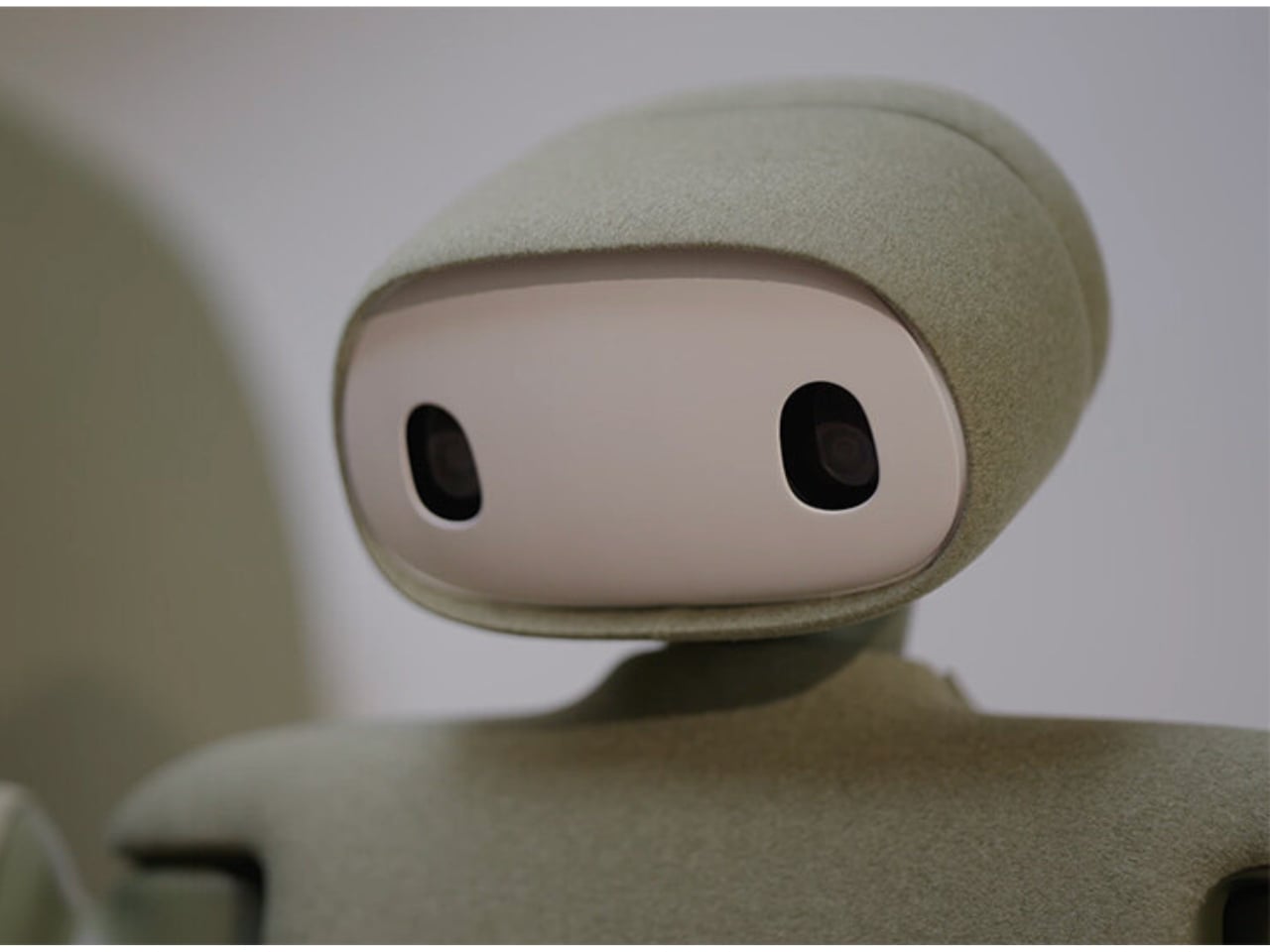
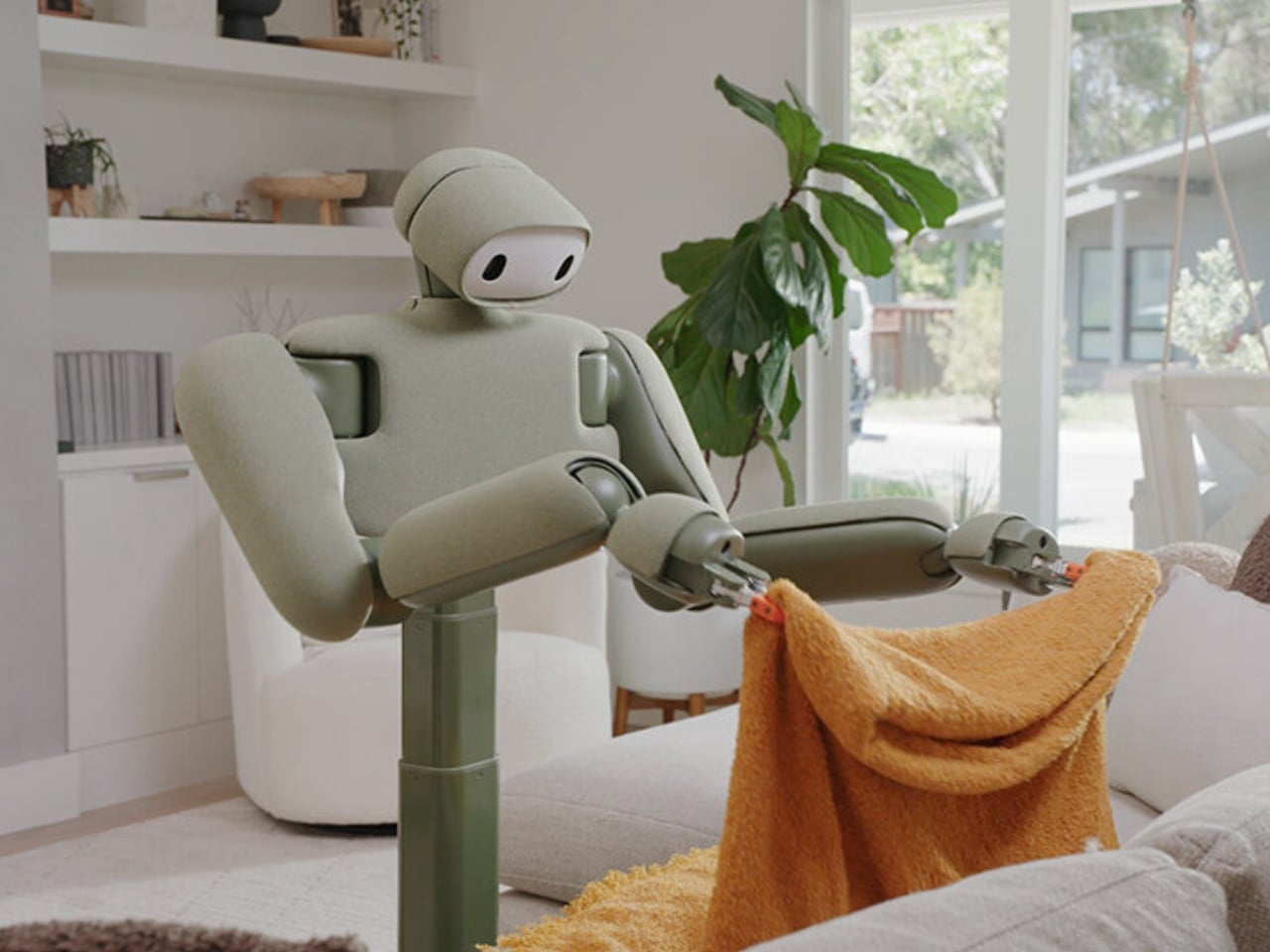
Most robots designed for the home look like they escaped from a manufacturing plant. They’re shiny, angular, and cold, and the moment you put one next to your sofa, the visual mismatch is almost comical. So when I came across the Isaac 1 by Weave Robotics, the first thing I noticed wasn’t what it could do. It was how it looked: soft, compact, wrapped in swappable fabric shells in colors like Sage, Slate Blue, and Terracotta. It looked less like a machine and more like something you’d find at a furniture fair. That’s entirely by design, and it matters more than most people probably realize.
Weave Robotics built the Isaac 1 from the ground up in San Francisco, and their approach is refreshingly considered. Instead of the humanoid form that most robotics companies seem obsessed with, Isaac 1 runs on a wheeled base and collapses down to about three feet when it’s not working, which means it can genuinely disappear into your space. When it’s needed, it extends up to 5’9″ with an 80-inch vertical reach and a 38-inch horizontal reach, enough to handle a wide range of domestic tasks without needing to replicate the human body to do it.
Designer: Weave Robotics
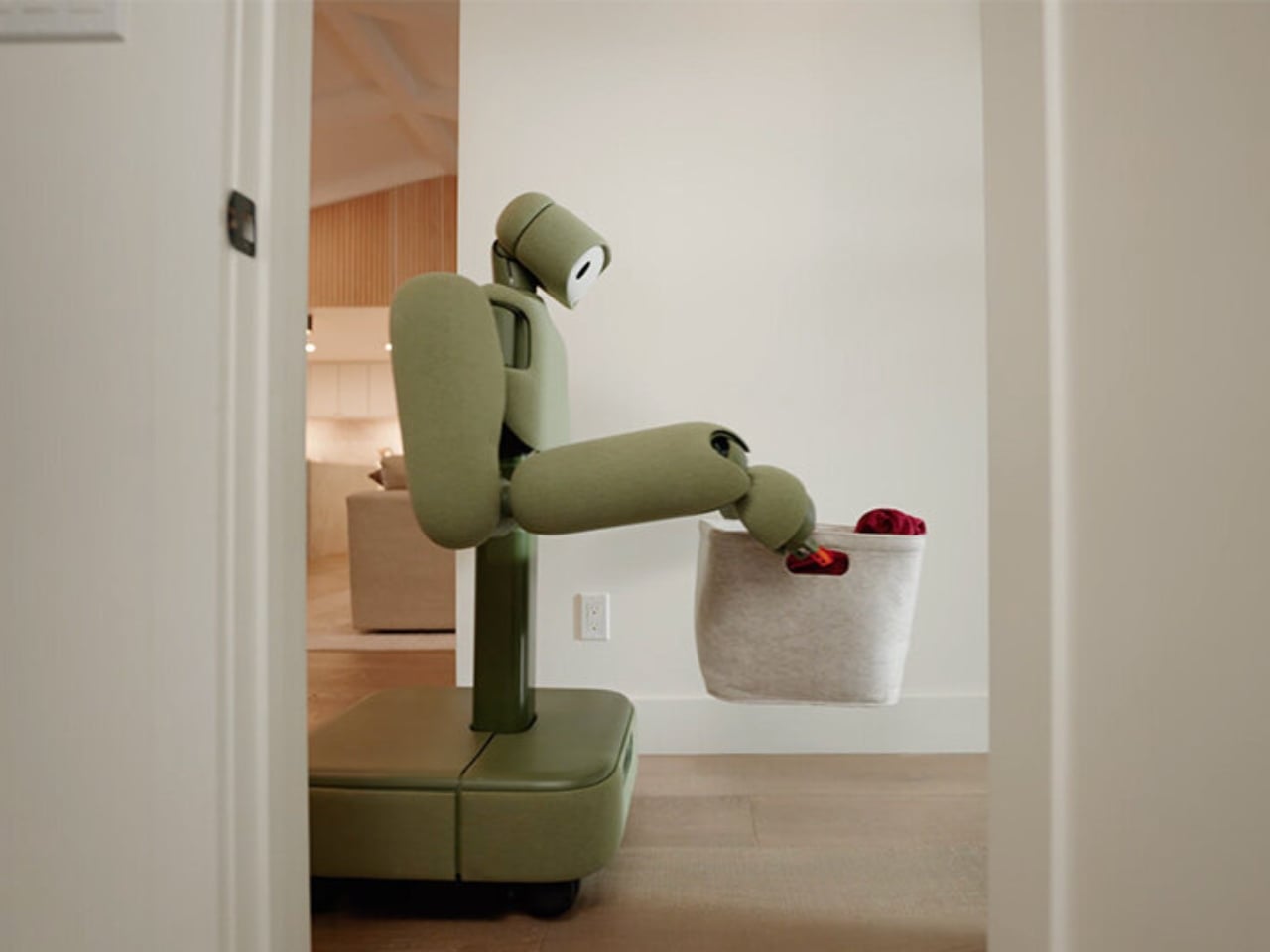
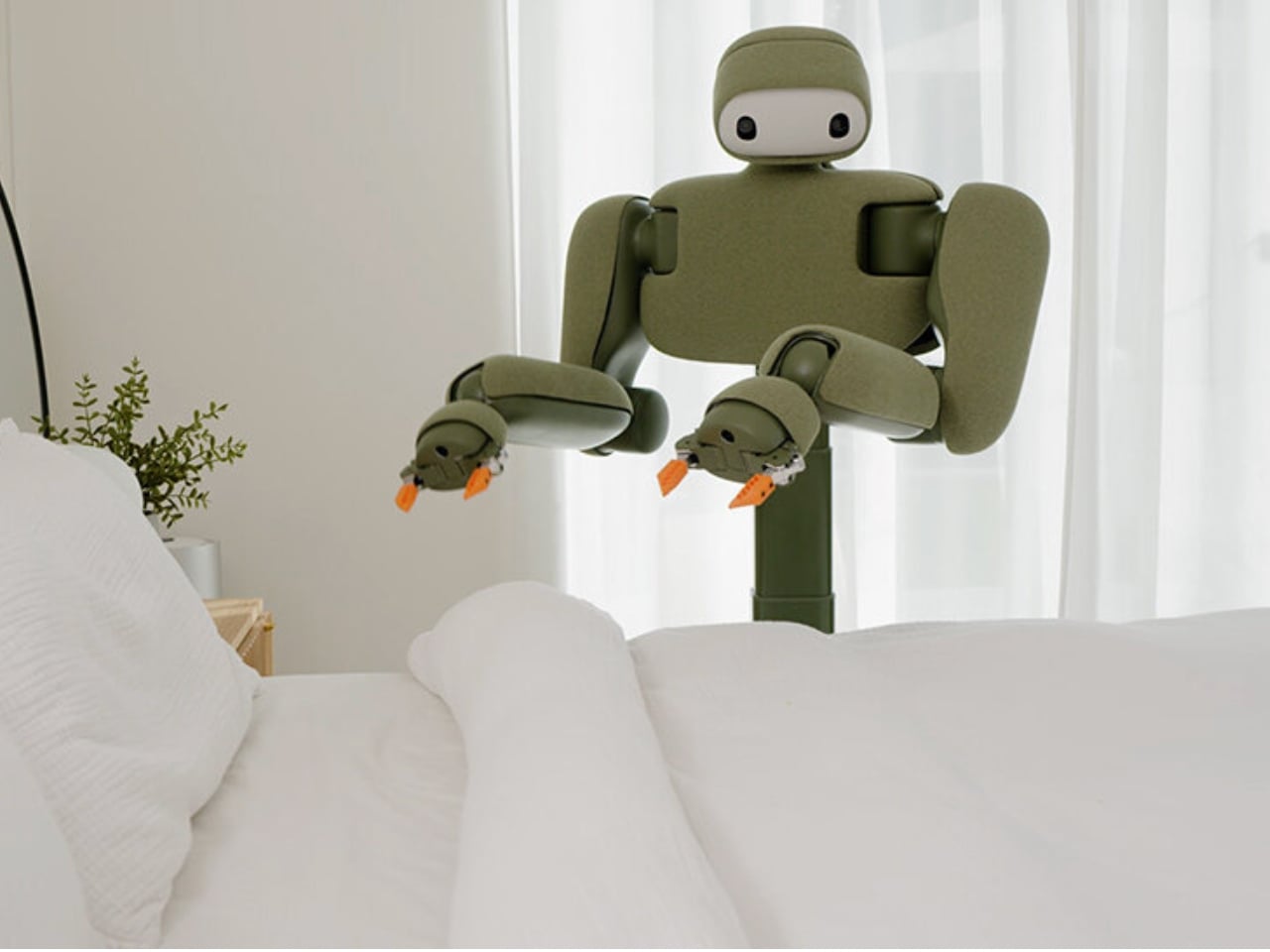
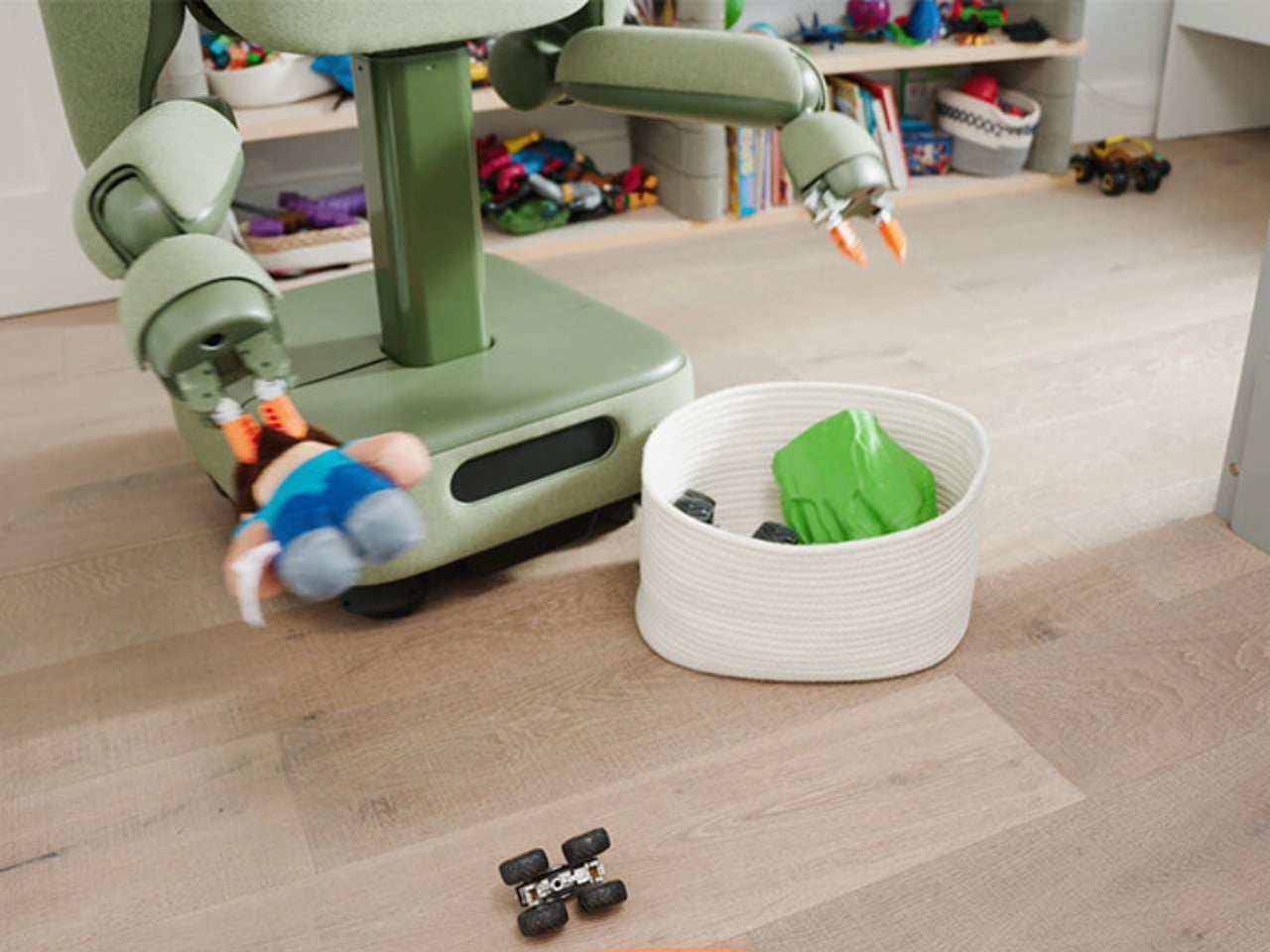
And the tasks it handles are, frankly, the ones most of us quietly dread. Laundry is front and center. The Isaac 1 picks up dirty clothes, manages loaded hampers, folds, and puts things away. It also handles the daily reset of a home: making beds, straightening cushions, returning clutter to where it actually belongs. If you’ve ever come home to a messy house at the end of a long day and felt that specific kind of low-grade despair, you understand the appeal.
But here’s what gets me about the Isaac 1. The decision to wrap it in fabric rather than hard plastic isn’t just cosmetic. It signals something about how Weave Robotics thinks about the relationship between people and the technology they invite into their homes. A robot that reads as furniture rather than lab equipment is a robot that respects the space it’s entering. It acknowledges that a home is a personal, lived-in place, not a test environment. That philosophical underpinning makes Isaac 1 feel different from the robots that tech companies roll out at trade shows and then quietly retire two years later.
Privacy is also built into its physical design, not just its software policy. Isaac 1 has physical cues that make it visually clear when it’s active versus idle, and its cameras can be physically disabled. For a connected device that moves through your most private rooms, that kind of intentionality is worth noting. The teleoperation feature, where a human can step in remotely when the robot hits an edge case it can’t solve autonomously, is the detail that deserves the most scrutiny. Weave has been transparent about it, but it’s something you want to sit with before committing.
That commitment currently sits at $8,000, with pre-orders open and first deliveries expected in California in fall 2026, and wider US availability following in 2027. It’s not an impulse buy by any measure. The price positions it well above a novelty and firmly in the category of household infrastructure, which, to be fair, is exactly what Weave is pitching it as.
I don’t think the Isaac 1 is perfect or even fully proven yet. Homes are unpredictable environments and no amount of smart engineering fully accounts for the everyday chaos of real life. But as a statement of intent about what a domestic robot can and should be, it’s one of the more coherent things I’ve seen come out of this space. It’s not trying to look human. It’s not trying to impress you at a conference. It’s trying to fit into your home, quietly, practically, and without making a scene. That’s harder to achieve than it sounds, and the fact that Weave seems to understand that puts them ahead of most.