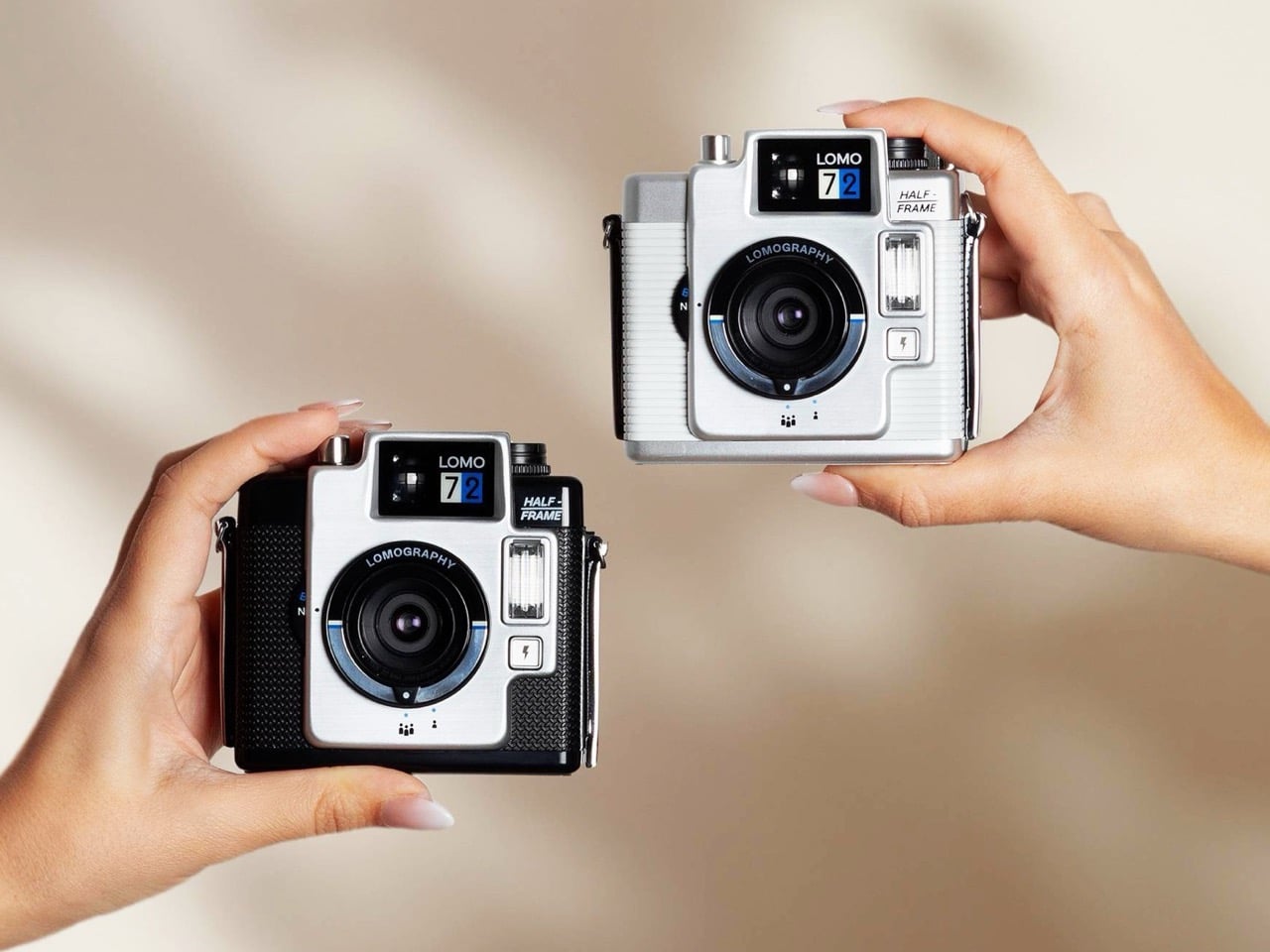
Back in 1959, Olympus figured out that if you cut a 35mm frame in half, people would happily shoot twice as many photos. The Olympus Pen became a hit, and half-frame cameras had a full-blown moment across 1960s Japan. Then they faded away, as trends do. Now they’re back, thanks to the Pentax 17, the Fujifilm X half, and a generation that discovered film right as film got expensive. Lomography’s newest entry is the Lomo72, and the name gives away the pitch: 72 shots from a regular 36-exposure roll.
At $79, the Lomo72 sits between disposable-style plastic shooters and the roughly $500 Pentax 17. Lomography gave it a multi-coated 27mm glass lens, a metal-plated body in black or silver, and simple two-zone focusing for nearby subjects or distant scenes. Shutter speed is fixed at 1/100 of a second, with a Bulb mode for long exposures when you’re feeling brave. A built-in flash, colored gels, and a multiple-exposure switch leave room for happy accidents. It’s up for preorder on Lomography’s site, with delivery promised before Christmas Eve.
Designer: Lomography
Half the Frame, Double the Roll, and Built-In Diptychs
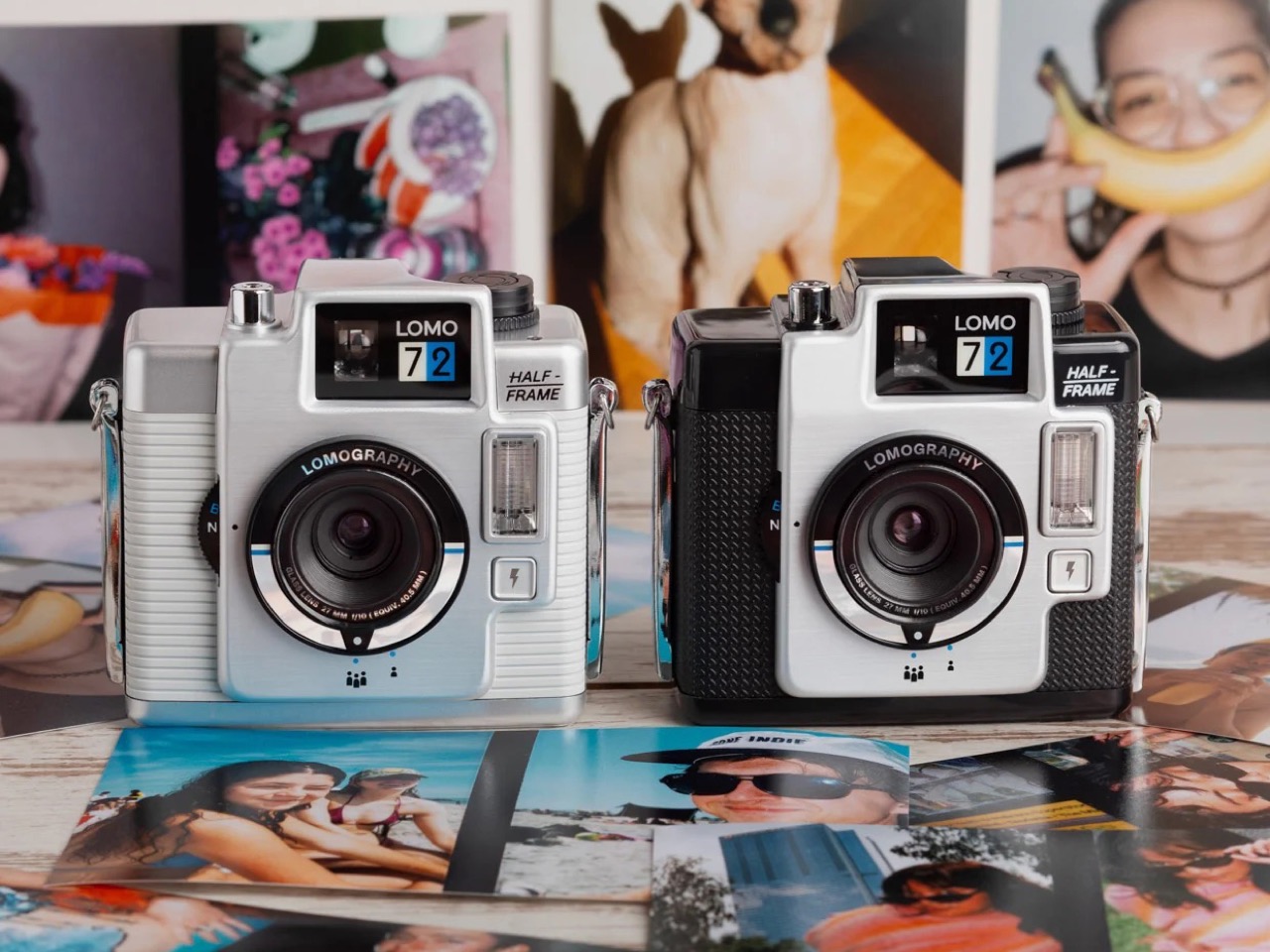
Half-frame means the camera exposes only half of a regular 35mm frame, giving you a tall 17 x 24mm image instead of the usual wide 36 x 24mm one. Two photos fit where one used to live, so a 36-exposure roll stretches to 72. Run that against your own lab bill and it gets fun fast. If a roll plus developing and scans costs you $30, each shot drops from about 83 cents to roughly 42. That buys more freedom to photograph your lunch, your cat, and your friend’s slightly blurry dance moves.
The vertical frames also pair up naturally, so two consecutive shots sit side by side on the negative as a diptych. Half-frame shooters have played with this since the Pen days, matching a wide scene with a close detail, or a face with its reaction. One tip for first-timers: tell your lab you shot half-frame so it can scan the frames correctly. The trade-off is a smaller negative, which means more visible grain if you blow prints up big. On a phone screen or a 4 x 6 print, you might find that grain part of the charm.
A Multi-Coated Glass Lens and a Metal-Plated Body for $79
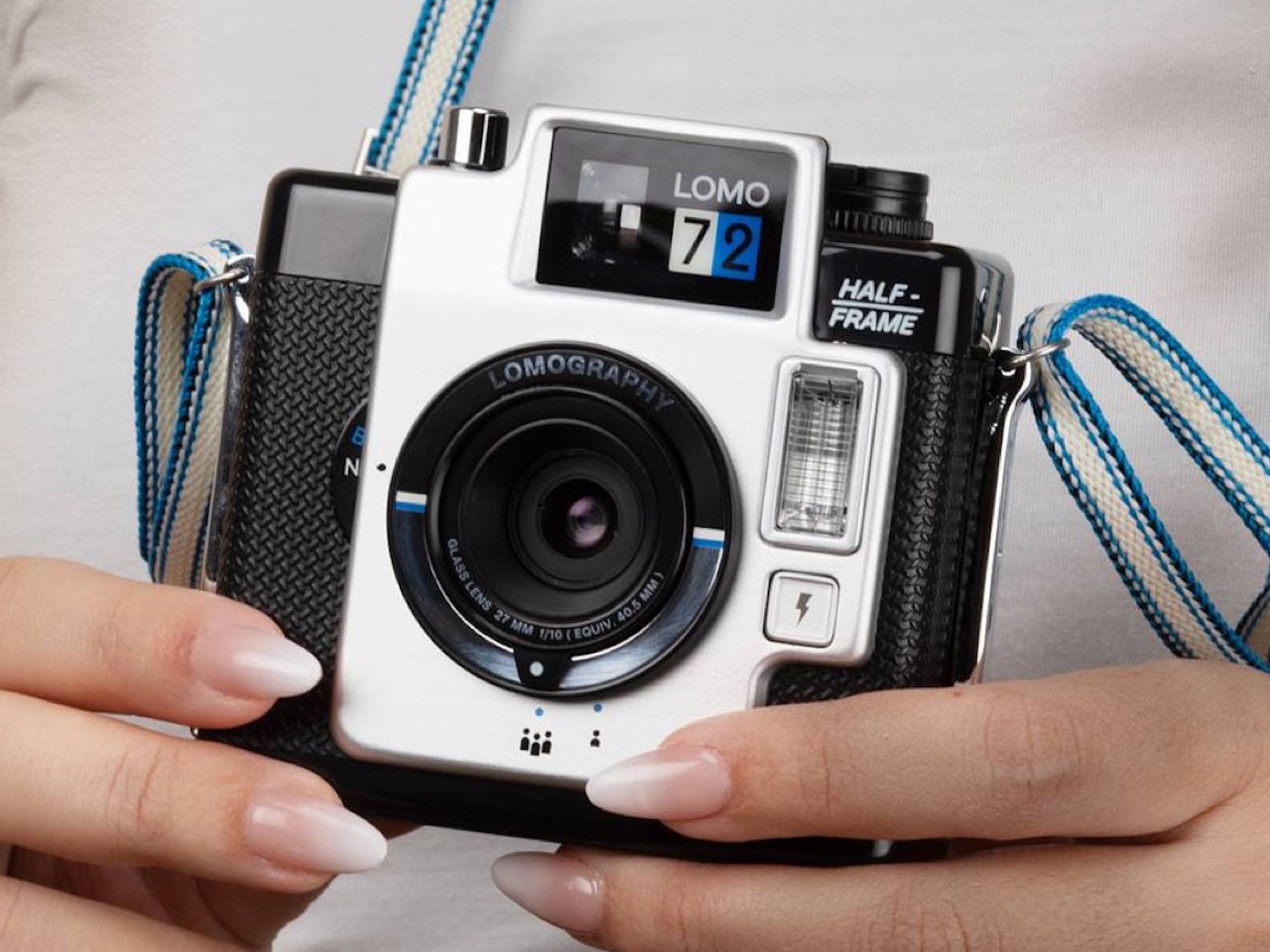
Lomography’s $35 Half-frame Simple Use camera, introduced in July, keeps things basic, so the Lomo72’s biggest upgrade sits right up front. It gets a 27mm glass lens built from two elements in two groups, with multi-coating: thin layers on the glass designed to reduce flare and ghosting. On a half-frame negative, 27mm frames a scene roughly like a 40mm lens on full-frame. Most outlets list the aperture as a fixed f/10, though Lomography’s own shop page has shown f/8. Either way, there’s no aperture setting to fiddle with.
The body wears a retro metal-plated finish in black or silver, and Lomography describes it as pocket-sized. Metal side locks double as strap lugs, keeping extra hardware off the body. Film loads through a rear door, and there’s a standard quarter-inch tripod socket and a cable-release thread for long exposures without nudging the camera. The built-in flash runs on a single AAA battery, with a stated reach of about 3.3 feet (1m) with ISO 100 film or 6.6 feet (2m) with ISO 400. That’s selfie and dinner-table range, and the included colored gels turn it into a pocket party light.
How the Lomo72 Stacks Up Against a $50 Kodak and a $500 Pentax
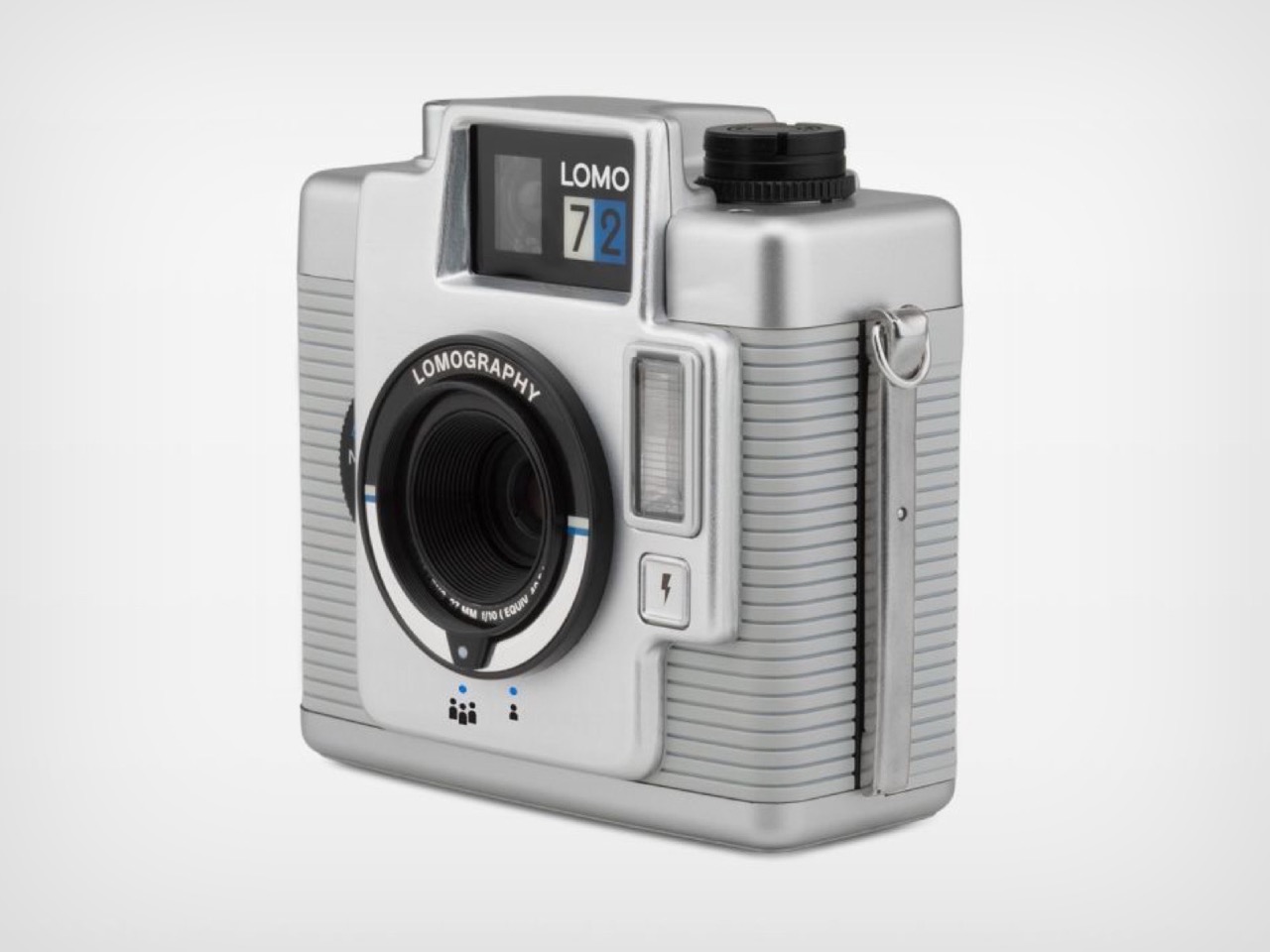
Kodak’s Ektar H35 sells for around $50 with a 22mm lens at f/9.5 and a 1/100s shutter. The Lomo72’s exposure settings land close to it, so the extra money goes into the multi-coated glass, the metal-plated shell, a close-focus zone down to 1.3 feet (0.4m), and that multiple-exposure switch. At the other end, the roughly $500 Pentax 17 adds a brighter 25mm f/3.5 lens and automatic exposure. Lomography covers the budget end of its own catalog too, with the Simple Use at $35 and the Lomourette at $69. Of that trio, the Lomo72 is the one with glass.
With the shutter fixed at 1/100s for ordinary shooting, your film choice matters. ISO 400 color negative offers some latitude between sun and shade, though a camera with fixed exposure settings has its limits. Set the focus to Close for nearby subjects or Infinity for distant scenes, and there’s little else to adjust. Bulb and the MX switch are waiting for when you get curious. The Lomo72 is available for preorder on Lomography’s site for $79 in black or silver, with delivery promised before December 24.