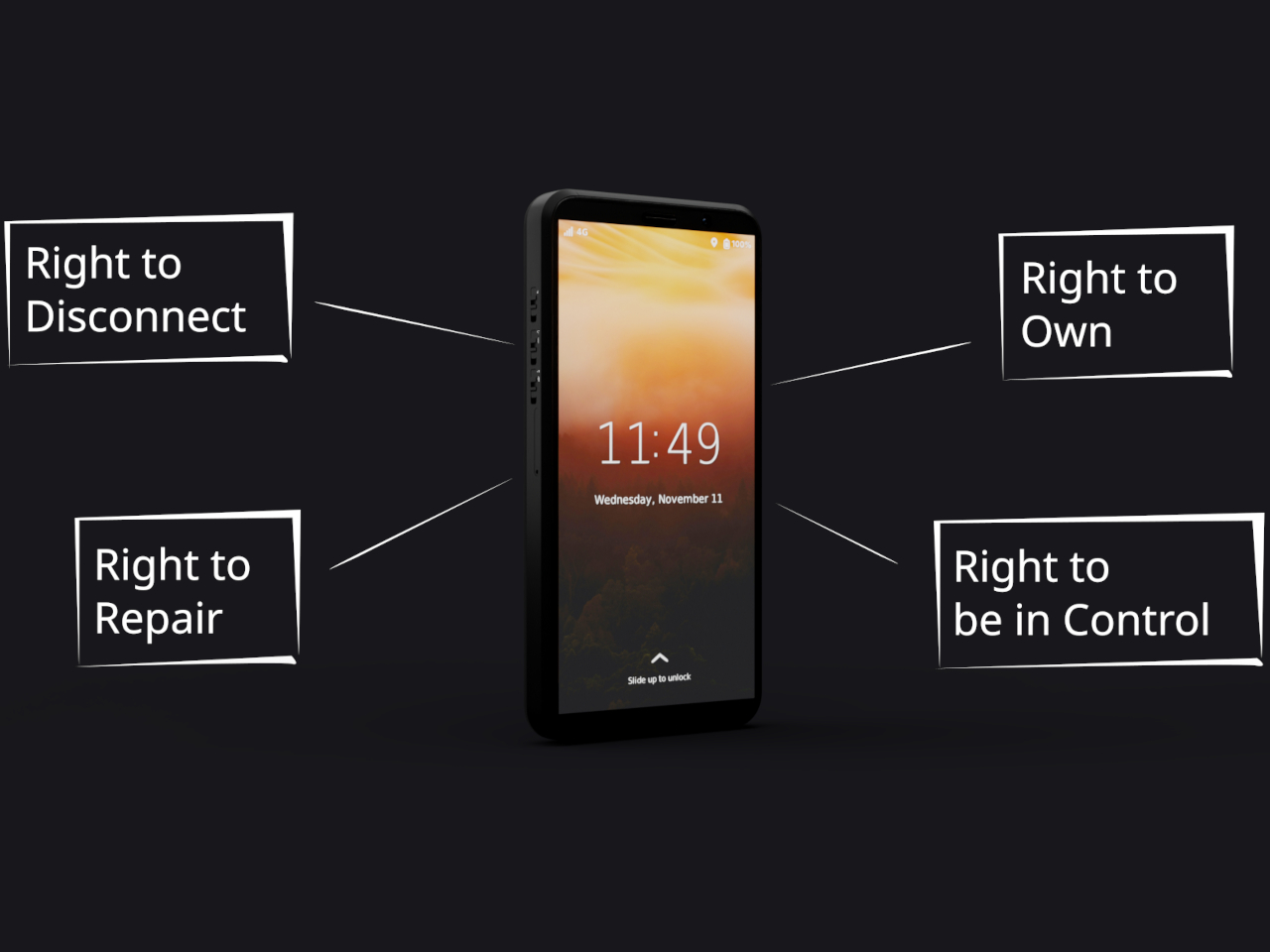
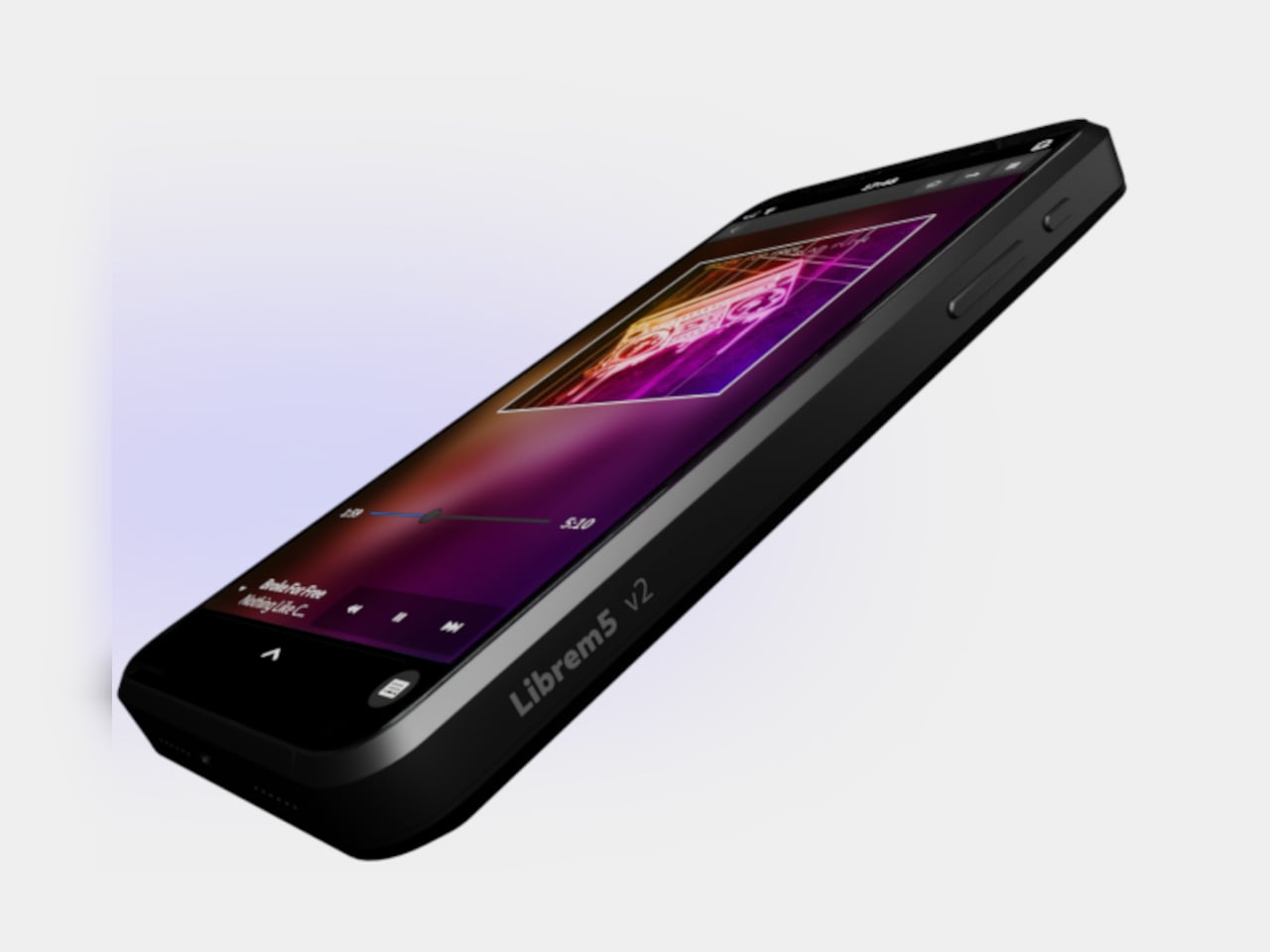
Purism’s Librem 5 v2 doesn’t look especially concerned about keeping up with smartphone fashion. The planned Linux phone keeps its predecessor’s blocky shell while proposing a change underneath, moving from an Arm processor to RISC-V. Its more interesting design choices remain tangible: switches you can slide, a battery you can remove, and components that aren’t permanently married to the rest of the phone.
The thick borders around its 5.7-inch screen and substantial black sides give it a rugged-looking appearance, although that shouldn’t be confused with certified ruggedness. There’s something almost stubborn about retaining this shape while announcing a second generation. The display’s planned 720×1440 resolution won’t help it look especially contemporary, either. The front camera sits above the screen, without a display cutout.
Designer: Purism
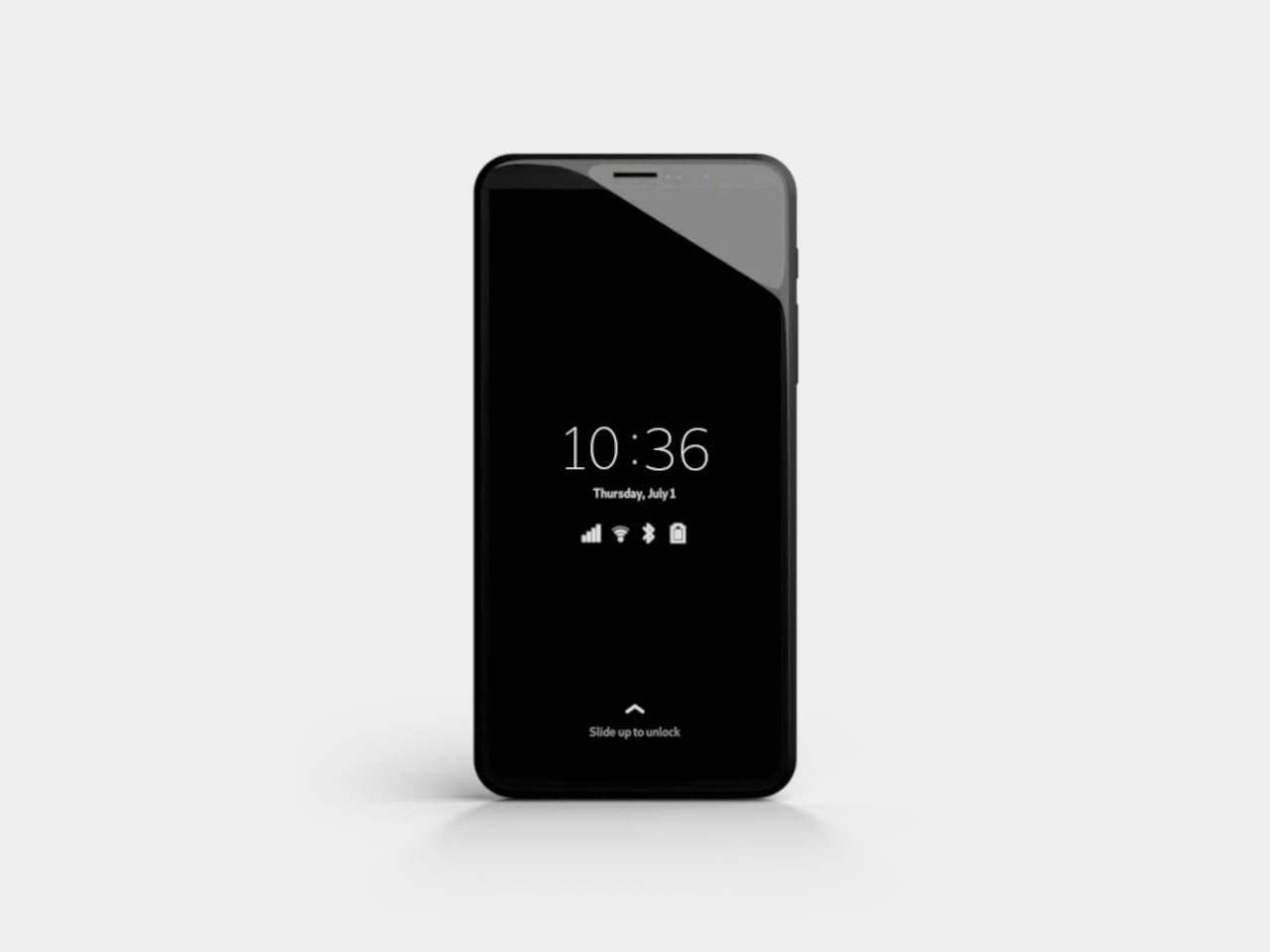
That familiar body has a practical explanation. Purism is retaining the original chassis to support repairs and potential hardware upgrades between generations. Reusing an enclosure makes more sense when the parts inside are intended to be accessible rather than sealed away. The company expects to offer replacement electronics after production, subject to supply, so this isn’t a guaranteed upgrade kit for existing owners.
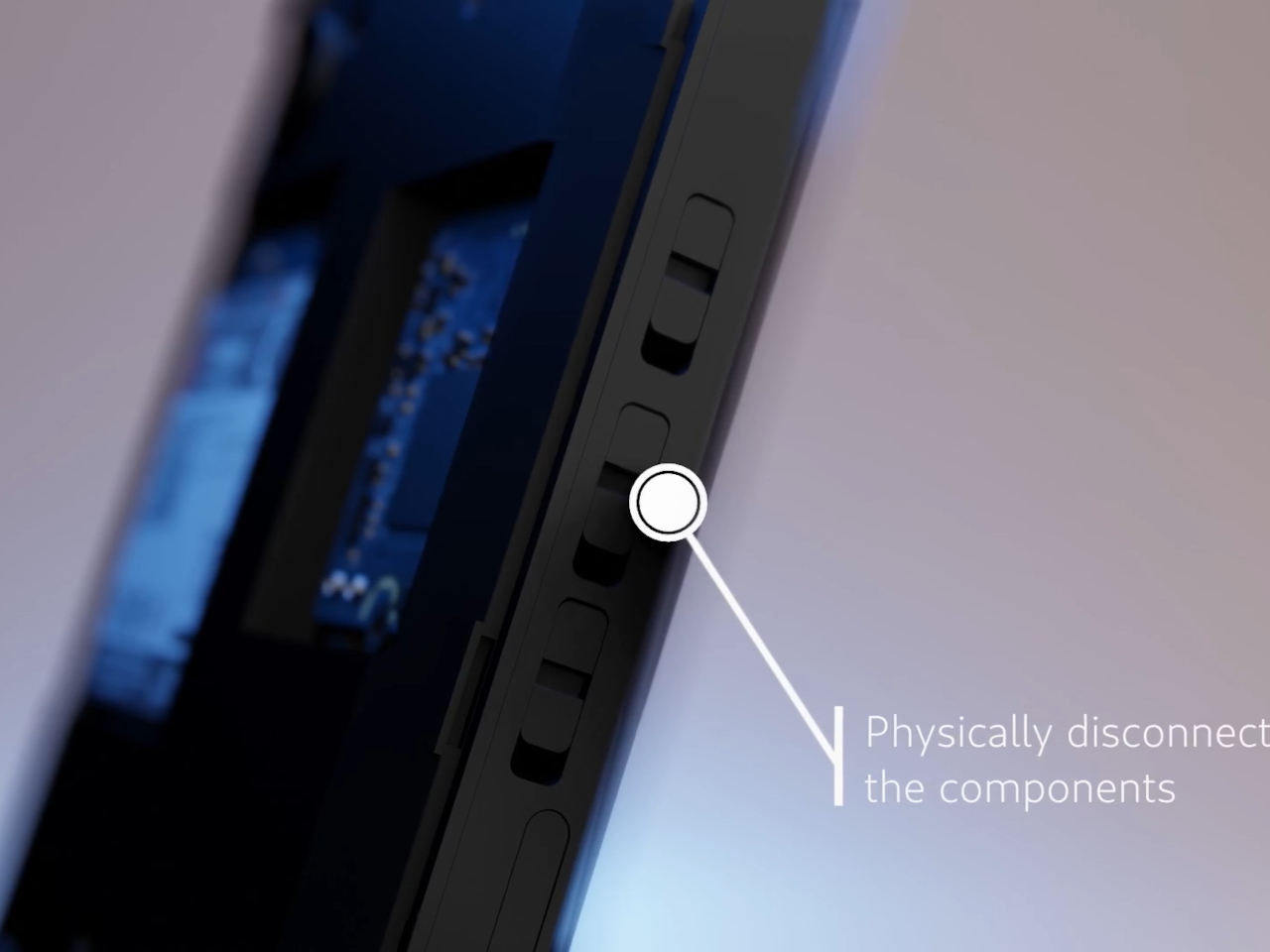
The side switches give that ownership argument a more immediate, everyday purpose. Three hardware switches cut power to the cellular modem, Wi-Fi and Bluetooth, and cameras and microphones, respectively. Before a private conversation, you could disable the recording hardware without navigating through settings. It turns a privacy preference into an action you can make with your fingers, right on the phone’s edge.
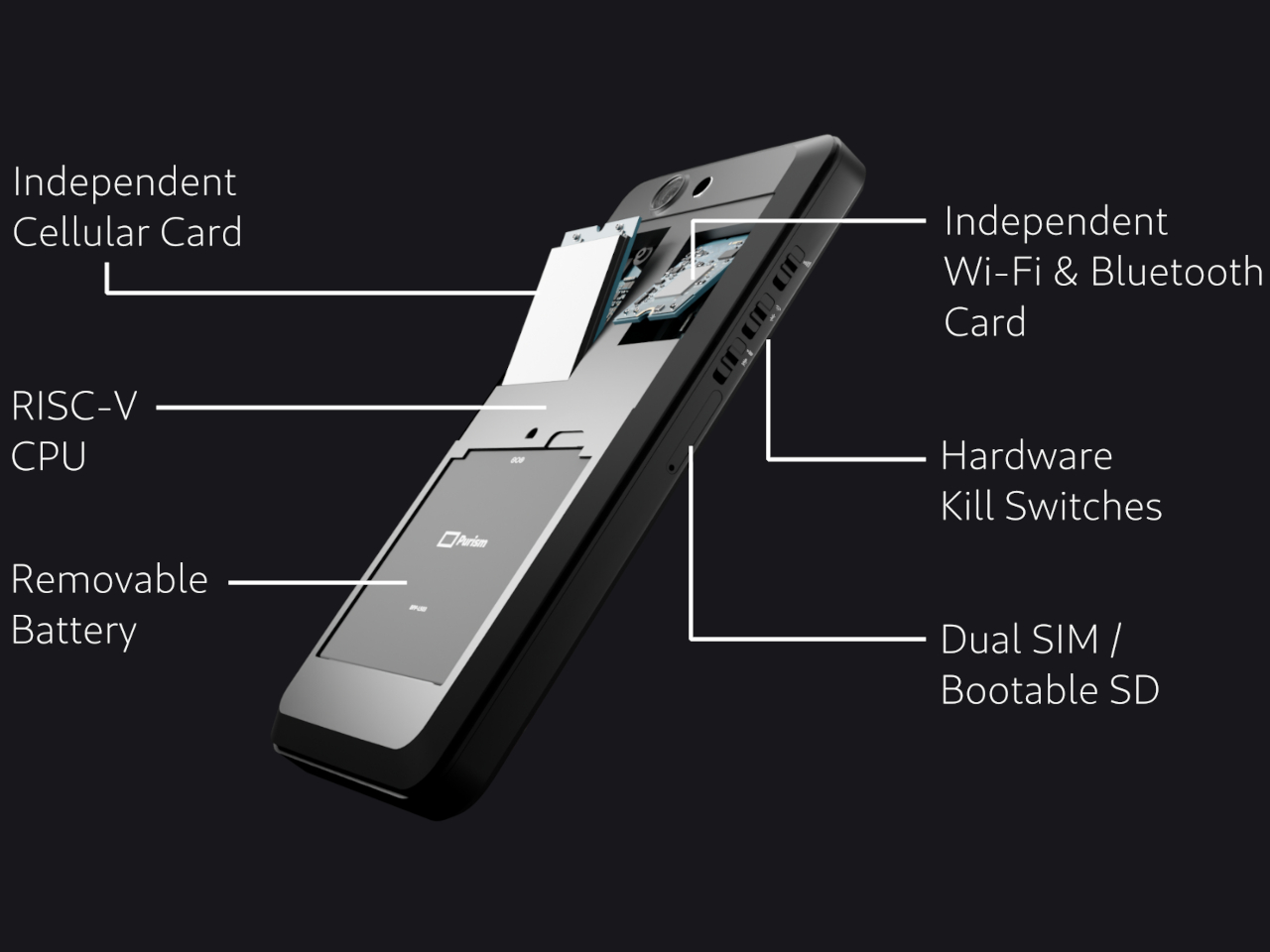
The removable 4,500mAh battery follows the same thinking. When it eventually wears out, replacing it wouldn’t have to mean replacing the handset. Separate cellular and Wi-Fi/Bluetooth cards bring that modular approach to connectivity, too. Even the headphone jack sticks around, letting wired headphones work without another adapter. None of this makes the phone slimmer, but it leaves more things within the owner’s reach.
Purism’s proposed hardware pairs an eight-core SpacemiT K1 processor with at least 8GB of RAM and 128GB of built-in eMMC storage. RISC-V gives Purism an open instruction set to build around, although that doesn’t mean every chip or piece of firmware becomes open source. The company promises cooler operation and longer battery life, but neither improvement has been established through independent testing.
PureOS, a Debian-based Linux system, is intended to offer an alternative to Android and iOS. Connecting an external screen through USB-C would extend the phone’s workspace, while native Linux apps offer a different software route. The catch is familiar apps. Android compatibility still needs work, alongside graphics and power management, so you shouldn’t assume your banking or messaging routine will transfer without friction.
Purism currently lists a $1,599 price for the phone under development, with production deliveries targeted for spring 2028 rather than any immediate release. That leaves considerable work between the proposal and something ready for your pocket. Keeping the old enclosure is defensible, but access to replaceable parts and dependable everyday software will matter much more than the promise of owning them someday.