A bedside table fills up quickly. A phone, a charging cable, a lamp, and the book you keep meaning to finish can leave very little room for anything else. Choosing accessories for that space means looking beyond appearance. The useful pieces deserve their footprint, make everyday tasks simpler, and give you something worth looking at when the overhead light finally goes off at the end of another long, crowded day.
These five editorial picks approach that brief through different materials and functions, rather than a matching aesthetic. Their appeal lies in specific decisions: a readable clock face, a removable vase plate, or a lamp you can move without finding another outlet. There are qualifications, too. The candle-powered diffuser needs a setting outside the sleeping area when lit, while the stone bookend is currently an availability-dependent choice rather than an immediate purchase.
1. Battery-Free Aroma Diffuser
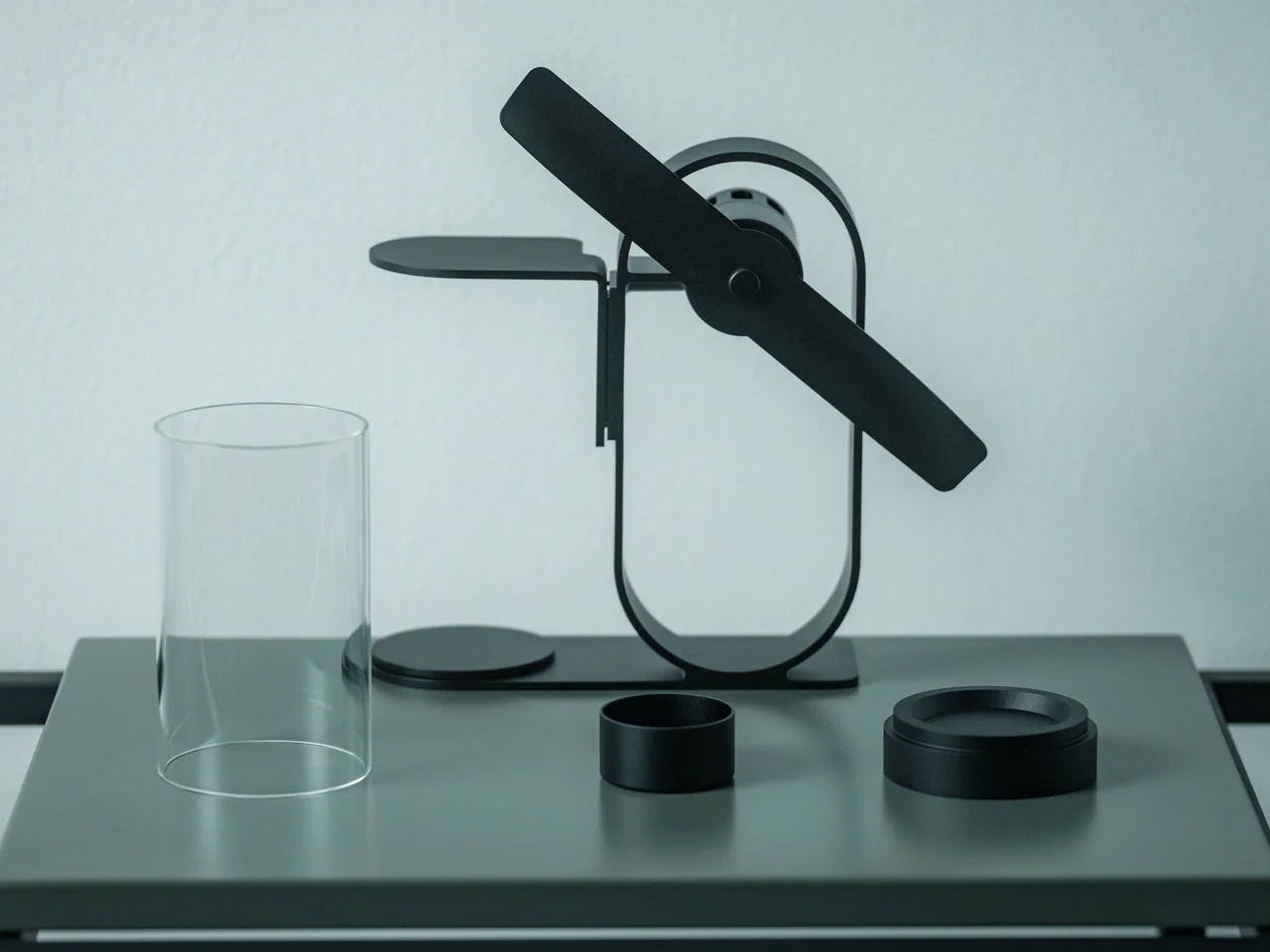
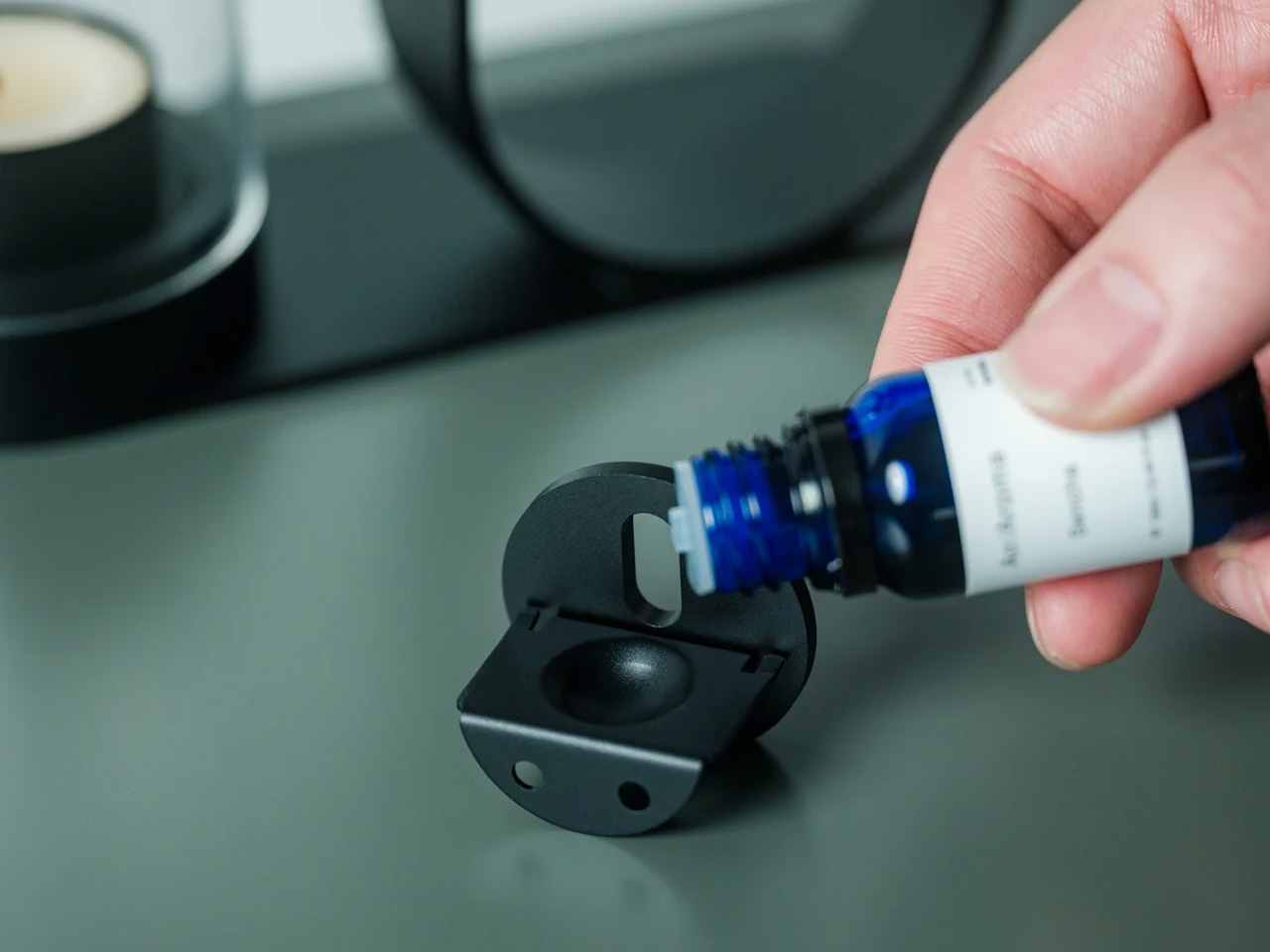
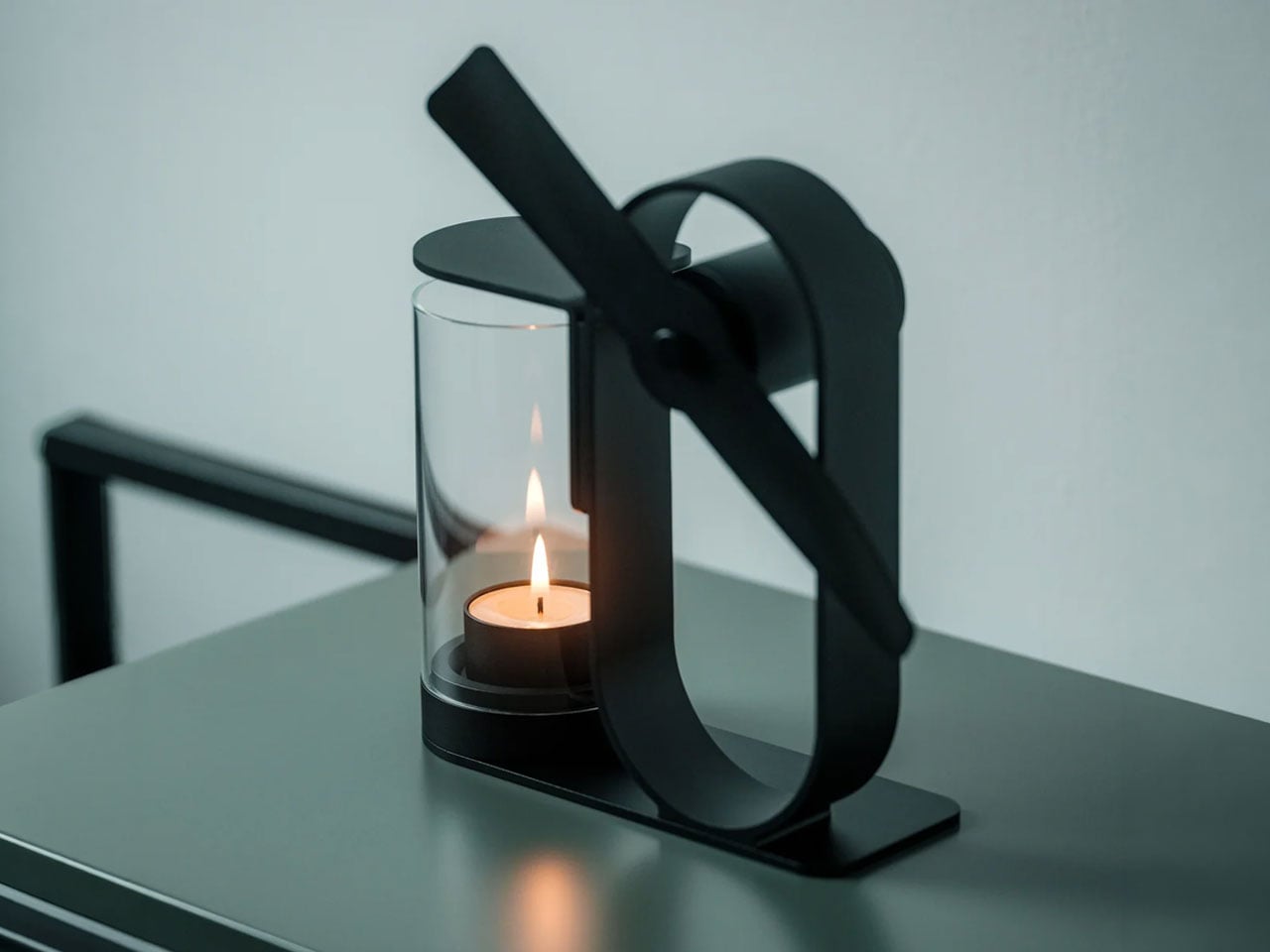
The Battery-Free Aroma Diffuser makes its operating principle part of its appeal. A candle $290.00 heat that generates electricity to drive a small, single-blade fan, which helps carry the fragrance outward. Made in Japan from aluminum, glass, and iron, it replaces the familiar plastic diffuser enclosure with a structure organized around the flame and moving blade. There’s no charging cable or battery compartment to accommodate, and the mechanism gives the object a reason to hold your attention.
The candle also places an important limit on its bedroom credentials. The US Fire Administration advises against using lit candles in bedrooms and sleeping areas, so this belongs there as an unlit display object, with its fragrance function reserved for an appropriate, supervised space elsewhere. That’s a substantial qualification, not a small-print detail. Its strongest design contribution is the visible relationship between heat, movement, and scent, rather than any promise of better sleep or unattended fragrance through the night.
Click Here to Buy Now: $290.00
What we like
- Candle-generated power eliminates batteries and an external electrical connection.
- The exposed mechanism makes the functional components worth displaying.
What we dislike
- Candle operation makes it unsuitable for lit use in a sleeping area.
- Battery-free operation still requires replacement candles and supervision.
3. KINTO Aqua Culture Vase
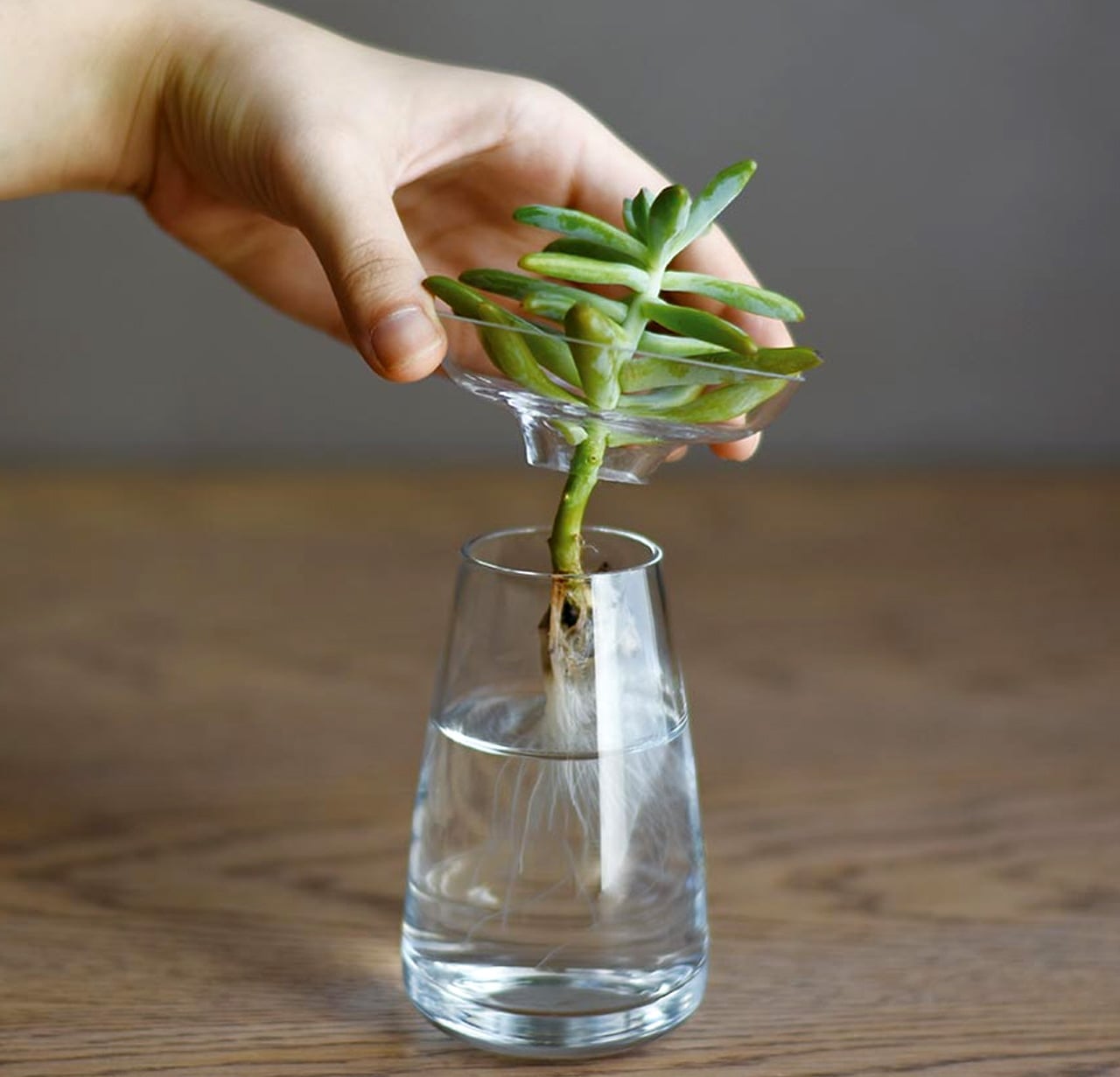
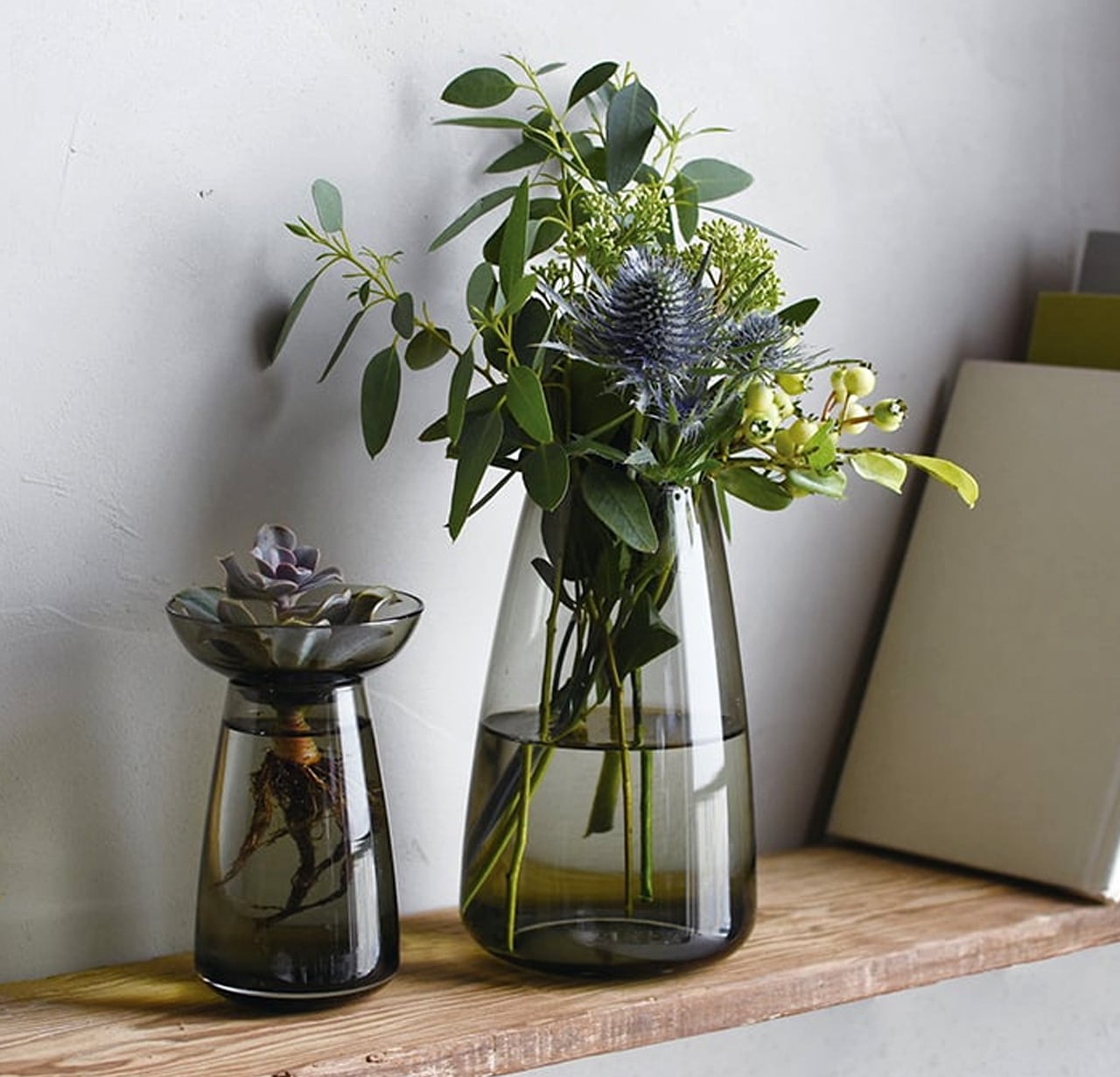
KINTO’s Aqua Culture Vase gives the part of a plant usually hidden in a pot its own display space. The design includes a glass vessel and a removable support plate, letting you see roots extending into water beneath the foliage. The bedroom connection is quite appealing: a suitable windowsill can accommodate a modest planting arrangement without requiring a large decorative pot or a separate plant stand nearby.
The removable plate is the useful detail. KINTO shapes it to support plant material such as bulbs and seeds, while taking it away converts the vessel into a conventional flower vase. The smaller version measures 80 millimeters across and 130 millimeters tall, giving it a manageable footprint for a narrow surface. This is soda glass, not borosilicate, and KINTO warns against sudden temperature changes. Choose it for its flexible construction and visible growth, not as a maintenance-free substitute for plant care.
What we like
- The removable plate supports different arrangements.
- Transparent glass makes the roots part of the display.
What we dislike
- The soda glass needs protection from sudden temperature changes.
- Its small format limits the scale of your arrangement.
3. Anywhere-Use Lamp
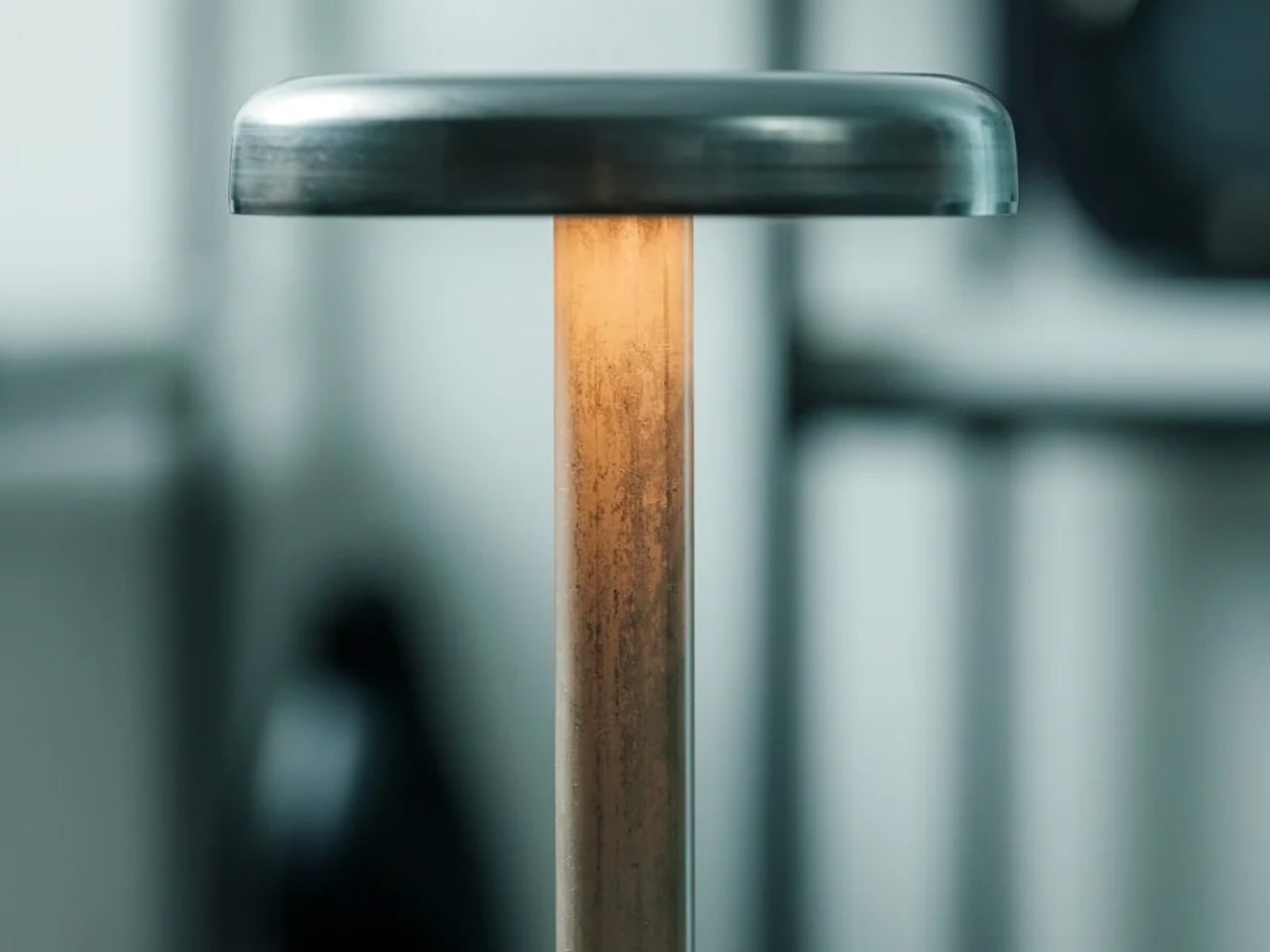
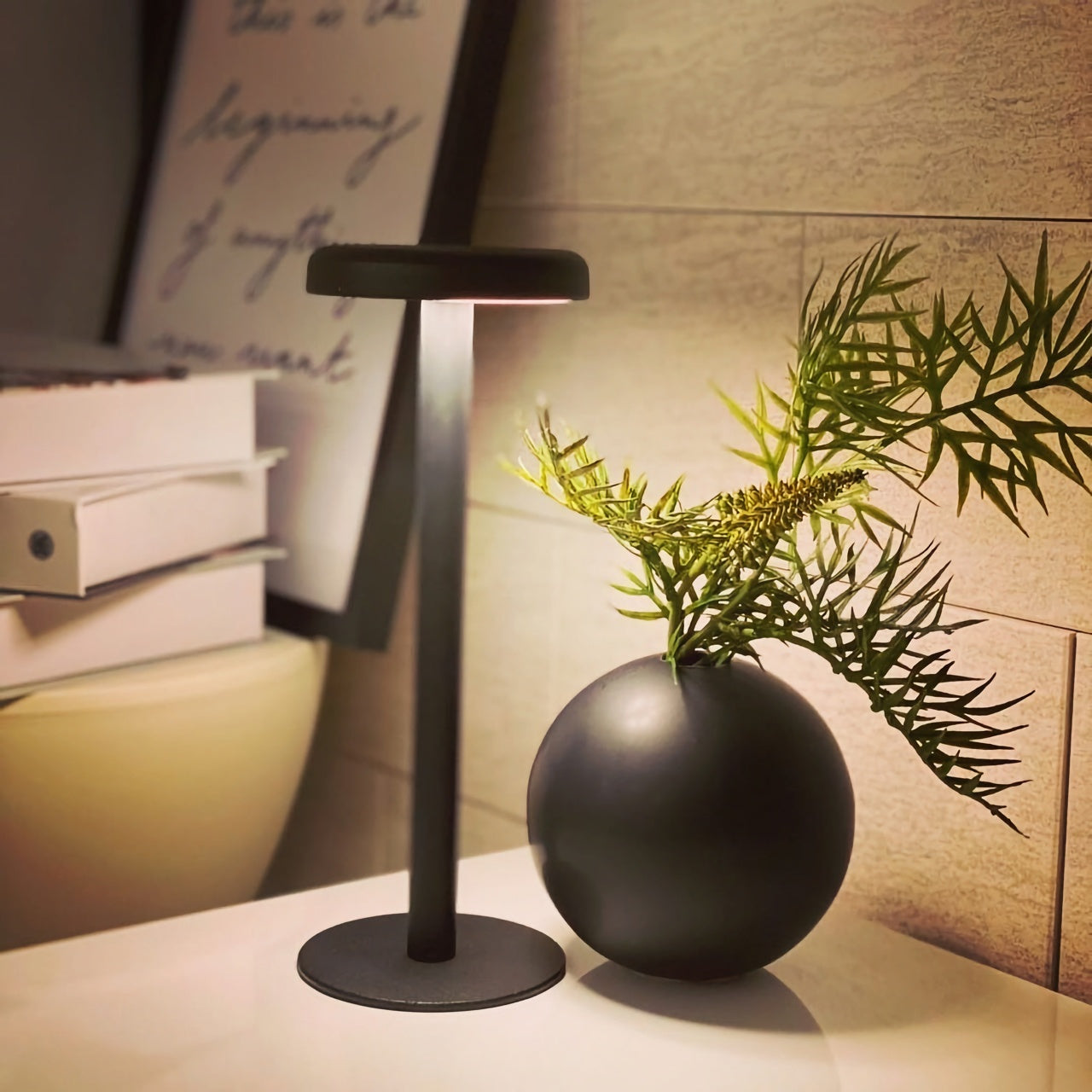
The Anywhere-Use Lamp addresses a familiar bedroom problem: the useful spot for a light isn’t always beside an outlet. Designed by TENT × Fujita Metal and made in Japan, it runs on four AA batteries, allowing you to move it between a nightstand, dresser, and reading corner without trailing a cord. Its iron construction gives the familiar mushroom silhouette a more substantial material character than a typical plastic battery lamp, while the compact, self-contained arrangement keeps the technology visually unobtrusive.
Pressing an edge of the shade cycles through four brightness levels, so the main control is part of the lamp’s form rather than a separate switch on a cable. That’s the design choice that makes particular sense beside a bed. Battery life is the tradeoff: it offers approximately 80 hours at the lowest setting and eight at the highest.
Click Here to Buy Now: $149.00
What we like
- Cordless operation lets placement follow the furniture, not the outlets.
- Shade-edge controls provide direct access to four brightness levels.
What we dislike
- Four AA batteries need replacing rather than simply plugging in a charging cable.
- Stated runtime drops substantially at the highest brightness.
4. Aji Stone Book End Large
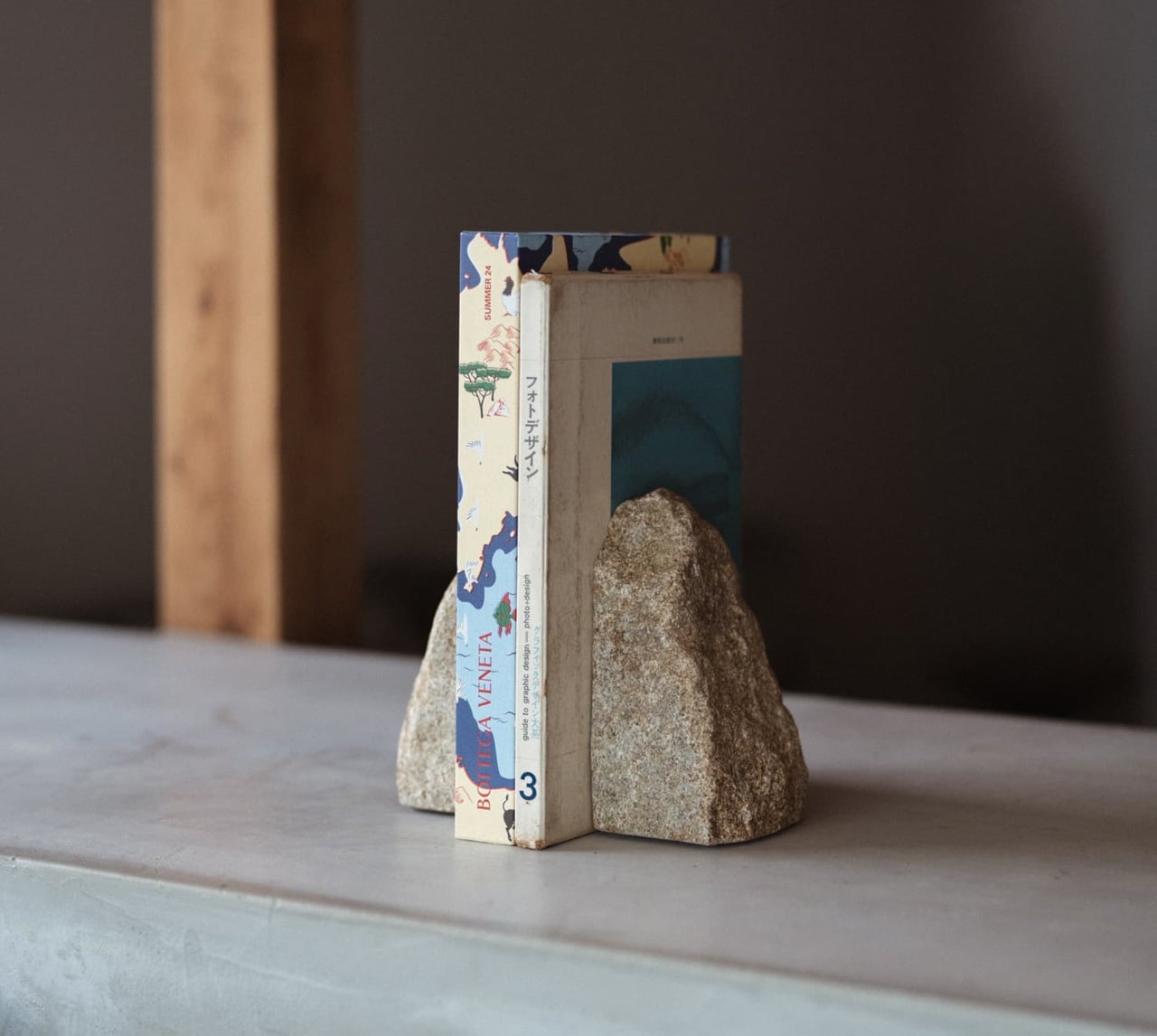
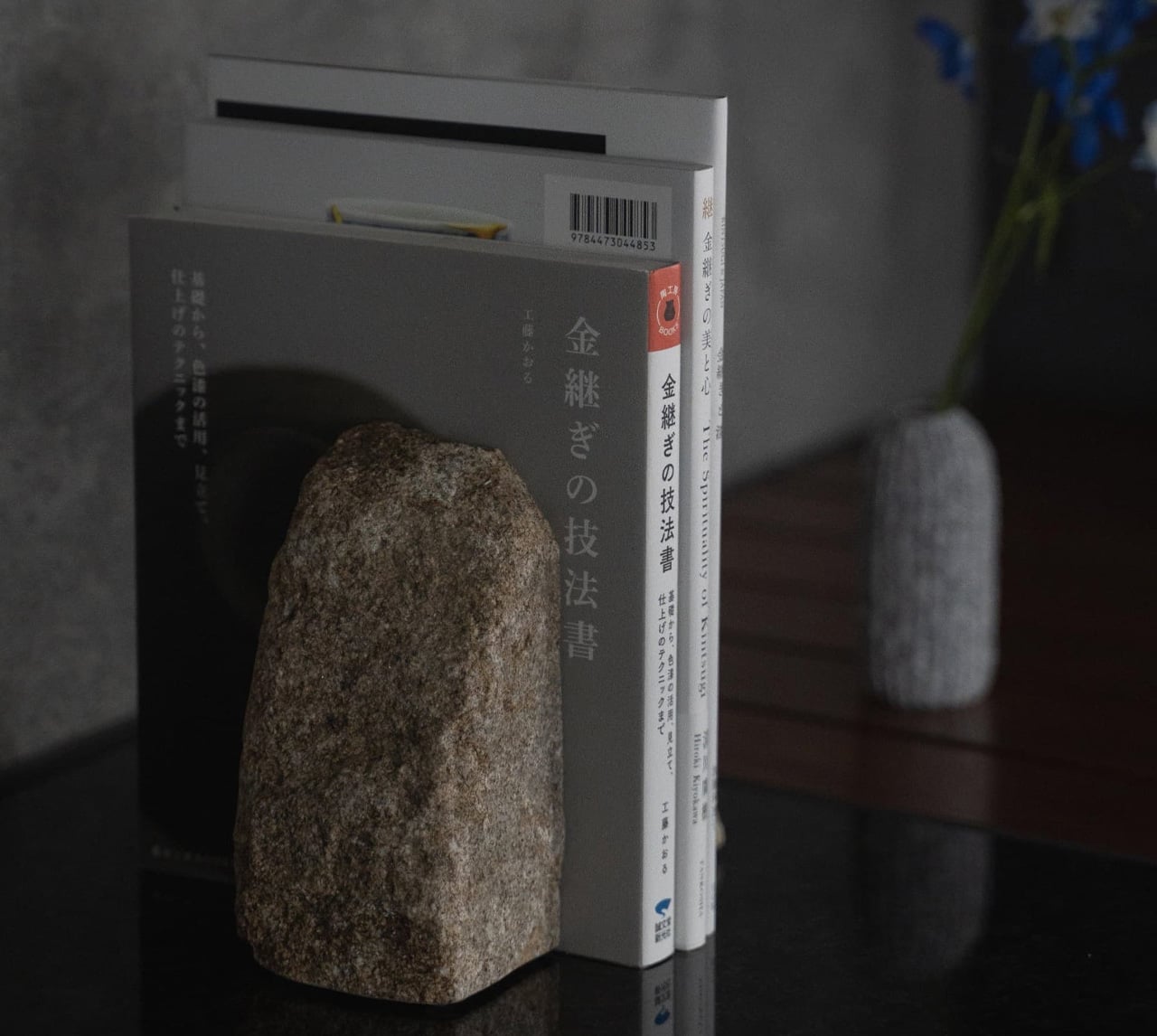
Aoishima’s Aji Stone Book End Large brings a different kind of presence to a bedroom shelf. Made in Kagawa, Japan, it uses granite whose mineral pattern and fractured contours supply the visual interest. The appeal is strongest where books already belong: on a low shelf, a substantial dresser, or a dedicated reading ledge. It organizes something you use rather than introducing a decorative object that needs its own justification.
The contrast between split stone and polished contact surfaces is the important material decision. Some areas retain the irregularity of the fracture, while others are finished smooth where they meet books and furniture. The large version measures 15 centimeters wide and tall, with a listed weight of approximately three kilograms, so check the supporting surface before placing it.
What we like
- Natural fracture contours give the stone a distinctive form.
- Polished contact surfaces make the material more practical around books.
What we dislike
- The substantial weight needs a suitably sturdy surface.
5. Riki Alarm Clock
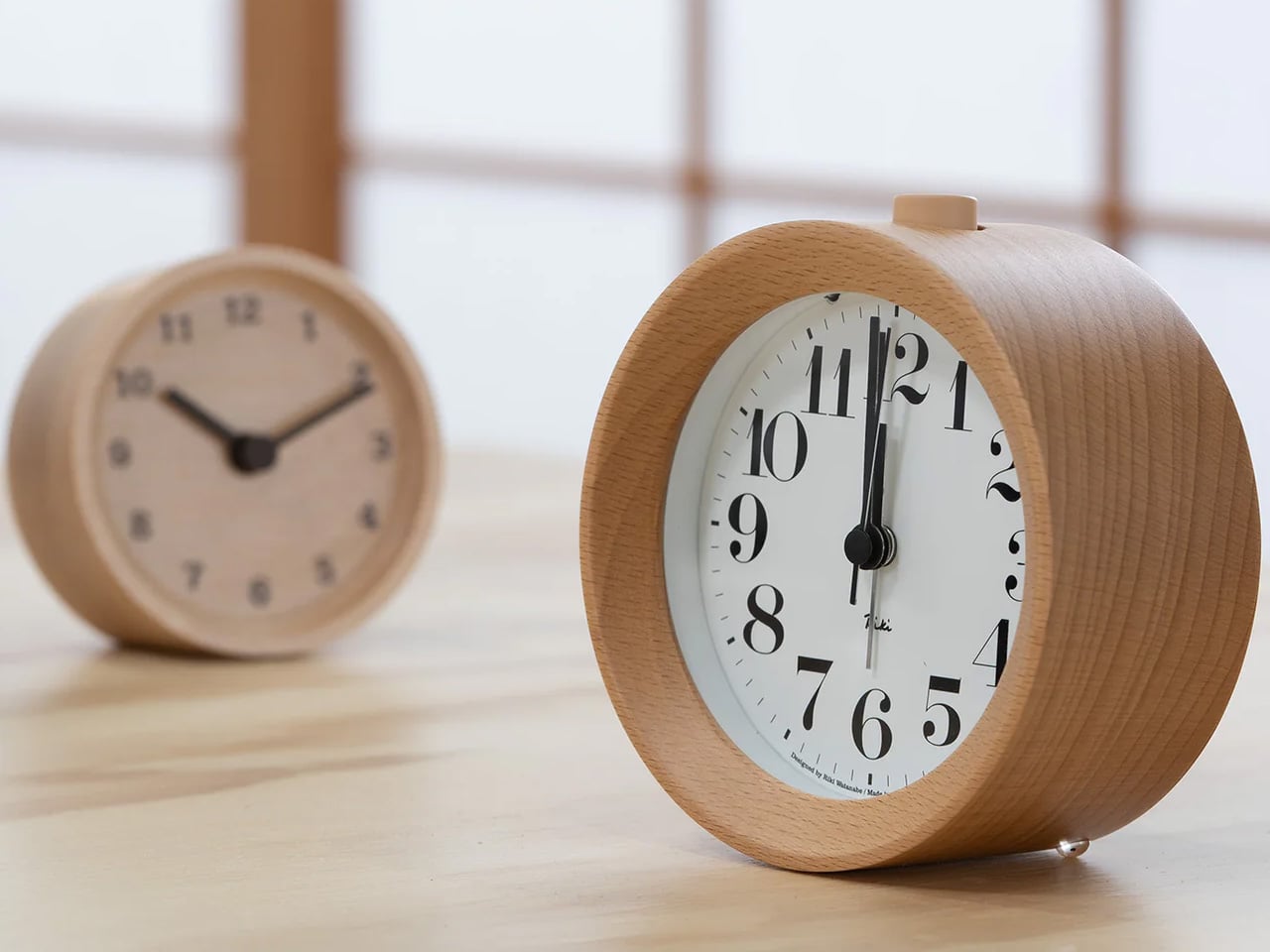
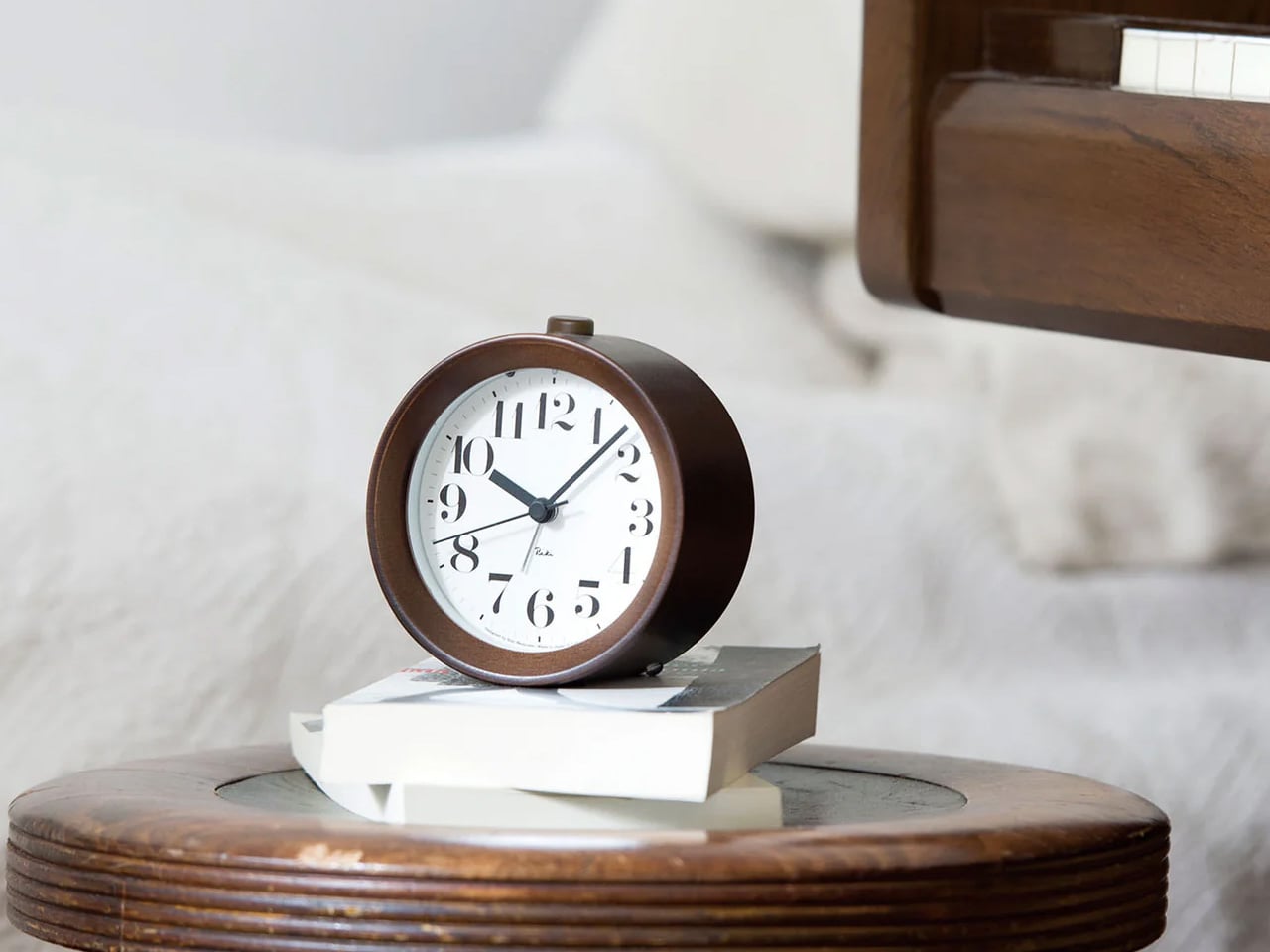
The Riki Alarm Clock gives the bedside table a dedicated timepiece without turning it into another screen. Designed by Riki Watanabe, its rounded beechwood frame surrounds a dial with large numerals that prioritize readability. Lemnos pairs the wooden case with glass and ABS resin, keeping the construction straightforward rather than pretending every component is a natural material.
Its practical features include an electronic alarm that increases in volume, snooze, and a light activated by pressing the light/snooze button. That means the dial needn’t remain illuminated throughout the night. One detail deserves care: although some listings describe the movement as silent, Lemnos’s linked manual acknowledges operating sounds from the sweep-second mechanism. Choose it for its clear face and restrained construction, not a guarantee of absolute silence. It also gives you the option of charging your phone somewhere else.
What we like
- Large numerals make the face easy to interpret.
- On-demand illumination avoids a continuously glowing display.
- Reading the dial in darkness requires pressing the light button.
- The sweep-second movement isn’t guaranteed to be inaudible.
Leave room for the things you already use
Start with the task that currently feels awkward. If reaching for your phone is the only way to check the time, consider a dedicated clock. If your lamp’s cord dictates the furniture arrangement, look at portable lighting. Decorative choices become easier once those practical needs are settled. You’ll know which surfaces are available and which materials would add something, rather than buying several objects and searching for places afterward instead.
There’s no need to assemble the entire collection on one bedside table. Give a vase a suitable windowsill, keep books on a shelf that can support them, and leave enough clear space beside the bed for the things you reach for half asleep. A considered bedroom can still contain color, possessions, and personality. The useful restraint is knowing when an accessory has solved its problem and another purchase would add clutter.