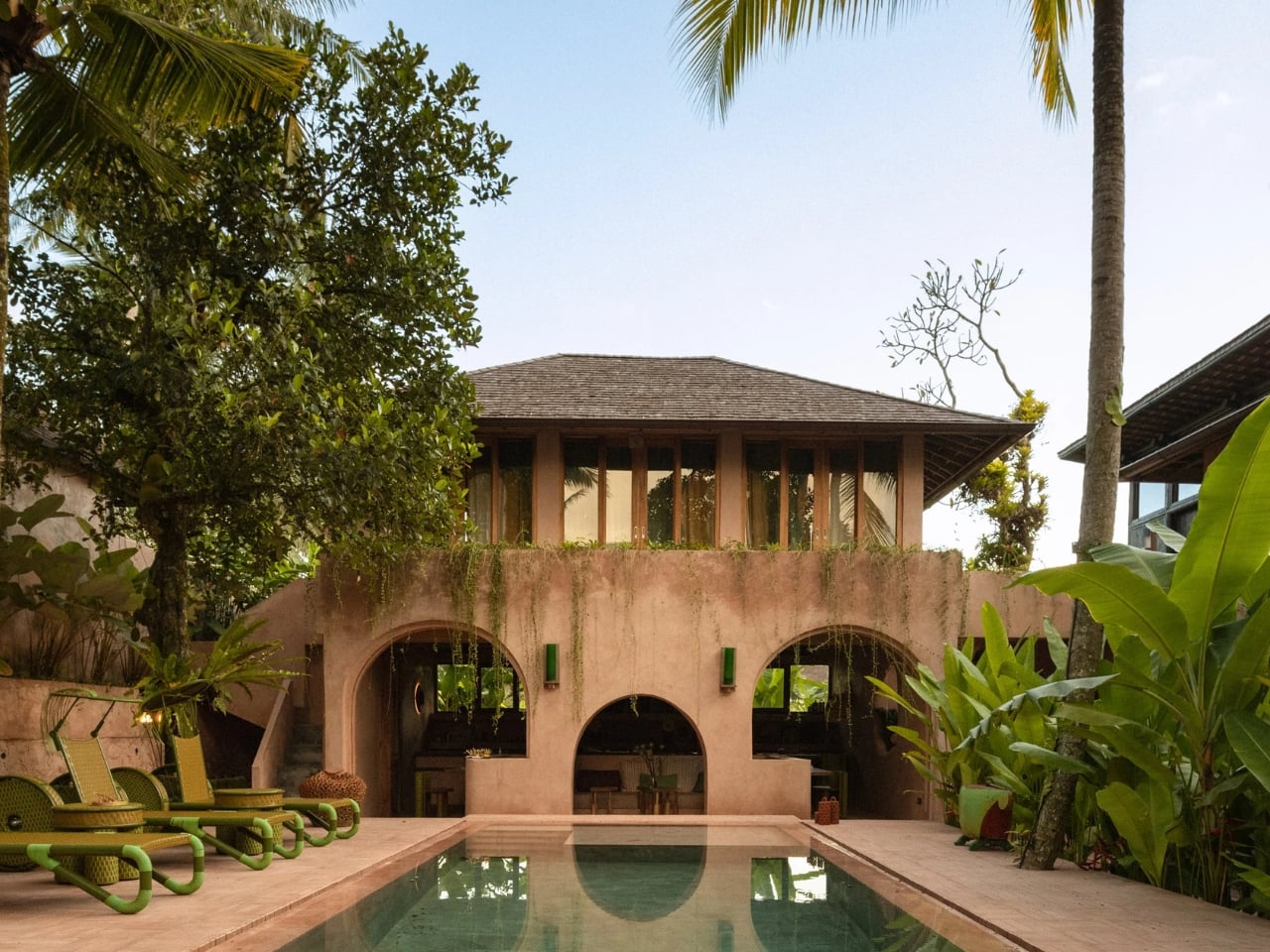
The approach to Moon Gang in Ubud, Bali, is too narrow for a car. Guests arrive on foot or by motorbike, a detail that sounds romantic until you consider getting construction materials to the same address. For Sydney studio YSG, transforming a deteriorating vacation residence into a five-suite hotel meant solving that logistical problem alongside a more fundamental one: making a water-damaged concrete building worth staying in.
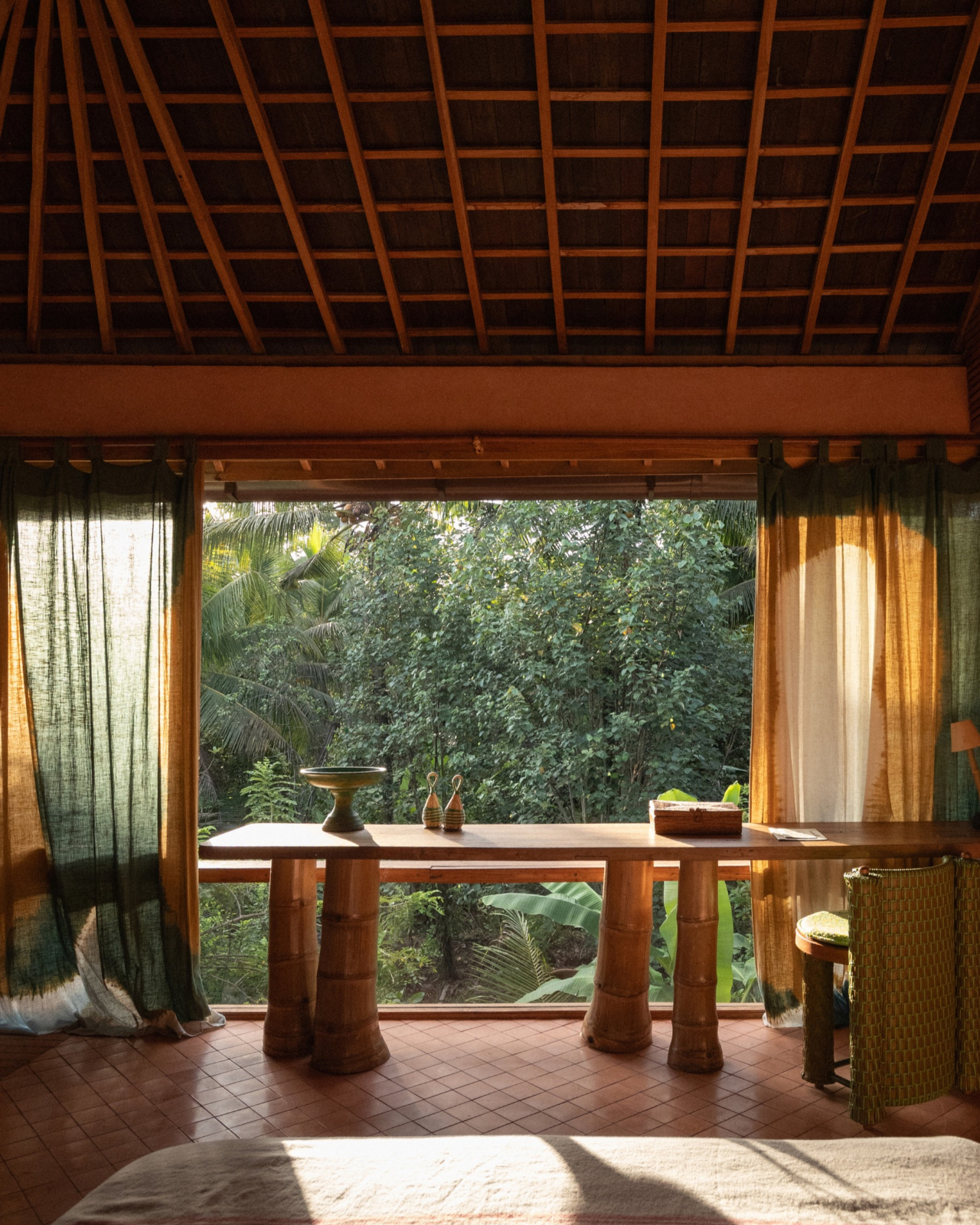
That combination gives the project its most interesting design story. YSG repaired the existing complex, replacing rotten timber walls, portions of the roof, and concrete flooring. Materials were sourced locally where possible, and joinery was designed for assembly on site. I like seeing these practical decisions alongside the finished interiors. They explain how the hotel came together, especially when the photographs could easily let you get distracted by the pool and forget the construction work entirely.
Designer: YSG
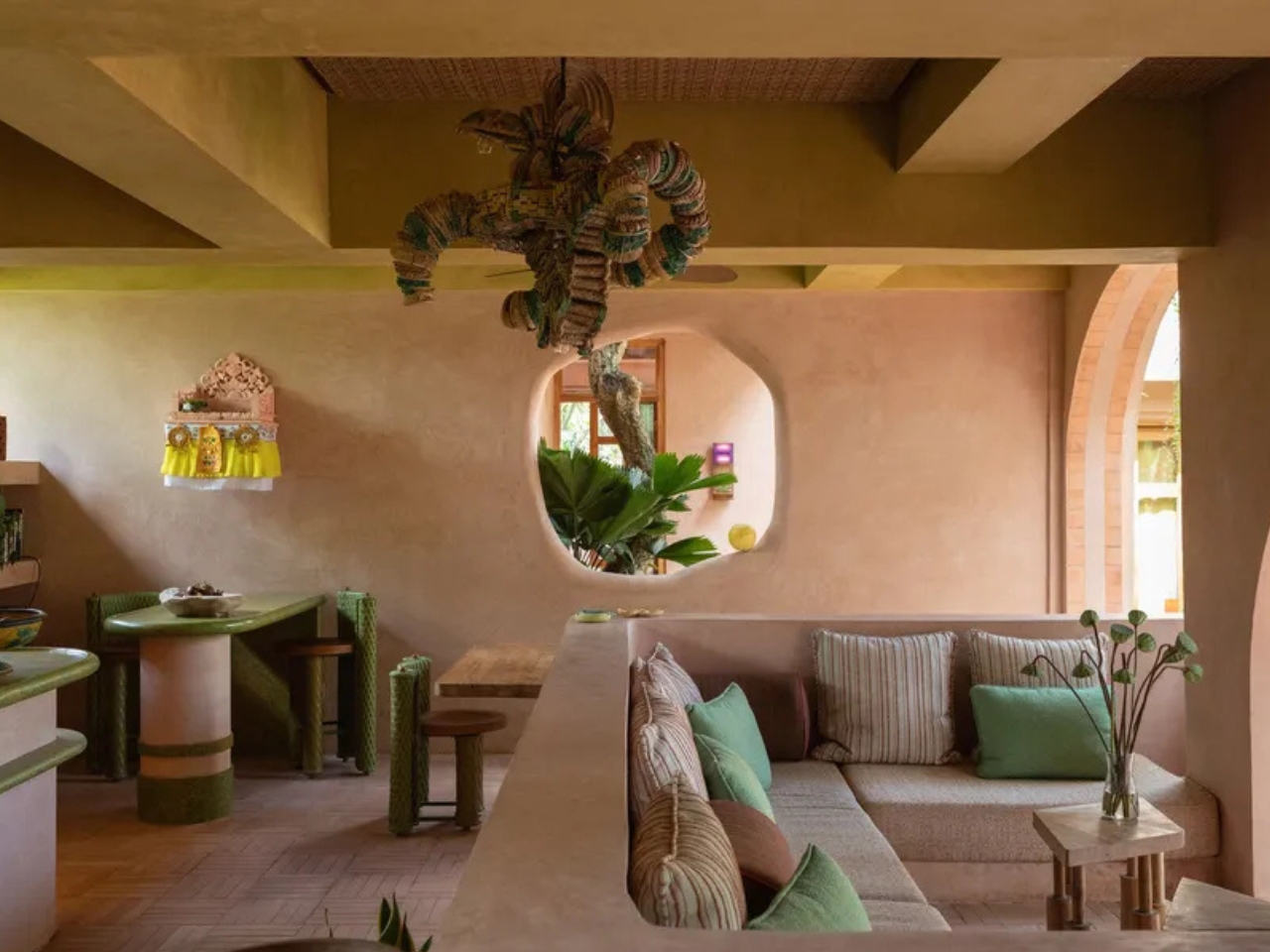
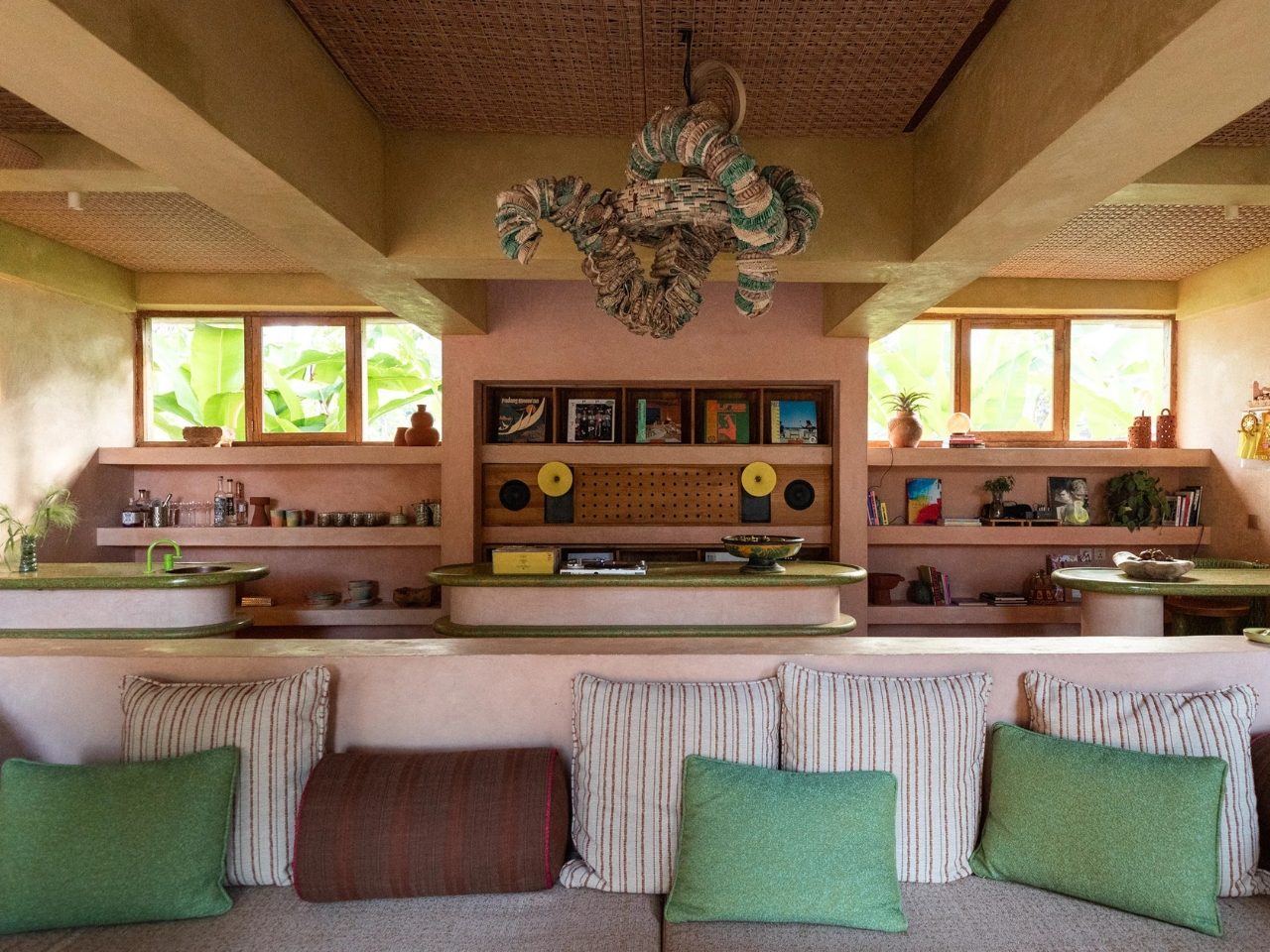
Some of the less glamorous work deserves attention. According to the studio, terracotta tiles and breeze blocks were crushed and reused to help with drainage. That is a useful destination for material that might otherwise leave the site as rubble. It also connects the renovation to the water damage YSG had to address. The appealing surfaces sit above a project that needed repairs before it needed personality.
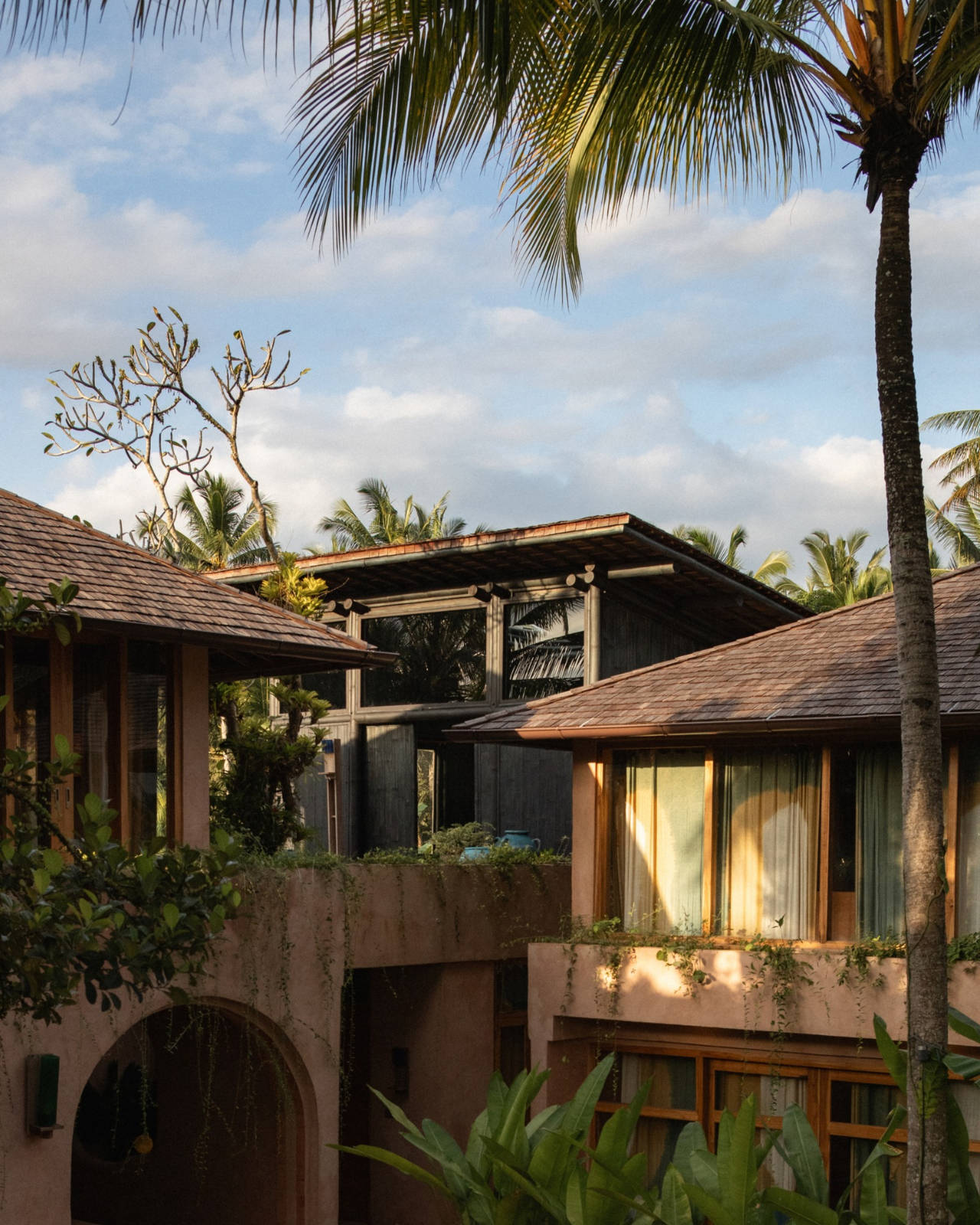
The layout places the pool within a central courtyard, enclosed on three sides by suites and communal spaces. Guests enter from the remaining side, encountering the shared outdoor area before dispersing into the hotel. At this scale, the courtyard becomes an easy point of orientation. You can understand the basic arrangement without navigating a maze of corridors, and the pool belongs to the everyday circulation rather than feeling like a separate amenity.
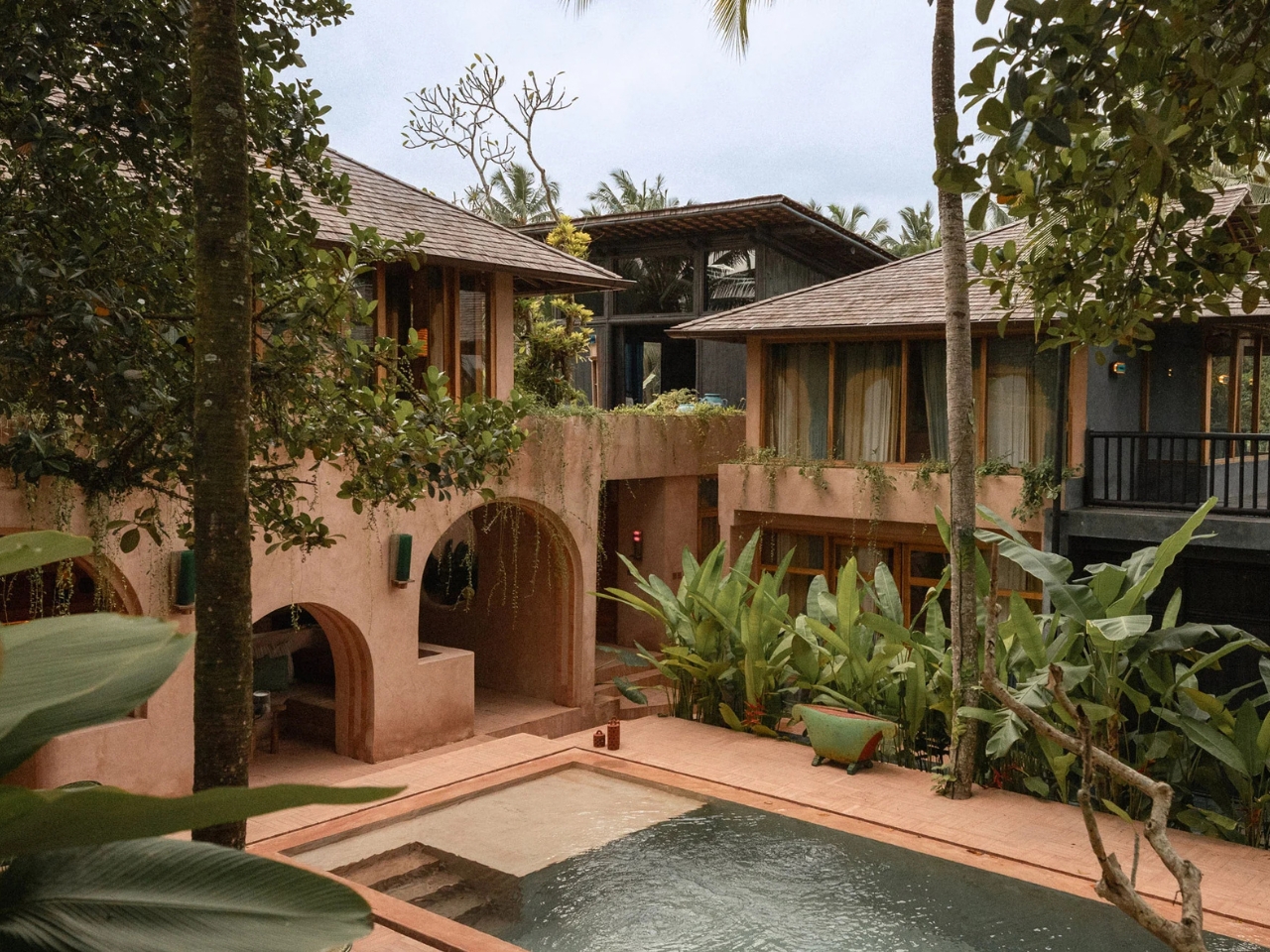
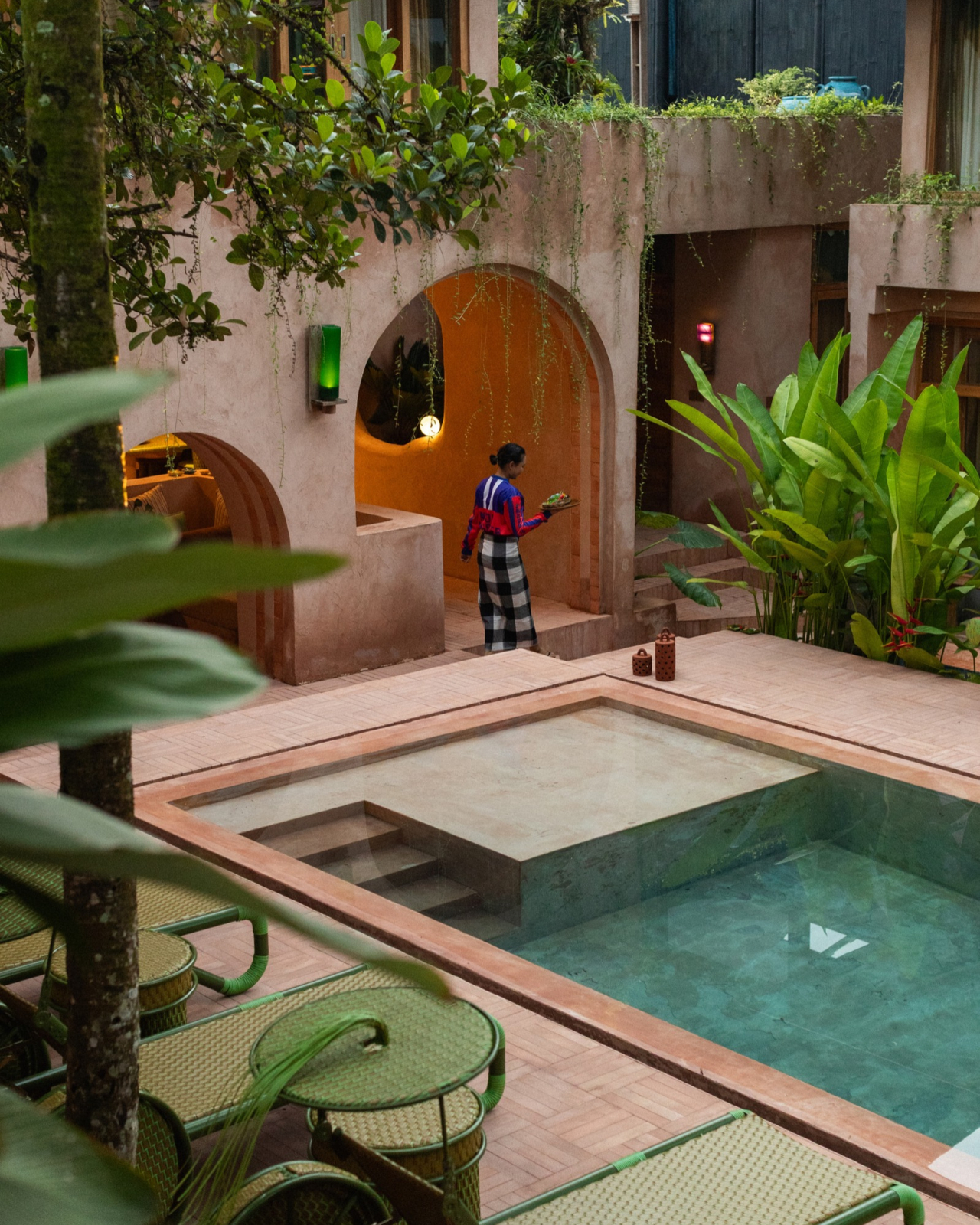
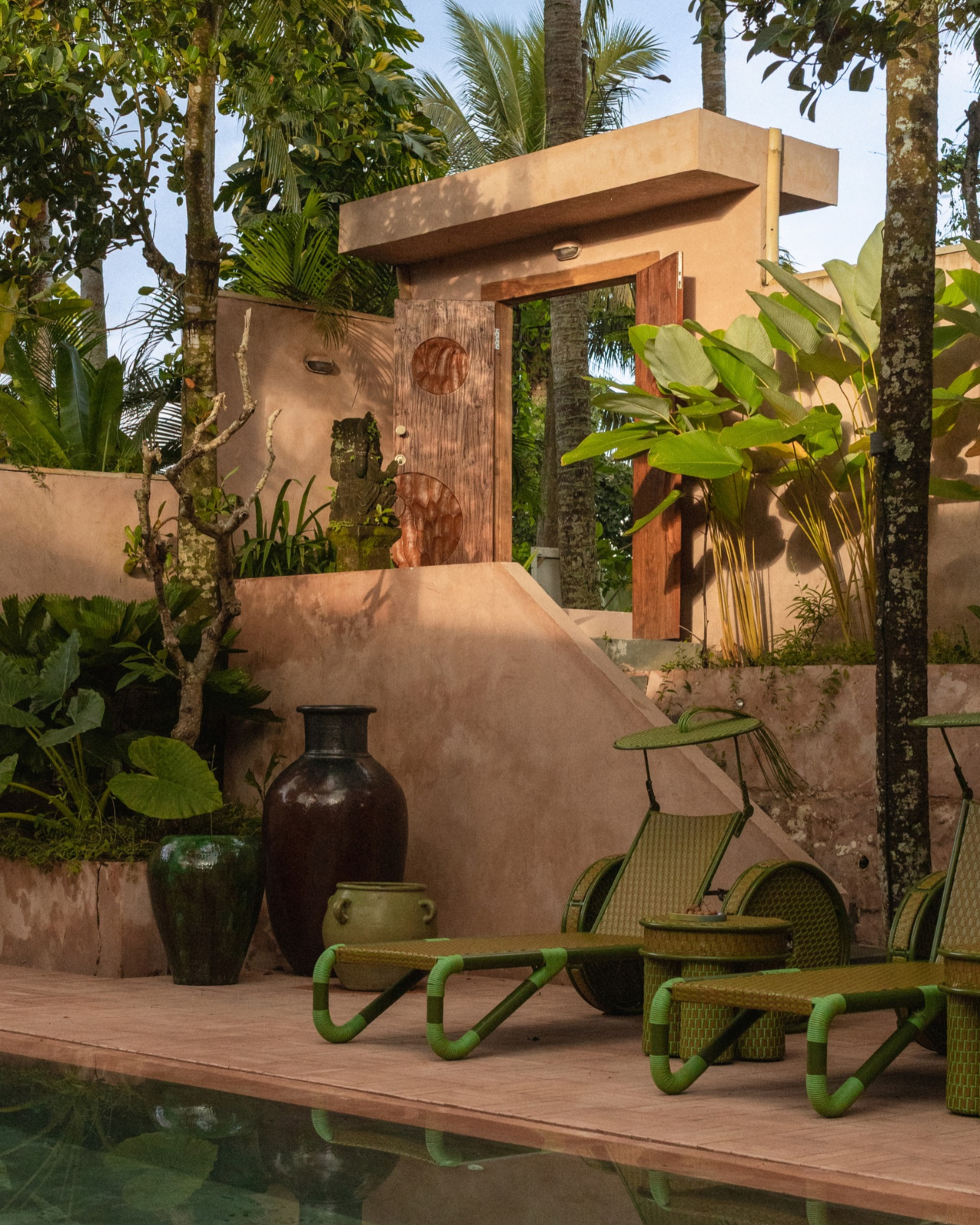
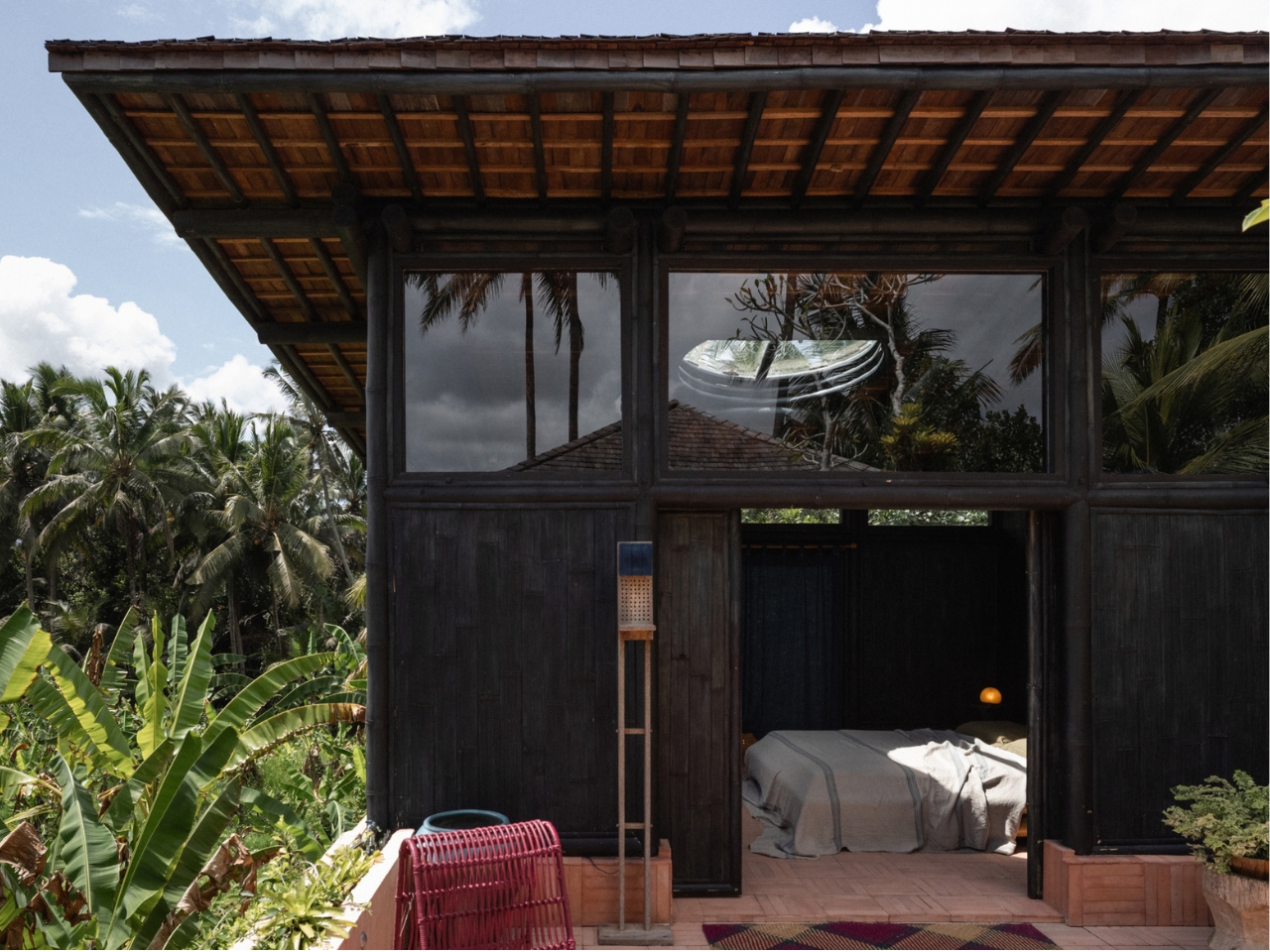
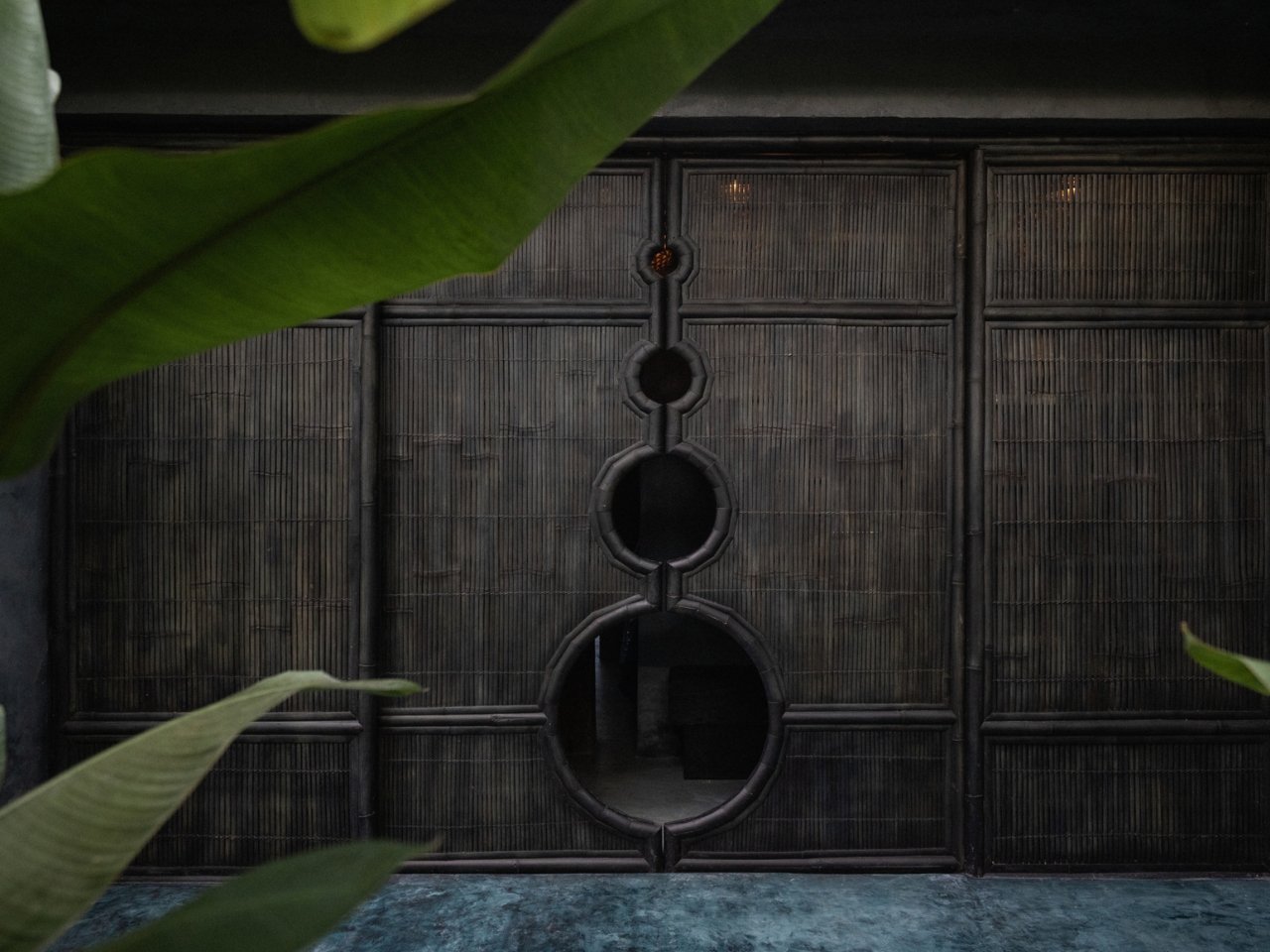
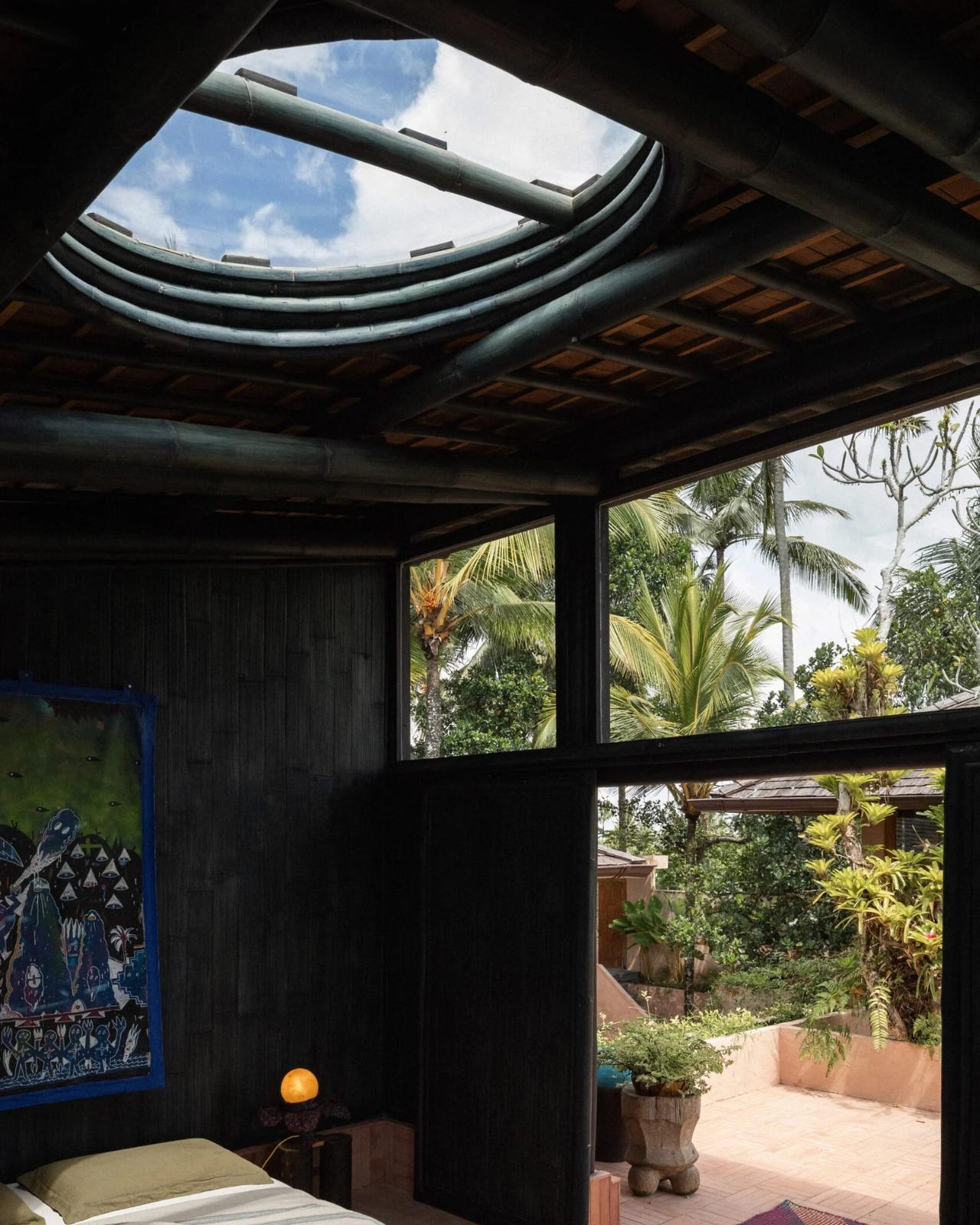
YSG gives that relatively compact arrangement plenty of material variety. Lava stone, terracotta, bamboo, and timber sit alongside resin and recycled plastic. An added upper-level suite uses bamboo and an oversized skylight, with indigo staining giving it a distinct identity. The spa’s sliding bamboo doors depict lunar phases. I’m usually wary of a hotel theme that follows you into every room, but these references have actual surfaces and structures to work with.
More than 15 Indonesian makers and artisans contributed to the project, and their work provides much of its character. Weedoo Plastics made counters and stools from recycled bottle tops. BYO Living produced handwoven pool loungers using upcycled materials, while AA Practice combined local seseh wood with green resin for wall sconces. Those credits matter. They make it possible to recognize the individual workshops behind an interior that might otherwise be attributed entirely to the design studio.
The bottle-top furniture is particularly appealing because the recovered material gets a prominent role. Counters and stools are things guests encounter and use, rather than a recycling story tucked into a specification sheet. That doesn’t establish the environmental performance of the whole building, and I wouldn’t stretch it into that claim. It does show how a material choice can contribute to the room’s identity while finding another use for discarded plastic.
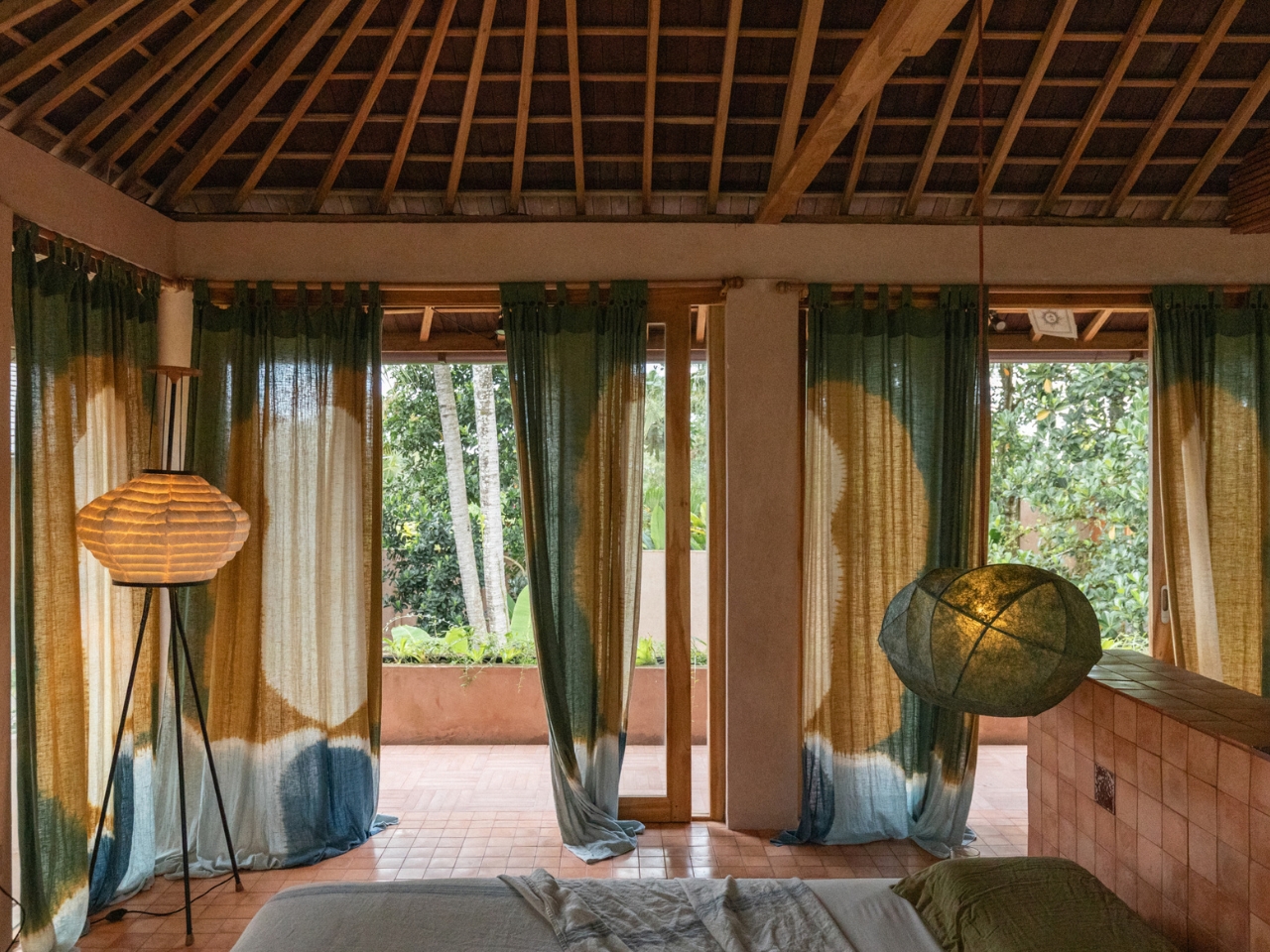
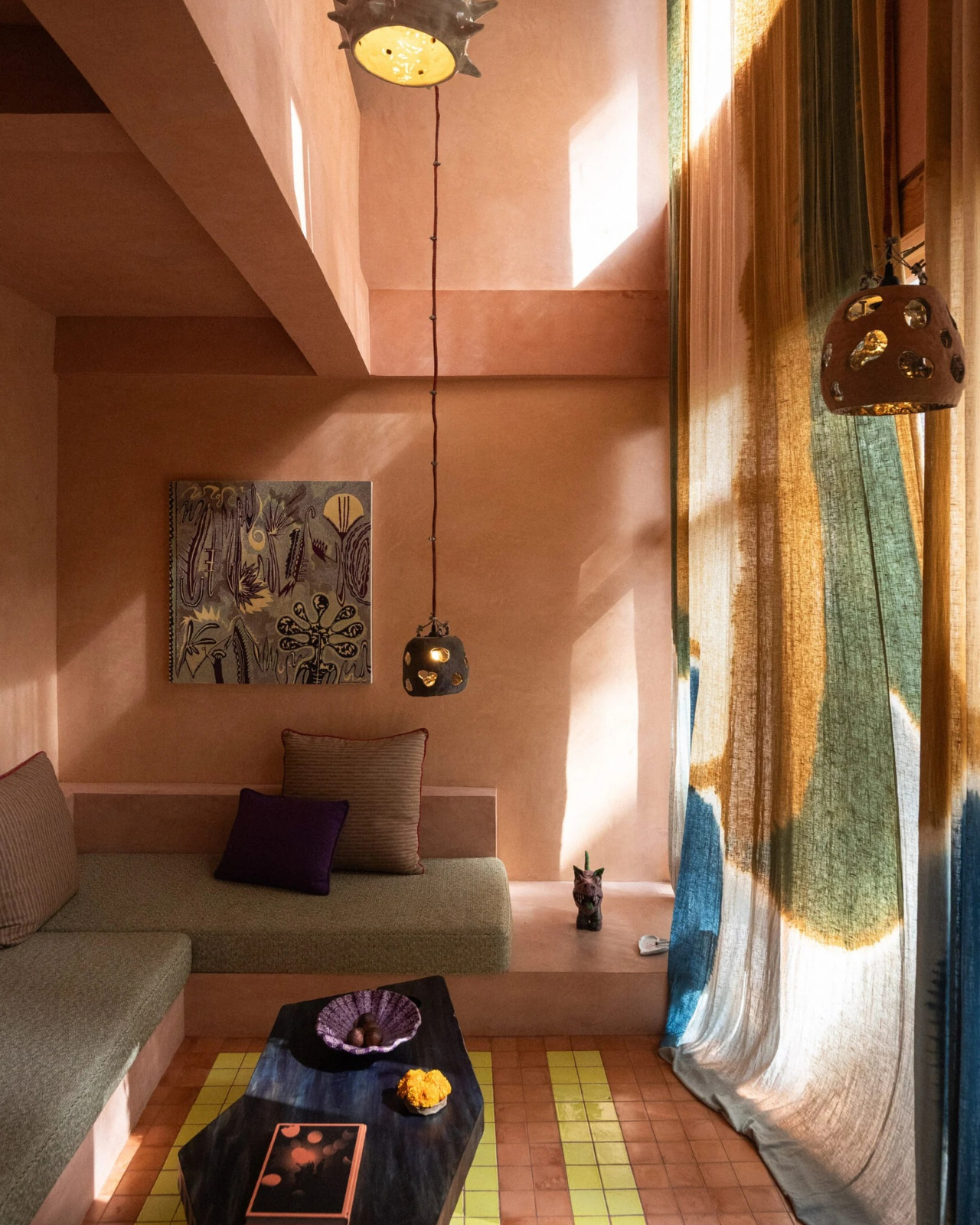
Inside the suites, plant-dyed curtains hang from high points, while indigo-dyed banana-leaf pendants sit beside beds. These details carry the material experimentation into more private spaces, where guests have time to notice them. The communal lounge also includes a guest-operated DJ setup with Indonesian and Japanese city pop records curated by Midnight Runners. It’s a welcome option for an unstructured afternoon, without needing to become the hotel’s entire personality.
The narrow approach remains a tradeoff, particularly for travelers who need direct vehicle access. Attractive interiors don’t cancel that out. What makes Moon Gang persuasive to me is the relationship between its constraints and its finished character: locally sourced materials, components assembled on site, and an existing courtyard building repaired for another use. I’d be interested in staying here for the rooms and the makers behind them, with the journey down the lane considered before packing.