The tech pouch is usually where packing light starts to unravel. One charger becomes three, headphones demand their own corner, and a mouse leaves an awkward lump beside the laptop. A useful travel gadget has to justify that intrusion. It should solve a problem you actually encounter, replace something bulkier, or make the equipment you already carry more useful. Looking clever on a hotel desk is a distant secondary concern.
These five designs approach that test from different directions, starting with an unusually small phone cooler. There’s also a lightweight pair of headphones, a bridge between wireless audio and wired seatback screens, a charger for device-heavy trips, and a mouse that changes shape before going into your bag. This is a design-led selection based on published information, not hands-on testing or a suggestion that every traveler needs all five items.
1. OnePlus Ice Card Mini
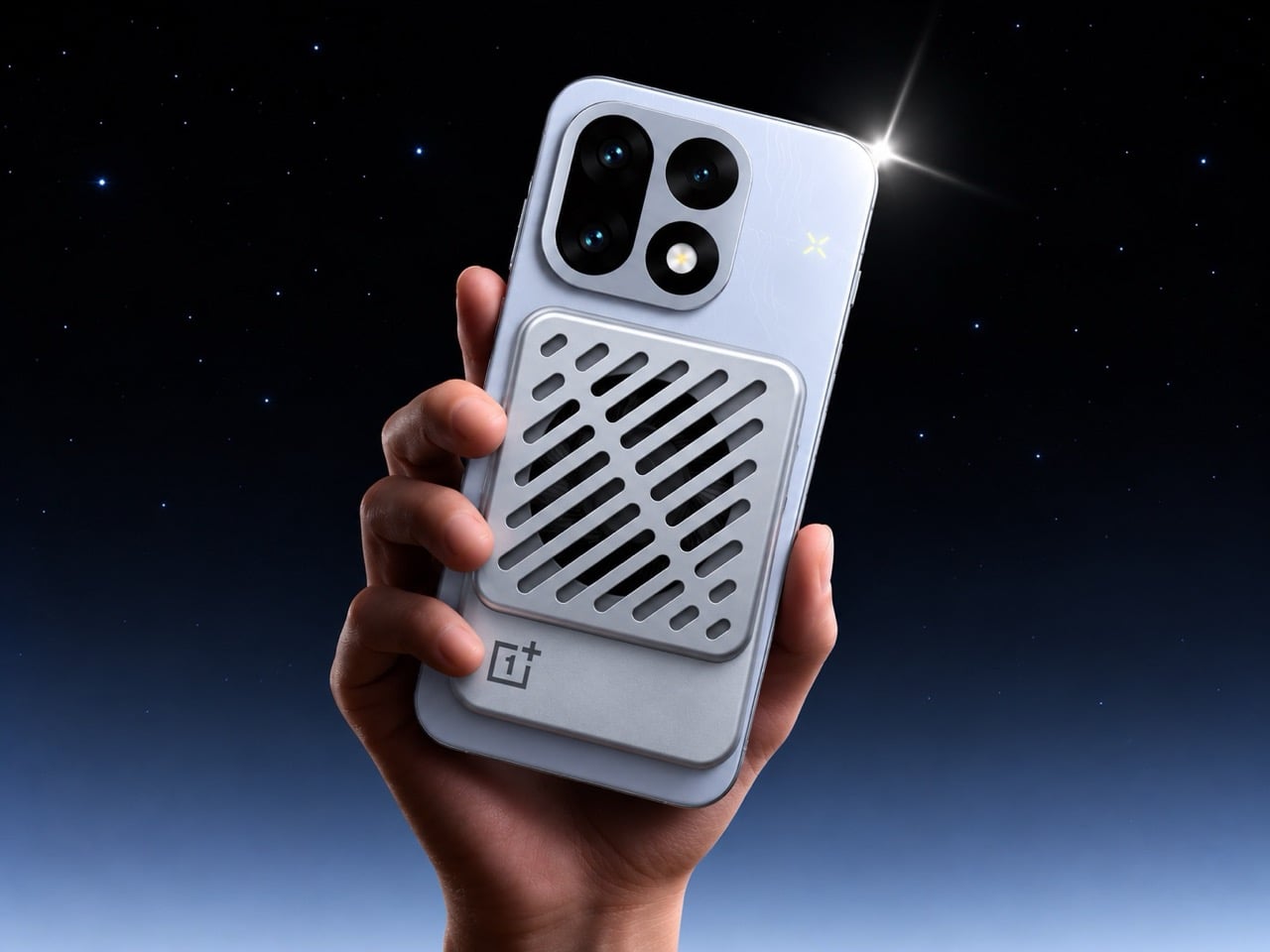
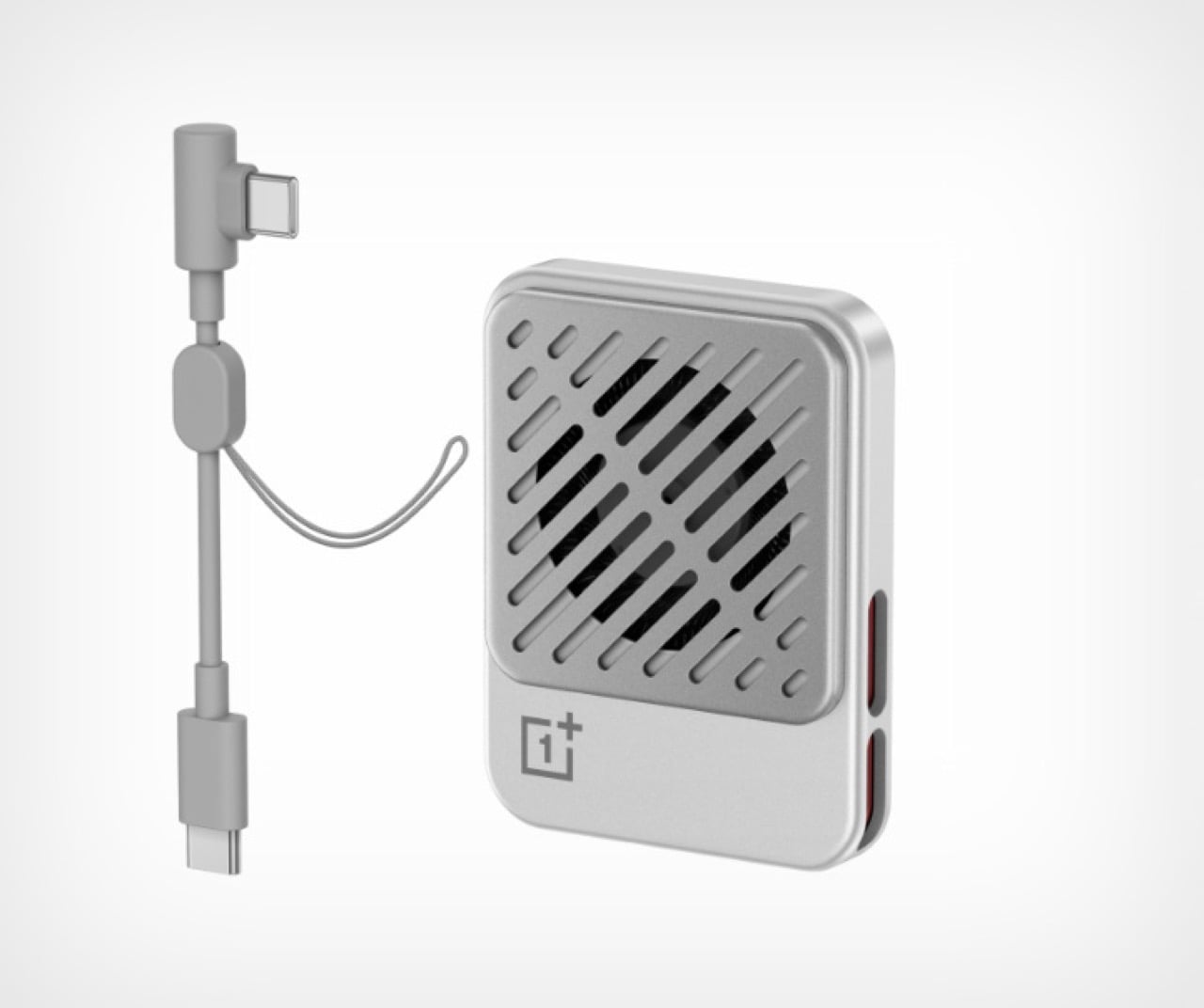
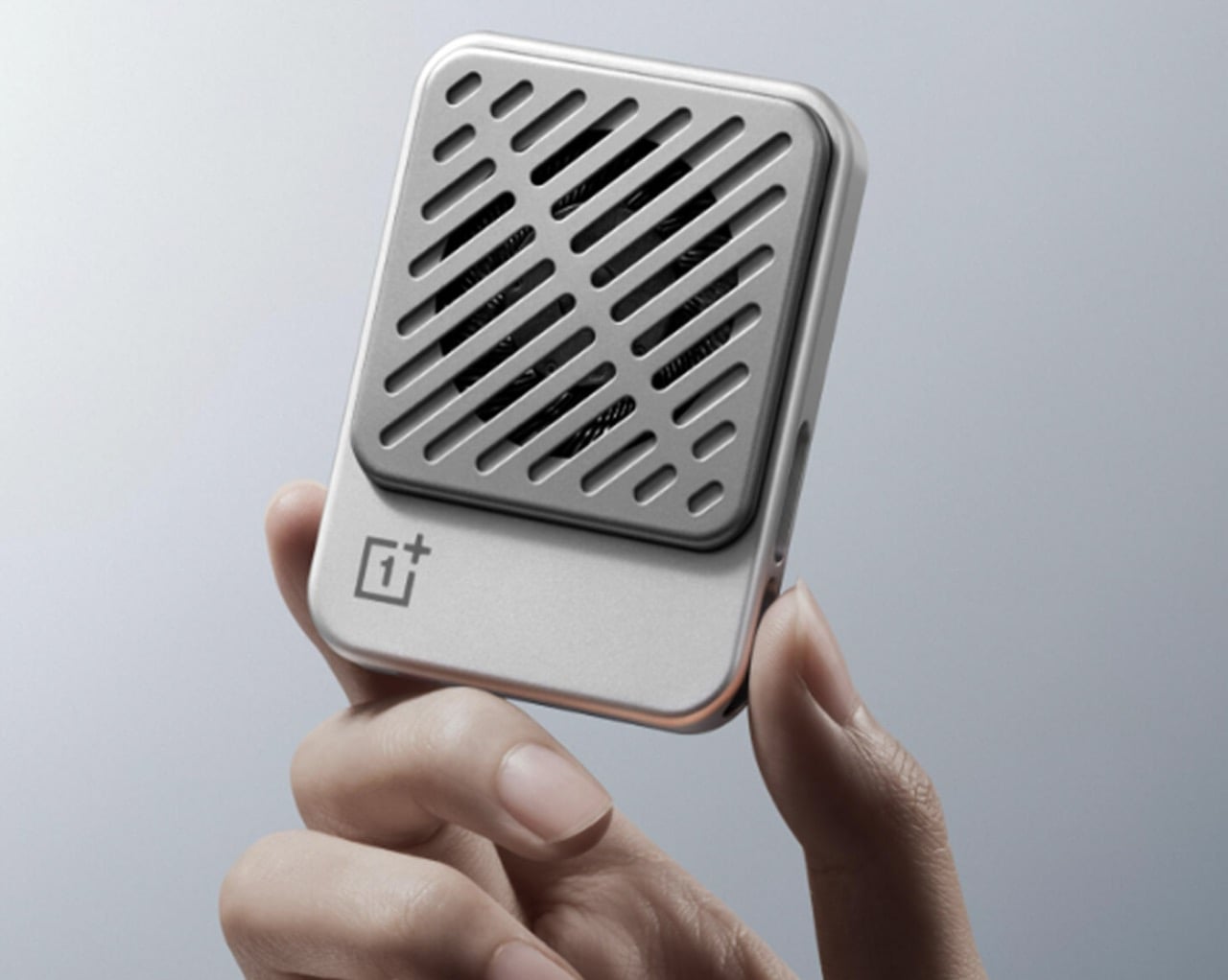
A phone cooler sounds like an accessory best left on a gaming desk. OnePlus’s Ice Card Mini makes a more portable case for it: the magnetic attachment weighs about 50 grams and measures 70 by 53.4 millimeters. That’s smaller than a bank card across its face, although considerably thicker. Inside, a thermoelectric cooling element works with a fan. The appeal for a traveling mobile gamer is straightforward: dedicated cooling without packing one of the larger clamp-on accessories alongside their phone.
The more important packing decision concerns power. OnePlus’s official product imagery shows a USB-C cable with an angled connector and says the cooler can run directly from a phone. That avoids requiring a separate wall charger, but it also draws on the battery you need for the rest of the journey.
What we like
- Compact magnetic format suits a small tech pouch.
- Phone-powered operation reduces dependence on wall outlets.
What we dislike
- Cooling consumes power from the connected source.
- US retail availability wasn’t verified.
2. StillFrame Headphones
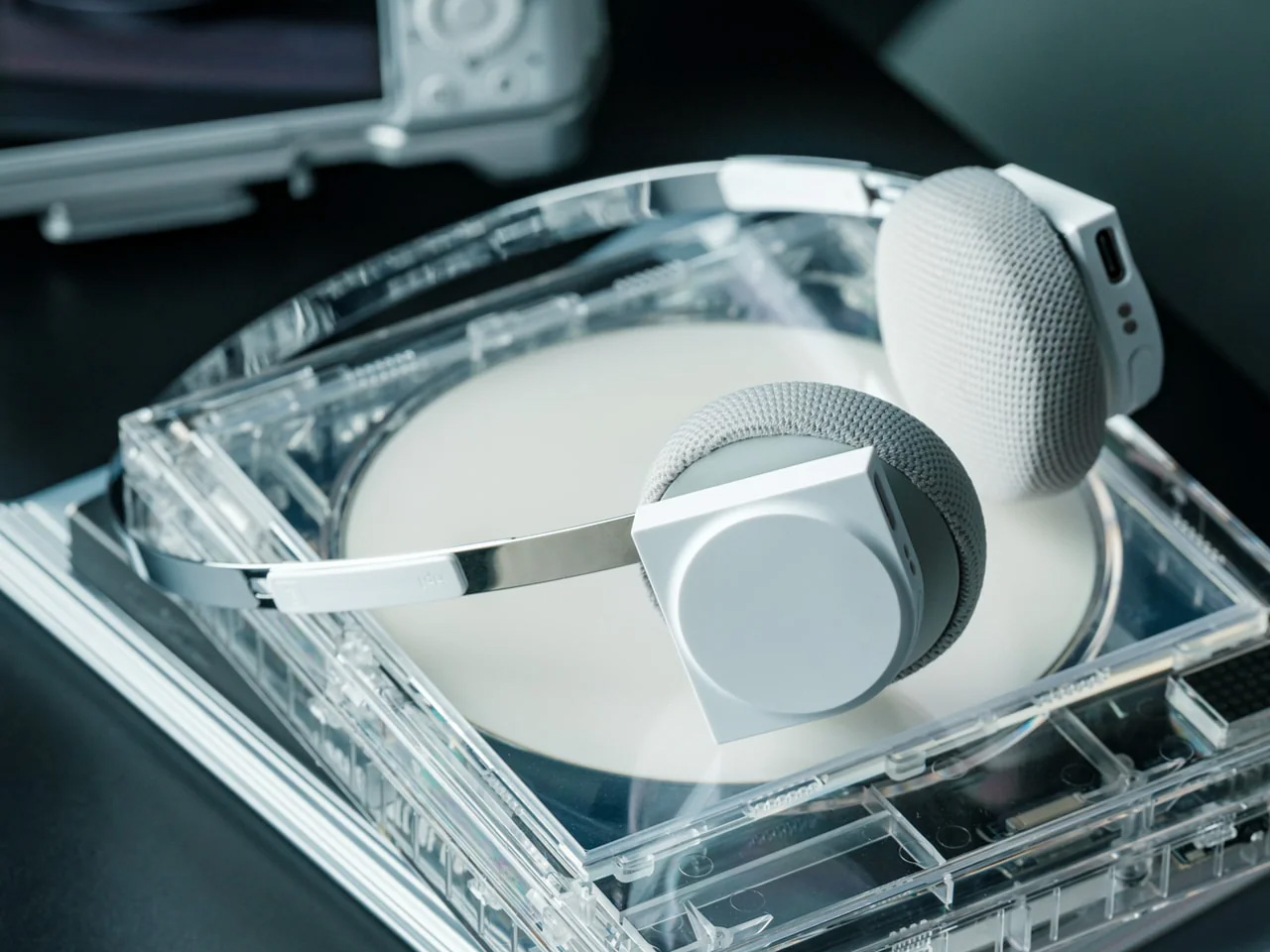
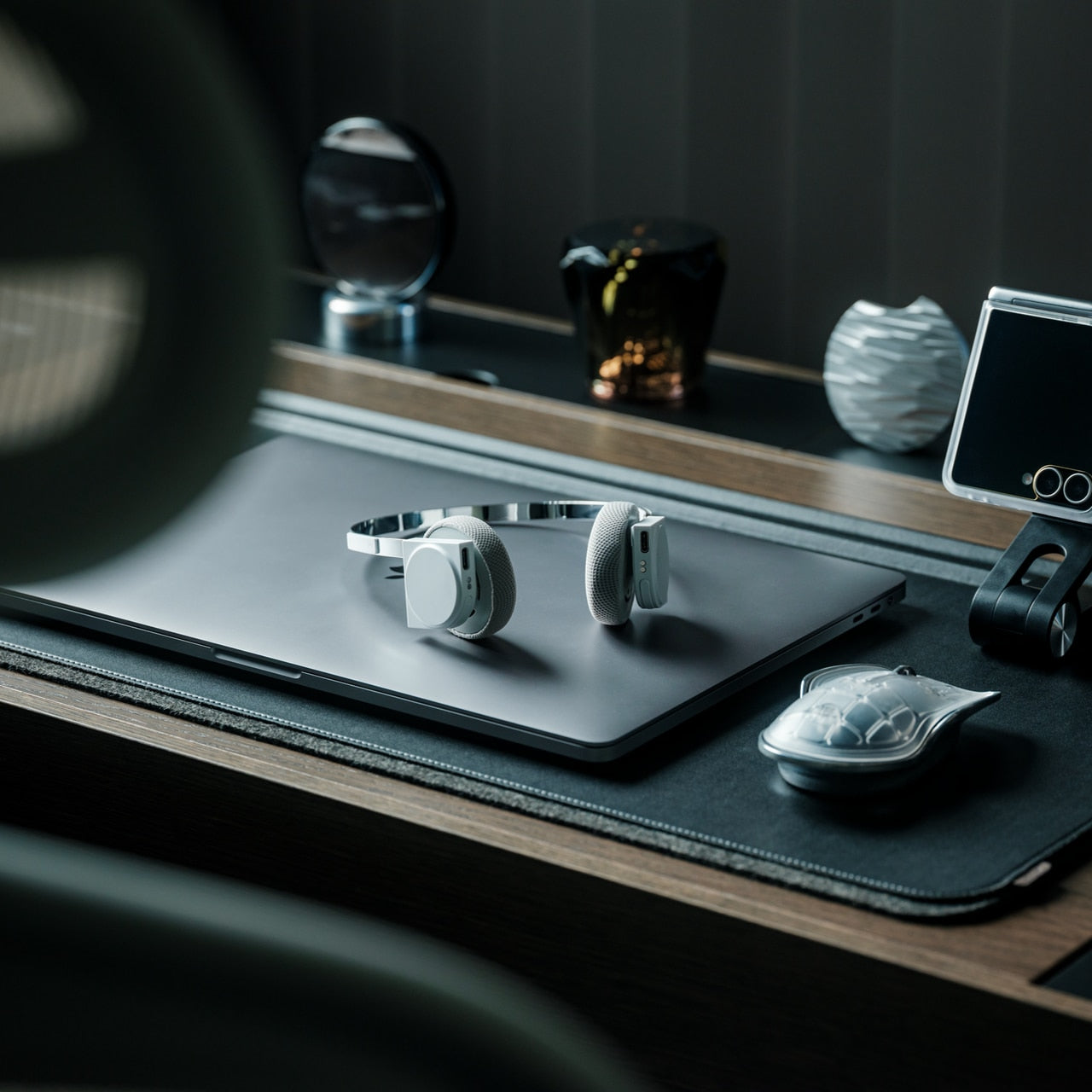
StillFrame’s strongest travel specification is its weight: 103 grams. Designed by Tatsufumi Funayama, the headphones use a stainless-steel headband and ear cushions that attach magnetically, keeping the construction focused on a light frame and changeable contact surfaces. Those magnetic pads are a useful detail because they can be swapped without wrestling with a fixed fabric covering. For packing purposes, though, low weight and small volume are different things. These still occupy more room than a pair of earbuds in your bag.
Bluetooth 5.4 handles wireless listening, while USB-C provides a wired audio option as well as charging. It includes noise-canceling and transparency modes, plus battery life of up to 24 hours. That combination makes StillFrame worth considering for someone who wants one pair for music, calls, and downtime away from home. The stated charging time is approximately three hours, so overnight charging makes more sense than expecting a quick top-up to do everything. Noise-canceling performance isn’t established by specifications alone.
Click Here to Buy Now: $245.00
What we like
- Low weight keeps the carried load modest.
- Bluetooth and USB-C offer two listening options.
What we dislike
- Three-hour charging calls for some planning.
- Larger packed footprint than earbuds.
3. Twelve South AirFly SE
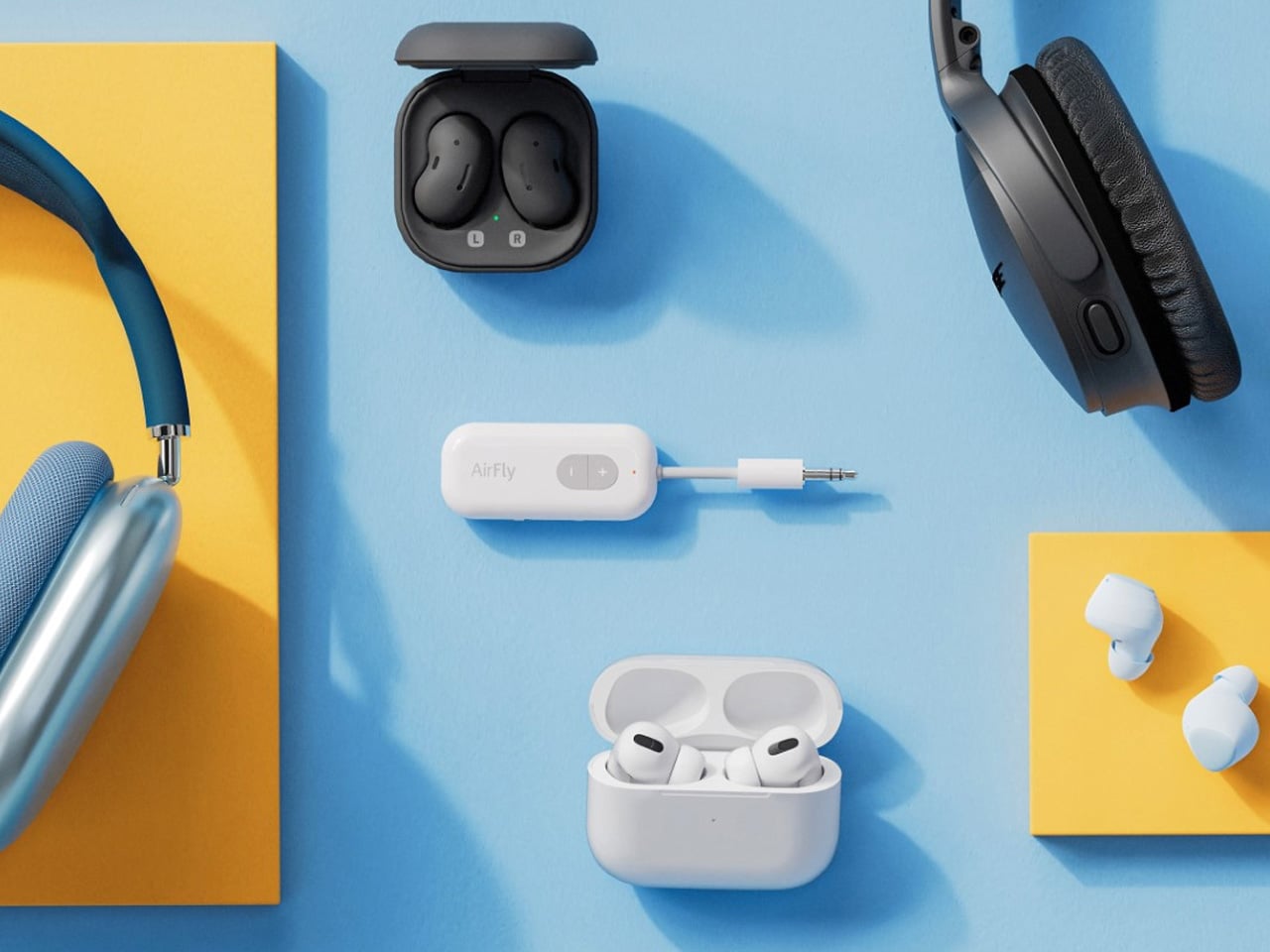
The AirFly SE addresses a specific travel irritation: your headphones are wireless, but the movie playing in front of you expects a cable. Twelve South’s little transmitter plugs into a compatible 3.5mm headphone output and sends that audio to a Bluetooth headset. Its short lead keeps the electronics separate from the plug, rather than making the entire device a rigid protrusion from the socket. It’s a sensible addition for travelers who actually use seatback entertainment on their regular routes.
Twelve South rates the SE for up to 20 hours of battery life and connection to one pair of headphones. That last detail matters: this isn’t the model for two people sharing the same soundtrack. It remains another rechargeable object, even if it’s a small one. Check the aircraft’s headphone connection before relying on it, and pair your headphones before settling into the film. Travelers who download everything to a phone or tablet may have little reason to pack one.
What we like
- Adds Bluetooth transmission to a compatible wired output.
- Lets existing wireless headphones handle in-flight entertainment.
What we dislike
- Connects only one pair of headphones.
- Adds another battery to keep charged.
4. TESSAN Voyager 205 Universal Travel Adapter

The Voyager 205 earns consideration by replacing other equipment, not by being the smallest object here. TESSAN combines six USB-C ports, one USB-A port, and an AC socket in a single travel adapter, with a stated maximum USB output of 205 watts. Two USB-C ports are rated for up to 140 watts individually. For someone carrying a compatible laptop alongside smaller devices, that creates a plausible alternative to packing several separate chargers and then finding enough outlets to use them.
The arithmetic needs care. A 205-watt total doesn’t mean every socket delivers its maximum simultaneously; connected devices share the available output. The physical arithmetic matters, too: TESSAN lists roughly 326 grams and dimensions of 100 by 55 by 56 millimeters. That’s a meaningful addition if you only need to charge a phone. Most importantly, the AC socket is not a voltage converter. Check each appliance’s voltage rating and the adapter’s destination compatibility before plugging in, rather than trusting its name.
What we like
- Seven USB ports can consolidate a multi-device charging kit.
- High-output USB-C supports compatible power-hungry devices.
What we dislike
- Approximately 326 grams is substantial for a light packing list.
- The AC socket doesn’t convert voltage for incompatible appliances.
5. OrigamiSwift Mouse


OrigamiSwift tackles the shape that makes a conventional mouse annoying to pack. Designed by Horace Lam, it folds from a raised working form into a flat panel, trading the hump for an origami-inspired triangular structure. YD Select lists its weight at 40 grams. The transformation is the reason to carry it: the mouse can occupy a flatter compartment when work is finished, rather than demanding a pocket deep enough to preserve its operating shape throughout the rest of your trip.
Bluetooth handles the connection, and USB-C recharges the battery, which the shop rates for up to three months per charge. Folding flat doesn’t make every dimension smaller, though. The flattened form measures about 4.8 by 5 inches, and its sensor area remains thicker than the surrounding panel. Think slim sleeve rather than tiny pocket. For travelers who prefer a mouse to a trackpad, the design offers a clear packing advantage; whether its raised shape suits your hand needs personal assessment.
What we like
- Folding construction reduces packed thickness.
- The 40-gram weight keeps the addition modest.
What we dislike
- Flat form is almost five inches wide.
- Sensor housing prevents a uniformly thin profile.
Pack for the Trip You Actually Take
Before adding anything to your bag, decide which part of the trip keeps causing trouble. A work-heavy itinerary and a weekend spent mostly outdoors call for different equipment. The strongest purchase is often the one that lets another object stay home, but a specialist accessory can still make sense when it solves a recurring problem. The mistake is packing for every possible inconvenience instead of the journey you actually booked.
Give the complete kit a trial pack, including the cables each gadget needs. A compact product can be a poor traveler if its supporting equipment takes up the space it supposedly saves. Check connections, charge everything, and see what you can remove before leaving. The goal isn’t an impressively full tech pouch. It’s being able to reach for the right tool without carrying three others that never leave the bag.