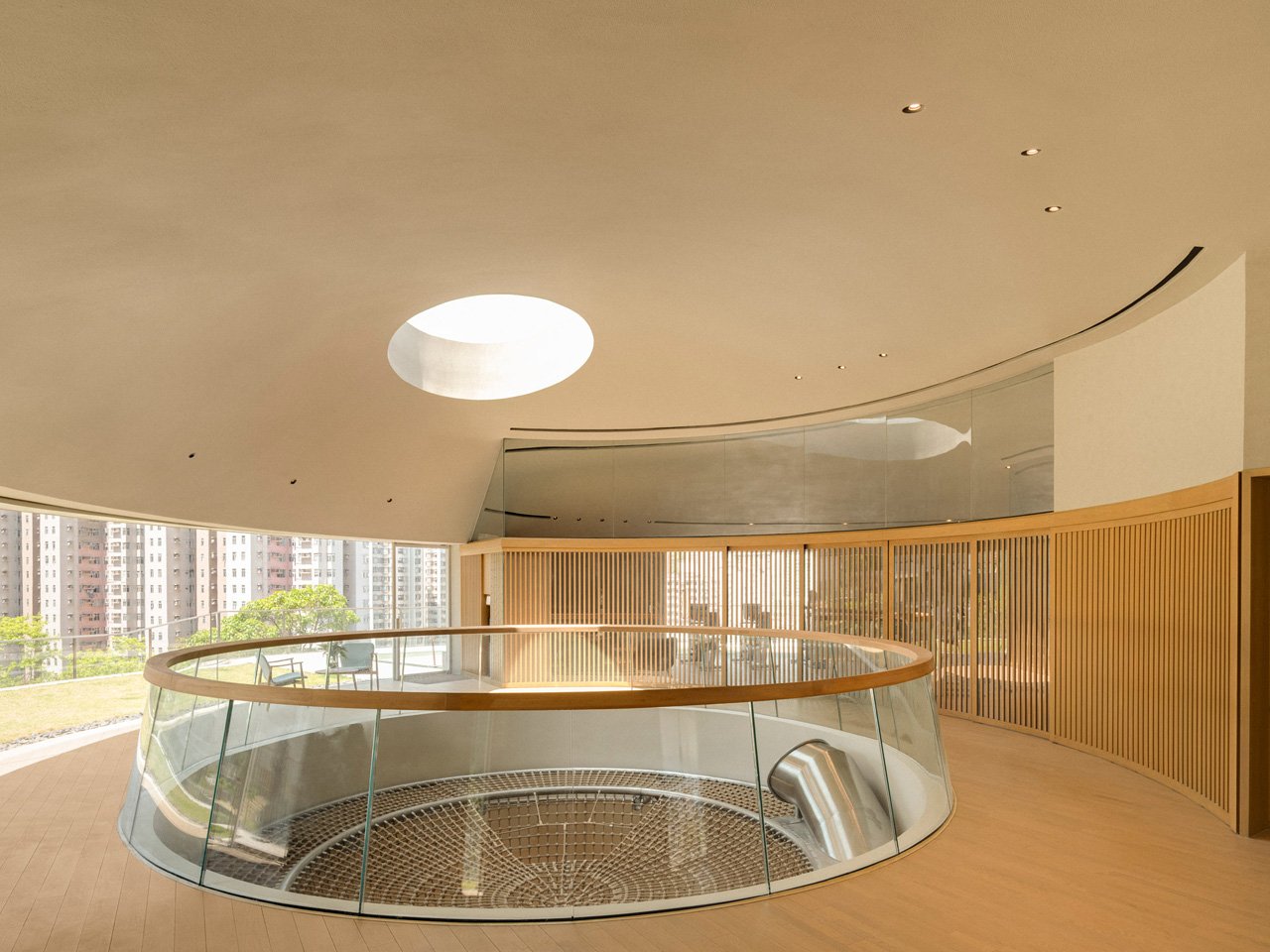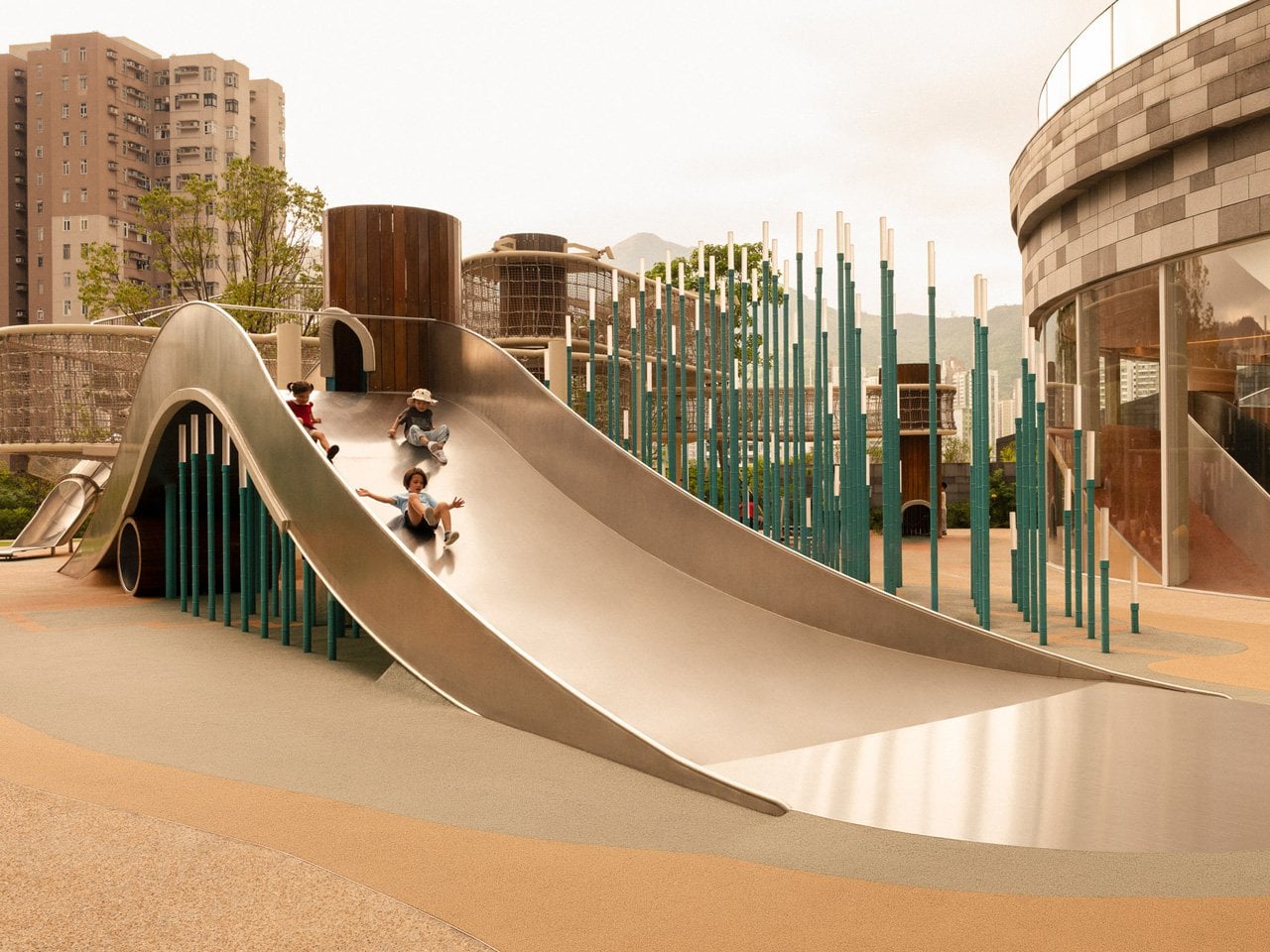
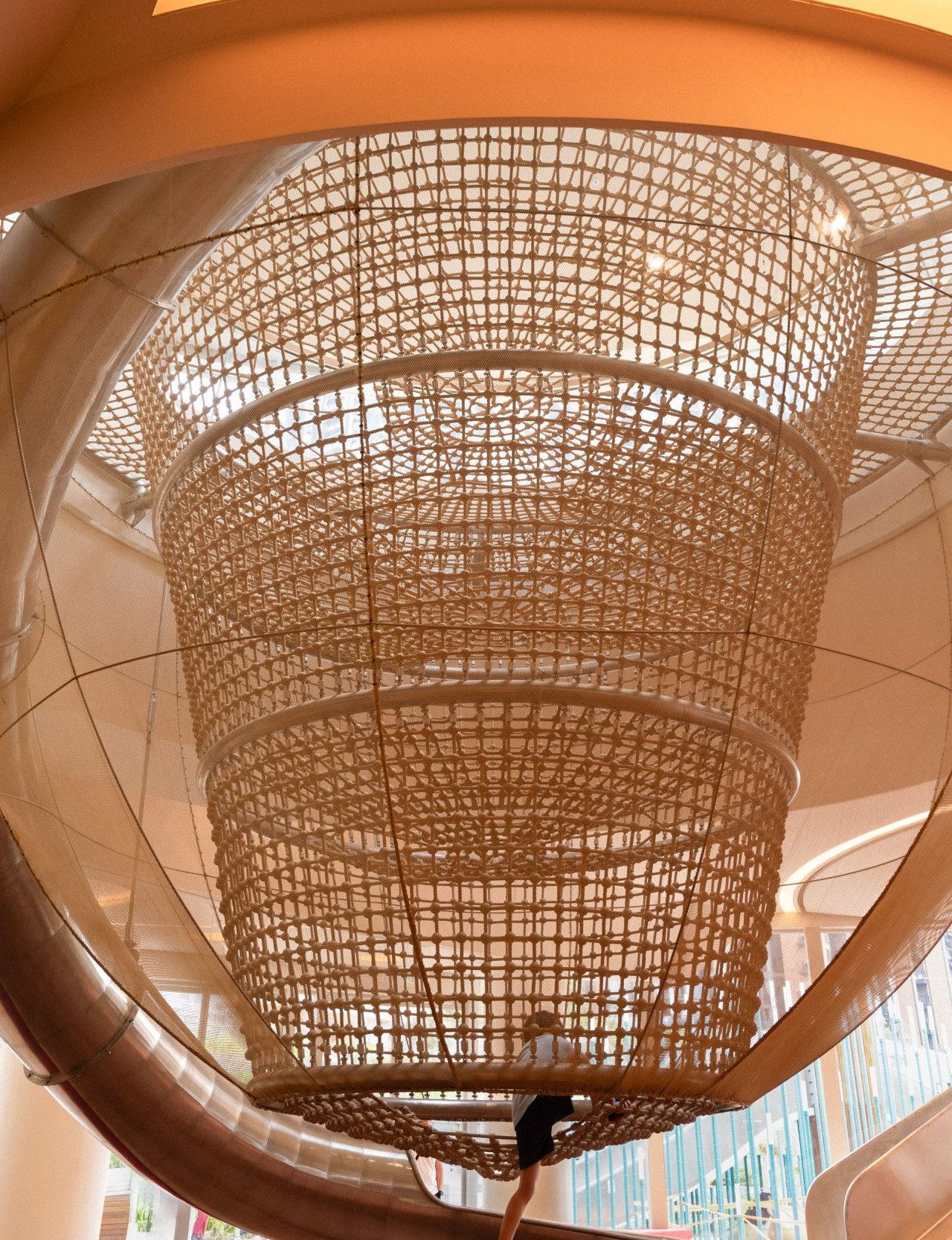
Light does the heavy lifting at Sky House. The fourth and final clubhouse Snøhetta has completed at Hong Kong’s Pavilia Farm development earns its name not through height alone but through intention. At the development’s highest point, a double-height rope-climbing tower rises through the center of the two-story, 12,150-square-foot structure and terminates beneath a domed skylight. The dome pulls the eye — and the light — into a building that was always meant to be about movement, play, and the simple act of looking up.
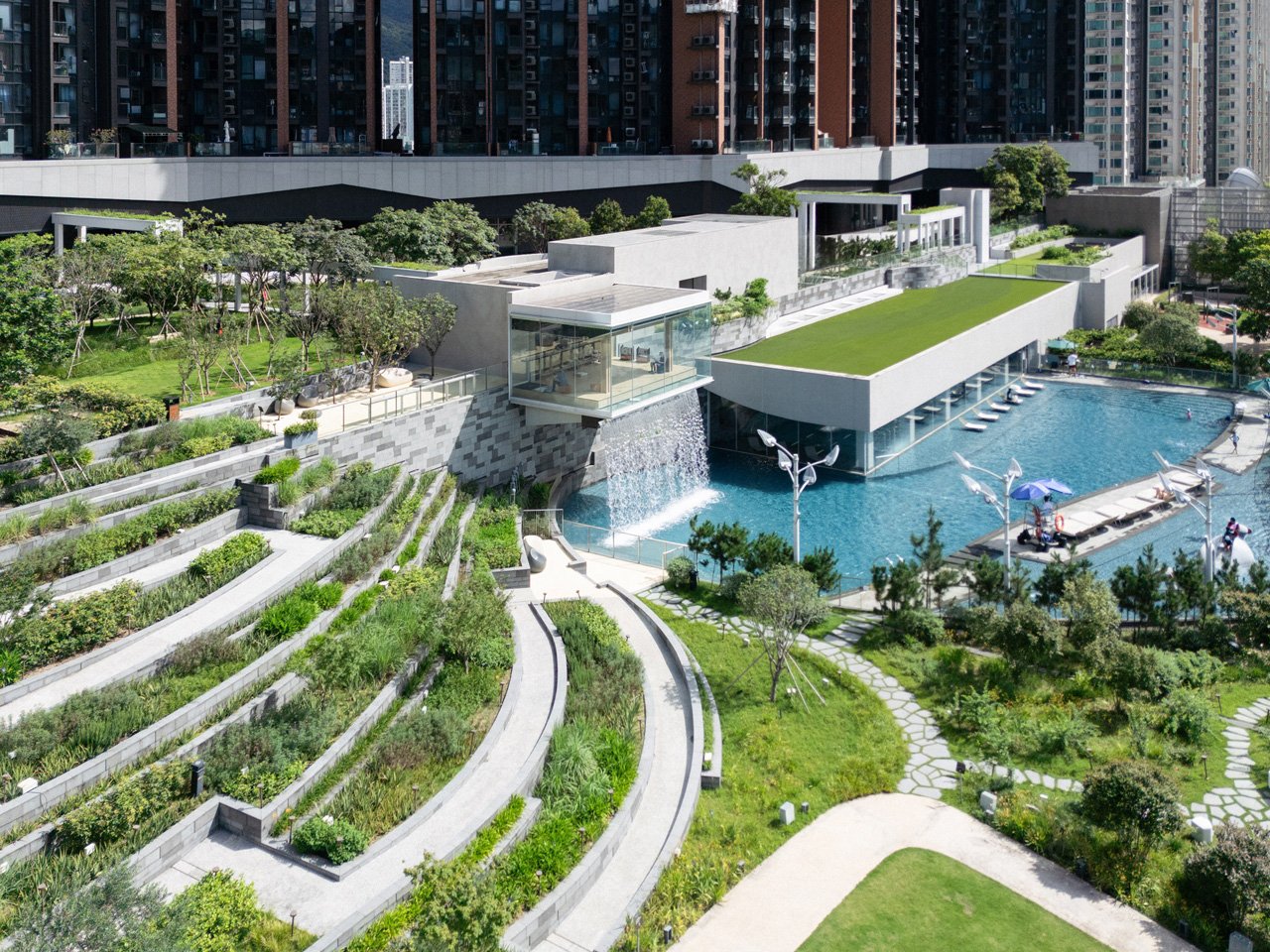
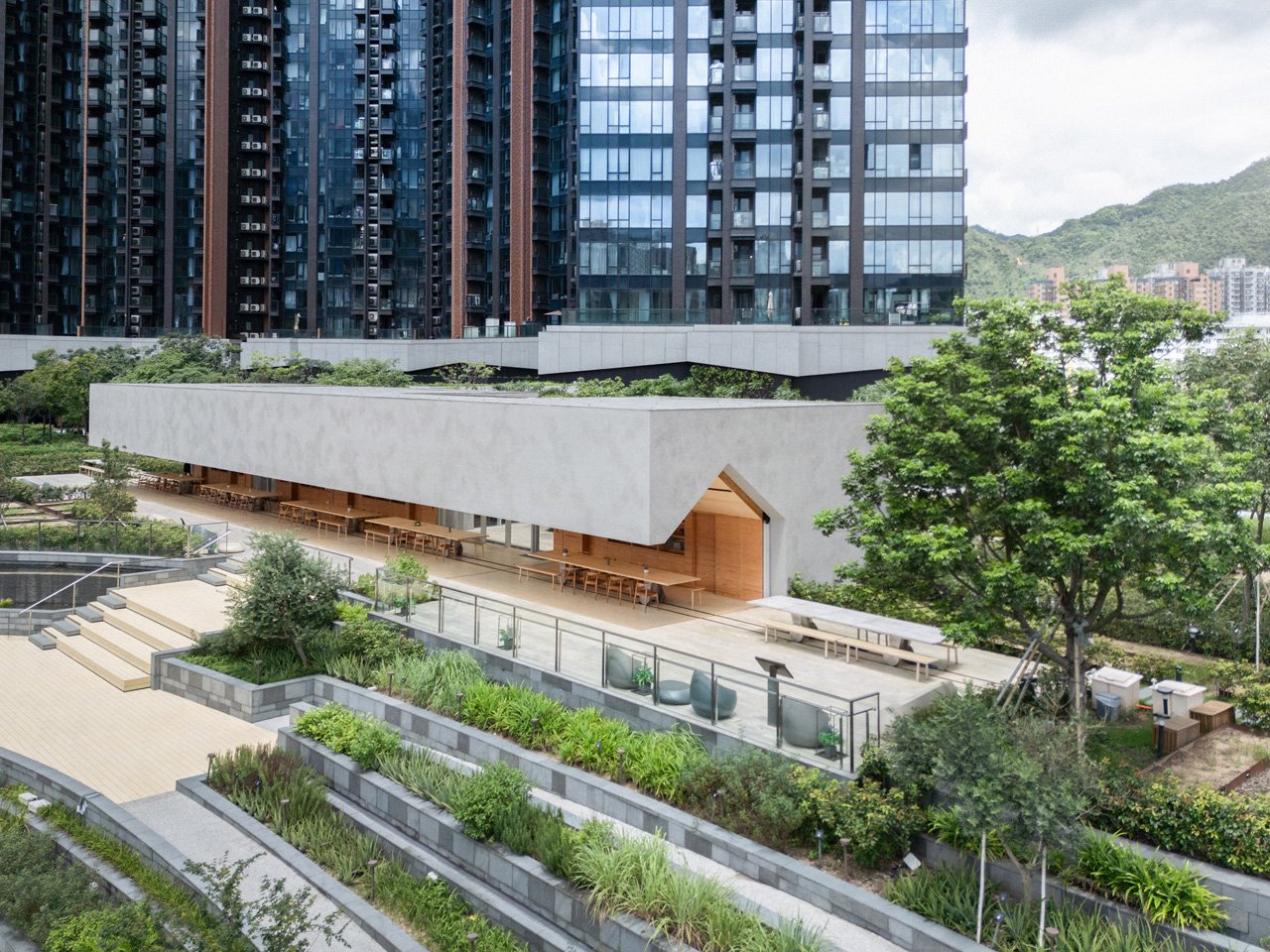
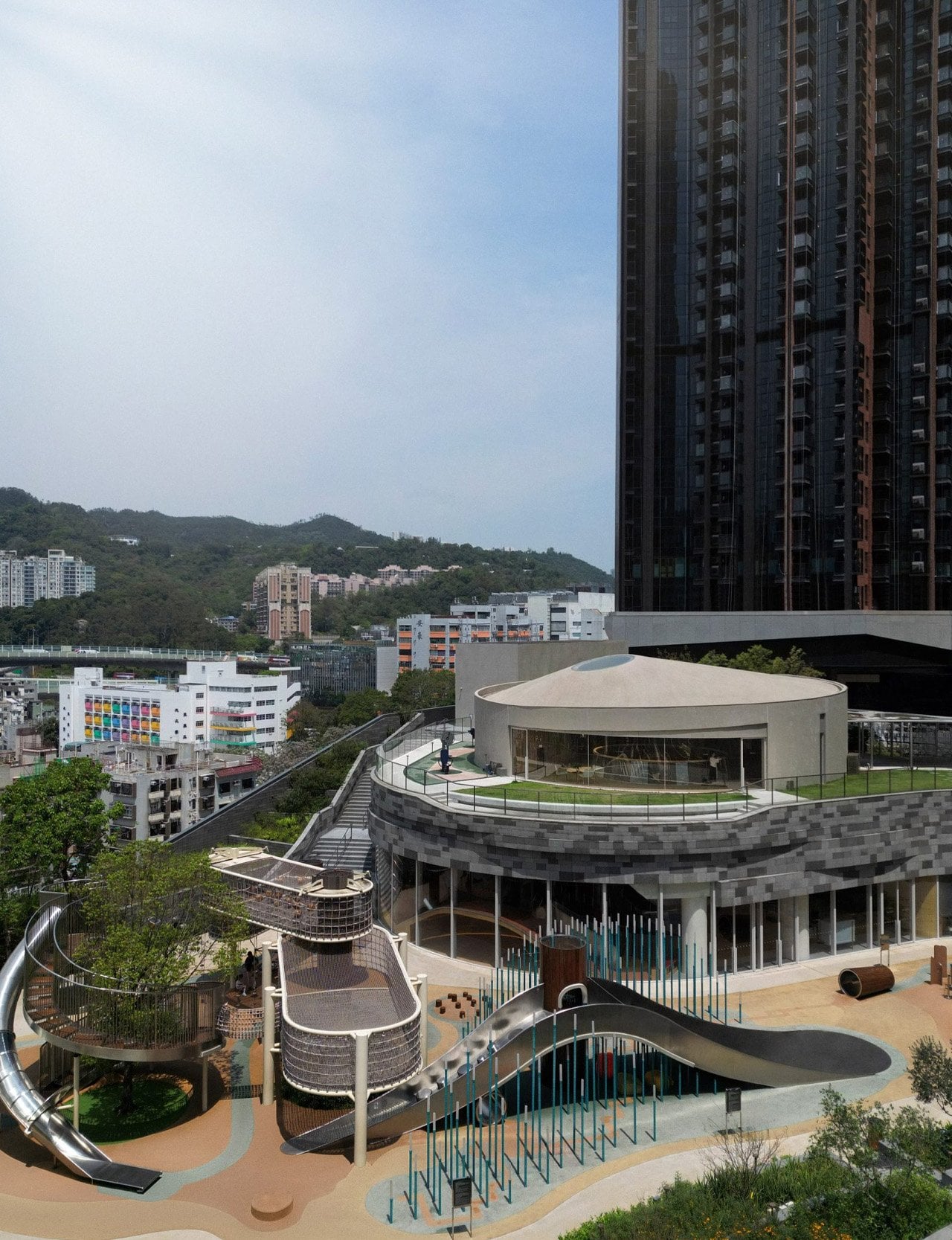
Pavilia Farm is a 6.5-acre mixed-use development in Hong Kong, and Snøhetta’s strategy across the site has been to distribute what would typically be a single monolithic clubhouse into four distinct structures, each one attuned to a different mode of community life. Well House activates the body. Farm House sits atop a terrace. Tea House projects beyond the site’s edge. Sky House completes the quartet by turning movement into a shared, intergenerational experience. It is a building that makes curiosity social.
Designer: Snøhetta
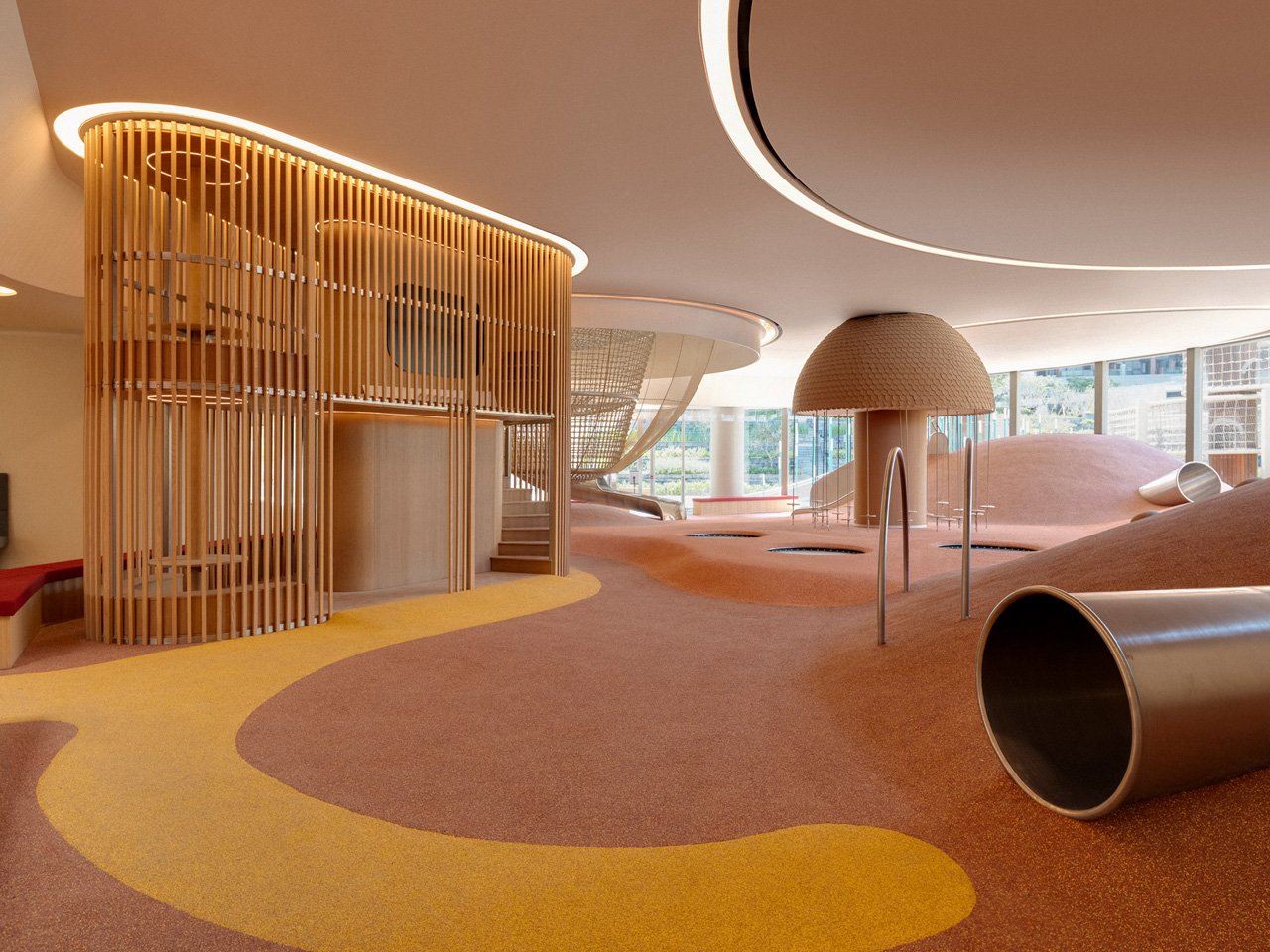
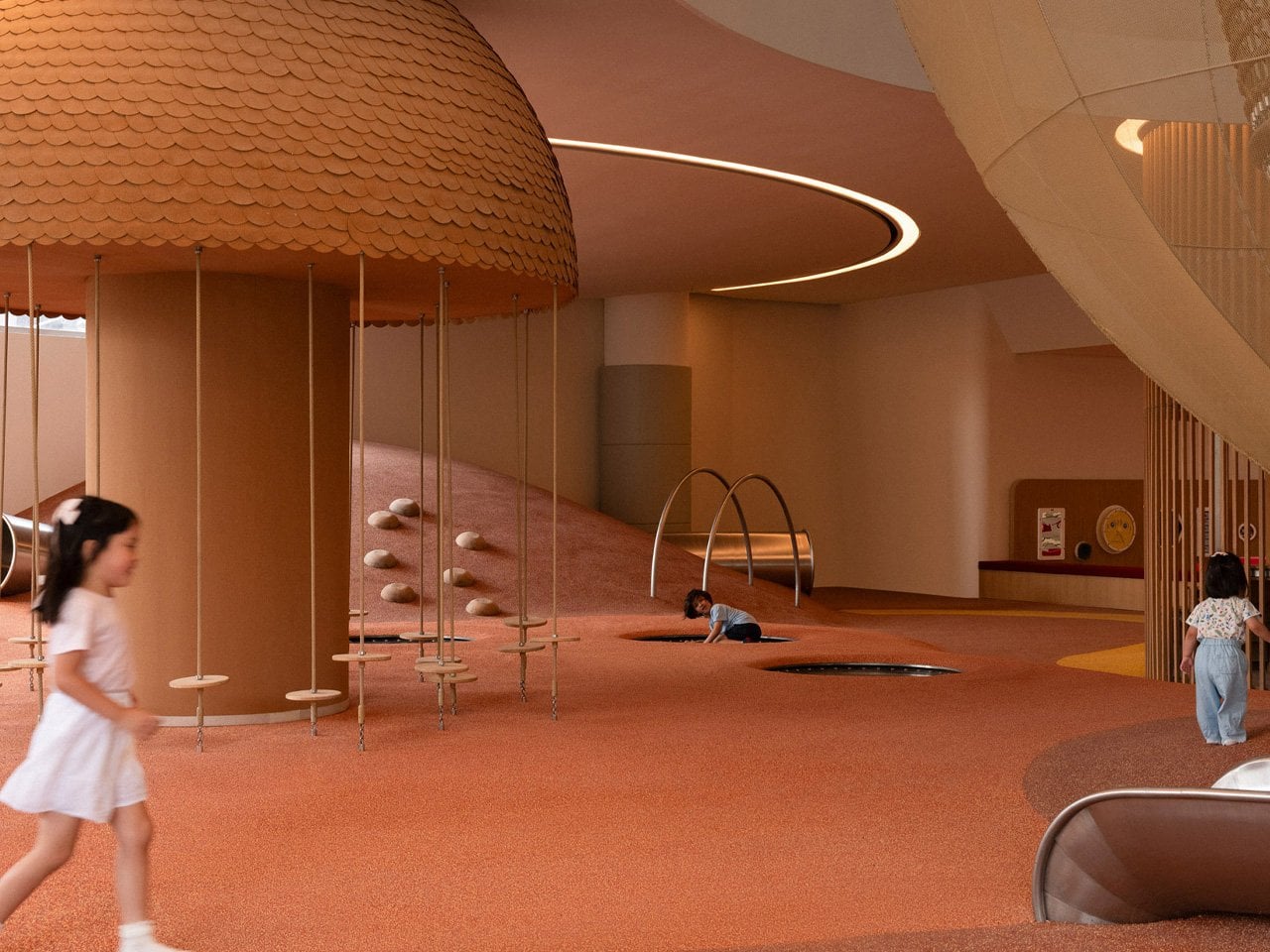
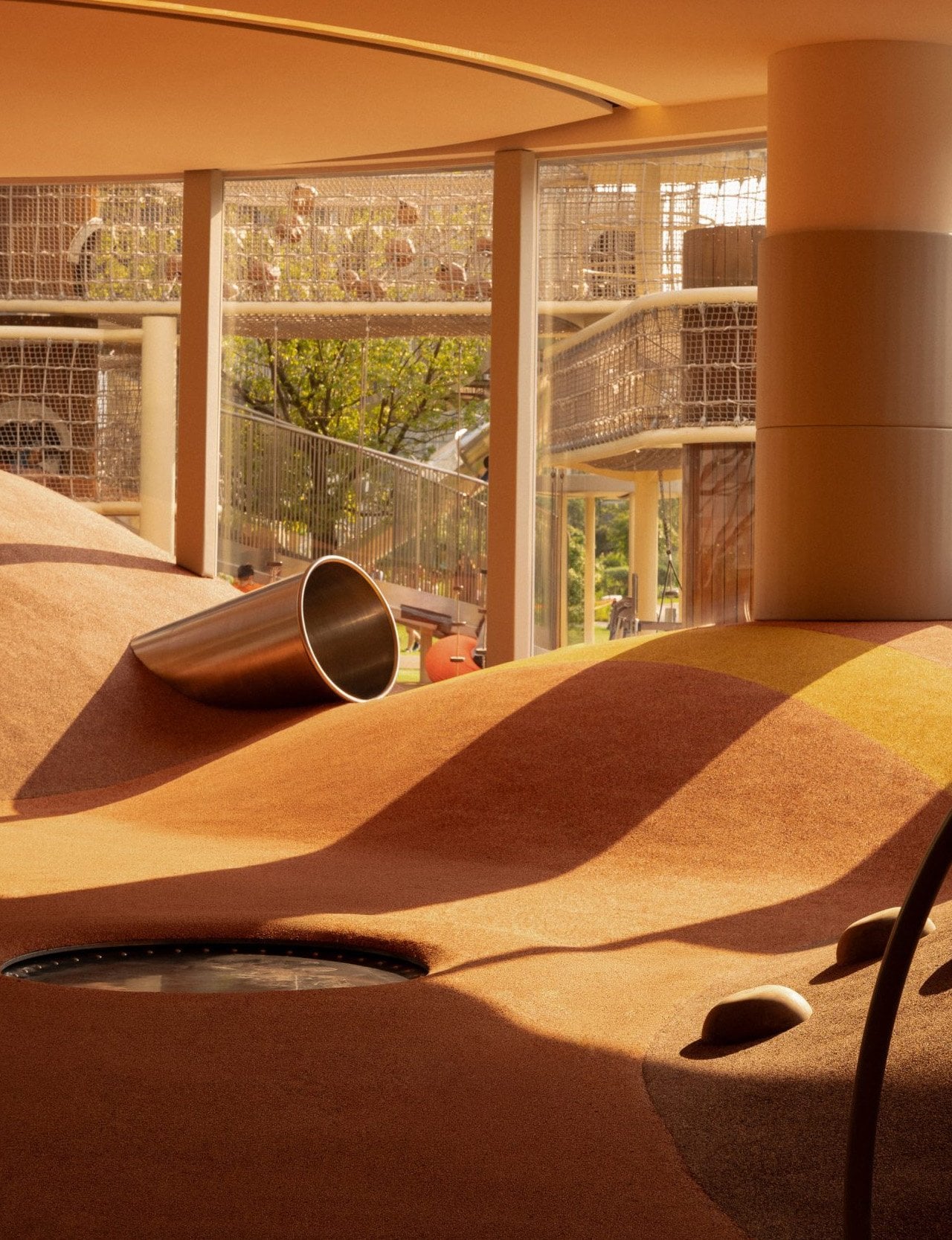
The spatial logic inside is organized around two contrasting ideas: cave and sky. The lower level, wrapped in an undulating floor whose colors and textures shift the quality of incoming daylight, reads as an enclosed terrain for open-ended play. Snøhetta conceived the lower-level interiors not as a literal grotto but as an environment that does not prescribe specific uses — a quiet and thoughtful move that trusts children to determine the space’s meaning. The rope-climbing tower anchors the room without dominating it, and the open span surrounding the structure gives the whole floor a sense of interior landscape.
Upstairs, the register shifts entirely. Lounge areas, fitness zones, and outdoor exercise spaces occupy the upper level, oriented toward senior residents. The arrangement places children and older residents in proximity, allowing them to see and hear one another. Sky House treats that proximity as a design feature, not an afterthought. The vitality of one group becomes part of the daily texture for the other, and the climbing tower — visible from both levels — becomes a shared focal point rather than a dividing line.
What Snøhetta has built at Pavilia Farm is less a collection of clubhouses than a sustained argument about collective living. Sky House brings that argument to its most expressive point. The dome overhead is structural, yes, but it also functions as a kind of permission: to climb, to wander, to look up, and to do all of it together.
Each of the four buildings at Pavilia Farm speaks to a different rhythm of daily life, and yet Sky House feels like the one that ties the whole vision together. It is the loudest, the most playful, and perhaps the most generous; a building that gives people of different ages and different needs the same roof, the same light, and the same reason to show up.