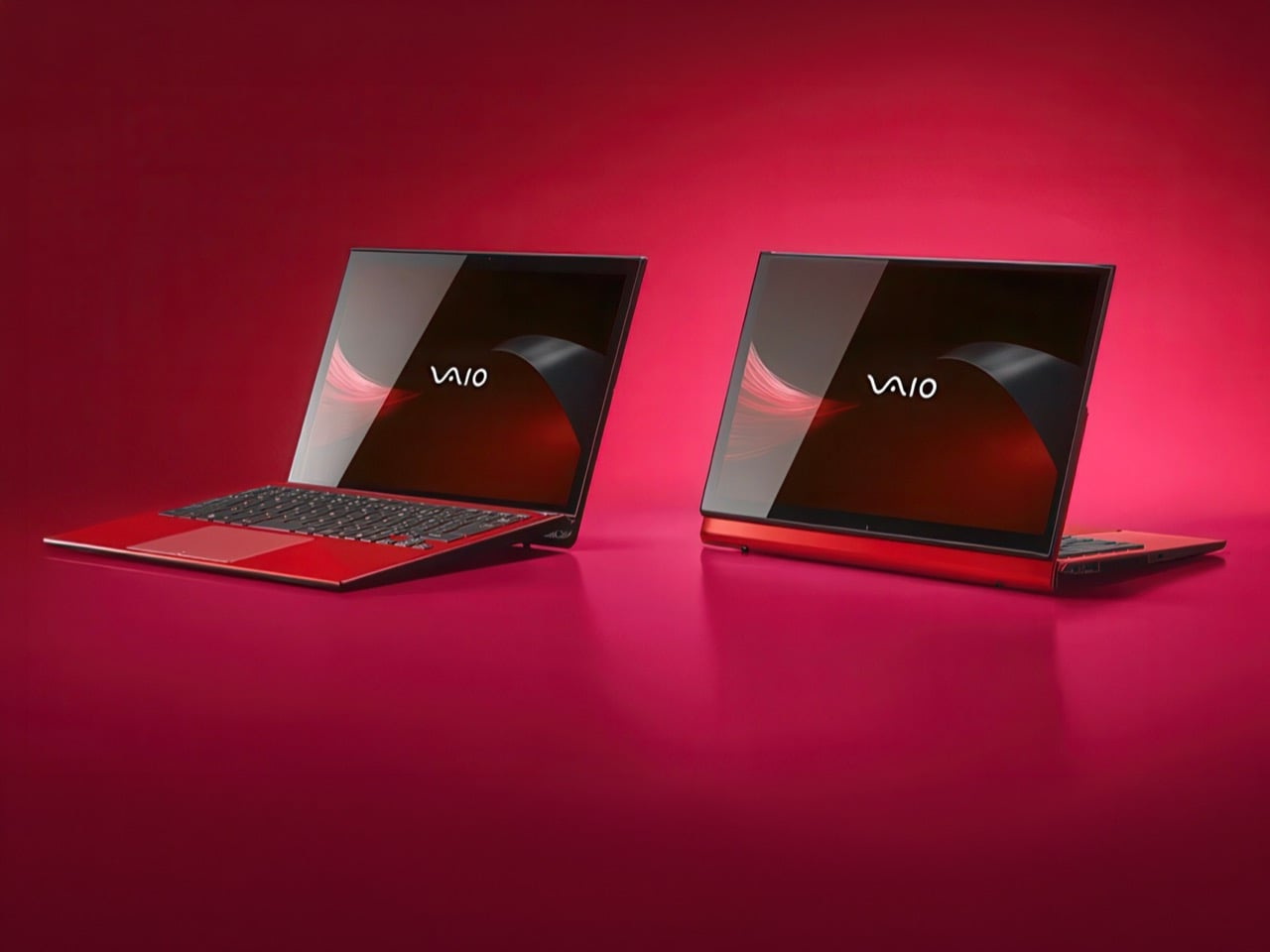
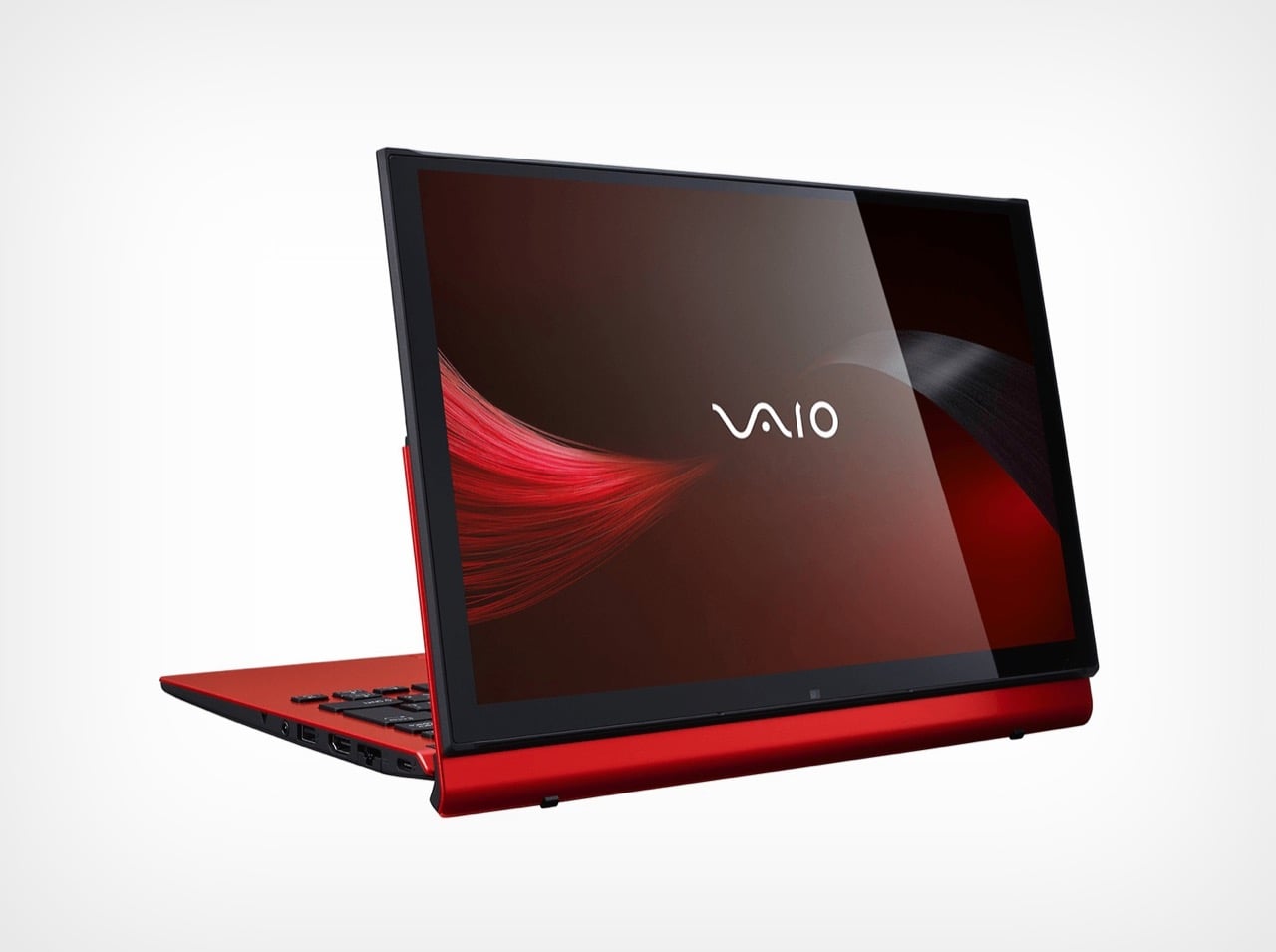
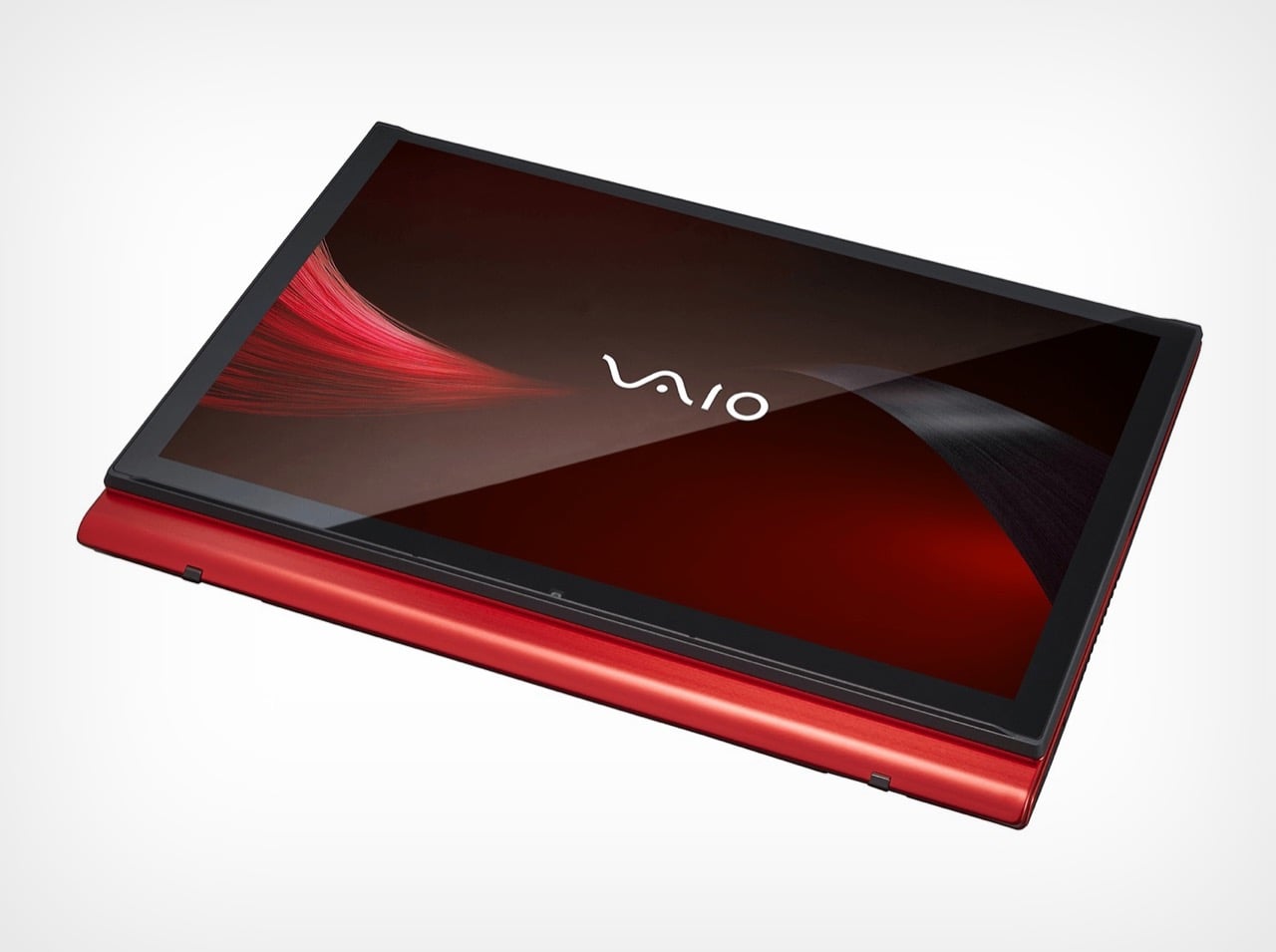
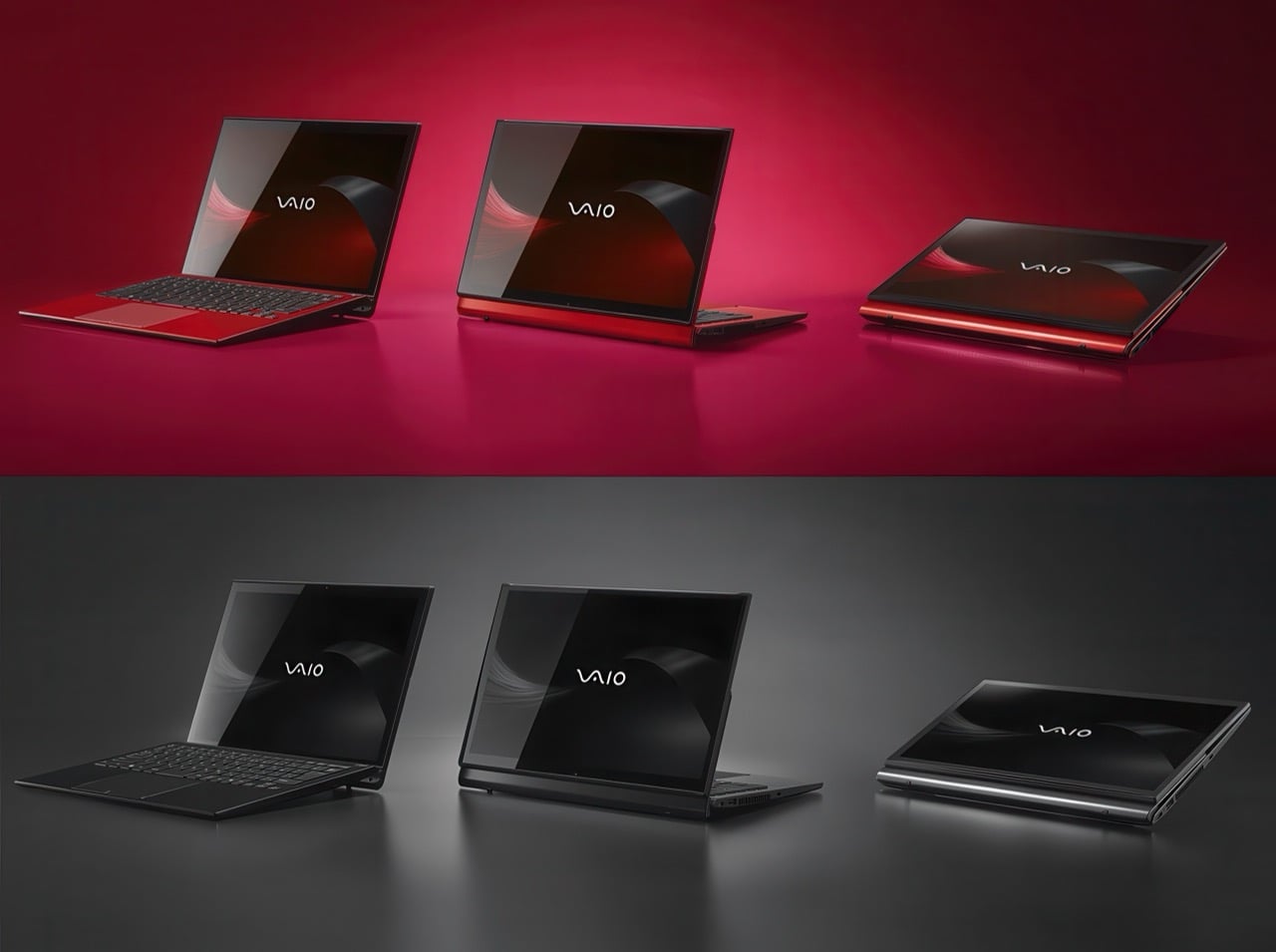
Count how many times you have flipped your convertible into tablet mode this year. I am guessing the number sits closer to zero than to ten, and the reason is that your palms end up resting on a live keyboard, which feels like holding a cat backwards. VAIO’s fix is a 13.3-inch laptop called the VAIO T, whose display rotates 180 degrees on a pivot in the center of the lid so the keyboard folds away inside instead of facing the world. The mechanism rides on two urethane sheet hinges with the display cable sandwiched between them, locked by VAIO’s first magnetic retention system. Prototypes got flexed by hand over 20,000 times before anyone signed off on it.
This is the Multi-Flip Mechanism, and VAIO has not built one since the Z Flip in 2016. Sony launched the idea on the VAIO Fit 13A in 2013 and lost the format war to Lenovo’s cheaper, simpler 360-degree hinge, the one every convertible still uses today. The double hinge instinct has not stayed buried either. Acer flirted with something similar at IFA 2026 through Project DualPlay Mini, a gaming handheld that splits open on a second hinge to expose a keyboard, part of our best of IFA 2026 coverage. The VAIO T is the first product co-developed since Nojima acquired VAIO in January 2025, and the first entry in a range the company calls VAIO Next. Pricing starts at 374,000 yen, about $2,400, with nothing announced for markets outside Japan.
Designer: VAIO
The three modes sound simple until you try describing them without waving your hands around. Fold the top half of the display toward you from a normal open laptop and you land in view mode, screen facing outward for a meeting or a presentation while the keyboard sits underneath doing nothing. Keep folding and the lid closes flat with the display on top, and you have a tablet, minus the part where your palm rests on a row of keys. VAIO says the urethane sheet hinges and the sandwiched display cable were the hard part to get right, since a flexible cable running through a rotating joint fails in ways a fixed one never does. The magnetic retention is new to this generation and exists to stop the whole assembly from drifting loose between shapes.
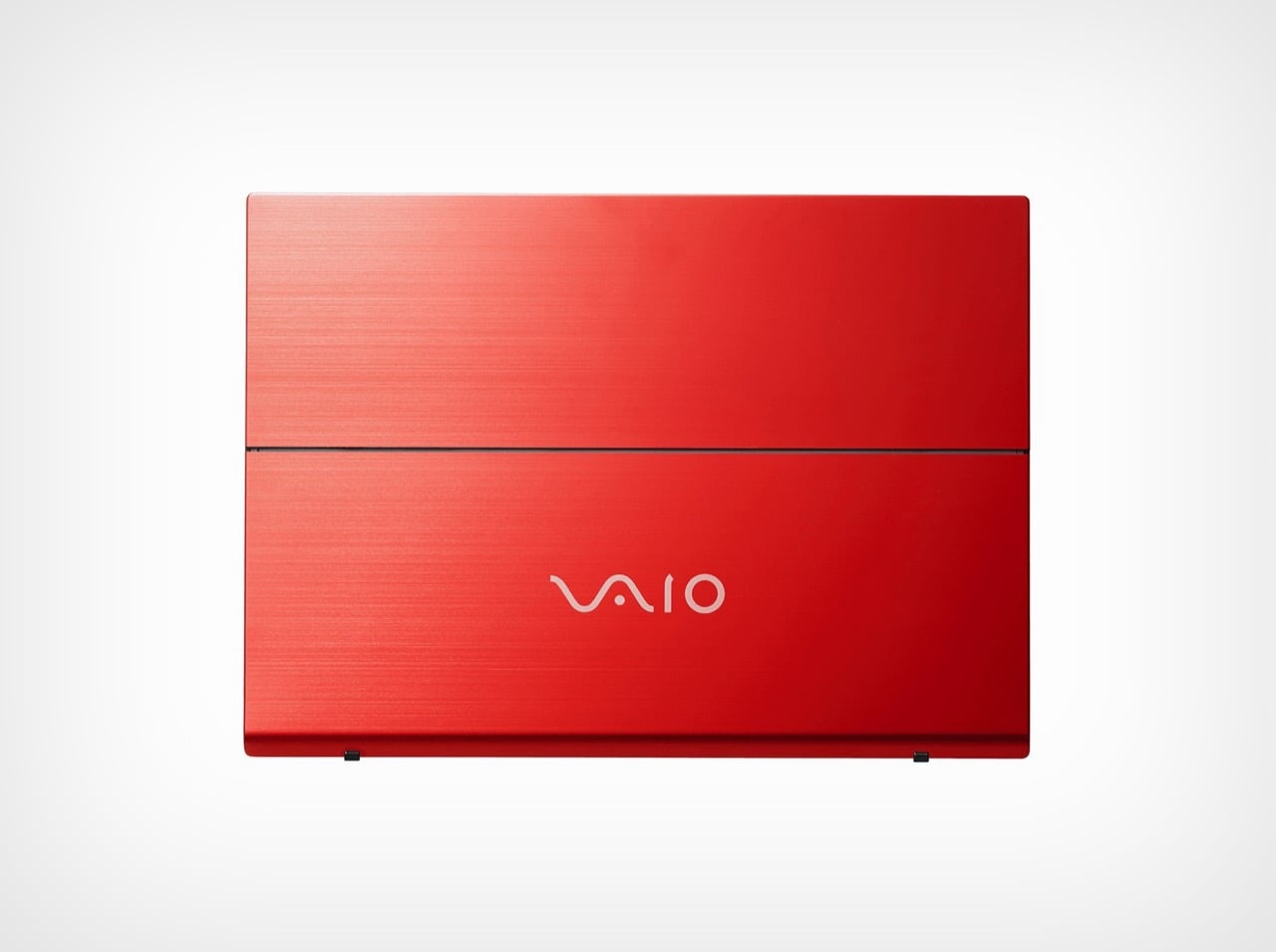
VAIO also used the relaunch to pull its favorite color story back out. Kachi-iro is a near black indigo made by pounding dyed cloth, worn by samurai centuries ago because the name sounds like the Japanese word for victory, and VAIO has been putting it on flagship machines since a special edition SX12 back in 2021. The T ships in fine black and fine red as standard, with a Kachi-iro Special Edition reserved for the VAIO Store and paired with the fastest chip on offer, an Intel Core Ultra X7 358H with a stronger integrated GPU. Everyone else chooses between the eight core Core Ultra 5 325 and the sixteen core Core Ultra 7 356H. It is a small flourish, but it tells you exactly which customer VAIO is chasing.
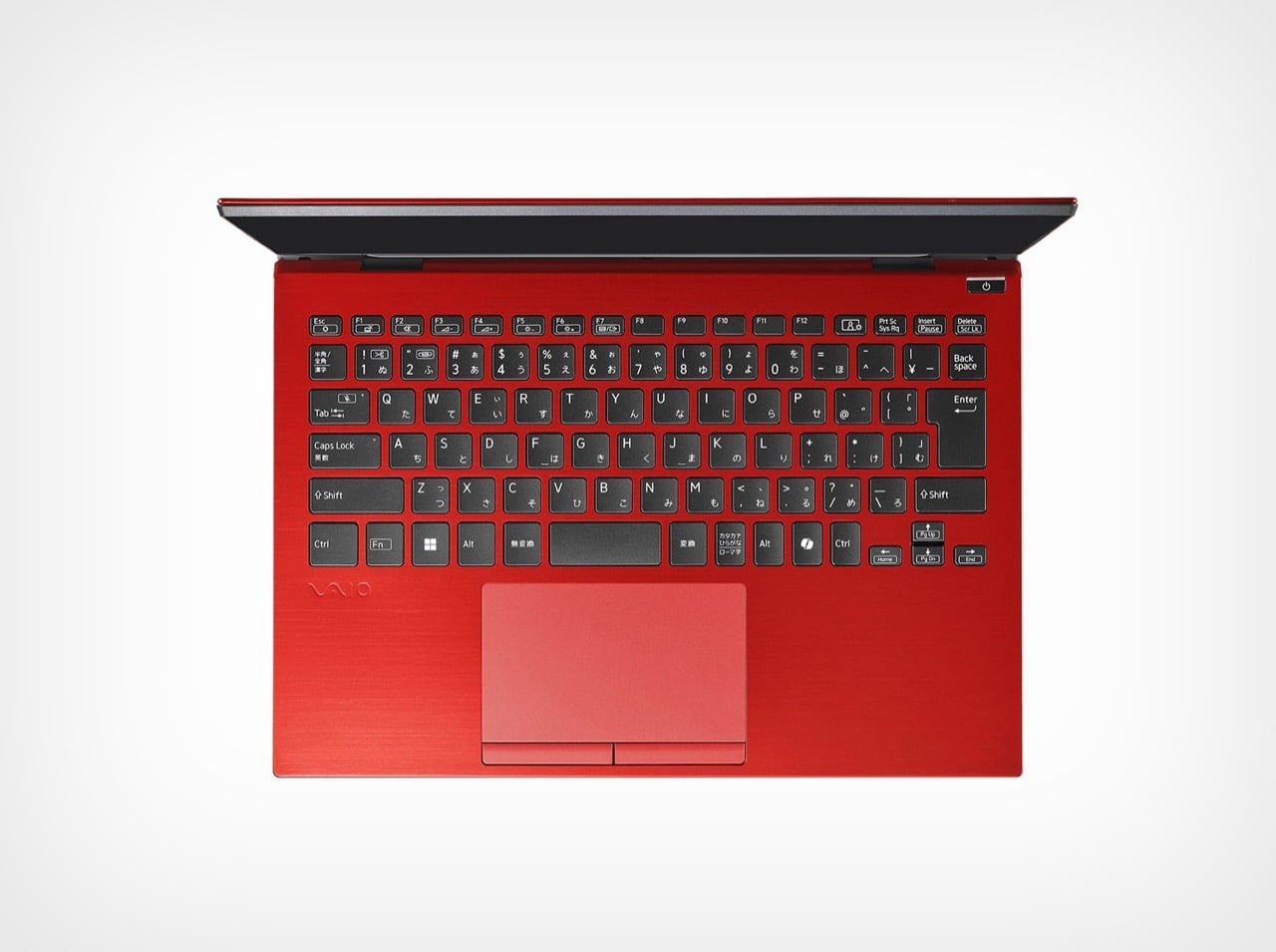
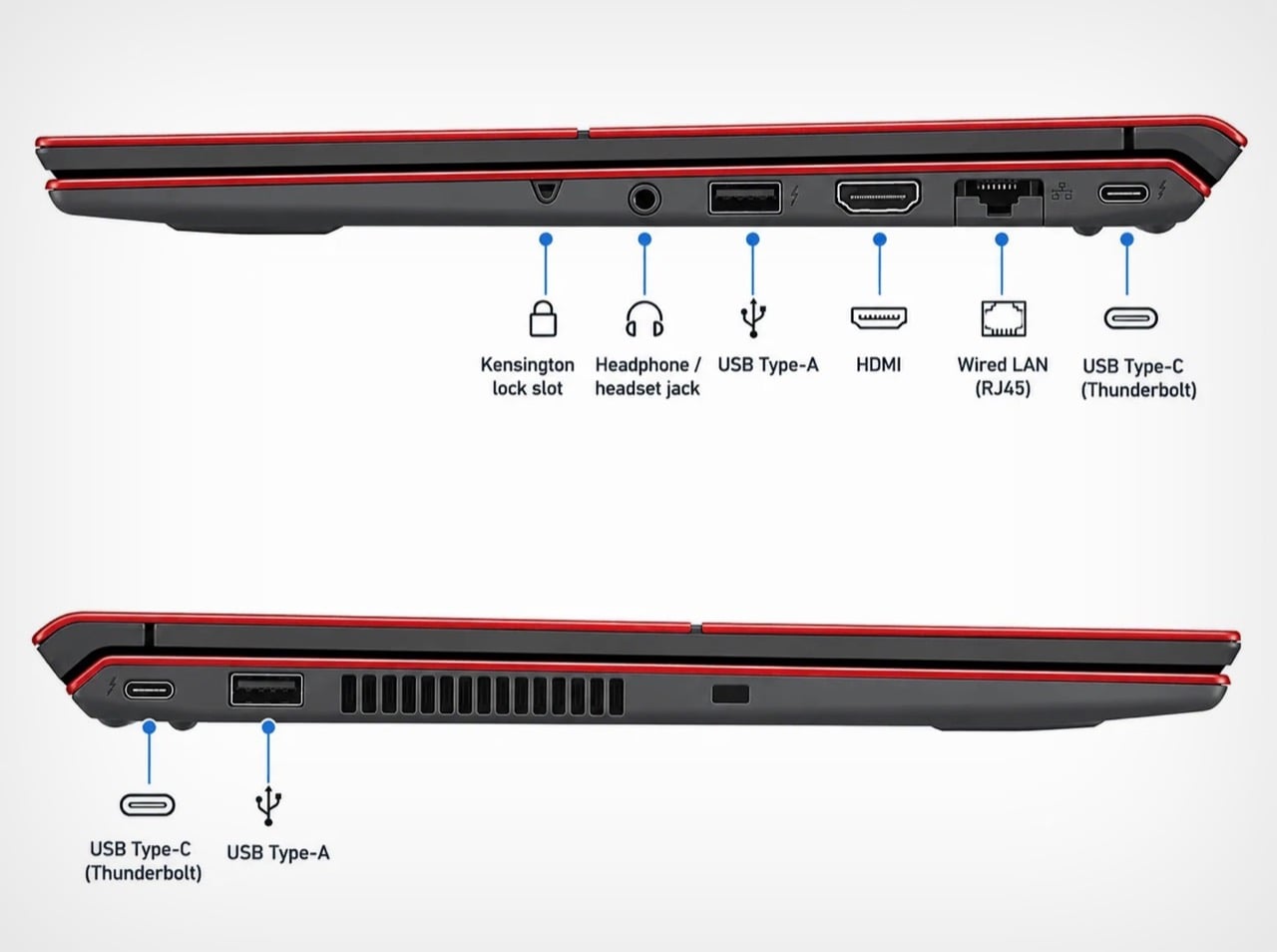
The rest of the spec sheet is competent rather than dramatic, which is fine, since the hinge is doing the talking. The 13.3-inch touchscreen runs at 2560 by 1600 in a 16:10 frame, glossy, built on VAIO’s flash surface glass, an odd choice for a machine designed around showing your screen to someone across a table, since that is exactly when glare shows up uninvited. Memory tops out at 64GB on the Core Ultra 7 configuration, storage climbs to a 2TB PCIe 5.0 SSD, and an optional battery claims around 18 hours of video playback under Japan’s generous JEITA 3.0 standard.
None of it comes cheap, and none of it comes to the US. The base configuration starts at 374,000 yen, close to $2,400, for a Core Ultra 5 with 16GB of memory and a 512GB drive, before you add storage, the bigger battery or an English keyboard as paid extras. VAIO has not announced any plan to sell the T outside Japan, so this is a laptop most of us can admire through a browser window and nothing else. I would also gently point out that a glossy panel is an odd choice for a machine built around showing your screen to someone across a table, since that is exactly the moment glare tends to show up uninvited.
Still, the interesting part of this story was never really the spec sheet. It is that a company selling laptops for a living looked at its own back catalog, found the mechanism everyone else abandoned a decade ago, and decided the abandoned one was actually correct. Lenovo’s hinge won the market. VAIO’s hinge is making the argument that winning the market and solving the problem were never quite the same fight.
SHARE