Here is what $281 buys you in an American projector aisle right now: TCL’s C1 at $250 with 230 ISO lumens, or XGIMI’s Vibe One at $269 with 250 ANSI lumens and zero HDR support. Both are decent little machines. Both also demand a room dark enough that you stub your toe finding the sofa. The sub-$300 bracket in the West has genuinely improved, but it improved into “acceptable,” which is a low ceiling for a category promising a 120-inch screen. Xiaomi’s newest budget projector landed in China this week and makes that ceiling look even lower.
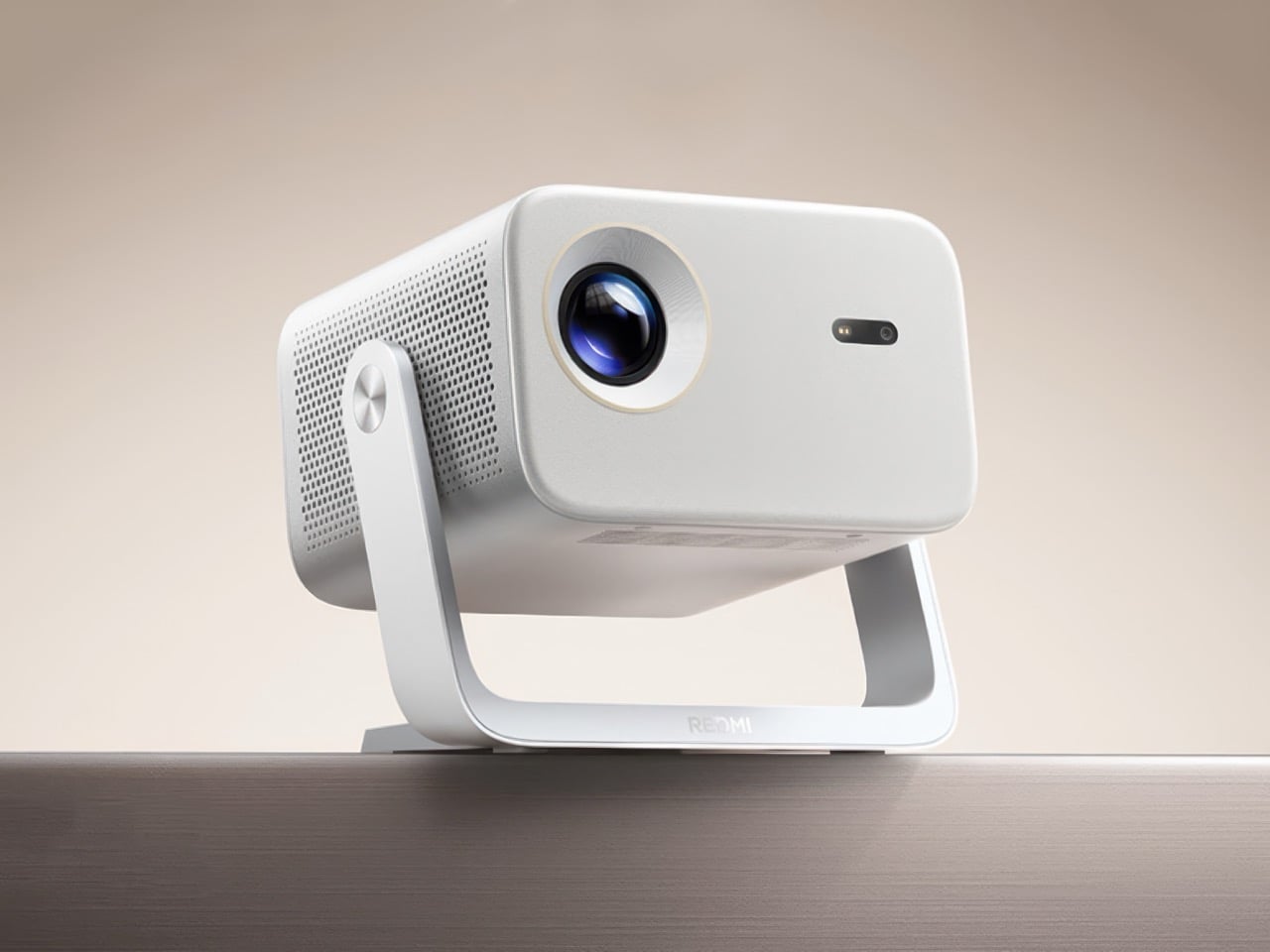
The Redmi Projector 5 Pro sells for 1,899 yuan, roughly $281, against a 1,999 yuan list price. That buys native 1080p at up to 120 inches, 1,000 CVIA lumens, HDR10, a 120Hz refresh rate with 5ms latency, dual HDMI, Wi-Fi 6, and a metal gimbal arm that swings the body through 150 degrees. A year of Netflix Premium now runs $323.88 after March’s price hike, so the hardware costs less than the subscription. What holds my attention is that the industrial design survived the price target intact, which almost never happens down here.
Designer: Xiaomi
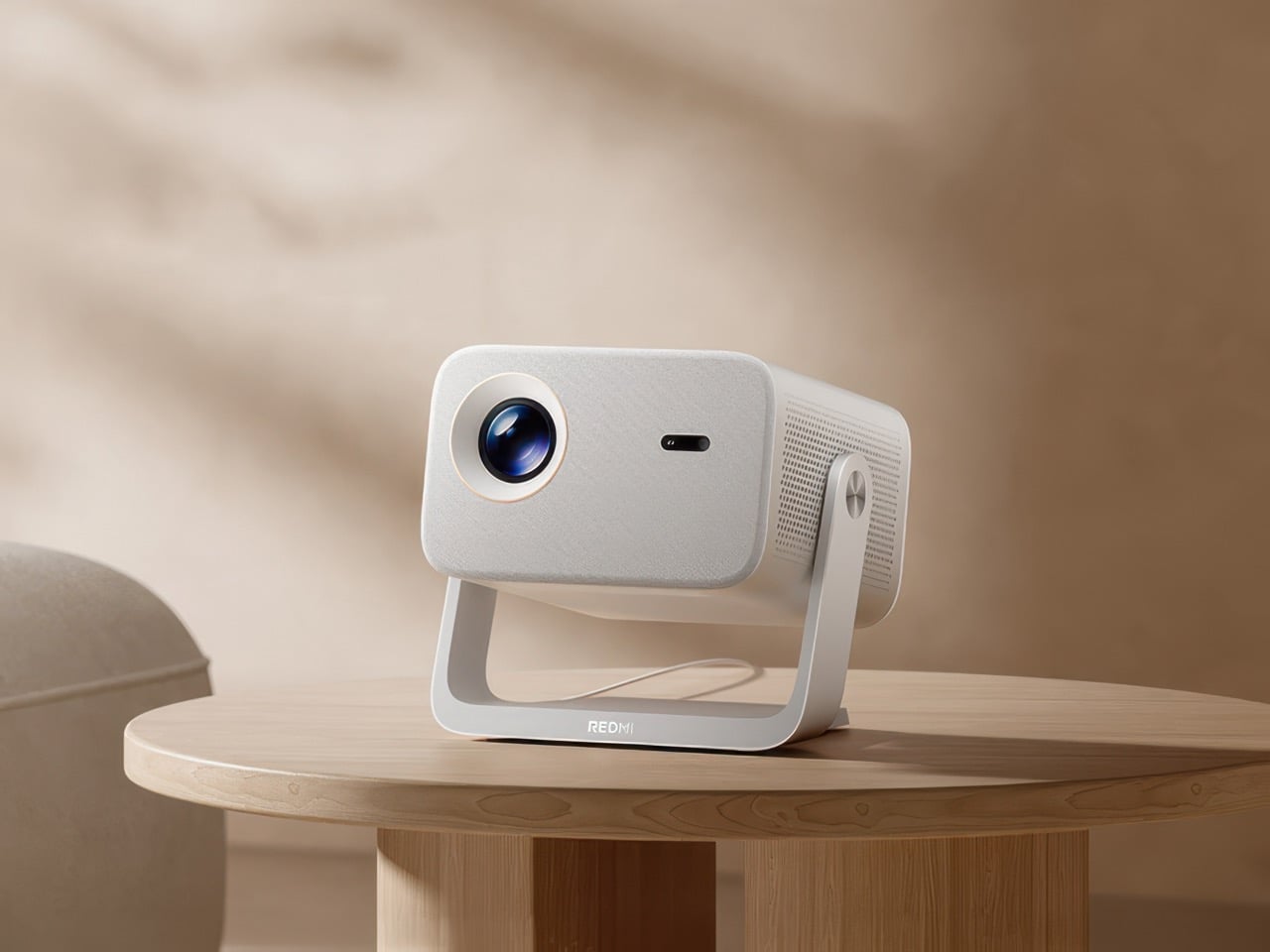
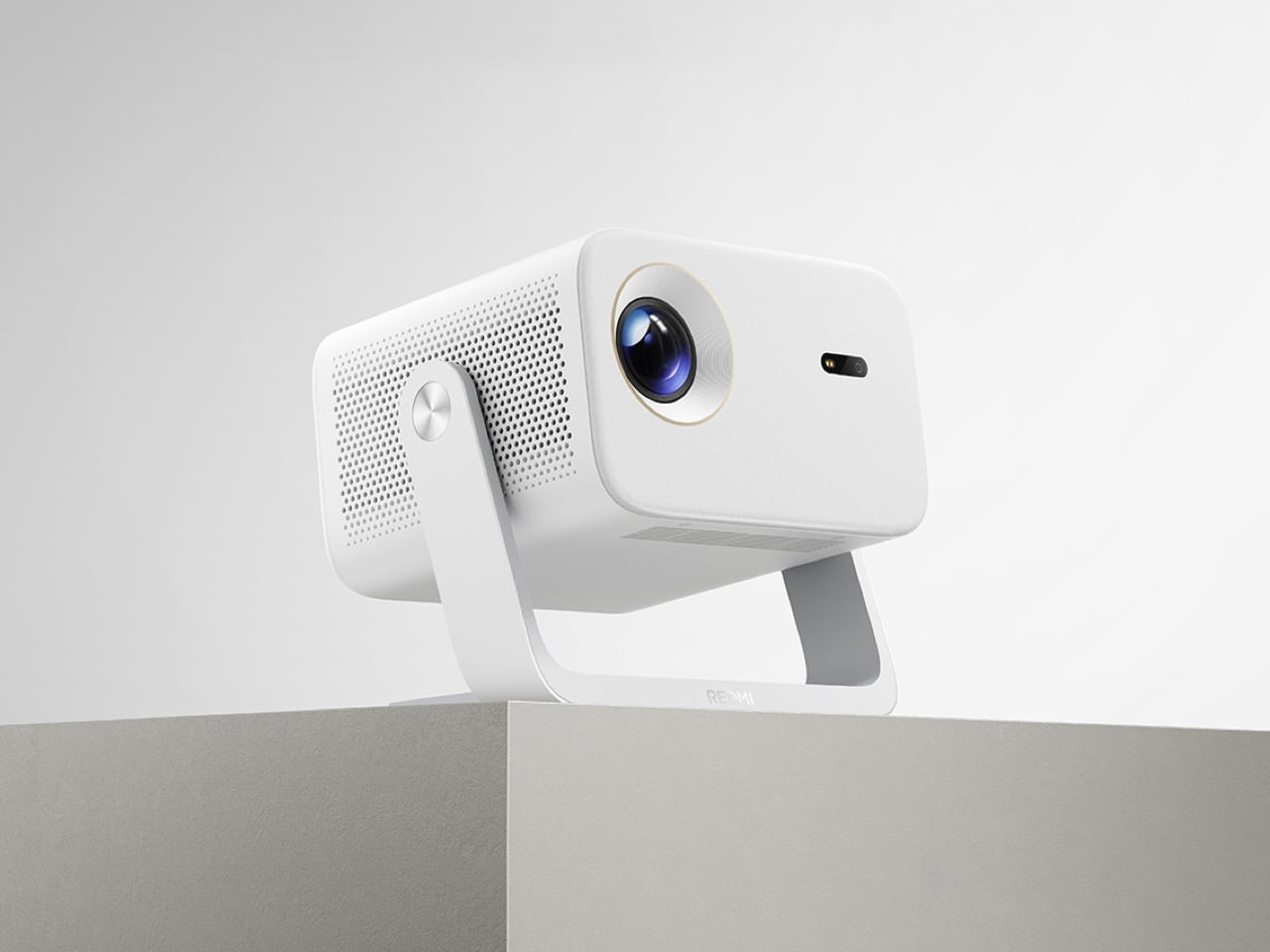
The body is a soft white wedge with a fabric-wrapped front panel, cradled in a U-arm carrying the REDMI wordmark along its cross-member. That arm is structural rather than a bracket bolted on afterward, so the silhouette holds together from every angle instead of looking like a box propped on a stand. Budget projectors usually betray themselves at the seams, with plastic that doesn’t look premium or boast of a perfect surface finish. Here the perforated grille wraps one flank as deliberate texture, and the white-and-grey split keeps the mass visually light. The posture borrows from a studio monitor on a yoke, a smarter reference than the black plastic router look most of this segment settles for.

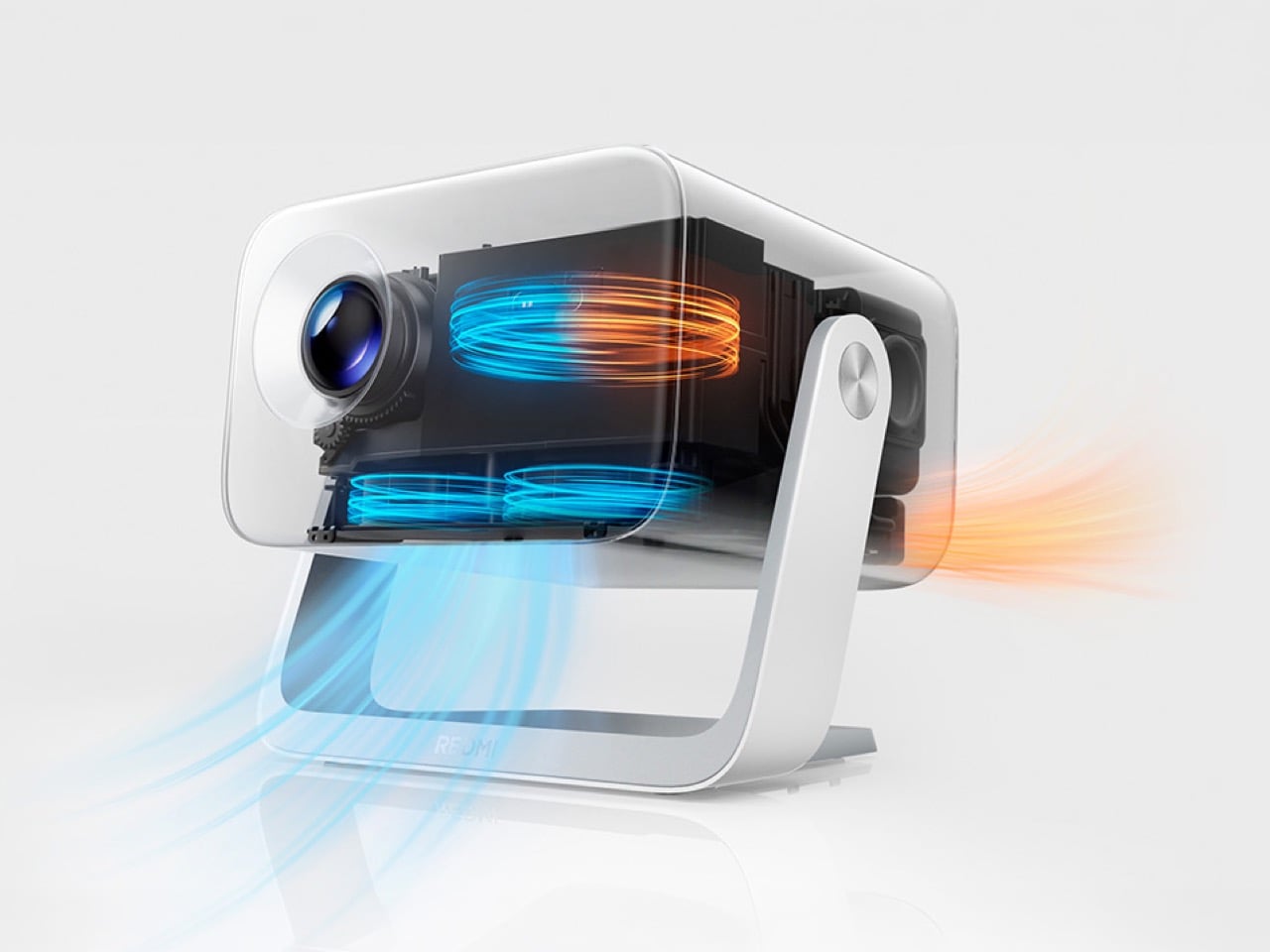
A ToF sensor, an HD camera and Xiaomi’s algorithms handle focus, keystone, obstacle avoidance and screen alignment without you opening a menu, and wall colour adaptation reads your paint job to adjust the image. The 150-degree tilt lets you aim at the ceiling by nudging the body rather than stacking books under one end. Thirty degrees of side projection correction covers the reality that nobody’s coffee table sits square to the wall. Sealing the optical engine behind an all-glass lens keeps dust off the internals and, Xiaomi claims, sharpens the picture 10% over last year’s model. Both features used to be premium-tier boasts.
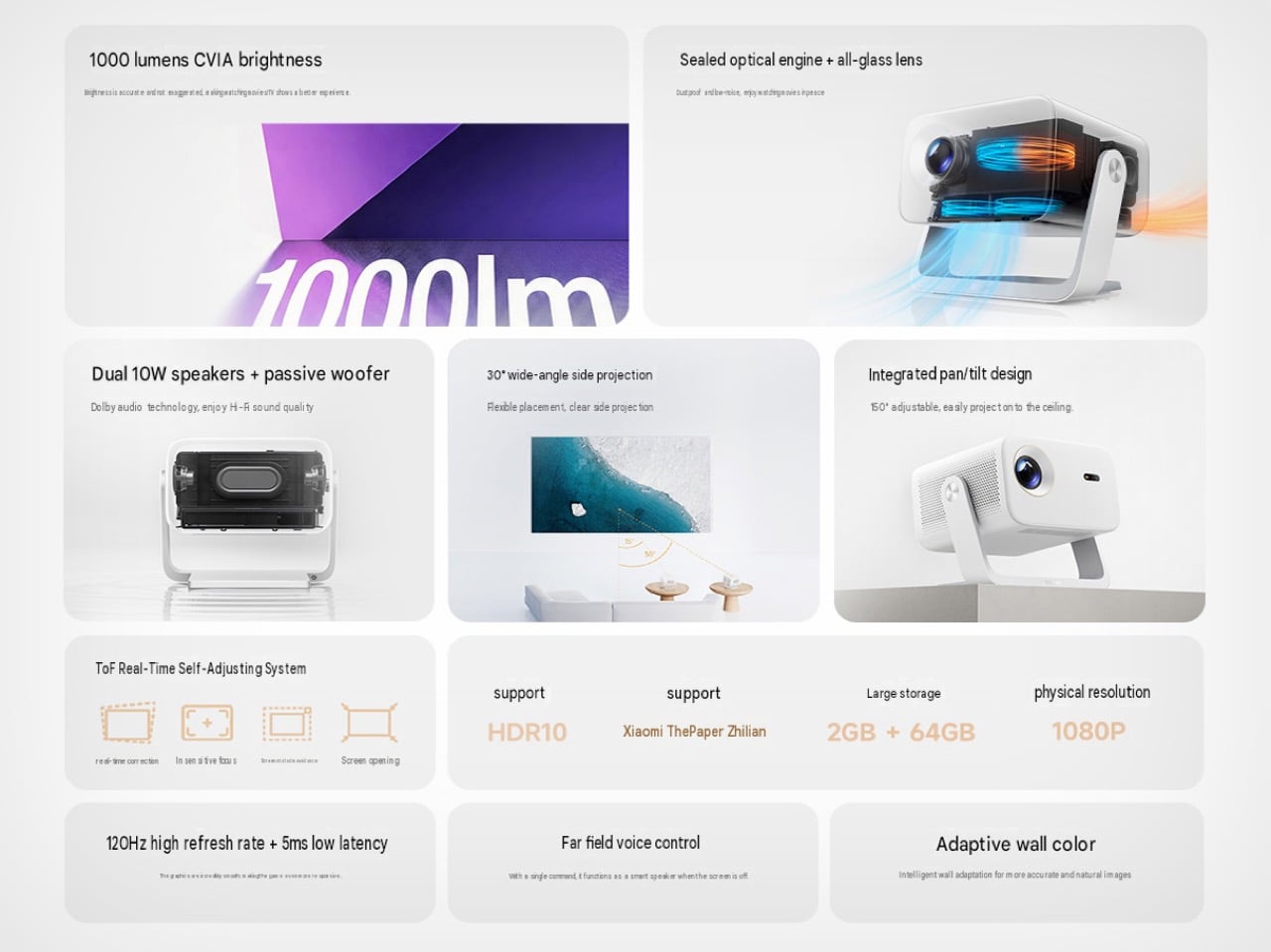
Temper expectations on brightness before you get excited. 1,000 CVIA lumens converts to roughly 700 ISO lumens, which puts this firmly in dim-room territory rather than sunlit-living-room territory. CVIA is a stricter Chinese standard than the fantasy figures printed on Amazon listings, where anonymous brands promise 10,000 lumens and deliver maybe 150. So the number is honest, and the honest number is modest. You will still be drawing the curtains.
The catch arrives at the end, as it always does with Redmi hardware. Xiaomi has said nothing about a global release, and Redmi projectors historically stay inside China while the Xiaomi-branded models travel. It runs HyperConnect and the XiaoAI assistant, meaning no Google TV, no Play Store, and no Netflix app. A projector that costs less than a year of Netflix and cannot run Netflix is the funniest possible ending to this story, and also the most frustrating one, because the rest of us are still shopping in a bracket that peaked at 250 lumens.