August outdoor gear doesn’t get the editorial runway of spring launches or the pre-holiday push. That’s what makes it honest. The products landing in late summer have already been through a season of real conditions and arrive in the lineup on merit rather than timing. This month’s five picks cover the full range of what a serious outdoor day demands: shelter, light, cooking, carry, and sound. Each one addresses a problem its category had been handling adequately for years, then makes adequately feel like the wrong standard to have accepted.
What connects all five is a refusal to inherit the category’s old logic. A jacket that transforms into a tent. A flashlight built around actual daily carry. A backpack that zips apart into three genuinely usable bags. A speaker shaped like a jerry can, with 300 watts and a guitar input. A grill plate that reconfigures to the meal. August’s best gear doesn’t announce itself. It earns its place quietly, trip after trip.
1. Shelter Wear
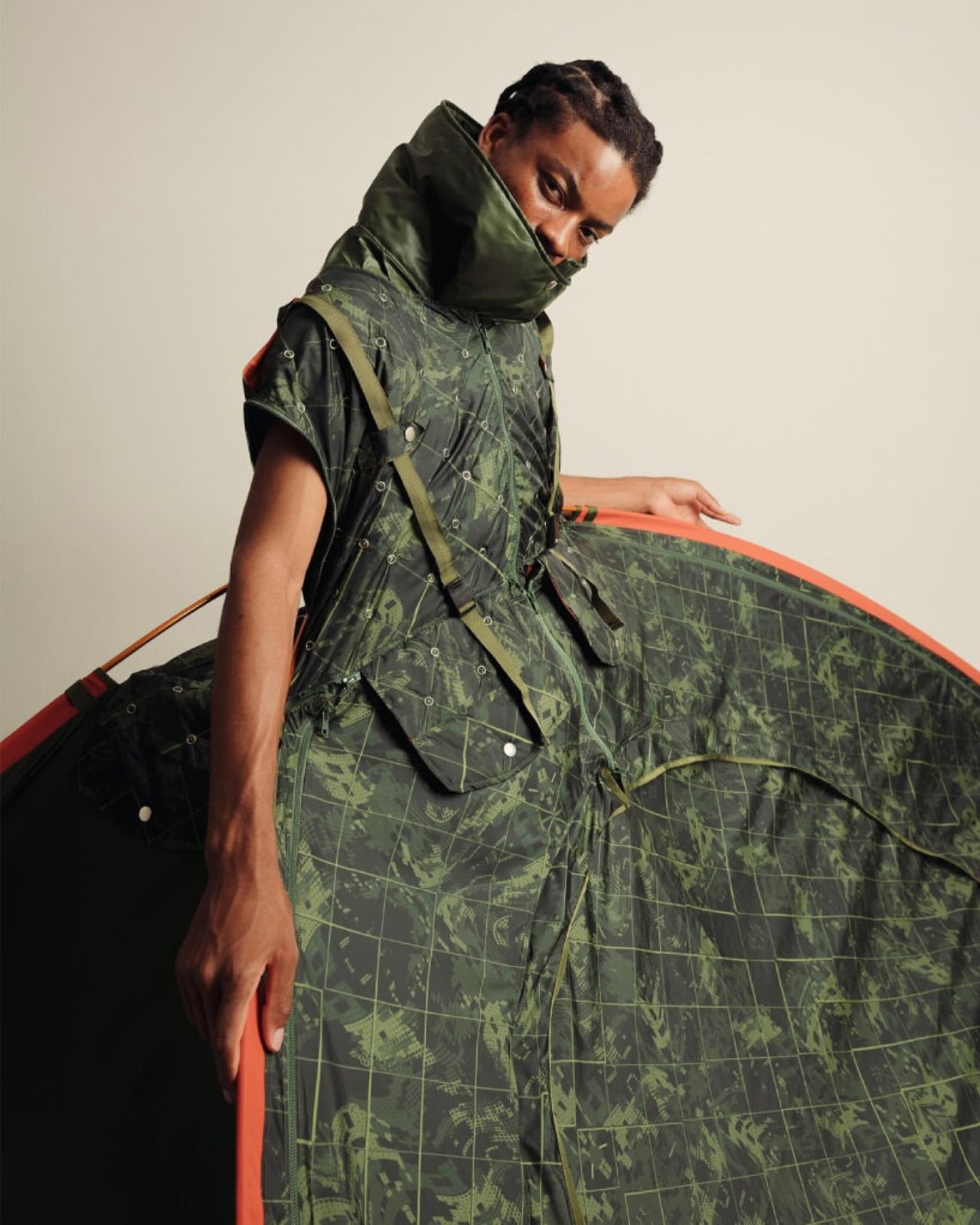
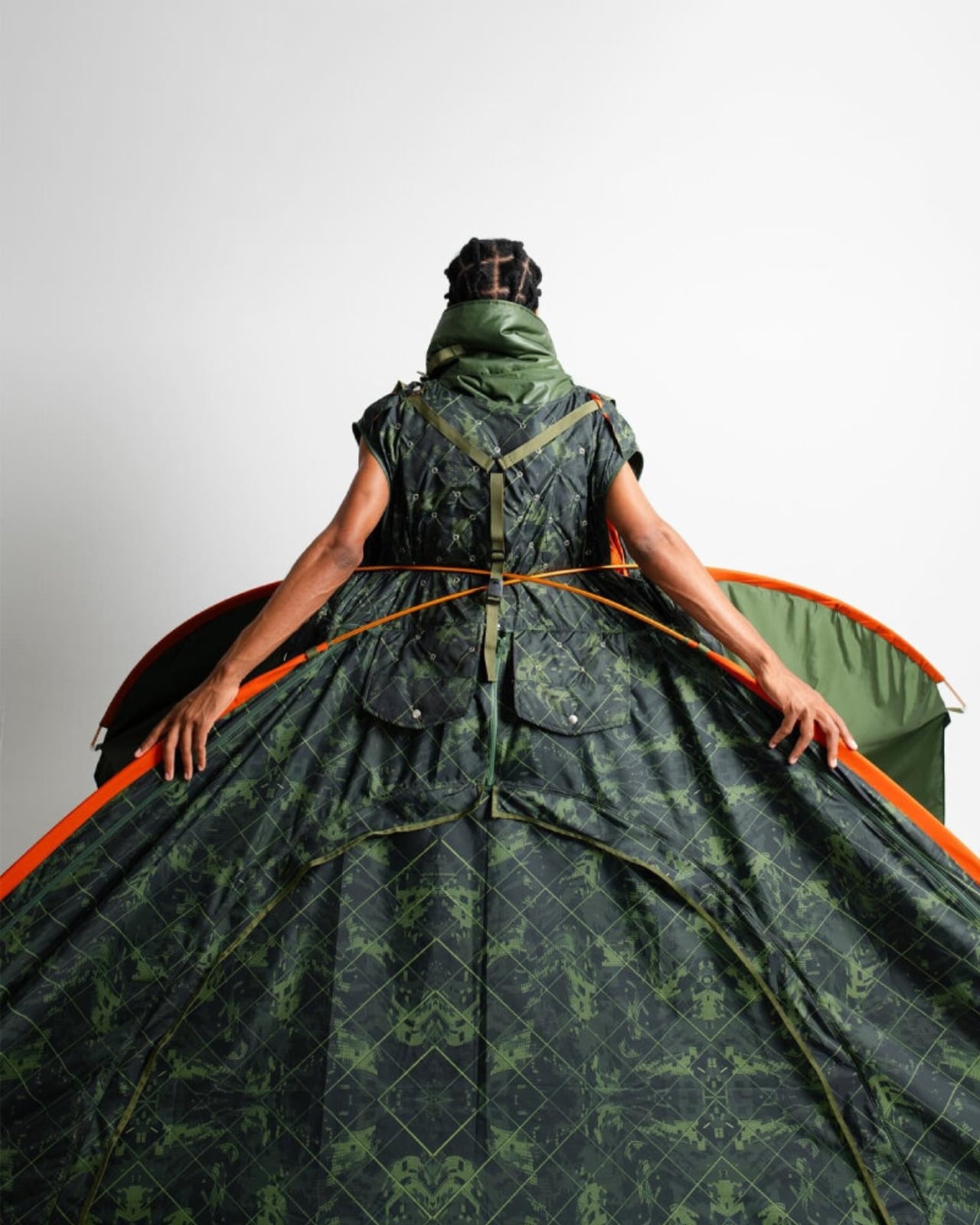
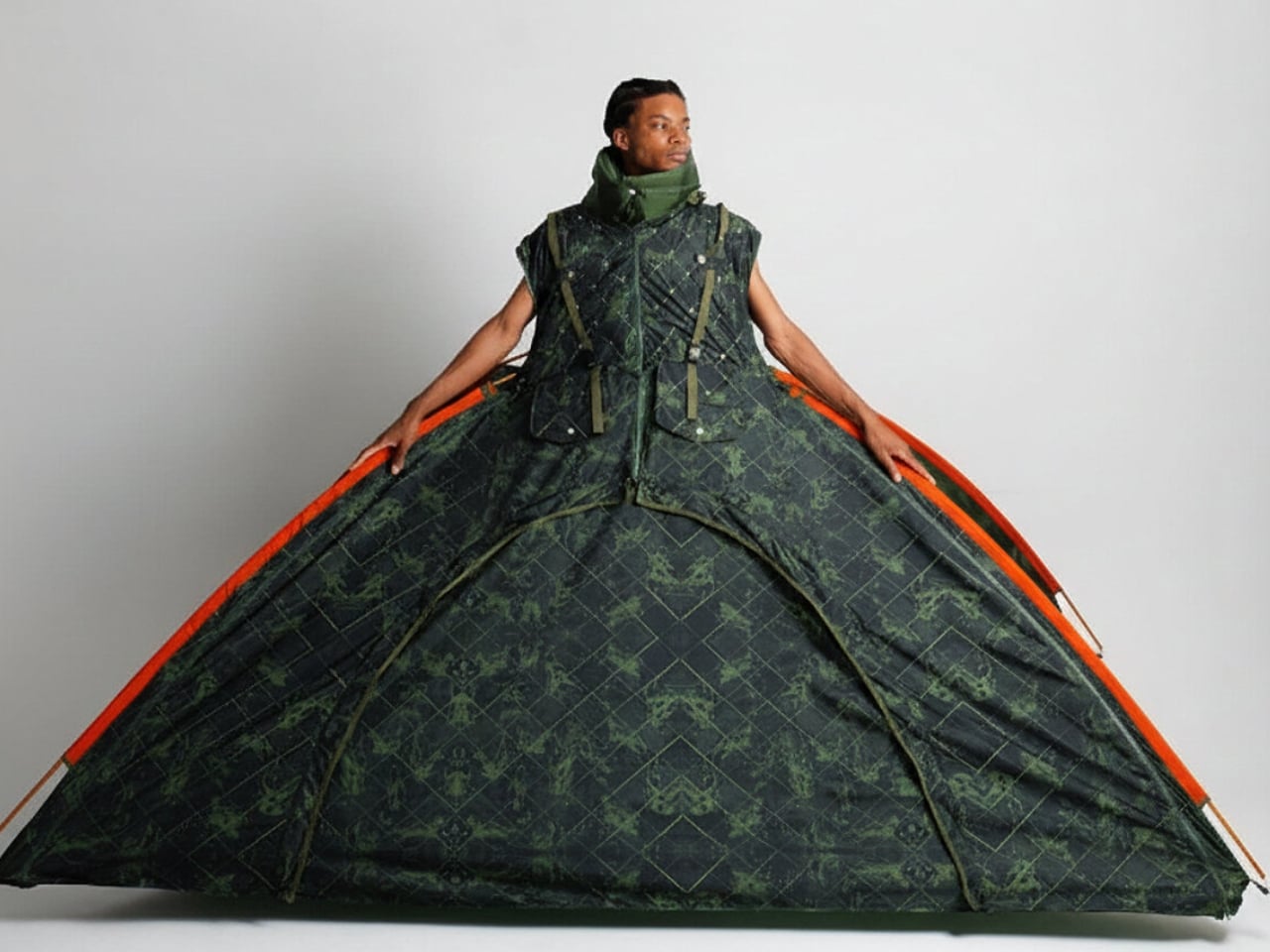
Yoon Myat Su Lin designed Shelter Wear from a specific memory. The Tokyo-based fashion student experienced an earthquake in Myanmar and watched people left without temporary shelter in the critical hours before help arrived. That moment produced a single design question: what if the garment you were already wearing could become what you needed most? At first glance, the answer looks like structured techwear outerwear with a high protective collar and a silhouette that works as well in a city as on a trail.
The transformation is the design. Unclip a series of buckles, unfold the panelling, and the garment expands into a triangular tent that forms shelter around the wearer. The detachable sleeves double as backpacks before becoming structural components of the form. Ripstop materials and engineered fasteners hold the system together under real conditions, a claim validated by the YKK Special Prize at the 25th YKK Fastening Award. For anyone spending time in unpredictable terrain, Shelter Wear removes the gap between what you’re wearing and what you need.
What we like
- The garment-to-tent transformation addresses emergency shelter at the level of what you’re already wearing, not what you remembered to pack separately
- The YKK Special Prize validates the mechanical integrity of the fastening system well beyond the concept stage
What we dislike
- Currently a student concept design, with production availability and final manufacturing specifications unconfirmed
- The techwear silhouette reads as urban and may not suit every outdoor environment or wearer preference
2. CasaBeam Everyday Flashlight
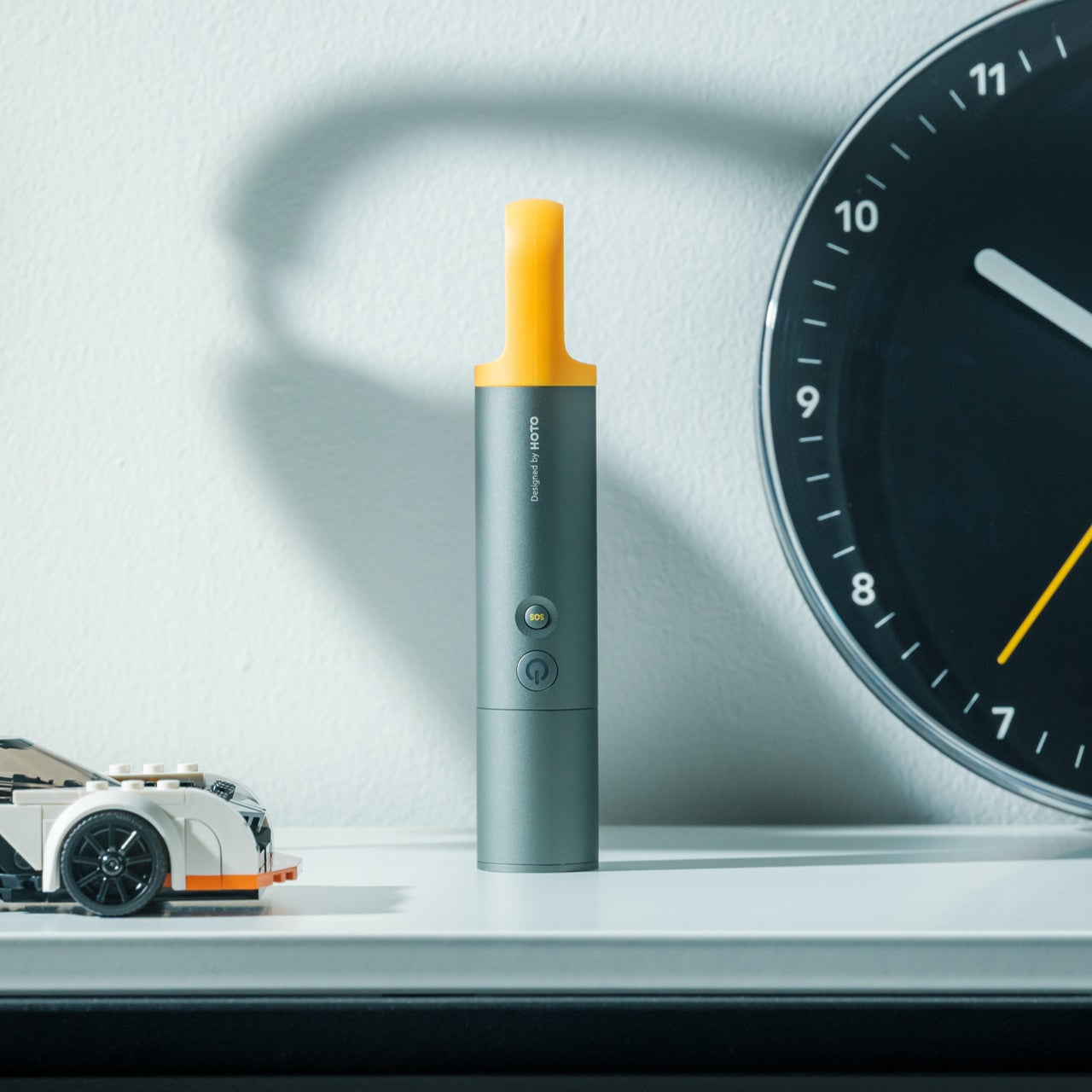
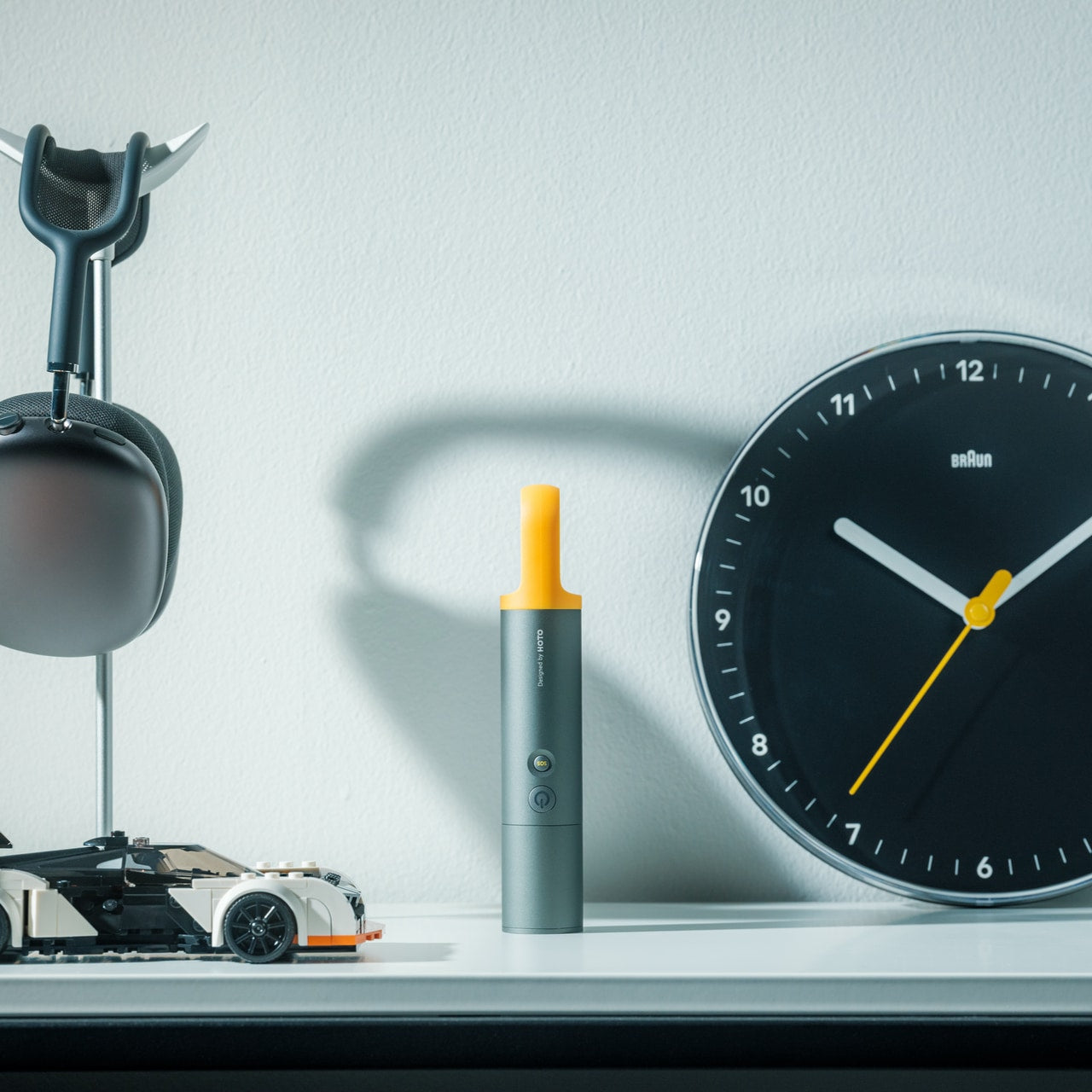
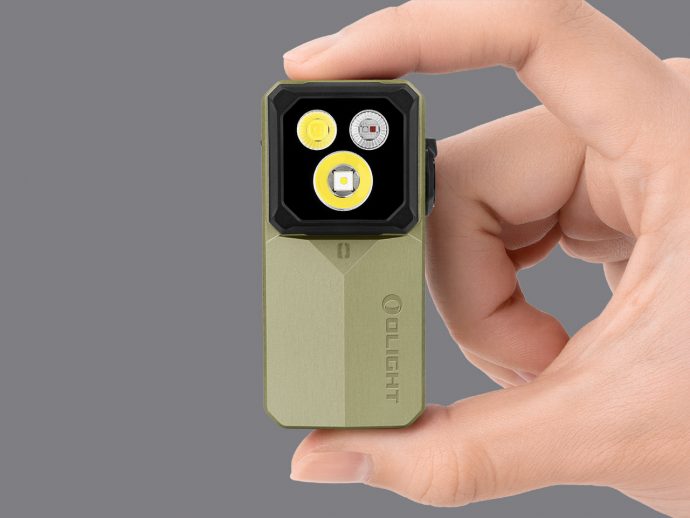
Most outdoor flashlights are built around a peak performance scenario: maximum output, maximum throw, maximum everything. The CasaBeam starts from the opposite end of that thinking. The “everyday” in its name is a design commitment, not a marketing qualifier. It’s sized and weighted for the person who carries their light not only on planned trail days but on every day between them, because those are often the moments that actually test whether your gear kept its promise.
That daily carry philosophy changes how the object performs for you. The pocketable form means it’s already on your person when you need it, not sitting in a pack you didn’t bring. The beam handles close-range campsite tasks and longer throws without demanding a deliberate mode change between them. For a flashlight that lives in your pocket rather than your kit bag, that standard matters every time you reach for it.
What we like
- Sized and weighted for genuine daily carry, not just the planned outdoor days when remembering a flashlight is already obvious
- The pocketable form keeps it accessible in the unplanned moments that a pack-stored light consistently misses
What we dislike
- The everyday carry positioning means it isn’t optimized for the peak-output demands of technical night hiking
3. Modevo Trio
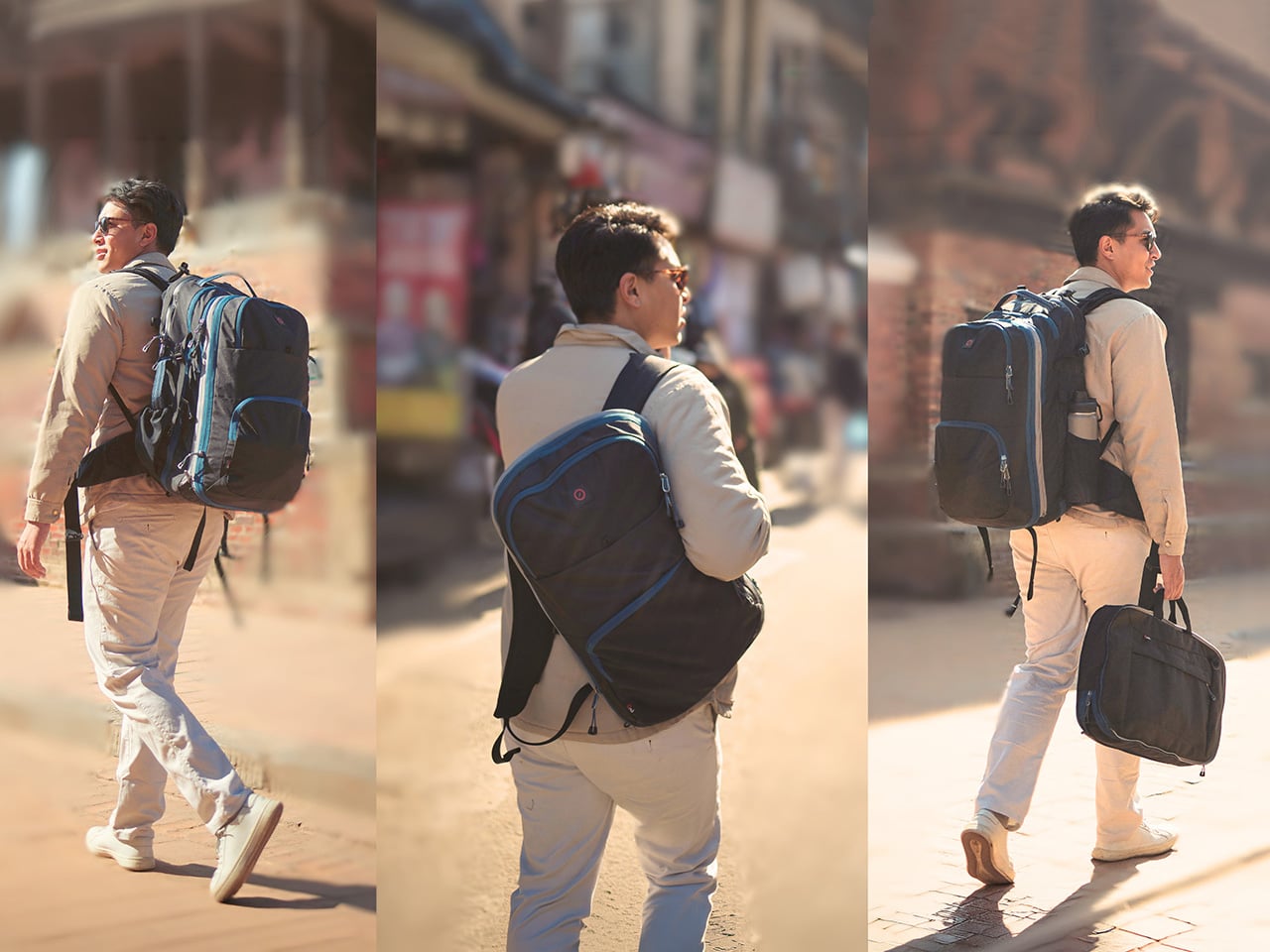
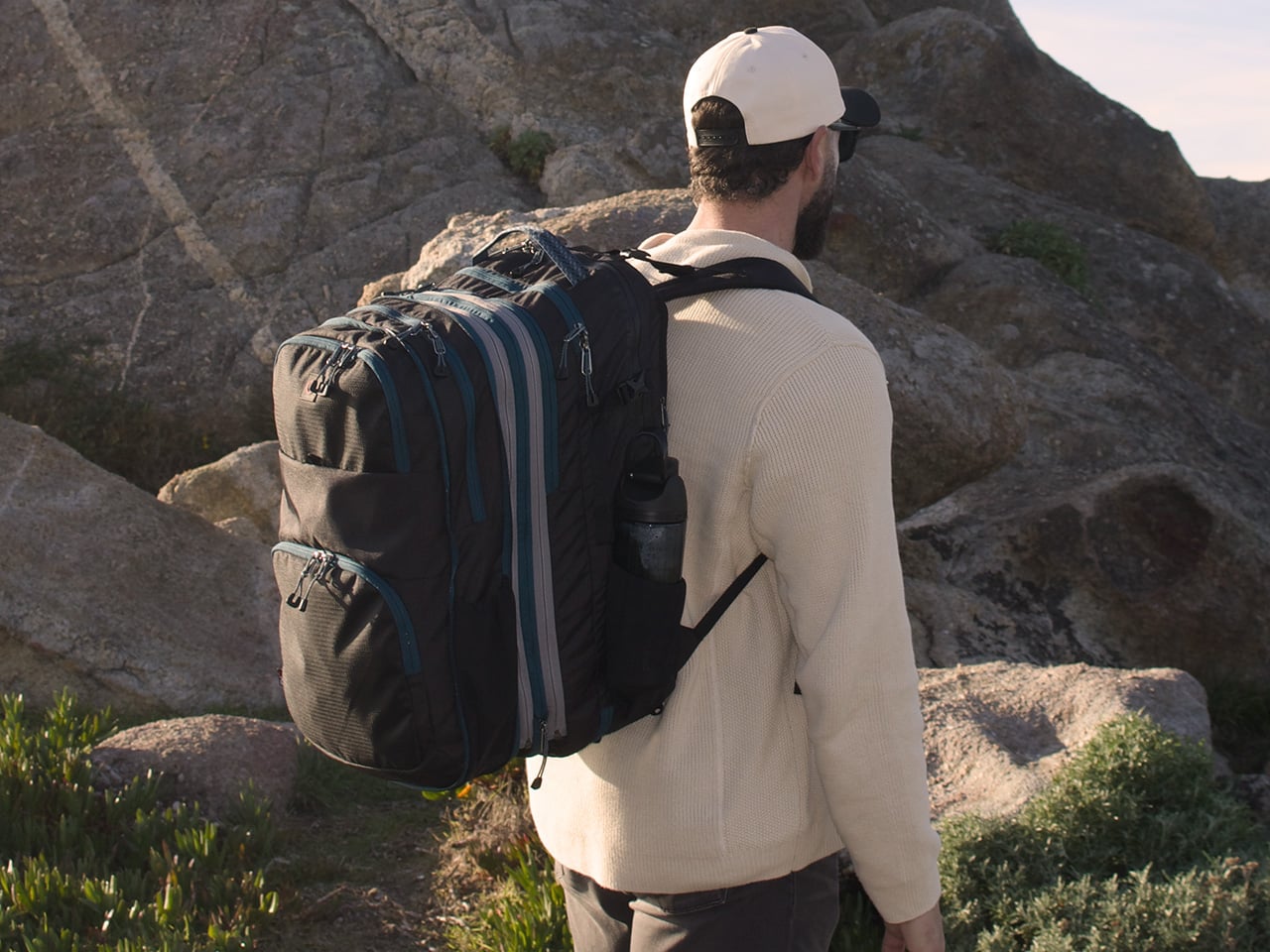
The design insight behind the Modevo Trio is one most bag companies avoid: a single pack that tries to be everything ends up the wrong thing across multiple scenarios. Onli Travel built the system in reverse, designing each of the three components as a genuinely usable standalone bag first, then engineering the connection points between them. The Core Pack is a 28-liter travel backpack with a clamshell opening and a functioning hip belt. The Link works as a briefcase or shoulder bag. The Go Daypack expands from 12 to 27 liters on its own.
Put all three together, and you get 58 to 73 liters of carry. Separate them mid-trip and each piece performs without producing a compromise product. Bluesign and OEKO-TEX certified water-resistant fabric with YKK zippers throughout reflects the build standard expected from a fourth-generation design. At $224 for the full Trio, it’s a considered purchase. For outdoor days that move between activities, the Modevo removes the most persistent pack complaint: that you brought the right bag for the first half of the day and the wrong one for the second.
What we like
- Each component was designed as a standalone first, so separating the system mid-trip never produces a bag that only exists as a leftover from the combined configuration
- Bluesign and OEKO-TEX certified fabric with YKK zippers reflects independently verified material and construction standards rather than self-reported claims
What we dislike
- At $224 for the full Trio, the investment requires genuine confidence in modular carry as a system before committing
- Three-bag systems introduce the real possibility of leaving one component behind when packing quickly or in low light
4. Jerry Can Speaker
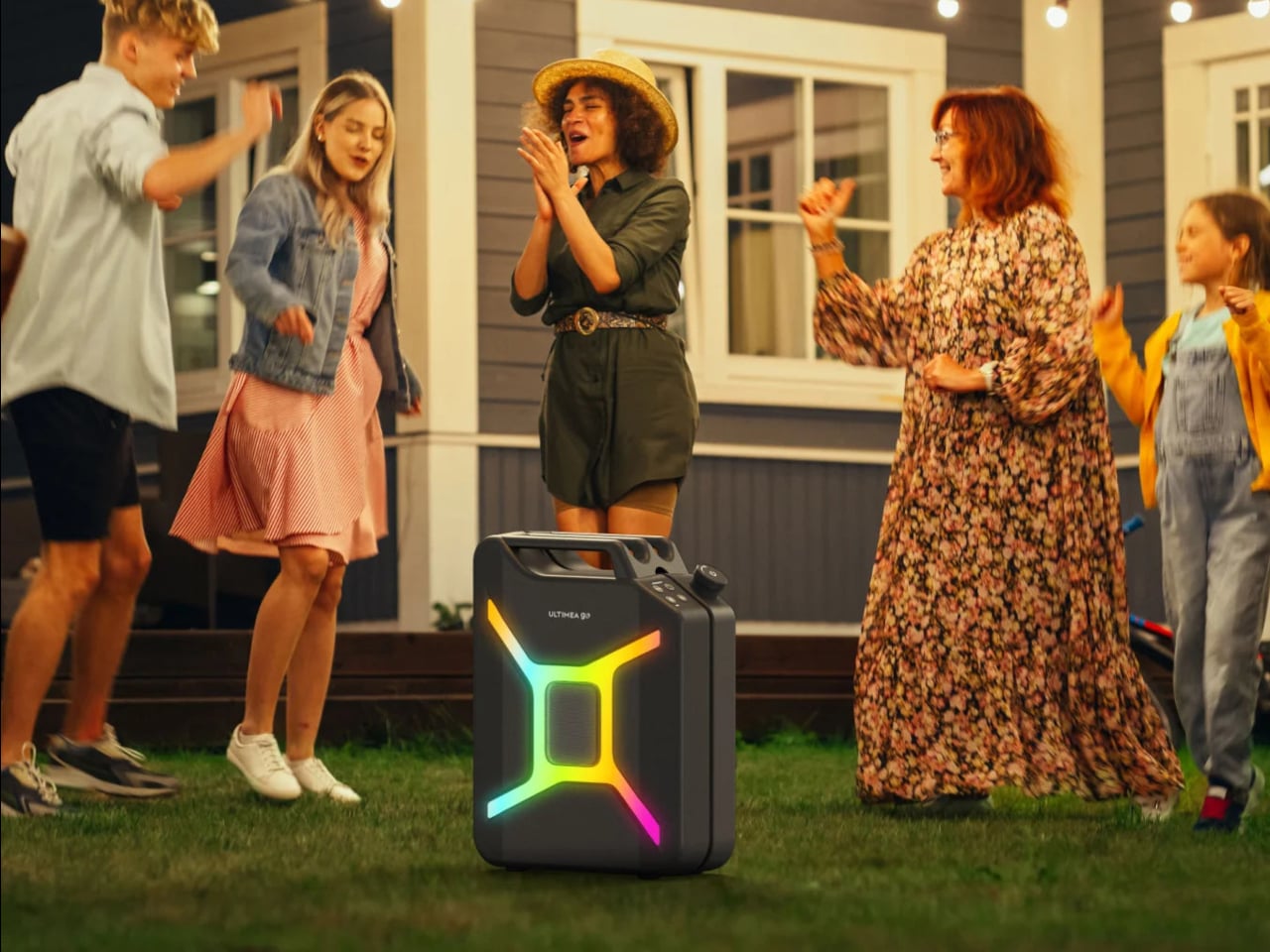
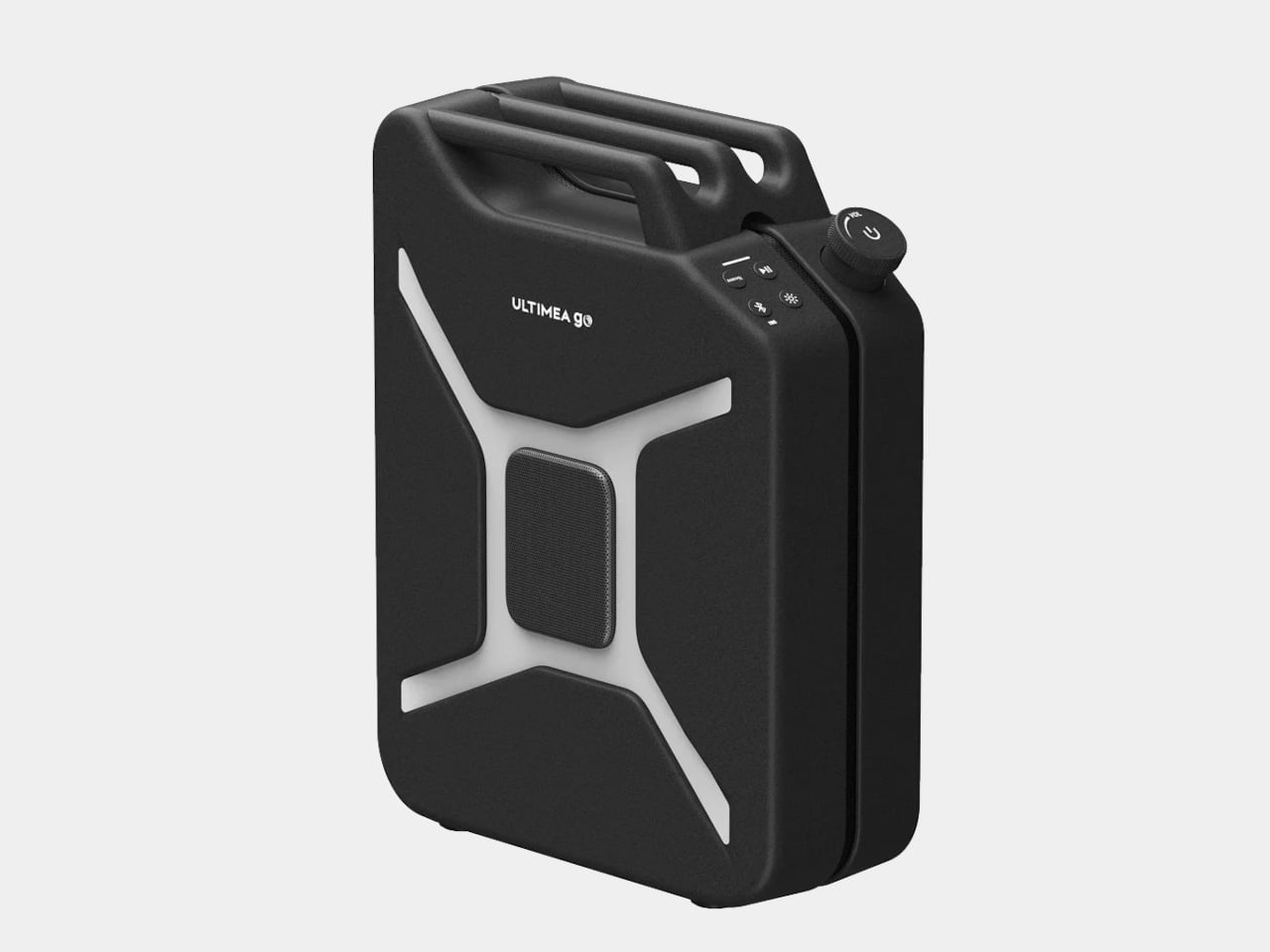
The Ultimea Go looks exactly like a jerry can. Not a loose visual reference or a softened modern take on the form: a full commitment to the fuel container silhouette, boxy proportions, handle and all. The design misdirection is deliberate, and it lands. Under that shell, dual 5-inch woofers, dual 3-inch full-range drivers, and a 1-inch tweeter deliver 300 watts of peak output through 360° omnidirectional sound that radiates in all directions rather than projecting from a single face, which matters when a crowd is gathered around it.
The guitar input is what makes this genuinely useful for you rather than just visually interesting. Two microphone inputs and direct instrument connection turn it from a passive playback device into something you can plug a guitar into at a campsite or a backyard set. Auracast support syncs up to 100 devices simultaneously without the timing offsets that come with daisy-chaining. Sixteen hours of battery and IPX4 water resistance keep it running through a full outdoor day without requiring repositioning or supervision.
What we like
- Guitar and microphone inputs transform it from a playback device into one a musician can plug directly into on a campsite, which no comparable outdoor speaker in this class offers
- Sixteen hours of battery and IPX4 water resistance handle a full outdoor day without monitoring, repositioning, or an overnight charge between uses
What we dislike
- The full-commitment jerry can form is a deliberate design statement that won’t suit every camp aesthetic or setting
- At 300W peak output, the power draw requires a reliable source, which adds planning for longer off-grid trips
5. Compact Modular Grill Plate
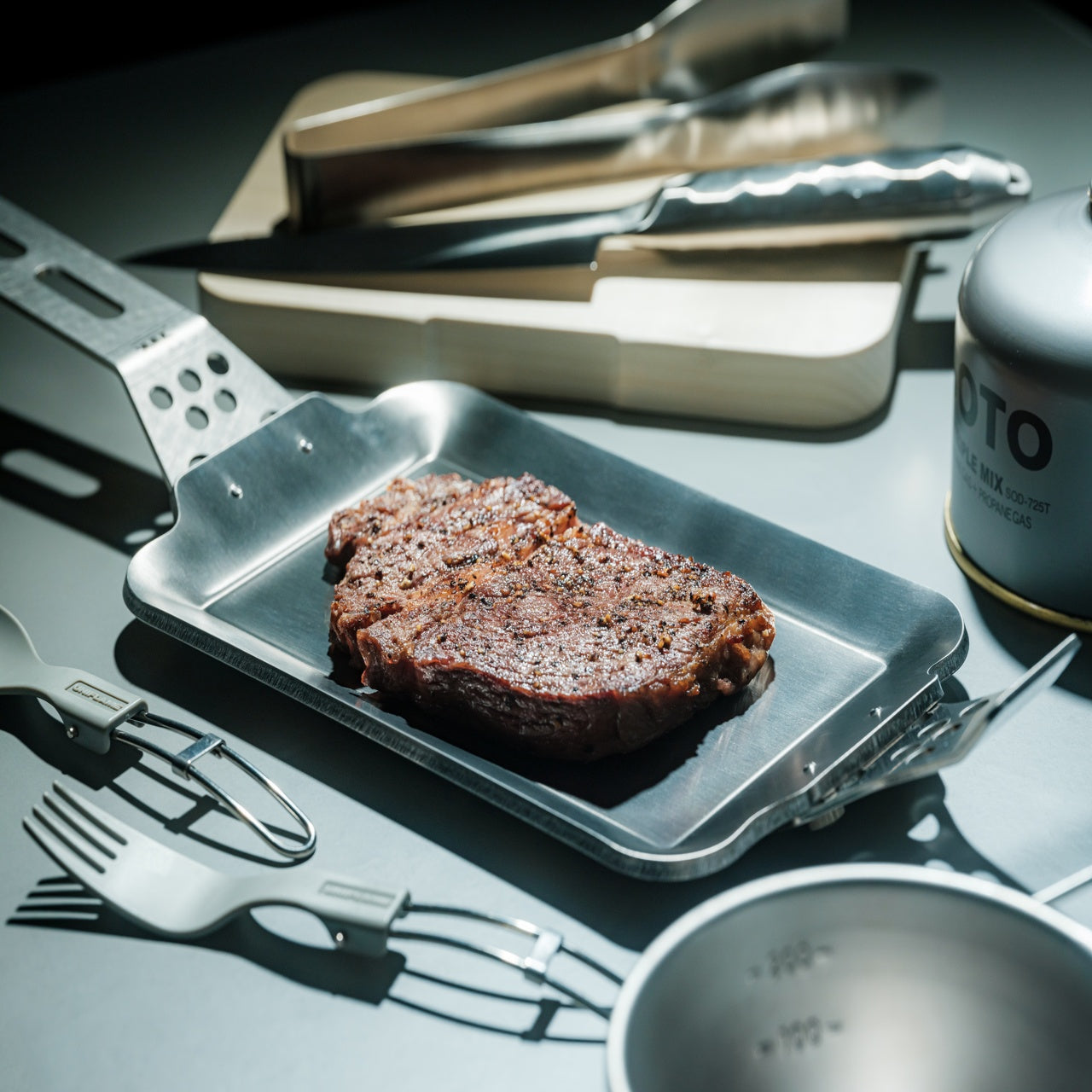
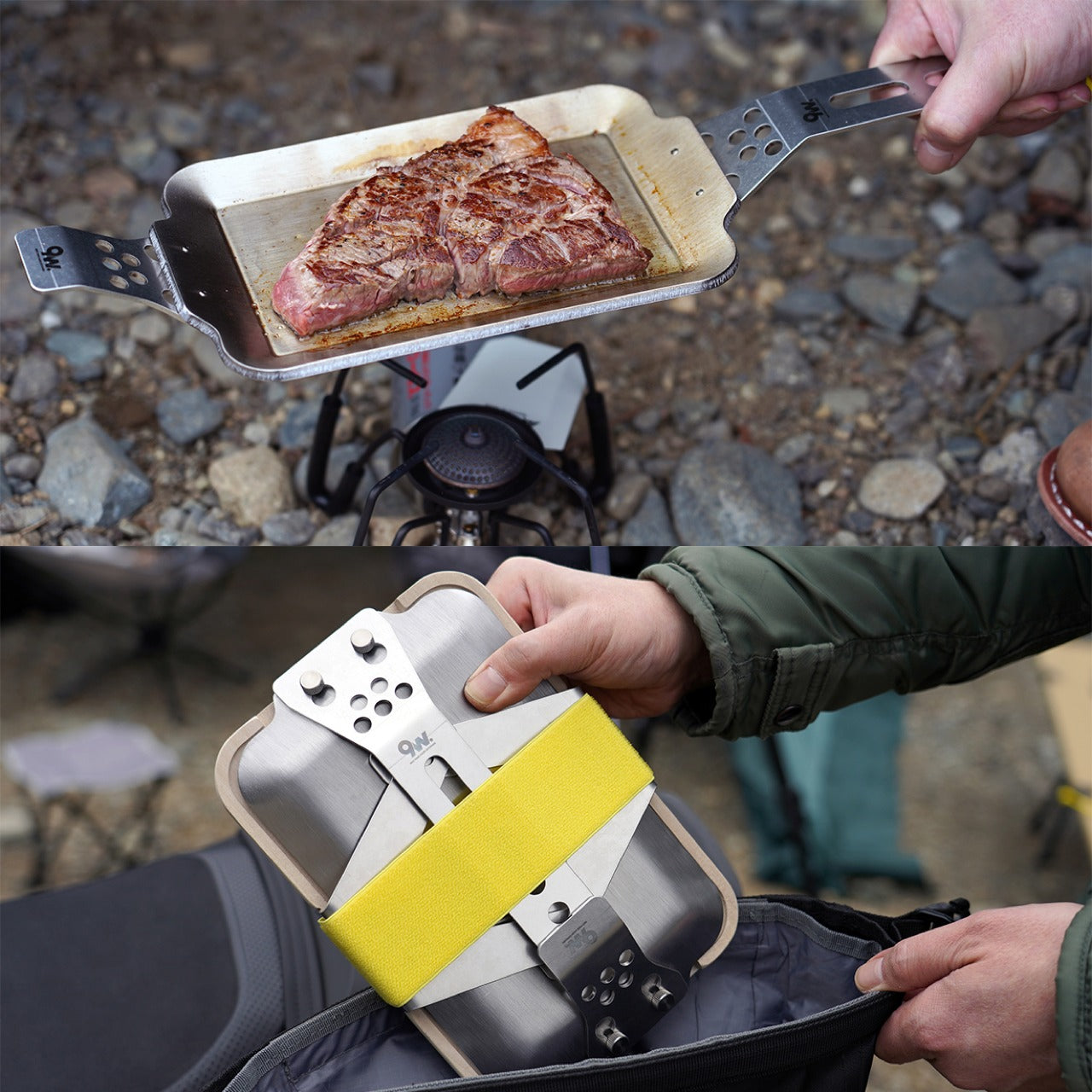
Most camp cooking surfaces commit you to a single method before you’ve decided what you’re making. The Compact Modular Grill Plate works differently. The modular design lets the surface be configured around the meal rather than the other way around, so the same piece of gear that handles a morning sear handles an evening cook without requiring a second surface in the pack. That kind of adaptability usually arrives with a bulk penalty. This one resolves the trade-off rather than asking you to live with it.
The compact form changes what you’re willing to bring on shorter trips. When cooking gear is bulky, it gets left behind. When it packs flat and reconfigures at the campsite, it earns a permanent slot in the kit. For camp cooking that doesn’t require a second thought about space, this is the surface that justifies its place on the first trip and holds it on every one that follows.
Click Here to Buy Now: $100.00
What we like
- Modular configuration adapts to different cooking requirements without adding a second surface or additional weight to the pack
- Compact form removes the space calculation that causes most camp cooking gear to get left at home on shorter trips
What we dislike
- Modular systems require all components to be present and accounted for before setup, which adds a pre-trip organization step
- Still requires a separate heat source, making it a cooking surface rather than a self-contained cooking system
The Gear Holds
The five products in August’s lineup cover every stage of a serious outdoor day. What connects them is a refusal to accept the performance floor their categories had settled on. The Shelter Wear asks why clothing stopped at decoration. The Modevo Trio asks why a single bag has to make compromises. Each product arrived here by questioning something the outdoor gear world had quietly stopped questioning, and all five are better for it.
Gear that earns long-term trust doesn’t announce itself on the first trip. It builds that trust through every trip that follows, quietly removing the small calculations and compromises that average equipment leaves behind. Take these five picks into real conditions, and the design decisions behind each one become self-evident in the best possible way. August’s outdoor gear doesn’t need a seasonal hook to justify it. It just needs the chance to perform.