Home entryway products have a coverage problem. A shoe rack deals with footwear, but not the umbrella. An umbrella stand handles the wet item but does nothing for the dripping floor around it. A small tray catches keys but not the daily chaos that accompanies them. The pieces exist, but they don’t form a coherent system, and the result tends to be a doorway that feels permanently unsettled.
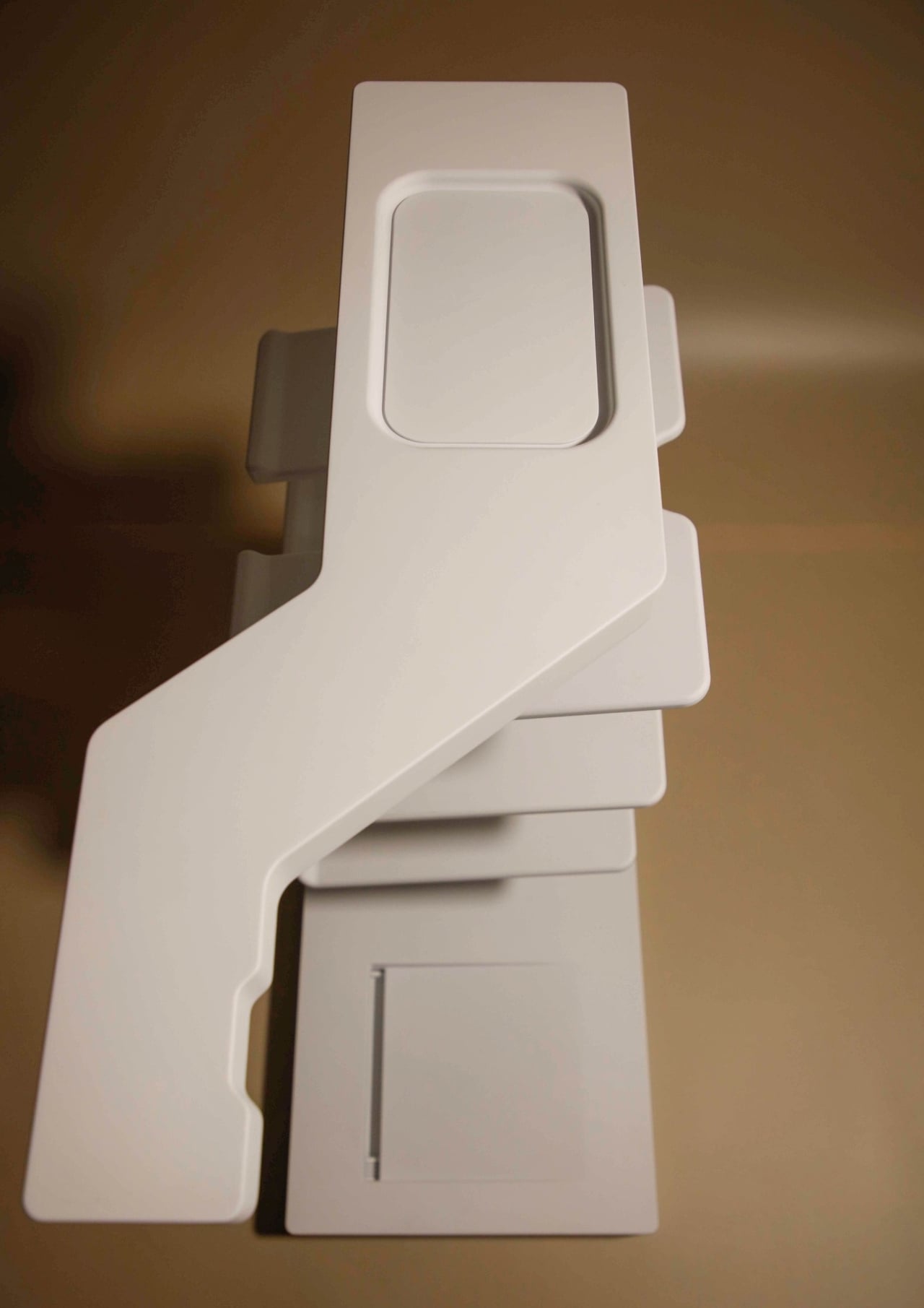
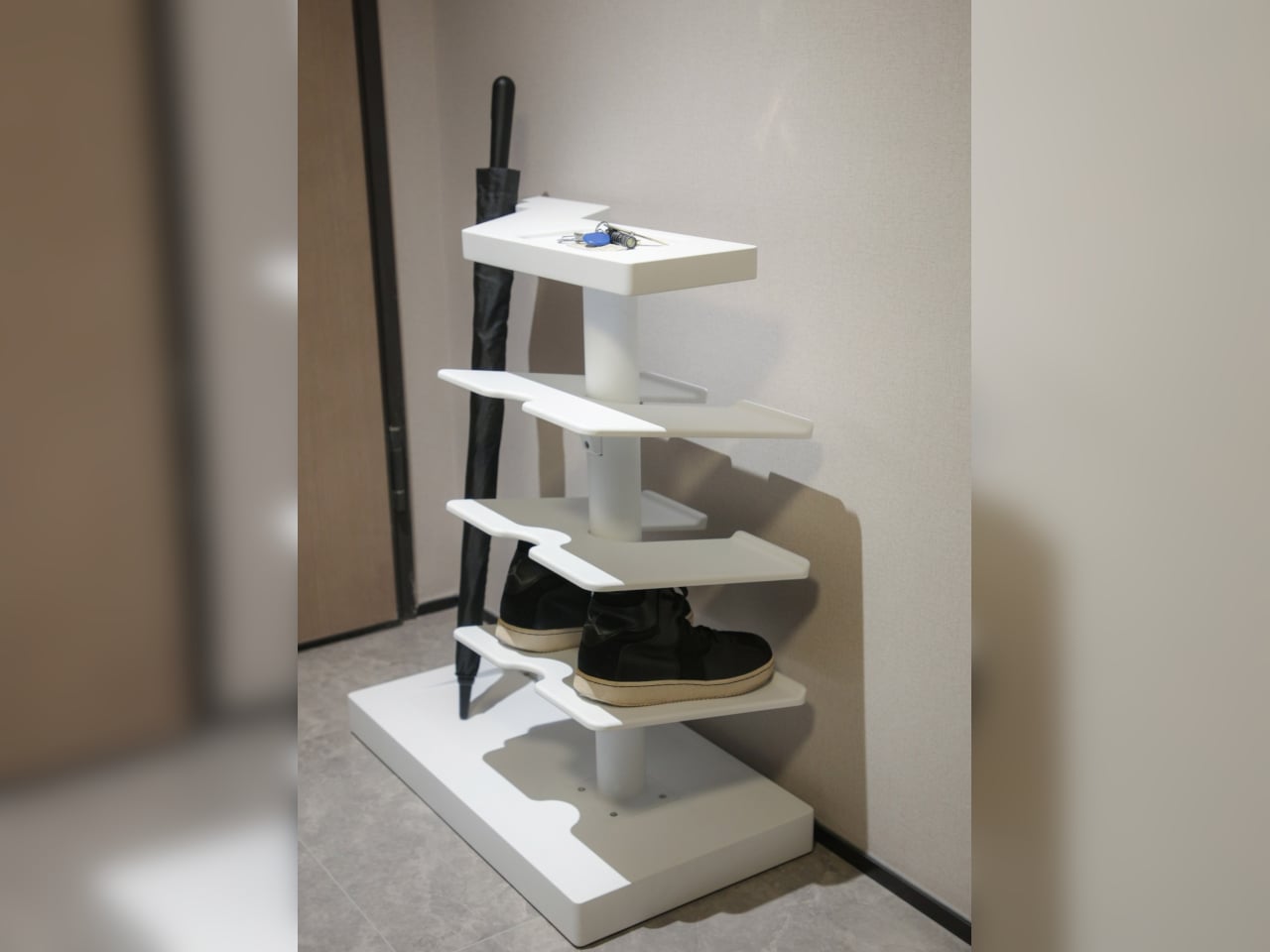
ENTRY is a concept that answers that scatter with one vertical object. It integrates umbrella guidance, water collection, elevated footwear storage, and a top catch-all surface into a single threshold form, described by its designer as something that organizes the first 30 seconds of coming home. Rather than treating the entrance as a storage corner, it reframes that space as a managed wet-dry transition between outside conditions and domestic calm.
Designer: Zhenhua Chen
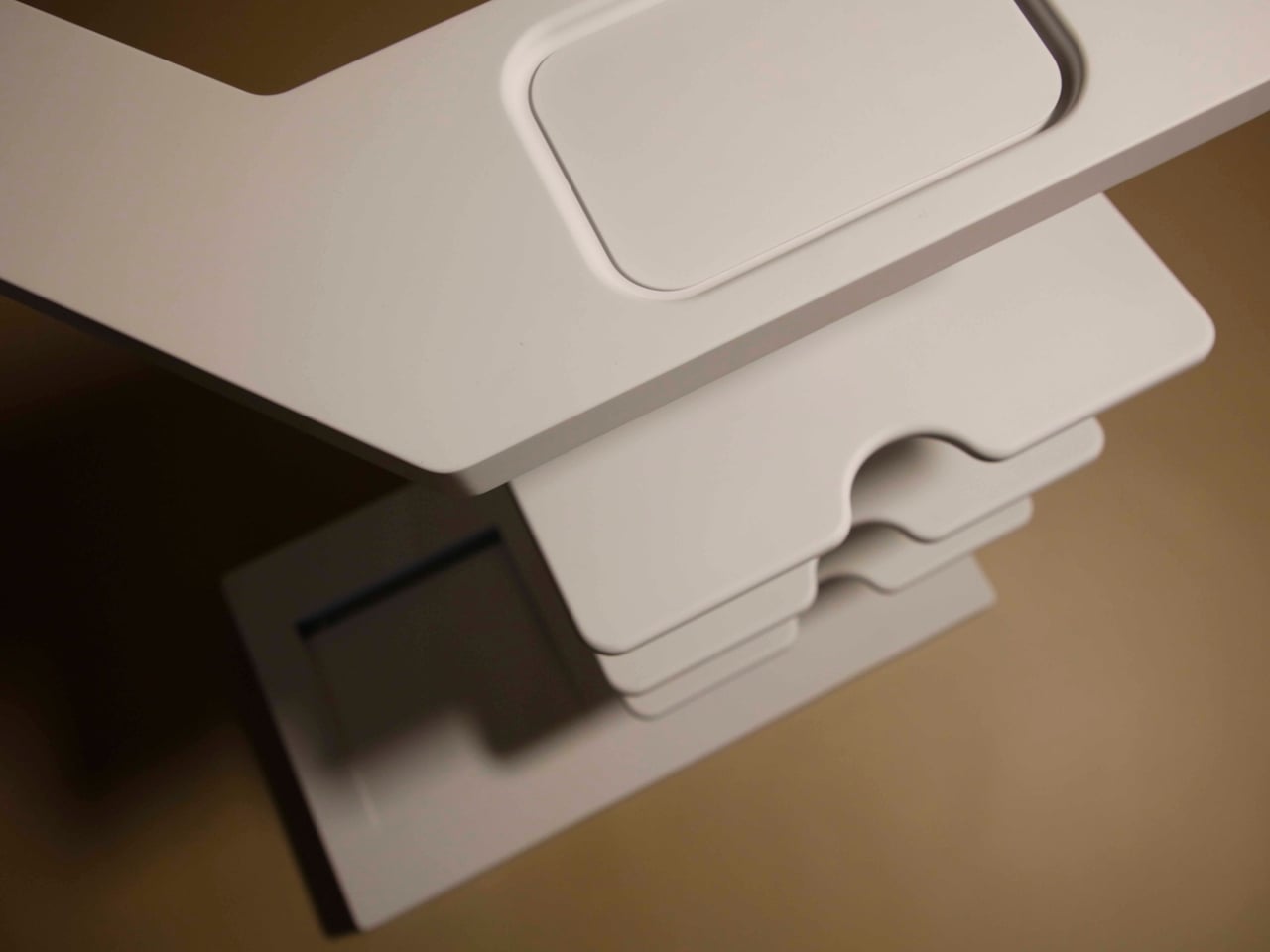
The design gives the wet umbrella a precise position rather than a vague area to lean against. A vertical spine with controlled side geometry holds the umbrella in a defined relationship to the base, reducing the casual lean that scatters water across walls and floors. It’s structural thinking that locates the wet object deliberately, so that whatever drips off it goes where the design expects it to go.
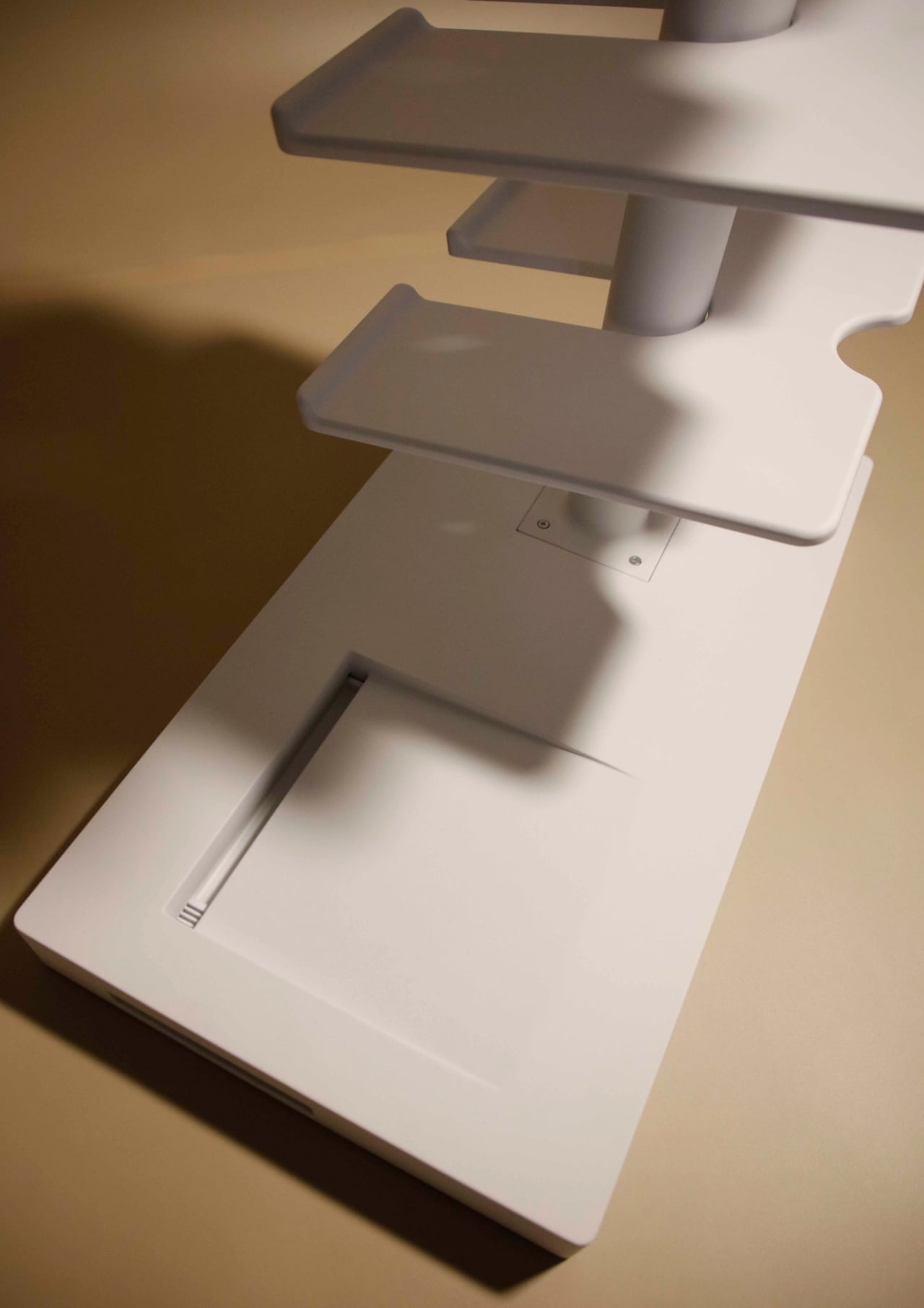
Below the umbrella position, a concealed, removable tray collects water at the base. Rather than allowing drips to pool on the floor or soak into a mat, the design makes water collection part of the object’s own structure. The tray pulls out when it needs emptying, keeping the maintenance cycle as minimal as the design premise itself. Water arrives with the umbrella, gets directed downward, gets caught, and gets removed.
Footwear gets lifted off the floor onto dedicated raised platforms rather than accumulating at the base of the door in the usual loose arrangement. The difference between floor-level disorder and a designated surface is partly visual but also functional: the floor around the entrance stays clear, and the entryway retains the quality of a space someone has thought about rather than one that simply absorbed what was dropped into it.
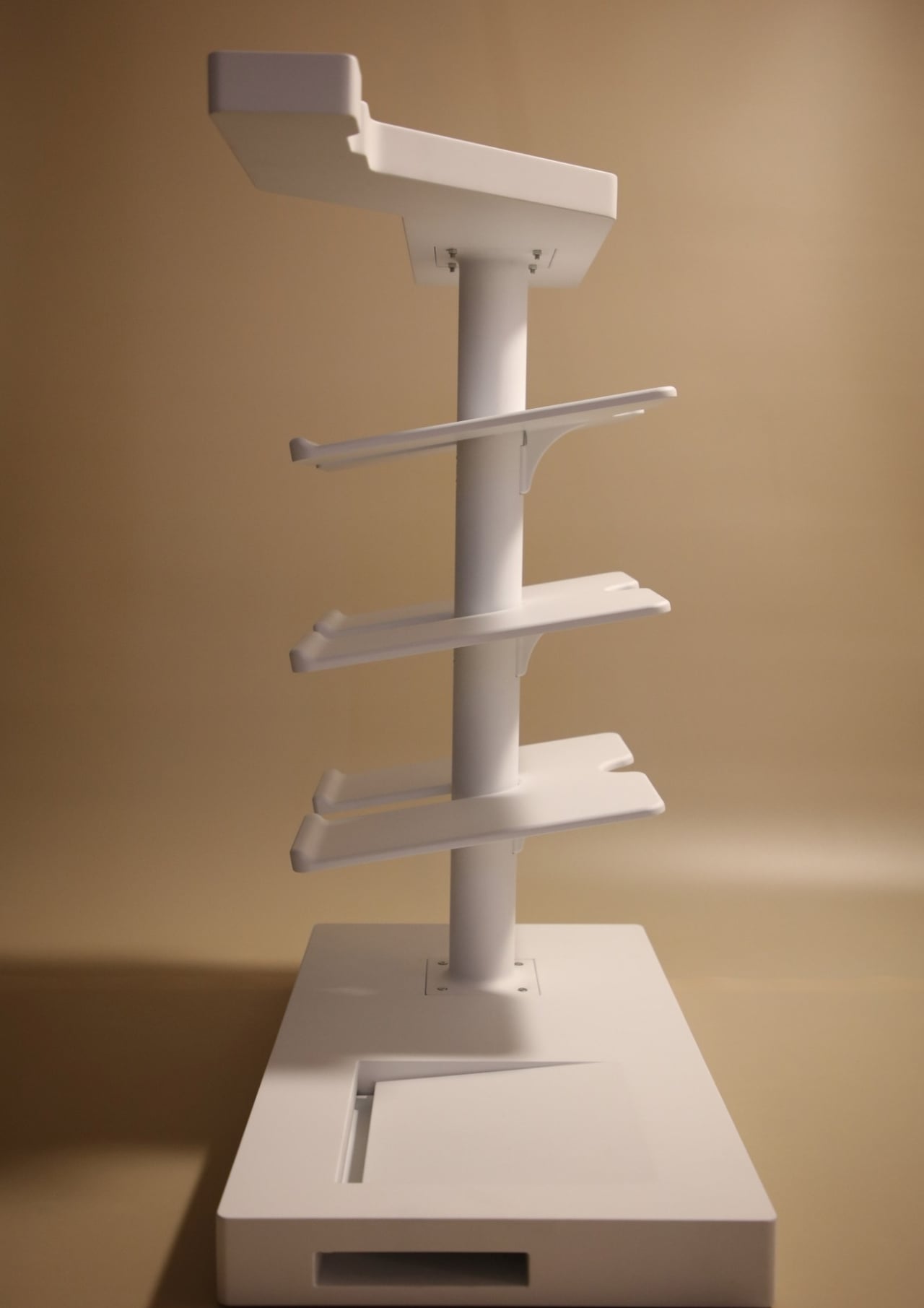
The top surface is a flat catch-all tray for keys, cards, and anything else that comes in at the end of the day. Placing that surface on the same object as the umbrella and shoes means the coming-home ritual resolves at a single point. You don’t split between the entryway table, the kitchen counter, and the shoe mat; everything lands together, and the entrance stays coherent rather than scattered.
The design doesn’t try to decorate the problem. It reframes the entryway as a piece of domestic infrastructure, a small managed object whose job is to absorb the friction of arriving rather than add to it. ENTRY currently exists as a concept prototype that confirms scale, spatial arrangement, and visual language. Drainage performance and load testing are identified as the next steps before the design moves further forward.