In 1987, Fisher-Price tried to turn every kid into a junior Spielberg with the PXL-2000, a $179 toy camcorder that recorded grainy black-and-white video onto regular audio cassettes. It flopped as a toy, then became a cult favorite among art-school filmmakers, which is the most ’80s plot twist imaginable. Nearly four decades later, Camp Snap is taking its own swing at the kids’ camcorder with the CS-8 Mini. It’s a $149.99 screen-free video camera for ages 6 and up, styled after a 1970s Super 8 camera. Pull the trigger, record a clip, and wait until you get home to see what you shot.
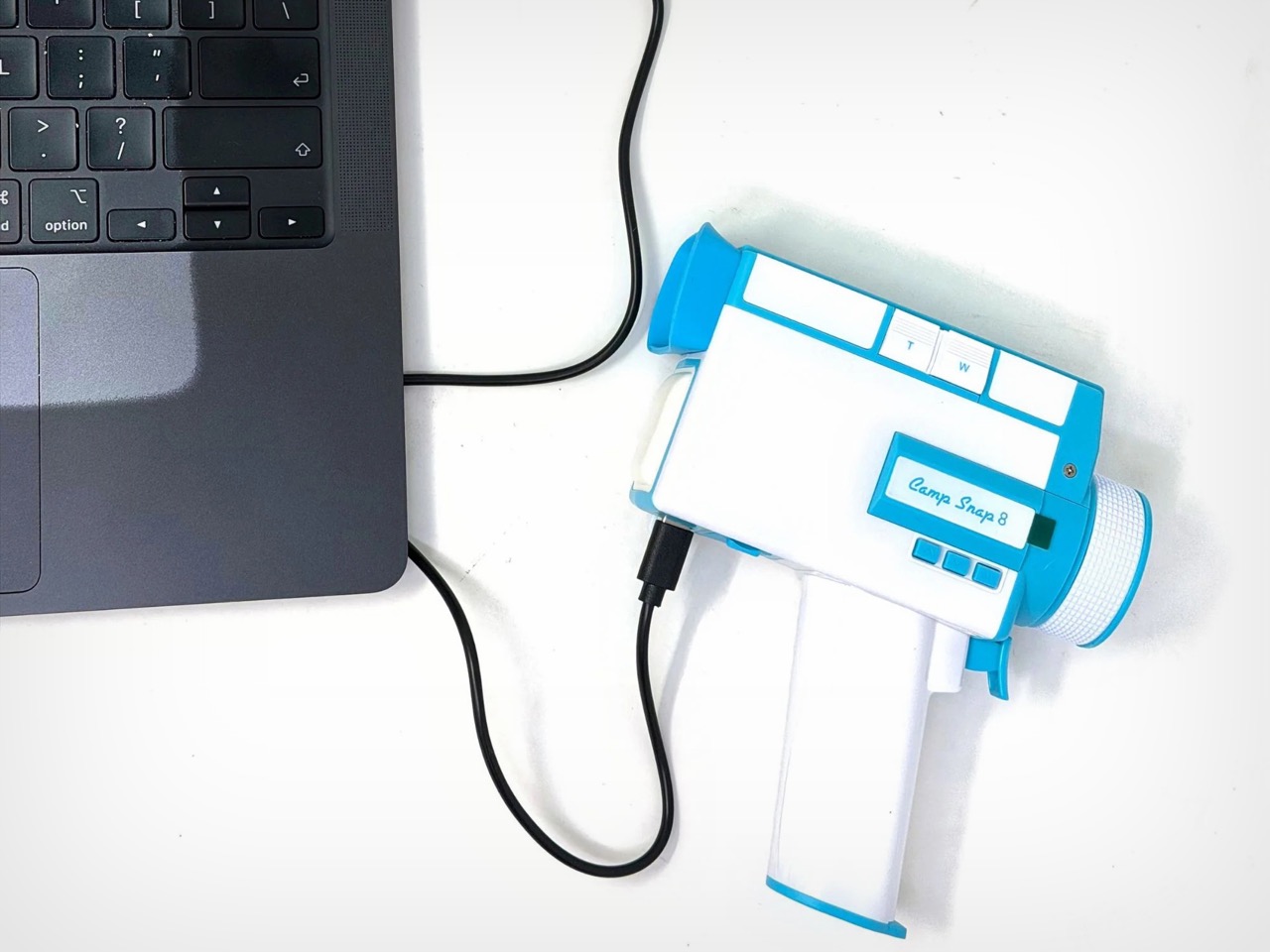
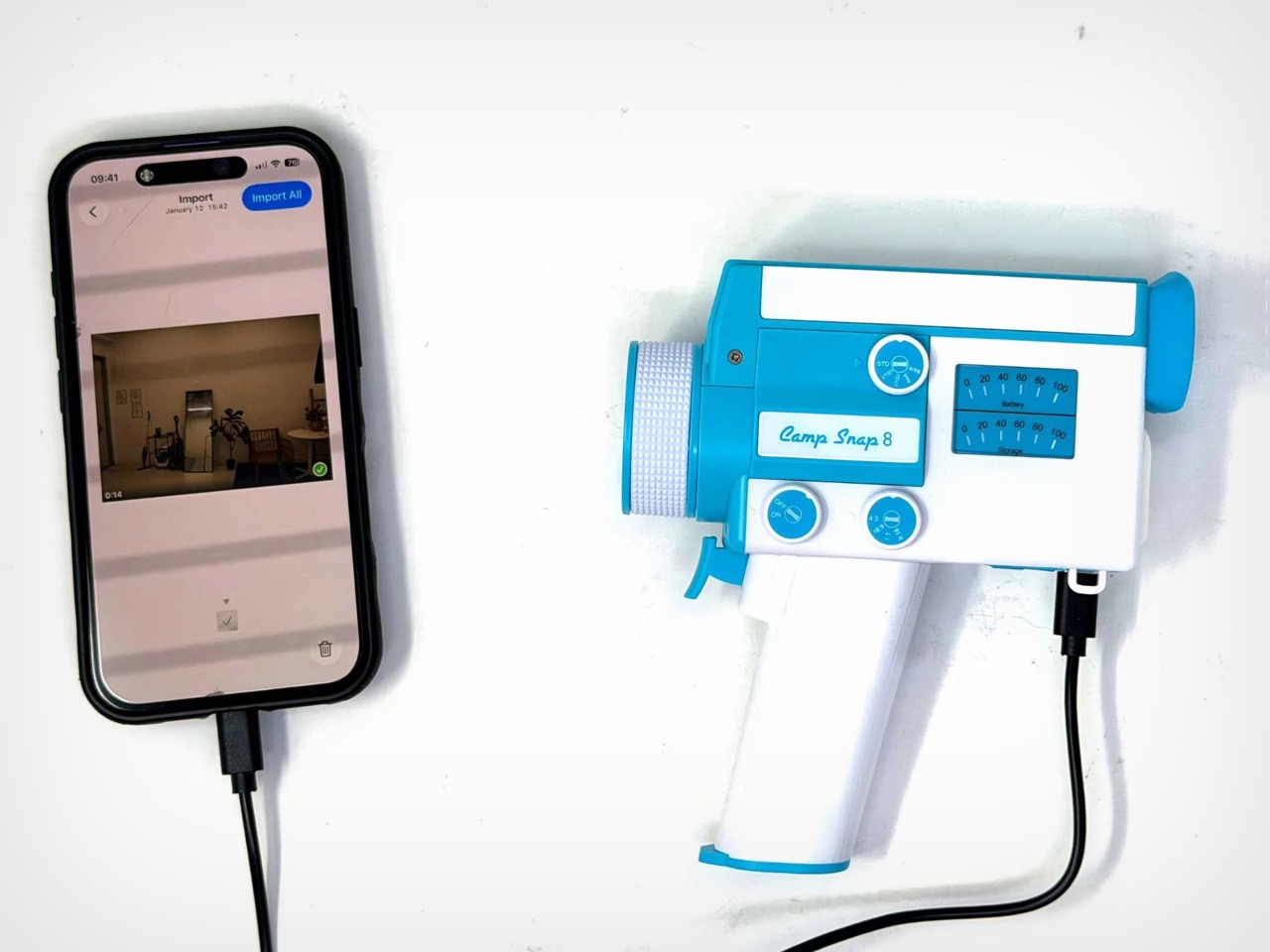
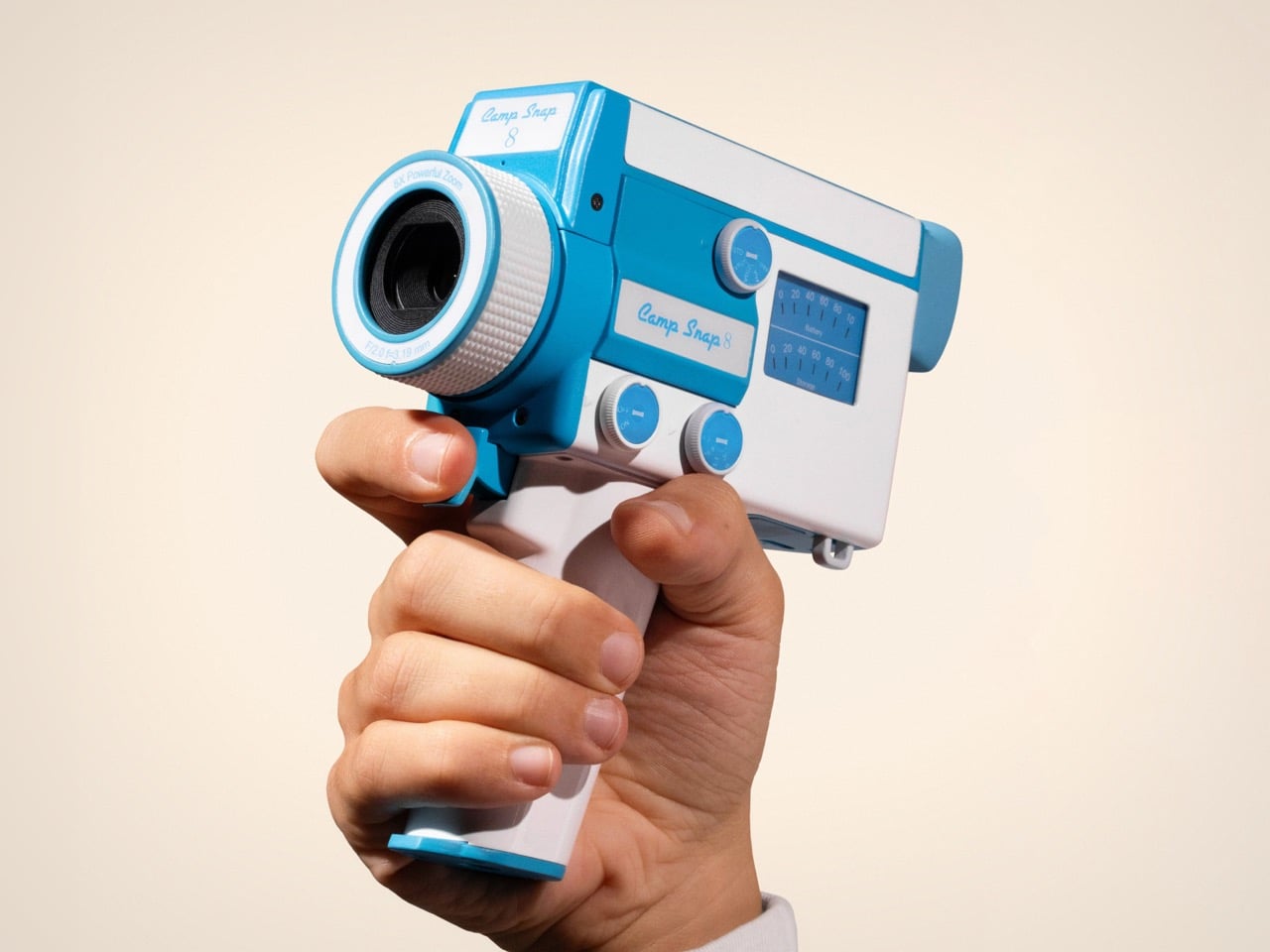
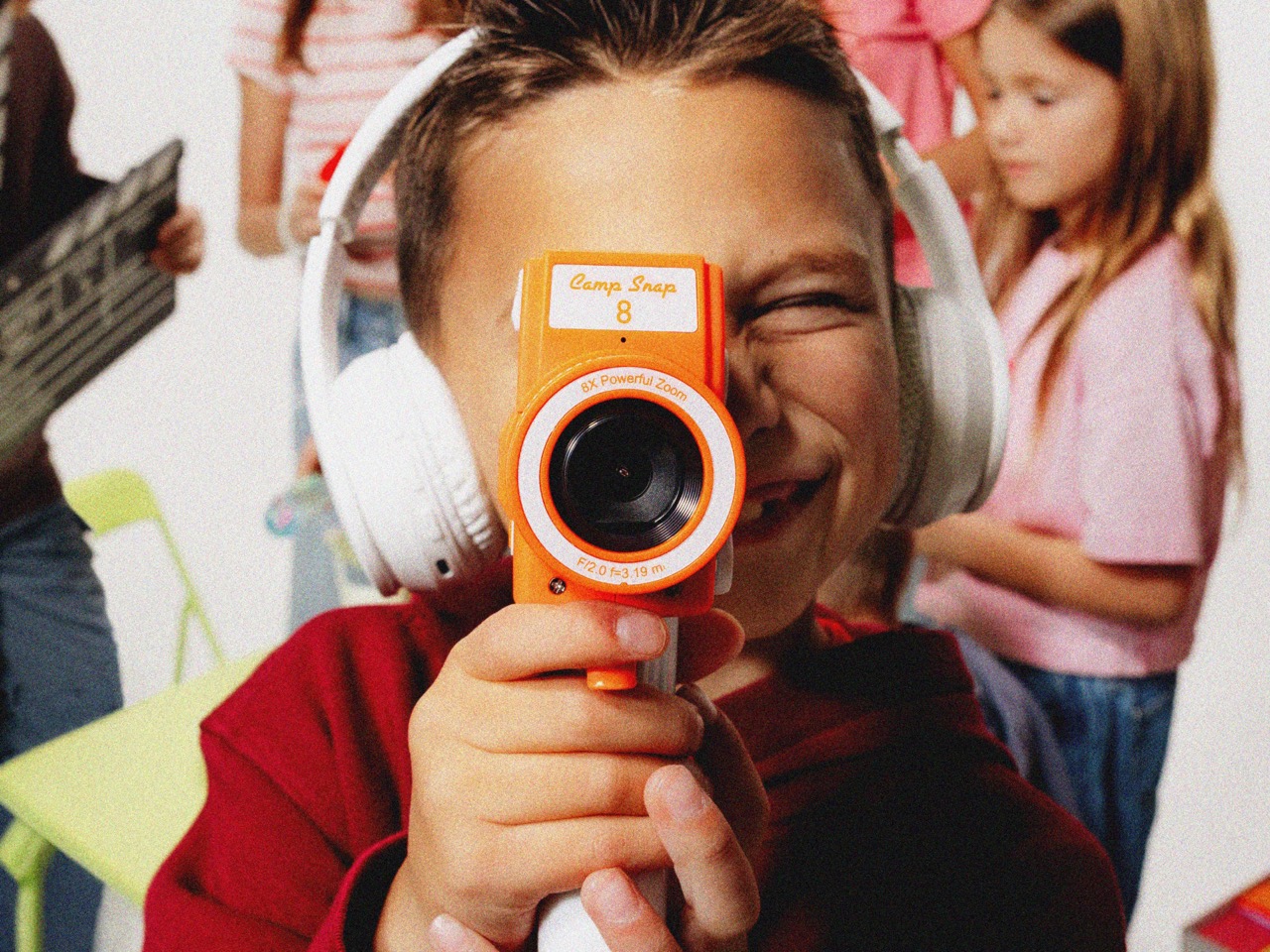
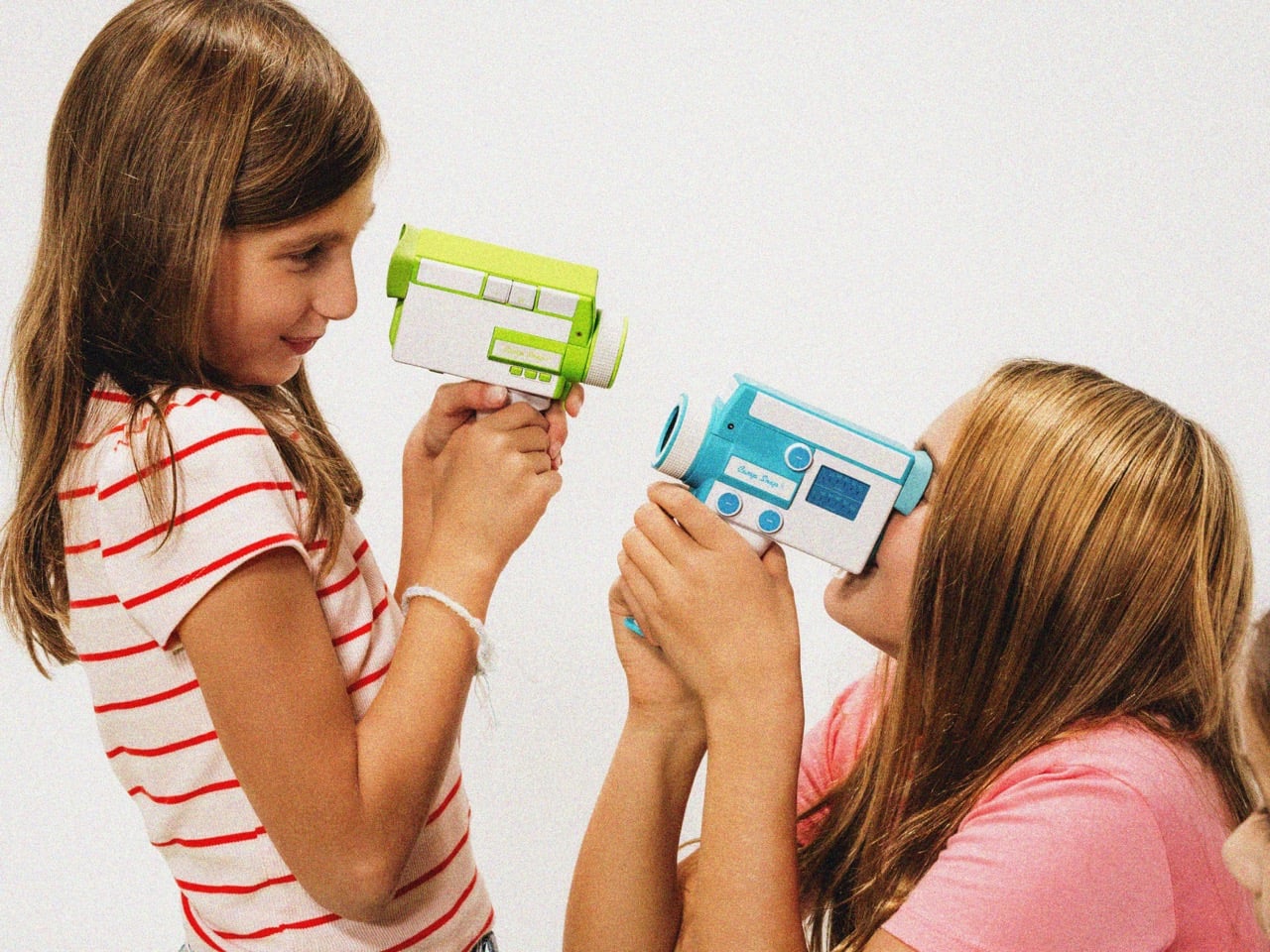
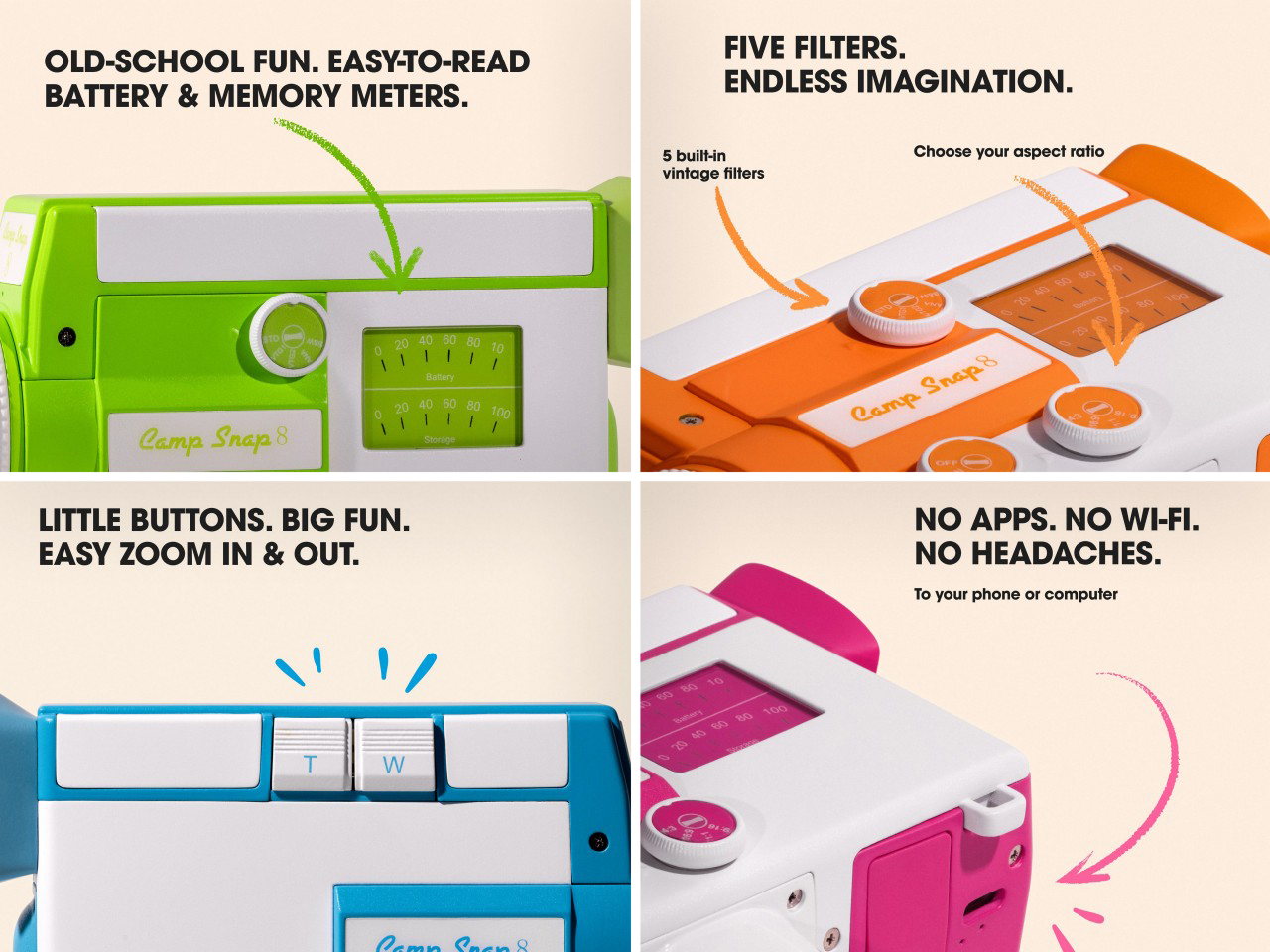
The Mini is a shrunken-down take on Camp Snap’s $199 CS-8, and the brand says it’s less than half the size of the original. It measures about 5.6 inches (14.2cm) wide, small enough for little hands and small enough to look hilarious in mine. It comes in green, orange, pink, and blue, with a white body that looks like it wandered out of a Fisher-Price catalog. There’s no screen, no app, no Wi-Fi, and no way to delete the 47 takes of your kid’s slime tutorial on the spot. Five vintage filters and four aspect ratios live on chunky rotary dials, and footage moves to a phone or laptop over USB-C.
Designer: Camp Snap
A 1970s Super 8, Shrunk Down to First-Grader Scale
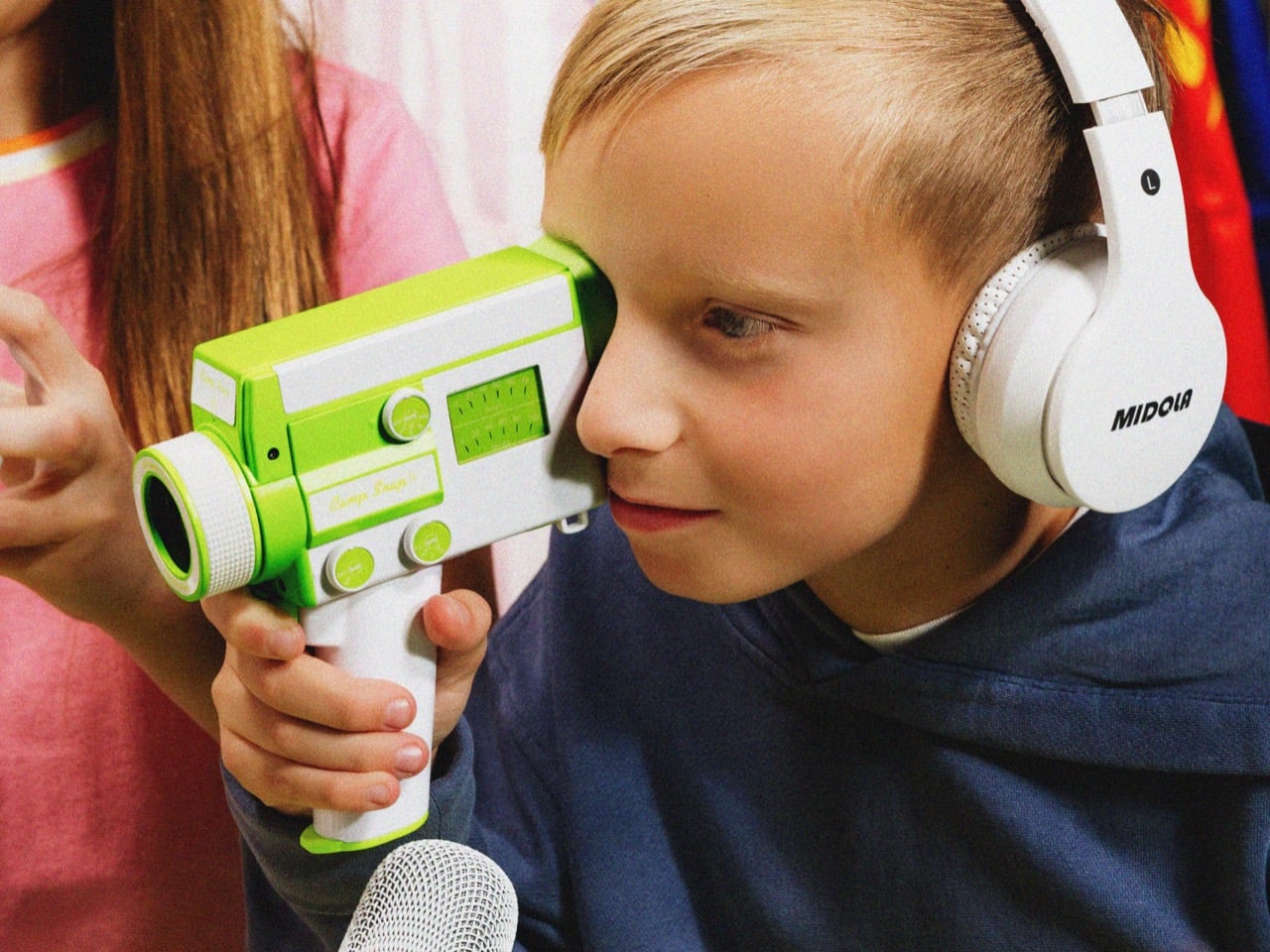
The silhouette is pure 1970s home movie, with a boxy body, a forward-jutting lens wrapped in a knurled ring, and a pistol grip underneath. Camp Snap uses glossy white plastic with color-blocked panels, a script “Camp Snap 8” badge, and a trigger finished in the accent color. The analog needle gauges for battery and storage survived the shrink, redesigned to fit the smaller side panel. Zoom moves to a pair of oversized T and W keys on top, sized for small fingers. The rear eyecup is generous for the body size, which makes sense for a viewfinder that will spend its life smushed against tiny cheeks.
The original CS-8 played it straight, with a black-and-silver body that could pass for something pulled from a grandparent’s closet. The Mini borrows its colors from the toy aisle instead, landing somewhere between a classic Fisher-Price toy and a Nintendo accessory. The grown-up CS-8 has since picked up a cold shoe and a mic jack for accessories, while the Mini’s spec sheet sticks to the essentials. Fewer controls and connections mean less for kids to fiddle with, and I suspect every parent reading this just nodded.
One Trigger Pull, One Clip, Zero Screens
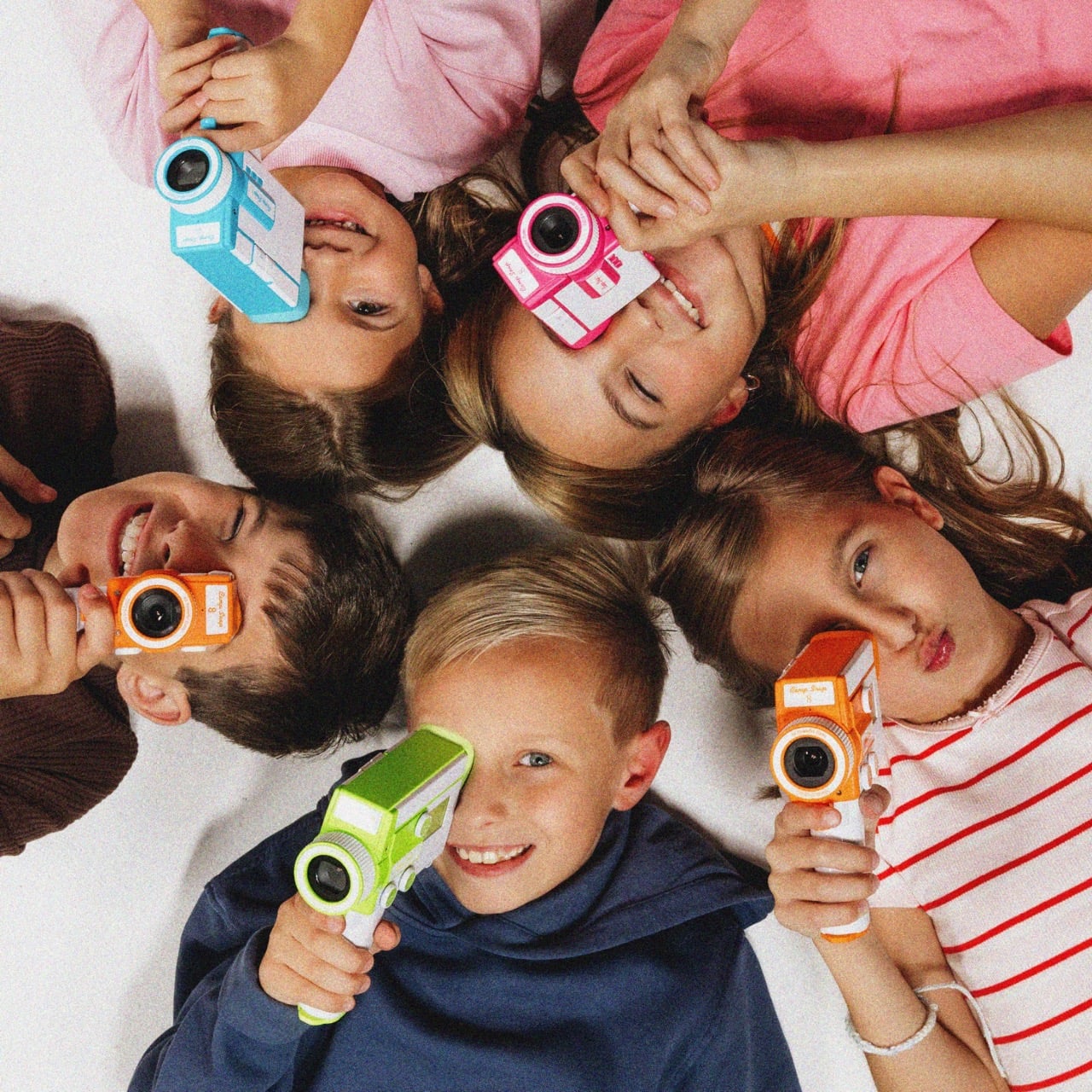
Recording works the way Super 8 did, with a squeeze to roll and a release to cut. Every pull saves its own MP4 file, so a kid builds a story one take at a time without touching a menu. One dial cycles through five filters: true-to-life color, a faded ’90s camcorder look, a golden family-film glow, grainy 8mm flicker, and black and white. A second dial sets the aspect ratio to 4:3, 16:9, 1:1, or vertical 9:16. Camp Snap says the included 4GB card holds about 30 minutes, while a 128GB card stretches that to roughly 16 hours. A built-in mic records sound.
Filters get baked in at capture, and nothing can be reviewed or deleted until the camera plugs into a phone or computer, where it mounts like a flash drive. That delay makes reviewing the footage a potential couch session with a parent. The 9:16 option adds a funny tension, and Camp Snap’s own list of 20 suggested shoots leans right into it with Pokémon card openings, unboxings, and mini YouTube vlogs. Screen-free capture feeding a very online output feels like the most 2026 compromise possible. Camp Snap hasn’t published resolution or frame rate figures.
Pixelvision’s Spiritual Successor Costs $149.99
The CS-8 Mini sells for $149.99 directly from Camp Snap, about $49 less than the full-size CS-8 and a rounding error next to Kodak’s $5,495 Super 8 revival. It ships fully charged with the 4GB card and a USB-C cable. Camp Snap lists free shipping and currently estimates that orders will go out in one to two weeks. The company also warns that holiday stock is very limited. A matching $19.99 carrying case and a $4.99 lanyard are available for parents who know how often things get dropped. All four colorways cost the same.
Kodak introduced Super 8 in 1965 to make home movies easy enough for anyone. The PXL-2000 found its real audience years after its release, when filmmakers fell for the exact flaws Fisher-Price had tried to sell to kids. I’d put money on the CS-8 Mini having a similar second life, except this time the grownups won’t wait for it to be discontinued. The two-tone toy styling, the needle gauges, and the trigger grip are just as appealing to a 35-year-old with a film-camera habit as they are to a first grader.